83 Jean St, Grange QLD 4051
Mon-Fri 07:30 AM - 04:00 PM - Sat - 8:00 - 12 - Sunday Closed

A standard single power point installation in Brisbane typically runs $150 to $280, with doubles from $170 to $320. Queensland's lower electrician rate, about $98 an hour versus $102.50 in NSW, often keeps the same job cheaper here when the wiring is already in place and the install takes only a couple of hours.
That's why a homeowner can ring for “just one more outlet” and still end up comparing two very different quotes. One electrician is swapping a neat existing fitting on a reachable wall, another is pricing hidden cable runs, patching, certification, and the time it takes to work safely in an older Brisbane house.
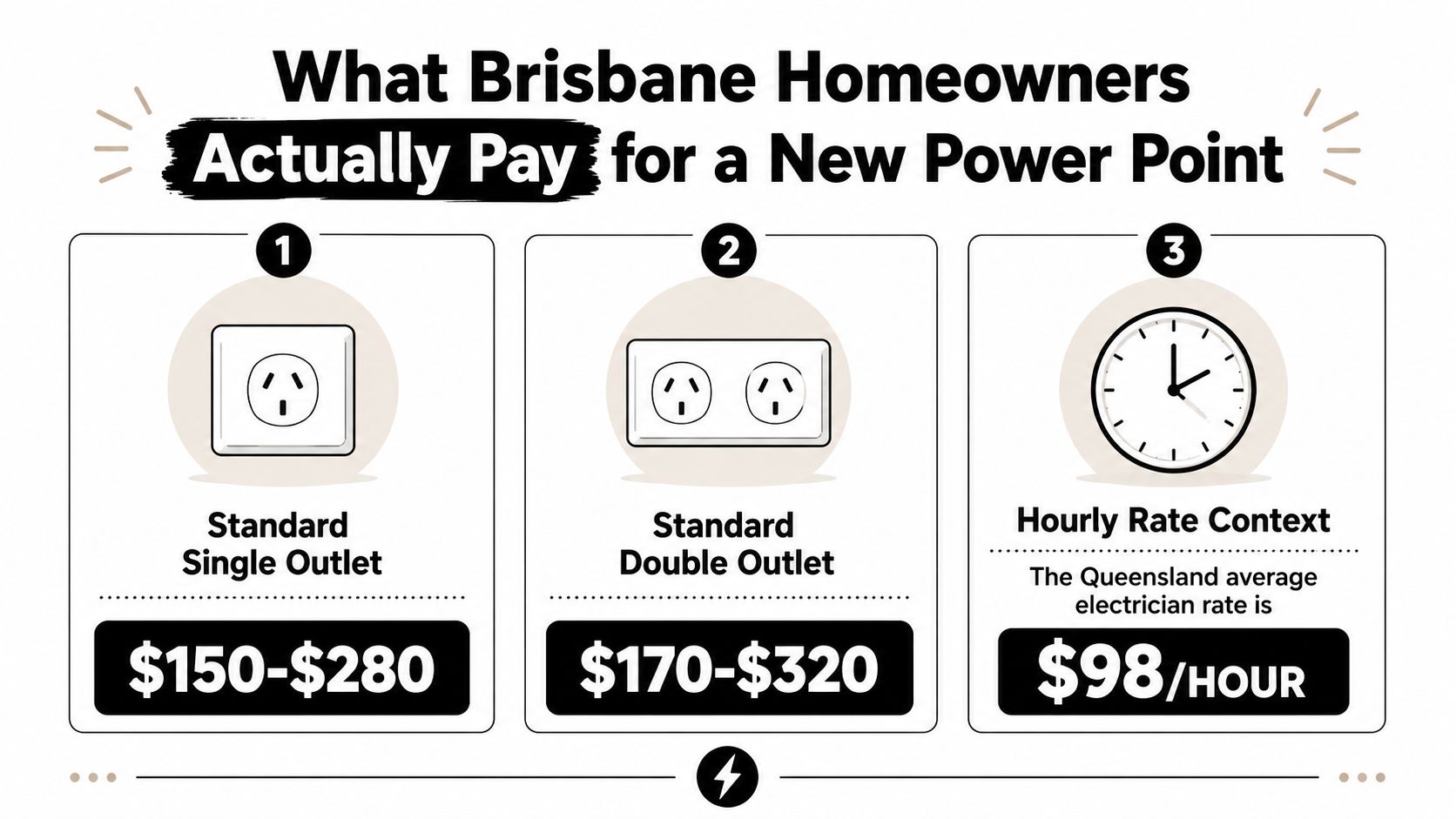
Brisbane homeowners usually start in the $150 to $280 band for a standard single power point, with a double power point typically landing between $170 and $320. Those figures line up with Australian pricing guides that put a simple single outlet around $100 to $150, a double around $120 to $180, and a standard new power point installation at about A$150 to A$300 per point. For a local homeowner, that's the baseline worth keeping in mind before any salesperson starts talking up extras.
Queensland's hourly rate helps explain why the same simple job can be a touch cheaper here than interstate. One 2026 pricing guide puts electricians at about $98 per hour in Queensland, compared with $102.50 in NSW and $104 in Victoria. If the electrician can use existing wiring and finish in 1 to 2 hours, the quote usually stays near the lower end of the market, because labour is doing most of the pricing work.
A simple install is usually a straight swap or an additional outlet close to an existing circuit. The wall cavity is accessible, the cable run is short, and there's no need to chase wires across the house or rebuild plaster after the job. That's the sort of work that keeps the power point installation cost predictable.
Practical rule: If the electrician can get to the outlet, connect to nearby wiring, and test it without opening half the wall, you're probably looking at the lower end of the Brisbane range.
That's also why a quote for a “new point” can look cheap at first glance but climb once the electrician sees what's behind the wall. A tidy job in a Queensland home with decent access is one thing. A job in an older house with awkward framing, cramped cavities, or tired wiring is something else entirely.
A lot of homeowners compare the final figure and miss the four parts that sit underneath it. Labour usually does the heavy lifting on a simple job, but the hardware, testing, overheads, and paperwork still matter. If you know those buckets, you can tell whether a quote is fair or just padded.
The first line item is labour, and on a straightforward Brisbane install it's usually the biggest driver because the electrician's time is what you're really buying. The second is the outlet hardware itself, which matters more when you choose a premium mechanism, USB-integrated unit, or weatherproof fitting. The third is compliance testing and certification, because the electrician has to check the work is safe and properly installed. The fourth is the less visible call-out and travel overhead, which is why a one-point job rarely costs the same as the raw part alone.
A good comparison point is this internal Brisbane pricing note on the typical electrician call-out fee in Brisbane. Even when the electrical work itself doesn't take long, the visit still has to cover the time to get to your place, inspect the job, do the install, and complete the required checks.
The cheapest quote isn't always the lowest true cost. If a quote leaves out testing, certification, or a proper finish, you'll often pay for it later in rework.
That's why two quotes can both be “for one power point” and still be miles apart in real value. One electrician has priced a clean installation with proper sign-off. The other has priced only the visible part and hopes the hidden extras don't come up until the job is underway.
If you want a useful external reference point, the general breakdown in electrical work in Bristol also shows the same pattern, labour and compliance do most of the pricing work on small electrical jobs, even though the market is different. The principle carries across well enough, because the cost structure of an installed outlet is never just the plastic faceplate on the wall.
Brisbane homeowners usually narrow the decision down to the outlet type first, because the fitting itself changes the job as much as the location does. The power point installation cost moves with the style you choose, the access the electrician has, and how much wiring the wall allows. A standard indoor outlet is a simple install. A weatherproof external outlet asks for more care, more protection, and usually more time.
This guide on power outlet installation goes deeper into each fitting type and what to expect.
| Brisbane Power Point Installation Cost by Outlet Type | Typical Brisbane Price | Main Cost Driver |
|---|---|---|
| Standard single outlet | A$100–A$150 | Basic mechanism and straightforward installation |
| Standard double outlet | A$120–A$180 | Slightly higher hardware and similar labour |
| USB outlet | A$150–A$250 | Higher-spec mechanism and added component cost |
| Weatherproof outdoor outlet | A$200–A$350 | Ingress protection, mounting, and cable routing |
A double outlet usually sits only a little above a single because the labour is often similar, but the fitting is larger and takes a bit more care to install neatly. USB outlets cost more because the hardware does more work and the extra convenience is built into the unit. Outdoor units climb faster because they need safer mounting and more attention around exposure, which makes the job slower and more exacting.
Weatherproof installations are rarely just a faceplate swap. The electrician has to account for enclosure rating, routing, fixing, and whether the location is exposed to water, sun, or garden use. That is why Australian guides put outdoor weatherproof power points around A$200 to A$350, and some broader pricing guides go higher depending on access and complexity.
Brisbane homeowners with patios, alfresco areas, or poolside access often choose weatherproof fittings because the job has to suit the environment, not just the wall. If you are comparing quotes, make sure both electricians are pricing the same outlet type. A standard indoor socket and a weatherproof outdoor socket are not the same job, even if they look similar on paper.
Batching also matters. If you need one outlet in the kitchen and another in the lounge, doing both in one visit usually makes more sense than paying for two separate call-outs. The overhead gets spread across more work, and that is where the savings usually show up.
The jump from a straightforward $150 to $280 job into the $300 to $550 zone usually comes down to four things. Brisbane's older housing stock makes these more common than some owners expect, especially in homes with tough wall materials or outdated electrical layouts. If any of these are in play, the quote should change.
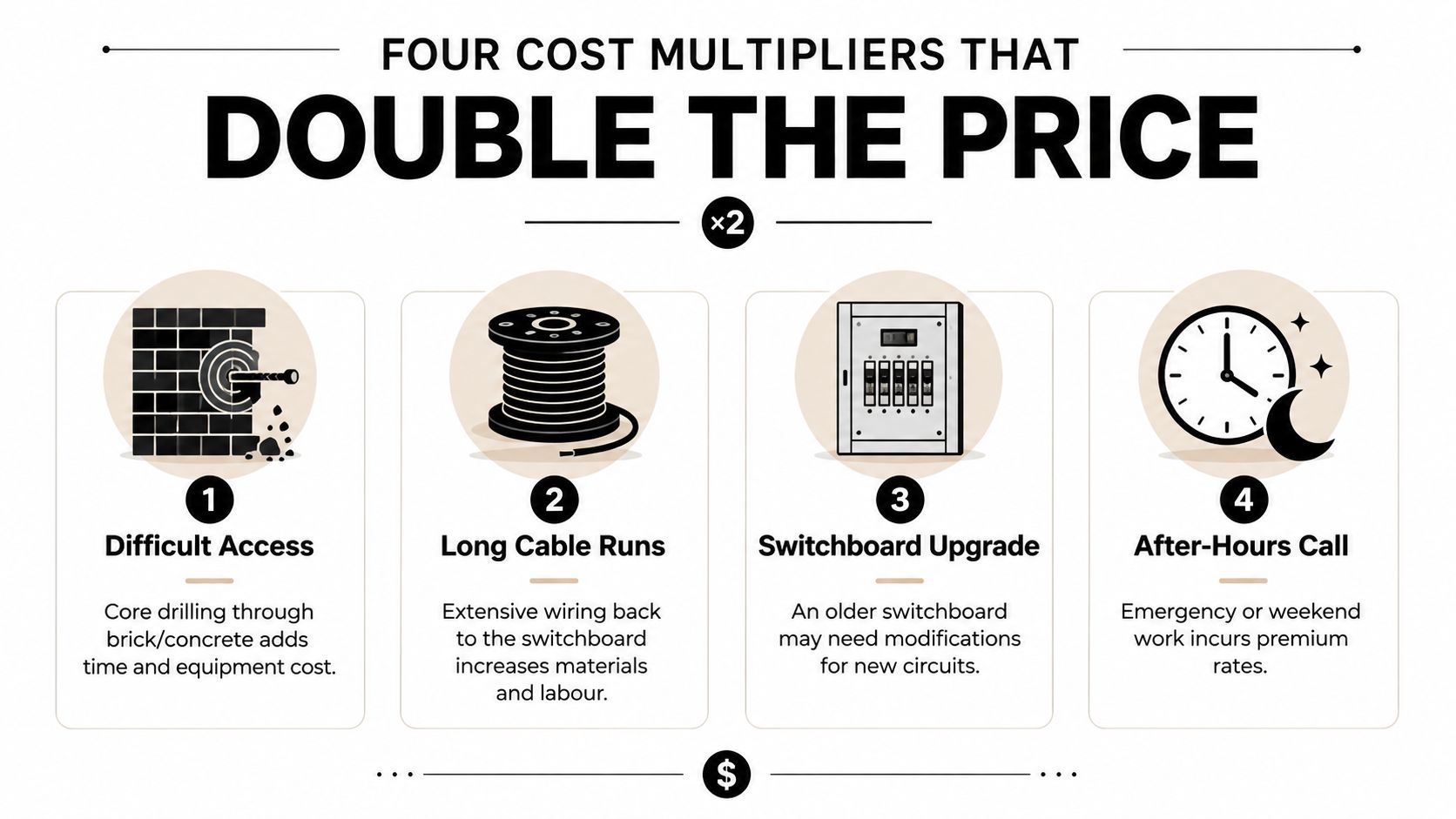
Brick or concrete walls can push a job up to $300 to $550 because the electrician has to core drill, run conduit, and spend extra time on the install. An outdoor weatherproof powerpoint can sit around $280 to $450 for the same reason, since the fitting often needs more mounting and routing. In older Brisbane homes, access is often the expense, not the socket itself.
A short run to nearby wiring is one thing. A long cable run back to the switchboard is another, because the electrician needs more materials and more labour to get the job done properly. If the new point needs its own circuit, the power point installation cost moves again, since the job is no longer a simple add-on. The same applies when the switchboard has to be adjusted to suit the new load.
Older Queensland homes can bring switchboard issues into the mix, especially when the board is dated or doesn't support the work safely. If the electrician has to modify the board, the project stops being a small outlet job and becomes a broader compliance task. That's where homeowners see the biggest difference between a tidy replacement and a bigger upgrade.
For a local reference, this guide on switchboard upgrade regulations helps explain why some installs trigger extra electrical work before the new outlet can go in. It's the kind of detail that catches owners off guard when they only budgeted for the socket on the wall.
If a quote suddenly rises, ask what changed. The answer is usually access, cable length, switchboard condition, or circuit requirements.
A DIY power point looks cheaper only if you ignore everything that comes after a mistake. The job isn't just about fitting plastic to plaster, it's about testing, compliance, and getting the wiring right the first time. A licensed electrician brings those pieces together as part of the service, and that's what a home repair needs.
An unlicensed install skips the professional compliance testing that tells you the circuit is safe. It also leaves you exposed on the paperwork side, since insurers and buyers often expect evidence that fixed wiring was done properly. In Queensland, fixed wiring work belongs with a licensed electrician, and the wiring rules under AS/NZS 3000 still apply whether the outlet is inside, outside, or in a tight spot behind furniture.
The hidden cost of DIY is the redo. If the work has to be pulled apart, patched, and reinstalled by a licensed tradie, the labour saving disappears fast. You've then paid twice, once in time and materials, and again for the proper fix.
That's the part homeowners rarely see until something goes wrong. A power point is a small fitting, but it sits inside the house's electrical system, and the system doesn't care whether the work was “only a little job”. It either works safely or it doesn't.
The best savings come from helping the electrician spend less time on the job, not from cutting corners on safety. If you want a lower invoice, give the tradie a clean run at the worksite and make the scope as clear as possible before he or she arrives. That's where Brisbane homeowners usually win a few dollars back without changing the standard of the work.
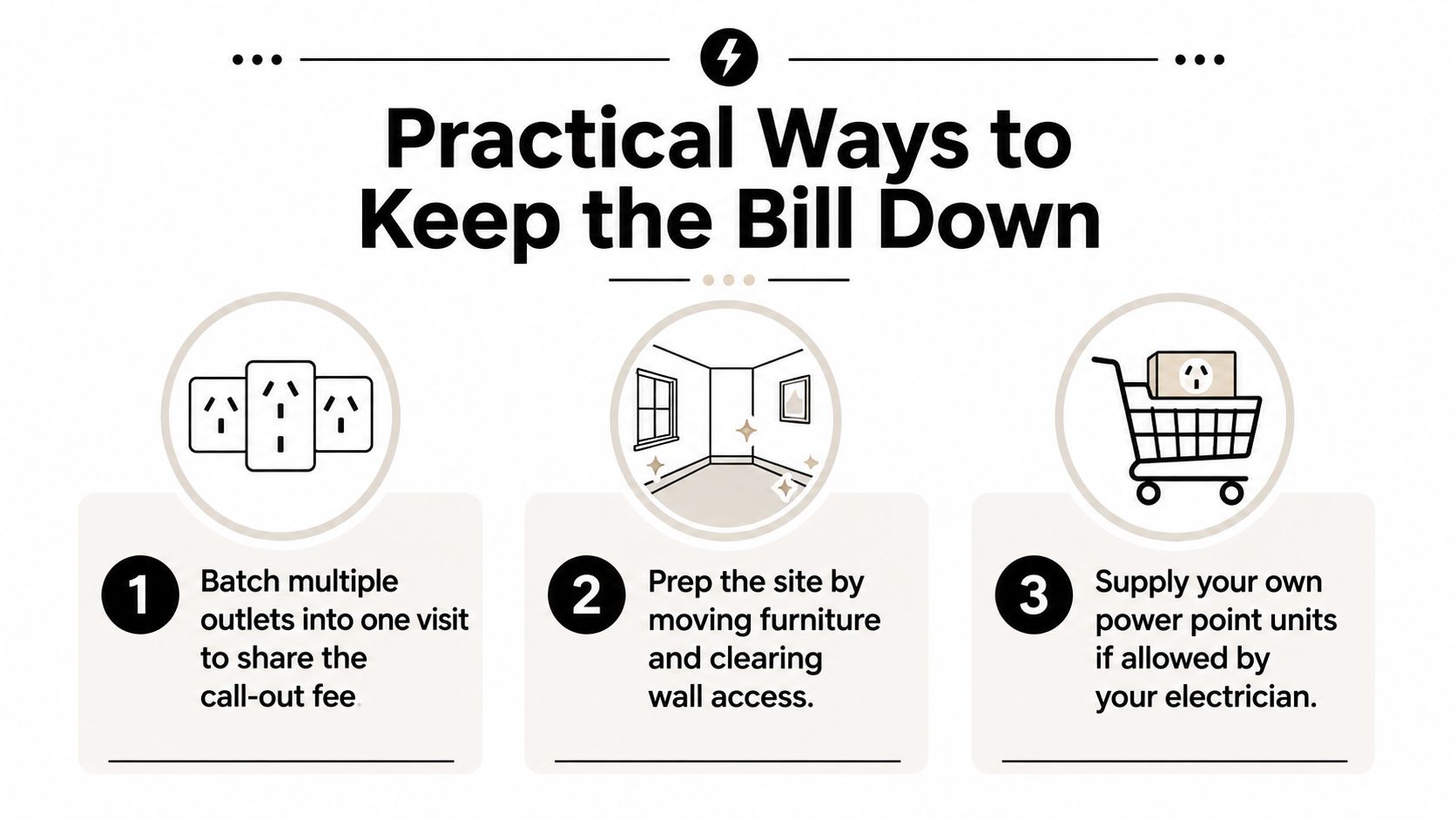
Being upfront about access issues also helps. If the wall is brick, the cavity is cramped, or the route to the switchboard is awkward, say so before the quote is locked in. That reduces the chance of variation pricing on the day and gives you a more honest estimate from the start.
A suspiciously low quote deserves a closer look. It can mean the operator is cutting corners on insurance, licensing, or certification, or that the quote excludes the parts that make the install legitimate. A proper quote may not be the cheapest line on the page, but it's the one that protects the job after the sparkie leaves.
A clean site, a clear scope, and one visit for several outlets usually beat haggling over a cheap single-point quote.
For a Brisbane homeowner, the question is not just what a power point costs. It is what your wall, your switchboard, and the way the house is built will do to that figure. In older Brisbane homes, that often means more labour than people expect, even though Queensland rates can be kinder than what you might see in some other states. A standard single outlet still commonly sits around $150 to $280, and a double around $170 to $320, but the final number lands where the labour and complexity land.
That is why a local quote matters. DLG Electrical is a family-owned Brisbane contractor that has been working across residential and commercial electrical jobs for over 19 years, with fully licensed and insured electricians and Monday to Friday availability from 7:30 AM to 4:00 PM. If the job is straightforward, the quote should show that. If the job needs extra wiring, switchboard work, or harder access, the quote should spell it out before anyone starts.
Ask whether the price covers the outlet hardware, labour, testing, and certification. Ask whether the quote assumes existing wiring or a new circuit. Ask whether the wall type or access conditions could change the price once the electrician opens the job up.
Those questions separate a genuine installed price from a headline figure that only covers part of the work. In Brisbane, that honesty usually saves more money than chasing the lowest number on the page, because you are comparing the whole job rather than a cheap-looking starting point.
If you are comparing options for a new outlet, a double, a USB upgrade, or a weatherproof outdoor point, the fastest way to get a number that fits your house is to request a local quote from DLG Electrical. The right quote should tell you what is included, what might change, and what the finished job will cost before anyone drills the first hole.

Master Electrician with over 30 years of experience. Founded DLG Electrical in 2005 after international project work including electrical installations at Stamford Bridge Stadium, London(Home of Chelsea FC).

Local Electricians that can fix all Electric Hot water Systems.
Motion sensor lights are a versatile addition to any home, offering nu
