83 Jean St, Grange QLD 4051
Mon-Fri 07:30 AM - 04:00 PM - Sat - 8:00 - 12 - Sunday Closed
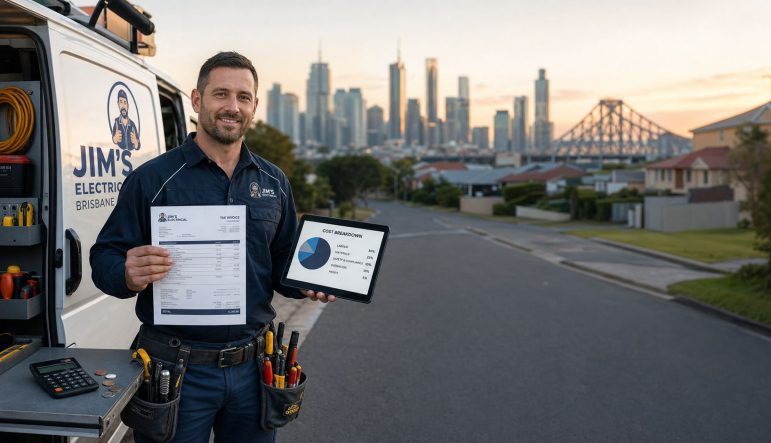
A standard electrician call-out in Brisbane usually lands around A$50 to A$150, and hourly labour often adds A$80 to A$150 per hour on top. If the job starts small, that first invoice can still jump fast because you're paying for the visit, the diagnosis, and then the work itself.
You're standing in the kitchen, the safety switch has tripped again, and the house is half-dark. The first instinct is to ring the nearest sparky and hope the number on the invoice doesn't sting worse than the blackout.
The call goes like this. You check the switchboard, flick the breaker back, and maybe half the house comes back to life. Then it trips again, and now you're on your phone searching electrician call out fee Brisbane while trying not to panic about what a simple visit will cost.
That's the point most homeowners get trapped. They see one headline number, but the actual bill is usually a mix of travel, assessment, and then the first slice of labour. In Brisbane, that standard call-out benchmark sits around A$50 to A$150, with labour commonly sitting on top of it at A$80 to A$150 per hour (What's the Damage).
A lot of people assume the call-out fee is the whole story. It isn't. It's the cost of getting the sparky to your place, getting eyes on the fault, and starting the job, not always finishing it.
Practical rule: if the issue might take longer than a quick diagnosis, treat the call-out as the starting line, not the finish line.
That's why the same headline price can feel fair on one job and expensive on another. A dead power point can be a quick fix. An intermittent fault that keeps tripping a safety switch can turn into a longer, messier invoice before anyone's even found the cause.
The smart move is to book the right person for the right type of visit. If you understand what the call-out buys you, you can stop overpaying for a tiny repair and stop underestimating a bigger one.
A call-out fee is not just a number pulled out of thin air. It represents the minimum fare plus the first part of the trip. You're paying for the electrician to stop what they're doing, drive to you, assess the fault, and begin the work if it's simple enough to move straight ahead.
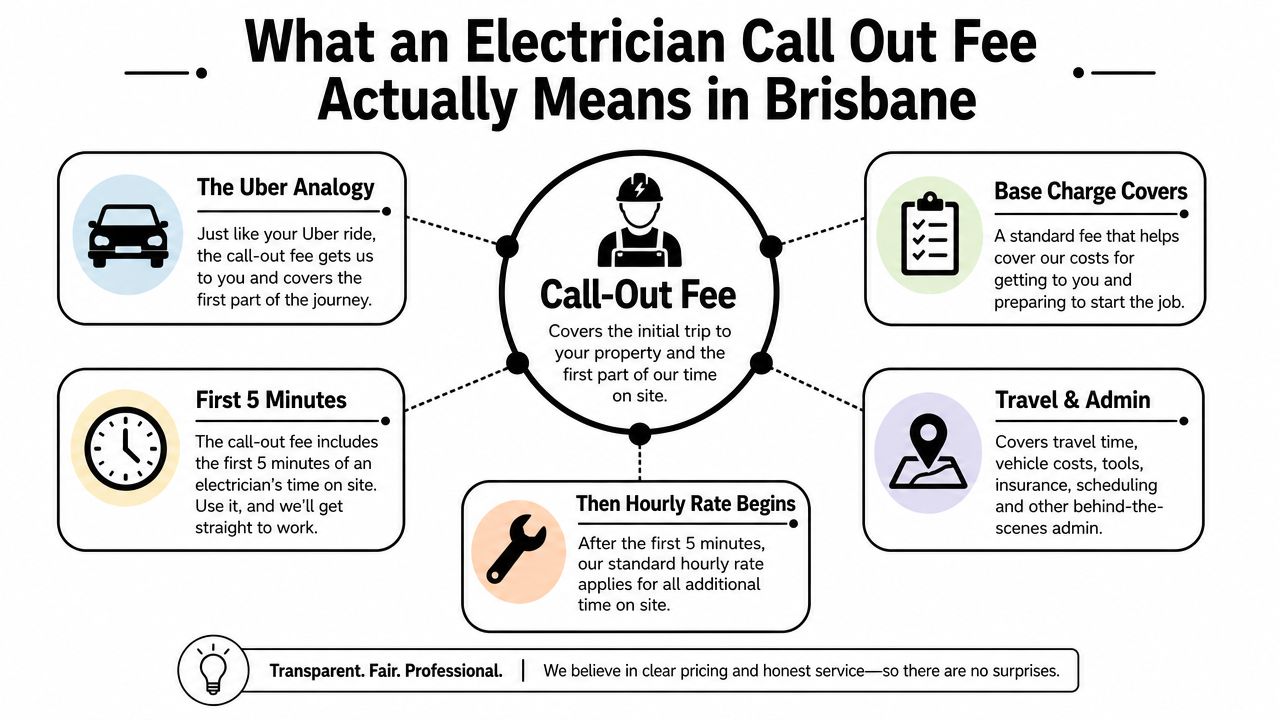
First is mobilisation, which is the travel and scheduling side of the job. Second is the on-site assessment, where the electrician checks the board, the circuit, the fitting, or the appliance. Third is the short diagnostic window, which is the bit homeowners often expect to be “included” even when the quote says otherwise.
In Brisbane, a standard electrician call-out typically runs A$50 to A$150, with hourly labour commonly adding A$80 to A$150 per hour on top, and the fee is usually a mobilisation and first-assessment charge rather than the full job price (What's the Damage). That's the key bit. The clock doesn't magically stop just because the electrician has parked in your driveway.
A true call-out fee and a minimum on-site labour charge can look similar on paper, but they're not always the same thing. One business might include the first 30 minutes. Another might charge for arrival, then start hourly billing as soon as the problem is confirmed.
The question to ask is simple. “What does the call-out include, and when does hourly labour start?”
If the answer is vague, assume the invoice will be less friendly than the phone quote. That's where small repairs turn into bill shock. One broken fitting can stay near the call-out total, while a diagnosis-heavy job can blow straight past it once the first hour is gone.
A Brisbane electrician's call-out fee is mostly a timing charge. Standard weekday work sits at the lower end because the sparky is already set up to take the job, while evenings, weekends, and emergency visits cost more because the visit interrupts normal work and usually starts the clock as soon as the electrician leaves for your place.
Across Brisbane, the usual residential numbers land around A$75 to A$110 per hour with a separate call-out fee of about A$50 to A$150 on top, while Queensland averages sit near A$99 to A$100 per hour (Word of Mouth). Pricing pages from Brisbane electricians also commonly show A$80 to A$120 for standard business-hours call-outs and A$120 to A$300+ for after-hours or emergency visits, but the question is whether that fee buys the first 30 to 60 minutes, or just the drive and the first look at the fault (On 2 It Electrical).
A weekday safety switch problem during business hours belongs in the lower band. A sparking outlet at 11 pm on Sunday belongs in the higher band, and you should budget for that without pretending it is a normal service call. The after-hours price is not a rip-off by itself, it is the cost of getting someone to your door when the rest of the trade world is closed.
| Time of Day | Call Out Fee | Hourly Rate | Best For |
|---|---|---|---|
| Business hours | A$50 to A$150 | A$75 to A$110 | Routine faults, minor repairs, scheduled diagnosis |
| After-hours or emergency | A$120 to A$300+ | A$80 to A$150 or higher | Power loss, dangerous faults, urgent isolation |
| Weekend or late evening | Often above standard business-hours pricing | Often above weekday rates | Problems that can't wait until Monday |
If you want a clear example of how urgent attendance is sold separately from standard booking work, the DLG Electrical 24-hour electrical service page shows the difference between ordinary call-outs and round-the-clock response.
Here is the part homeowners usually miss. Short jobs hurt most under call-out pricing, because the fixed fee takes a bigger bite out of the invoice. Once the problem starts chewing through diagnostic time, the hourly rate takes over, and that is the point where a fixed quote often makes more sense than paying a call-out plus open-ended labour.
The invoice changes for a few plain reasons. The fee is a billing threshold, not a fixed sticker price, so the key question is when the clock starts, what the first visit covers, and when a proper quote would cost less than open-ended call-out time.
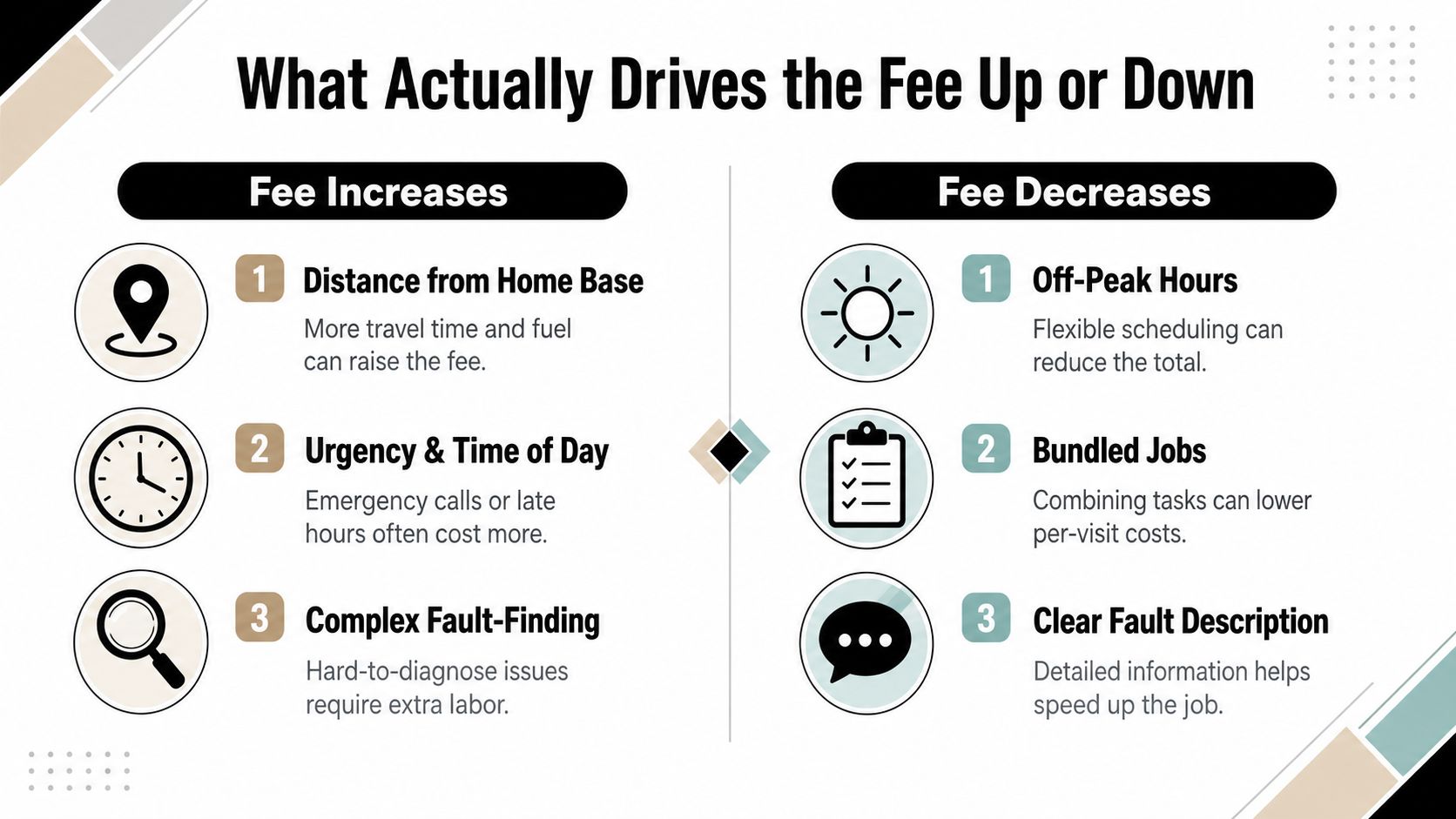
Distance from the electrician's base is the first lever. A job in an inner Brisbane suburb is easier to price than one that burns extra driving time at the edge of the metro area. A Grange call is usually simpler to dispatch than a long outer-Brisbane run where the sparky loses time on the road.
Urgency and time of day come next. A booked weekday visit sits in one lane, a same-day rescue job sits in another. After-hours pricing exists because someone is leaving normal trading hours to handle your fault.
Fault-finding complexity can lift the total fast. Swapping a switch is straightforward. Chasing an intermittent circuit that only trips when the weather turns is not. Diagnostic time is where homeowners get caught, because the problem looks small until the electrician starts opening circuits and testing properly.
Travel and parking also matter, especially in tight streets, units, or places with awkward access. If the electrician spends time hunting for parking or waiting at a locked gate, that time gets recovered somewhere. Clear access saves money more often than people expect.
Minimum on-site charges are the hidden lever. Some businesses set a floor price for turning up, even if the work itself is quick. That is why a simple reset can still cost more than you thought.
The pricing gap is real. Most Brisbane pages give you a range, but they often skip the part homeowners care about most, whether the first stretch of time is included or when the hourly clock starts. For a straight read on labour once the sparky is on site, the electrician hourly rate Brisbane guide is worth having open alongside the quote.
Good question to ask: “Is this a call-out fee, or a minimum on-site labour charge?”
If you want to see how different businesses frame that first visit, the On 2 It Electrical page is a useful comparison point for how Brisbane electricians describe their pricing.
A call-out fee makes sense once you see it against an actual job. The same pricing structure can feel cheap, fair, or expensive depending on how long the fault takes to find and fix.
A homeowner rings on a Tuesday after the safety switch trips twice in an hour. The electrician arrives during business hours, isolates the problem circuit, checks appliances, and finds a faulty device that's causing the issue. In this kind of job, the call-out sits in the standard range, then labour starts once the diagnosis and repair go past the first stretch of time.
That's the type of visit where the invoice can stay relatively contained if the fault is obvious. It's also where homeowners get the best value from a sparky who can diagnose quickly and fix on the spot.
A hot water issue is more annoying because it often starts with testing, not fixing. The electrician might check the board, confirm the circuit is live, and then identify a failed element or control issue that needs more than one visit or a replacement component. Now the call-out fee is only the opening number, because labour and parts start stacking together.
This is the exact kind of job where a fixed quote can beat a pure hourly arrangement. Once the first diagnosis points to a broader repair, the “cheap” call-out stops being cheap.
A weekend outage is where the invoice climbs hardest. If the fault is dangerous, widespread, or tied to an external issue that isn't your home's wiring, the electrician still has to attend, inspect, and isolate the problem. That urgency pushes the job into after-hours territory, and that's where the higher call-out bands become normal rather than exceptional.
The point isn't to scare you off. It's to show that the same home, the same switchboard, and the same suburb can produce very different outcomes depending on when the call happens and how long the fault takes to find.
If you're a visual person, the walkthrough in this electrician service video helps make the handover from diagnosis to repair a bit easier to picture.
A quote looks expensive until you compare it with the cost of another visit, another hour, and another delay.
If you want the bill down, don't try to game the sparky. Give them less wasted time and more useful information. That's how you save money without cutting corners.
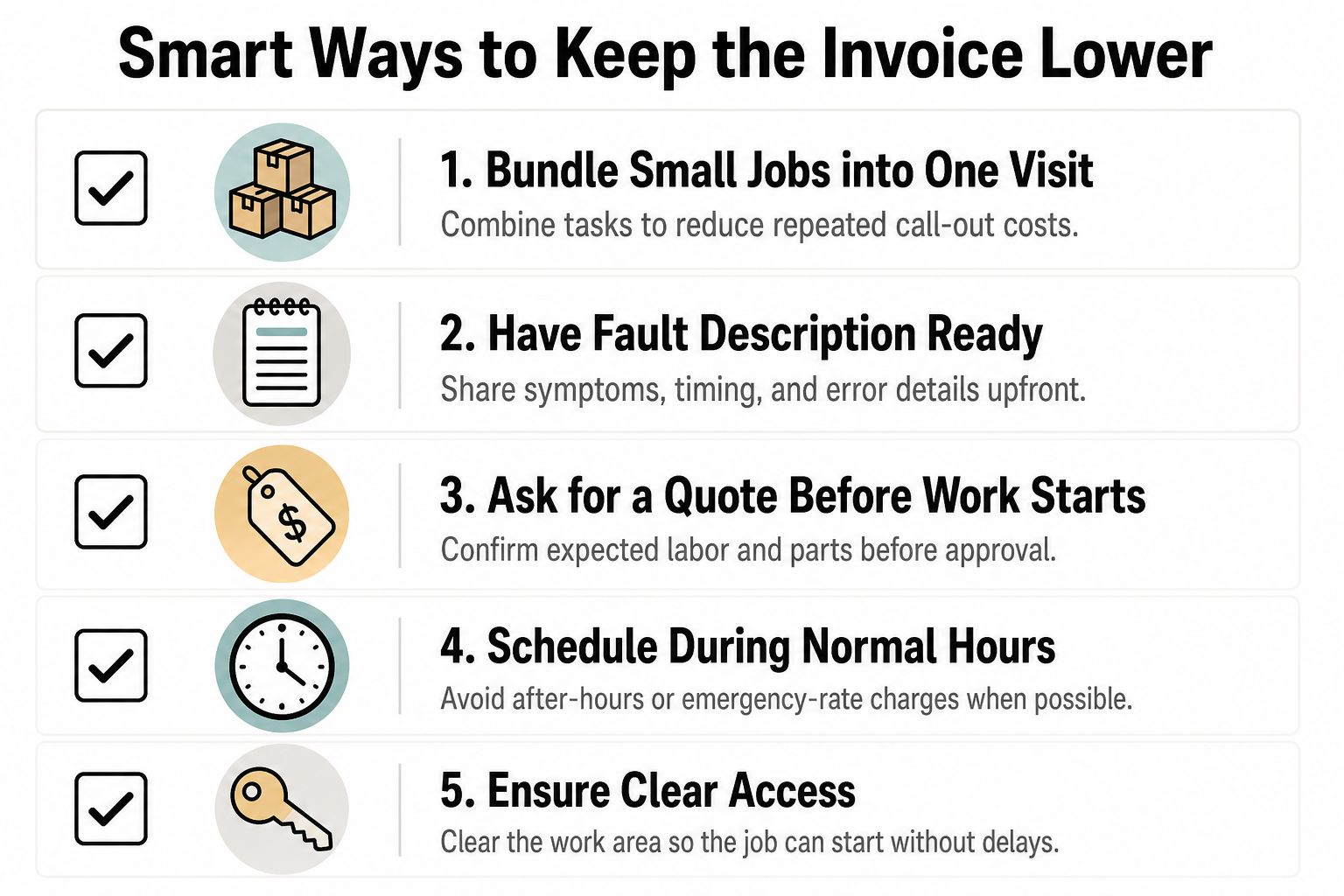
If the repair already sounds like more than an hour, stop thinking call-out fee and start thinking quote. A fixed price makes more sense once you know the fault is bigger than a quick swap or reset.
You should also ask for the price change point in plain English. If the electrician says the call-out is one fee and hourly labour starts after that, get them to spell out the threshold before they arrive. That's the detail that separates a tidy invoice from a messy one.
For broader homeowner decision-making, the Boocoo guide on how to generate more plumbing leads is a useful example of how service businesses win trust by making quoting clearer and faster. The same logic applies here, customers pay less when the scope is clearer.
A good booking starts with four questions. Is this a true call-out fee or a minimum labour charge. What does the after-hours premium cover. When does hourly labour begin. What happens if the fix takes longer than expected.
Don't skip licensing and insurance either. If a tradie can't prove they're properly covered, walk away. Cheap work that turns into a liability problem is never cheap.
If you want a Brisbane example of a business that frames residential and commercial work around straight quoting and licensed service, the DLG Electrical Brisbane electrician page is worth a look. DLG Electrical is a family-owned Brisbane contractor with over 19 years in the trade, and that kind of local experience matters when the job is about diagnosis, access, and getting the first visit right.
Use the quote to compare scope, not just price. That's the same principle good operators use in other trades, and it's what separates a clean booking from a nasty invoice.
If you want a straight answer before you book, contact DLG Electrical for a free quote and ask exactly what the call-out includes. They handle Brisbane electrical work with fully licensed and insured electricians, and they'll tell you upfront what you're paying for before anyone starts the job.

Master Electrician with over 30 years of experience. Founded DLG Electrical in 2005 after international project work including electrical installations at Stamford Bridge Stadium, London(Home of Chelsea FC).

Local Electricians that can fix all Electric Hot water Systems.
Motion sensor lights are a versatile addition to any home, offering nu
