83 Jean St, Grange QLD 4051
Mon-Fri 07:30 AM - 04:00 PM - Sat - 8:00 - 12 - Sunday Closed
A Brisbane landlord gets a call at 9 pm. A February storm is pushing rain under the eaves, the safety switch keeps tripping, and the tenant wants to know whether it's safe to stay. Earlier that week, a smoke alarm compliance notice arrived in the letterbox. Neither problem was on the calendar.
That's how reactive maintenance becomes expensive. A missed inspection turns into an emergency attendance, a tenant-access problem, a damaged fitting, or a compliance question that's difficult to answer without records. A practical rental property maintenance schedule prevents that scramble by combining tenancy events, electrical safety work, smoke alarm obligations, and Brisbane's weather exposure in one working system.
Brisbane properties don't all fail in the same way. Humidity affects outdoor fittings and electrical connections, intense storms expose weaknesses in drainage and external wiring, and older homes may contain ageing switchboards, cabling, or fittings that need closer attention than a modern apartment.
A generic national checklist usually says to inspect the property periodically. That's not enough for a Brisbane rental. The useful question is, what has happened recently, and which part of the property is most exposed now?
Practical rule: A storm, heavy rain event, extended heat period, lease renewal, or tenant changeover should trigger a review of the maintenance calendar.
A property manager may have a routine inspection scheduled, but that inspection shouldn't be the only point at which someone considers the property's condition. A tenant reporting flickering lights, a warm switchboard, water around an external power point, or a repeatedly tripping safety switch needs a prompt response. These symptoms can indicate a defect that won't improve by waiting for the next inspection.
The strongest schedule separates three types of work:
This approach also gives landlords better control over trade bookings. A planned visit can combine related tasks, while an urgent fault is triaged according to risk rather than handled as an ordinary repair. The schedule becomes a practical record of what was checked, who completed it, and what still needs rectification.
A Brisbane rental can pass a routine inspection and still fall short at lease renewal. Smoke alarm placement, interconnection, battery condition, access notices, and electrical records need to be managed against tenancy events, not left on a general annual reminder.
Queensland rental compliance starts with obligations that have defined timing. Smoke alarms require maintenance throughout the tenancy, while electrical safety inspections must be arranged at the legally required interval by a licensed electrician. Keeping these items in the same workflow helps prevent a missed deadline from becoming a rushed repair.
The Residential Tenancies Authority states that rental smoke alarms must be interconnected and photoelectric, and installed in all residential rental properties. It also recommends a service life of at least 10 years under normal conditions of use. Owners or property managers must test the alarms within 30 days before the start of a tenancy, including a renewal, and replace flat or nearly flat batteries within that same pre-tenancy window. Tenants must test and clean the alarms at least once every 12 months during the tenancy. These requirements are set out in the Queensland RTA smoke alarm maintenance guidance.
Queensland's smoke alarm requirements tightened on 1 January 2022. Rental alarms needed to meet the correct Australian Standard, be photoelectric and interconnected, and be installed in each bedroom, in a connecting hallway or adjacent room, plus at least one alarm on each level without a bedroom. The requirements applied by the first lease renewal from that date or before the start of a new lease. A landlord arranging a changeover should verify the alarm arrangement, age, position, and interconnection, rather than only pressing the test button. The Queensland smoke alarm compliance requirements provide a practical reference for this review.
Use a clear sequence when setting up the maintenance calendar:
| Obligation | Frequency | Trigger Event | Governing Regulation |
|---|---|---|---|
| Smoke alarm testing by owner or property manager | Within 30 days before each tenancy start or renewal | New lease or renewal | Queensland RTA smoke alarm requirements |
| Battery replacement where batteries are flat or nearly flat | Within the same 30-day pre-tenancy window | New lease or renewal | Queensland RTA smoke alarm requirements |
| Tenant smoke alarm testing and cleaning | At least once every 12 months | During the tenancy | Queensland RTA smoke alarm requirements |
| Electrical safety inspection | At the legally required interval | Rental ownership and ongoing tenancy management | Queensland electrical safety requirements |
| Maintenance access notice | 48 hours before planned maintenance | Repair, inspection, installation, or replacement | Queensland tenancy entry rules |
The owner remains responsible for ensuring repairs occur within a reasonable timeframe. Property management software can create reminders, but it cannot replace evidence. Keep certificates, invoices, photographs, tenant notices, and completed work orders together so the maintenance history is available when needed. In Brisbane's humid, storm-prone conditions, accurate records also show whether a recurring fault was inspected, repaired, or left awaiting further work.
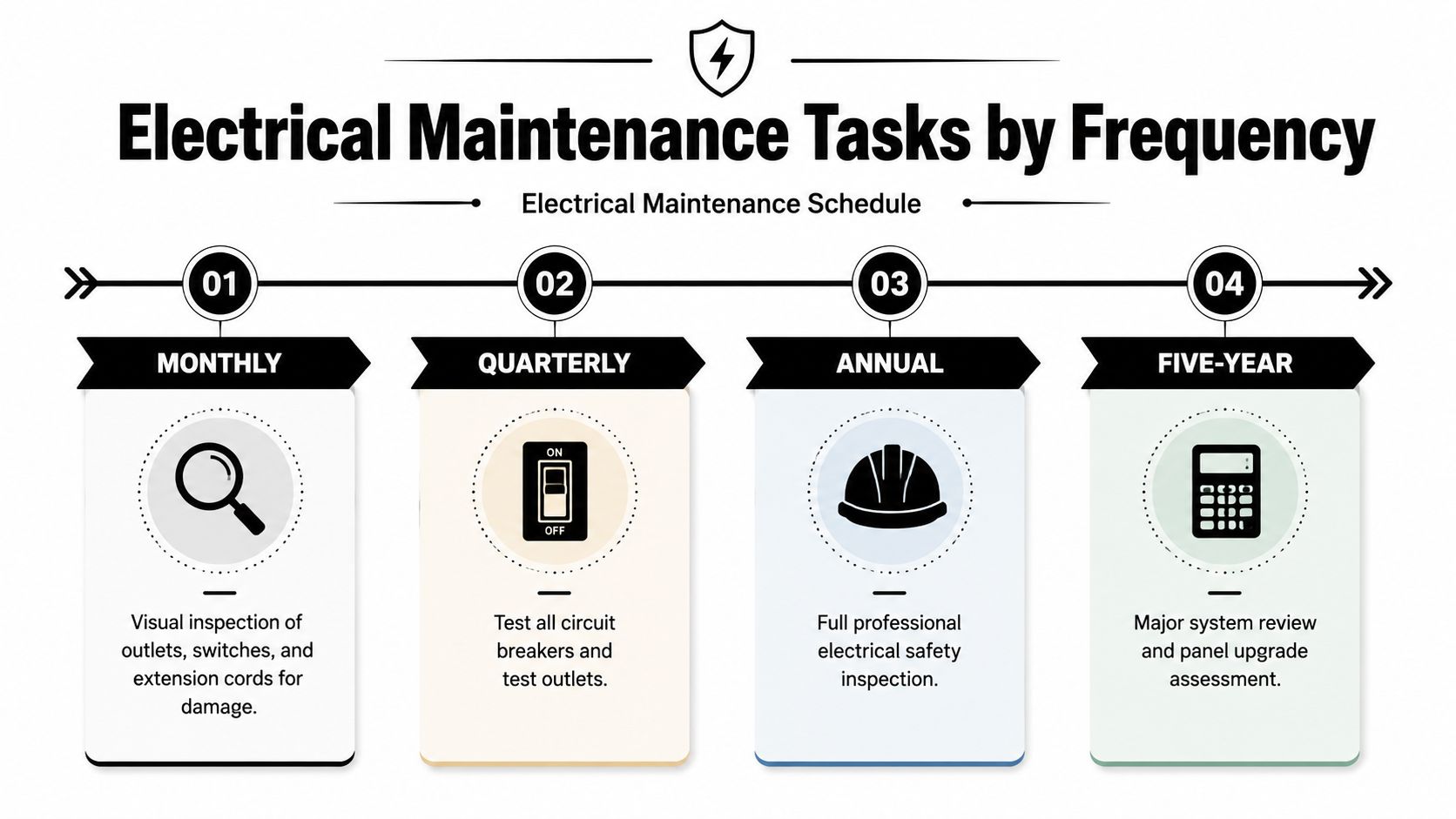
A useful electrical schedule distinguishes between what a landlord or manager can observe and what requires a licensed electrician. Visual checks can identify warning signs early, but they don't replace testing or certification.
Start with a simple visual walk-through. Look for scorch marks, cracked outlets, loose switches, damaged extension leads, discolouration around the switchboard, or equipment that feels unusually warm. A tenant report of burning smell, buzzing, flickering, or repeated tripping should be treated as a fault report, not as a minor inconvenience.
A licensed person should also test safety switches in accordance with the equipment instructions and applicable requirements. Humidity, insects, corrosion, storm exposure, and ageing components can all contribute to faults in Brisbane homes, particularly where outdoor or damp-area fittings have been exposed for years.
Quarterly inspections should focus on areas that face the weather or greater physical exposure:
Don't open electrical equipment or attempt repairs as part of a routine inspection. The purpose of the check is to identify and escalate risk safely.
An annual electrical visit can include a broader condition review, switchboard assessment, ceiling fan mounting and wiring checks, circuit-label verification, smoke alarm observations, and thermal imaging where appropriate. Thermal imaging can help locate abnormal heat patterns associated with loose connections, but an image is a diagnostic aid, not a repair.
In Victoria, the rental benchmark is a two-year electrical safety check by a licensed or registered electrician for landlord-supplied electrical installations, appliances, and fittings, as outlined in the Victorian rental maintenance guideline. That requirement illustrates why a landlord should separate jurisdiction-specific compliance from a general maintenance checklist.
For Brisbane properties, use the applicable Queensland requirement as the legal anchor, then add more frequent checks where the property's age, storm exposure, moisture problems, or electrical history justifies it. Earth continuity, insulation resistance, and polarity checks belong to qualified electrical testing, not a landlord's visual inspection.
Brisbane's weather should change the schedule. A fixed quarterly visit can miss the period when a property has taken the greatest hit from rain, wind, heat, or humidity.
Before the storm-prone summer period, check air-conditioning circuits, external power points, outdoor lighting, surge protection arrangements, and visible cabling. Air-conditioning systems place sustained demand on electrical circuits, while outdoor fittings face rain, UV exposure, insects, and garden activity. Arrange repairs before a major storm rather than after a tenant reports a tripping safety switch at night.
The air-conditioning maintenance service information can help landlords identify the electrical and equipment checks that should sit alongside filter cleaning and general servicing.
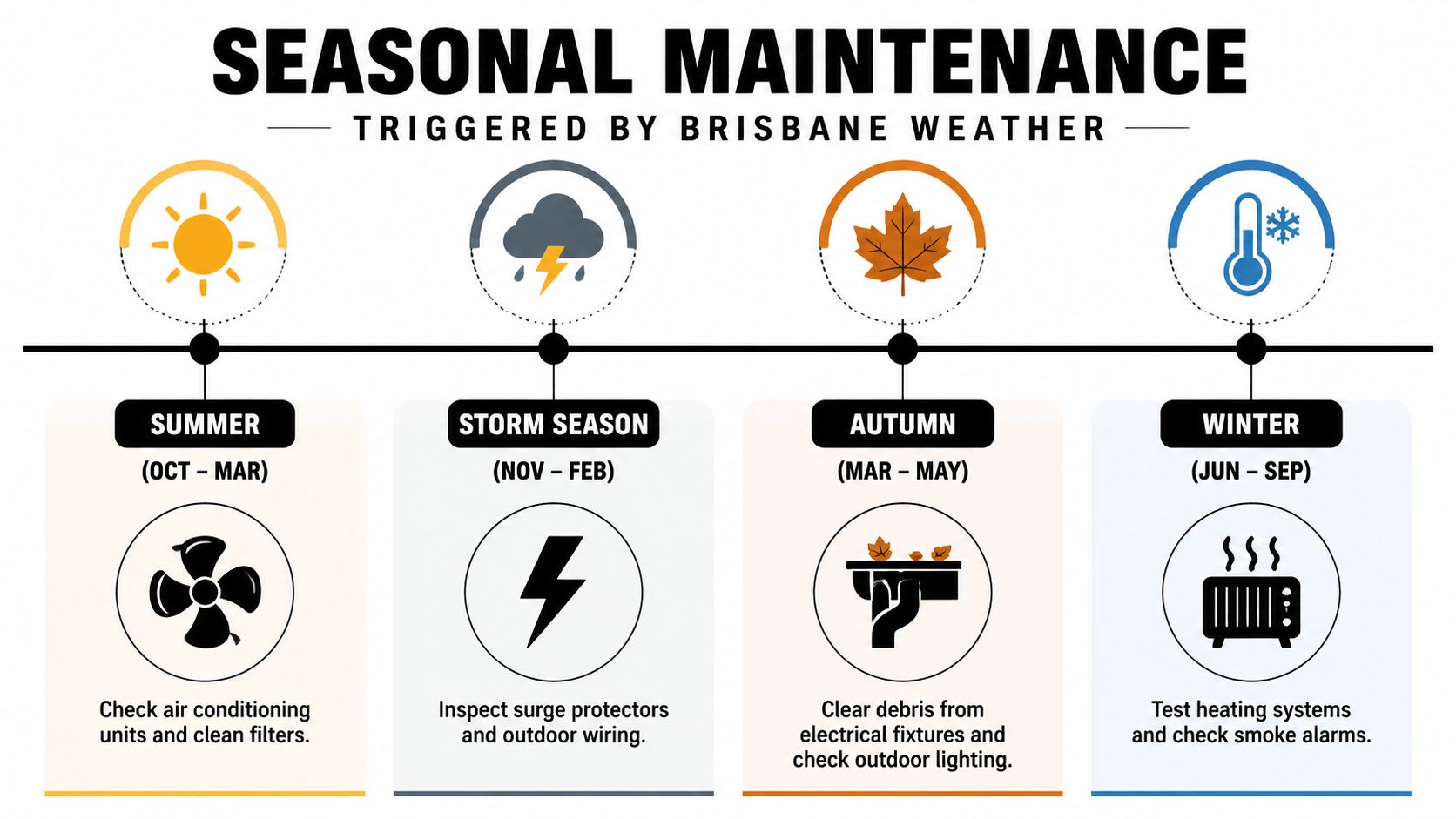
Autumn is a useful point for reviewing moisture ingress after the hotter and wetter months. In a character home in Paddington, that may mean roof drainage and older wiring. In a Newstead apartment, it may mean balcony fittings, air-conditioning equipment, and shared-access coordination.
A schedule works only when someone owns each task. Start with a property register that lists every smoke alarm, switchboard, safety switch, ceiling fan, air-conditioning unit, hot-water system, outdoor outlet, and landlord-supplied appliance. Record the location, installation or replacement history where known, last service date, next due date, responsible person, and supporting documents.
Then create three calendar layers:
A property management platform can handle reminders, but a shared spreadsheet works if it records the same information consistently. Send tenants a courtesy notice two weeks before planned access, explain what the tradesperson will inspect, and document the outcome with photographs, invoices, certificates, and a short completion note.
| Frequency | Task | Responsible Party | Estimated Cost (AUD) |
|---|---|---|---|
| Monthly | Visual review of accessible electrical warning signs and tenant-reported defects | Property manager or landlord, with electrician escalation | Obtain a property-specific quote |
| Quarterly | Outdoor outlets, visible cabling, drainage around electrical areas, and storm-related condition review | Property manager, landlord, or licensed electrician where testing is required | Obtain a property-specific quote |
| Biannual | HVAC servicing, gutter and downpipe work, moisture review, and seasonal exterior inspection | Relevant licensed trade | Obtain a property-specific quote |
| Annual | Smoke alarm compliance work, broader electrical condition review, and records audit | Licensed electrician and property manager | Obtain a property-specific quote |
| Scheduled plumbing cycle | Preventative plumbing checks across rental or managed assets | Licensed plumber | Obtain a property-specific quote |
For plumbing and broader building services, a resource such as JMJ Plumbing commercial maintenance can help managers think in terms of planned service intervals rather than isolated callouts. The same principle applies to electrical work. A written electrical maintenance plan should assign responsibility instead of assuming someone else is watching the date.
Reactive maintenance feels cheaper because the cost appears only when something breaks. The invoice, however, often includes urgent attendance, fault-finding, restricted access, secondary damage, and the time spent arranging a second repair.
A scheduled safety switch test or replacement can be planned around access and other work. An emergency fault during a storm may require immediate isolation, additional investigation, and a return visit. The trade-off isn't just the price of the component. It's the difference between controlled work and a safety problem that has already interrupted the tenancy.
The same logic applies to air-conditioning circuits, switchboards, and external fittings. A landlord who records abnormal heat, corrosion, nuisance tripping, or water entry can arrange rectification before the defect affects other equipment or the tenant's ability to use the property. That doesn't guarantee a low repair bill, but it reduces avoidable surprises and creates a clearer maintenance history.
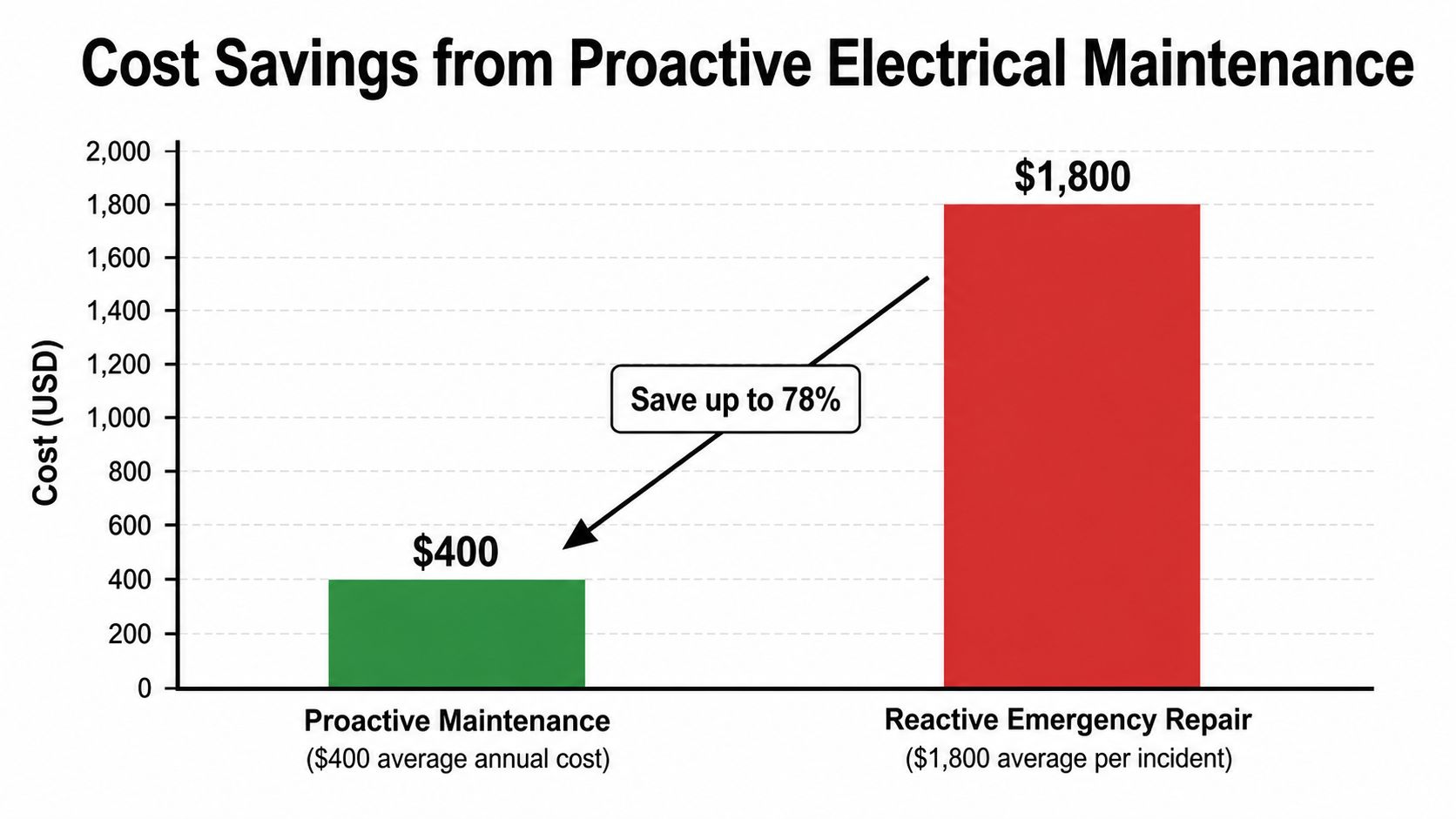
The useful comparison: Planned maintenance buys control over timing, access, scope, and documentation. Emergency work gives you control over very little.
A proper cost model should use the property's actual history rather than a made-up average. Review invoices across the ownership period, separate emergency work from planned work, and note whether each callout followed a missed inspection, a weather event, or a tenant report that wasn't acted on. Include gutters, plumbing, HVAC, smoke alarms, and external repairs, not just electrician invoices.
Proactive maintenance can also protect tenancy continuity. Prompt repairs make it easier for tenants to report defects early, while complete records help demonstrate that the owner responded responsibly. Those outcomes matter even when no immediate saving appears on a single invoice.
The most expensive mistake is treating “not broken” as “safe”. Flickering lights, warm switches, buzzing outlets, repeated safety-switch trips, damp around fittings, and damaged outdoor covers are warning signs. They should be recorded, assessed, and repaired, not hidden until the next lease renewal.
Landlords also make the mistake of assuming a property manager's software removes their responsibility. A manager can coordinate inspections and trades, but the owner should still review completed work orders, certificates, invoices, and upcoming deadlines. If the records are incomplete, the landlord may struggle to show what happened and when.
Maintenance responsibilities outside electrical work create similar confusion. For example, landlords comparing different legal systems may find the explanation of who pays for pest control in Miami useful as a reminder that responsibility depends on the relevant jurisdiction, lease terms, and cause of the problem. Brisbane owners should rely on Queensland requirements and their own documented tenancy processes, not overseas assumptions.
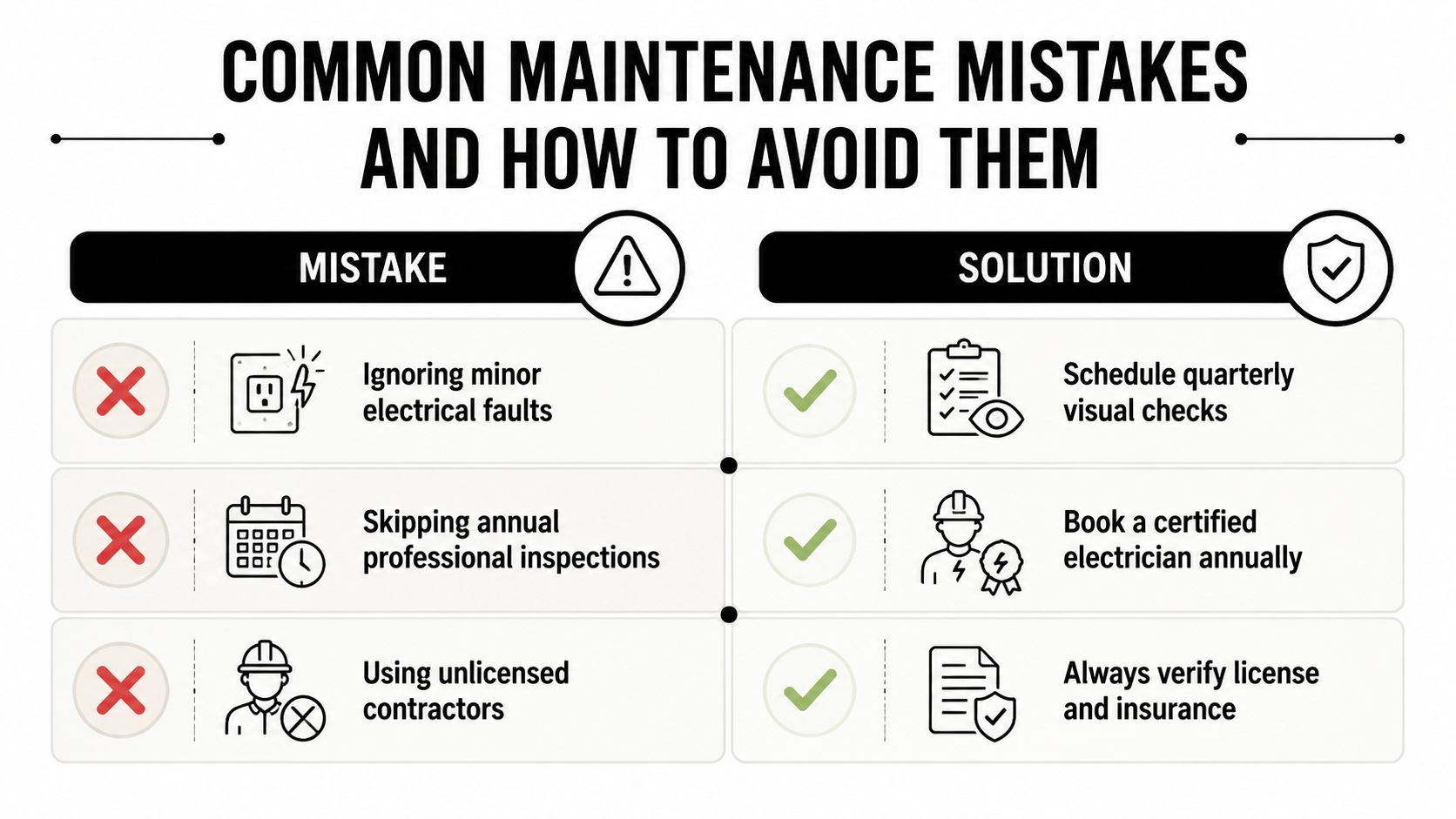
Run a short quarterly audit:
A schedule that isn't reviewed is only a list. It won't protect the property until someone acts on it.
DLG Electrical helps Brisbane landlords and property managers organise electrical maintenance, smoke alarm compliance, fault repairs, and scheduled inspections around tenancy and weather risks. Visit DLG Electrical to discuss the property, request a quote, and put the next required checks on a practical maintenance calendar.

Master Electrician with over 30 years of experience. Founded DLG Electrical in 2005 after international project work including electrical installations at Stamford Bridge Stadium, London(Home of Chelsea FC).

Local Electricians that can fix all Electric Hot water Systems.
Motion sensor lights are a versatile addition to any home, offering nu
