83 Jean St, Grange QLD 4051
Mon-Fri 07:30 AM - 04:00 PM - Sat - 8:00 - 12 - Sunday Closed
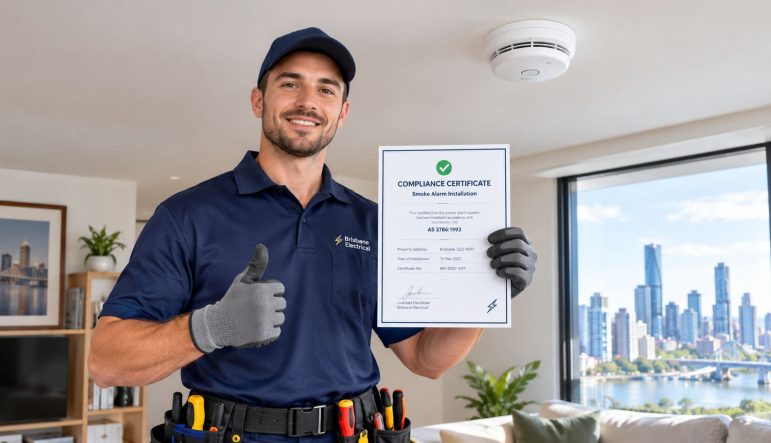
You're preparing a Brisbane property for sale, arranging a new tenancy, or checking a rental before the next inspection. Then an agent asks for a smoke alarm compliance certificate, and a simple question follows: does the certificate itself make the property compliant, or does it only record work that's already been completed?
That distinction matters. In Queensland, the issue is the alarm system installed in the dwelling. The document is useful because it records what a licensed professional inspected, when the inspection occurred, and whether the alarms met the required technical conditions at that time. It can support a sale, lease, property-management file, or renovation handover, but it isn't a substitute for compliant alarms.
This guide explains the certificate in practical terms, including Queensland's deadlines, the photoelectric and interconnected standard, what an electrician should inspect, why certificates can be requested during a transaction, and what to do if the existing system fails. For a broader overview of Brisbane smoke alarm obligations, see this Brisbane smoke alarm compliance guide.
A Brisbane landlord might receive a renewal request from a property manager. A homeowner might be organising photography and contracts before listing a house. A renovator might have removed a ceiling or changed room layouts and suddenly need to confirm whether the existing alarms still suit the property.
In each situation, the same practical concern appears: are the alarms compliant, and can that be demonstrated clearly?
Queensland's smoke alarm reforms created a phased compliance timeline. Rental properties and homes being sold or transferred needed to comply by 1 January 2022, while other Queensland dwellings, including owner-occupied homes, must comply by 1 January 2027. The Queensland RTA explanation of smoke alarm laws confirms why these dates matter for Brisbane property owners.
The certificate can feel like paperwork added to an already busy property transaction. It's more useful to think of it as a dated record of the system behind the paperwork. If an agent requests it, they're generally looking for evidence that the alarms have been inspected or serviced, rather than asking for a generic document unrelated to the property.
Practical perspective: A certificate can support your compliance file, but it can't turn an unsuitable alarm system into a compliant one.
By the end of this guide, you'll be able to check whether your property is likely to need an upgrade, understand what information should appear on the certificate, and prepare for an inspection without guessing. The process is manageable when you treat the alarms as a connected life-safety system rather than separate battery-powered devices.
A smoke alarm compliance certificate is dated evidence that a particular property's smoke alarm system was inspected against Queensland's requirements. It should relate to the dwelling named on the document and identify the person or business responsible for the inspection.
A useful analogy is a roadworthy inspection. The roadworthy document records the condition of a vehicle at the time it was checked. It doesn't guarantee that the vehicle will remain faultless indefinitely, and it doesn't repair a failed brake or worn tyre. A smoke alarm certificate works in a similar way. It records the outcome of an inspection, while the alarms themselves provide the protection.
The document should make the inspection understandable to someone who wasn't present. At a minimum, ask whether it records:
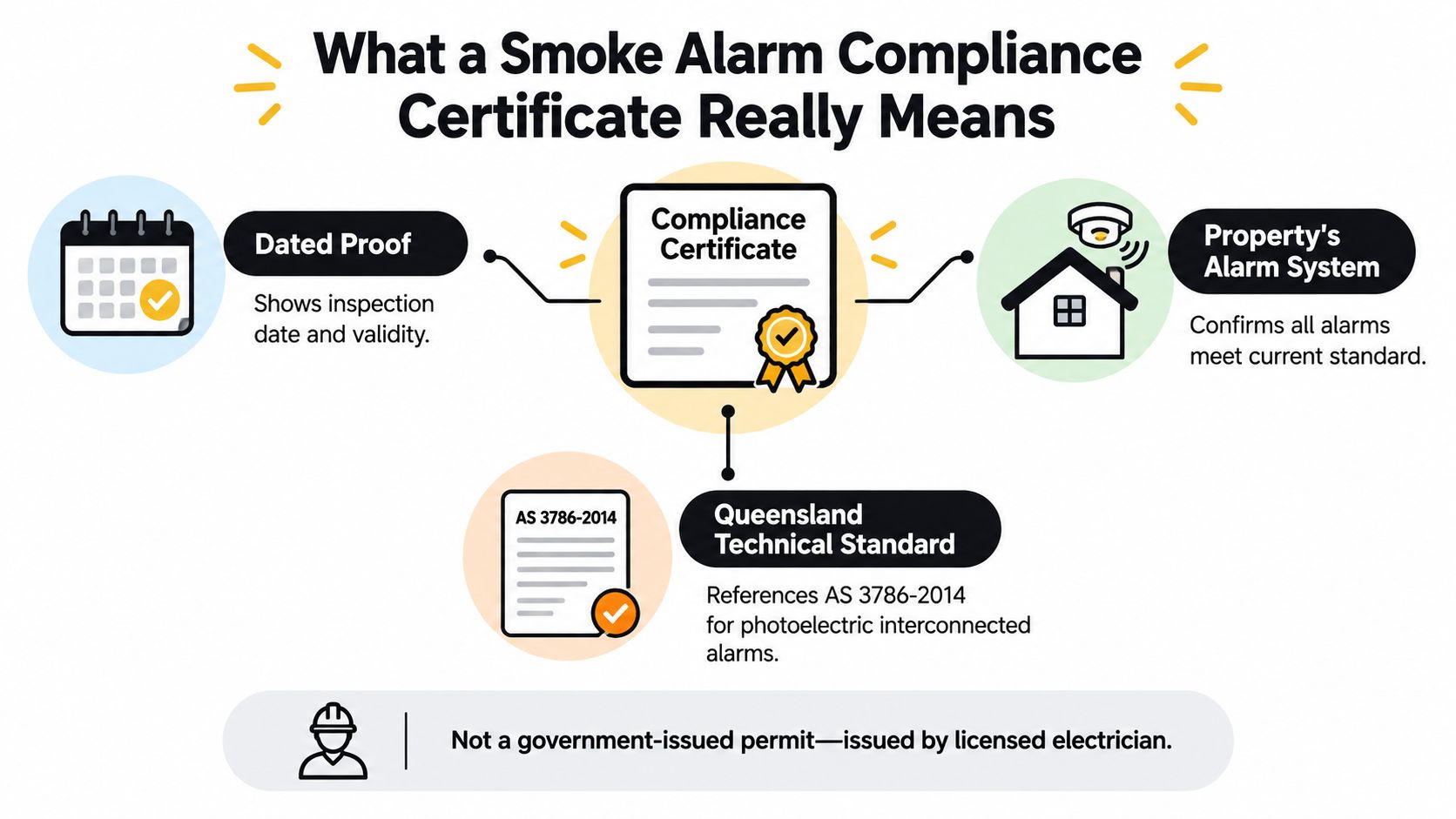
The certificate isn't automatically a government-issued permit, building approval, or permanent guarantee. Queensland's fire authority explains that a real estate agent may request a “certificate of compliance” as proof of service, but the certificate isn't itself a standalone legal obligation in every transaction. The legal focus remains on whether the dwelling has the required alarm system.
That's why a certificate issued for an old installation may not be enough if the property has since been altered, alarms have passed their service life, or a device has stopped working. A professional should assess the actual system before issuing documentation.
For a buyer, landlord or property manager, the best certificate is specific rather than vague. It should help answer, “What was checked, where, and against which standard?” If it only says “smoke alarms tested” without identifying the alarms, locations or result, ask the provider what supporting inspection information is available.
Queensland's rules are easier to understand when separated into two parts. The first is the legal duty to have a compliant smoke alarm system. The second is the practical use of documentation to demonstrate that the duty has been met.
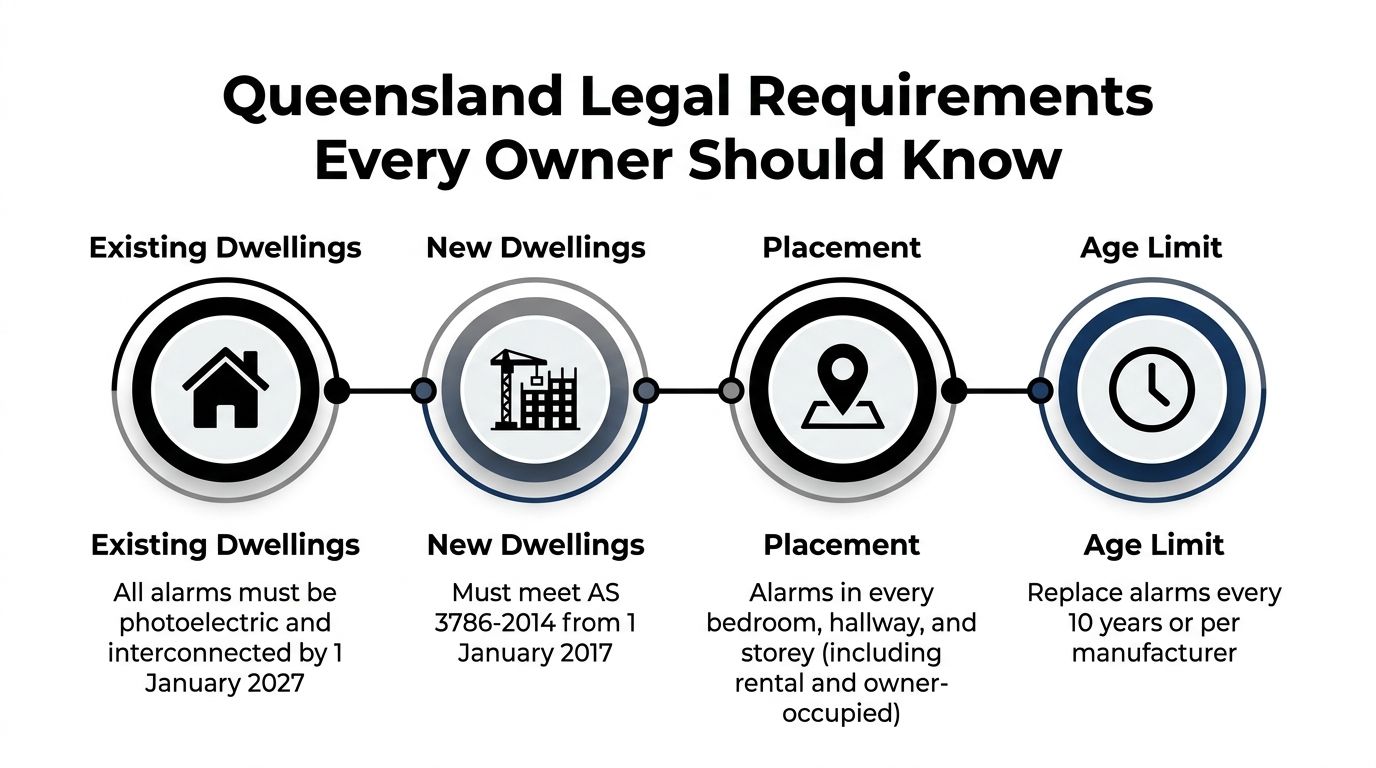
The phased timeline is the starting point. Rental properties and homes being sold or transferred had to comply by 1 January 2022, while every other Queensland dwelling, including owner-occupied homes, must comply by 1 January 2027, as outlined by the Queensland Residential Tenancies Authority.
The Queensland Fire Department smoke alarm requirements identify the core technical conditions. Compliant alarms must be:
Placement also matters. Queensland requirements cover alarms on each storey and in bedrooms and hallways, subject to the applicable rules for the dwelling. An alarm sitting in a convenient central position doesn't automatically satisfy a requirement for a bedroom or hallway.
Alarm age matters too. The Queensland Fire Department legislation information states that alarms must be under 10 years old, correctly located and working when tested. The manufacture date or replacement information should therefore be checked during an inspection, not assumed from the appearance of the casing.
An agent may request a certificate because a file needs clear evidence that a service or installation occurred. That request doesn't necessarily mean Queensland law requires a standalone certificate for every sale. It means the agent, owner, buyer or manager wants documentation they can retain and provide during due diligence.
The compliance requirements also extend beyond conventional houses. Queensland's reforms apply to caravans and motorised caravans from 1 July 2024, with full application to registered caravans and motorhomes from January 2027, according to the Queensland Fire Department legislation material. Owners of these vehicles should confirm the requirements relevant to their specific registration and use.
The person inspecting the system needs to understand more than how to press a test button. A compliant installation involves alarm technology, placement, age, electrical connections and interconnection testing. That's why a licensed electrician is the appropriate professional to assess and document an interconnected system.
A handyman may be able to perform limited maintenance in some circumstances, such as replacing a battery-operated unit where no electrical work is involved. That doesn't automatically mean they're qualified to assess a hardwired network, alter wiring, install interconnected alarms or issue documentation that an agent can rely on.
| Provider or approach | What it may handle | Main limitation |
|---|---|---|
| Homeowner self-check | Pressing test buttons, checking visible labels and noting locations | Doesn't provide independent certification or verify the whole interconnected system |
| General handyman | Some basic maintenance or replacement work | May not be authorised or equipped for electrical and interconnection assessment |
| Licensed electrician | Technical inspection, installation, wiring, interconnection testing and documentation | The provider still needs relevant experience and should explain the inspection scope |
| Fire authority information | Explains Queensland requirements and technical expectations | Doesn't replace a property-specific inspection and certificate |
Before booking, ask the electrician what the certificate will identify. A useful document should connect the result to the property, the inspection date, the alarm configuration and the test outcome. It should also identify the licensed person or business responsible for the work.
Check the provider's licence details and insurance, and ask whether they regularly work with AS 3786-2014 photoelectric interconnected systems. If the installation is hardwired, ask whether the inspection includes the electrical connections and whether any upgrade work will be quoted separately.
DLG Electrical is one Brisbane provider that offers smoke alarm assessment, compliant product supply, installation and certification support. When comparing electricians, you can also review electrical contractor registration information so you understand why registration and licensing matter.
Don't sign a blank certificate or accept a document that doesn't state what was inspected. Certification should follow the inspection, not replace it.
A well-organised inspection follows a clear sequence. You don't need to dismantle alarms yourself, but you can make the visit quicker by providing access to every bedroom, hallway, storey, roof space or service area connected with the system.
When booking, provide the full address, property type and reason for the inspection. Tell the electrician whether the property is being sold, leased, renovated or reviewed as part of routine maintenance. Mention known issues, such as alarms that chirp, missing units, recent ceiling work or a previous failed inspection.
On the day, clear furniture or stored items that block access. Keep power available where the system is hardwired, and make sure tenants or occupants know that the electrician needs to enter bedrooms and other relevant areas.
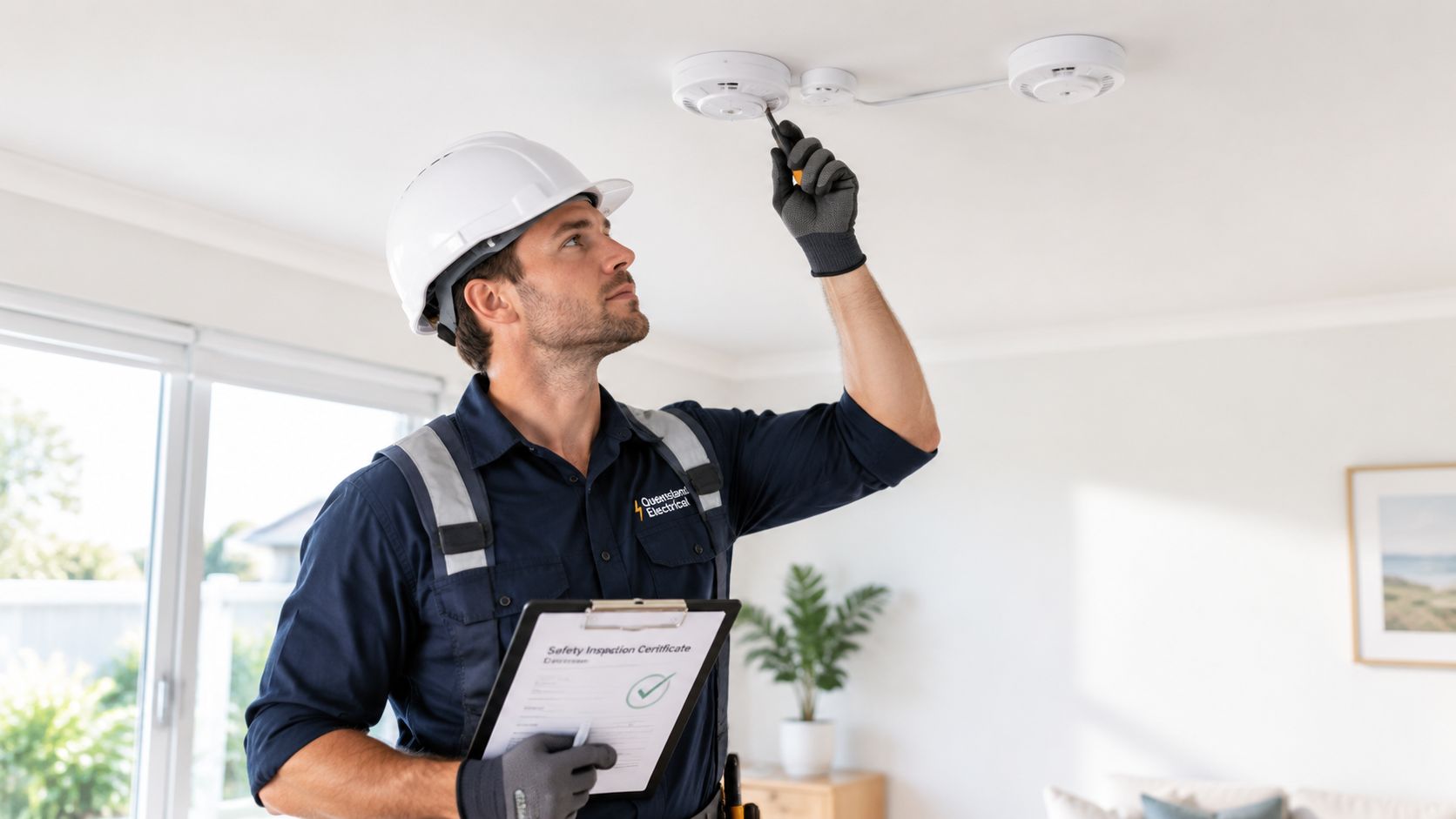
The electrician should identify the alarms and inspect their labels, type, age and condition. They'll check that the devices are photoelectric, marked to AS 3786-2014, free from ionisation sensors and located where Queensland requirements apply.
Interconnection testing is a separate practical check. Activating one alarm should demonstrate whether the other interconnected alarms respond as intended. A single alarm that sounds on its own may pass its local button test but still fail the system-level requirement.
The electrician should also check whether alarms are within the permitted age, correctly positioned and free from obvious damage or contamination. Testing should record whether the system operates, rather than relying on a visual inspection alone.
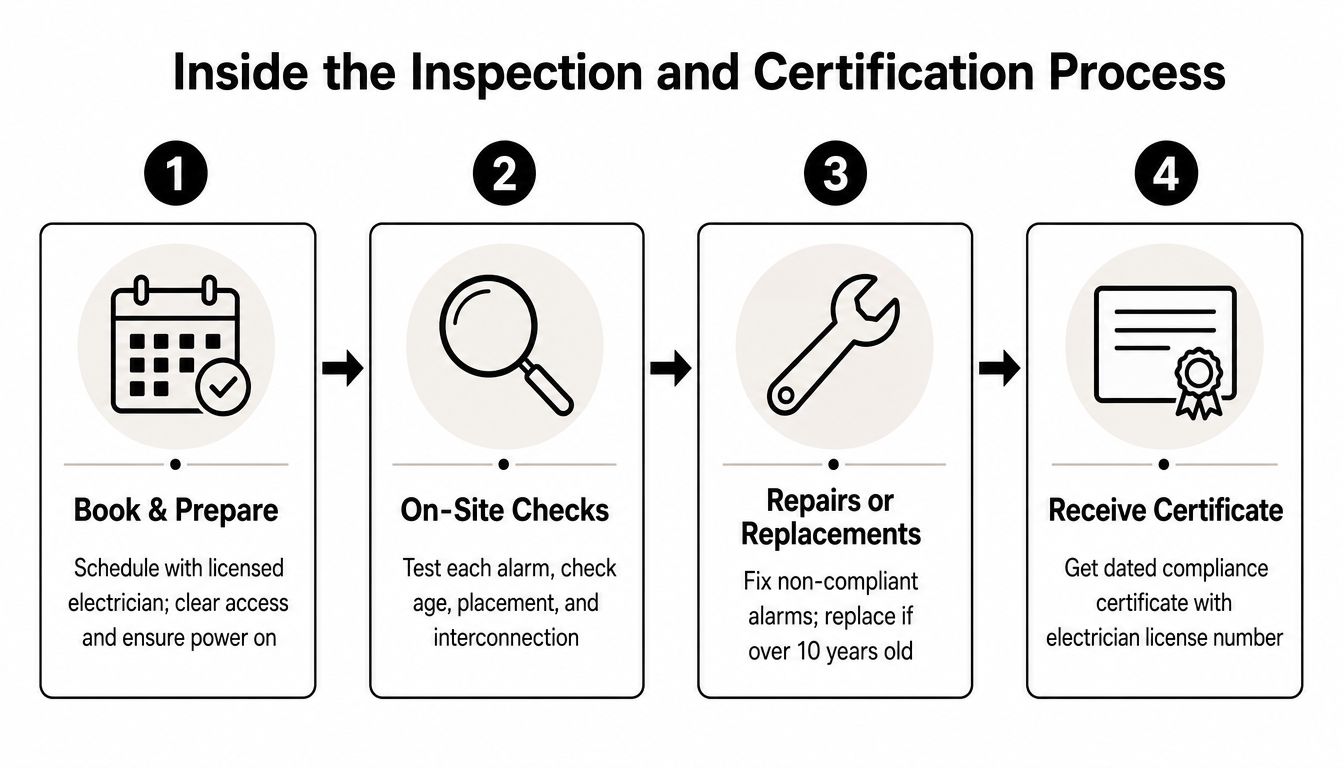
If the inspection finds a non-compliant alarm, the electrician should explain the correction. That might involve replacing an unsuitable unit, installing additional alarms, repairing interconnection wiring or adjusting a location. Don't assume a battery replacement will resolve a system that uses the wrong alarm type or lacks interconnection.
For readers comparing broader fire safety arrangements, this fire detection system guide provides useful context about how detection systems can fit within a wider safety plan. It shouldn't replace Queensland-specific advice for a residential smoke alarm installation.
Once the system passes, request a dated certificate that identifies the property, inspection scope, alarm status and licensed provider. Keep it with installation invoices, product information and photographs of labels where available. A detailed electrical inspection report can also help maintain a broader property safety record, although it isn't the same document as a smoke alarm compliance certificate.
The price and duration of smoke alarm work depend on the property, not just the certificate. A small dwelling with accessible alarms may need a straightforward inspection. A larger or altered property may require extra alarms, new interconnection wiring, ceiling access, replacements or a return visit.
Ask for the quote to separate inspection, repair or installation work, replacement products, and re-testing or documentation. That makes it easier to compare providers and prevents a low inspection quote from hiding the work needed to achieve compliance.
The most common problems are practical:
Avoidable delay: Don't book the inspection immediately before a settlement, tenancy start or handover if you already suspect the alarms are old or disconnected.
| Current situation | Likely action needed | Certificate outcome |
|---|---|---|
| Photoelectric alarms are correctly located, interconnected, within age limits and pass testing | Record the inspection and test results | Certificate can be issued if the provider confirms the full system complies |
| Alarms work individually but aren't interconnected | Repair the interconnection or replace the system with compatible interconnected units | Certificate waits until the system-level test passes |
| One or more alarms use unsuitable technology | Replace the affected alarms with compliant photoelectric units | Certificate depends on the upgraded devices and complete system test |
| Alarms are over the permitted age | Replace the outdated alarms and test the replacements | Certificate can follow successful inspection |
| Locations don't cover required bedrooms, hallways or storeys | Add or relocate alarms as required | Certificate follows verification of the revised layout |
| Access is unavailable or areas are blocked | Arrange access and a complete inspection | No reliable whole-property result until all relevant areas are checked |
A certificate records the condition found during the inspection. It doesn't prevent later faults, tenant interference, renovation changes or alarm ageing, so landlords and managers should keep the system in their regular maintenance schedule.
Start with the property's status. If it's rented or being sold or transferred, Queensland's earlier compliance milestone applies. If it's an owner-occupied dwelling outside those categories, plan around the 1 January 2027 statewide deadline for other Queensland dwellings, as set out in the RTA's Queensland smoke alarm guidance.
Then complete a simple pre-booking check:
Don't replace alarms at random if the property has a hardwired system. Compatible devices, wiring condition and interconnection behaviour all need to work together. A licensed electrician can identify whether the existing network can be upgraded or whether a different installation approach is required.
For landlords and property managers, give the certificate to the relevant property file after the inspection and note the inspection date. For sellers, provide it to the agent when requested and retain your own copy with the transaction records.
The compliance gap in Queensland remains substantial. An ABC report published in 2026 said 70 to 80 percent of owner-occupied Queensland homes still didn't comply, with around 1.2 million properties needing upgrades before the 2027 deadline. A Queensland Fire Department community-insights summary reported a statewide interconnected installation rate of 52 percent, with regional results ranging from 43 percent in Innisfail to 61 percent in Rockhampton. These figures are cited in the ABC report on Queensland's smoke alarm deadline. For a Brisbane owner, the sensible response is to arrange an assessment before demand and upgrade work become urgent.
DLG Electrical provides Brisbane smoke alarm assessments, compliant alarm supply, installation and certification support for homeowners, landlords and property managers. Visit DLG Electrical to request a free quote and arrange a practical compliance inspection during business hours.

Master Electrician with over 30 years of experience. Founded DLG Electrical in 2005 after international project work including electrical installations at Stamford Bridge Stadium, London(Home of Chelsea FC).

Local Electricians that can fix all Electric Hot water Systems.
Motion sensor lights are a versatile addition to any home, offering nu
