83 Jean St, Grange QLD 4051
Mon-Fri 07:30 AM - 04:00 PM - Sat - 8:00 - 12 - Sunday Closed
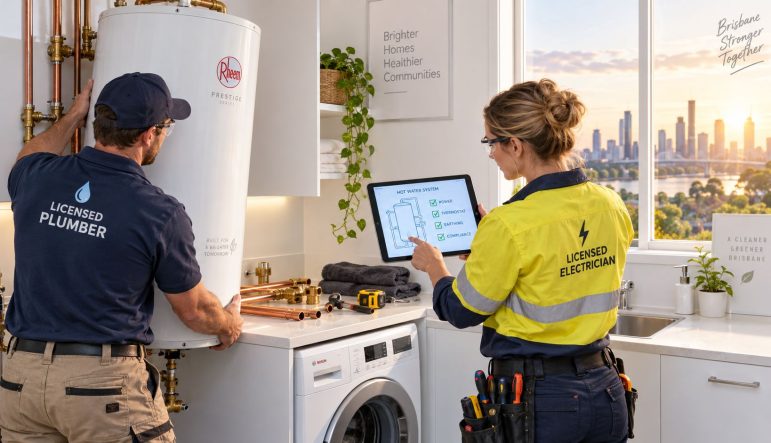
At 6am in Carindale, a cold shower usually feels like a sudden emergency. The cylinder in the laundry is silent, the breaker may have tripped overnight, and everyone in the house wants an answer before work and school. The first decision is whether the fault needs a repair or whether the tank has reached the point where replacement makes better financial sense.
That decision controls the rest of the invoice. A failed element, thermostat or relief valve may be serviceable, while a leaking vessel, badly corroded cylinder or unsafe electrical connection can justify a complete changeover. Brisbane replacement pricing commonly sits between $1,400 and $4,500 installed, depending heavily on the technology selected, as outlined in this Queensland hot water replacement cost guide.
The cheapest quote isn't always the cheapest job. Tariff arrangements, switchboard condition, access to the cylinder and the pipework behind it can all appear as additions after the headline price. This guide walks through the cost of hot water cylinder replacement in Brisbane, so you can compare quotes calmly rather than making a rushed decision after a failed shower.
A cold shower doesn't automatically mean the cylinder needs replacing. Start by checking whether the home has power, whether the hot-water circuit has tripped and whether the unit shows visible leaking. Don't remove covers or work inside the cylinder yourself. An electric storage system combines water, mains voltage and heating components, so diagnosis belongs with a licensed professional.
Age matters more than the symptom alone. An older cylinder with a failed element may still be repairable, but a vessel that has begun leaking from the tank itself can't be restored by changing a thermostat. Corrosion around the base, rusty hot water, repeated breaker trips and noticeably reduced hot-water recovery all deserve prompt inspection. A leak can damage flooring, cabinetry and wall framing, particularly when the cylinder sits inside a laundry cupboard with limited drainage.
Practical rule: A repair makes more sense when the tank is sound and the failed component is isolated. Replacement deserves serious consideration when the vessel, insulation and several working parts are ageing together.
Ask the technician to identify the failed component, not state that the system is old. The useful questions are straightforward:
A like-for-like electric replacement is often the least disruptive option because the existing circuit, pipe route and location may remain suitable. That doesn't mean every existing installation can be copied. The electrician still needs to check protection, cable condition, isolation, earthing and the tariff arrangement before reconnecting a new unit.
Leaving a failing cylinder until the weekend can turn a planned job into an emergency callout, water extraction problem or insurance question. Rushing into the lowest written figure can create a different problem if the quote excludes a safety switch, valves, disposal or switchboard work. The right objective is a clear scope, a compliant installation and a system that suits how your household uses hot water.
A hot water cylinder is an insulated storage tank that holds heated water until a tap or shower draws it. The system reheats the stored supply through electricity, gas, a heat pump or solar energy with an electric boost. Your quote should identify not only the cylinder brand and capacity, but also the heat source, control arrangement, valves and electrical or gas connection required.
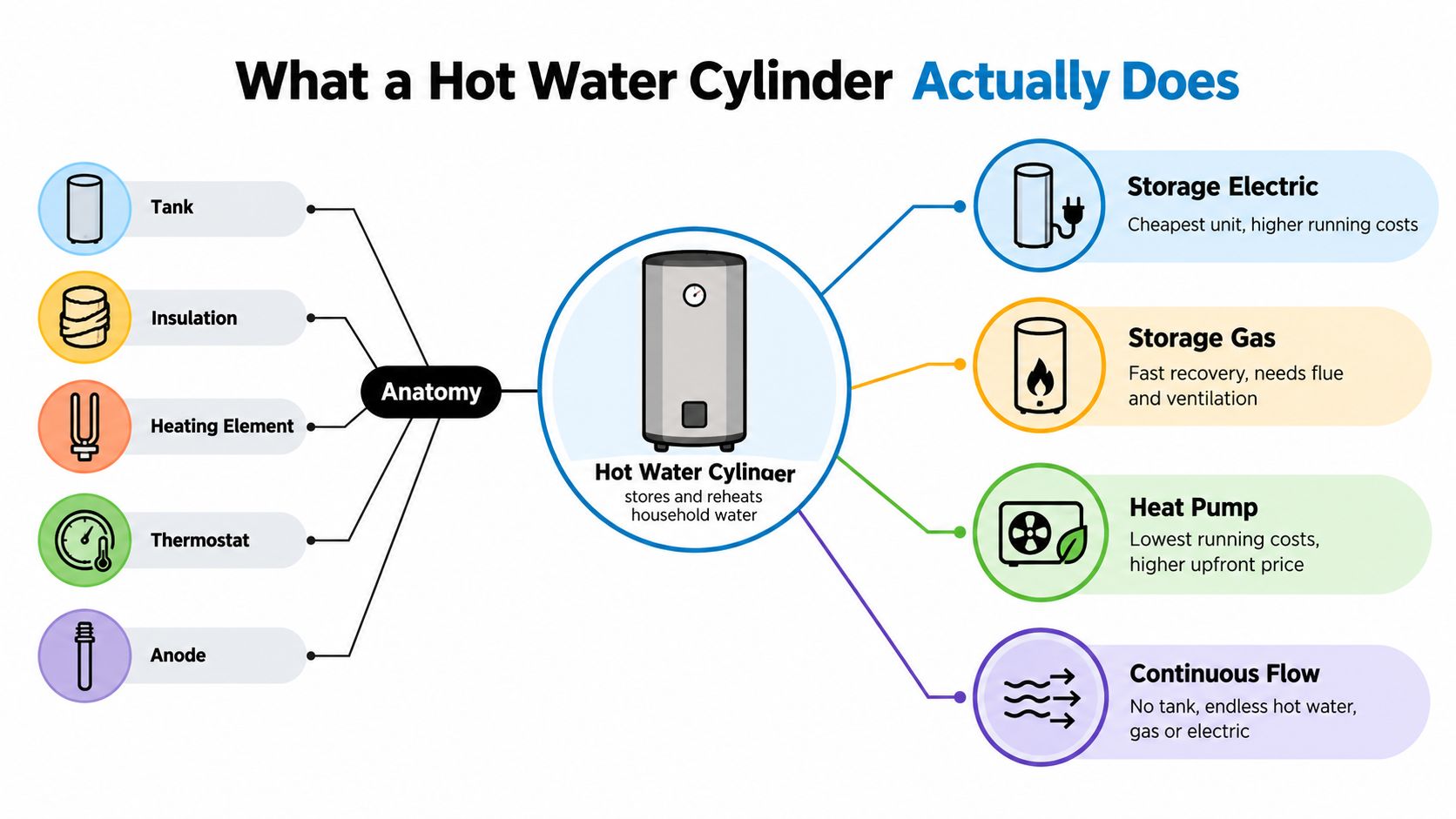
Electric storage uses an element inside the tank. The cylinder heats water during its controlled operating period, often through an economy tariff, or at other times under the property's electricity arrangement. It generally has the simplest replacement pathway when the existing wiring and plumbing are suitable, although inefficient operation can make running costs less attractive.
Gas storage heats water in a tank using a gas burner. It needs appropriate gas pipework, ventilation and flue arrangements, so a licensed gas fitter is part of the installation. Gas storage can suit homes already set up for gas, but converting from an electric cylinder adds more than a new tank.
Continuous-flow gas doesn't store a large volume in a cylinder. It heats water as it passes through the unit, which can reduce standby losses and provide ongoing supply when correctly sized. The installation still depends on gas capacity, flue location, water pressure and electrical controls.
Heat pump systems use an outdoor fan and refrigeration circuit to move heat from ambient air into stored water. They cost more to install than a basic electric cylinder, but their operating profile can be substantially more efficient. Eligible heat pumps can attract federal Small-scale Technology Certificates, subject to the current eligibility rules and installation requirements.
Solar hot water uses roof-mounted collectors with an electric or gas boost for periods when solar input isn't enough. Roof orientation, shading, structural access and the location of the storage tank all influence the installation. A solar system isn't an electric cylinder with panels added to the quote.
The tank may be vitreous enamel or stainless steel. Inside or attached to it, the anode helps protect the vessel, the element supplies heat in an electric unit, and the thermostat controls temperature. Outside the tank, the pressure relief valve protects against excessive pressure, while a tempering valve manages the temperature delivered to household outlets.
The system also needs a dedicated electrical circuit, isolation equipment and suitable pipework. A change in tank size, heating method or tariff may require different controls or alterations. Understanding these components makes it easier to see why a “tank-only” price doesn't represent a finished, tested installation.
A proper quote separates the physical equipment from the work required to install it. Australian storage cylinders must be installed to AS 3500.4, and Queensland jobs commonly include valves, isolation, tempering arrangements and licensed labour. The Australian hot water replacement cost reference also explains why standard replacement pricing varies with system type, labour and site conditions.
Parts include the cylinder, pressure relief valve, tempering valve, isolation valve, pipe fittings and flexible connectors. A basic tank-only figure can look attractive until the installer adds components that should have been included in a compliant changeover.
Labour covers disconnection, draining, removal, positioning, plumbing, electrical connection, testing and commissioning. A simple ground-level swap is different from work involving a gas line, roof access, difficult lifting or a damaged circuit.
Disposal covers removing the old unit and taking it for recycling or appropriate disposal. Ask whether this is included. Metal recovery may reduce the disposal burden, but you should still see a clear allowance rather than assuming the old cylinder will disappear at no charge.
Compliance covers the required licensed work, testing and paperwork. The quote should explain any electrical notification, plumbing documentation, gas certification or other approval relevant to the proposed system.
| Line Item | Typical Brisbane Range (AUD) |
|---|---|
| Cylinder and core components | A$900 to A$2,800 |
| Labour for a straightforward changeover | A$600 to A$1,400 |
| Disposal and recycling | A$80 to A$180 |
| Compliance, testing and documentation | Included or itemised according to scope |
Those component ranges are practitioner-style budgeting figures from the brief, but the verified Queensland and national references place complete replacement pricing across a wider technology-led band. A Queensland installed estimate runs from $1,400 to $4,500, while national standard replacement references sit around $1,200 to $4,500, with one guide placing a standard installed replacement near $2,800. See the DLG Electrical guide to electric hot water system replacement costs when comparing like-for-like electric work.
Read the exclusions carefully: “Installed” should tell you whether the price includes valves, disposal, electrical protection, access equipment, permits and final testing.
A quote that presents one total isn't automatically poor, but it gives you less visibility. Before accepting it, ask for the exact model, capacity, location, warranty, inclusions and exclusions. If you want additional installation options to compare, you can browse water heater install pros while still checking that each provider is properly licensed for the work required.
Technology choice creates the largest difference in the replacement budget. A standard electric cylinder usually needs a tank, plumbing connections and an electrical connection. Gas, heat pump and solar systems introduce extra equipment, controls, location requirements and commissioning decisions.
The verified Queensland guide places typical installed pricing at $1,400 to $2,200 for electric storage, $1,600 to $2,500 for gas storage, $1,800 to $2,800 for continuous-flow gas, $2,500 to $4,000 for heat pumps, and $3,000 to $4,500 for solar systems. These figures are useful starting points, not promises, because a difficult Brisbane site can move the final quotation outside the basic range.
| System Type | Unit Price (AUD) | Installed Range (AUD) | Typical Extras |
|---|---|---|---|
| Electric storage | Varies by capacity and model | $1,400 to $2,200 | Valves, element, thermostat, circuit or tariff controls |
| Gas storage | Varies by capacity and model | $1,600 to $2,500 | Gas fitting, flue, ventilation and commissioning |
| Continuous-flow gas | Varies by output and model | $1,800 to $2,800 | Gas capacity, flue route, electrical point and water-pressure checks |
| Heat pump | Varies by model and eligibility | $2,500 to $4,000 | Outdoor unit, condensate management, controls and possible electrical work |
| Solar with boost | Varies by collector and tank arrangement | $3,000 to $4,500 | Roof access, collectors, pump or controller, boost connection and approvals |
Electric storage sits at the lower end when the home already has a suitable circuit, sound pipework and an accessible cylinder position. The quote can rise if the replacement requires a new anode, tempering valve, safety switch, isolation arrangement or tariff-compatible timer.
Gas systems carry the cost of licensed gas work and safe flue discharge. A home that already has suitable gas infrastructure may avoid some alterations, while an electric-to-gas changeover needs a broader assessment. Continuous-flow units also need adequate gas delivery and correct sizing, otherwise the advertised “endless” supply won't perform as expected.
Heat pumps have a higher purchase and installation cost, but eligible systems may qualify for federal STCs. The DLG Electrical overview of new hot water system costs is useful for framing the wider choice between a basic replacement and a system change.
Solar has the greatest dependence on roof conditions. Panels, pipe routes, tank placement and electric boosting all matter. STCs may apply to eligible solar and heat-pump equipment, but the installer should show the assumed certificate value and explain what happens if eligibility or market conditions change.
Two homes can need the same nominal cylinder and receive very different quotes. The difference usually comes from the site, not from a mysterious labour loading. Access, switchboard condition, plumbing alterations and the property's electricity arrangement determine how much work sits around the tank.
A ground-level laundry with a clear driveway is the straightforward example. The installer can isolate water and power, drain the cylinder, move the replacement into position and test the system without special lifting arrangements. A rooftop cylinder on a Queenslander presents a different job. Stairs, narrow passages, roof access, lifting and extra safety controls can add substantial labour even when the new unit itself costs the same.
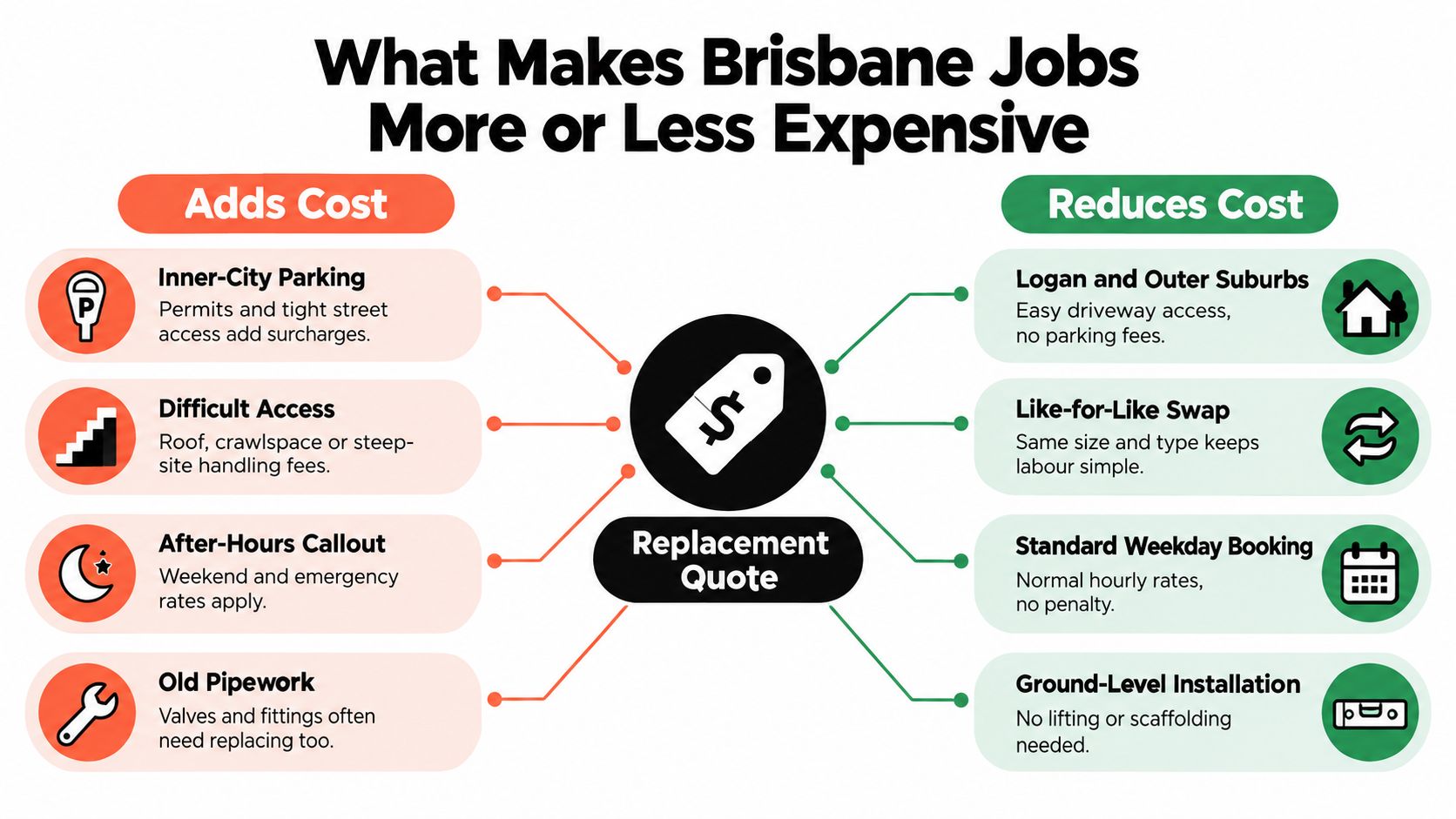
The switchboard deserves attention before anyone promises a final price. Older boards may have limited space, outdated protection, deteriorated cable or no suitable safety switch for the hot-water circuit. A replacement can expose those issues because the electrician must connect the new appliance safely, not reuse every existing component.
Tariff arrangements can also change the scope. Economy hot-water tariffs and other controlled-load setups use metering and switching arrangements that need to match the replacement system. If the homeowner wants a different operating schedule or a change in tariff structure, the electrician may need to coordinate the electrical work and the relevant network process.
Queensland residential customers on hot-water economy tariffs experienced July 2025 increases of about 2.1%, or roughly $47 a year, for larger hot-water systems on Tariff 31, and about 1.6%, or around $34 for smaller systems and pool pumps on Tariff 33, according to Ergon Energy's July price-change information. Those changes don't decide the replacement by themselves, but they make tariff choice and running cost more relevant when comparing an ageing electric cylinder with a more efficient option.
Old copper, galvanised or mixed pipework may need new fittings. A seized isolation valve, failed relief valve, inadequate drain route or damaged tempering valve can become apparent only after the old tank is disconnected. Brisbane weather adds practical complications too. Roof work during heavy rain or storm activity may need to be rescheduled, while muddy access can slow an outdoor installation.
| Cost pressure | What the installer checks | Why it changes the quote |
|---|---|---|
| Tight inner-city access | Parking, stairs, lifting path | Handling and site time increase |
| Outer-suburban access | Driveway and travel requirements | Easier vehicle access may simplify handling |
| Old switchboard | Space, protection and cable condition | Extra electrical safety work may be required |
| Roof or elevated tank | Safe access and lifting method | Equipment and additional labour can be necessary |
| Existing pipework | Valves, materials and drain route | Fittings and alterations may be added |
Ask the installer to inspect the site before fixing the price. A photograph can help with an initial estimate, but it can't always reveal the condition of a switchboard, the route behind a cupboard or the actual roof access.
Start with diagnosis, not a catalogue. Many electricians apply a call-out that is waived if you proceed with the recommended replacement, while a standalone diagnostic visit may be charged separately. Get that arrangement in writing before booking, including whether the diagnosis fee is credited against labour, the equipment or the complete job.
A useful quote names the manufacturer, model, capacity, energy source and installation location. It also states whether the price includes:
Federal STCs can apply to eligible heat-pump systems, and they can also apply to eligible solar hot-water equipment. The Queensland incentive picture is more fragmented, with the residential hot-water rebate reported as closed in 2026, so don't allow a salesperson to present an assumed state rebate as guaranteed. Ask for the current eligibility basis and have any certificate discount shown clearly on the quote.
Budgeting advice: Compare the amount payable after confirmed incentives, not a large advertised rebate displayed before the installer checks your equipment and property.
Timing affects risk and convenience. A planned weekday booking is usually easier to organise than an emergency replacement during Brisbane's storm season, particularly where the cylinder sits on a roof or outside. Clearing the access route and combining related electrical work can also avoid repeat visits, provided the additional work is required.
Use the correct licensed trades for the job. An electric replacement or switchboard alteration requires a licensed electrician. A gas conversion also requires a licensed gas fitter, and solar work may involve plumbing, electrical and roof-related requirements. Verify Queensland licences and insurance, and be cautious with a quote that omits compliance, valves or disposal to appear cheaper.
The cleanest replacement starts before the cylinder fails completely. Shortlist two or three licensed Brisbane installers and ask each for a written, itemised quote. Give them the same information, including the current system type, cylinder location, visible symptoms, household demand and any electricity tariff details shown on your bill.
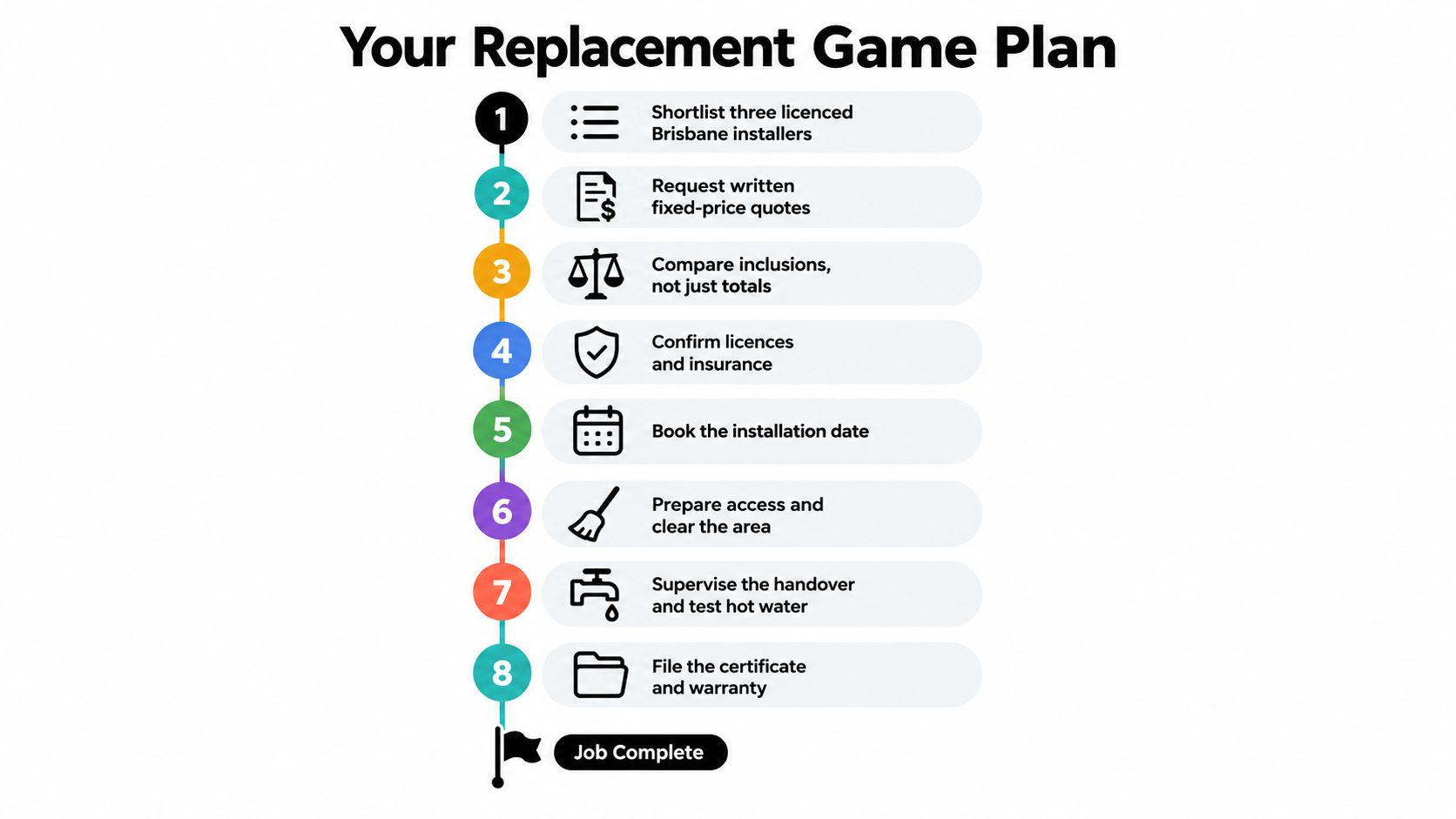
The final handover should include a leak check, hot-water test, relief-valve inspection and explanation of the controls. If your system uses an economy tariff, confirm when it is programmed to heat and whether the switchboard labels match the installed circuit.
A failed system can also be a diagnostic question rather than an immediate replacement question. If you're unsure whether the issue is an element, thermostat, circuit or complete cylinder failure, use this guide to a hot water system that isn't working to organise the right type of inspection.
Keep the documents for insurance, future servicing and any later property sale. The cheapest installation is rarely the one with the lowest first number. It's the one where the equipment, tariff, switchboard, plumbing and compliance requirements were identified before the work began.
DLG Electrical provides hot-water repairs, servicing and electrical connections for electric, heat-pump and solar hot-water systems across Brisbane. For help deciding between repair and replacement, request a quote through DLG Electrical and ask for the cylinder, labour, access, tariff and compliance costs to be itemised before work starts.

Master Electrician with over 30 years of experience. Founded DLG Electrical in 2005 after international project work including electrical installations at Stamford Bridge Stadium, London(Home of Chelsea FC).

Local Electricians that can fix all Electric Hot water Systems.
Motion sensor lights are a versatile addition to any home, offering nu
