83 Jean St, Grange QLD 4051
Mon-Fri 07:30 AM - 04:00 PM - Sat - 8:00 - 12 - Sunday Closed
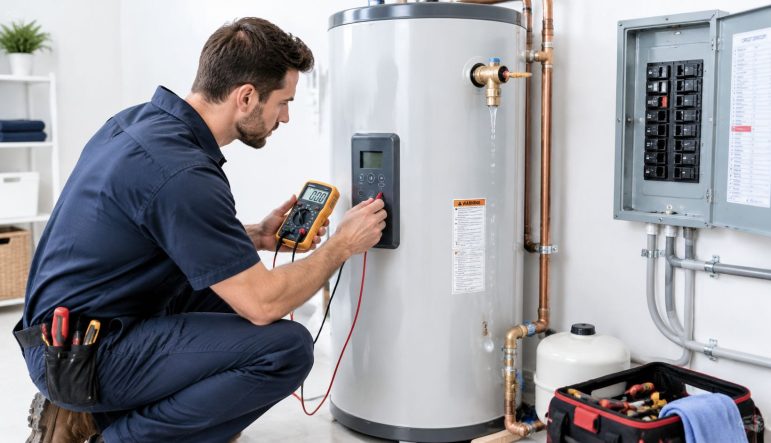
You turn on the shower in a Brisbane home and get cold water. The kids are waiting for the bus, someone's boiling the kettle for a quick hand wash, and the first assumption is usually, “The hot water system has failed.” Sometimes it has. Just as often, the tank is fine and the electricity supply to it has been interrupted.
A useful diagnosis starts outside the unit. Check the electricity network, the switchboard, the off-peak supply and the isolation switch before testing the element, thermostat or tank. That order takes only a few minutes and can prevent a needless service call.
In Brisbane, electric storage systems commonly heat during an off-peak period rather than continuously. That means a cold shower in the morning can follow a tripped circuit, a network interruption or a supply-timing problem. It doesn't automatically prove that the heating element has failed.
The first branch is supply-side. A local Energex interruption, planned maintenance, a failed safety switch, a tripped hot-water breaker or an off-peak control issue can leave a perfectly serviceable tank without power. The second branch is unit-side, involving the element, thermostat, pressure relief valve, tempering equipment or the tank itself.
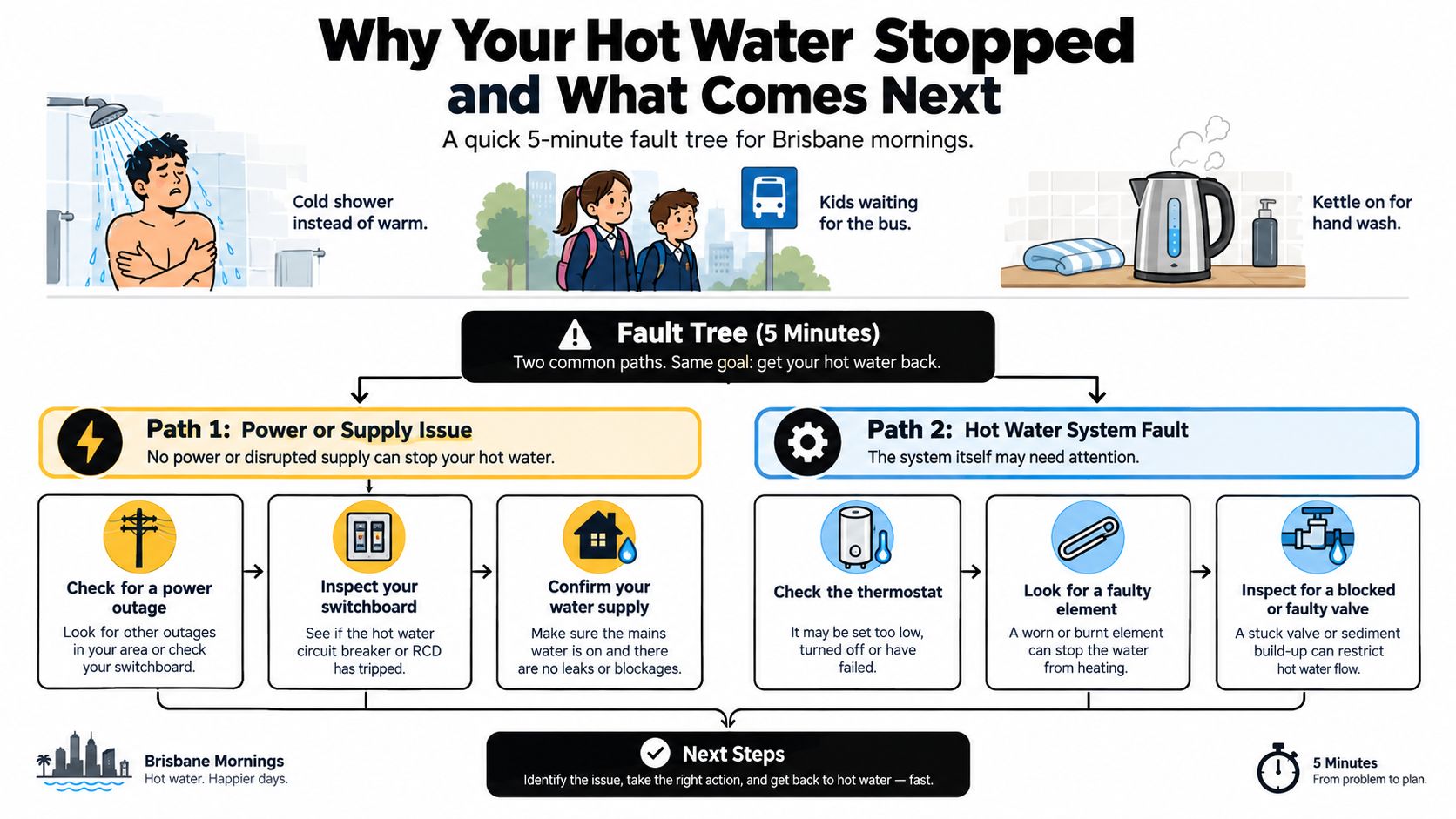
Use the water and the surrounding area to choose the next branch:
The DLG Electrical hot water troubleshooting guide provides a useful companion checklist for electric systems. If you're comparing safety and temperature control in bathroom fixtures, a separate thermostatic mixer shower Dublin guide can also help explain how controlled water temperature differs from the heating fault inside a storage system.
Queensland's network conditions make the supply-first approach more than a theoretical exercise. Energy Queensland's 2024–25 annual report recorded 24,648 unplanned network outage incidents and 15,861 planned outages. The average unplanned outage duration in urban areas rose to 275 minutes from 262 minutes in the prior year, while the network-wide average reached 346.4 minutes, compared with 286.5 minutes previously (Energy Queensland outage and hot-water report). Those figures don't diagnose your tank, but they explain why a working electric hot-water service can remain unavailable during a broader fault or maintenance event.
A safe first check follows the same sequence I'd use before touching the appliance.
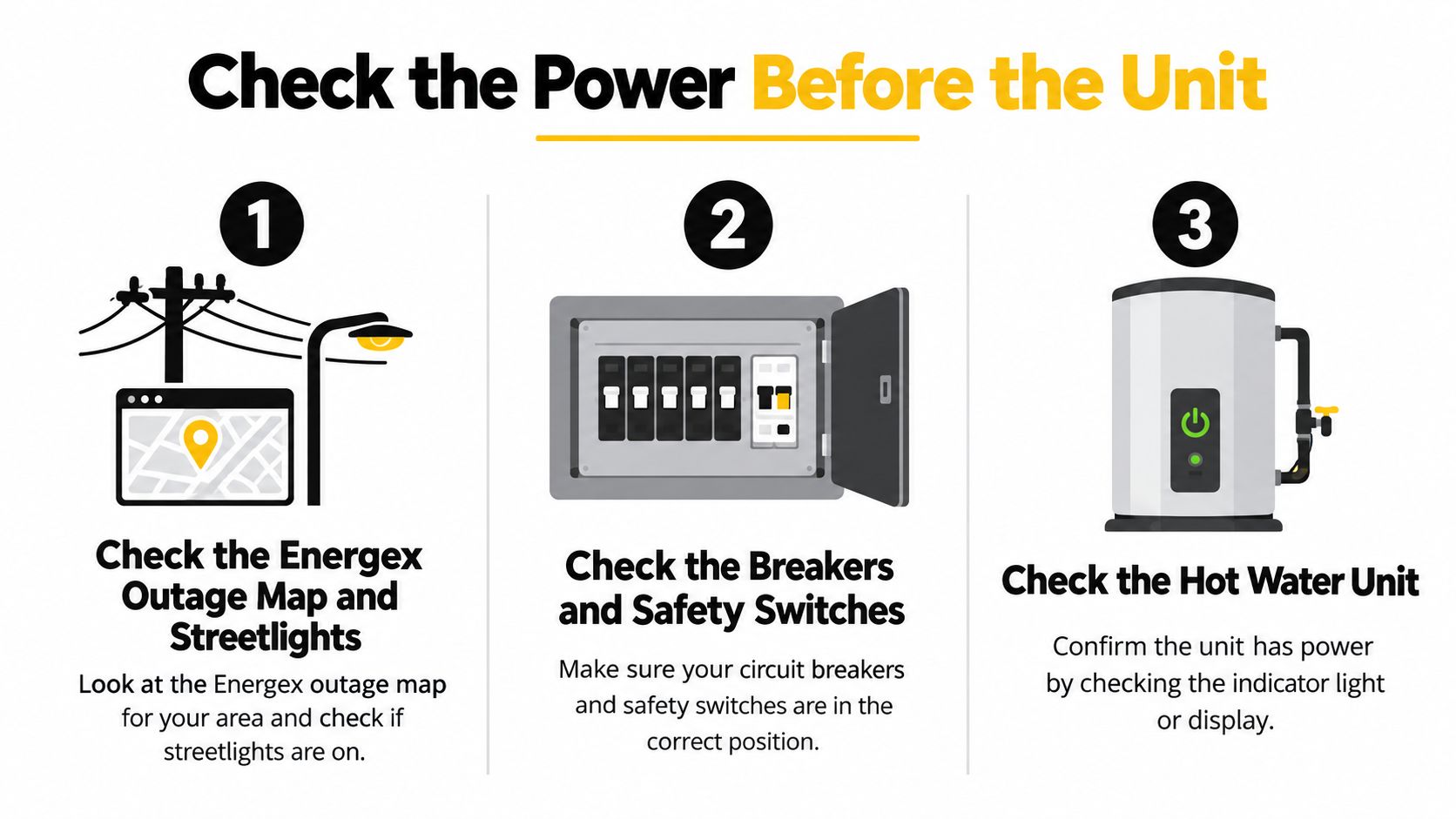
Look at the Energex outage information for your suburb and note whether nearby streetlights or neighbouring homes have power. If the street is dark or other properties are affected, leave the hot-water system alone until the network issue is resolved.
Queensland guidance directs South East Queensland residents to Energex for electricity faults, and Brisbane City Council's emergency dashboard also points residents towards utility outage information. A network interruption can produce exactly the same household symptom as a failed element, but resetting the appliance won't restore a feeder or street supply.
Find the circuit labelled hot water, HWS or a similar description. Confirm that the breaker is fully in the off position, then move it firmly back on once. If the safety switch or RCD has tripped, reset it once as well.
A single reset can be reasonable. If the breaker or RCD trips immediately, don't keep repeating the process. Repeated tripping can indicate an earth fault, deteriorating element or wiring problem, and each reset removes a useful warning.
The dedicated breaker's rating and switchboard layout vary between installations, so don't rely on a label if it appears unclear or damaged. A homeowner's role ends at the external controls. The DLG Electrical guide to an RCD that keeps tripping explains why recurring trips need proper testing rather than persistence.
Electric storage systems connected to off-peak supply may not heat immediately after a reset. Allow one to three hours for recovery, depending on the tank and tariff, as advised in Australian electric hot-water fault-finding guidance (M-Tech Electrical Queensland fault-finding guide).
Check the external isolation switch near the unit or meter box, but don't remove covers. Also confirm that the water isolation valve has not been shut, particularly after plumbing, renovation or storm-related work.
This short video demonstrates the type of external power check homeowners can understand before booking electrical work:
If network power is available, the switchboard stays on and the unit still produces no hot water after its heating window, the fault has moved from supply-side diagnosis to appliance testing.
Once the supply is confirmed, symptom patterns become more useful. Electric storage faults usually involve the heating element, thermostat, pressure relief equipment or the tank and its seals. The same cold shower can result from several parts, so the age of the unit and its history matter as much as the symptom.
A system producing no hot water at all may have an open-circuit element or a thermostat that has operated its safety cut-out. Lukewarm water that runs cold partway through a shower can point to one failed element in a dual-element arrangement. That distinction matters because a component repair may restore the tank without replacing the whole appliance.
Leaks require a different level of caution. Water at the base can indicate a failed gasket or valve, but water emerging from a seam or corroded section of the tank usually indicates that the container itself is reaching the end of its useful life. A relief valve that continually discharges also needs investigation, because the valve may be faulty or the thermostat may be allowing unsafe overheating.
Practical rule: A reset that holds is different from a breaker that trips again. The second pattern is evidence of a fault, not an invitation to reset harder.
The table below is a diagnostic starting point, not a promise of a fixed price. A licensed tradesperson must test the circuit and appliance before confirming the repair.
| Hot Water Symptom vs Likely Fault | Likely Fault | Repair Cost (AUD) |
|---|---|---|
| No hot water, no visible leak | Failed element, thermostat cut-out or loss of supply | Inspection required |
| Lukewarm water that turns cold during use | Failed element in a dual-element tank or control fault | Inspection required |
| Water at the base of the tank | Element gasket, valve or corroded tank | Inspection required |
| Constant discharge from the relief valve | Faulty valve, excessive heating or thermostat problem | Inspection required |
| Breaker trips when heating starts | Element earth fault, thermostat fault or wiring issue | Inspection required |
The correct next step is testing, not guessing from a parts list. An element may be replaceable, while a leaking tank or repeated internal failure can make a new system the more sensible option.
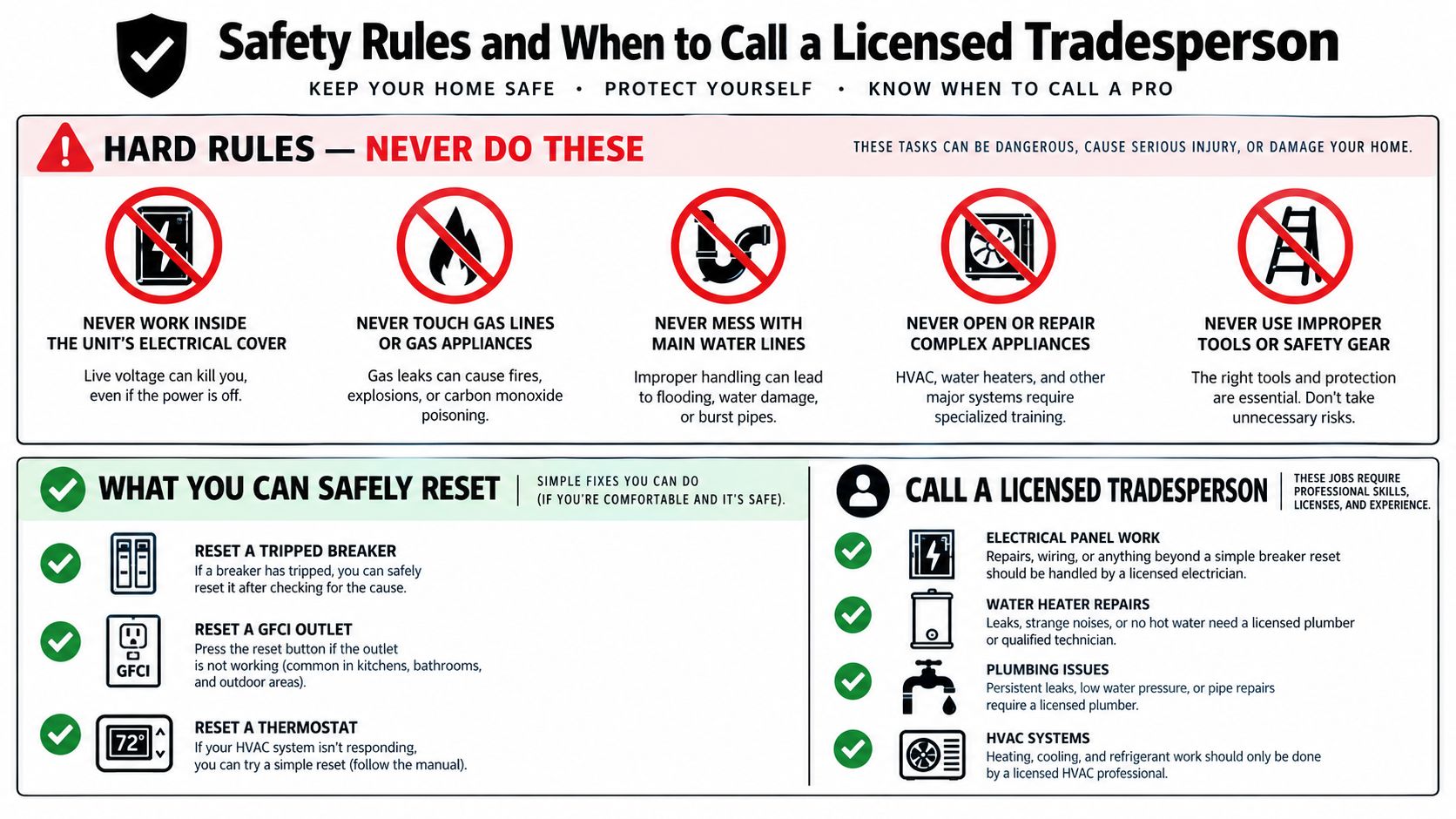
A homeowner can check an outage, operate an external breaker once and inspect for obvious leaks. The homeowner shouldn't open the electrical cover, remove the thermostat housing, disconnect wiring or attempt to change an element.
Water and electricity create a particularly poor combination. If water is near the switchboard, cable entry, element cover or electrical connection, treat the area as energised until a licensed person proves otherwise. Don't stand in pooled water while operating switches, and don't use a wet hand to reach an isolation point.
The NCC 2022 Plumbing Code of Australia treats a heated water service as a regulated building system. It requires connection to a drinking water supply and compliance with AS/NZS 3500.4, and it requires temperature control in buildings constructed after 19 October 1995. When a water heater is replaced, a temperature control device must be retained if one was previously installed (Ergon Energy network information).
That framework matters during repairs and replacements. Temperature-control components are part of the safety system, not optional accessories, and a quick DIY alteration can create scalding, electrical and compliance risks. It may also complicate warranty, insurance or future property documentation.
Before calling, record:
An after-hours call is justified by an active leak, water near electrical equipment, burning smells, exposed wiring or a fault that leaves the property unsafe. A same-day booking suits repeated tripping, no recovery after confirmed supply and a relief valve that continues to discharge. A scheduled replacement visit is more appropriate when the tank is corroded, the unit has a recurring fault history or a technician identifies an appliance that no longer represents a reliable repair candidate.
Repair makes sense when the tank is sound and the fault is isolated. A failed element, thermostat or valve can often be addressed without disturbing a healthy cylinder. Replacement becomes more attractive when the same system develops repeated faults, leaks from the tank body or combines an older appliance with escalating repair work.
Use three questions at the property:
Avoid treating a quoted figure as the only decision point. A lower repair price can still be poor value if the tank is corroded or the same circuit keeps failing. Conversely, replacing an entire system for a single confirmed thermostat fault wastes a serviceable appliance.
| Repair vs Replace Brisbane Cost Comparison | Typical Repair Cost | Typical Replacement Cost | Recommendation |
|---|---|---|---|
| Confirmed element fault in a sound tank | Quote required | Not applicable | Repair is usually the logical first option |
| Thermostat fault with no tank leak | Quote required | Not applicable | Repair after electrical testing |
| Relief valve or related valve fault | Quote required | Not applicable | Repair if the tank remains sound |
| Corrosion, seam leak or tank failure | Quote required | Site-specific quote | Replacement is generally the lower-risk path |
| Repeated faults on an ageing system | Quote required | Site-specific quote | Compare the full repair history with replacement |
No responsible electrician can provide a universal Brisbane price band without checking access, tariff configuration, compliance requirements, unit size and whether plumbing work is involved. After-hours availability can also change the quote. For a more detailed discussion of the factors that affect replacement pricing, see DLG Electrical's electric hot water system replacement cost guide.
Replacement is also a chance to reassess the operating arrangement. A smaller household may value a different tariff structure, while a heat-pump system may suit a property where energy use and available installation space justify the change. Don't choose based on the tank alone. Ask how the replacement will connect to the existing supply, temperature control and household demand.
Australian homeowners comparing storage systems with other designs may find broader terminology in this tankless water heater San Antonio resource, although Brisbane installation decisions still need to follow local electrical, plumbing and building requirements.
Prevention starts with observation, not dismantling. Once a year, walk around the tank and look for dampness, corrosion, unusual discharge or a relief pipe that doesn't terminate safely away from the building structure. Listen for popping or kettling sounds during heating, because persistent noise can justify an inspection before the system stops producing hot water.
Keep the overflow path clear and make sure discharge isn't pooling against the slab or structure. Don't cap, block or tamper with a relief outlet. It exists to release pressure under fault conditions, so a small-looking valve issue deserves attention rather than a makeshift fix.
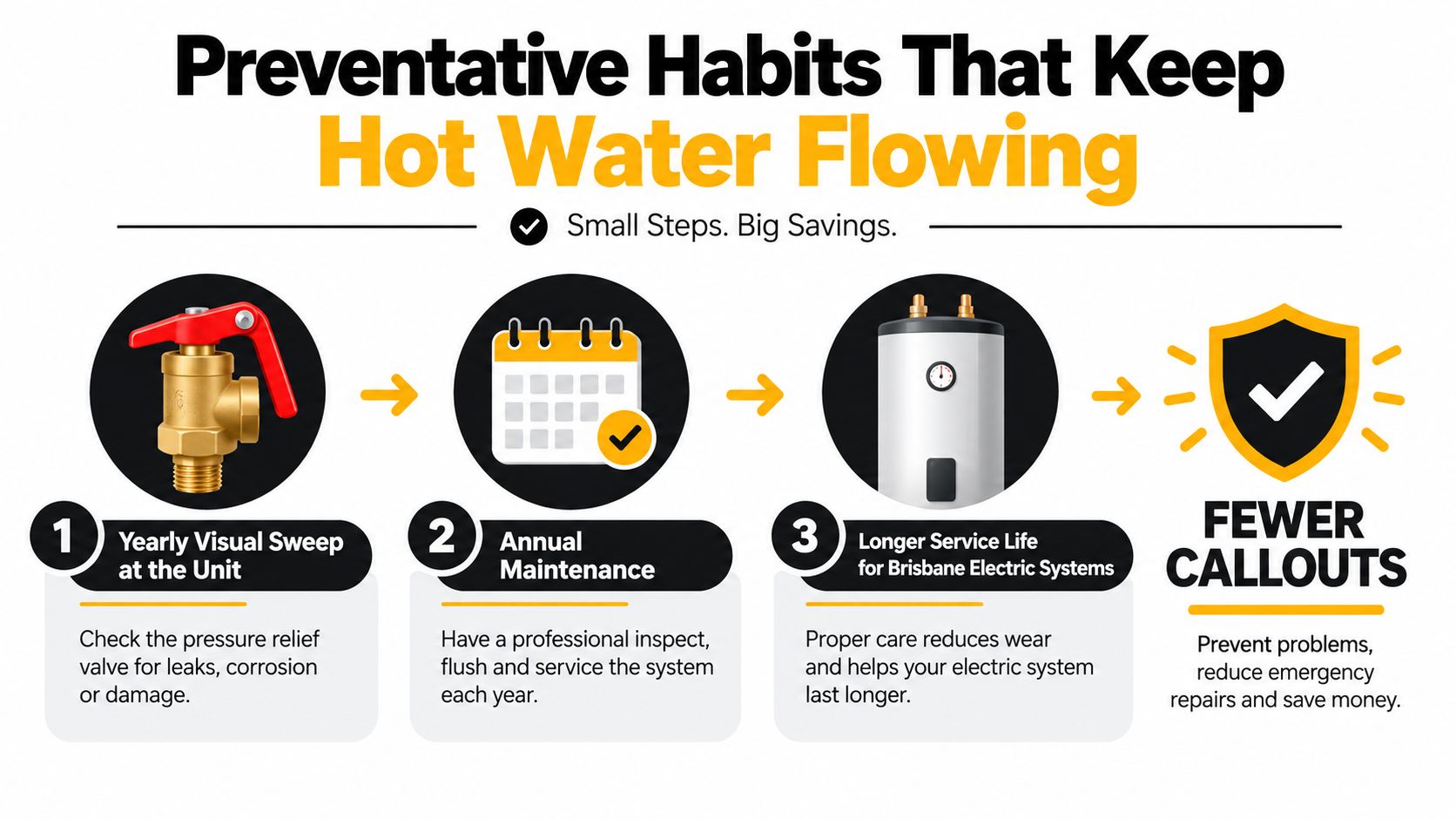
The sacrificial anode helps protect the steel tank from internal corrosion. A tradesperson can inspect its condition during scheduled servicing and advise whether replacement is warranted for the water conditions and appliance. If the anode is neglected, the tank can rust internally even when the outside still looks acceptable.
Tariff suitability deserves the same attention. An off-peak arrangement can work well for a household with predictable demand, but changes in occupancy, renovation or hot-water usage can make another configuration more suitable. Have the electrician check the control arrangement rather than assuming the old tariff still matches the way the home operates.
After water-supply work in the street, watch for sediment or discoloured water and follow the utility's advice before normal use. Sediment can affect valves and outlets, and a tradesperson may recommend flushing or inspection where symptoms appear.
Print this checklist and keep it near the switchboard:
Maintenance records help a technician see whether a fault is isolated or part of a pattern. They also give landlords, renovators and homeowners clearer evidence when warranty, insurance or replacement decisions arise.
If your hot water service isn't working, DLG Electrical can inspect the supply, test electric hot-water elements and thermostats, and advise whether repair or replacement is the safer option. Visit DLG Electrical to arrange a Brisbane electrical service or request a quote.

Master Electrician with over 30 years of experience. Founded DLG Electrical in 2005 after international project work including electrical installations at Stamford Bridge Stadium, London(Home of Chelsea FC).

Local Electricians that can fix all Electric Hot water Systems.
Motion sensor lights are a versatile addition to any home, offering nu
