83 Jean St, Grange QLD 4051
Mon-Fri 07:30 AM - 04:00 PM - Sat - 8:00 - 12 - Sunday Closed
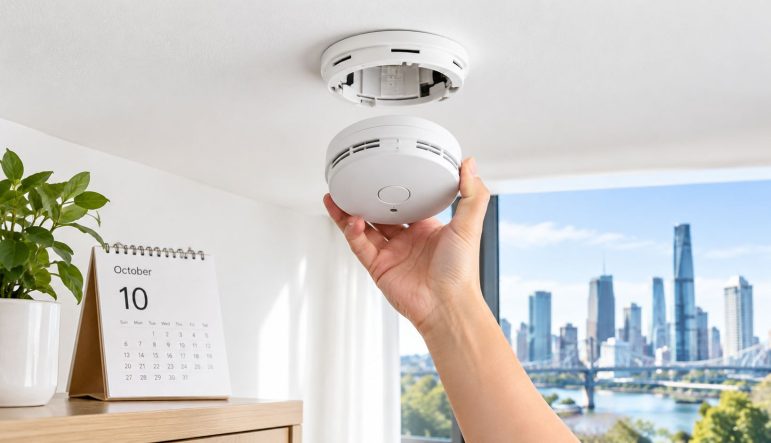
Replace every smoke alarm 10 years from its manufacture date, not from the day it was installed. In Queensland, replacement also needs to line up with the move to photoelectric, interconnected alarms, with full statewide compliance required by 1 January 2027 for applicable homes under the Queensland rules.
You're probably here because one of three things has happened. You pressed the test button during a routine check and started wondering how old the alarm is. You've bought an older Brisbane home and don't trust what the previous owner left behind. Or you've heard about the Queensland deadline and you're trying to work out whether you need a simple swap, a full upgrade, or both.
That confusion is normal. Smoke alarms sit on the ceiling for years, so it's easy to treat them like light fittings that stay there forever. In Queensland, they don't work that way. They have a service life, and once that life is up, the whole unit needs replacing.
A lot of people also get caught by one detail that generic guides miss. The date that matters is usually the manufacture date stamped on the alarm, not the date someone fitted it in the hallway. That means an alarm can look clean, beep on test, and still be overdue.
A homeowner in Grange climbs up to clean a ceiling vent, gives the hallway smoke alarm a quick wipe, then twists it down to check the label. The alarm still beeps on test. It still looks tidy from the floor. But the stamped date on the back shows it is older than they thought.
That moment catches a lot of Brisbane households out.
Smoke alarms age. They sit through summers, humidity, dust, cooking residue and the odd insect finding its way inside. The test button only tells you the unit can make a sound and has power. It does not confirm the sensing chamber is still responding as it should.
That is why replacement timing matters. A smoke alarm works more like a carton of milk than a light fitting. It can seem fine right up until the point you should no longer rely on it.
For Brisbane homes, there is also a legal angle. The broad rule is simple. Old alarms need replacing, and the date to check is the one stamped on the unit itself.
Practical rule: If you are unsure how old the alarm is, take it down safely and read the label before you assume it has years left.
That small habit saves a lot of confusion. It helps you avoid the common trap of counting from the day the alarm was installed, and it helps you avoid buying a replacement that suits today but leaves you short on Queensland compliance later.
The key point at the start is straightforward. Before you ask whether the alarm still works, check how old it really is.
Smoke alarms aren't like a ceramic tile or a metal hinge. They're more like a car tyre. A tyre can still look usable right up until the tread is too worn to trust. In the same way, a smoke alarm can still sit neatly on the ceiling, still have power, and still be past the point where you should rely on it.
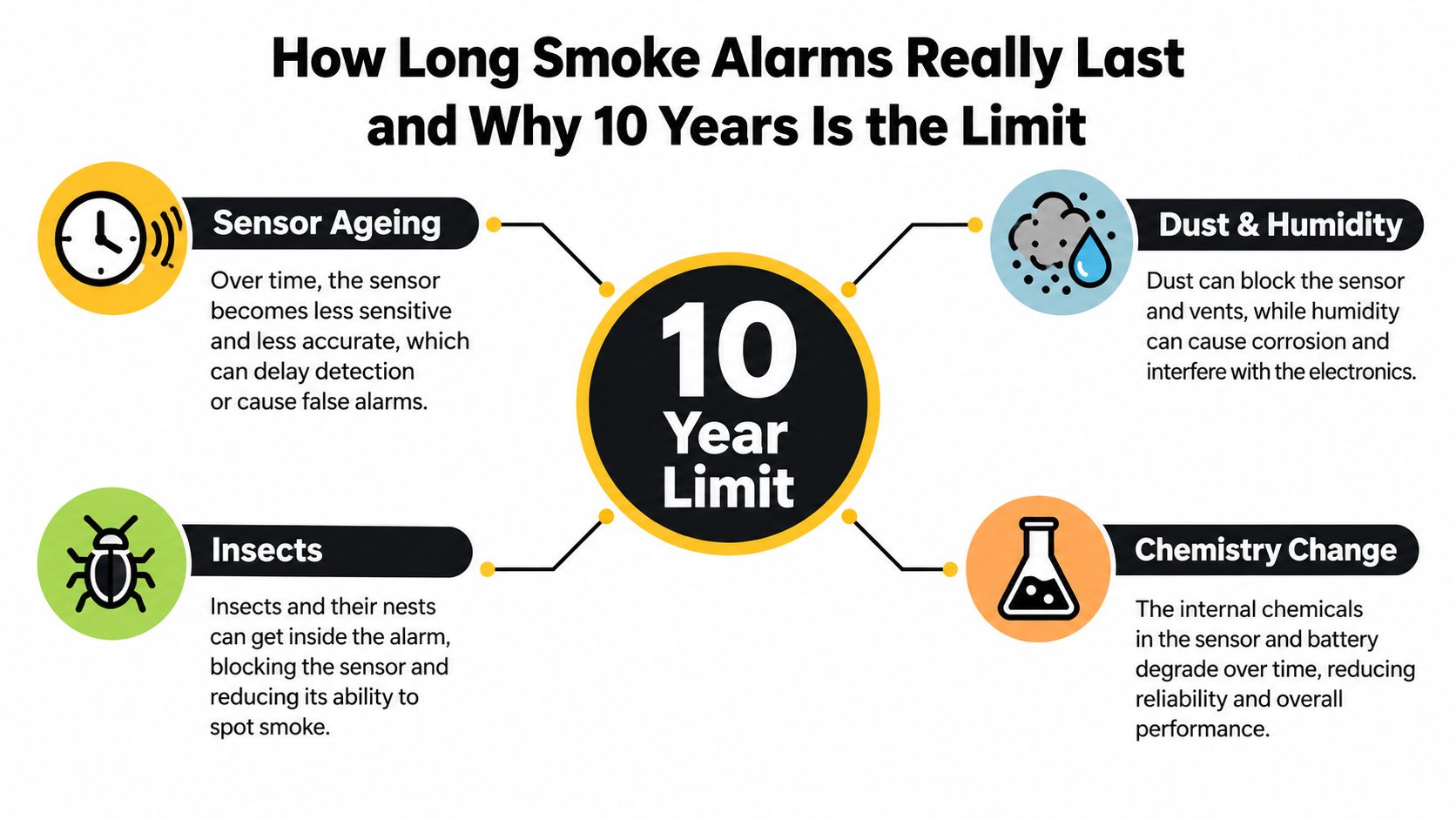
Australian fire authorities are consistent on this point. Queensland guidance says both hard-wired and battery-operated smoke alarms are manufactured for a recommended service life of at least 10 years under AS 3786. Other Australian authorities reinforce the same benchmark, with Western Australia noting an operating life of 10 years and Fire and Rescue NSW stating alarms should be replaced at least every 10 years because age, dust, insects, and humidity reduce performance over time (Australian fire authority guidance summary).
In plain language, the alarm's sensing parts don't stay fresh forever. Tiny contamination inside the chamber can affect sensitivity. Moisture in the air can play a part. So can insects, grime, and normal ageing of electronic components.
Many homeowners get a false sense of security. The test button mainly tells you the unit has power and that the sounder can operate. It doesn't prove the smoke sensing chamber is performing like a newer alarm.
A smoke alarm is like a doorbell. If the chime rings, that tells you the bell works. It doesn't tell you the front door lock is in good condition. A smoke alarm's button test is useful, but it's not the whole story.
An alarm that still beeps on test can still be too old to trust.
That's one reason Queensland guidance focuses on age as well as function. The designed service life is a benchmark for normal use. Once the unit reaches the end of that period, replacement is the safe and compliant move.
If you're asking how often should smoke alarms be replaced, the cleanest answer is this:
That last point matters more than many people realise, especially once you compare the different alarm types used in Brisbane homes.
Not all smoke alarms are powered the same way, and that's where plenty of confusion starts. A homeowner might look at one alarm and think, “That one's wired in, so it should last forever.” Another might see a sealed unit and assume the battery can be swapped later. Neither assumption is reliable.
Queensland guidance distinguishes between alarms that are hardwired and alarms powered by a non-removable 10-year battery. It also notes that many public housing alarms are hardwired with a 10-year backup lithium battery, while some battery-powered alarms operate as sealed units for the same broad service life. When those sealed units reach end-of-life, the complete alarm must be replaced, not just the battery (Queensland housing smoke alarm guidance).
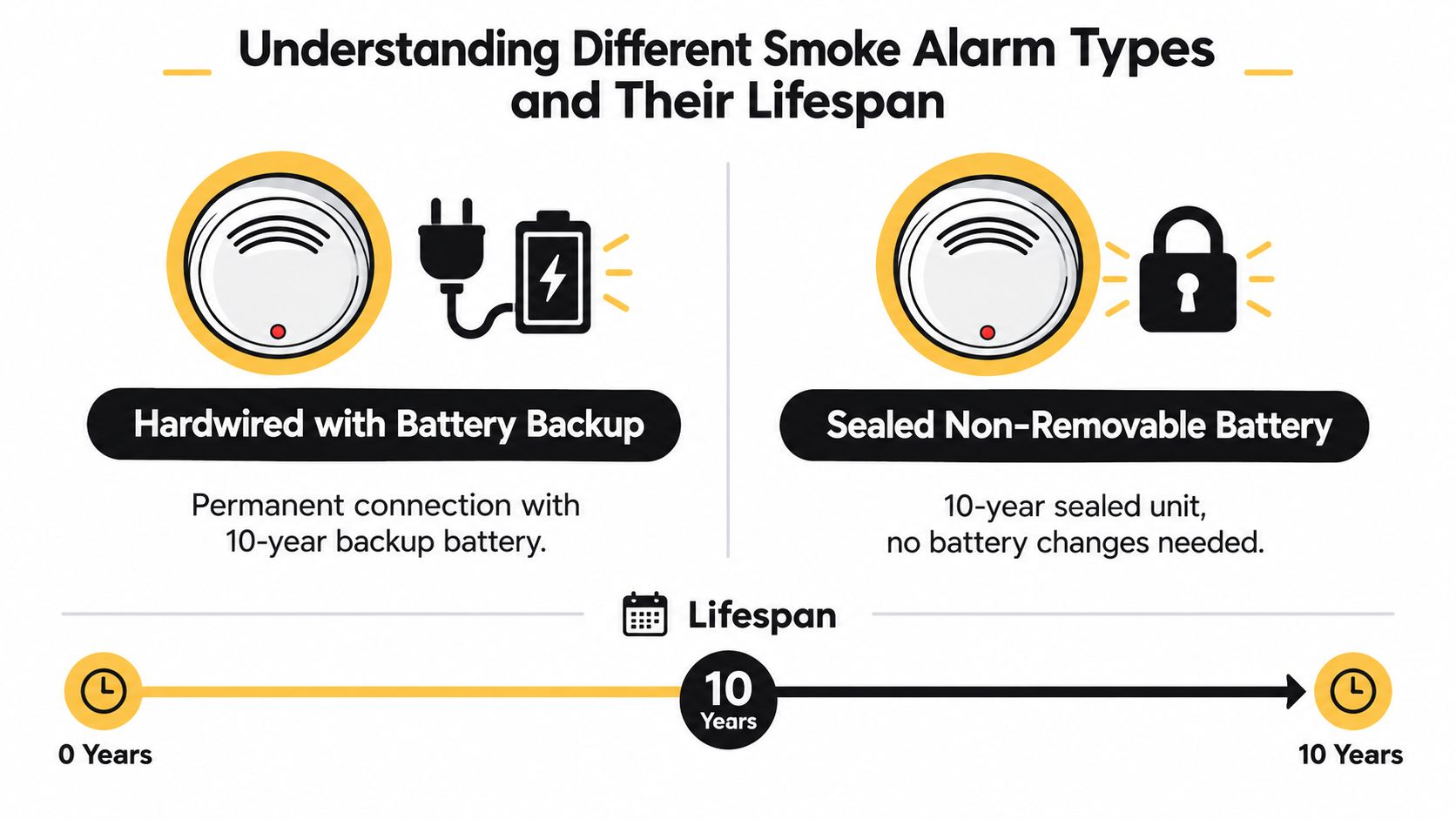
Here's the side-by-side view.
| Smoke Alarm Types Compared for Brisbane Homes | |||
|---|---|---|---|
| Alarm Type | Power Source | Expected Lifespan | Replacement Action |
| Hardwired with backup power | Mains power with backup battery | Check manufacture date and service life of the unit | Replace the alarm unit at end-of-life |
| Sealed non-removable battery alarm | Built-in long-life battery | Designed around the sealed service life of the alarm | Replace the whole alarm, not the battery |
A hardwired alarm still has a smoke sensor inside it. Being connected to the house wiring doesn't stop that sensor from ageing.
A sealed battery alarm is different again. People often expect a battery door they can open later. With a sealed 10-year unit, there usually isn't one for normal battery replacement. The battery and the alarm are treated as one product for service-life purposes.
For Brisbane homeowners comparing options, Queensland's broader compliance direction also matters. The replacement should suit the property's legal requirements, which is why many homes are moving toward photoelectric interconnected systems rather than one-off standalone swaps. If you want a plain-language breakdown of how those systems work, this guide to photoelectric smoke alarms in Queensland is a useful companion.
Use this rule of thumb:
That's where many people make an expensive mistake. They replace an old alarm with the wrong type, then find out later the age or setup still isn't compliant.
This is the detail that causes the most confusion in older Brisbane homes. People remember when the alarm was fitted, or when they moved in, or when a handyman swapped one over after a repaint. But Queensland's rule turns on the manufacture date, not the day it was installed.
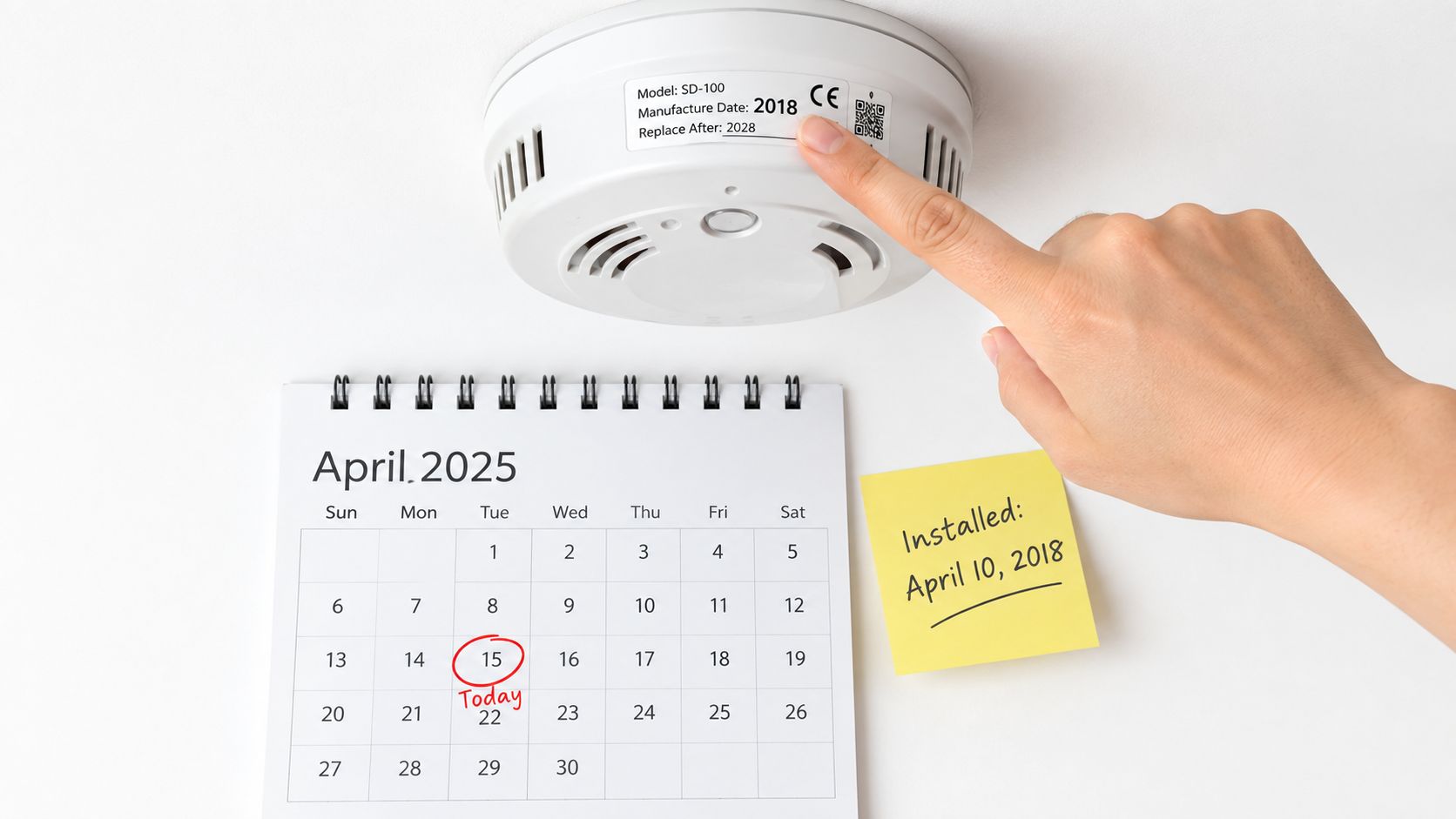
Queensland government guidance says existing smoke alarms manufactured more than 10 years ago must be replaced, and official information also states alarms should be less than 10 years old and powered by hardwiring or a non-removable 10-year battery where required (Queensland smoke alarm legislation information).
That means a recently installed alarm can still be too old. It may have sat in storage. It may have been left over from an earlier job. In some houses, alarms get moved between rooms during renovations or ceiling repairs. In rentals, an older unit can stay in place through several tenancy changes because it still appears to work.
A Windsor or Grange homeowner can easily inherit that problem without realising it.
Take the alarm down carefully if the model allows for safe removal from its base. On the back or side, you'll usually find the stamped manufacture date. That's the date to judge against.
Look for these red flags:
The trap isn't just old alarms. It's old alarms that look new enough to be trusted.
For a quick visual explanation, this short video shows the kind of age-checking issue many homeowners run into.
A Fraser Coast council fact sheet based on Queensland guidance highlights the same overlooked point. Alarms made more than 10 years ago must be replaced, which means a recently installed but older unit can still be expired and non-compliant. The fact sheet also notes the hidden risk in older homes and rental properties where alarms may have been moved, retained during renovations, or left by previous owners (Queensland council smoke alarm fact sheet).
That's why I always tell homeowners to trust the stamped date more than their memory. The ceiling doesn't tell you how old the alarm is. The alarm itself does.
A Brisbane homeowner replaces one old alarm in the hallway, presses the test button, hears the beep, and assumes the job is done. Then a sale, lease renewal, or inspection brings an unpleasant surprise. The new alarm may work, but the home can still fall short if the system is not photoelectric, interconnected, and suited to the property under Queensland rules.
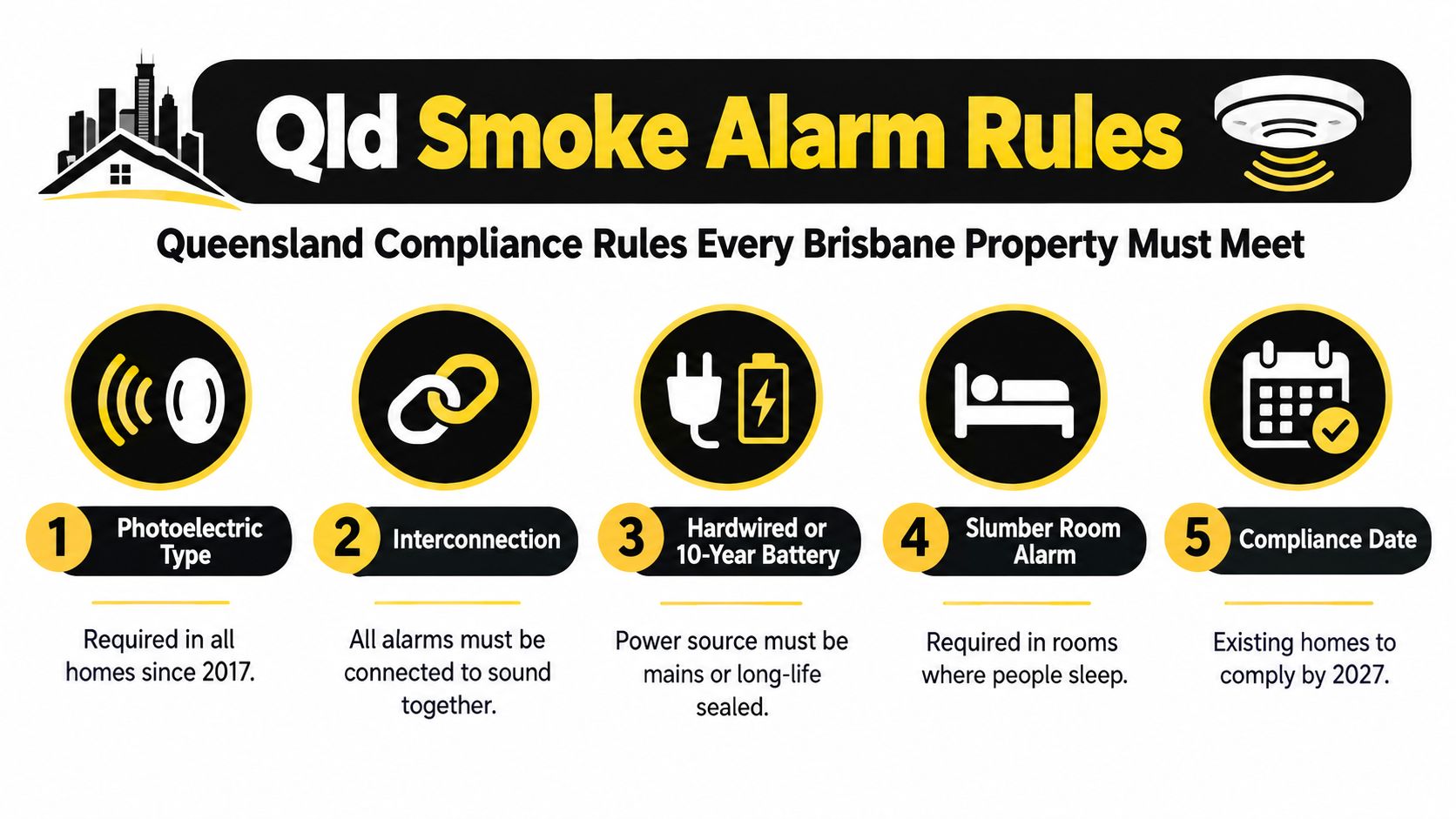
Queensland's statewide deadline of 1 January 2027 catches people out because it shifts the question from “Is this alarm under 10 years old?” to “Does the whole setup meet the current standard?”
For homes covered by the updated rules, the alarms need to be photoelectric, interconnected, and powered by hardwiring or a non-removable 10-year battery. A single like-for-like swap does not always solve that. In many Brisbane homes, replacement turns into a system check, because one compliant alarm in one spot is different from a compliant home.
The easiest way to understand interconnection is to picture the alarms like linked doorbells. If one is triggered, they all sound. That matters at night, especially in larger homes, split-level homes, or houses where bedroom doors are shut and air-conditioners soften other sounds.
The rules are easiest to handle if you check the home as a layout, not as a collection of separate devices.
This is the point many generic “replace every 10 years” guides miss. Age still matters, but Queensland compliance is also about whether the replacement belongs in a system that meets the 2027 standard.
If you want a plain-English summary of how these rules apply in real homes, this guide to Queensland smoke alarm compliance is a useful reference.
Late replacement often leads to rushed decisions. A homeowner expects to swap one ceiling alarm, then finds the job also involves matching models, choosing an interconnection method, and checking whether other alarms in the house are suitable.
Older Brisbane homes are where this gets messy. Extensions, past renovations, and piecemeal alarm changes can leave you with a mix of types, ages, and power sources. The result is a setup that looks reasonable at a glance but does not work as one clear warning system.
If you're reviewing wider property safety items at the same time, this audit checklist for life safety can help organise the broader compliance picture.
DLG Electrical offers smoke alarm compliance checks and installation for Queensland-compliant systems, which can help if you want the setup assessed properly instead of guessing from what is already on the ceiling.
A compliant replacement means the alarm suits the home, the layout, and Queensland's current rules, not just the hole left by the old unit.
Replacement timing matters, but so does what happens in between. A smoke alarm should be treated a bit like a safety switch. You don't install it and forget it. Small checks done regularly are what keep it dependable through its service life.
A manageable routine usually works better than an ambitious one you won't keep up with.
If you want a broader household reminder list to pair with your own alarm routine, this home fire safety from Restore Heroes gives a straightforward checklist format that many homeowners find easy to adapt.
Not every issue means instant replacement. A dusty alarm may just need careful cleaning. A homeowner who has been doing renovations might find that a light clean and retest solves a nuisance issue.
But some signs should push you straight past maintenance and into replacement:
That's where people lose time by trying to nurse an old alarm along. If the problem is age or failure, maintenance won't reset the service life.
Call a licensed electrician when the job involves hardwired alarms, interconnection problems, uncertain compliance, or a whole-home replacement plan. That's especially true in older Brisbane homes where past renovations may have left a mix of alarm types across different rooms.
For homeowners who want a step-by-step refresher before checking their units, this guide on how to test a smoke alarm is a practical starting point.
Once you know the rule, smoke alarm replacement gets much less confusing. The key habit is simple. Check the manufacture date, not your memory of when the alarm went up.
That one step clears up the biggest mistake Brisbane homeowners make. It also helps you avoid wasting money on a replacement that still leaves the home short of Queensland requirements. If the unit is approaching end-of-life, it's worth thinking beyond a single alarm and looking at whether the whole home setup suits the move toward photoelectric interconnected protection.
For owner-occupiers, that means fewer surprises later. For landlords and property managers, it means cleaner records and less risk of discovering a problem during a tenancy change. For renovators, it means folding smoke alarm decisions into the electrical work while ceilings and access points are already being considered.
Smoke alarms aren't meant to last forever, and that's not a fault in the product. It's the nature of a safety device that depends on sensitive components doing their job when conditions are at their worst. Replace them on time, choose the right type for the property, and the process stays straightforward.
If you're unsure about dates, compatibility, or whether your current alarms meet the Queensland rules, a professional check is usually the fastest way to get certainty.
DLG Electrical helps Brisbane homeowners with smoke alarm compliance checks, replacement advice, and installation of Queensland-compliant alarm systems, including interconnected and hardwired setups where needed. If you want clear answers about your existing alarms or a free quote for an upgrade, visit DLG Electrical.

Master Electrician with over 30 years of experience. Founded DLG Electrical in 2005 after international project work including electrical installations at Stamford Bridge Stadium, London(Home of Chelsea FC).

Local Electricians that can fix all Electric Hot water Systems.
Motion sensor lights are a versatile addition to any home, offering nu
