83 Jean St, Grange QLD 4051
Mon-Fri 07:30 AM - 04:00 PM - Sat - 8:00 - 12 - Sunday Closed
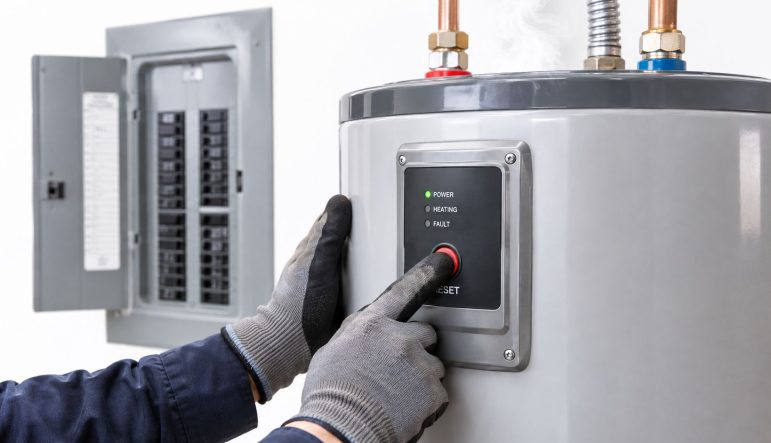
After a Brisbane power outage, an electric hot-water heater may stay cold because its dedicated safety switch or circuit breaker has tripped, or because it runs on an off-peak tariff and missed its scheduled heating signal. Queensland households are especially affected, with 75% of hot-water systems using electricity in the ABS's Queensland survey, including 1,233,400 households. Australian outage and household energy data helps explain why the lights can return while the shower stays cold.
The situation is familiar after a storm. The refrigerator starts, the Wi-Fi reconnects and the kitchen lights work, but the hot tap produces nothing more than cold water. Before you assume the tank has failed, identify the system type and follow one controlled check. A storage heater may just be waiting to recover, while an instantaneous, heat-pump, solar-boosted or gas system has different controls and restart requirements.
You get up after a storm, the lights are on, the fridge is humming again, but the shower is cold. That usually points to the hot-water system's own supply path, not a dead tank. In Brisbane homes, the heater often sits on a dedicated circuit, a controlled-load tariff, or its own protection, so it can stay off even after the rest of the house comes back.
That is why the first job is to identify what type of unit you have and isolate the problem properly. A cold tank after an outage does not always mean a failed element or thermostat. Sometimes the system has lost power on its own circuit, missed its off-peak heating window, or needs time to recover once supply is restored.
In the ABS Queensland survey, 45% used off-peak electricity, representing 736,400 households. The same ABS figures also show that 91% of Queensland households using solar hot water also used electricity as a booster, or 123,400 households. The Australian household energy figures explain why this comes up so often after a blackout. Plenty of systems depend on a separate controlled supply, or on electricity even when the main heat source is something else.
An electric storage heater needs its element to heat a full tank again. A heat-pump system depends on an outdoor compressor and controller. A solar unit may have collected plenty of sun and still give you cold water if the electric booster has not come back online. A gas system can also stop after a power cut if it uses electronic ignition or powered controls.
If you are not sure what is installed, check the rating plate, the outdoor equipment, and the labels at the switchboard. This guide to how an electric hot-water system works gives useful background before you start touching switches.
The key question is simple. Is the heater circuit live, safe, and allowed to heat right now?
If the unit is older, keep the repair-versus-replace call in mind while you work through the checks. The Bear Valley Plumbing & Heating cost guide compares running costs across system types, which helps once a licensed electrician confirms the fault is more than a reset.
Start outside the switchboard if there are any warning signs. Don't touch it if the board is wet, cracked, scorched, buzzing, visibly damaged or surrounded by floodwater. Keep children away and call a licensed electrician. Queensland guidance also warns against resetting a protective device when the board or electrical equipment is unsafe. Queensland maintenance guidance supports a cautious inspection rather than trial-and-error resets.
If the board is dry and intact, use this sequence:
Look, don't open. Check the labelled hot-water breaker and safety switch from the front. A switch sitting between its normal positions may have tripped. Don't remove the switchboard cover or reach behind it.
Switch off the heater circuit. If you can identify the hot-water isolator or dedicated breaker safely, move it to OFF. This prevents an immediate restart while you check whether another appliance or circuit is causing the problem.
Reduce other loads. Switch off or unplug accessible appliances where practical. Don't pull at wet plugs, damaged leads or hard-wired equipment.
Restore the relevant protection once. With the area dry and safe, reset the safety switch or breaker as directed by its markings, then restore the hot-water isolator. A breaker may need to move fully OFF before it will move back ON.
Observe what happens. If the switch stays on, allow the heater to operate normally. If it trips again, turn the heater circuit off and leave it off.
Practical rule: A second trip is evidence of a fault, not an invitation to try a third reset.
A controlled isolation test can help an electrician later. With the heater isolated, re-energise other circuits one at a time where the switchboard layout makes that safe. If the fault follows the heater circuit, the appliance, its controls or its wiring needs testing. If another circuit trips independently, the property may have a separate fault. Don't remove covers, access thermostats, press internal reset buttons or bypass a safety switch. Those tasks can expose live parts and require licensed work.
If the switchboard behaviour is confusing, this explanation of an RCD that keeps tripping may help you describe the symptom, but it doesn't make repeated resetting safe.
A storage tank doesn't create unlimited hot water during an outage. It stores heat, and the element must run again to rebuild that supply after the tank has been depleted. A lengthy interruption can leave the water cold even when general power returns.
Australian network data illustrates why recovery can be delayed. In the South West Interconnected System during 2024–25, customers experienced an average cumulative outage time of 438 minutes, with an average individual interruption of 163 minutes. These are Western Australian figures, not Brisbane measurements, but they show that an interruption can last long enough to empty a tank's available heat. The outage reliability report provides that national context.
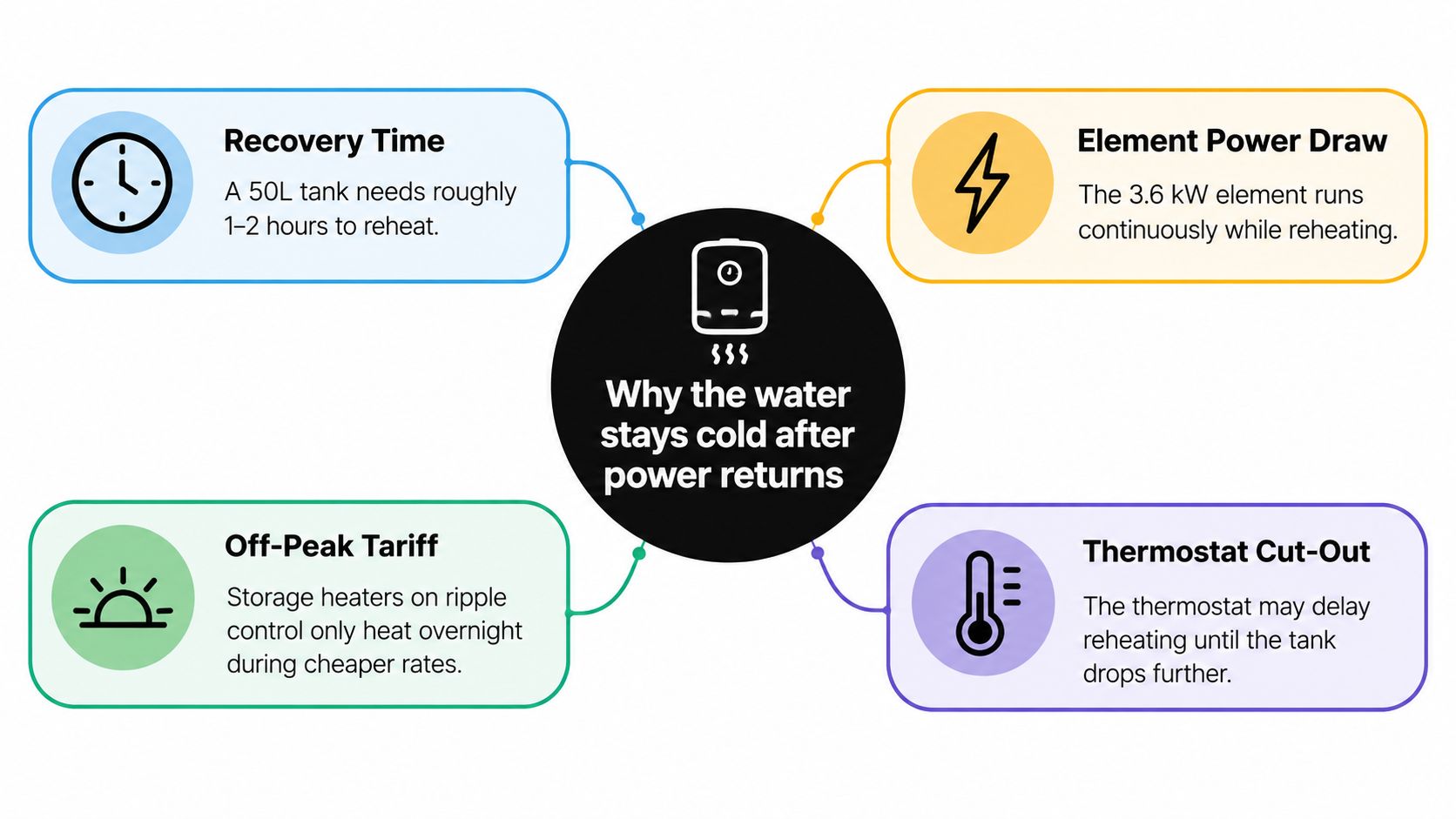
An off-peak or controlled-load heater may not begin reheating as soon as you restore the switch. The energy provider controls that tariff through a scheduled signal, and a missed signal can leave the heater waiting for the next heating period. Australian Defence Housing guidance recommends confirming with the provider that the overnight off-peak signal was transmitted.
That distinction matters. A heater that remains cold immediately after a blackout may be operating normally, while one that stays cold after a complete available heating window needs further investigation. Check whether the breaker remains on, listen for normal operation from the system type and avoid drawing a conclusion during the first few minutes. A home energy monitoring overview can also help households understand which circuits consume power, although it won't replace electrical testing.
The following video provides additional general context on hot-water operation:
Keep the system operating normally once supply is safely restored. Queensland health guidance advises ensuring the unit reaches full temperature after an extended shutdown before using the water, because insufficient heat can allow harmful bacteria to grow. Don't alter the thermostat yourself to speed recovery. If water is still cold after the relevant heating period, move from waiting to diagnosis.
A heater that trips once and then recovers is different from one that trips every time you restore supply. The first may reflect an outage-related interruption. The second indicates a fault in the appliance, its control equipment or the property wiring.
Use the signs below as a decision guide rather than trying to identify a failed part by opening the unit.
| Fault Type | Likely Signs | What to Do |
|---|---|---|
| Tripped safety switch or breaker | Heater stops after the outage, then operates when safely restored | Reset once only if the board is dry and undamaged. Stop if it trips again. |
| Failed heating element | Water remains cold or only lukewarm after a complete heating period | Leave the circuit isolated if it trips, and arrange licensed testing. |
| Faulty thermostat | Temperature is inconsistent, recovery is poor or the heater cuts out unexpectedly | Don't adjust or access the thermostat. Have the component tested. |
| Controlled-load relay or contactor fault | The breaker remains on, but the heater doesn't receive its scheduled supply | Confirm the tariff signal with the energy provider, then arrange electrical diagnosis if supply is available. |
| Water leak near electrical parts | Moisture, dripping pipework or water around the outdoor unit or connections | Keep clear of the equipment and switch off power only if it can be done safely. Call a professional. |
| Surge or wiring damage | Burning smell, buzzing, scorch marks or immediate tripping | Don't reset again. Keep the circuit off and request urgent inspection. |
A failed element can look like a tariff problem, and a missed controlled-load signal can look like a failed element. The electrician separates those possibilities by testing supply, controls and components, not by guessing from the shower temperature.
Stop immediately for repeated trips, burning odours, unusual noises, visible moisture, damaged wiring or a tank that stays lukewarm after a full heating window.
Landlords and tenants should report the issue promptly rather than attempting hard-wired repairs. Queensland safety material treats electric hot-water systems as equipment the property owner must maintain safely in a rental property.
Call a licensed electrician when the protective device trips again, the heater remains cold after its available heating period or the switchboard shows any sign of damage. The same applies to a failed safety-switch test, exposed wiring, burning odours, water near electrical components or a suspected element, thermostat, contactor or relay fault.
Don't remove an access cover to reach an internal reset button. Don't test terminals, bypass the safety switch or install a larger breaker. Those actions can expose live 230 V parts or remove the protection designed to disconnect a dangerous circuit. Queensland electrical safety information is clear about leaving electrical repairs to licensed professionals.
Before calling, note a few useful details:
DLG Electrical is a family-owned Brisbane contractor offering licensed and insured electrical services, including electric hot-water diagnosis and repairs involving heating elements and thermostats. The team also handles urgent electrical fault assistance, so a proper inspection can replace repeated resets with a clear repair decision.
A technician can verify whether power reaches the dedicated circuit, confirm the controlled-load path and test the heater's components safely. That approach is usually more efficient than resetting a fault until the breaker, element or wiring suffers further damage.
The safest maintenance is mostly observation and scheduled testing. Keep the heater area clear, look for drips or corrosion and check that outdoor equipment hasn't been damaged by weather. Never open an electrical cover as part of routine maintenance.
Queensland Electrical Safety guidance recommends testing a safety switch by pressing its test button every three months. If it doesn't trip, arrange immediate electrician attention because the circuit may not be protected. Reset it only after the test, provided the switchboard is dry and undamaged.
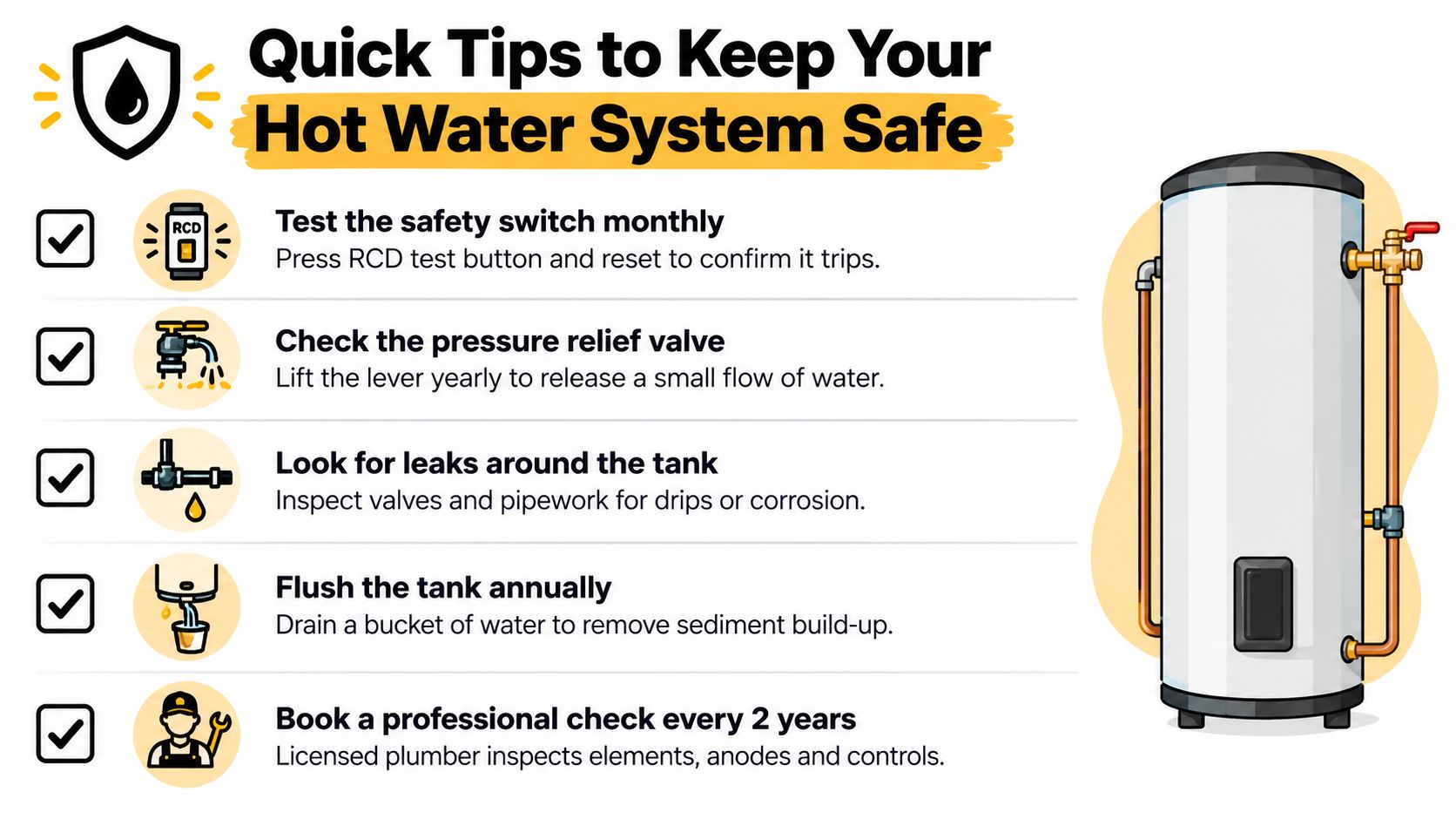
The dividing line is simple. Homeowners can observe, identify the system, check a safe switchboard and wait for normal recovery. Licensed professionals must test hard-wired equipment, internal components, damaged circuits and protective devices.
DLG Electrical can diagnose electric hot-water faults, inspect dedicated circuits and repair or replace faulty heating elements and thermostats across Brisbane. If your hot water heater is still not working after a power outage, visit DLG Electrical to arrange practical electrical assistance instead of repeatedly resetting a tripping switch.

Master Electrician with over 30 years of experience. Founded DLG Electrical in 2005 after international project work including electrical installations at Stamford Bridge Stadium, London(Home of Chelsea FC).

Local Electricians that can fix all Electric Hot water Systems.
Motion sensor lights are a versatile addition to any home, offering nu
