83 Jean St, Grange QLD 4051
Mon-Fri 07:30 AM - 04:00 PM - Sat - 8:00 - 12 - Sunday Closed
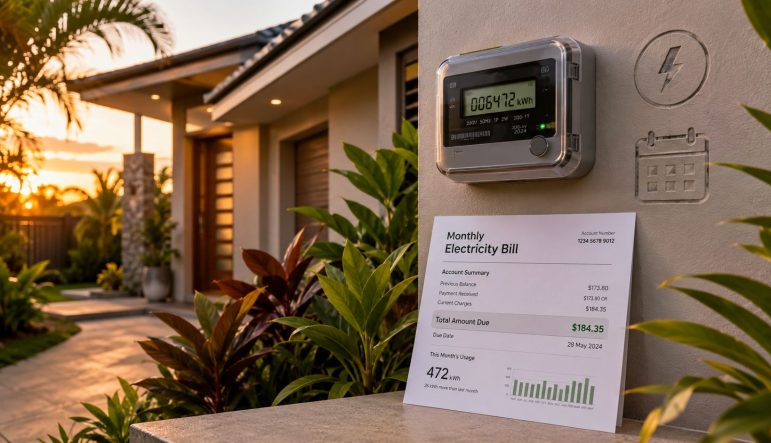
You open the power bill, scan to the total, and wonder how it got there so fast.
That's a common Brisbane conversation, especially after a long humid stretch where the air con barely stops, the hot water system keeps working in the background, and a few older appliances draw power every day. A single dramatic cause is uncommon. Instead, a handful of ordinary things stack up at once.
The mistake is comparing your house to some vague national average and assuming something must be wrong if your bill looks high. Sometimes there is a fault. Often, though, the better question is simpler. What in this particular home is driving the bill up?
A lot of bill shock starts the same way. Summer hits hard, the bedrooms need cooling at night, the living area air con runs most afternoons, and nobody thinks much about it until the statement arrives. Then the total looks out of proportion to how the household felt it was living.
In Brisbane, that reaction makes sense. Houses here deal with heat, humidity, long cooling seasons, older switchboards in established suburbs, and a mix of tariffs that many homeowners haven't reviewed in years. Add electric hot water or an ageing pool pump, and the bill can climb without any obvious single culprit.
One practical place to start is with your own usage pattern, not the retailer's marketing summary. If you've never checked how your meter lines up with the bill, this guide on how to read your electricity meter is worth a look. It helps you separate a real usage spike from a billing surprise.
Practical rule: A high bill usually comes from either heavy consumption, the wrong tariff for your habits, or equipment that's running inefficiently. Sometimes it's all three.
Homeowners also tend to chase the wrong fixes first. They'll unplug a phone charger and ignore the ducted air con, or swap a few bulbs while an old electric storage hot water system does the expensive work in the background. Broader homeowner resources on ways to lower your electric bill can be useful for quick ideas, but actual savings usually come from identifying the biggest loads in your own house.
Most Brisbane homes can cut waste once the main drivers are clear. The key is to stop treating the average electric bill per month like a target and start treating your bill like a diagnostic tool.
The cleanest national benchmark available is this. In Australia, the average annual household electricity bill was estimated at A$1,740, which works out to about A$145 per month before household-specific differences in usage, tariffs, or rebates, based on the ABS-conducted household energy survey for 2022 to 2023 as cited by Electricity Plans.
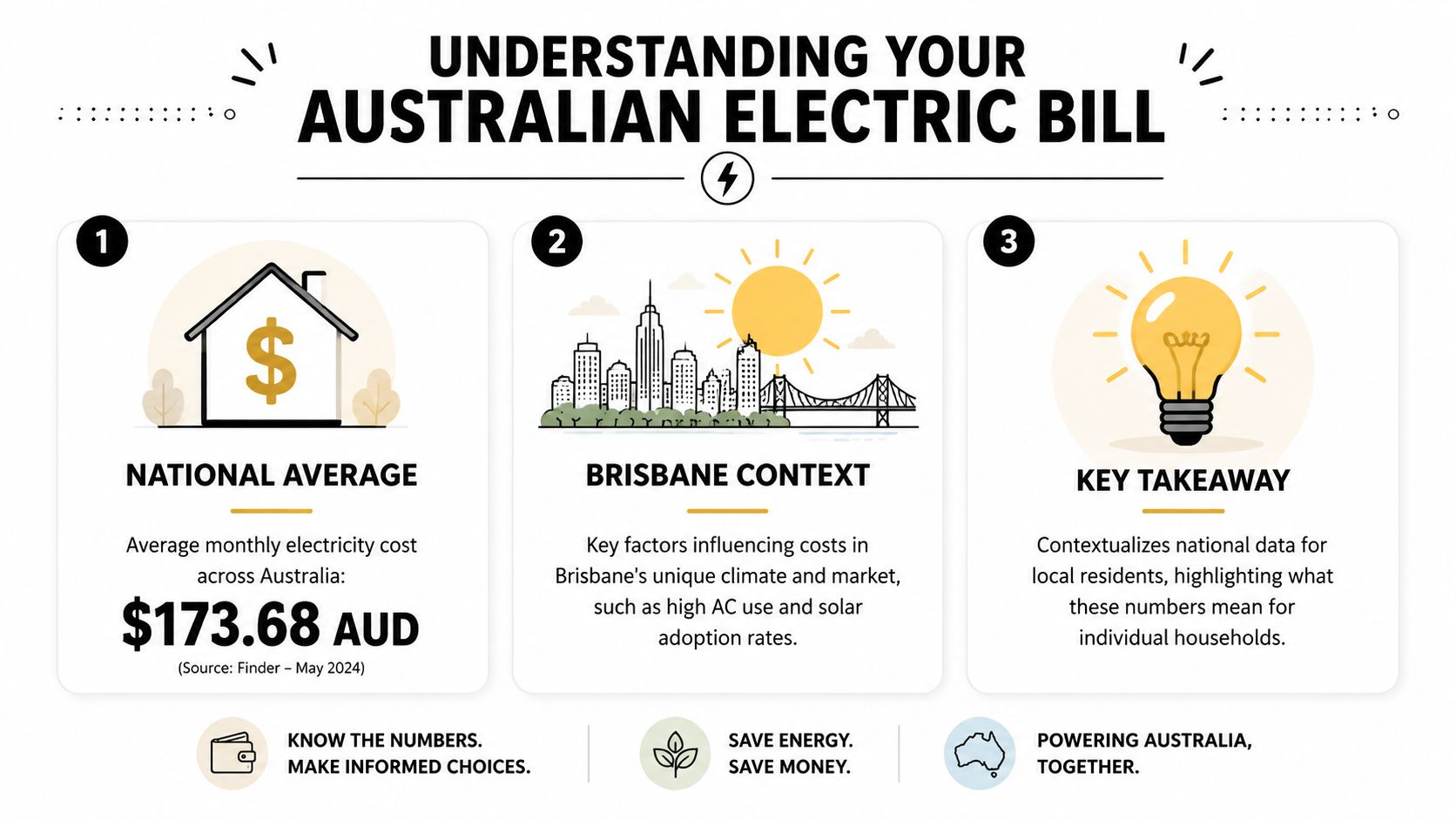
That figure is useful as a reference point. It isn't a promise, and it isn't a Brisbane-specific expectation. If you live in a Queensland home with regular air-conditioning use, electric hot water, a larger household, or a tariff that doesn't suit when you use power, your real bill can land well above or below that number.
A bill is usually made up of two broad parts:
| Bill part | What it means in practice |
|---|---|
| Supply charge | The fixed cost of being connected, whether you use much power that day or not |
| Usage charge | What you pay for the electricity your home actually consumes |
The national average smooths all of that into one broad figure. It blends different climates, different home sizes, different appliance mixes, and different network conditions. That's why homeowners often get frustrated when they compare their statement to an average and feel they must be overpaying.
In Brisbane, usage often does the heavy lifting on the bill. Cooling loads can run hard for months. A house with western sun, poor shading, older insulation, or a family that's home through the day won't behave anything like a mild-climate household that barely uses air con.
Averages help with orientation. They don't diagnose your house.
If you want to understand your average electric bill per month properly, ask these questions instead:
For Brisbane homeowners, the national benchmark is only the starting line. The bill gets easier to understand once you tie it back to local conditions and the actual equipment in the home.
Most high bills in Brisbane come from a short list of repeat offenders. The trick is knowing which ones matter in your house, because not every expensive bill is caused by the same thing.
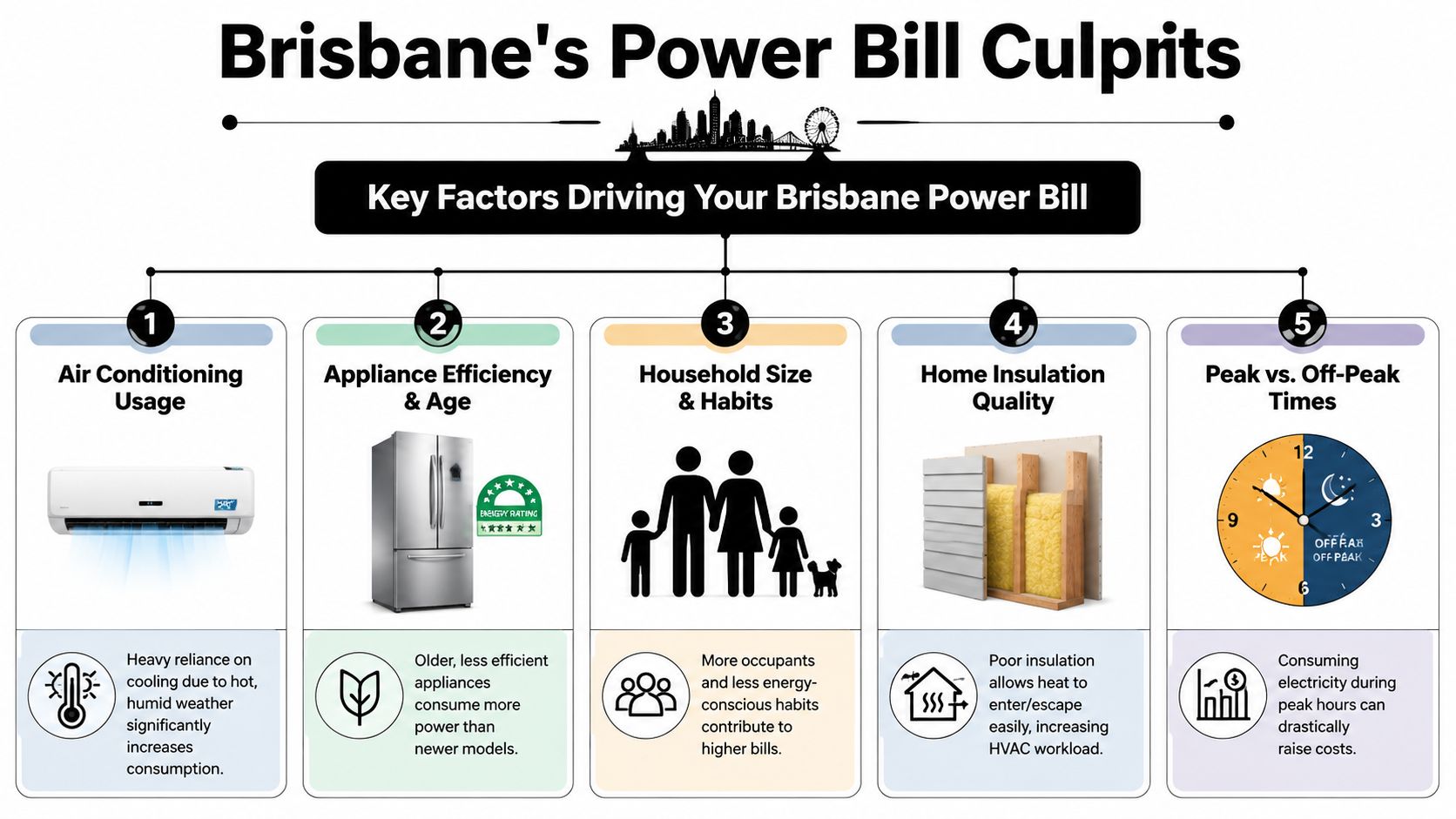
Cooling is usually the first place I'd look in a Brisbane home. Not because air con is bad, but because it's often doing more work than the homeowner realises. A unit that runs through the afternoon sun, tries to cool unused rooms, or struggles against poor sealing around doors and windows will stay on longer and cycle harder.
That's also why heat gain matters. While a lot of window-performance content is written for other climates, the logic still applies here. These SHGC insights for Atlanta drivers explain heat gain clearly, and the same principle helps homeowners think about how glazing, tinting, and sun exposure affect indoor temperature.
Common Brisbane air con cost drivers include:
Hot water catches people off guard because it doesn't feel dramatic. There's no big motor noise in the lounge room, and it doesn't announce itself the way an air con does. But older electric storage systems can be a steady background cost, especially if the thermostat, element, timer, or insulation isn't performing well.
If you're not sure where your main household loads sit, this breakdown of what appliances use the most electricity gives a practical starting point. In many homes, hot water lands near the top of the list.
If a household says they're careful with lights and small devices but their bill is still stubbornly high, I look at cooling and hot water before anything else.
Two homes can use electricity differently and get very different outcomes from the same retailer. That's where tariff structure matters.
A flat tariff is simple. You pay a steady rate structure for usage regardless of time. A time of use tariff changes the cost depending on when power is consumed. That can work well for some homes, but it can punish the wrong routine. If your biggest loads land in the expensive periods, the tariff can make a high bill feel worse.
A quick mental audit helps:
| Household pattern | Likely bill pressure |
|---|---|
| Home empty most of the day | May suit some time-shifted usage habits better |
| Family home active in late afternoon and evening | Cooling, cooking, showers, and laundry can stack together |
| Electric hot water with poor timing control | Can add cost in the background |
| Pool equipment running at unhelpful times | Can increase avoidable usage costs |
Old fridges, ageing freezers in the garage, inefficient dryers, and tired pool gear all add up. So can switchboards and circuits that weren't designed for the way modern households use power now. A house that's gradually added air con, induction cooking, office equipment, and entertainment loads may have infrastructure that's safe enough to function but no longer efficient or well organised.
That doesn't mean the fix is always a big upgrade. Sometimes it's as simple as controlling run times properly, replacing one poor performer, or correcting a tariff that no longer matches the household's life.
Electricity prices became a bigger cost-of-living issue after 2021, with ABS inflation data showing electricity prices surged sharply during the early 2020s, making efficiency and cost-saving measures more important for household budgets, as noted by Energy Harbor.
That matters because many Brisbane households can't rely on waiting for prices to settle. The practical move is reducing waste inside the home.

The cheapest savings usually come from timing and control.
These aren't glamorous fixes, but they work because they target repeat behaviour.
A small spend can remove a lot of waste if you choose the right area.
Consider these first:
| Upgrade | Why it helps |
|---|---|
| LED lighting | Reduces lighting load and cuts maintenance hassle |
| Smart plugs or timers | Better control over appliances with predictable schedules |
| Air con filter cleaning and servicing | Helps units move air properly and cycle as intended |
| Door seals and simple draught control | Keeps conditioned air where you paid for it |
| Hot water timer review | Stops systems heating at unhelpful times if setup allows |
If you want a broader list of homeowner-friendly ideas, these Florida energy saving strategies are written for a warm climate and map surprisingly well to Brisbane in terms of cooling pressure, shading, and daily usage habits.
The largest savings usually come from fixing the biggest load, not from doing twenty tiny things.
If the system is old, unreliable, or heating inefficiently, it can drag the bill up month after month. This is one area where homeowners often get a better result from repair, control changes, or replacement than from chasing tiny savings elsewhere.
A tariff should fit your routine. If most of your heavy usage happens at the wrong times, the “cheaper” looking plan may not be cheaper in practice. Reviewing bills against how the house operates can be more valuable than chasing headline offers.
Air con replacement, appliance upgrades, solar planning, and switchboard improvements can all make sense. But they only work when they solve the right problem. Replacing a decent appliance won't help much if the underlying issue is poor usage control or a hidden fault.
This guide on how you can save electricity is a practical companion if you want to build a room-by-room action list.
A useful visual rundown sits below.
Worth checking first: If one appliance change would make the biggest difference in your house, it's often not the one you notice most. It's the one that runs longest.
Sometimes the bill isn't mainly about lifestyle or tariff choice. It's your house telling you something electrical isn't right.
If you've already tightened up usage, changed routines, and ruled out obvious seasonal spikes, a stubbornly high power bill can point to a fault, ageing hardware, or a control problem. The biggest concern isn't just cost. It's safety.
Watch for combinations like these:
A faulty appliance can keep drawing power inefficiently. A hot water system can overwork because of control or element issues. A tired switchboard can struggle under modern household loads. None of that is something to ignore.
In older Brisbane homes, the switchboard is often the overlooked centre of the problem. Renovations happen, more circuits get added, larger appliances come in, and the board is expected to keep up with demands it wasn't originally built around.
That can show up as nuisance tripping, unstable performance, or poor fault protection. It can also make diagnosing the actual issue harder because the symptoms appear elsewhere first. A homeowner notices the bill, the lights, or the air con behaviour, but the distribution point is where the underlying story sits.
If the house gives you both cost symptoms and electrical symptoms, treat it as an inspection issue, not a budgeting issue.
Call a licensed electrician when the problem includes any safety signal at all. That means burning smells, heat, buzzing, repeated breaker trips, unexplained outages, or equipment that behaves erratically. It also means any situation where your bill changed sharply and you can't tie it to a normal change in weather or household routine.
Good electrical diagnosis saves money in a different way. It stops households from spending months changing habits while a fault keeps driving the bill from behind the scenes.
The useful takeaway is simple. The average electric bill per month is only a loose benchmark. It isn't one fixed Australian number that tells you what your Brisbane home should cost to run. Usage, tariff structure, and state-level conditions change the answer, and a better question is what a Brisbane household should expect based on its usage, tariff, and major appliances like electric hot water, as summarised by Jackery.
That's why the most effective homeowners don't obsess over averages. They audit the house they live in.
Read your latest bill properly
Look at the tariff, billing period, and whether the jump lines up with weather, occupancy, or a new appliance.
Walk through the house with fresh eyes
Focus on air con, hot water, pool gear, old refrigeration, dryers, and anything that runs on a timer or in the background.
Act on warning signs early
If the bill is high and you've also got flickering lights, breaker trips, or a suspect switchboard, get it checked before it becomes a bigger problem.
Most savings come from a small number of high-impact fixes. In Brisbane, that usually means cooling control, hot water efficiency, tariff fit, and making sure the electrical system itself is healthy.
If your power bills don't make sense, or you're seeing warning signs like tripping circuits, switchboard issues, or unreliable hot water, DLG Electrical can help you sort out what's normal, what's waste, and what needs proper attention. They're a local Brisbane team offering practical advice, quality electrical work, and free, no-obligation quotes.

Master Electrician with over 30 years of experience. Founded DLG Electrical in 2005 after international project work including electrical installations at Stamford Bridge Stadium, London(Home of Chelsea FC).

Local Electricians that can fix all Electric Hot water Systems.
Motion sensor lights are a versatile addition to any home, offering nu
