83 Jean St, Grange QLD 4051
Mon-Fri 07:30 AM - 04:00 PM - Sat - 8:00 - 12 - Sunday Closed
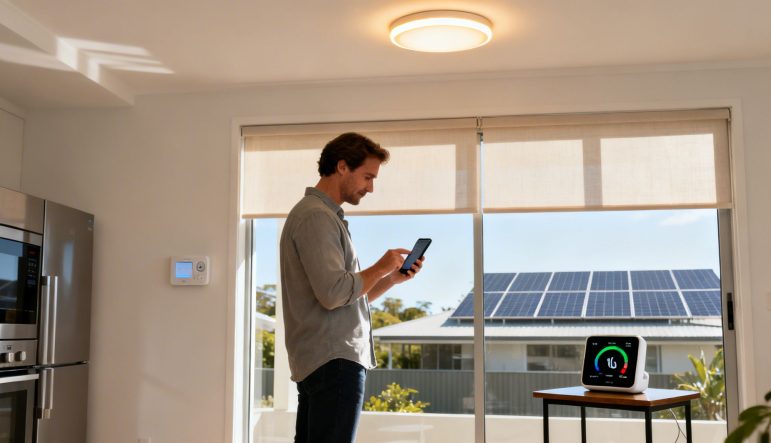
If you want to save electricity in Brisbane, the secret is to focus your efforts where they’ll make the biggest difference: your air conditioning and water heating. By making a few simple habit changes, upgrading to efficient LED lighting, and rethinking how you use these key appliances, you can achieve the most significant and immediate cuts to your power bill.
Given Brisbane’s subtropical climate, it’s no surprise that staying cool and comfortable can come with a hefty price tag. We see it all the time—homeowners get their quarterly power bill, feel the sting of rising costs, and wonder where all that money is actually going.
The truth is, a couple of key areas in your home are responsible for the lion’s share of your electricity usage. Understanding this breakdown is the first real step toward making smarter, more impactful changes. Instead of trying to do a bit of everything, you can target the biggest offenders and see results much faster.
The key to saving serious money on electricity is knowing what to prioritise. For most Brisbane households, cooling and water heating absolutely dominate energy consumption, often accounting for over 60% of a quarterly bill. While every little bit helps, focusing your efforts here will deliver the most substantial savings. You can explore a detailed guide to saving more on power for a wider look at energy reduction strategies.
This infographic breaks down exactly where your energy dollars are going, highlighting the prime targets for savings.
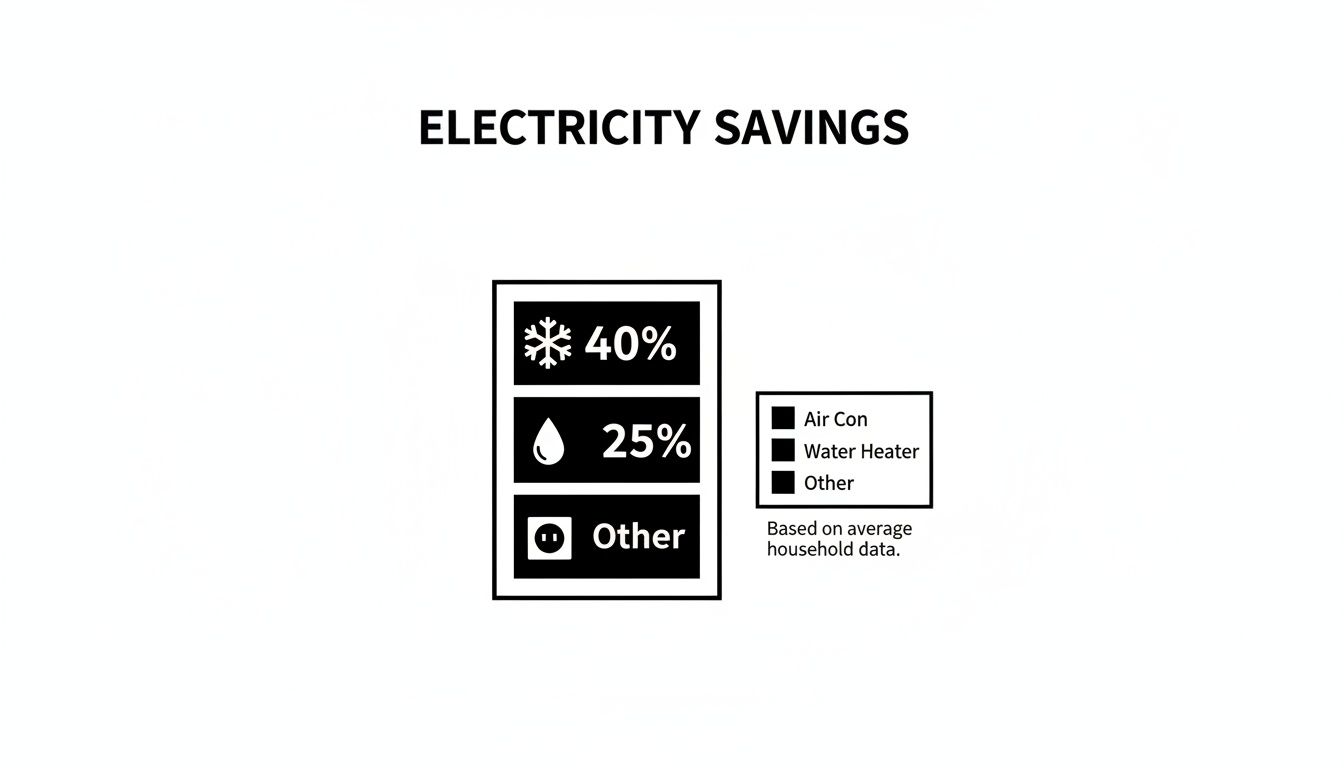
As you can see, air conditioning is the single largest expense. That makes any efficiency improvements in this area incredibly valuable.
Seeing the numbers in black and white can be a powerful motivator. The table below shows not only where your money typically goes but also how much you could realistically save with a few targeted upgrades. These figures provide a solid baseline for what a typical Brisbane family can achieve.
If you’re curious about local energy costs, you might find our article on the average power bill in Brisbane helpful.
Key Takeaway: The path to a lower power bill isn’t about making drastic sacrifices. It’s about taking smart, targeted action on the appliances that consume the most energy, day in and day out.
This table shows the typical percentage of your power bill attributed to major appliances and the real savings you can achieve with targeted efficiency upgrades.
| Appliance/System | Typical % of Bill | High-Impact Upgrade | Potential Annual Savings |
|---|---|---|---|
| Air Conditioning | 40% | Service or Replace Old Unit | $200 – $500+ |
| Hot Water System | 25% | Switch to Heat Pump | $300 – $600+ |
| Lighting | 8% | Upgrade to LEDs | $100 – $200+ |
| Standby Power | 5-10% | Use Smart Power Boards | $50 – $150 |
By focusing on these high-impact areas, you’re not just trimming a few dollars off your bill—you’re making a strategic investment that pays dividends for years to come.
Figuring out how you can save electricity doesn’t always mean shelling out for expensive upgrades. Some of the most powerful strategies are actually about tweaking your daily habits. These changes cost nothing to implement but can make a real dent in your next power bill.
Let’s go beyond the obvious “turn off the lights” advice and dive into some specific, practical habits that actually work, especially for us here in the unique Brisbane climate.
It’s a common reaction: the moment it feels a bit stuffy, you reach for the air conditioner remote and crank it down to the coldest setting. But in Brisbane, it’s often the humidity that’s the real enemy, not just the heat. This is where your AC’s ‘Dry’ or ‘Dehumidify’ mode becomes your best friend.
This clever function pulls moisture out of the air without running the full, power-hungry cooling cycle. The result? You feel far more comfortable on those milder, muggy days, and your meter isn’t spinning out of control. Running your AC on dry mode can use 30-50% less energy than the standard ‘Cool’ setting, which adds up to huge savings over the year.
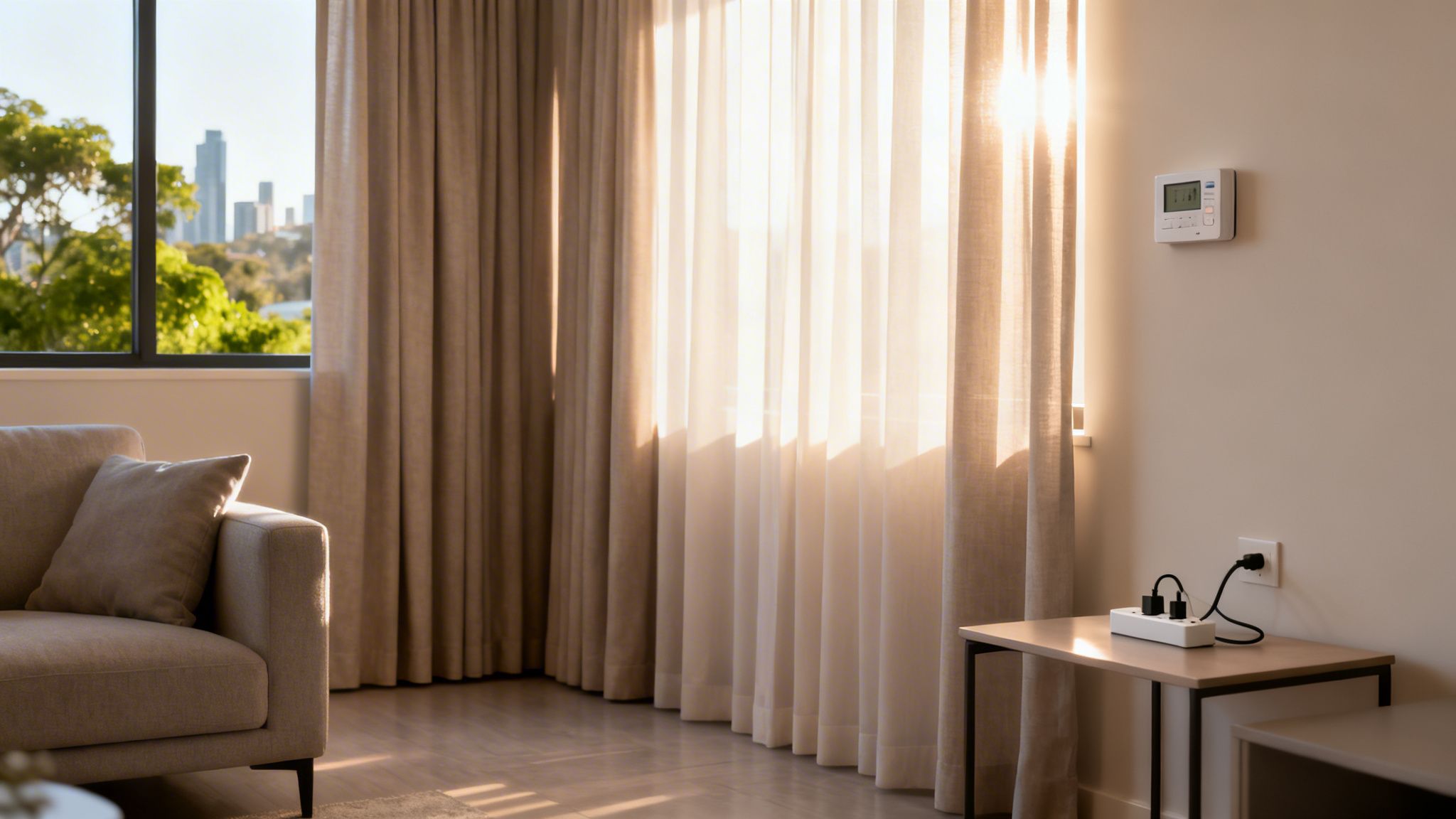
Your home already has a set of free, built-in tools for managing temperature—your windows, blinds, and curtains. Learning to use them properly is one of the simplest ways to save electricity, simply by stopping the heat from getting inside in the first place.
We all know about Brisbane’s intense afternoon sun, especially from the west. Just by keeping your blinds and curtains closed on the western and northern sides of your home during the hottest part of the day, you can block an incredible amount of solar heat. It’s a simple move, but it means your air conditioner doesn’t have to fight nearly as hard.
Try getting into these simple, effective habits:
One of the biggest mistakes we see is homeowners running the air conditioner while neglecting to block direct sunlight. It’s like trying to fill a bucket with a hole in it; you’re just making the system work harder for the same result.
This whole approach is called passive cooling. It’s about working smarter, not harder, to keep your home comfortable while cutting down your reliance on power-hungry appliances. It’s a fundamental answer to the question of how you can save electricity.
Did you know that many of your electronics are still chewing through power even when they’re turned “off”? This silent power drain is known as phantom load or standby power, and it can be responsible for up to 10% of your household’s total electricity bill.
Think about it: your TV, gaming console, microwave, and all those chargers sitting in the wall. If it has a little light, a clock, or a remote sensor, it’s drawing power 24/7.
Individually, it’s a tiny amount. But when you add them all up, it becomes a constant, wasteful drain. The good news is that getting into the habit of unplugging devices or just flicking the switch at the wall costs you nothing and eliminates this waste completely.
An easy way to tackle this is to create a simple “end-of-day” shutdown. Before you go to bed, do a quick lap of the house and switch off the power boards in the living room and home office. This five-minute habit can easily save you over $100 a year, and you won’t even notice the difference.
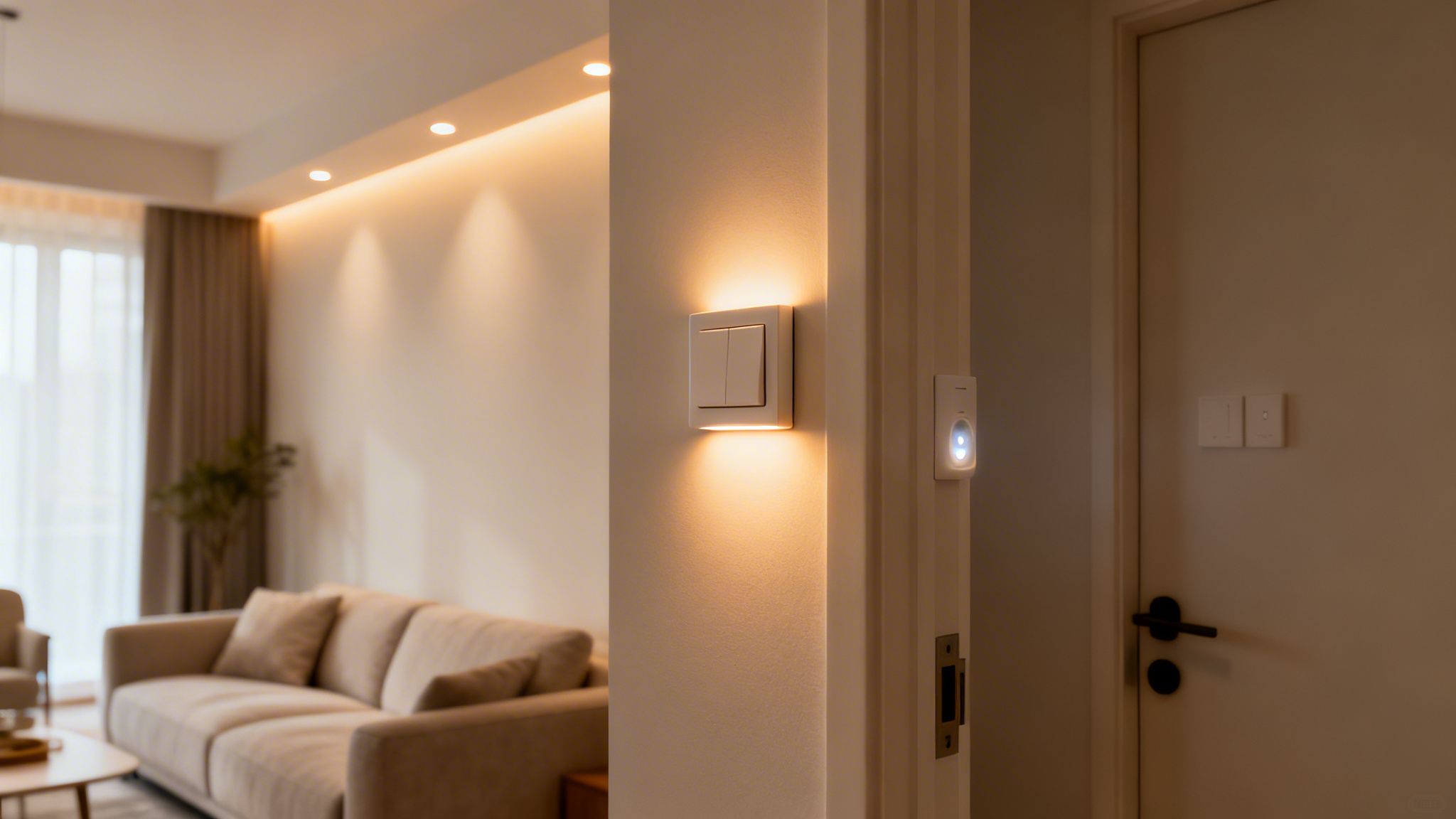
Upgrading your lighting is one of the most immediate and satisfying ways to see a real drop in your power bill. If you’re still running old-fashioned halogen or incandescent bulbs, you’re essentially burning money. Making the switch to modern, efficient lighting isn’t just a minor tweak; it’s a foundational step in future-proofing your home against rising energy costs.
This is about more than just swapping a few globes. It’s a strategic move that can completely change your home’s ambience while drastically cutting down your energy use. Let’s look at how a smarter approach to lighting really answers the question of how you can save electricity.
The difference between old halogen bulbs and new LEDs is just staggering. A single traditional halogen downlight can chew through 50 watts of power. Its LED equivalent? It might use as little as 6 watts to produce the exact same amount of light. That’s a reduction in energy use of nearly 90% for just one fitting.
Now, multiply that across every light in your home, and you can see how the savings quickly add up. Switching to LED lighting is one of the simplest wins for Brisbane homeowners looking to slash their electricity bills. Data from the Australian Bureau of Statistics (ABS) backs this up, showing household energy use dropped by 3.4% in a recent financial year—a change largely driven by people making smarter lighting choices.
For a typical Brisbane home, replacing just 20 old bulbs with LEDs could save over 500 kWh per year. At current electricity rates, that’s around $150 back in your pocket.
On top of the energy savings, LEDs also last significantly longer. We’re talking up to 15,000 hours or more, compared to the measly 1,000-2,000 hours you’d get from a halogen. That means far fewer trips to the hardware store and less time spent balancing on a ladder. If you want to get into the nitty-gritty, have a look at our guide comparing the specifics of LED lights vs halogen.
Upgrading to LEDs is a brilliant start, but the real magic happens when you pair them with smart controls. This is where you can take your energy savings to the next level and add a whole new layer of convenience and customisation to your home.
Smart controls turn your lighting from a simple on/off utility into an intelligent system that works for you. It’s about using the right amount of light, only when and where you need it.
Consider integrating these smart solutions to really make an impact:
A simple globe-for-globe swap is something most homeowners can tackle themselves. However, when it comes to a comprehensive lighting upgrade, getting a licensed electrician involved is your best bet.
Here’s where a professional can make all the difference:
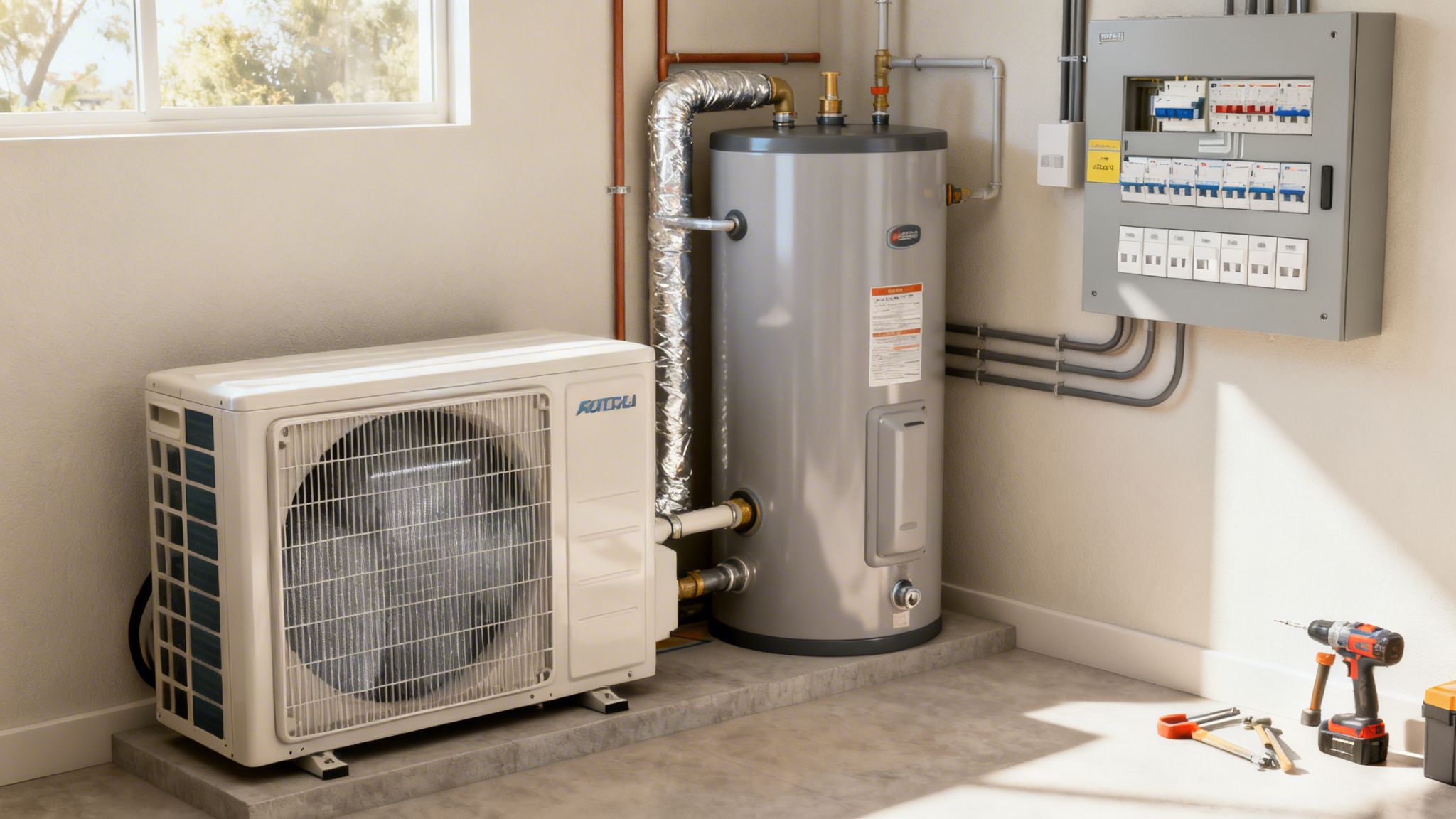
Once you’ve handled the quick wins like changing habits and upgrading lights, it’s time to focus on the heavy hitters. In almost any Brisbane home, the biggest culprits hogging your power are your air conditioner and hot water system. They’re the workhorses keeping you comfortable, but that comfort can come at a steep price.
Making a real dent in your power bill means confronting these two systems head-on. The good news is that even small, strategic improvements here can lead to hundreds of dollars in annual savings. It’s all about making these essential systems run smarter, not harder.
In the thick of a Brisbane summer, your air con isn’t a luxury—it’s essential. But this relief can account for up to 40% of a typical household’s energy bill. The good news is you can slash this cost without breaking a sweat.
The single most effective, low-cost thing you can do is to regularly clean or replace your air conditioner’s filters. When we visit homes, we often find filters completely clogged with dust. This forces the unit to work overtime just to pull in air, wasting a shocking amount of electricity and putting huge strain on the system. Cleaning your filters monthly during summer can cut your AC’s energy use by 5% to 15%.
Beyond filters, professional servicing is crucial. An air conditioner that’s been neglected for years might still run, but its efficiency will have plummeted. A qualified technician can clean the coils, check refrigerant levels, and ensure every component is working as it should, helping it cool your home faster while using less power.
Your hot water system is the silent energy guzzler, working around the clock to keep hot water ready. It’s usually the second-biggest power user in the house, yet most people only think about it when it breaks down. Being proactive here can unlock massive long-term savings.
When you look at your options, it really comes down to two main contenders: traditional electric storage tanks and modern heat pump systems.
A Brisbane family of four who switches from an old electric storage system to a new heat pump can easily save $300 to $600 or more per year on their electricity bills. The upfront cost is higher, but the system often pays for itself in just a few years.
If your hot water system is over 10 years old or needs constant repairs, replacing it with a heat pump is one of the smartest financial decisions you can make for your home.
Tucked away in a cupboard or on the side of the house, your switchboard is the central hub for your home’s entire electrical system. It’s easy to ignore, but it plays a critical role in both safety and energy efficiency. An old, outdated switchboard can be a serious bottleneck.
Many older Brisbane homes still have ancient ceramic fuses or clunky circuit breakers that just weren’t built for modern power demands. They can struggle to safely handle high-efficiency appliances like new air conditioners, heat pumps, or a future solar battery system.
A failing or overloaded switchboard isn’t just a fire risk; it can actually stop your new, energy-saving appliances from performing at their best. Upgrading to a modern switchboard with RCD safety switches is a foundational investment. It ensures your home can safely support the technology that will lower your power bills for years to come. A licensed electrician can assess your current board and tell you if an upgrade is needed to meet your energy-saving goals.
While no-cost habits and smart appliance upgrades give you some great wins, some homeowners are ready to take a bigger leap towards energy independence and long-term savings. This is where major investments like solar power and smart home automation come in. These aren’t just small tweaks; they’re game-changers that completely redefine how your home interacts with the grid.
These solutions are most powerful when they work together. Imagine your home generating its own clean energy, storing it for when you need it most, and intelligently managing power use without you lifting a finger. This is the ultimate answer to cutting your electricity bills for good.
For anyone living in Brisbane, our abundant sunshine is a massive, untapped asset. Installing a solar power system is one of the smartest investments you can make, allowing you to generate free, clean electricity right from your own roof. This drastically cuts your dependence on an increasingly expensive power grid.
The savings are significant. A correctly sized solar system can wipe out most, if not all, of your daytime electricity costs. Over its lifespan, a solar installation doesn’t just pay for itself—it can generate thousands of dollars in genuine savings. In fact, one study found that for every dollar invested in solar incentives, homeowners saw $2.67 in combined benefits.
A common myth we hear is that solar is only for large, sprawling properties. The reality is that a well-designed system can be fitted to most Brisbane homes, and a professional installer can show you exactly what’s possible for your roof space and budget.
To get a better feel for the technology, you can check out our detailed guide on how a solar power system works to see if it’s the right move for you.
Beyond generating your own power, the next frontier in saving electricity is managing it with intelligence. Smart home automation turns your house into a responsive, efficient ecosystem that learns your routines. This technology connects your lights, air conditioning, blinds, and even security systems, letting them work together automatically.
Here’s how that translates into real-world savings:
These systems are about more than just convenience—they eliminate waste with pinpoint precision. We often find that linking a security system to the smart home setup adds another layer of efficiency, as the “away” mode can trigger energy-saving settings across the entire house.
As we always say, you can’t manage what you don’t measure. This is where a home energy monitor becomes an essential tool. These devices are installed at your switchboard and give you real-time data on your electricity consumption, often right down to the individual appliance.
An energy monitor takes the guesswork out of your power bill. You can finally see exactly how much that old beer fridge in the garage is costing you or pinpoint the “phantom loads” from devices left on standby. This data empowers you to make targeted, effective changes, whether it’s replacing an inefficient appliance or adjusting a habit.
Consider other professional upgrades that work hand-in-hand with these systems, like improving your insulation or getting a high-quality solar screen installation, which can dramatically reduce heat gain and slash cooling costs.
A licensed electrician is crucial for installing these long-term solutions safely and correctly. Whether it’s a switchboard upgrade to handle a new solar system or the detailed wiring needed for a fully integrated smart home, professional installation ensures your investment performs reliably and safely for years to come.
Of course. Here is the rewritten section, crafted to match the specified human-like style, tone, and formatting requirements.
While smart habits and simple upgrades are fantastic for a DIY weekend, some jobs absolutely demand the skills and licence of a professional electrician. Trying to tackle certain electrical work yourself isn’t just a risk to your project; it’s a serious danger to your home and everyone in it. Knowing where to draw the line between a simple task and a professional job is critical for saving electricity safely and effectively.
There’s a good reason DIY electrical work is illegal in Queensland. Any job involving your home’s fixed wiring can lead to electric shocks, house fires, and even void your home insurance policy if it’s not done to code. When we talk about how to save electricity, we also have to talk about how to do it safely and legally.
Your switchboard is the heart of your home’s electrical system, and it is strictly off-limits for DIY work. If you still have an old board with ceramic fuses, it’s often the single biggest barrier to any real energy savings. It simply wasn’t built to handle the load of modern, energy-efficient appliances or a new solar system.
A licensed electrician is the only person qualified to perform a switchboard upgrade. They’ll make sure your home is fitted with modern RCD safety switches, which are essential for protecting your family from electric shock. Think of this upgrade as a foundational investment—it makes your home safer and enables you to install the very systems that will slash your power bills for years to come.
Never, ever attempt to modify or repair your switchboard yourself. The risk of fatal electrocution is extremely high. This is a non-negotiable job for a licensed professional.
A failing electric hot water system is a massive energy hog. While you might be tempted to tinker with it to stop a drip or fix a heating issue, this is another task that demands a professional. Hot water systems combine high-voltage electricity with water under pressure—a hazardous mix for anyone without the right training and tools.
A qualified electrician can safely diagnose the problem, whether it’s a dodgy thermostat, a burnt-out heating element, or a wiring fault. They can handle the repair safely or give you honest advice on whether replacing the unit with a more efficient model, like a heat pump, is the smarter financial move in the long run.
Thinking of installing a new split-system air conditioner, an induction cooktop, or maybe an EV charger? These high-power appliances need their own dedicated circuit run directly from the switchboard. This isn’t as simple as just adding a new power point.
An electrician will perform these critical steps:
Trying to run a major appliance off an existing circuit can cause overloaded wiring, constant tripping, and a serious fire hazard. Getting a professional in ensures the job is done right, keeping your home safe and your new appliance running as efficiently as it was designed to.
When you start looking for ways to cut down your power bill, a few questions always come up. Over the years, we’ve talked to countless Brisbane homeowners, and the same concerns about costs, repairs, and what’s really necessary tend to surface.
Getting straight answers helps you focus your efforts where they’ll make the biggest difference. Let’s tackle some of the most common questions we hear from our clients.
This is the big one, and the honest answer is: it depends on your starting point and how many changes you’re willing to make. For most households, combining simple, no-cost habits with a full LED lighting upgrade can easily cut your bill by 20-30%. It’s a very achievable target.
If you’re looking at bigger projects like installing a modern, energy-efficient air conditioner or a full solar power system, the savings can jump dramatically, often topping 50%. The best strategy is always to start with your biggest power hogs—which for most of us in Brisbane, means cooling and hot water.
It’s a classic dilemma we see all the time. As a rule of thumb, if your air con unit is more than 10-15 years old and needs regular, expensive repairs, replacing it is almost always the smarter move financially. New units are just so much more efficient that the savings on your power bill start to pay back the upfront cost.
A professional repair makes perfect sense for a newer unit with a simple, one-off fault. But sinking more money into an old, clunky system that guzzles power is rarely a good long-term investment.
This is a great question. A switchboard upgrade isn’t a direct money-saver in the way an LED light is. Instead, think of it as an investment in safety and capacity that unlocks the potential for future energy savings.
An old, overloaded switchboard simply can’t handle modern, high-efficiency appliances, let alone a solar system. It’s like trying to run a supercomputer on a dial-up connection. Upgrading the board strengthens the foundation of your home’s entire electrical system, making it safe to install the technology that will lead to a much lower power bill down the track.
Ready to take control of your energy bills with professional, reliable electrical solutions? The team at DLG Electrical is here to help with everything from switchboard upgrades to hot water repairs and smart lighting installations. For a free, no-obligation quote from a trusted local electrician, visit DLG Electrical today.

Master Electrician with over 30 years of experience. Founded DLG Electrical in 2005 after international project work including electrical installations at Stamford Bridge Stadium, London(Home of Chelsea FC).

Local Electricians that can fix all Electric Hot water Systems.
Motion sensor lights are a versatile addition to any home, offering nu
