83 Jean St, Grange QLD 4051
Mon-Fri 07:30 AM - 04:00 PM - Sat - 8:00 - 12 - Sunday Closed
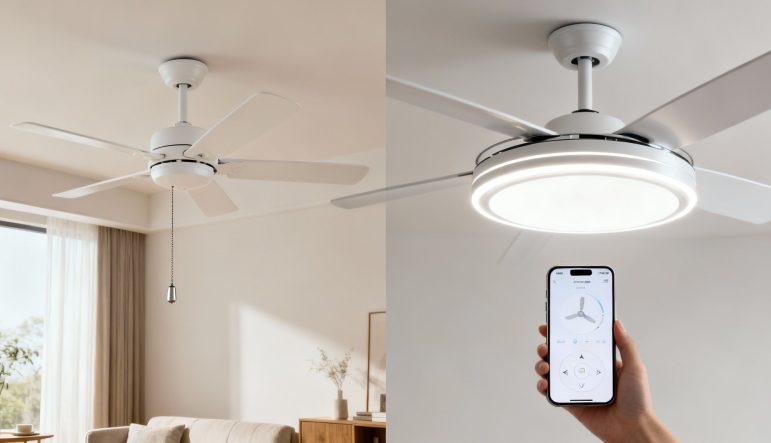
For Brisbane homeowners, the DC vs AC ceiling fan debate often comes down to a simple choice: modern efficiency or traditional reliability. DC fans are the premium option, offering whisper-quiet operation and serious long-term energy savings. On the other hand, AC fans are the budget-friendly workhorses that get the job done with a lower upfront cost.
Deciding between DC and AC technology will affect everything from your electricity bill to the amount of noise you hear in your bedroom at night. While both types of fans will cool a room, the way they work is fundamentally different. This leads to clear advantages in performance, control, and long-term value.
One uses advanced electronics for incredible precision and efficiency, while the other relies on a straightforward, time-tested design. This initial comparison is crucial for understanding how these differences translate into real-world benefits for your home. For instance, the near-silent operation of a DC fan makes it an obvious choice for bedrooms and home offices, whereas a robust AC fan might be the perfect fit for a garage or outdoor patio.
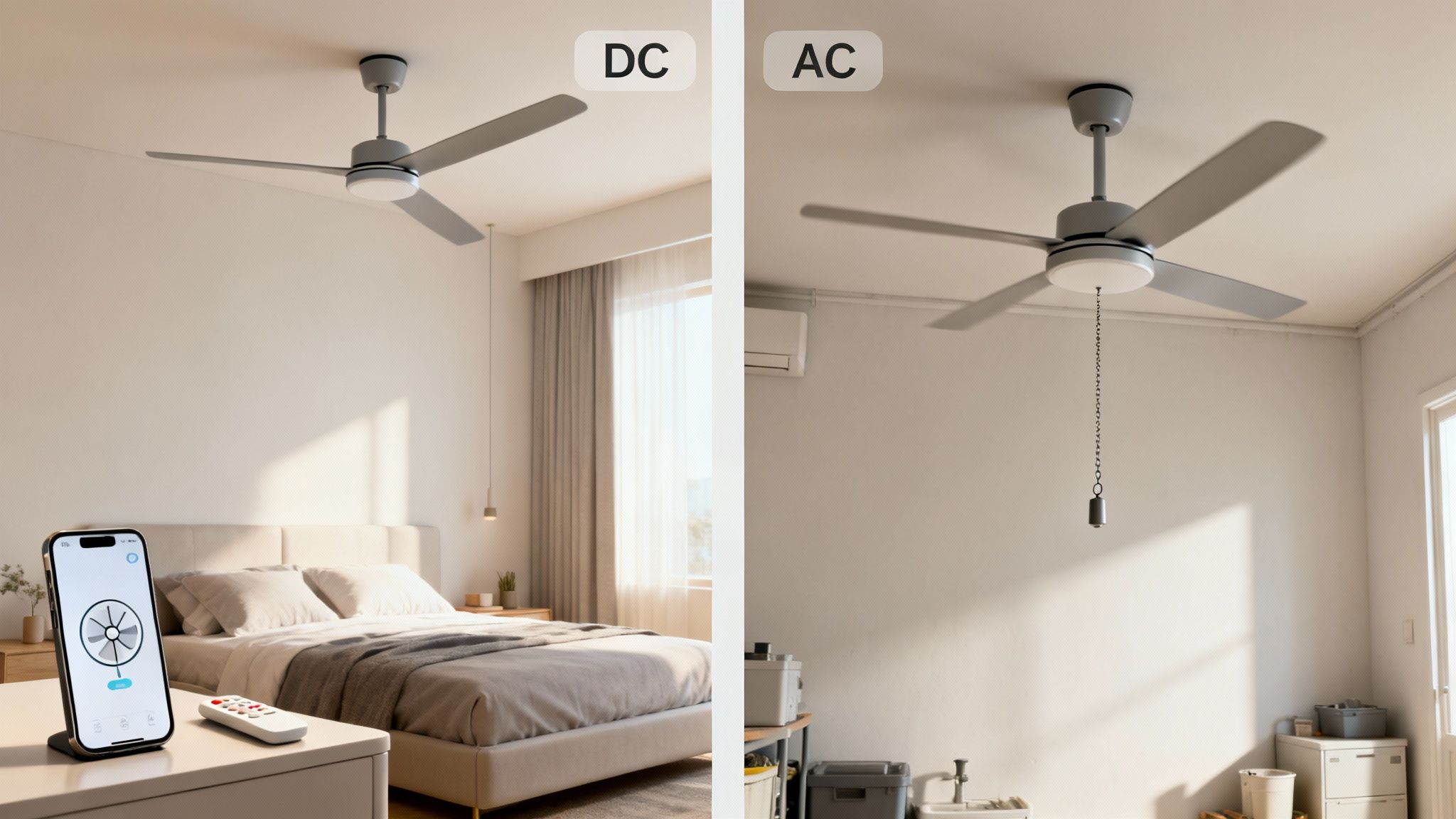
To help you see the core distinctions at a glance, here’s a simple breakdown of the most important attributes for each fan type. Think of this table as a high-level overview before we dive deeper into what these differences really mean for your home.
| Attribute | DC Ceiling Fan | AC Ceiling Fan |
|---|---|---|
| Energy Use | Highly efficient, uses up to 70% less power (typically <30W) | Standard efficiency (typically 60-100W on high) |
| Noise Level | Virtually silent due to a brushless motor | Can produce a noticeable hum, especially at low speeds |
| Speed Options | More precise control with 5-6+ speed settings | Limited control, usually with 3 standard speed settings |
| Upfront Cost | Higher initial purchase price | Lower initial purchase price |
| Features | Often includes remote control, reverse function, and smart home integration | Typically basic controls (pull chain or wall switch) |
| Motor Size | More compact and lightweight, allowing for sleeker designs | Larger and heavier motor construction |
As you can see, the choice isn’t just about price. It’s about balancing upfront cost against long-term running costs, noise, and the level of control you want.
To really get to the bottom of the DC vs AC ceiling fan debate, you have to look under the bonnet at the engine driving everything. The core difference in their motor technology is the source of every single benefit you hear about, from crazy energy savings to that whisper-quiet performance everyone wants. It’s the one thing that should steer your decision.
The AC (Alternating Current) motor is the classic, the old reliable. It hooks straight into your home’s standard AC power, using that alternating current to create a magnetic field that spins the blades. The design is dead simple and has been around for ages, but it’s a bit of a blunt instrument—not very precise or efficient by today’s standards.
A DC (Direct Current) fan, on the other hand, is a much smarter bit of kit. It also plugs into your home’s regular AC wall socket, but here’s the clever part: it has a small transformer inside that converts the power from AC to DC before it even hits the motor. This conversion is the secret sauce behind its superior performance.
By using direct current, the motor can manage electricity with incredible precision. Instead of wrestling with the raw, fluctuating current from the grid, it uses a system of opposing magnets to create a smooth, highly controlled rotation.
Here’s a simple way to think about it: an AC motor is like a standard garden hose with a basic on/off nozzle—it gets the job done, but the control is limited. A DC motor is more like a high-tech irrigation system, precisely managing the flow for maximum impact with almost zero waste. This fine-tuned control is what makes DC fans so incredibly quiet and efficient.
This internal conversion process is what truly sets a DC fan apart. The ability to precisely control the electrical current delivers tangible benefits you’ll notice straight away:
This leap in technology means a DC fan isn’t just another fan; it’s a more advanced piece of equipment built for modern energy demands and comfort. The motor’s design also allows for more compact and lightweight builds, which is why you see so many sleek, contemporary fan styles that look right at home in modern Brisbane properties.
With Brisbane’s electricity prices always on the move, the long-term running cost of a ceiling fan is a massive factor in any decision. Forget the technical jargon for a minute; let’s break down the real-world financial impact of choosing between a DC and an AC ceiling fan. The difference in how much power they use is where the true savings really start to stack up.
A standard AC ceiling fan can pull up to 100 watts on its highest setting. In contrast, a modern DC fan is remarkably efficient, often using less than 30 watts at full speed. This isn’t just a minor difference—it’s a huge drop in energy use that translates directly into lower power bills.
Let’s put this into a practical scenario for a typical Brisbane home. Imagine you’re running a fan for eight hours a day during the six warmer months of the year (that’s roughly 180 days).
Assuming an electricity rate of 30 cents per kWh, the annual running cost for the AC fan would be about $43.20. The DC fan? Just $12.96. That’s a saving of over $30 per year, for a single fan. If you have three or four fans in your home, those savings multiply quickly. You can get a better handle on these numbers by checking out our guide on how to calculate electrical energy consumption.
A DC ceiling fan can easily pay back its higher upfront cost through energy savings within just a few years. Over its decade-plus lifespan, it represents a much smarter financial investment for any household looking to keep their power bills under control.
This push towards efficiency isn’t just a niche trend. The Australian ceiling fan market is seeing a major shift towards energy-saving DC motor technology, which consumes 30-50% less electricity than the older AC motors. For Brisbane homeowners, this means substantial long-term savings.
This infographic breaks down the simple but crucial power conversion process that makes DC motors so much more efficient.
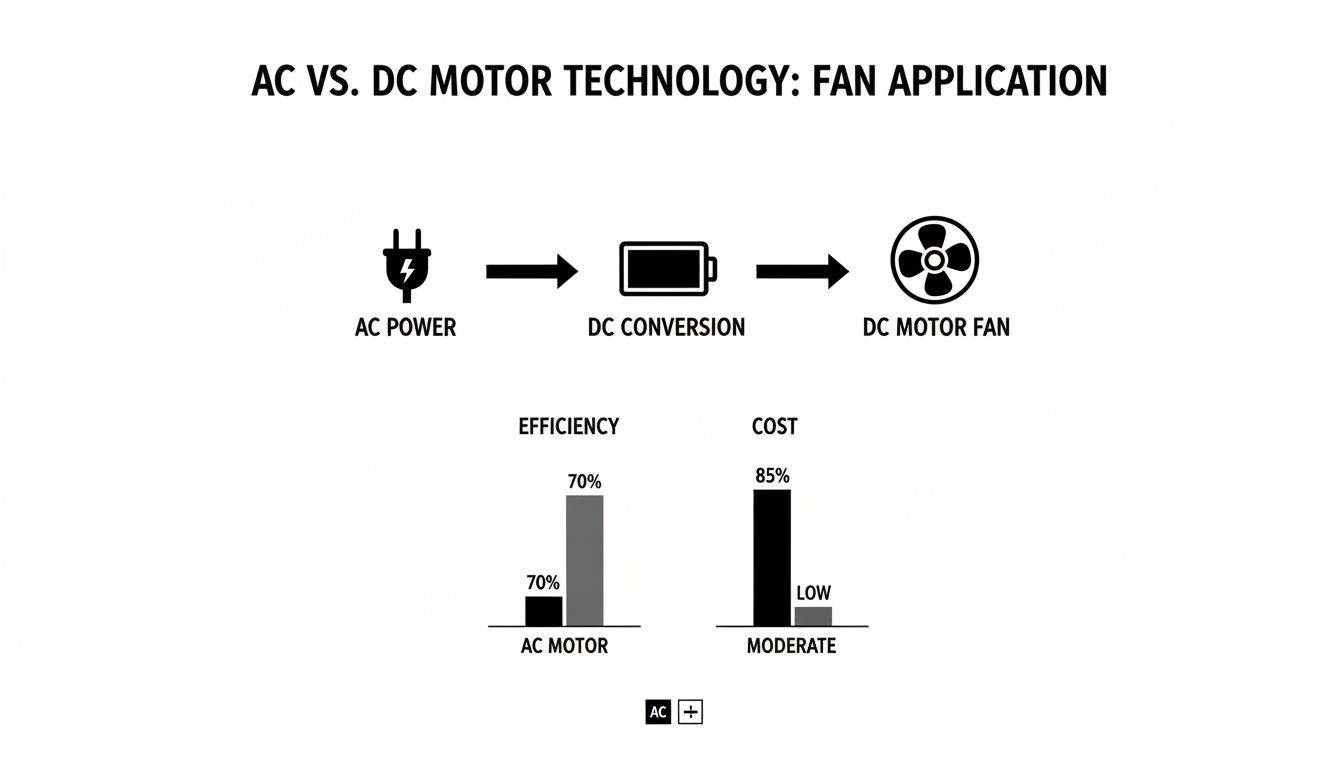
The key takeaway is that by converting AC power to DC internally, the fan gains precise control over its speed and drastically cuts down on wasted energy.
Ultimately, while an AC fan might look cheaper on the shelf, the DC fan is the clear winner when it comes to the total cost of ownership. For anyone trying to rely less on their air conditioner, exploring ways to keep your house cool without AC can offer even more insights into smart and efficient climate control at home.
Beyond energy bills and the mechanics of the motor, the real test of a fan is how it feels and sounds in a room. This is where the DC vs AC ceiling fan debate gets personal, impacting everything from your sleep quality to your daily comfort. The differences in noise, airflow precision, and control options are significant, and this is where you’ll notice the user experience truly diverge.
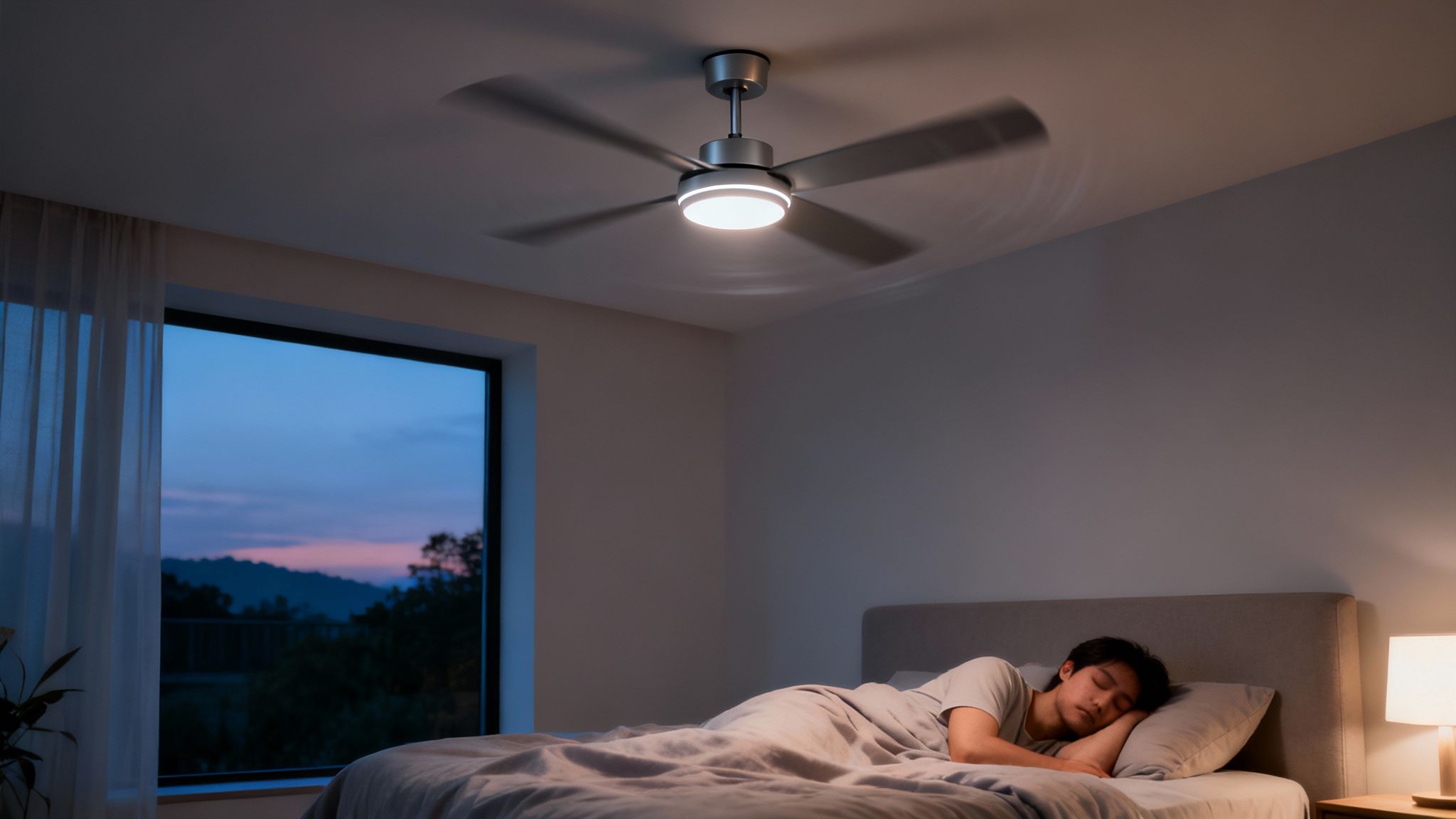
Perhaps the most celebrated feature of a DC fan is its near-silent operation. The magic is in the brushless motor, which uses magnets and a precisely controlled direct current. This design minimises electrical friction, getting rid of that persistent hum you often hear from older fans.
AC motors, on the other hand, can produce a noticeable electrical hum, particularly on lower speed settings. It might not be loud, but in a quiet space like a bedroom, nursery, or home office where you need to focus, that constant sound can be a real distraction.
The amount of control you have over airflow is another huge point of difference. AC fans are pretty basic here, usually giving you just three options: low, medium, and high. This often leaves you stuck choosing between a gale-force wind or not quite enough of a breeze.
This is an area where DC fans really shine. They provide a much wider range of speed settings—it’s not uncommon to find a DC fan with six or more speeds. This lets you perfectly fine-tune the airflow, from a barely-there gentle circulation to a powerful downdraft for those scorching Brisbane afternoons.
For spaces where precise comfort is key—like a living room when you have guests over or your bedroom at night—the granular control of a DC fan delivers a far superior experience. You can adjust the airflow to match the exact conditions of the room.
How you actually interact with your fan also plays a big part in its day-to-day performance. The control methods for each type of fan are a direct reflection of their underlying technology.
This advanced control package makes DC fans far more versatile and convenient for everyday life. While AC fans are dependable workhorses, the DC vs AC ceiling fan performance comparison clearly shows that DC technology delivers a quieter, more adaptable, and finely controlled cooling solution. As you plan your installation, don’t forget to check out these helpful ceiling fan tips and tricks to get the most out of your new fan.
Ceiling fans aren’t just for moving air anymore. They’ve become central pieces of a connected home, and this is where the DC vs AC ceiling fan debate becomes less about mechanics and more about lifestyle. The advanced motor in a DC fan opens up a world of convenience and control that older AC models just can’t compete with.
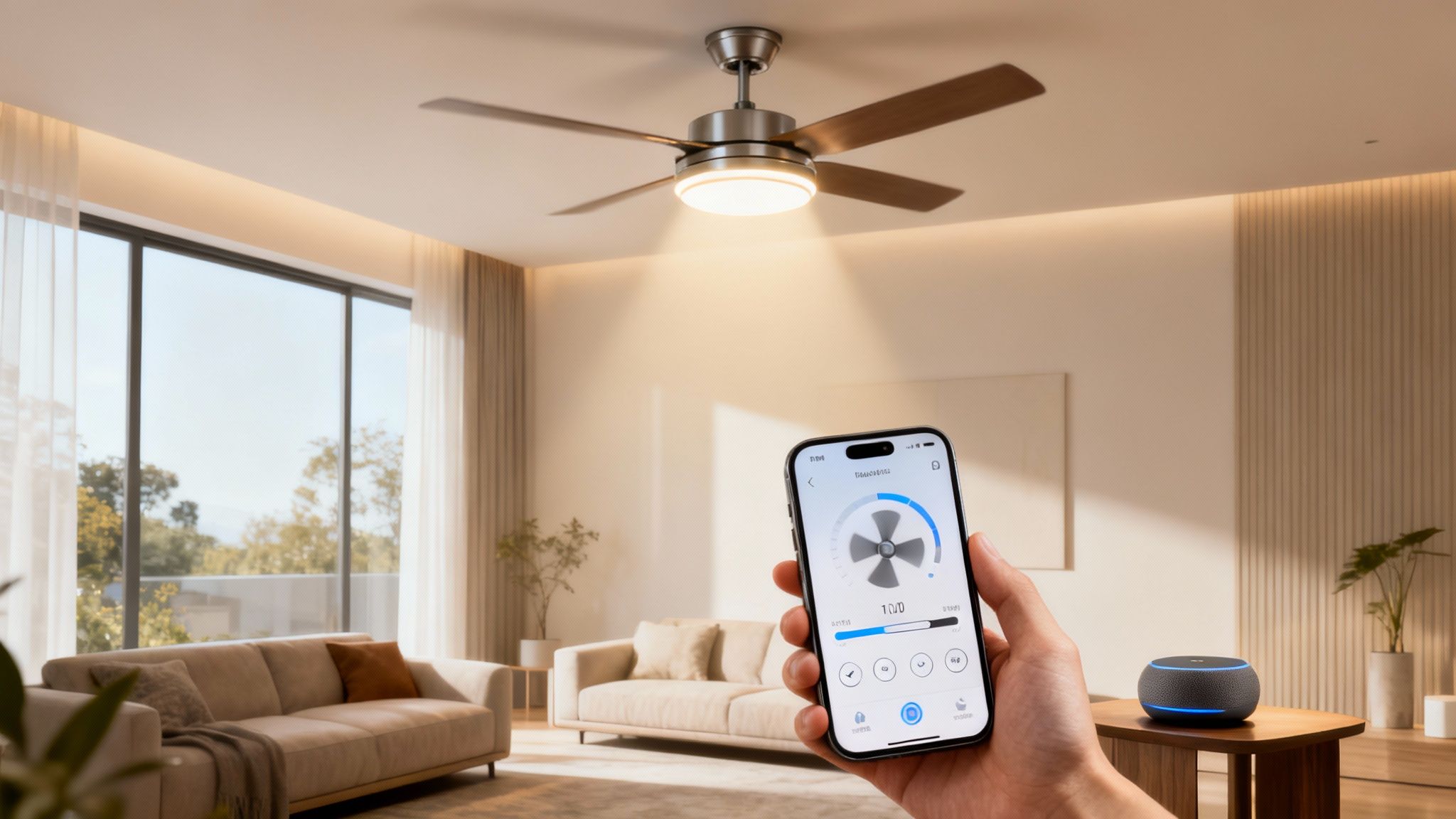
While your typical AC fan is still operated by a pull chain or a simple 3-speed wall dial, almost every DC fan comes standard with a multi-function remote. This single device gives you access to a bunch of genuinely useful features that go way beyond just turning the fan on.
These handy remote functions on a DC fan usually include:
The biggest leap forward for DC fans is how easily they fit into smart home setups. Most new DC models now have WiFi built-in, turning them from simple appliances into fully interactive parts of your home.
This lets you control your fan from anywhere using a smartphone app or with voice commands through assistants like Google Assistant and Amazon Alexa. Think about telling Google to turn on the bedroom fan without leaving your bed or scheduling the living room fan to run just before you get home from work.
This level of automation and remote access is a massive upgrade in home comfort. It’s no longer just about airflow; it’s about creating a smarter, more responsive environment that works for you.
This isn’t just a gimmick; it reflects a strong demand from homeowners in Brisbane and across Australia for more efficient, integrated home solutions. The growing smart ceiling fan market shows that people are actively looking for these kinds of features.
For a truly connected home, you can even pair a smart fan with other intelligent devices to boost efficiency even further. Understanding the benefits of smart thermostats, for instance, can help you create a more cohesive and energy-saving climate control system. At the end of the day, the choice between DC and AC is a choice between basic function and modern, connected convenience.
When you’re standing in the aisle comparing ceiling fans, the price tag is often the first thing you notice. It’s true—a traditional AC fan will almost always be cheaper to buy outright. This makes them a tempting choice for quick renovations, investment properties, or if you’re just working to a strict budget. They get the job done reliably at a price point that’s hard to beat.
But the smartest financial call isn’t just about the initial outlay. If you shift your thinking from a simple purchase to a long-term investment, the whole picture changes. That higher upfront cost for a DC fan is really a down payment on better technology, and it’s an investment that pays you back over the life of the fan.
The real story of a DC fan’s value unfolds when you look past the price on the box and consider the total cost of ownership. This isn’t just what you pay at the register; it’s what you’ll be paying on your electricity bills for the next decade or more.
The incredible energy efficiency of DC technology is what really drives this long-term value. As we touched on earlier, a DC fan can slash its energy use by up to 70%. That translates directly to a smaller power bill, quarter after quarter. Over ten years, those savings can easily add up to more than the initial price difference, meaning the fan has literally paid for itself.
The decision to invest in a DC ceiling fan is a strategic upgrade. It adds measurable value to your home through reduced running costs, superior comfort, and modern features, making the higher initial cost a calculated and worthwhile expense.
The payback you get from a DC fan isn’t purely financial. You’re also investing in a better quality of life at home. That near-silent operation is a game-changer in bedrooms and living rooms, and having a wider range of speed settings gives you truly personalised comfort. These models also tend to come with longer warranties, a good sign of their durable, modern build quality.
This move towards more efficient appliances is happening all over the country. The Australian electric fan market is growing, with more and more homeowners looking for cooling solutions that won’t break the bank, especially as power prices climb. DC-powered fans are quickly becoming the preferred choice as people recognise they perform better and keep bills down. You can dig deeper into these market trends in this comprehensive industry report.
So, while an AC fan solves an immediate need for less money today, a DC fan is a smart investment in your future comfort, savings, and overall home value.
Deciding between a DC and AC ceiling fan is just one piece of the puzzle. Getting it installed properly in Brisbane is non-negotiable for safety, performance and legal compliance. Queensland law makes it clear: any hardwired electrical work, including ceiling fans, must be carried out by a licensed electrician.
Going the DIY route might save on labour costs, but it carries major risks. You could face electrical shocks, fire hazards or a poorly mounted fan that wobbles—or worse, falls. On top of that, insurers often deny claims if an unlicensed person has tampered with your wiring, leaving you out-of-pocket for any damage.
From your first call to final sign-off, our team follows a rigorous checklist to deliver a safe, wobble-free installation.
• Wiring Assessment
We start by inspecting your home’s cabling to ensure it can handle a high-efficiency DC motor or a standard AC unit without overloads or safety issues.
• Secure Mounting
Using the right ceiling brace and fasteners, we anchor the fan to structural support—guaranteeing zero wobble every time it runs.
• Correct Connections
Every terminal, switch and optional remote control is wired to comply fully with AS/NZS standards for electrical safety and reliability.
• Final Testing
We operate the fan through all speeds and modes, checking for noise, balance and smooth performance before we pack up.
Hiring a licensed professional isn’t just about following regulations—it’s about peace of mind for you and your family.
Learn more about what goes into a safe and secure setup in our detailed guide on ceiling fan installation.
Ready for a flawless, fully compliant ceiling fan installation in your Brisbane home or business? Visit DLG Electrical today for a free quote and experience the difference our expert team makes.

Master Electrician with over 30 years of experience. Founded DLG Electrical in 2005 after international project work including electrical installations at Stamford Bridge Stadium, London(Home of Chelsea FC).

Local Electricians that can fix all Electric Hot water Systems.
Motion sensor lights are a versatile addition to any home, offering nu
