83 Jean St, Grange QLD 4051
Mon-Fri 07:30 AM - 04:00 PM - Sat - 8:00 - 12 - Sunday Closed
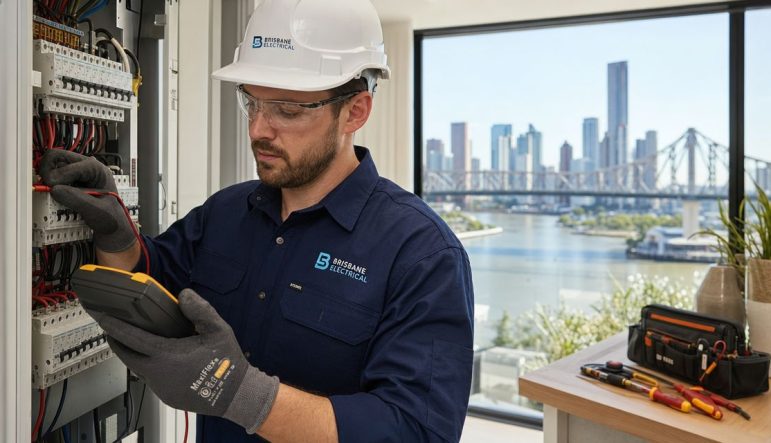
Flickering lights usually start as an annoyance. Then the switchboard trips when the kettle and air fryer run together, or a property manager gets asked for smoke alarm paperwork before a new tenancy starts. That's when the search for a cheap fix stops, and the hunt for a reliable electrician in Brisbane begins, one who can tell them what's wrong, what it will take to fix, and what needs to be done to keep the property safe and compliant.
For homeowners, the stress is usually uncertainty. For landlords, it's timing, legal responsibility, and making sure work is done properly the first time. Electrical work isn't just about getting the power back on. In Brisbane, it often involves licensing, testing, and decisions about whether a small issue is really a sign of a bigger upgrade that shouldn't be put off.
When you call an electrician, you usually want three things straight away. You want someone to turn up, explain the problem in plain English, and do the work safely without creating a bigger issue later.
That matters more in Brisbane than many people realise. With Brisbane's population growing by about 1.7% per annum and an estimated 12,000 to 14,000 licensed electricians in Greater Brisbane, demand for skilled work across housing, renovations, solar, and EV charging keeps rising, as noted in this Brisbane electrician market analysis. A busy market gives you plenty of options, but it also means not every contractor takes the same approach to communication, workmanship, or compliance.
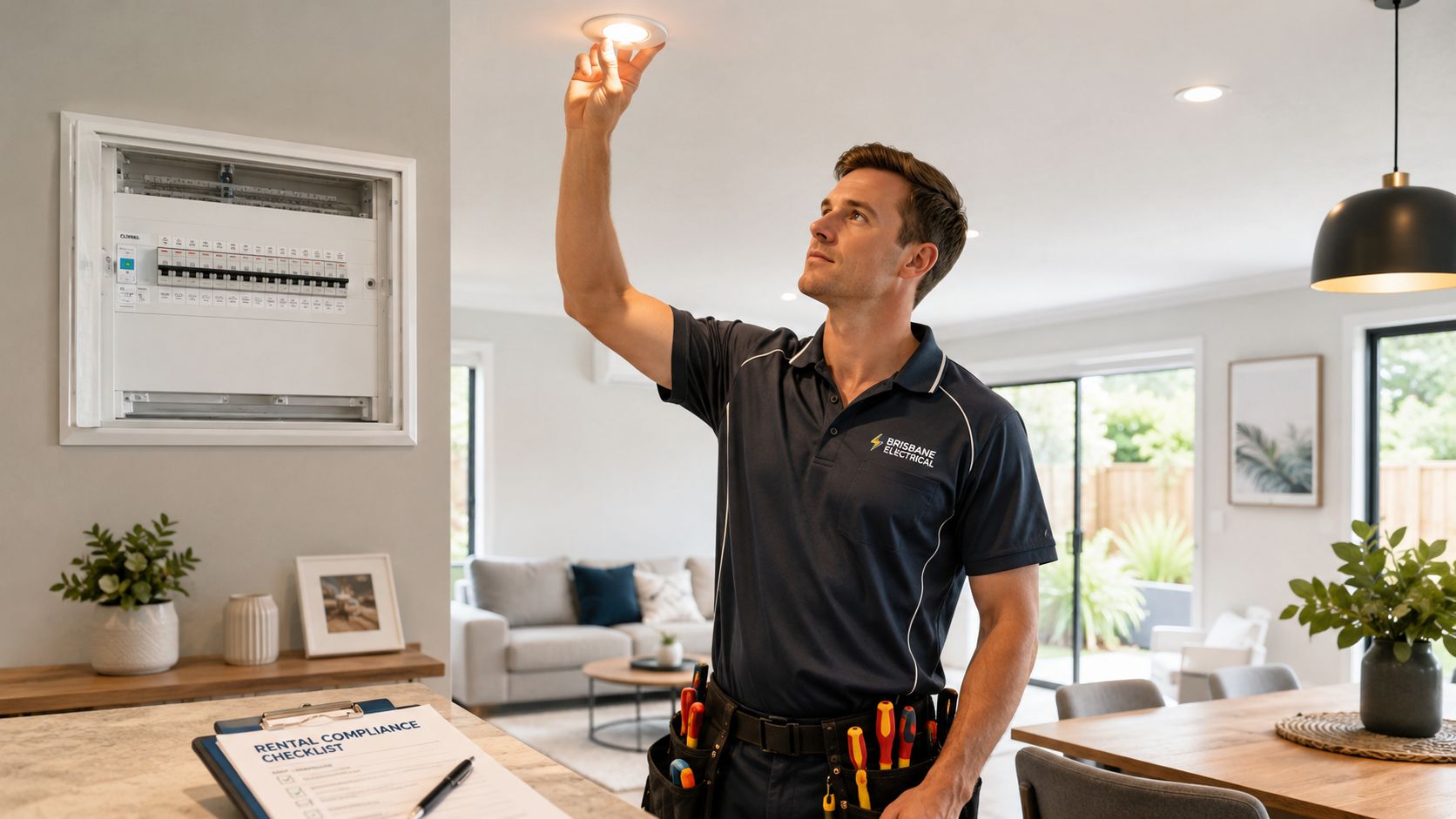
Some jobs are obvious emergencies. Others are jobs people live with for too long.
Practical rule: If the electrical issue affects safety, creates uncertainty, or keeps recurring, it's already worth a proper inspection.
A good electrician in Brisbane doesn't just replace a fitting and leave. The job is to look at the full context. Is the fault isolated, or is the board outdated? Is the smoke alarm work straightforward, or is it part of a larger compliance problem in an older property? Is the cheapest quote leaving out testing, certification, or rectification work?
That's why many homeowners and property managers start with practical guidance before they book. This local Brisbane electrician guide is a useful starting point if you're trying to narrow down what kind of help you need.
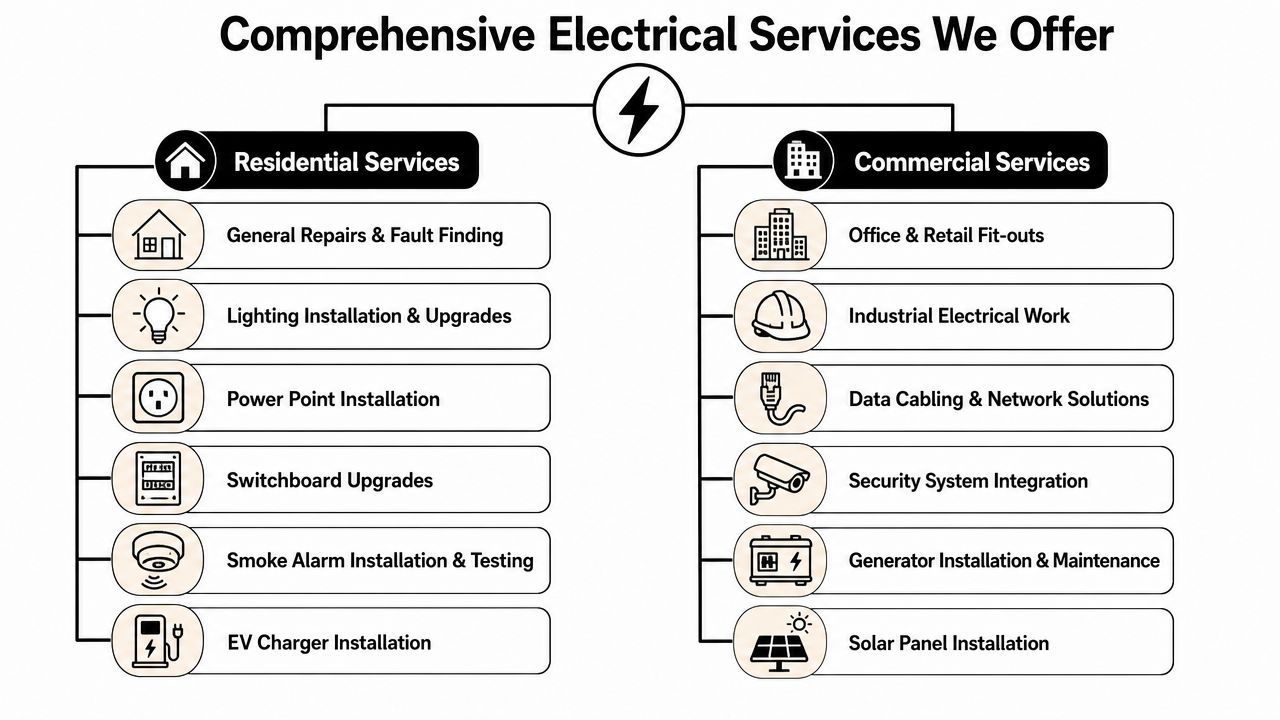
Electrical work usually falls into three buckets. Safety and compliance, installations and upgrades, and repairs and maintenance. The right electrician should be comfortable across all three, because many call-outs overlap. A smoke alarm issue may uncover an older switchboard problem. A renovation may need fault rectification before new circuits go in.
This is the work people often delay, even though it's the category that protects the property and the people in it.
This is where planning matters. The cheapest install often becomes the most expensive one if the layout is wrong, the future load hasn't been considered, or the finish looks rushed.
A well-organised electrician in Brisbane should handle practical improvement work such as lighting upgrades, additional power points, appliance connections, EV charger installation, data cabling, and security system integration. In homes, that often means combining better function with cleaner presentation. In commercial spaces, it usually means staging work around business operations so downtime is kept under control.
Good installation work doesn't just “work”. It fits the way the property is actually used.
Fault finding is where experience shows. Anyone can change a fitting. Diagnosing an intermittent fault without wasting the client's time or money is different.
Typical repair and maintenance jobs include:
For businesses, maintenance often extends to data infrastructure, security systems, backup supply arrangements, and scheduled checks across tenancy or industrial spaces.
If you want a fuller overview of service categories before comparing quotes, this Brisbane electrical services guide lays out the common residential and commercial scopes clearly.
Waiting too long for the first call often leads to a rushed decision once the problem becomes disruptive. The better approach is to separate urgent warning signs from planned work. They need different responses, and the cost, timing, and risk are different.
Some symptoms tell you to stop troubleshooting and get a licensed electrician involved.
A burning smell near a switchboard, outlet, or fitting is one of them. Sparking power points, blackened switch plates, buzzing from a board, or shocks from an appliance or tap all point to faults that need proper diagnosis. Frequent circuit trips belong in the same category if they're new, getting worse, or happening under normal use.
In older Brisbane homes, a recurring issue often isn't just a single failed accessory. It can be a sign that the installation no longer matches the way the home is being used.
If a circuit only behaves when you avoid using normal appliances together, the problem isn't solved. You're just working around it.
Not every reason to call an electrician is urgent. Some of the best-value work is planned in advance.
Renovations are the obvious example. If walls are open, ceilings are being patched, or cabinetry is changing, that's the time to rethink lighting positions, outlet placement, appliance circuits, and switchboard capacity. Trying to retrofit those decisions later usually creates more patching, more labour, and a poorer finish.
Other planned reasons include:
DIY isn't the answer for this category either. Electrical work in Queensland needs licensed handling, and even straightforward-looking jobs can have hidden compliance issues once testing begins.
The question most clients ask first is reasonable. What's this likely to cost? The mistake is assuming there's one answer for every electrical job.
Brisbane pricing usually falls into three models. Small repair and diagnostic work is often charged by the hour. Some jobs include a call-out fee, especially when fault finding or urgent attendance is involved. Larger works are better priced as a project quote, because that gives the client a clearer view of labour, materials, testing, and exclusions before work starts.
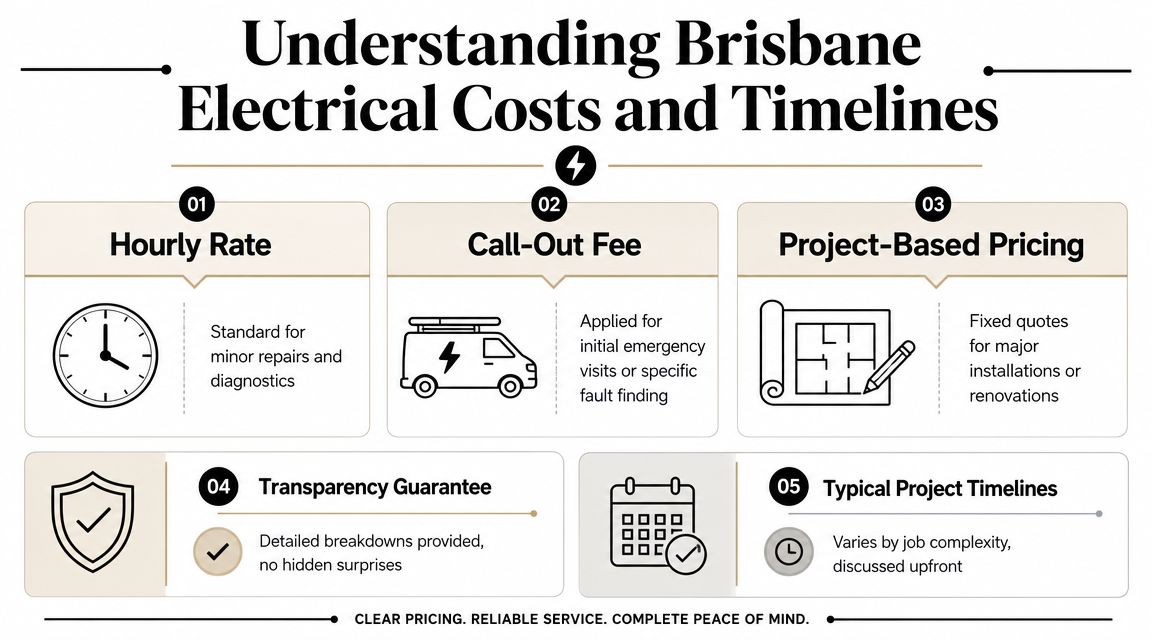
Typical Brisbane electrician rates sit at about $80 to $120 per hour, with call-out fees between $80 and $150, according to this Brisbane electrical rate guide. The same guide notes that a switchboard upgrade often costs $1,000 to $2,500+, while compliant smoke alarm installation is typically $120 to $250 per alarm.
Those figures are useful because they anchor expectations. They also show why hourly rates alone don't tell you much. A quote can look cheap on labour and still miss the actual job scope.
Here's the practical difference:
| Pricing model | Usually suits | What to watch for |
|---|---|---|
| Hourly rate | Small repairs, diagnostics, straightforward maintenance | Whether testing, parts, and travel are included |
| Call-out fee plus labour | Urgent visits, fault finding, after-hours attendance | What the fee covers before hourly charging starts |
| Project quote | Switchboards, smoke alarms, renovations, major installations | Whether exclusions, compliance items, and access issues are listed |
In Brisbane homes, price usually rises for understandable reasons, not because someone is padding the invoice.
Older properties are the clearest example. A switchboard upgrade in a newer house can be relatively direct. The same job in an older Queenslander may involve access issues, aged cabling concerns, rectification, and more time spent making the installation safe before the visible upgrade even starts.
Other factors that commonly affect cost include:
A detailed quote should spell that out. Estimating platforms such as Exayard estimating software for electricians are useful for understanding how professional contractors structure scope, labour, materials, and allowances rather than guessing from a one-line price.
A practical benchmark for comparing pricing is whether the quote tells you what is included, what may change, and what happens if testing uncovers additional defects. This guide to how much electricians charge is helpful if you want to compare quotes on more than just the headline number.
Queensland doesn't treat electrical work as a casual trade task, and that's a good thing. If you own, manage, renovate, or lease out property, compliance isn't an optional extra. It's part of responsible ownership.
Under Queensland's electrical safety framework, electrical work must be designed, installed, tested, and maintained so it can be operated safely. WorkSafe Queensland also states that electricity entities have a duty to inspect, test, and maintain works to keep them electrically safe, as set out in this Electrical Safety Act and Regulation code of practice material. In practice, that means documented testing and maintenance matter. They aren't box-ticking. They form part of the compliance pathway.
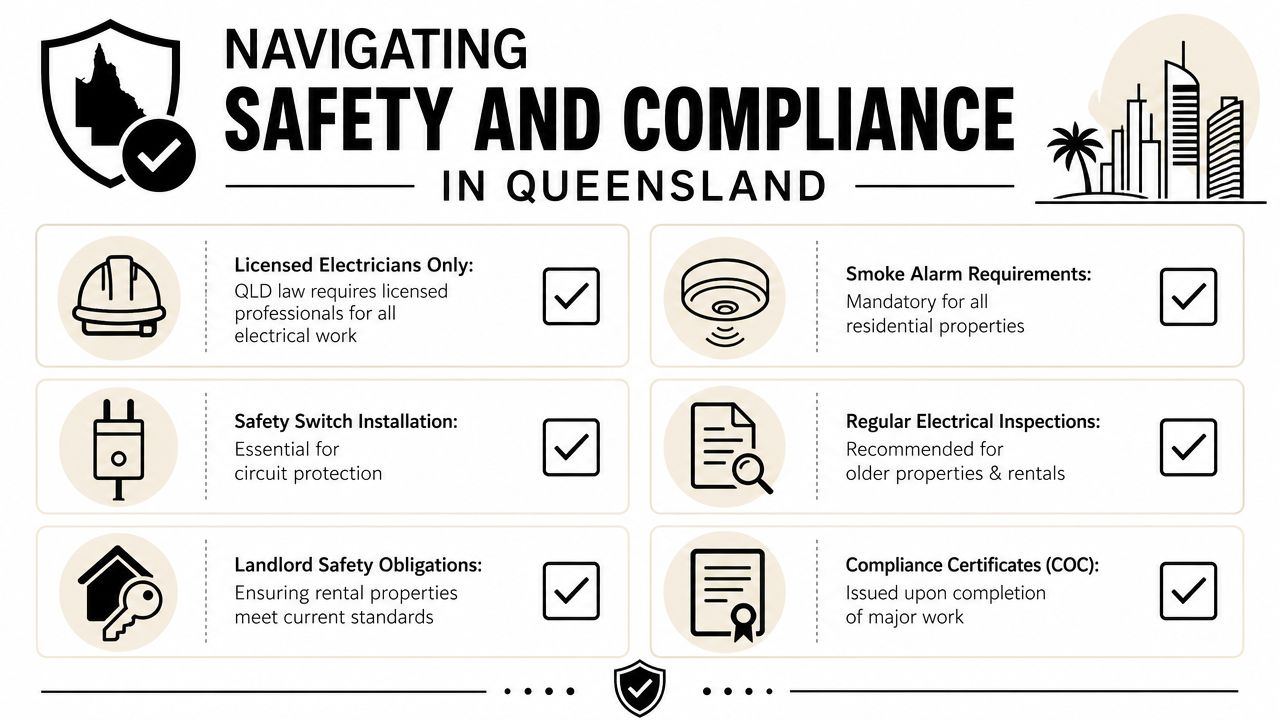
The first principle is simple. Electrical work must be done by a licensed professional. That includes jobs people often underestimate, such as safety switch installation and other alterations that might look minor from the outside.
For landlords and property managers, the challenge is usually sequencing. Smoke alarm work, switchboard review, and general fault rectification are often connected. Treating them as separate issues can create repeat call-outs and inconsistent paperwork. Looking at the property as one compliance job is often the cleaner path.
A sensible compliance checklist includes:
The safest job is rarely the one with the shortest quote. It's the one that addresses the real condition of the installation.
The technical benchmark behind compliant work is AS/NZS 3000, the Wiring Rules. In practical terms, electricians should assess upgrades against wiring methods, protective device coordination, earthing, and verification requirements, not treat every job as a simple swap-over. That's especially important when a renovation uncovers older work that doesn't match current expectations.
Insurance matters too, particularly for contractors and commercial operators who need to understand risk around liability, site conditions, and project scope. This overview from Coverage Axis on electrical contractor insurance is a useful background read if you're trying to understand why properly insured trade work protects more than just the installer.
People don't keep a good electrician's number because the website looked polished. They keep it because the job was explained properly, the property was treated with respect, and the work held up.
That's what separates a dependable local contractor from a revolving list of one-off call-outs. DLG Electrical is a family-owned and operated Brisbane electrical contractor with over 19 years of service, offering residential and commercial installations, maintenance, repairs, switchboard upgrades, smoke detector compliance, security systems, and custom electrical design work. The business is also fully licensed and insured, provides free quotes, and has a five-star Google rating.
For homeowners in North Brisbane, Grange, Windsor, and nearby suburbs, the priority is often straightforward advice. They want to know whether the issue is urgent, whether the quote covers the full job, and whether the work is being done cleanly and safely.
For landlords, renovators, and business owners, it's usually responsiveness and scope control. They need an electrician who can handle compliance-driven tasks without turning a routine job into weeks of avoidable delays.
“The right electrician doesn't just finish the task. They remove uncertainty.”
A family-run business tends to work differently. Communication is tighter. Reputation matters. And there's less appetite for shortcuts that come back as call-backs later.
That local accountability is part of why many Brisbane property owners prefer to deal with the same electrical team across maintenance, upgrades, and compliance work instead of starting from scratch each time. It creates continuity, especially in older homes where each job tells you something about the next one.
If you need a practical answer on a fault, an upgrade, or a compliance issue, call a licensed electrician who will assess the job properly, explain the trade-offs, and give you a clear quote before work begins.
If you need help from DLG Electrical, the next step is simple. Get in touch for a free, no-obligation quote and a clear assessment of the work required, whether it's urgent fault finding, a switchboard upgrade, smoke alarm compliance, or a planned renovation project in Brisbane.

Master Electrician with over 30 years of experience. Founded DLG Electrical in 2005 after international project work including electrical installations at Stamford Bridge Stadium, London(Home of Chelsea FC).

Local Electricians that can fix all Electric Hot water Systems.
Motion sensor lights are a versatile addition to any home, offering nu
