83 Jean St, Grange QLD 4051
Mon-Fri 07:30 AM - 04:00 PM - Sat - 8:00 - 12 - Sunday Closed
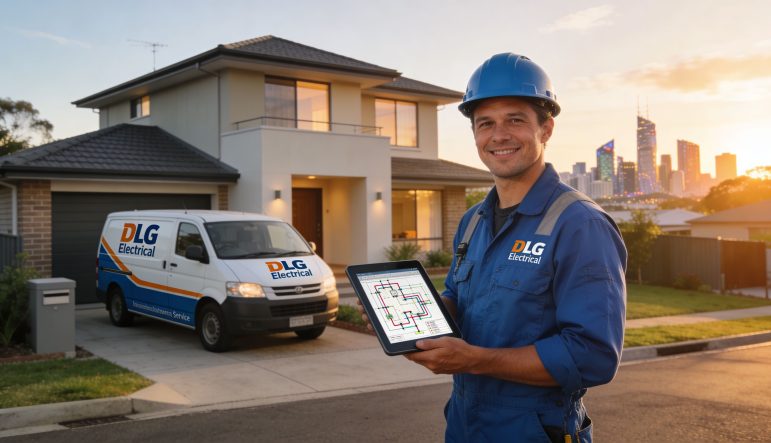
You’re usually not searching “electrician close to me” because you’ve got plenty of spare time. It’s often after a safety switch trips, the hot water stops, a light starts flickering, or you’ve realised a rental property needs compliant smoke alarms before the next inspection. In that moment, close matters. So does fast communication. But safe, licensed, and properly insured matters more.
A nearby electrician who turns up without the right licence, misses compliance issues, or leaves behind messy work can create a much bigger problem than the one you started with. In Brisbane, demand for electrical work keeps rising as the city grows, and that makes it even more important to choose carefully rather than just picking the first listing that appears.
It usually starts with something small. A power point feels warm, the lights dip when the air con starts, or a safety switch keeps tripping and you are not sure whether it is a nuisance fault or a real hazard. Searching “electrician close to me” is the obvious first step. In Brisbane, the better question is whether that electrician can do the work legally, safely, and to Queensland standard.
Local knowledge matters here because Brisbane homes vary a lot. Older Queenslanders, post-war brick homes, renovated properties, and newer builds all have their own common faults and upgrade issues. A nearby electrician should recognise those patterns quickly, but speed alone is not the measure. The work also needs to meet Queensland compliance requirements, especially when smoke alarms, switchboards, meter panels, or safety defects are involved.
Start with the basics. Confirm the electrician is properly licensed for electrical work in Queensland and carries current insurance. Then look at how they explain the job. Clear advice is a good sign. If they cannot tell you what they found, what risk it creates, and what needs to happen next, that is a problem in itself.
A good electrician should also separate urgent work from work that can be planned. If a switchboard has heat damage, exposed wiring, or failed protection devices, that needs prompt attention. If the issue is an upgrade you want for convenience or future renovations, that should be priced and scheduled properly, without pressure.
Practical rule: Choose the electrician who explains the safety issue clearly and can show how the work will be tested and signed off, not just the one who can arrive first.
The same screening mindset applies across any trade entering your home. This ultimate guide to finding the perfect house cleaning service in Brisbane is useful because trust, communication, and professionalism matter there too.
A local search should narrow the field, not make the decision for you. Ask whether the electrician regularly works on Brisbane homes like yours. Ask whether they check for underlying faults instead of only replacing the failed fitting. Ask what testing is included after the repair. In Queensland, safe electrical work is not just about getting the lights back on. It is about making sure the circuit protection, installation method, and final result are all fit for use.
If you want a practical shortlist of what to look for before booking, this guide on choosing an electrician near me in Brisbane is a useful next step.
Most homeowners don’t call an electrician because they want electrical work. They call because something isn’t working properly, doesn’t feel safe, or needs to be brought up to standard. The job is to solve the actual problem, not just swap a part and leave.
A switchboard upgrade is a good example. A switchboard isn’t just a box on the wall. It’s the control point that helps protect circuits, appliances, and people inside the home. If your power trips often, circuits overload when you use multiple appliances, or the board looks dated, that’s often a sign it needs a closer look.
Smoke detector compliance is another area where homeowners and landlords can get caught out. The issue usually isn’t whether there’s a detector in the house. It’s whether it’s installed in the right locations, interconnected where required, and working as intended.
Then there’s hot water system electrical repair. When hot water disappears, people often assume the entire unit has failed. Sometimes it has. Sometimes the fault sits with the electrical supply, isolation switch, or associated component. Proper testing matters because replacing the wrong thing wastes time and money.
Security work is often less visible than lighting or appliance installation, but it can change how a home feels day to day. That might include external security lighting, power to cameras, or complete security system installation depending on the property.
For homeowners planning bigger improvements, electrical work often sits behind the finish you see. A feature light, kitchen renovation, or improved natural light system still relies on careful electrical planning. If your project includes motorised daylighting, it helps to understand how electric skylight installations fit into wiring, switching, and overall room design.
Here’s a quick view of the common residential work homeowners ask about:
| Service | What It Solves | Best For |
|---|---|---|
| Switchboard upgrades | Frequent tripping, outdated protection, limited circuit capacity | Older homes, renovated homes, growing households |
| Hot water repairs | No hot water, inconsistent heating, electrical supply faults | Family homes, rental properties |
| Smoke detector compliance | Non-compliant alarm placement or ageing alarm systems | Landlords, sellers, homeowners updating safety |
| Security system installations | Poor visibility, weak perimeter security, lack of monitored systems | Families, corner blocks, homes with side access |
| General repairs and installations | Faulty lights, broken power points, appliance connections | Everyday residential maintenance |
Good residential electrical work solves two problems at once. The immediate fault, and the underlying cause that made it happen.
If you’re comparing the sort of work available for Brisbane homes, residential electrical services in Brisbane gives a broader picture of the kinds of jobs commonly handled across repairs, upgrades, and installations.
You finish a renovation, move the furniture back in, and then realise the new kitchen has nowhere sensible for small appliances, the garage can’t support an EV charger, and the home office shares a circuit with half the house. Those are expensive problems because the walls are already closed.

The best time to sort electrical layout is before plaster, paint, and cabinetry go in. That is when lighting positions, switch locations, garage supply, outdoor power, appliance loads, and data points can be planned as one job instead of a series of compromises. Retrofitting still works, but it usually means extra labour, more patching, and fewer options for a tidy finish.
In Brisbane, future planning also needs to match Queensland safety rules and approval requirements. Solar provisions, EV charging circuits, switchboard capacity, RCD protection, smoke alarm integration, and any work tied into a renovation all need to be set up properly and signed off correctly. Homeowners comparing local contractors should understand what licensed electricians near you in Brisbane should be able to explain about compliance and safety, especially before agreeing to upgrade work that will be buried behind new finishes.
A good custom plan does not mean adding every possible extra. It means choosing the wiring and capacity that suit the way the home will be used over the next five to ten years.
Some upgrades earn their keep because they reduce rework and improve day to day use:
I often see homeowners spend well on finishes and then get stuck with awkward electrical decisions that could have been avoided early. A slightly larger switchboard, an extra circuit, or conduit left in the right wall can save a lot of money later.
DLG Electrical handles this type of work across Brisbane, including repairs, upgrades, compliance work, and custom electrical design for homes being renovated or improved.
If you are renovating, ask what the house will need next, not just what it needs today.
You book the nearest electrician, the job looks fine on the day, and six months later a fault shows up in the switchboard or the new wiring fails inspection during a sale. That is when licence checks stop feeling like admin and start looking like protection.
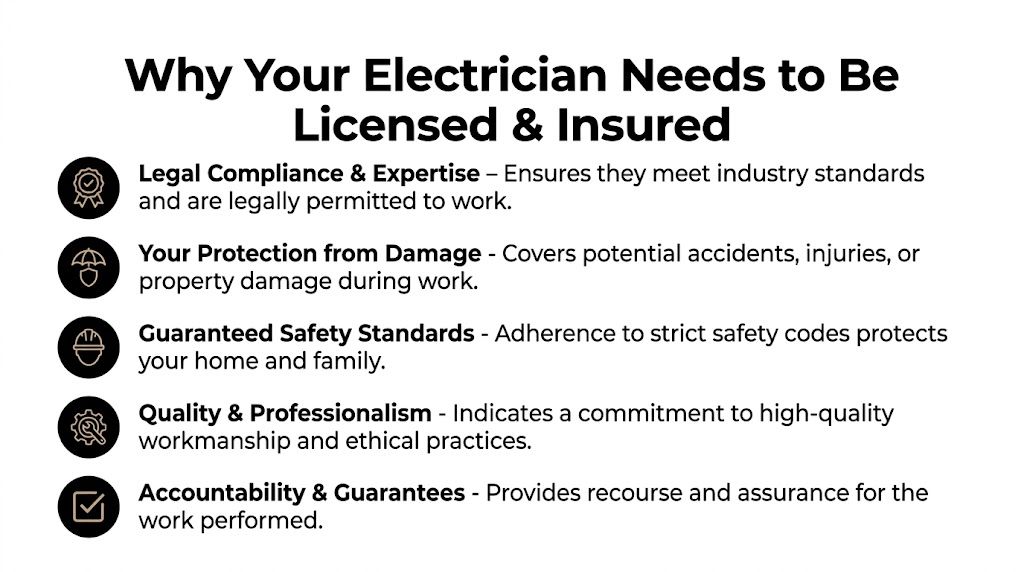
In Queensland, electrical work is tightly regulated for good reason. Faulty or illegal work can put people at risk, create insurance problems, and leave the homeowner paying to have the job opened up and done again. The Electrical Safety Office sets out licensing duties, who can perform electrical work, and the penalties that apply for unlawful work under Queensland law.
Searching for an electrician close to me should lead to one question first. Can this person legally and safely do the job at my house in Brisbane?
A proper check only takes a few minutes, and it tells you a lot about the person turning up to your home.
I tell homeowners to pay attention to how this conversation goes. A licensed electrician usually answers clearly and without dodging the details. If someone gets vague about licence numbers, testing, or certificates, that is a warning sign.
For a local breakdown of what to look for, read this guide on licensed electricians near me in Brisbane before you book.
A short video can also help clarify what proper trade professionalism should look like in practice.
A licence shows the contractor is authorised to carry out electrical work. Insurance matters if something goes wrong. That can include property damage, faults that need urgent rectification, or an injury on site.
This matters most on higher-risk household jobs such as switchboard upgrades, smoke alarm work, hot water circuits, air conditioning supplies, and any repair where the original fault is still unknown. These are not jobs for cash-only operators or someone helping out on the weekend.
Cheap work can get expensive fast. Hidden joins, overloaded circuits, missing protection, and poor testing do not always show up straight away. They tend to appear later, after the plaster is patched, the cabinets are back in, or the property is about to be sold.
A licensed and insured electrician gives you accountability, a legal path if problems arise, and a better chance the work is safe the first time.
That is the key difference in Brisbane. You are not only choosing someone nearby. You are choosing someone who can meet Queensland requirements, test the work properly, and stand behind it.
You book an electrician for a fault, and the first question is usually the same. What will this cost me?
Fair question. Electrical work in Brisbane is priced on the job type, the time on site, the fault-finding involved, and whether testing or compliance paperwork is part of the visit. A simple fitting replacement is very different from tracing an intermittent safety switch trip or checking whether older work meets current Queensland requirements.
That is why clear pricing matters. The visit covers more than labour. It also covers travel, stocked materials, test instruments, licensing, insurance, and the time needed to make sure the work is safe before power is restored.
A well-run residential job is usually straightforward.
Initial call
Describe the problem as clearly as you can. If a light fitting is damaged, a switchboard looks scorched, or a power point has stopped working, photos often help narrow down what needs to be checked first.
Assessment or quote
Some work can be priced upfront. Faults, older homes, and jobs involving switchboards, smoke alarms, or new circuits often need a site assessment first. That protects you from guesswork and helps make sure the scope is accurate.
Arrival and safety checks
On site, the first step is confirming the issue, checking access, and isolating power if needed. Before any repair or replacement, the right tests should be carried out. In Queensland, that matters. Safe electrical work is not just about replacing a part. It is about verifying the circuit is safe to put back into service.
Work completed and explained clearly
Once the job is done, you should be told what failed, what was repaired or installed, and whether anything else needs attention. If there are limits to what could be confirmed on the day, that should be explained plainly as well.
A bit of preparation saves time and helps fault-finding go faster:
One detail often saves a lot of time. If the problem is intermittent, write down exactly when it happens.
Transparent pricing does not mean every job has a fixed cost before testing starts. It means you know what you are being charged for, what checks are being carried out, and whether the work has been properly verified before the electrician leaves.
You notice a switch tripping in Grange, a smoke alarm issue in Windsor, or a planned upgrade in an older Brisbane home. Distance matters, but local knowledge matters more. Brisbane houses vary a lot from suburb to suburb, and the right electrician needs to know how to work safely in Queensland conditions, identify what needs testing, and carry out work that stands up to inspection.
DLG Electrical works with homeowners, landlords, renovators, and property managers across Brisbane, with a strong focus on North Brisbane suburbs such as Grange and Windsor, as well as the wider region. The work includes residential maintenance, upgrades, fault finding, and compliance-related jobs where clear documentation and safe verification matter.
The team is available Monday to Friday, 7:30 AM to 4:00 PM for scheduled residential electrical work.

For Brisbane homeowners, a nearby electrician should do more than fit into the calendar. They should understand local housing stock, common switchboard issues, smoke alarm obligations, and the difference between a quick fix and work that has been properly checked before the circuit is put back into service.
If you need help with a fault, upgrade, or planned installation, ask for a free quote.
A few practical questions usually come up before booking. Here are the ones homeowners ask most often.
| Question | Answer |
|---|---|
| Is the quote obligation-free? | Yes. If you’re trying to understand the likely scope and cost before committing, asking for a quote is the right first step. |
| Do I need to know exactly what the fault is before I call? | No. Describe what you’ve noticed. Flickering lights, tripping circuits, dead power points, no hot water, or alarms that don’t seem right are all useful starting points. |
| Can you help with rental property compliance work? | Yes. Property managers and landlords often need electrical work tied to safety, maintenance, or smoke alarm compliance. Clear access and tenancy coordination help the job run smoothly. |
| Is it worth upgrading electrical items that still technically work? | Sometimes, yes. If something is outdated, unsafe, or no longer suitable for the way the home is used, replacement can be the safer and more economical option. |
| What if I’m renovating and want to future-proof the home? | Raise that early. It’s often easier to plan extra circuits, better lighting layout, and infrastructure for later upgrades while other building work is already underway. |
If you’re looking for an electrician in Brisbane from DLG Electrical, choose someone who can do more than arrive quickly. Choose a contractor who understands Queensland compliance, explains the work clearly, and handles your home with care. Reach out for a free quote and get the job assessed properly before a small issue turns into a bigger one.

Master Electrician with over 30 years of experience. Founded DLG Electrical in 2005 after international project work including electrical installations at Stamford Bridge Stadium, London(Home of Chelsea FC).

Local Electricians that can fix all Electric Hot water Systems.
Motion sensor lights are a versatile addition to any home, offering nu
