83 Jean St, Grange QLD 4051
Mon-Fri 07:30 AM - 04:00 PM - Sat - 8:00 - 12 - Sunday Closed
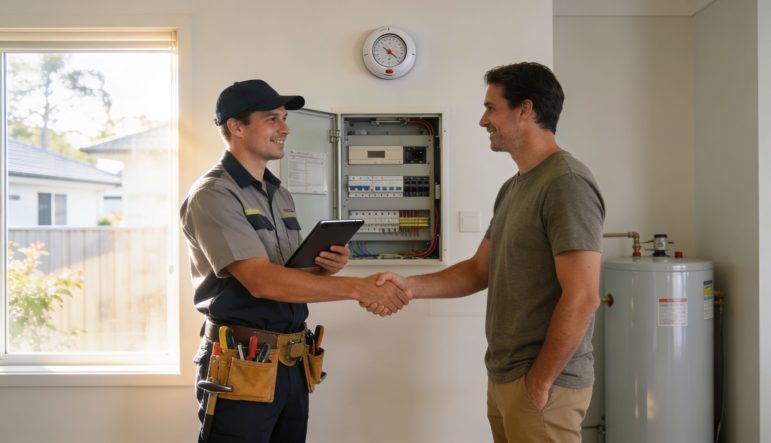
You notice it at the worst time. The kitchen light flickers while you’re cooking. One power circuit keeps tripping whenever the kettle and microwave run together. Or the hot water suddenly drops out on a busy weekday morning.
That’s usually when people grab their phone and type electrician in near me. Then the problem gets worse in a different way. You’re hit with a page full of names, ads, maps, and review snippets, with no easy way to tell who’s competent, who’s current on Queensland rules, and who’ll leave you with a safe job instead of a bigger repair later.
In Brisbane, that choice matters more than many people realise. Older homes around Grange, Windsor, and other inner-north suburbs often come with ageing switchboards, patchwork renovations, and compliance issues that generic listing sites never explain properly. A polished website doesn’t tell you whether the electrician understands local housing stock, rental smoke alarm obligations, or when a hot water system is worth repairing instead of replacing.
This guide is for that moment. If you want a practical starting point before booking anyone, it helps to understand the kinds of electrical home repairs Brisbane households commonly face. And if you’re comparing standards across service markets, even a directory entry like this Montgomery TX electrician shows the same core issue everywhere. Homeowners need a way to separate a genuine tradesperson from a listing that only looks convincing.
A lot of electrical faults don’t start with smoke or sparks. They start with annoyance. A downlight that fails again after you’ve already changed the globe. A safety switch that trips once a week, then twice, then every day. A bathroom exhaust fan that sounds rough and then stops.
Those small warning signs matter because electrical problems often hide behind walls, ceilings, and switchboards. By the time the issue becomes obvious, the repair can be larger, the inconvenience can be worse, and the safety risk can be higher. Homeowners in Brisbane’s older suburbs run into this often. The house still works, mostly, but the electrics don’t feel right.
The phrase electrician in near me sounds simple, but it isn’t. Search results mix emergency operators, large booking platforms, solo contractors, and businesses that outsource jobs to whoever is free. That can work for some jobs, but it can also leave you guessing about who is turning up, what qualifications they hold, and whether they’ve done this exact type of work before.
That uncertainty gets expensive fast when the problem is tied to compliance or older wiring. A landlord might need smoke alarm work done correctly the first time. A homeowner in Windsor might need someone who can identify whether nuisance tripping points to a faulty appliance, a load issue, or a switchboard problem. Those are different jobs, and the best electrician for one isn’t always the best for the other.
The right electrician doesn’t just fix the symptom. They identify why the symptom appeared in the first place.
Many people wait because they don’t want to overreact. Others worry they’ll get talked into a full replacement when they only need a repair. Both concerns are fair.
The smarter move is to treat recurring electrical issues as a diagnostic problem, not a shopping problem. You’re not looking for the fastest ad or the cheapest call-out. You’re looking for someone who can assess the fault, explain it clearly, and leave the installation safe and compliant.
A tidy website means very little if the person who turns up cannot legally carry out the work, cannot show cover if something goes wrong, or has no clear business trail. In Brisbane, that matters even more in older suburbs like Grange and Windsor, where a simple fault can uncover mixed-era wiring, outdated protection, or rental compliance issues that need to be handled properly from day one.
Start with identity and legal standing. Do that before you compare reviews.
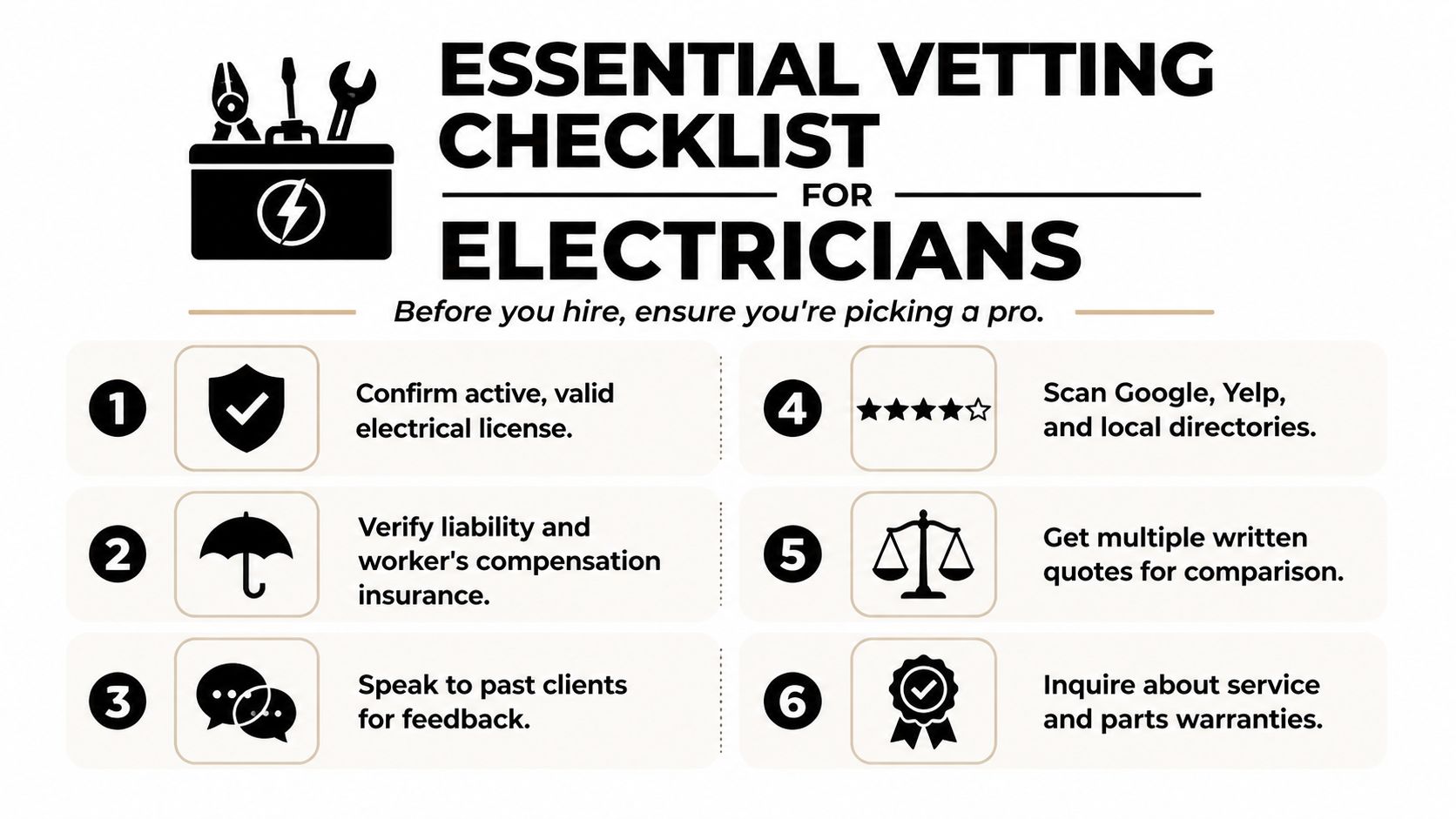
Checks to complete before booking
Licence: Ask for the electrical contractor licence details and verify them in Queensland.
Insurance: Confirm current public liability and relevant worker cover.
ABN: Check the ABN matches the business name you were given.
Any contractor worth hiring should be able to provide those details without hesitation. If the answers are vague, inconsistent, or delayed, move on. Electrical work is regulated for good reason. Faulty work can leave you with safety risks, failed compliance, and expensive rectification.
For Brisbane homeowners who want a clear local reference point, this overview of a licensed electrician in Brisbane shows what a properly presented contractor should look like.
After licence, insurance, and ABN are sorted, look at how the business operates. Through its operations, experience starts to show.
A competent Brisbane electrician should be able to tell you what type of residential work they do every week, whether they inspect before quoting, and what paperwork you will receive. That matters in suburbs with older housing stock because the quote for replacing a fitting is one thing, while fault finding on an older circuit with altered wiring is another. Good operators make that distinction early.
Check for these signs:
Use this as a fast filter before you spend time chasing full quotes:
| Check | Good sign | Bad sign |
|---|---|---|
| Licence | Gives details straight away | Avoids giving a number |
| Insurance | Confirms current cover and can provide proof | Says it is “all sorted” but will not show it |
| Business identity | ABN and business name match | Uses different names or unclear trading details |
| Scope clarity | Explains what is included and what may need testing first | Makes vague promises with no written detail |
One practical point from the trade. If a contractor is hard to verify before the job, they are usually harder to deal with after the job. That is when paperwork, responsibility, and workmanship matter most.
A quick phone call can save you from a poor hire. In Brisbane, that matters more than people expect. A house in Grange with an original switchboard and later renovations needs a different level of judgment than a newer unit with a single faulty fitting.
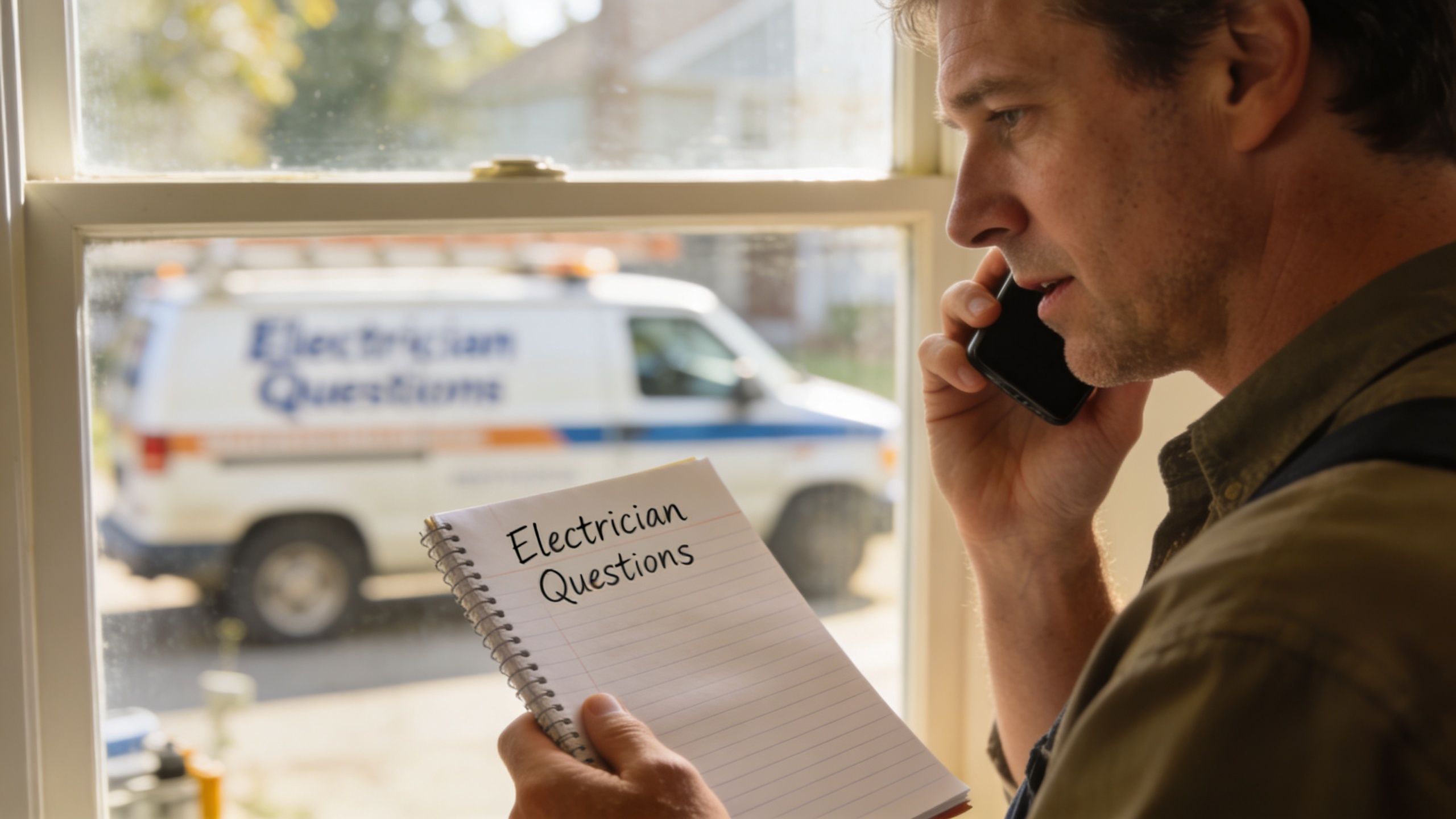
The goal of the call is simple. Find out how the electrician thinks before you let them touch your wiring. Brisbane homes often have mixed-age installations, older cable runs, rental smoke alarm obligations, and switchboards that have been altered over decades. Generic answers are usually a bad sign.
Ask questions that make the electrician explain their process, not just confirm they can “do the job.”
“Have you worked on homes like mine in this suburb?”
In Windsor, Grange, and similar older pockets, a good answer should mention age of the house, likely alterations over time, and the need to inspect before promising a fix.
“What would you want to check before quoting this properly?”
Competent electricians know the difference between a straightforward replacement and a job that needs testing first. That answer tells you whether they are careful or just chasing bookings.
“If the problem leads back to the switchboard, how do you decide between repair, partial upgrade, or full replacement?”
A solid answer covers testing, protection, circuit condition, spare capacity, and compliance. It should not jump straight to “new board” without explaining why.
“What do you do for Brisbane rental smoke alarm compliance?”
You want specifics. Interconnection, photoelectric alarms, correct locations, and paperwork should all come up. If they stay vague, keep looking.
“Do you diagnose hot water faults, or mostly replace systems?”
This is one of the easiest ways to spot a sales-driven operator. A good electrician will talk through likely fault points, testing, and whether repair is worth doing before recommending replacement.
“How will the quote deal with unknowns if the wiring is older than expected?”
Older Brisbane homes often hide joins, undocumented changes, and brittle accessories. Good trades spell out what is included, what may vary, and when they would stop to get approval.
The best answers are specific and calm. They use plain language, explain the first checks, and set realistic limits on what can be confirmed before a site visit.
I’d trust an electrician who says, “On a house that age, I’d want to inspect the board, test the affected circuit, and check whether any previous renovation work changed the cable path before I price repairs.” That is how someone speaks when they have worked through these jobs in Brisbane homes.
Poor answers usually fall into three groups:
Confidence is cheap. Good judgment is harder to fake.
A capable electrician explains the order of work. Inspect first. Isolate the fault. Test the circuit. Check whether the existing installation is safe and compliant. Then recommend the repair or upgrade that fits the condition of the system and the budget.
That matters in Brisbane because local housing stock varies so much street to street. One job in a post-war cottage can uncover old alterations, while a similar complaint in a modern townhouse might be a quick accessory failure. The right contractor recognises that difference early.
If an electrician cannot explain how they would start diagnosing your problem, do not expect clear answers once the invoice arrives.
A short visual like this can help you frame the conversation before you ring around.
Tailor the conversation to the actual job. For outdoor lighting, ask about weather exposure, cable protection, and fitting quality. For rental properties, ask about compliance records and whether the work will meet current Queensland requirements. For fault finding, ask how they handle time-based investigation and approval if the cause is not obvious on arrival.
If you want a better handle on how electricians structure rates for testing, repairs, and quoted works, this guide on how much electricians charge in Brisbane will help you ask sharper pricing questions as well.
The best call leaves you with a clear picture of how the electrician will assess risk, explain options, and protect you from paying for the wrong solution. That is the standard to look for. It is also the standard good Brisbane contractors, including DLG, work to every day.
Pricing frustrates people because electrical jobs rarely fit neat categories. One “simple repair” can take minutes if the fault is obvious, or much longer if the cause is hidden behind multiple symptoms. That’s why clear quoting matters more than chasing the lowest number.
For hot water work, there is one figure worth knowing. In Brisbane, electric hot water system repairs typically cost between $350-$650, and for 60% of pre-2010 systems, a targeted repair can be more cost-effective than a full replacement, especially when off-peak tariffs are considered. That’s why it pays to ask for a quote that assesses repair viability before anyone pushes replacement.

Some jobs suit an hourly rate. Fault finding is the obvious example. Until the electrician tests the circuit, they may not know whether the problem is the fitting, the switch, the protective device, or the cable path.
Fixed prices work better when the scope is clear, such as replacing a known fitting, installing agreed equipment, or carrying out defined compliance work.
A useful breakdown of how contractors structure charges is this guide on how much electricians charge.
The written quote should show what is being paid for. Common price drivers include:
A good quote is not just a number. It should state the scope, exclusions, and whether the price may change if hidden defects are uncovered. That protects both sides.
Use this quick comparison when reviewing quotes:
| Quote feature | Useful | Risky |
|---|---|---|
| Scope | Clear list of included work | One vague line item |
| Materials | Named or described properly | “Misc parts” only |
| Variations | Explains what happens if extra faults are found | No mention at all |
| Recommendation | Repair and replacement options where relevant | Pushes one expensive path only |
A cheap quote can become the most expensive job in the house if it leaves the original fault unresolved.
Homeowners often ask, “How long will it take?” That’s fair, but the honest answer depends on diagnosis, parts access, and whether the electrician finds additional defects once testing begins.
Be cautious of anyone who promises an exact completion time for a fault they haven’t properly inspected. Confidence is good. False certainty is not.
Some warning signs show up before the electrician arrives. Others appear the moment they start talking. Either way, don’t ignore them.
The biggest red flag is often poor command of current rules. That matters especially for landlords, because 28% of Brisbane rental inspections failed smoke alarm checks, and hiring someone who isn’t across AS 3786 compliance for interconnected alarms creates real risk.
These are the patterns that should put you on alert straight away:
A landlord asks whether new alarms need to be interconnected. The contractor says, “Smoke alarms are smoke alarms.” That’s not a small mistake. It tells you they may not understand the compliance standard you’re paying them to meet.
A homeowner reports repeated tripping on one circuit. The contractor glances at the board and says the whole house needs rewiring, without testing or explaining the fault path. That’s not decisive. It’s sloppy.
A business promises to “beat any quote” before anyone has inspected the job. That usually means one of two things. The scope will shrink later, or the variation charges will arrive after work starts.
If the explanation gets murkier as the price gets higher, walk away.
Bad paperwork often signals bad workmanship. A quote that says only “electrical works as discussed” gives you almost no protection. If the contractor swaps materials, changes scope, or leaves parts of the job unfinished, you have very little to point back to.
Look for the operator who writes things down clearly, explains exclusions, and doesn’t rush you into an instant yes. That’s usually the one who expects their work to stand up later.
Hiring well comes down to a few disciplined habits. Verify the licence and business details first. Ask questions that reveal actual experience, especially if your home is older or your property is rented. Insist on a written quote that explains the scope in plain English. Walk away from anyone who avoids specifics.
That approach works because it shifts the decision away from advertising and toward proof. The electrician in near me who looks convenient on your phone screen isn’t always the one you want in your ceiling space or at your switchboard. Brisbane homes, especially in suburbs with older housing stock, reward careful diagnosis and local knowledge.
If you’re still comparing options, use this short standard:
That same logic applies outside electrical work too. If you’ve ever had to think about selecting a professional security firm, the pattern is familiar. Licensing, clarity, and accountability matter more than a slick pitch.
Value for money isn’t the cheapest line on a quote. It’s the job that gets diagnosed properly, completed safely, and doesn’t create a second repair later. It’s the contractor who knows when a hot water service is worth repairing, when a switchboard issue needs deeper investigation, and when compliance work has to be done exactly right.
For Brisbane homeowners, developers, landlords, and renovators, that’s the benchmark. A competent electrician protects the property, the people in it, and the resale or rental position of the home. That’s what you’re really paying for.
If you want that standard without the guesswork, DLG Electrical is a strong place to start. They’re a family-owned Brisbane contractor with over 19 years in business, fully licensed and insured, with a five-star Google rating and practical expertise across switchboard upgrades, smoke detector compliance, electric hot water repairs, security installations, and general residential electrical work. If you need a reliable opinion and a clear, no-obligation price, contact DLG Electrical for a free quote.

Master Electrician with over 30 years of experience. Founded DLG Electrical in 2005 after international project work including electrical installations at Stamford Bridge Stadium, London(Home of Chelsea FC).

Local Electricians that can fix all Electric Hot water Systems.
Motion sensor lights are a versatile addition to any home, offering nu
