83 Jean St, Grange QLD 4051
Mon-Fri 07:30 AM - 04:00 PM - Sat - 8:00 - 12 - Sunday Closed
A lot of Brisbane homeowners start looking for an electrician at the same moment. A safety switch won’t stay on. A renovation is ready to begin, but the old switchboard looks questionable. A smoke alarm keeps chirping at 2 am and no one’s sure whether it’s just a battery issue or a sign the whole system needs attention.
That’s usually when electrical work stops feeling like a small household task and starts feeling like something you want handled properly.
In Brisbane, that matters more than ever. Queensland has over 22,000 licensed electricians, and that workforce has grown 15% since 2018 as housing demand has increased across the state, according to the electrician workforce outlook referenced here. With more homes being built, renovated, and upgraded, homeowners need more than a name and phone number. They need to know who’s qualified, what work should look like, what compliance means, and what shortcuts to avoid.
If responsiveness matters to you, it’s also worth noticing how some trade businesses now use systems like an Eden AI receptionist for electricians to handle enquiries faster and reduce missed calls. That doesn’t replace a good electrician, but it can make a real difference when you’re trying to book urgent work.
A Brisbane home rarely has just one electrical need. An older Queenslander in Grange might need a switchboard upgrade and smoke alarm compliance. A renovated family home in Windsor might need new lighting, power points, and fault finding after an extension. A rental property might need practical compliance work done cleanly, quickly, and with the right paperwork.
That’s why hiring an electrician shouldn’t be treated like buying a commodity. You’re not just paying for someone to connect wires. You’re relying on someone to assess the condition of your home’s electrical system, identify risks, and carry out work that has to be safe, legal, and durable.
Customers asking for an electrician want clear answers to a few practical questions:
Practical rule: A good electrician doesn’t rush to quote from a photo alone when the condition of the existing installation is the real issue.
This guide is written for Brisbane homeowners who want practical help, not generic trade advice. It covers what a modern electrician does, the services most homes need, how Queensland licensing works, the warning signs you shouldn’t ignore, and what a professional job process should look like from first call to final paperwork.
Most homeowners still picture an electrician as the person who fixes a faulty powerpoint or swaps a light fitting. That’s part of the work, but it’s a narrow view.
A modern electrician is closer to a diagnostician for your home’s electrical system. If the wiring is the nervous system, the switchboard is the control centre, the safety devices are the reflexes, and the appliances are the moving parts. When one part fails, the symptoms often show up somewhere else.
A licensed electrician works across four broad areas.
That last point catches many homeowners out. A house can appear to “work fine” while still being outdated for modern demand.
There’s a reason Queensland separates electrical work from general handyman work. Electrical jobs often look simple from the outside. Replacing a fitting might seem straightforward. Adding a new circuit can sound like a minor upgrade. But the actual work is in isolation, testing, circuit protection, cable selection, compliance, and making sure the existing installation can safely support the change.
That’s where licensed trade knowledge matters.
Homeowners need a clear sense of scope. An electrician isn’t just there to “make it work”. A proper electrician makes it safe, compliant, and suitable for the property.
For a broader look at the range of trade work involved, this overview of what an electrician does in day-to-day practice is a useful reference.
If an electrician can’t explain why a fix is needed in plain language, ask more questions before approving the job.
The homes that cause the most trouble in Brisbane are often the ones with mixed-age electrical work. A renovated kitchen may be modern, but the rest of the house may still rely on older cabling, old protection, or piecemeal additions done over time.
That’s why the best electricians spend time diagnosing before replacing parts. A tripping breaker might point to an overloaded circuit, damaged wiring, moisture ingress, or a faulty appliance. Swapping the breaker without proper testing can leave the actual problem untouched.
A lot of Brisbane homeowners call after a renovation quote blows out, the hot water drops out, or a smoke alarm check turns up more work than expected. The surprise is usually not the fault itself. It is how often one small electrical job exposes an older board, limited circuit capacity, or past work that no longer suits the way the home is used.
That is why it helps to look at electrical services by the problems they solve in Brisbane homes, not just by trade labels.
The jobs I see most often in Brisbane houses usually sit in four groups. Safety upgrades, compliance work, fault finding, and additions or replacements after a renovation or appliance change.
Switchboards are a common pressure point in older Brisbane properties, especially Queenslanders and post-war homes that have had bits added over time. A house may have a new kitchen and air conditioning, but still rely on an old board layout that was never designed for today’s load.
A switchboard upgrade is usually recommended for clear practical reasons.
For homeowners researching common local work before booking, this guide to electrical services for Brisbane homes and businesses gives a useful overview.
Industry guidance from Schnap Electric Products on switchboard compliance in Brisbane also reflects what we see on site. Older fuse boards and outdated protection remain common in established suburbs. The trade-off is simple. A partial fix can cost less today, but if the board is already at its limit, a proper upgrade usually gives better value than repeated small repairs.
Smoke alarm work is often treated as a quick replacement job. In Queensland, it is usually more involved than that. The alarm type, locations, interconnection, power source, and age of the units all matter.
A key future deadline is 1 January 2027, by which Queensland homes will be required to meet the state’s smoke alarm standard for sale, lease, and existing residences. The Queensland Fire Department sets out the requirements for photoelectric, interconnected smoke alarms in dwellings. For many Brisbane homeowners, especially in older homes, compliance means more than swapping one alarm on the hallway ceiling.
Check these points before assuming the job is minor:
“No hot water” is not always a hot water system failure. Sometimes the fault sits in the circuit protection, isolator, off-peak control, or a failed component feeding the unit. The same principle applies to flickering lights, dead power points, tripping circuits, and outlets that stop working after rain.
Good fault finding saves money because it narrows the cause before parts are replaced. In Brisbane, that matters most in homes with mixed-age wiring or additions done across several renovations.
These are common day-to-day jobs, but they still need planning. Adding a few power points sounds simple until the existing circuit is already heavily loaded, the wall construction makes access difficult, or the client wants a neat finish in a tiled or rendered area.
The same goes for lighting upgrades. Replacing a fitting is one job. Installing downlights, garden lighting, bathroom exhaust units, or pendant lighting over a new kitchen island is a different scope. Access, switching changes, circuit loading, and the condition of the existing wiring all affect the final approach.
Commercial electrical work in Brisbane has a different priority. Reliability, access, and downtime usually matter more than convenience. A homeowner can often work around a short shutdown. A shop, office, medical suite, or warehouse usually needs staged work that keeps the site operating safely.
Typical commercial work includes tenancy fit-outs, lighting upgrades, testing and maintenance, switchboard work, emergency lighting, data and power provision, and fault repairs outside trading hours.
Pricing varies because cost is tied to site conditions. Roof access, switchboard condition, product choice, wall and ceiling construction, after-hours attendance, and hidden faults all change the quote. That is why any online price guide should be used as a rough budgeting tool only.
| Service | Estimated Cost Range (AUD) |
|---|---|
| Smoke alarm compliance assessment and upgrade | Quote required |
| Switchboard upgrade | Quote required |
| Fault finding for tripping circuits | Quote required |
| New power point installation | Quote required |
| Light fitting replacement | Quote required |
| Electric hot water circuit repair | Quote required |
| Security system electrical installation | Quote required |
A low quote can leave out testing, rectification work, certification, or better-quality fittings. Ask what is included before comparing prices.
Queensland licensing rules can feel bureaucratic until something goes wrong. Then they become very straightforward. If electrical work was done by the wrong person, the problem usually lands on the homeowner.
That’s why “fully licensed and insured” shouldn’t be treated as marketing language. It’s a basic filter.
Some overseas job markets include roles described as unlicensed electrical work. That causes confusion for homeowners reading general advice online. In Australia, the position is different. Specific electrical work must be performed by licensed professionals to protect safety, warranties, and insurance outcomes, as noted in this summary on licensed versus unlicensed electrical work context.
For a homeowner, the trade-off is simple. Unlicensed or unclear operators may look cheaper up front. But if the work is defective, non-compliant, or causes damage, you may end up paying twice. You can also run into trouble during insurance claims, property sales, or later renovations when another electrician has to correct the installation.
If you’re hiring an electrician in Brisbane, don’t overcomplicate it. Check a few basics.
If a contractor is vague on any of those points, pause the job.
Most homeowners never need to read AS/NZS 3000, and that’s fine. What matters is understanding what standards do. They govern how circuits are installed, how protection is applied, how equipment is selected, and how work is tested.
That affects real things in your home:
Some electrical jobs require evidence that the work complies. If you’re renovating, selling, managing a rental, or dealing with insurance, that paperwork becomes important quickly.
This plain-English guide to a Certificate of Compliance and when it matters is worth reading before approving larger or safety-related jobs.
Homeowner check: If the person doing the work dismisses licensing or compliance paperwork as “just admin”, that’s a warning sign.
Some electrical problems can wait for a planned booking. Others shouldn’t. The challenge for homeowners is knowing the difference.
If something changes suddenly, smells wrong, sounds wrong, or repeatedly fails, don’t treat it as a nuisance.
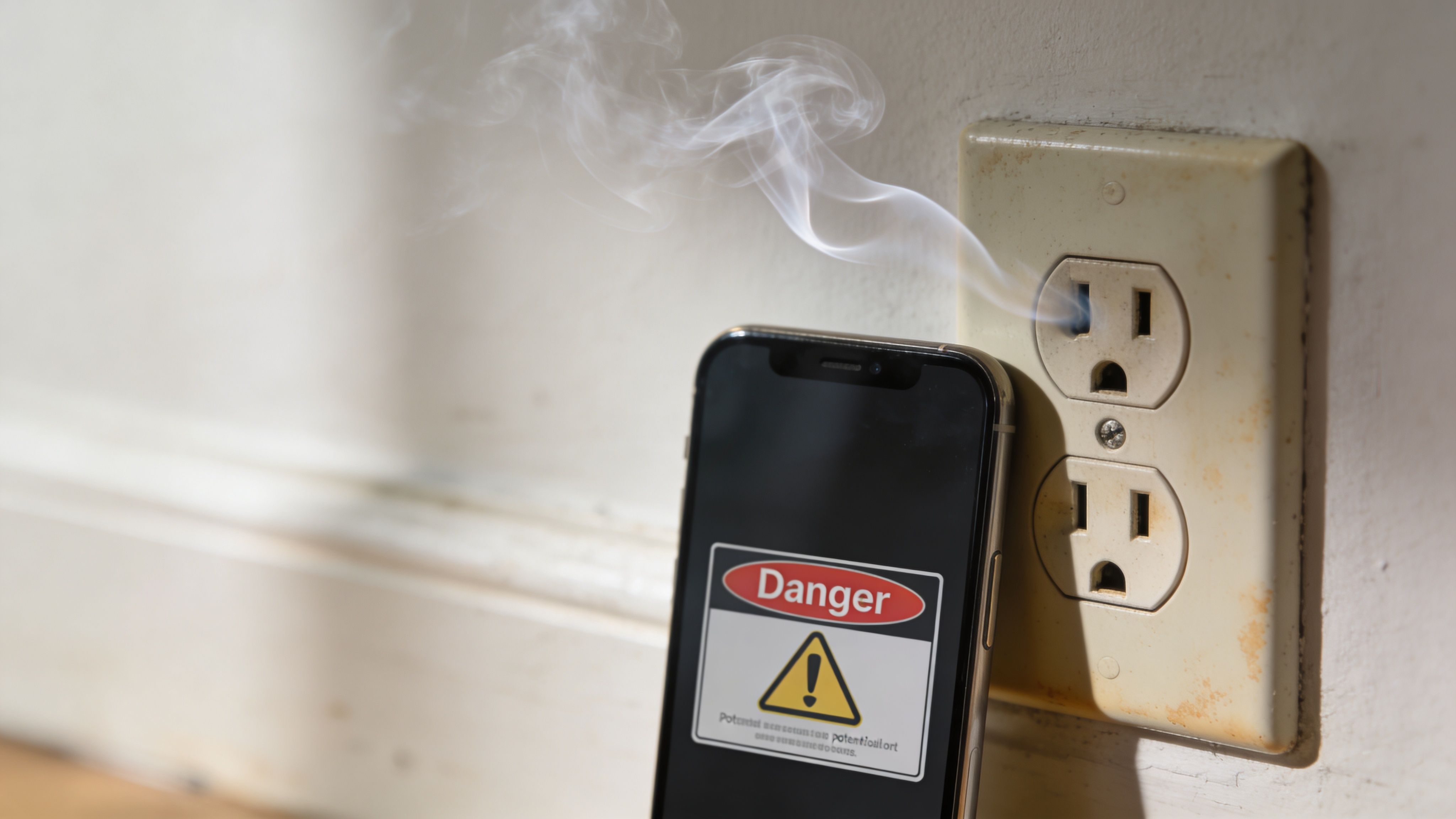
The reason these signs matter is that electrical faults don’t always fail dramatically. Many start small. A loose termination, damaged cable, overloaded circuit, or deteriorated fitting can keep operating just enough to look “mostly fine”.
Homeowners often make the same mistakes:
This short video gives a useful visual prompt for the kind of issues that shouldn’t be ignored:
If the system is giving you the same warning twice, stop testing your luck and start testing the installation.
A good electrical job should feel organised from the first contact. Homeowners shouldn’t have to guess what happens next, what the quote includes, or whether the work is finished properly.
The process is usually straightforward when the contractor runs a professional system.
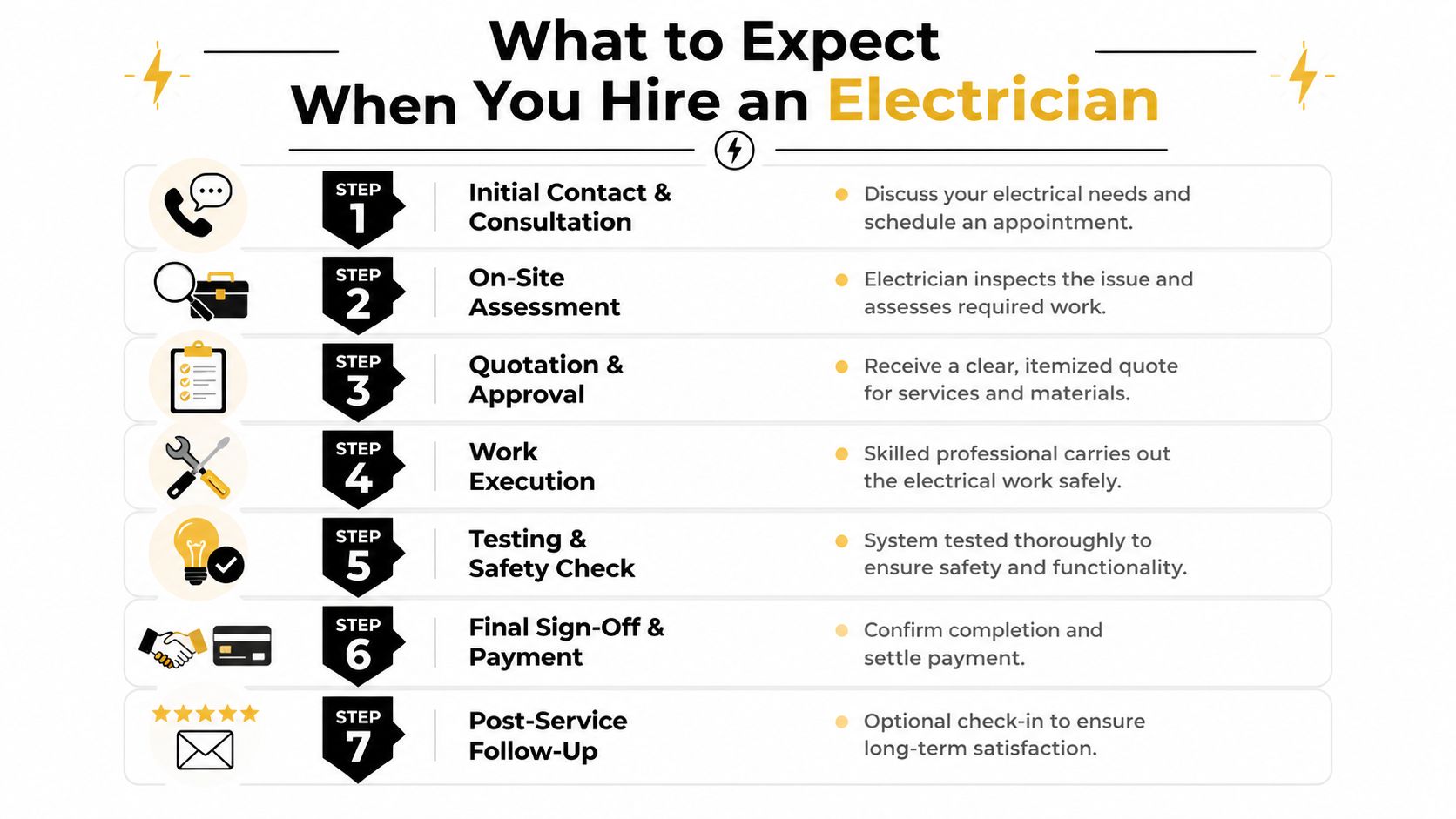
Initial contact and clear description
Tell the electrician what’s happening, when it started, and whether the issue is urgent. “Power keeps tripping when the oven and kettle run together” is far more useful than “electrics playing up”.
On-site assessment
For anything beyond the simplest replacement, expect inspection and testing before final recommendations. That’s especially true in older homes, renovated homes, and properties with mixed-age wiring.
Itemised quote or scope
You should be able to see what labour, materials, and key tasks are included. If there are variables, those should be explained rather than buried.
Approval before work begins
No surprises. If conditions on site reveal extra work, the electrician should talk you through it before proceeding.
Safe execution of the job
You should see normal professional habits. Isolation where required, tidy setup, appropriate tools, careful access into roof spaces or wall cavities, and respect for the home.
Testing and verification
This is the step many homeowners never see, but it matters. A neat finish means little without proper testing.
Sign-off and paperwork
If the job requires compliance documentation, ask for it. Keep quotes, invoices, and any certificates together for future records.
You don’t need to interrogate your electrician, but a few good questions help.
A solid electrician doesn’t rely on mystery. They explain the fault in plain English, identify the safest way forward, and tell you where the trade-offs are.
Sometimes the best answer isn’t the cheapest immediate fix. For example, repairing one failed circuit in an ageing board may restore power today, but a switchboard upgrade may be the smarter option if the rest of the installation is already at the end of its useful life.
A reliable electrician gives you enough information to make a good decision without drowning you in jargon.
You get three quotes for the same job and the prices are miles apart. That happens often in Brisbane, especially where older homes, partial renovations, and outdated boards make the actual scope harder to see from the driveway.
A good electrician earns trust before the tools come out. They ask what is happening, how old the installation is, what has been added over time, and whether the issue is a fault, an upgrade, or a compliance concern. That matters in Brisbane because a renovated Queenslander in Windsor usually presents very different risks and access limits from a townhouse in a newer estate or a post-war home in Grange.
Price still matters. Scope matters more.
The better choice is usually the electrician who explains what they found, what needs attention now, what can wait, and what paperwork should follow the job. That is how homeowners avoid paying twice for the same problem.
For regulated electrical work in Queensland, no. If the job involves fixed wiring, a switch, a socket outlet, a hardwired appliance, or safety devices, it belongs to a licensed electrician. Small-looking jobs can still affect shock protection, fault protection, and insurance.
Start with four checks. The alarm should be photoelectric, within service life, installed in the required locations, and interconnected where the rules require it.
If you are unsure, ask for a compliance check rather than a quick visual opinion. In many Brisbane homes, especially older properties with staged renovations, smoke alarm layouts no longer match the current standard. Also remember that by the 2027 deadline, all Queensland residences will need interconnected photoelectric smoke alarms.
Only if the scope is clear and comparable.
A low quote can still be legitimate, but it can also leave out fault finding, rectification of existing defects, wall or ceiling access work, switchboard adjustments, or compliance documentation. I tell homeowners to compare inclusions line by line. Ask what fittings are being used, whether testing is included, and what happens if the electrician finds non-compliant wiring once the job starts.
Look for patterns, not one perfect review. Good signs include clear communication, realistic arrival windows, tidy quoting, and reviews that mention the actual work completed rather than just saying “great service.”
Reviews are useful when they describe how the contractor diagnosed the issue, handled changes, and explained costs. If you want a practical look at why that kind of feedback matters, this guide on how contractors generate leads with Google reviews gives useful context.
For Brisbane homeowners, the right electrician is licensed, insured, easy to deal with, and familiar with local housing stock. They should be comfortable working in older roof spaces, identifying renovation-era shortcuts, and explaining Queensland compliance requirements without burying you in jargon.
Local experience shows up in small decisions. Whether a switchboard has room for a new circuit, whether an old cable route is still usable, whether smoke alarm locations suit the actual floor plan, and whether a repair is worth doing on ageing equipment all depend on the property in front of them.
If you need a licensed local team for switchboard upgrades, smoke alarm compliance, hot water repairs, security installations, or general electrical work, DLG Electrical offers practical residential and commercial service across Brisbane. They’re family-owned, fully licensed and insured, and provide free quotes with a focus on safe, tidy, compliant work done properly the first time.

Master Electrician with over 30 years of experience. Founded DLG Electrical in 2005 after international project work including electrical installations at Stamford Bridge Stadium, London(Home of Chelsea FC).

Local Electricians that can fix all Electric Hot water Systems.
Motion sensor lights are a versatile addition to any home, offering nu
