83 Jean St, Grange QLD 4051
Mon-Fri 07:30 AM - 04:00 PM - Sat - 8:00 - 12 - Sunday Closed
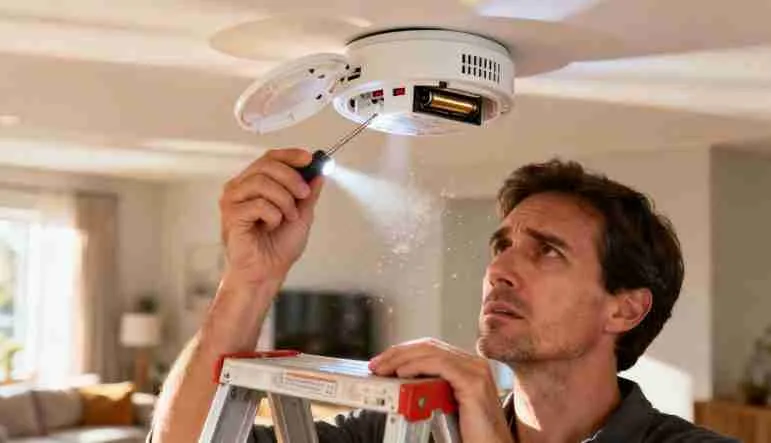
That sudden, ear-splitting shriek from your smoke alarm is more than just an annoyance—it’s a signal that needs investigating. While your first instinct might be frustration (especially at 3 AM), it’s critical to treat every activation seriously until you know for sure there’s no real danger.
The good news? A fire alarm randomly going off is rarely a sign of a major electrical fault. More often than not, it’s the alarm’s way of telling you it needs a bit of attention.
Your first job is to figure out what kind of noise you’re hearing. A loud, continuous siren means the sensor has picked up particles it thinks are smoke. On the other hand, a single, sharp “chirp” every minute or so is the universal signal for a low battery. Knowing the difference saves a lot of guesswork.
In our experience working across Brisbane, many alarms are just a bit sensitive to our local climate and lifestyle. From the thick humidity during a summer storm to dust kicked up during renovations, plenty of things can set them off.
These nuisance alarms are surprisingly common. Research shows that more than half of all Australian households have dealt with false alarms, with cooking fumes, low batteries, and steam being the main culprits. Worryingly, this frustration often leads to people removing the batteries altogether, leaving them unprotected. In fact, incorrect placement—like installing a detector too close to a kitchen or on a faulty circuit—accounts for up to 30% of these issues. You can learn more about smoke alarm statistics and how they impact home safety.
Key Takeaway: Think of a random alarm as a maintenance reminder, not just a malfunction. It’s prompting you to check its power, cleanliness, and location before a real emergency happens.
To help you get to the bottom of it quickly, here’s a rundown of the most common triggers we see and what you should do first.
This table breaks down what might be happening when your fire alarm is randomly going off and the first simple steps you can take to resolve it.
| Potential Cause | What It Sounds Like | Your First Action |
|---|---|---|
| Low Battery | A single, high-pitched chirp every 30-60 seconds. | Replace the battery with a high-quality 9V lithium battery. |
| Dust or Insects | A full, loud alarm siren with no smoke present. | Press the hush button and gently vacuum the alarm vents. |
| Humidity or Steam | A full alarm during or after a hot shower or boiling a kettle. | Press the hush button and ventilate the area by opening a door or window. |
| Cooking Fumes | A full alarm while cooking, especially when frying or toasting. | Press the hush button, use the rangehood fan, and ventilate. |
| End of Life | Persistent, random chirping even with a new battery. | Check the expiry date on the back; if it’s over 10 years old, replace the unit immediately. |
Most of the time, one of these simple fixes will solve the problem. If you’ve tried these steps and the alarm is still acting up, it might be time to look a little deeper.
That piercing shriek from a smoke alarm in the middle of the night is enough to jolt anyone awake. But before you reach for a broom handle to silence it, take a breath. There are a few simple checks you can run through yourself before calling in a professional. More often than not, a bit of hands-on troubleshooting can sort out the issue and save you a call-out fee.
Here in Brisbane, we see it all the time. The humidity, dust, and even tiny insects can trick the sensitive sensors inside an alarm, making it think there’s a real fire when there isn’t.
It’s a surprisingly common problem. In South Australia, for instance, fire services respond to about 9,000 alarm calls every year, but less than 5% are for actual fires. This creates a dangerous “alarm fatigue,” where people get so used to false alarms that they might ignore a real one.
So, when an alarm starts screaming for no reason, here’s a good process to follow.
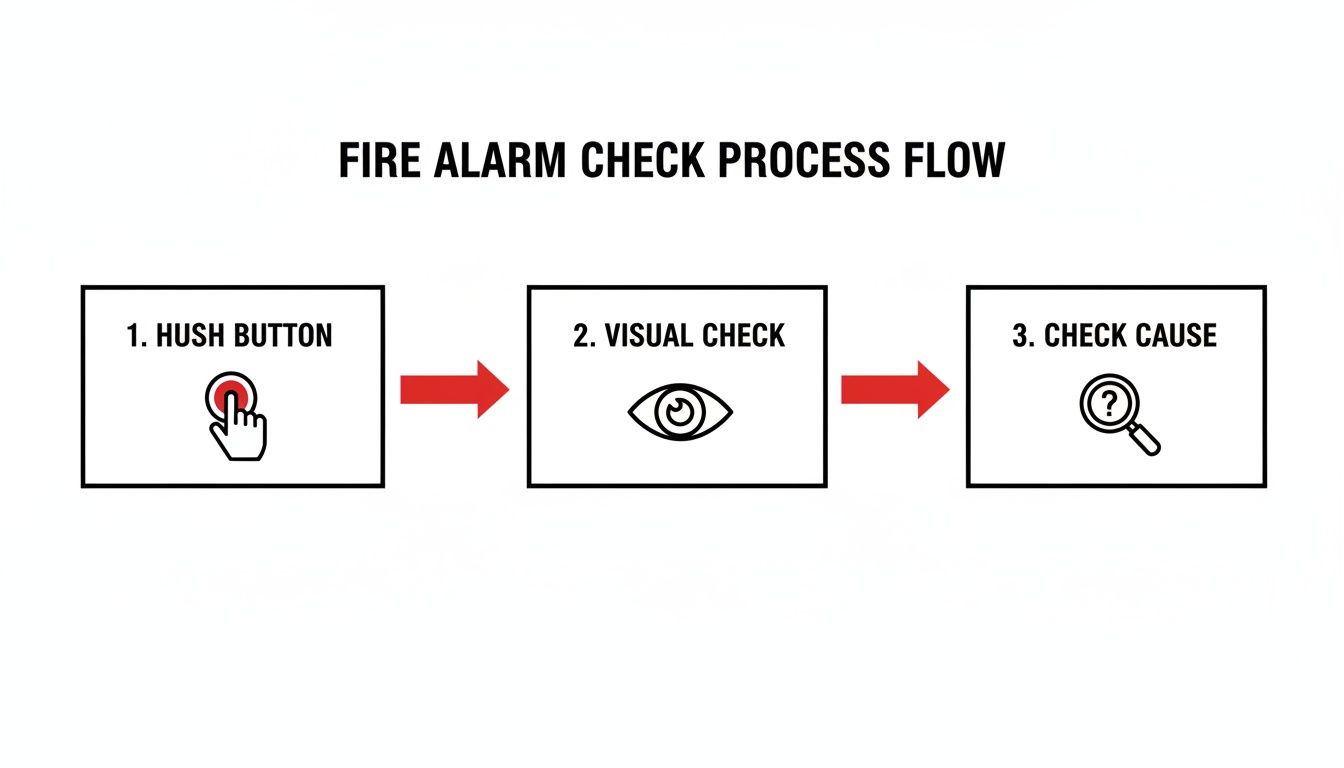
This simple flowchart helps you safely quiet the noise first, then start figuring out what’s actually going on.
Your first line of defence against a phantom alarm is surprisingly simple: a good clean. Dust, cobwebs, and even small insects can get inside the sensor chamber and set it off. Thankfully, it’s an easy fix.
Doing this quick clean every six months can make a huge difference in cutting down nuisance alarms. For a more detailed routine, you can also check out our guide on how to check a smoke detector.
A dying battery is the next major culprit, especially if you’re hearing that maddening, intermittent “chirp.” Even your hardwired alarms have backup batteries that need replacing from time to time.
Pro Tip: Ever notice the chirping always seems to start in the middle of the night? That’s not a coincidence. As the air temperature drops overnight, a failing battery’s power output dips just enough to trigger the low-battery warning.
Sometimes, the alarm isn’t faulty at all—it’s just in the wrong spot. Placement can make a huge difference, making an alarm hyper-sensitive to things that aren’t a fire.
Think about whether your alarm is located near any of these common triggers:
Often, just moving the alarm a metre or two away from the problematic area can solve the issue for good. By working through these simple checks, you can usually identify and fix the cause of a randomly activating fire alarm yourself.
So, you’ve swapped the battery and given the alarm a good clean, but the piercing siren just won’t quit. When the simple fixes don’t work, the problem often lies a bit deeper—especially with modern hardwired and interconnected systems. These alarms are wired directly into your home’s mains power, which brings a whole new set of potential triggers into the mix.
One of the most common culprits we see, particularly here in Queensland, is a power surge. A nearby storm or even a minor hiccup on the grid can send a jolt of electricity through your wiring, which is more than enough to trip the alarm’s sensitive internal parts. It can even happen when a big appliance, like your air conditioner or a power tool in the garage, suddenly kicks on and causes a momentary voltage dip on the circuit.
This isn’t just a modern headache; nuisance alarms have been a massive drain on emergency services for decades. Faulty systems tie up critical resources that should be heading to real emergencies. Back in 1996/97, the Tasmania Fire Service reported that a staggering 43.7% of their 8,446 callouts were false alarms. While that’s Tassie data, it paints a national picture. Other reports suggest improper installations are to blame for around 30% of all nuisance alarms. It’s a serious issue that highlights just how important a correct setup is.
Interconnected systems are brilliant for safety, but they can create some unique diagnostic headaches. As per Queensland law, all the smoke alarms in your home have to be linked, so when one detects smoke, they all scream. The downside? One faulty unit can become a “ghost,” setting off every single alarm in the house for absolutely no reason.
Suddenly, you’re not trying to silence one device; you’ve got a whole chorus of them going off. The trick is to find which one started it all.
This is a scenario we see all the time. We had a client in The Gap who was at their wit’s end with alarms going off randomly every few days. We went through all the usual checks, and eventually found that their smoke alarms were on the same circuit as a brand-new, powerful air conditioning unit. Every time the AC compressor started up, that tiny power fluctuation was enough to trigger one sensitive alarm, which then set off the entire house. Our team ran a new, dedicated circuit just for the alarms, and the problem vanished instantly.
If you’ve ruled out power surges and a single rogue unit, the issue might be with the wiring itself. This is absolutely not a DIY job and needs a licensed electrician to diagnose safely. Here are a few signs that point towards a deeper electrical fault:
An interconnected system is only as reliable as its weakest link. A single malfunctioning or incorrectly wired alarm can compromise the entire network, causing constant false alarms and eroding your trust in the system when a real emergency strikes.
Knowing about these complexities helps you recognise when you’ve reached the limit of your own troubleshooting. While changing a battery is easy, diagnosing circuit faults and interconnected failures is a job for the pros. For a deeper dive, have a look at our complete guide on interconnected smoke alarms in QLD.
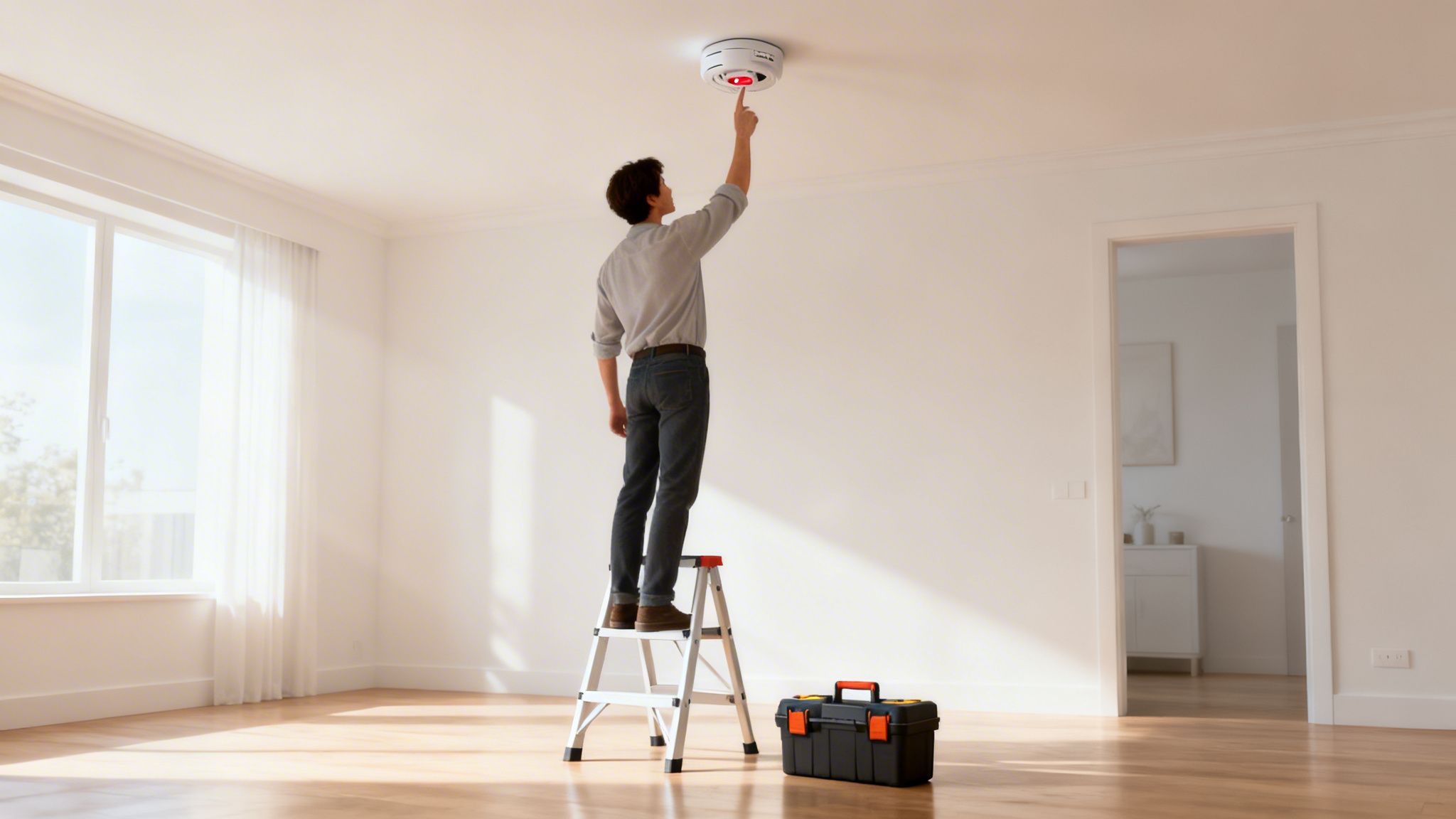
Dealing with a fire alarm randomly going off is beyond frustrating, but the best fix is to stop it from ever happening. The secret is shifting from reactive panic to proactive care. By setting up a simple, consistent maintenance calendar, you can dramatically cut the chances of a false alarm waking you up at 3 AM.
This isn’t about complex electrical work; it’s just basic upkeep anyone can handle. A few minutes of attention every now and then will save you hours of annoyance and, more importantly, ensure your alarms work when you actually need them. Adopting a structured approach like Planned Preventive Maintenance (PPM) is the best way to manage risks and prevent unexpected headaches like false alarms.
A simple routine is your best weapon against nuisance alarms. Think of it like any other household chore—quick, easy, and essential for keeping things running smoothly.
Once a month, do a quick button test. This is the simplest check in the book. Just press and hold the ‘test’ button on each alarm for a few seconds until you hear that ear-piercing siren. This confirms the battery and the internal sounder are working. While it doesn’t test the smoke sensor itself, it’s a crucial check to make sure the unit has power and can alert you.
Every six months, give them a deep clean. Brisbane’s climate means dust, moisture, and tiny insects are a constant nuisance for the sensitive sensors inside your alarms. To clean them properly:
This simple six-monthly clean is one of the most effective ways to stop the most common false alarm triggers in their tracks.
Expert Insight: Always remember to test your alarms again after a deep clean. It’s a quick way to make sure you haven’t accidentally knocked a wire loose or affected the power connection while handling the unit.
In Queensland, the law is very specific about the smoke alarms required in our homes, and this is key to preventing false alarms. The legislation mandates the use of photoelectric smoke alarms.
Photoelectric alarms are designed to “see” smoke particles. This makes them brilliant at detecting the slow, smouldering fires most common in homes. Just as importantly, they are far less likely to be triggered by cooking fumes from burnt toast or a sizzling steak—a notorious cause of false alarms with the older ionization-type models. If you still have ionization alarms, upgrading isn’t just a good idea, it’s a legal requirement.
This might be the most important piece of maintenance advice we can give: every single smoke alarm has an expiry date. Over time, the internal sensors degrade, becoming less reliable and much more prone to false activations.
All smoke alarms sold in Australia must be replaced within 10 years of their manufacture date. You’ll find this date printed on the back of the alarm itself. This isn’t a suggestion; it’s a critical safety standard. An alarm that’s over 10 years old simply can’t be trusted to protect your family, no matter how clean it is or how new its battery is.
For landlords, sellers, or anyone doing major renovations in Brisbane, ensuring all alarms are photoelectric, interconnected, and within their 10-year lifespan is a non-negotiable legal obligation. A regular check-up from a professional electrician like DLG Electrical ensures your home is not just compliant, but genuinely safe.
So, you’ve done everything right. You’ve cleaned the alarm, put in a fresh battery, and even checked it’s not too close to the steamy bathroom. But the phantom chirps or full-blown false alarms just won’t quit, leaving you frustrated and on edge.
This is exactly the point where DIY troubleshooting runs out of road. It’s time to bring in a professional.
Some fire alarm issues are more than just a simple fix; they’re actually warning signs of deeper, more complex problems brewing within your home’s electrical system. Knowing how to spot these signals is key to making sure your alarm is a reliable lifesaver, not just a middle-of-the-night nuisance.
If you’ve gone through all the basic maintenance steps and the false alarms are still happening, that’s a major red flag. It tells us the problem probably isn’t dust or a weak battery, but something more serious like a faulty sensor, a problem with the mains power connection, or an issue in the wiring itself.
It’s not always obvious when to throw in the towel and call a sparky. However, some symptoms are dead giveaways that you need a qualified electrician to investigate, both for your family’s safety and to ensure your home meets Australian Standards.
Here are the definite signs it’s time to pick up the phone:
A professional diagnosis is invaluable for tracing complex faults. An electrician has the tools and experience to test the circuit, identify issues in interconnected systems, and ensure your entire setup is safe and compliant.
As smoke alarms get older, their ability to detect a real fire plummets. Honestly, an old, malfunctioning alarm is just as dangerous as having no alarm at all. Replacing units past their expiry date isn’t just a good idea—it’s a legal requirement here in Queensland and a fundamental part of keeping your home safe.
On top of that, if you’re looking to sell or rent out your property in Brisbane, you must meet strict smoke alarm compliance regulations. The rules are clear: all alarms must be photoelectric, interconnected, less than 10 years old, and installed in the correct locations. A qualified electrician can test your system and provide a compliance certificate, giving everyone peace of mind.
For a deep dive into what’s required, check out our guide on professional smoke alarm testing services.
Knowing when to tackle a problem yourself and when to call in the experts can be tricky. This table breaks down the common symptoms to help you make the right call.
| Symptom | Likely Cause | DIY Action | When to Call DLG Electrical |
|---|---|---|---|
| Intermittent Chirping | Low battery or dust | Replace the battery with a new 9V lithium one. Vacuum the alarm vents. | If chirping continues with a new battery in a hardwired alarm. |
| Single Alarm Goes Off | Dust, insects, steam, or cooking fumes | Clean the alarm. Move it further from the kitchen/bathroom if poorly placed. | If false alarms persist after cleaning and ruling out environmental causes. |
| All Alarms Go Off at Once | Interconnect fault, power surge, or faulty unit sending a signal | Press “hush” on the initiating alarm (the one with the flashing red light). | If it happens repeatedly or without an obvious cause. |
| Alarm is Yellowing/Discoloured | The unit is old and past its expiry date | Check the manufacture date on the back of the alarm. | Immediately. All alarms over 10 years old must be replaced by law. |
| Alarm Goes Off with Flickering Lights | Wider electrical circuit fault | Turn off the circuit breaker for that area. | Immediately. This indicates a potentially dangerous wiring issue. |
Ultimately, your safety is what matters most. While simple fixes are fine, never hesitate to call a professional if you’re unsure or if the problem persists.
If your fire alarm issues just won’t go away, you might need to consult with professional Brisbane services who live and breathe home electrical systems. An expert can find and fix these stubborn problems quickly and safely. Here at DLG Electrical, our team specialises in diagnosing these exact issues, ensuring your system works flawlessly when you need it most.
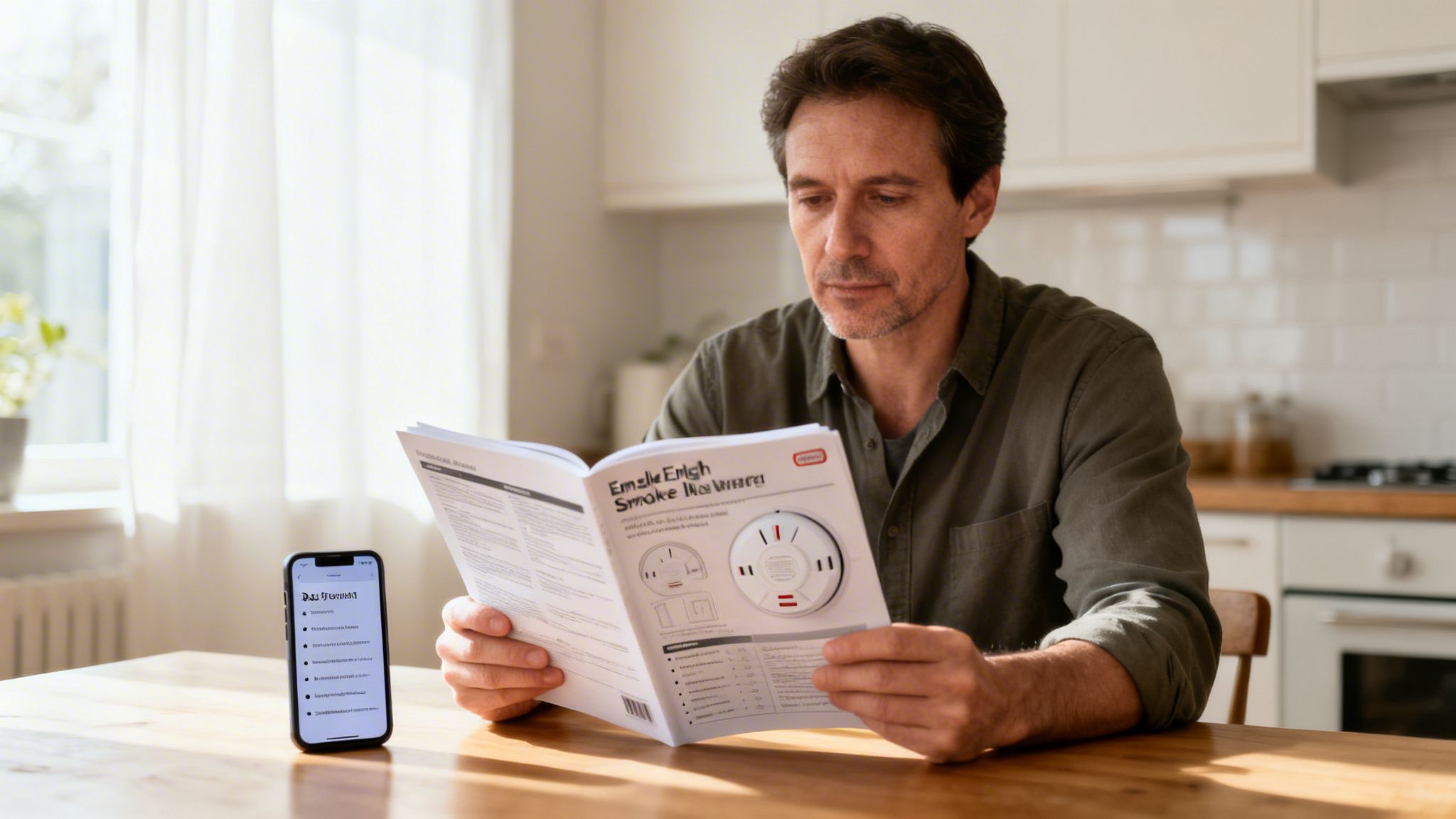
When your fire alarm goes off for no reason, it can leave you with more questions than answers. It’s a common call-out we get from homeowners across Brisbane, and the confusion is completely understandable.
So, let’s tackle some of the most frequent questions we hear. A few key behaviours and environmental triggers are usually behind these frustrating false alarms. Once you know what to look for, solving the mystery gets a whole lot easier.
This is a classic. It’s easily one of the most common complaints we hear, and the culprit is almost always a combo of temperature and battery chemistry. As the temperature in your house drops overnight, an ageing battery’s power output can dip just enough to fall below what the alarm needs.
That tiny power drop is what triggers that incredibly annoying low-battery “chirp”—the one that seems perfectly timed to wake you up. Brisbane’s muggy summers don’t help either; high humidity can cause moisture to condense inside the sensor, tricking it into activating.
If a fresh, high-quality battery doesn’t fix it, that’s a strong sign the sensor itself is on its way out. In that case, the entire alarm unit needs to be replaced.
When one alarm sounds, they all sound. That’s the point of an interconnected system, but it creates chaos during a false alarm. Pinpointing the source is your first mission.
When all the alarms are blaring, you need to find the “initiating” unit. Walk through your home and look closely at the indicator light on each alarm.
Your user manual can confirm the specific light codes for your model. If you can’t quickly find the source, an electrician has diagnostic tools to pinpoint the problem unit and put a stop to the false alarms for good.
Key Takeaway: Think of an interconnected system as a network. A single faulty, expired, or poorly located alarm can compromise the whole network’s reliability, causing system-wide false activations.
This one’s critical—it’s the law, not just a recommendation. In Australia, all smoke alarms must be replaced within 10 years of their manufacture date. You’ll find this date printed right on the back or side of the unit.
That 10-year lifespan isn’t arbitrary. Over time, the internal sensors that detect smoke degrade. They become less sensitive to real fire threats and more prone to nuisance alarms. An expired alarm is an unreliable alarm, and you simply can’t trust it to protect your family.
Yes, a power outage can definitely be a trigger. When your home loses mains power, your hardwired alarms automatically switch to their internal battery backup. This sudden power source change can sometimes cause a brief, full-blown alarm as the unit recalibrates.
More often, though, a blackout will expose a weak backup battery. If the battery doesn’t have enough juice to power the alarm on its own, the unit will start chirping its low-battery warning. It’s the alarm’s way of shouting, “My backup plan isn’t strong enough!” It’s a loud, but effective, reminder to test and replace those backup batteries regularly.
If you’re tired of playing detective with your smoke alarms and just want the peace of mind that comes with a professionally installed, compliant system, DLG Electrical is here to help. Our licensed Brisbane electricians can diagnose stubborn faults, upgrade expired units, and ensure your home is protected. Visit us at https://dlgelectrical.com.au to book a service today.

Master Electrician with over 30 years of experience. Founded DLG Electrical in 2005 after international project work including electrical installations at Stamford Bridge Stadium, London(Home of Chelsea FC).

Local Electricians that can fix all Electric Hot water Systems.
Motion sensor lights are a versatile addition to any home, offering nu
