83 Jean St, Grange QLD 4051
Mon-Fri 07:30 AM - 04:00 PM - Sat - 8:00 - 12 - Sunday Closed
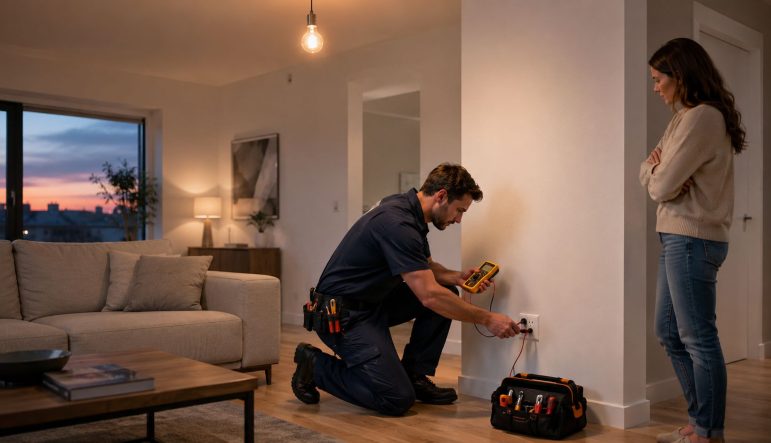
You notice it at night first. The kitchen downlights flutter for a second, the hallway light dips, then everything looks normal again. A day later, the lounge room pendant does the same thing when the air con starts. That's when most homeowners ask the same question. Is this just a bad bulb, or is something more serious happening behind the walls?
Flickering lights in house can be anything from a simple lamp issue to a fault that needs urgent attention. The trick is not guessing. The trick is narrowing it down safely, starting with what you can observe and stopping well before you touch anything that belongs to a licensed electrician.
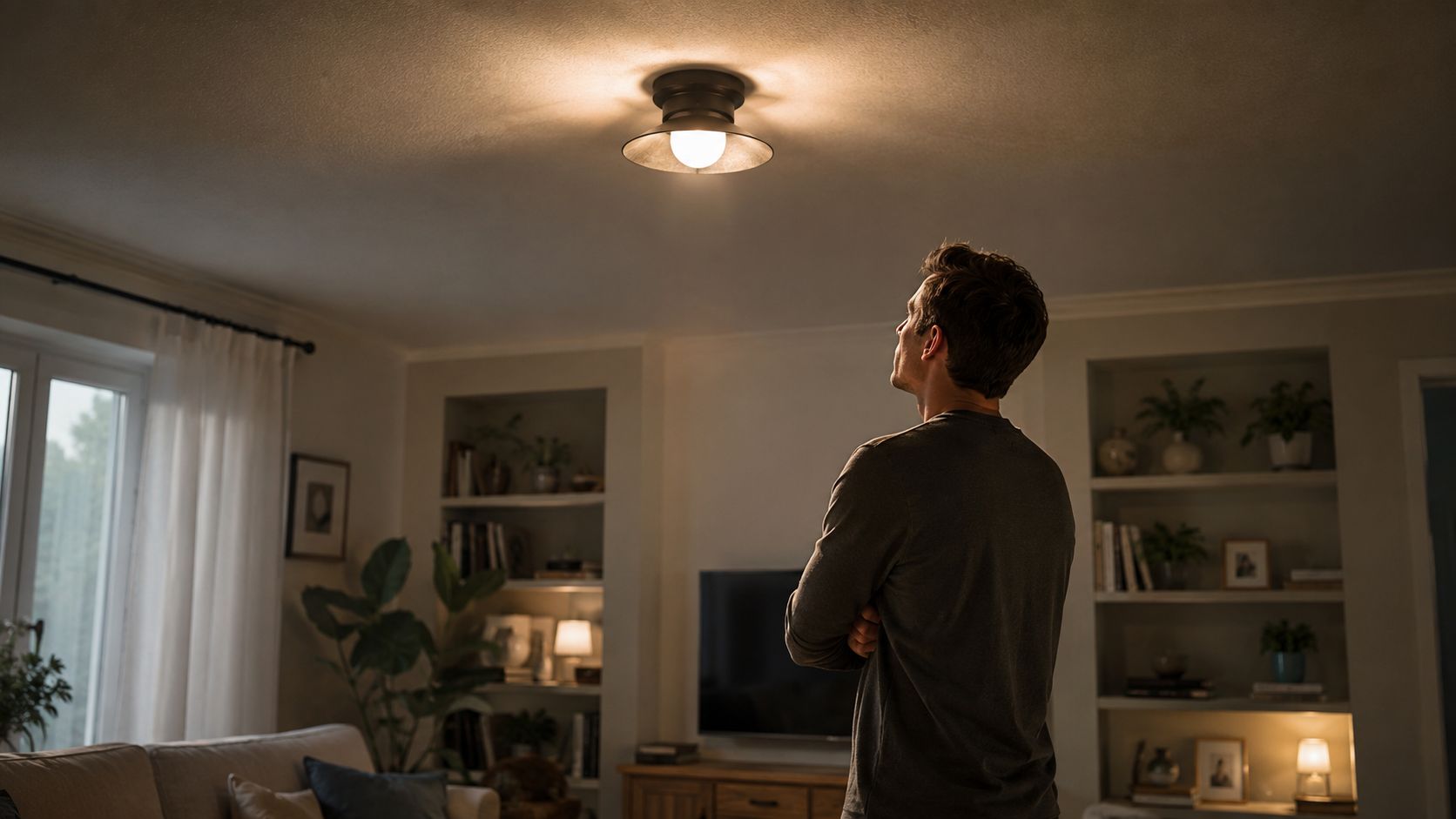
A flickering light doesn't always mean immediate danger, but it should never be ignored. Sometimes the cause is minor, like a loose globe or a dimmer that doesn't play nicely with LED lamps. Other times, the flicker is your home's way of telling you the power supply isn't stable.
That's the part people often miss. A light can flicker because of something at the fitting, on the circuit, in the switchboard, or even outside the property on the utility side. If you jump straight to replacing bulbs, you can waste time and still leave the underlying issue unresolved.
Practical rule: If the flicker pattern is changing, spreading, or happening with other symptoms like buzzing or dimming, treat it as an electrical fault until proven otherwise.
In Australia, electrical faults account for about 40% of residential fires, which is why early warning signs matter so much, including flickering caused by loose connections or failing components (Copper Bull on flickering lights and fire risk). If you've also noticed strange dips after storms or during periods of unstable supply, it helps to understand how power surges can affect home electrical systems.
A single lamp acting up is usually less alarming than several lights flickering together. Pattern matters. So does timing.
Watch for these clues:
If you're worried, that instinct is usually worth listening to. Electrical problems rarely fix themselves.
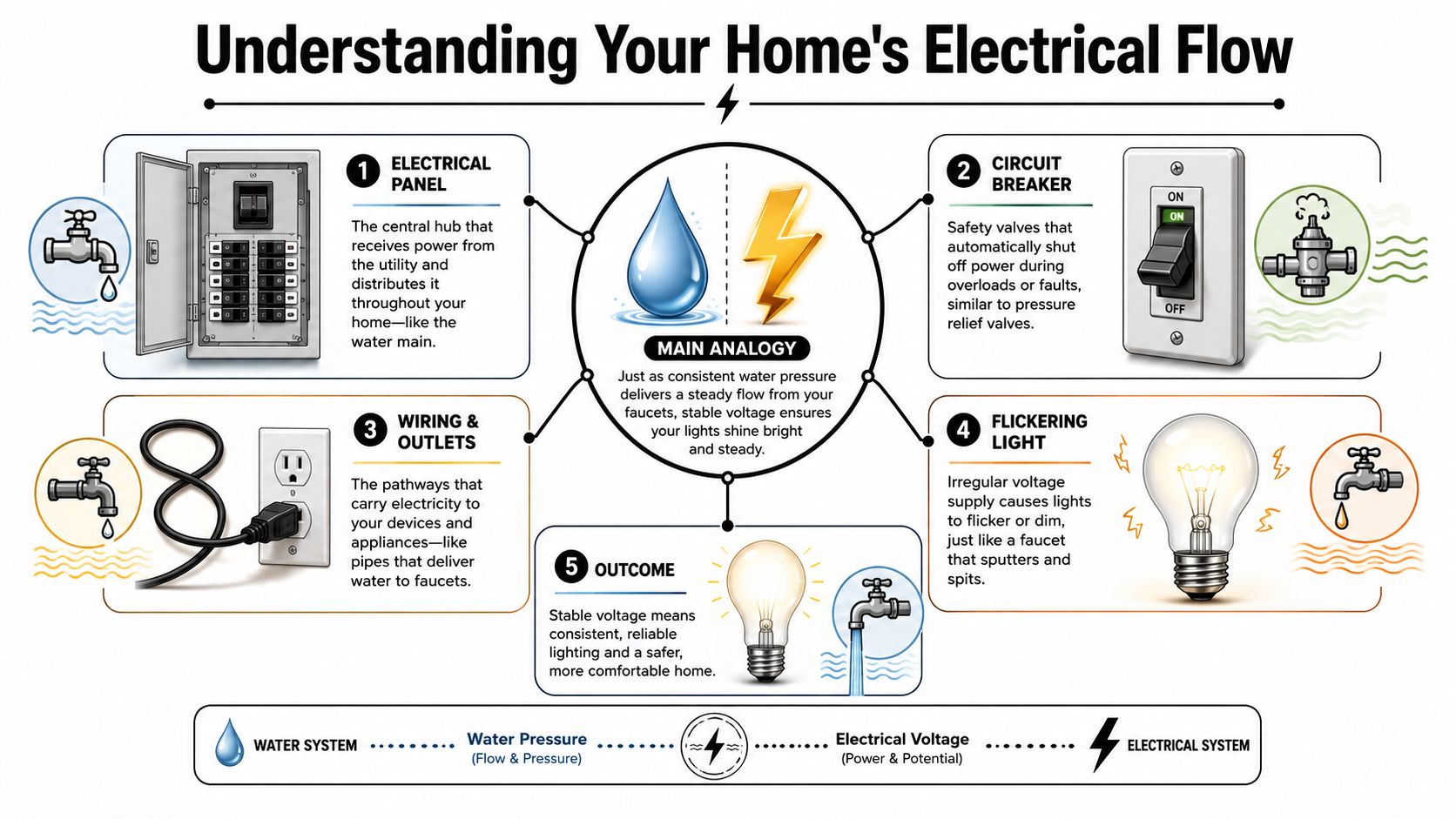
Think of your home's electrical system like water moving through pipes. Voltage is the pressure. Your wiring is the pipework. The switchboard is the main distribution point. Your lights need steady pressure to stay bright and stable.
When that pressure stays even, your lights look normal. When it drops or wobbles for a moment, the light output changes. That's the flicker you can see.
The fault can sit in a few different places.
That's why two homes can show the same symptom and need completely different fixes. One might need a new LED-compatible dimmer. The other might need the utility provider to fix a loose neutral.
Older lamps often hid small supply changes. Modern LEDs don't. They respond quickly, and that's great for efficiency, but it also means they show even minor instability far more clearly.
A steady light usually means steady voltage. A flickering light means the supply is changing somewhere, even if the change is brief.
If you're trying to make sense of flickering lights in house, this is the most useful mindset to keep. Don't think only about the light fitting. Think about the whole path the electricity takes from the street to that lamp.
A good diagnosis starts with the pattern. One light flickering needs a different line of thinking from several rooms dimming together, and that difference matters because the fix can be as small as a failed LED globe or as serious as a neutral fault upstream.
I sort flicker into three practical groups. The light fitting itself, the circuit feeding that area, or the supply affecting more than one part of the home.
If the flicker stays at one fitting and the rest of the house looks normal, start local.
Common causes include:
This type of fault usually stays in one spot. It may change when you swap the globe, turn the dimmer down, or operate the switch a few times.
Many generic articles stop too early; they mention “overload” and move on. In real homes, especially newer ones full of LEDs, I often see lights flicker because the LEDs are reacting to short voltage dips when a larger appliance starts.
That appliance startup is called inrush current. Air conditioners, fridges, pumps, microwaves, and some pool equipment can draw hard for a moment as they kick in. Older incandescent lamps often hid that dip. LEDs usually show it straight away because their drivers are far more sensitive.
If the lights blink only when one appliance starts, the cause may be load interaction on the circuit rather than a dangerous fault at the fitting. The trade-off is that some flicker is more of a nuisance than an emergency, but repeated voltage drop still needs checking because it can point to poor circuit design, a weak connection, or cheap LED gear that has no tolerance for normal startup events.
A proper electrical fault finding inspection looks at that timing, what else is running, and whether the issue sits with the appliance, the lighting circuit, or the supply quality.
If your lights dip when the air con, fridge, microwave, or pump starts, write that down. That timing clue saves a lot of guesswork.
If lights in multiple rooms flicker together, the focus shifts away from the individual fittings.
At that point, one of the most missed causes is a loose neutral on the utility side. I see homeowners spend time changing bulbs and blaming LED fittings when the actual problem is outside the house boundary. A bad neutral connection can cause unstable voltage across parts of the property, and that is not something to ignore.
Whole-house flicker can also come from a loose internal neutral, a poor breaker or main switch connection, or deterioration in the switchboard. The reason electricians take neutral issues seriously is simple. Voltage can become unpredictable, and that can damage appliances as well as create a safety risk.
There is one more pattern worth paying attention to. If flicker happens at a similar time on some evenings, the cause can be supply-related rather than a random fault inside your home. Timing matters.
| Symptom | Likely Cause | Risk Level | Next Step |
|---|---|---|---|
| One globe flickers, others are fine | Loose or faulty bulb, fitting issue, dimmer mismatch, failing LED driver | Low to moderate | Swap the globe or test another compatible bulb |
| Lights dip when air con or fridge starts | LED sensitivity to inrush current, shared circuit voltage drop | Moderate | Note which appliance triggers it and book testing |
| Several lights flicker in different rooms together | Main connection issue, switchboard fault, internal neutral problem | High | Stop troubleshooting beyond simple observations and call an electrician |
| Whole house flickers randomly, neighbours may have similar issue | Utility-side loose neutral or other supply fault | High | Contact your utility provider and arrange electrical inspection |
| Flicker happens around the same time on some evenings | Supply-related control signal or external voltage fluctuation | Moderate | Record the time and report the pattern for assessment |
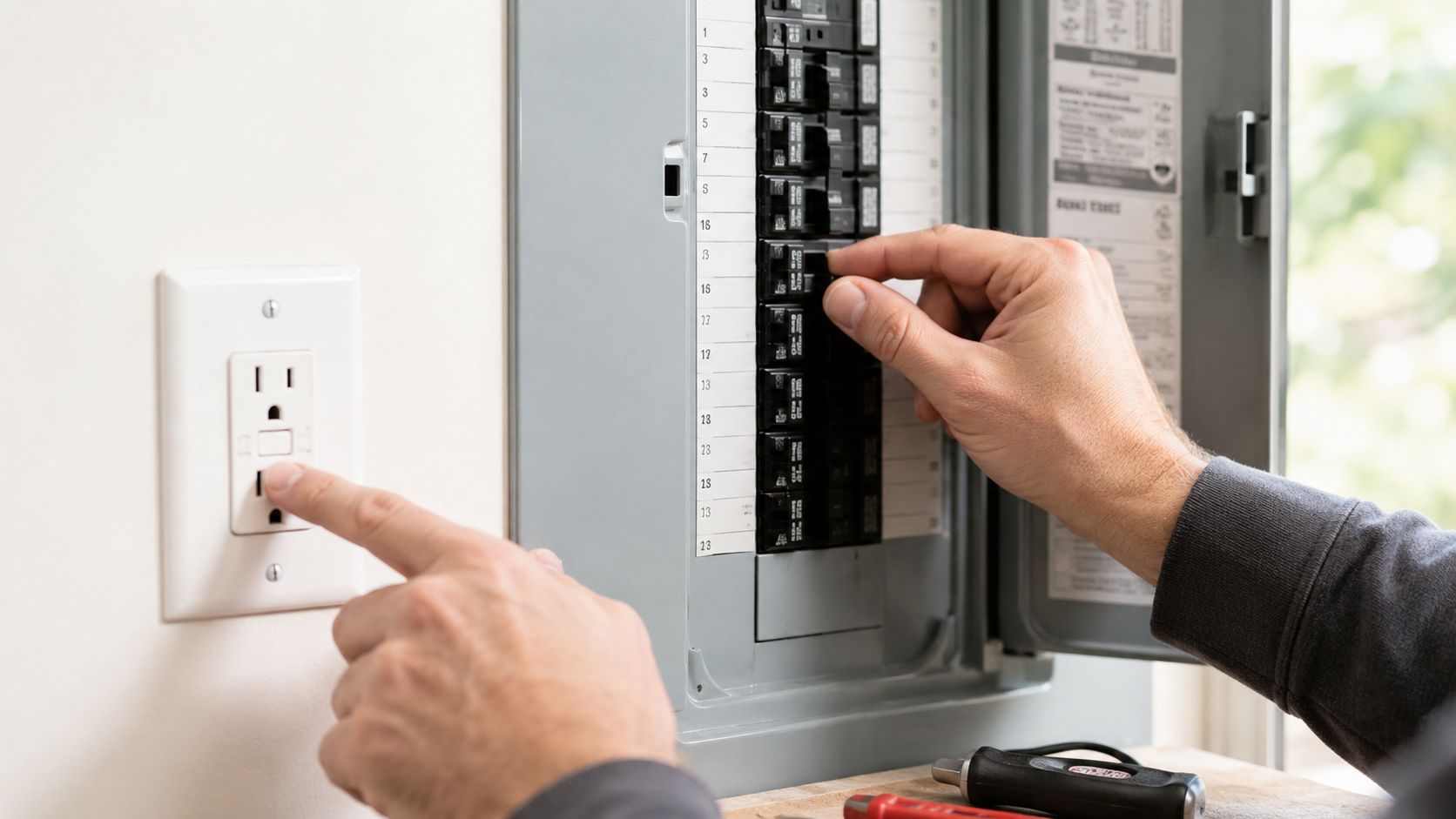
You can do a few useful checks without opening anything, removing covers, or taking risks. The goal isn't to repair the fault yourself. The goal is to gather good information.
Don't take the front off a switchboard. Don't remove power points or switches. Don't tighten wiring. Don't try to inspect the mains connection.
Those are licensed electrical tasks, and for good reason. Even a simple-looking loose connection can be live, unstable, and dangerous.
Write down what you see before you call. Which lights flicker, when they do it, and what else was running at the time. That short list often cuts fault-finding time dramatically.
Some flickering can wait a day or two for a booked inspection. Some can't. When certain warning signs show up, the safe move is immediate professional help.
According to guidance on Australian residential risk, electrical faults are responsible for about 40% of residential fires, and lights flickering across multiple rooms at once are a critical indicator of a main switchboard fault or loose connection that can overheat and become a serious fire hazard (Australian guidance on flickering across rooms and fire risk).
If you have flickering plus smell, sound, heat, visible scorching, or repeated outages, don't leave it overnight if you can avoid it. Arrange urgent help through a 24 hour electrical service in Brisbane.
This is not the moment for trial and error. Once flicker is tied to heat or a whole-house fault, the problem has moved beyond nuisance level.

If a homeowner in North Brisbane tells me the lights only flicker when the air con starts, or several rooms pulse together for no clear reason, I do not jump straight to fittings or a switchboard replacement. Those patterns need proper fault finding first, because the fix can be as small as a failed LED driver or as serious as a loose neutral on the supply side.
A good electrician should work through the problem in a set order and explain what they are seeing as they go. The aim is to find where the voltage is becoming unstable, inside the home or before it reaches the switchboard.
A typical visit includes:
That last point matters. A utility-side loose neutral can look almost identical to an internal fault from the lounge room, but the testing pattern is different and the electrician should recognise it.
The repair depends on what the testing shows. Common outcomes include:
In older North Brisbane homes, I often see a mix of new LED lighting on wiring and switchgear that was never designed with that sensitivity in mind. In renovated homes, the opposite can happen. New circuits are fine, but one supply-side issue causes symptoms all over the place.
If your flickering lights in house are becoming more frequent, affecting more than one area, or reacting every time a heavy appliance starts, a proper diagnosis saves money and guesswork. It also stops you replacing bulbs, dimmers, or fittings that were never the problem itself.
If you're in North Brisbane, Grange, Windsor or nearby and want clear answers without the runaround, DLG Electrical can help. As a family-owned Brisbane electrician with over 19 years of experience, the team handles fault finding, switchboard issues, lighting problems and safety upgrades with practical advice, free quotes and a strong focus on getting the job done right the first time.

Master Electrician with over 30 years of experience. Founded DLG Electrical in 2005 after international project work including electrical installations at Stamford Bridge Stadium, London(Home of Chelsea FC).

Local Electricians that can fix all Electric Hot water Systems.
Motion sensor lights are a versatile addition to any home, offering nu
