83 Jean St, Grange QLD 4051
Mon-Fri 07:30 AM - 04:00 PM - Sat - 8:00 - 12 - Sunday Closed
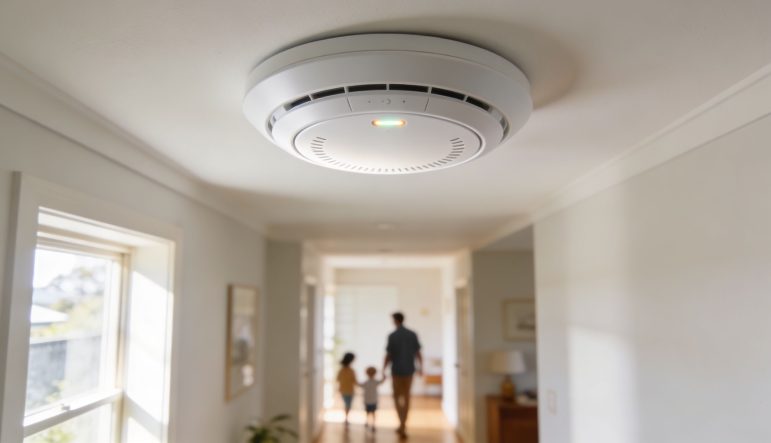
You’re probably reading this because smoke alarms have moved from “something I’ll sort out later” to “I need to know what’s required now”. That usually happens after a renovation, a property purchase, a tenancy changeover, or a late-night false alarm that leaves you wondering whether the alarms in your home are helping or just making noise.
Most Brisbane homeowners already know they need smoke alarms. The challenge is knowing what counts as good smoke alarms in a Queensland home in 2026. That means more than buying a unit from the hardware store and clipping it to the ceiling. It means choosing the right sensing technology, the right power source, the right locations, and a setup that works together when your household is asleep and reaction time matters most.
A lot of house fires don’t start as dramatic events. They start unnoticed. A charger overheats in a spare room. A kitchen mishap leaves smoke lingering after everyone thinks the danger has passed. A fault behind a wall or ceiling creates a slow-burning fire long before flames are visible.
That’s why early warning matters more than almost anything else in home fire safety. In Australia, working smoke alarms are proven to reduce the risk of death from house fires by approximately 50%, and analysis found 78% of fire deaths occurred in homes without working smoke alarms according to the Australian smoke alarm study referenced by Strategic Fire.
A homeowner will often say, “We’ve got alarms, so we’re covered.” Sometimes that’s true. Often it isn’t. The alarms might be the wrong type, installed in the wrong places, disconnected, expired, not interconnected, or still relying on old battery habits that fail at the worst time.
Good smoke alarms do four jobs well:
Practical rule: A smoke alarm isn’t “good” because it’s new. It’s good because it’s the right type, correctly installed, powered properly, and still working when the house is asleep.
If you’re doing a broader safety review at the same time, Northpoint Construction's electrical safety checklist is a useful companion resource because smoke alarms work best as part of a bigger electrical safety picture, not in isolation.
By the end of this guide, you should be able to look at your own home and answer the questions that matter. What type of alarms do you have. How are they powered. Are they interconnected. And do they meet Queensland requirements for the Brisbane market today.
The biggest technical choice in smoke alarms is the sensing method. For most homeowners, the label is familiar but the difference isn’t. That matters because Queensland doesn’t treat all smoke alarms as equal.
A simple way to think about it is this. Photoelectric alarms “see” smoke. Ionisation alarms react to tiny combustion particles. That sounds like a small distinction, but it changes how quickly each type responds under different fire conditions.
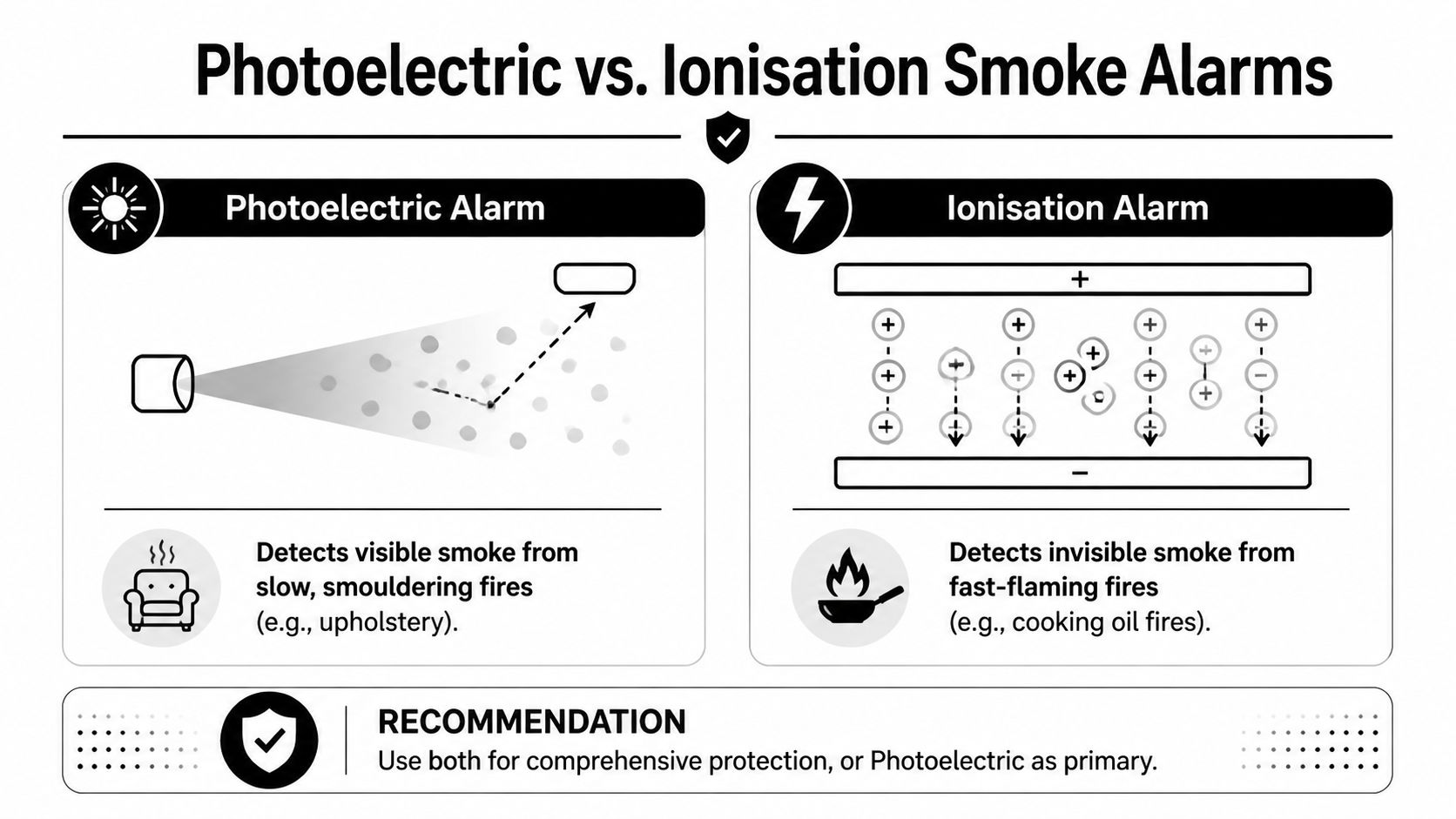
A photoelectric smoke alarm uses a light source and sensor inside a chamber. When smoke enters that chamber, the smoke particles scatter the light. The alarm detects that change and sounds.
In practical terms, photoelectric alarms are especially strong at picking up smouldering fires. The verified Australian data shows photoelectric alarms detect these conditions at 10 to 15% obscuration per metre, which is why they’re so well suited to fires involving bedding, furnishings, wiring, and other materials that can burn slowly before anyone sees flames, as outlined in the Victoria University smoke alarm location paper.
Ionisation alarms use a different method. They monitor changes in an electrical current caused by very small particles produced during combustion.
That makes them more responsive in some fast-flaming situations, but they’re not the mandated choice for Queensland residential compliance. In homes, the issue isn’t just speed in one fire type. It’s whether the alarm is suited to the range of fire conditions people face while sleeping, moving through hallways, or shut behind bedroom doors.
Australian homes commonly contain materials and layouts that make smouldering fire detection especially important. Upholstery, mattresses, soft furnishings, stored household goods, electrical appliances, and closed internal doors all influence how smoke moves and how quickly sleeping occupants are warned.
The verified data also notes that door-closed scenarios can increase detection time by 2 to 3 minutes, which is one reason interconnection matters so much. The same source states alarms need to achieve more than 75dB in bedrooms for reliable awakening, and that performance depends on a system that works as a network, not just as isolated units in the nearest hallway.
A smoke alarm can detect smoke correctly and still fail the household if the warning doesn’t reach the bedrooms in time.
| Feature | Photoelectric | Ionisation |
|---|---|---|
| Best at detecting | Visible smoke from smouldering fires | Very small particles from some fast-flaming fires |
| Typical home suitability | Strong fit for residential sleeping areas and general use | Less suitable for current QLD compliance needs |
| QLD compliance direction | Mandated technology for residential compliance | Not the required choice for new compliant residential setups |
| False alarm experience | Generally better tolerated in real homes when well placed | More prone to nuisance-trigger concerns in common household conditions |
For Brisbane homeowners, the practical answer is straightforward. If you want good smoke alarms that align with Queensland rules and the logic behind those rules, choose photoelectric alarms and treat them as part of a complete system.
That doesn’t mean every false alarm disappears. It does mean you’re using the sensor type the law requires and the one better matched to the way many residential fires develop. In day-to-day trade terms, that’s the difference between installing what’s merely available and installing what’s fit for purpose.
Once the sensing technology is right, the next issue is power. Many smoke alarm setups fail due to power. A detector can have the correct sensor and still fail because no one replaced the battery, someone removed it after a nuisance alarm, or the unit itself was never designed for long-term reliability.
The verified data is blunt on this point. Functional smoke alarm operability drops to less than 70% within 6 months post-installation due to nuisance alarms and battery issues, and AS 3786 requires 240V hardwired alarms with 10-year lithium battery backup to address that failure rate, according to the reviewed smoke alarm operability data hosted by PMC.
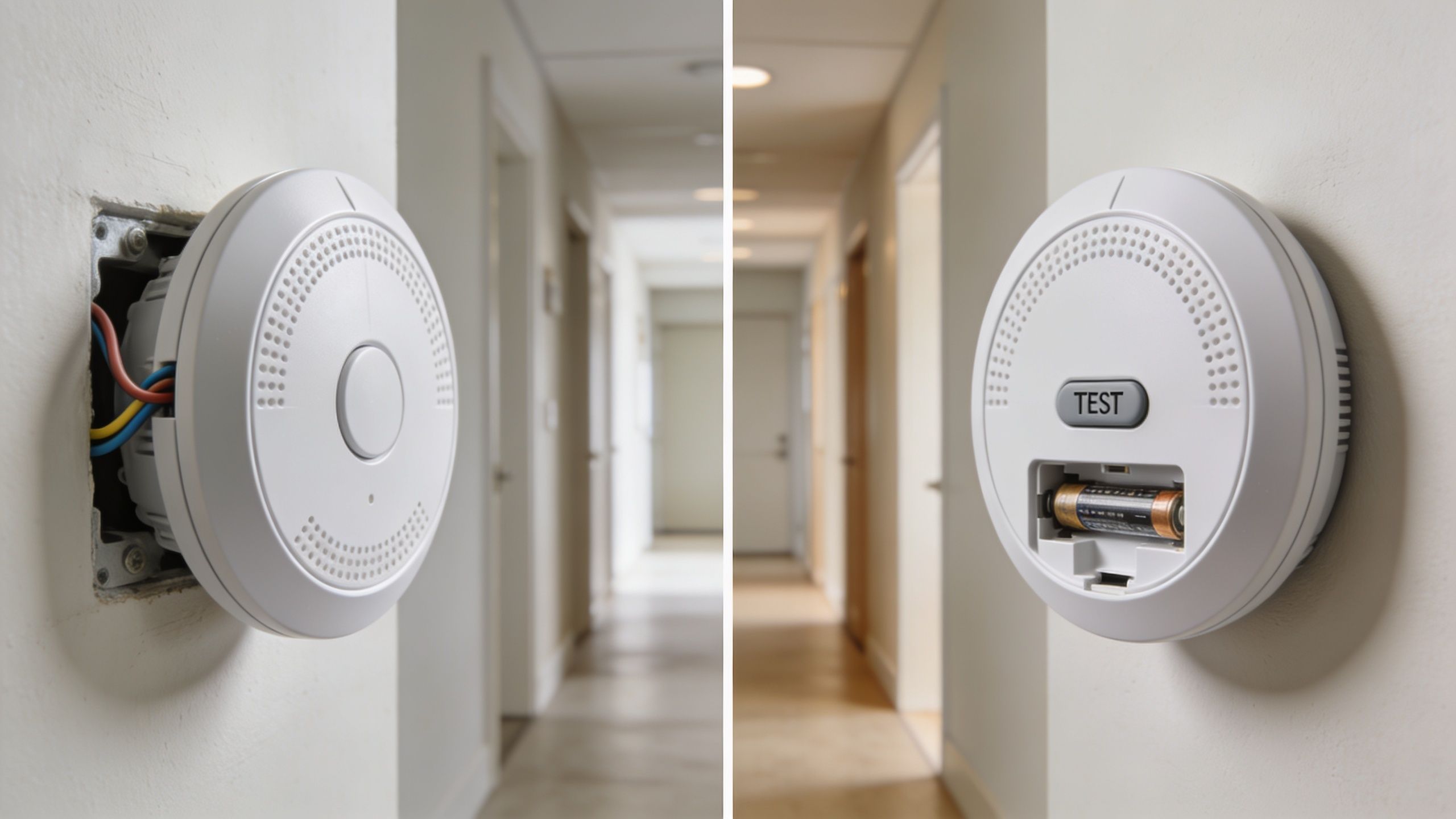
Most homes will have one of these arrangements:
The hierarchy is clear. Removable battery units create the most opportunity for human error. Sealed battery units reduce that risk. Hardwired alarms with backup offer the most dependable everyday arrangement when they’re correctly installed.
A hardwired alarm draws power from the home’s electrical system. That means it isn’t relying on a battery alone for normal operation. The backup battery is there for outages, not as the primary source every day.
That setup solves several common problems at once:
Sealed 10-year battery alarms still have an important place. In some existing dwellings, they can be the practical compliant option where hardwiring isn’t the chosen upgrade path.
The key point is that “battery alarm” and “old battery alarm” are not the same thing. A sealed long-life unit is very different from an older detector with a removable battery tray that depends on memory and good habits.
If your smoke alarm can be silenced for good by taking out a battery, that’s a reliability problem, not just a maintenance issue.
A homeowner can usually replace like-for-like compliant battery units in suitable existing positions if the product and placement are correct. Hardwiring is different. Once a smoke alarm connects to the fixed electrical installation, it’s electrician work.
For homeowners who want to understand the installation side in more detail, professional smoke detector installation services give a good overview of what’s involved in upgrading to a compliant setup.
If you’re comparing options in practice, ask one question first. “What is the most likely point of failure in this setup?” In older systems, it’s usually the battery or the person maintaining it. Good smoke alarms are designed to remove as much of that risk as possible.
That’s why modern Queensland-compliant systems lean toward long-life sealed backup arrangements and, where appropriate, hardwired installations. Reliability isn’t a bonus feature. It’s the whole point.
A standalone smoke alarm only protects the space where it can be heard. That’s the weakness.
If a fire starts downstairs while the family is asleep upstairs, the first alarm might activate exactly as designed, but the warning can still be delayed where it matters most. Bedrooms with doors closed, air conditioning running, and household noise all work against a single-unit approach.
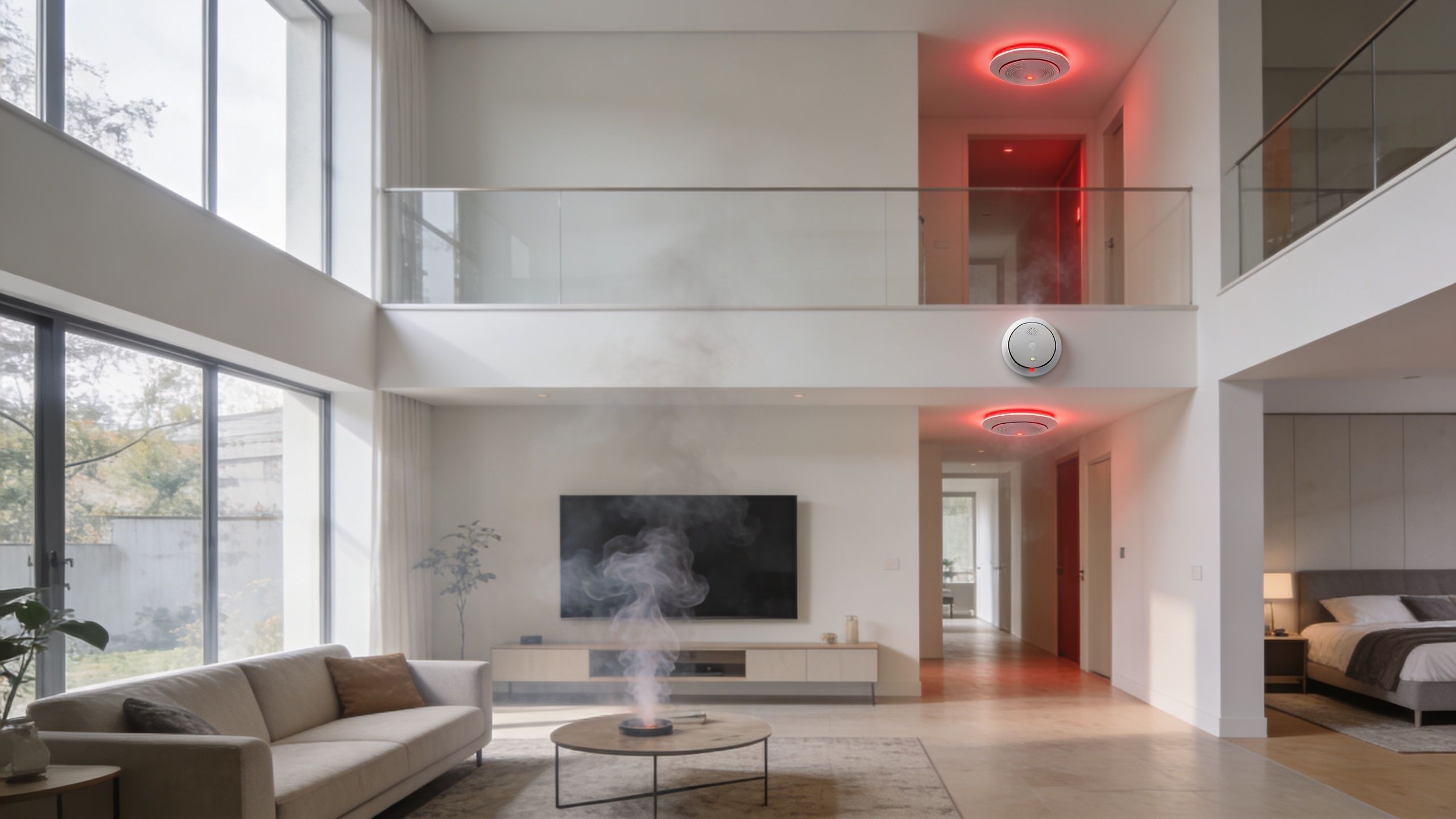
An interconnected smoke alarm system means when one alarm detects smoke, all linked alarms sound together. That can happen through hardwired links or approved wireless RF interconnection, depending on the property and installation method.
This changes the role of each alarm. It stops being a local warning device and becomes part of a house-wide warning system.
Interconnection is especially important in:
A practical example makes the point. If smoke starts in a lounge room at 2 am and only the nearest hallway alarm sounds, occupants on another level may not wake early enough. If every alarm activates together, the warning reaches all sleeping areas immediately.
Interconnection turns separate alarms into one response.
Both methods can work well when designed properly.
Hardwired interconnection is common in new work and major upgrades. It creates a physical communication path between alarms.
Wireless RF interconnection is often useful in existing homes where running new cabling through finished walls and ceilings would be disruptive. The end goal is the same. One alarm activates, all alarms respond.
For homeowners weighing layout, upgrade complexity, and compliance, this deeper guide to interconnected smoke alarms in Queensland is a useful reference.
Some people still think of interconnection as an upgrade feature, like adding app control or a nicer switch plate. It isn’t in the same category. It’s central to how a modern smoke alarm system protects a household.
This short video gives a useful visual sense of why whole-home alerting matters in practice.
Here’s the simple trade-off:
| Setup | What it does well | Where it falls short |
|---|---|---|
| Single standalone alarm | Basic local warning | Limited reach through the home |
| Several unlinked alarms | More coverage points | No simultaneous whole-home alert |
| Interconnected system | Full-house warning when one activates | Needs correct design and installation |
Good smoke alarms aren’t just about buying multiple units. They need to communicate. That’s the shift most homeowners need to make. You’re not installing separate gadgets. You’re building an alert system for the entire property.
By 2026, Queensland homeowners, landlords, renovators, and buyers need to think in terms of compliance from day one. Not because the rules are bureaucratic for the sake of it, but because the law now reflects what improves warning time and household safety.
The key legal change is already in place. The Fire and Emergency Services Amendment Act 2021 mandates 10-year sealed battery photoelectric alarms in all QLD properties. Verified data also states that compliance in Brisbane rentals reached 92% after the legislation, correlated with an 18% decline in residential fire incidents, and that compliant arrangements can reduce escape times by up to 3 minutes.
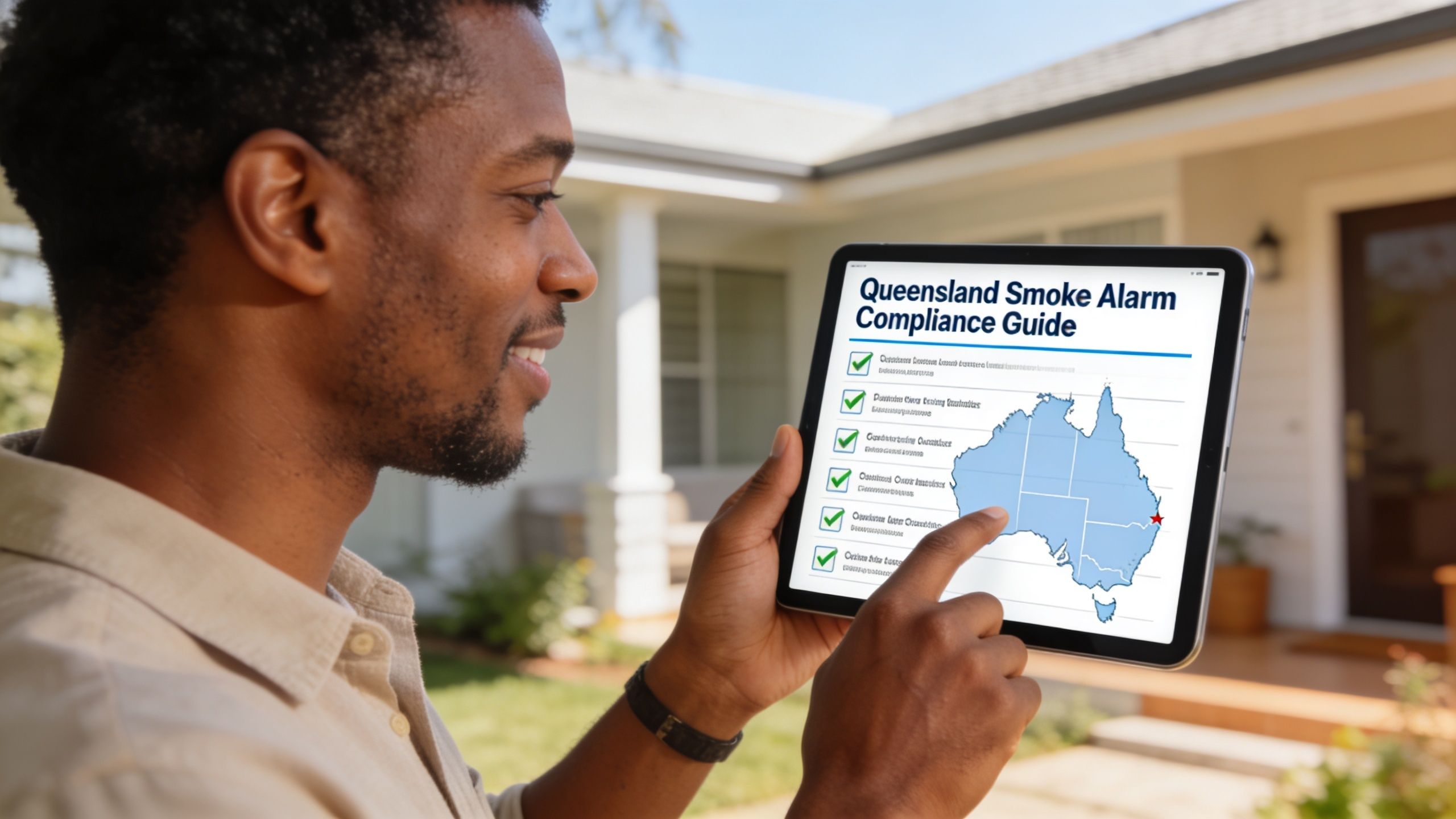
For a residential property aiming to meet Queensland requirements, the broad checklist is clear:
The mistake homeowners make is treating compliance like a product choice. It’s not. It’s a system choice plus a placement choice.
A compliant installation generally requires alarms in the locations people rely on during sleep and escape. In practical terms, that means coverage in:
If the floorplan doesn’t have a conventional hallway, the connecting path still needs to be protected. Open-plan homes, split-level designs, and renovations often need a closer look because the “obvious” ceiling position isn’t always the best or legally sufficient one.
Different property situations create different compliance headaches.
If you live in the property, the risk is often complacency. The home may already have alarms, but older installations frequently miss one or more of the current requirements. Common problems include expired units, isolated alarms that don’t communicate, and detectors left in old hallway-only positions that no longer suit the floorplan.
Rental compliance is less forgiving because every tenancy event puts the alarm setup under scrutiny. A property that looked “fine” a few years ago may no longer be acceptable if the system isn’t photoelectric, interconnected, and aligned with current expectations for placement and long-life battery design.
Smoke alarm compliance now affects transactions and upgrade planning. Buyers don’t want to inherit rectification work immediately after settlement. Sellers don’t want preventable issues raised late in the process. Renovators need alarm planning considered before patching and painting, not after.
Good smoke alarms protect occupants first, but they also protect property owners from the chaos of last-minute compliance work.
Use this as a first-pass review:
| Question | If the answer is no |
|---|---|
| Are the alarms photoelectric? | The system may not meet QLD requirements |
| Do they interconnect? | A triggered alarm may not warn the whole home |
| Are they installed in bedrooms and required connecting areas? | Coverage may be incomplete |
| Are they long-life sealed units or part of a compliant hardwired arrangement? | Reliability and compliance may both be weak |
| Are they within service life and functioning correctly? | Replacement is likely needed |
A professional compliance inspection is usually worthwhile when:
This is one area where guessing costs more than checking. A modern smoke alarm system needs the right products, but it also needs the right design. Ceiling position, interconnection method, room coverage, and power arrangement all have to line up.
For Brisbane homeowners, the practical reading of the law is simple. If you’re treating 2026 as the point by which your property must clearly stack up, then now is the time to assess what you have, identify gaps, and fix them before a sale, lease, or emergency exposes the problem.
A compliant installation is only half the job. Smoke alarms need to stay reliable year after year. In practice, the biggest threats to reliability aren’t dramatic. They’re dust, age, bad placement, insect ingress, ignored chirps, and the assumption that “it worked last year, so it must still be fine”.
Homeowners can handle some maintenance themselves. Other tasks should stay with a licensed electrician, especially where hardwiring or full-system fault finding is involved.
A good alarm in a poor location becomes a nuisance or a weak point.
As a general rule, keep smoke alarms clear of corners, dead-air spots, and obstructions such as large light fittings or nearby air-conditioning outlets. In homes where nuisance alarms are common, poor placement is often the first thing to check, not the product itself.
Common issues include:
The most useful routine is simple enough that it gets done.
If a smoke alarm chirps once in the middle of the night, it’s not being annoying. It’s telling you the system needs attention.
Here’s a practical split between what a homeowner can usually do and what should be booked in.
| Task | DIY or electrician |
|---|---|
| Monthly test button check | DIY |
| Light external cleaning | DIY |
| Checking expiry date on the unit | DIY |
| Replacing a suitable like-for-like sealed battery alarm where permitted | Sometimes DIY |
| Any hardwired installation or replacement | Licensed electrician |
| Interconnection faults or system upgrades | Licensed electrician |
If you want a proper service routine for an existing setup, smoke alarm testing services outline what a thorough check typically involves.
Landlords and property managers have an extra layer of responsibility because smoke alarm reliability needs attention between occupancies, not just when a fault is reported. A tenant might notice an issue late. A routine checklist catches it earlier.
For anyone managing the broader handover process, this 2026 landlord checklist is a practical reminder that smoke alarms sit alongside keys, condition reports, safety checks, and maintenance planning.
Book a proper inspection if you notice any of the following:
Some faults are obvious. Others aren’t. A system can look tidy on the ceiling and still be unreliable when tested properly. That’s why maintenance matters. Good smoke alarms aren’t “install once and forget forever”. They’re safety devices that need occasional attention to stay worthy of your trust.
A good smoke alarm isn’t one feature. It’s a complete setup.
For a Queensland home, that means photoelectric detection, a reliable power arrangement, interconnection across the required areas, and installation that matches the layout of the property. When one part is missing, the whole system is weaker. The alarm might detect smoke but fail to wake the household. It might be compliant in one room but leave another exposed. It might look modern but still be built around avoidable failure points.
That’s why the safest approach is also the most practical one. Stop thinking about smoke alarms as single products and start thinking about them as a house-wide warning system. That mindset leads to better product choices, better placement, and fewer surprises when you sell, lease, renovate, or want to sleep knowing the basics are covered.
For Brisbane homeowners, landlords, and property managers, the right next step is a proper compliance check of what’s already installed. Some homes only need targeted upgrades. Others need a full rethink. Either way, getting clear advice from a licensed electrician is far better than guessing from the packaging on an old alarm.
If you want a clear answer on whether your home meets Queensland smoke alarm requirements, contact DLG Electrical for a free quote, a compliance check, or professional installation. They handle smoke alarm upgrades, testing, and compliant system installations for Brisbane homes, including owner-occupied properties, rentals, and renovation projects.

Master Electrician with over 30 years of experience. Founded DLG Electrical in 2005 after international project work including electrical installations at Stamford Bridge Stadium, London(Home of Chelsea FC).

Local Electricians that can fix all Electric Hot water Systems.
Motion sensor lights are a versatile addition to any home, offering nu
