83 Jean St, Grange QLD 4051
Mon-Fri 07:30 AM - 04:00 PM - Sat - 8:00 - 12 - Sunday Closed

Most routine hot water repairs in Australia land between $140 and $200, with labour commonly priced at $60 to $90 per hour and parts adding roughly $30 to $50. If the unit is older or the fault is nastier than it first looks, that small bill can turn into a replacement decision fast.
A Brisbane homeowner usually discovers that on the worst possible morning, when the shower runs lukewarm, the kids are yelling for the bathroom, and the phone starts ringing through to anyone who can get there today. That's when the invoice stops being abstract. You're not just paying for a repair, you're paying for diagnosis, labour, parts, and the decision about whether the unit is still worth saving.
The first sign is usually simple. You turn on the hot tap and get a weak trickle of warm water, or the shower goes cold halfway through before anyone's had a proper rinse.
That's when the house tilts around the problem. School uniforms still need washing, work starts on time, and nobody wants to argue over who used the last of the hot water. In Brisbane, hot water faults always seem to show up when the household is already under pressure.
The price range matters because it gives you a realistic starting point before panic sets in. Most routine repairs sit between $140 and $200, with labour at $60 to $90 per hour and parts adding roughly $30 to $50 on top, so a straightforward fault doesn't have to become a financial shock. That AU pricing model is very different from what many people read overseas, and it explains why a quick thermostat or element fix can stay relatively contained if the diagnosis is simple and access is easy. hipages hot water repair pricing
Practical rule: if the system is still producing some heat and the plumber or electrician can identify the fault quickly, the bill usually behaves more like a service visit than a major project.
The hard part is not the number itself. It's deciding whether that number is buying you another few solid years, or just delaying a replacement that should already be on the calendar.
Brisbane hot water repair pricing is usually built from a few moving parts, not one neat flat fee. A tradesperson typically folds in the call-out, the diagnostic time, the labour on site, and then any parts that need replacing.
That model matters because the invoice tracks time and complexity. If a fault is obvious and accessible, the job can be short. If the cylinder is tucked away, the issue is intermittent, or the electrician has to trace a control problem across several components, the labour line moves first.
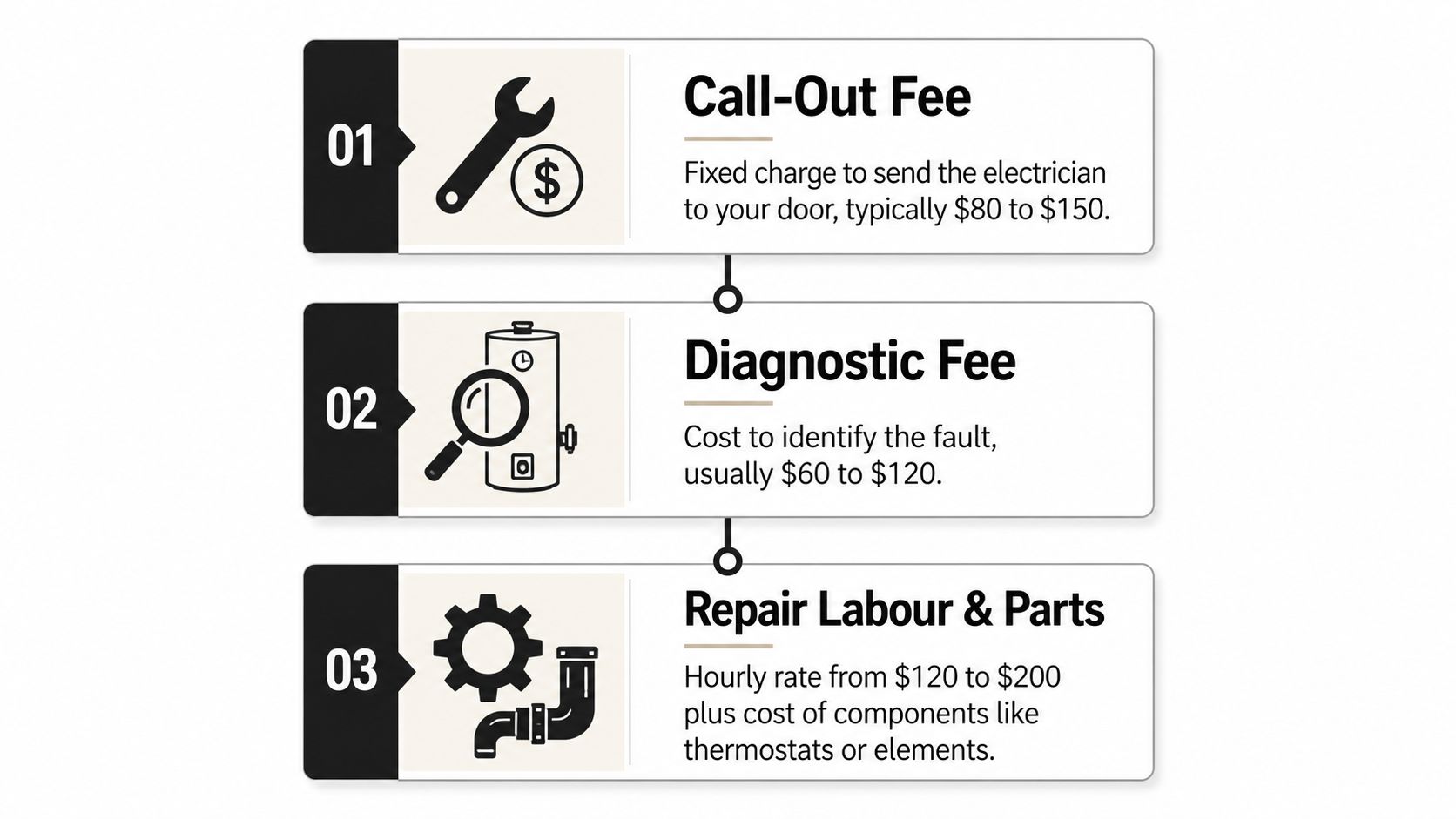
A clean written quote should tell you what part is being diagnosed, what labour is included, and whether replacement parts are allowed for or billed separately. If the quote only gives a vague total, ask for the split before you approve anything.
You should also expect the quote to say what happens if the job turns out to be bigger than the first inspection suggested. That is where misunderstandings start, especially when the homeowner assumes a simple component change and the tradesperson finds a deeper fault.
For context, the Australian market is usually pricing routine repairs far below overseas norms. US water heater repair averages have clustered around $600 in recent years, with figures commonly cited as $591, $606, or $615, and typical ranges of about $221 to $1,017. That gap does not mean Australian work is cheaper because it is worse, it means the labour model and job profile are different. Angi water heater repair cost
The lifetime-cost question starts here. A cheap visit that gets the unit running again can still be the expensive option if the same fault returns soon, while a slightly higher quote that includes proper fault tracing and the right part can save a second call-out later.
If you want a useful local comparator, DLG Electrical's thermostat replacement guidance is the kind of detail a proper repair quote should make clear. For a broader reference point from another market, Stultz Plumbing water heater installation shows how service providers separate repair, diagnosis, and replacement work.
A fair quote should also force the repair-versus-replace question into the open. If the unit is old, corroded, or already showing repeated faults, the lowest invoice today can hide the highest lifetime cost.
A hot water bill usually starts with the fault, not the symptom. A shower that cuts out halfway through can point to a failed element, a thermostat problem, or a control fault, while water pooling around the unit is usually a different job altogether.
A failed heating element often shows up as water that goes cold too soon, or never gets properly hot in the first place. A thermostat fault can look similar, but the temperature may swing around instead of stopping completely. A pressure relief valve issue usually presents as dripping or discharge near the unit, and minor tank or anode problems often show up through rusty water or early corrosion.
| Common Fault | Typical Symptom | Estimated Cost (AUD) |
|---|---|---|
| Heating element failure | No hot water or water goes cold fast | Often falls within the common repair band, depending on access and parts |
| Faulty thermostat | Water temperature is unstable or lukewarm | Often sits in the common repair band for routine faults |
| Pressure relief valve issue | Water dripping near the unit or visible discharge | Often sits in the routine repair range if caught early |
| Minor tank or anode issue | Rusty water or early corrosion signs | Can stay repairable, or point toward replacement if corrosion has spread |
Those ranges are broad because the invoice is tied to time on site and whether the job needs one part or several. A symptom that looks minor can be a quick fix in one house and poor value in another if the tech has to spend time tracing the fault or coming back with parts.
Australian consumer guidance puts common hot water repairs at about $150 to $500, while full replacements typically start around $900 and rise from there depending on the system and installation complexity. Capital Plumbing hot water system repair cost
A proper quote should also force the repair-versus-replace question onto the table. If the unit is old, corroded, or already showing repeated faults, the cheapest invoice today can become the expensive one over the life of the system.
The lifetime-cost call matters here. A young system with one failed component is usually worth repairing, especially if the plumber or electrician can isolate the fault cleanly and fit the right part first time. Once a unit has already had a few patches, or rust is showing in the water, the repair can turn into a short-term save that keeps sending money back out the door.
For a good local comparison on how a proper repair quote should separate diagnosis from parts work, see DLG Electrical's thermostat replacement guidance. If you want a broader service example, Stultz Plumbing water heater installation shows how some providers break out repair, diagnosis, and replacement work.
Timing changes the invoice as much as the fault does. A standard weekday repair is one thing, but after-hours work often comes with a higher call-out expectation and a more expensive labour structure.
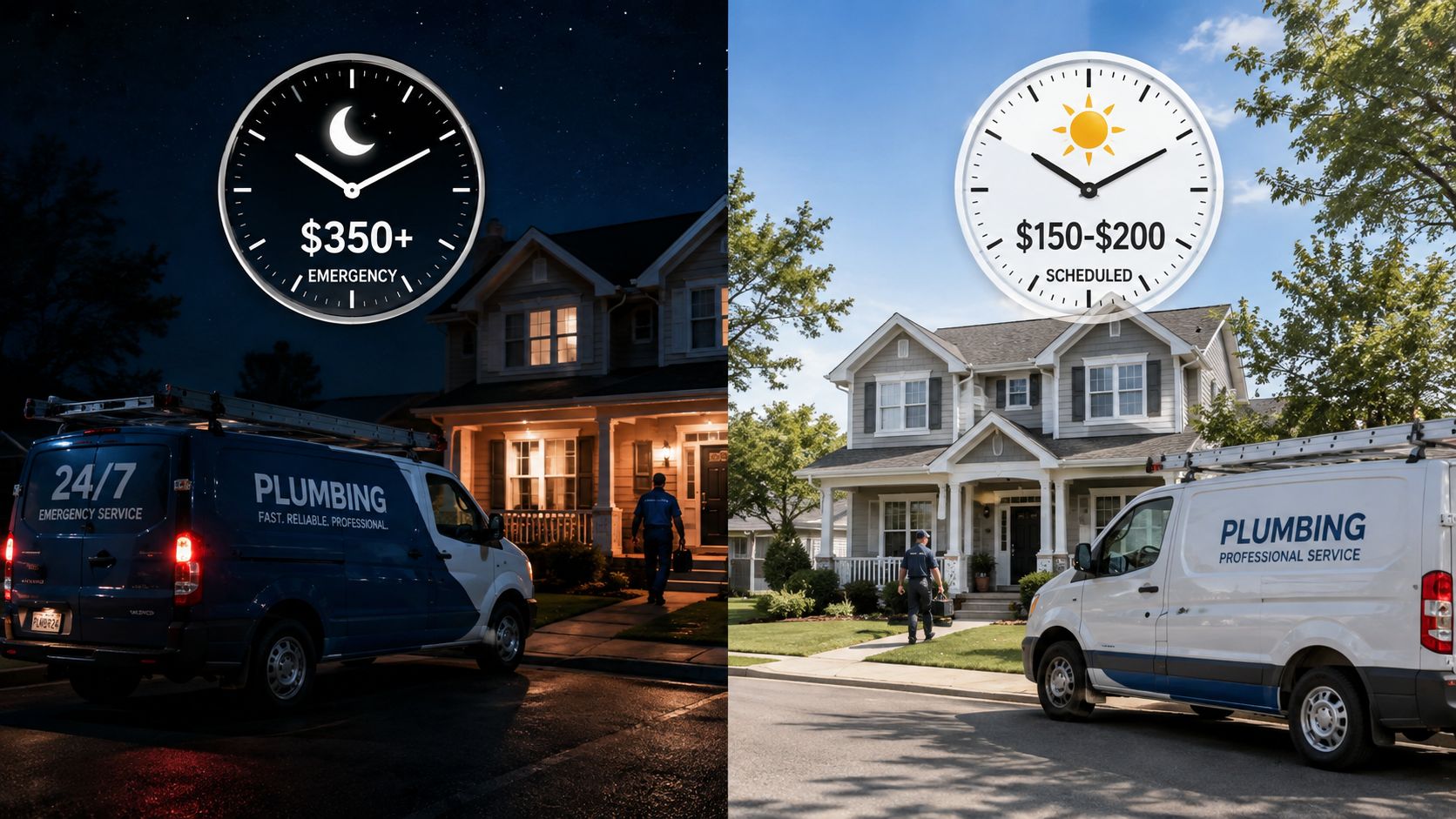
A burst valve flooding the laundry is a genuine emergency. That job needs speed because the risk isn't just inconvenience, it's water damage. A slow decline in hot water supply over a few days is different, and most households can usually book that for a standard slot instead of paying the premium.
If there are babies, elderly residents, or medical needs in the house, urgency can be real without being after-hours. In those cases, the smarter move is often to ask for the earliest daytime booking and be clear about why the timing matters. That gets you faster service without automatically triggering the most expensive response.
The painful part is that many homeowners overstate urgency on the phone, then pay for a rush they didn't need. Be direct. Say what's happening, what's leaking, whether the breaker has tripped, and whether you can safely wait until the next business day.
A short video overview can help you think through the decision before you commit to a call-out.
For a local fee reference point, DLG Electrical's Brisbane call-out fee guidance is useful because it frames the conversation the way tradespeople price visits. The main question is simple. Are you buying speed, or are you paying for the same fix sooner than you needed to?
The cheapest repair isn't always the cheapest outcome. If a unit is already old, corroded, or repeatedly failing, every low-cost fix is just another payment toward a replacement you were going to need anyway.
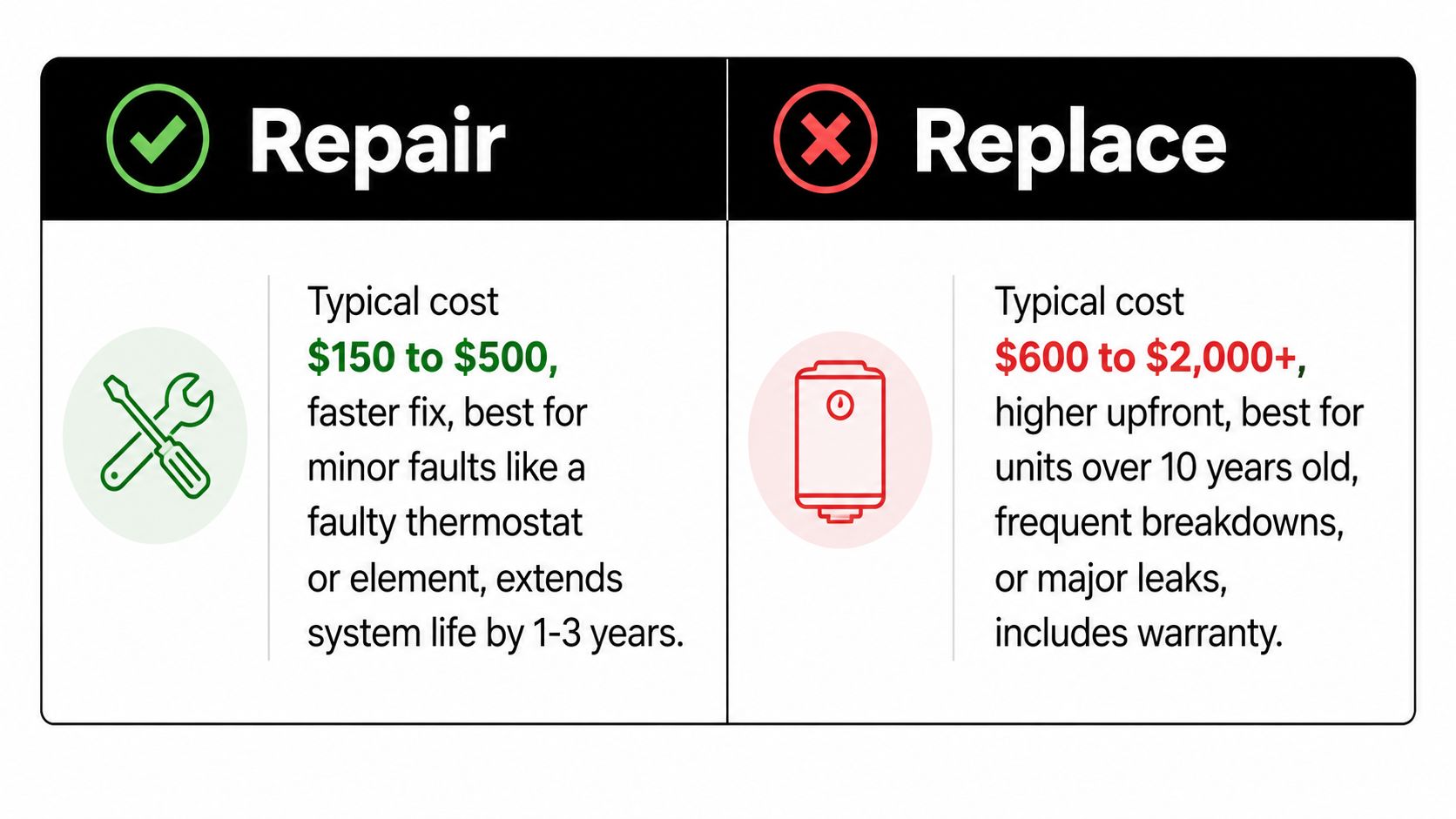
Use the repair if the unit is still young, the fault is isolated, and the tank itself is sound. That fits the usual pattern for a thermostat, element, or valve failure on a system that hasn't started rusting or leaking from the body.
Lean toward replacement if the unit is repeatedly breaking down, the tank is visibly corroded, or the same household keeps paying for service calls with little long-term improvement. As a rough AU threshold, common repairs sit around $150 to $500, while replacements typically start around $900 and can run much higher. Capital Plumbing hot water system repair cost
A few warning signs carry more weight than others:
The internal cost rule is simple. A young unit with one failed component is worth repairing. A tired system with corrosion, repeat call-outs, or declining efficiency is often cheaper to replace over its remaining life.
For readers who want another local reference point, DLG Electrical's hot water system replacement cost guidance is useful because it reinforces the same lifetime-cost logic from the replacement side.
A good quote starts before the electrician gets there. The more precise the information, the less likely you are to get a vague estimate that grows on site.
Give the tradesperson the system make and model if you can find it, the approximate age, the exact symptom, and whether the unit is electric, gas, solar-boosted, or another setup. Photos help too, especially a shot of the unit label, the surrounding install space, the switchboard, and any visible leaks or corrosion.
A clear first call usually gets you closer to a fixed-price visit instead of an open-ended wait-and-see. That's especially important on hot water work, because the difference between a simple component change and a deeper fault can be material.
DLG Electrical offers free quotes for Brisbane work, which suits homeowners who want the numbers in writing before they agree to anything. If you're comparing providers, ask every one of them to spell out labour, parts allowance, warranty on the repair, and any conditions that could change the final figure.
The same discipline applies to any trade you hire, not just electrical work. A practical roofing company SEO guide is a reminder that the best service pages don't hide the process, they make it obvious.
The easiest savings are usually the boring ones. Keep the system easy to access, know where the water isolation valve is, and don't make the electrician spend ten minutes hunting for what should have been obvious.
Annual maintenance matters too. Anode and valve checks help catch the kind of wear that turns into a bigger fault later, and old tanks benefit from basic care that stops sediment from building up unchecked. If you keep the thermostat at the manufacturer's setting instead of cranking it up, you reduce stress on the system and the repair cycle often gets kinder.
Honest disclosure saves money. If the hot water has been fading for weeks, say that upfront. It helps the electrician choose the right gear and the right booking window.
The best local jobs are usually the ones where the homeowner is prepared, the fault is described properly, and the quote is line by line. If you're in North Brisbane, Grange, or Windsor, that's the standard to expect from any electrician you invite in.
If your hot water system is acting up, DLG Electrical can inspect the fault, quote the repair clearly, and help you decide whether fixing it or replacing it makes better lifetime sense. Visit DLG Electrical to request a free quote and get the numbers before the cold shower becomes another expensive surprise.

Master Electrician with over 30 years of experience. Founded DLG Electrical in 2005 after international project work including electrical installations at Stamford Bridge Stadium, London(Home of Chelsea FC).

Local Electricians that can fix all Electric Hot water Systems.
Motion sensor lights are a versatile addition to any home, offering nu
