83 Jean St, Grange QLD 4051
Mon-Fri 07:30 AM - 04:00 PM - Sat - 8:00 - 12 - Sunday Closed
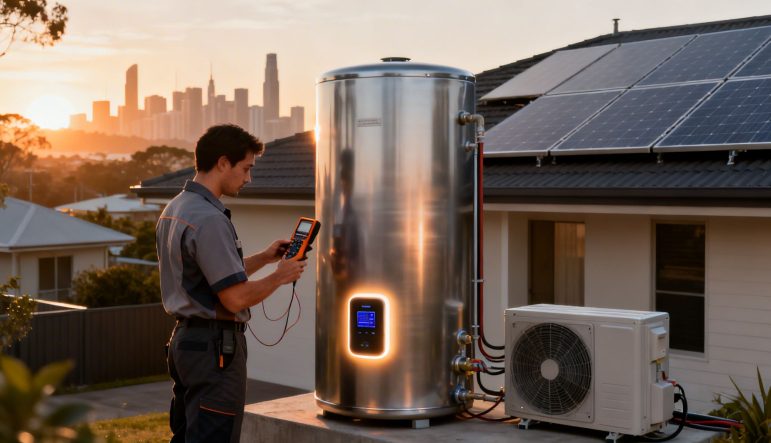
When you turn on the tap, you expect hot water. It’s that simple. For most Brisbane homeowners, from Grange to Windsor, a reliable hot water supply isn’t just a luxury—it’s an essential part of the day. A cold shower is a brutal way to start your morning, which is why professional hot water system services are one of the smartest investments you can make in your home.
Without an expert eye on your system, it could be quietly driving up your power bills or, worse, creating a serious safety risk. A struggling unit has to work harder and use more energy just to heat water. More critically, any faulty electrical or gas components are genuine hazards that need immediate attention from a licensed professional.
The demand for modern, efficient water heaters is booming. The Australian market hit USD 612 million in 2024 and is on track to reach USD 934.86 million by 2033. This growth is fuelled by homeowners switching to more energy-efficient models. In fact, installations of air-source heat pumps jumped by a massive 70% in the first half of 2023 alone.
For a local business like DLG Electrical, with over 19 years of experience servicing Brisbane’s hot water systems, this shift means staying ahead of new technology while still being experts on the traditional units we all grew up with. You can learn more about these market trends and their impact on Australian homes.
For the average household, water heating accounts for roughly 25% of total energy consumption. Proactive maintenance doesn’t just prevent breakdowns; it directly controls one of your largest utility expenses.
Looking after your hot water system should be proactive, not reactive. You wouldn’t wait for your car to break down on the highway before getting it serviced, and the same logic applies here. Routine check-ups catch small problems before they turn into expensive, inconvenient emergencies.
Here’s what a professional service from a qualified technician actually involves:
Ultimately, investing in professional care from a trusted local team like DLG Electrical gives you safety, savings, and the peace of mind that comes from knowing your hot water system won’t let you down.
Before you can even think about repairs or maintenance, you first need to know what you’re working with. For most Brisbane homeowners, that big tank tucked away in a cupboard or sitting outside falls into one of four main categories.
Knowing which type of hot water system you have is the key to spotting trouble early and having a clear conversation with an expert when things go wrong. While there are many different types of hot water systems on the market, let’s run through the ones we see most often.
This is the classic workhorse you’ll find in countless homes across Queensland. Think of it as a giant, insulated kettle that keeps a full tank of water hot, ready for whenever you need it. They are simple, reliable, and generally the cheapest to install upfront, which explains their popularity.
The downside? They suffer from “standby heat loss.” The system has to keep firing up to maintain the water temperature, meaning it uses energy even when you’re not running a tap. You can typically expect an electric storage system to last about 10 to 15 years.
Gas hot water systems bring a bit more variety. The first type, a gas storage system, is a lot like its electric cousin but uses a gas burner to do the heating. They’re often quicker to heat water and can be more affordable to run, especially if you’re already connected to natural gas.
The second type is the instantaneous gas system, and it’s a game-changer. Instead of storing water, it heats it on demand as it flows past a powerful gas burner. Because it only uses energy when you turn on a hot tap, it’s incredibly efficient. These compact, wall-mounted units can last over 21 years if they’re looked after properly.
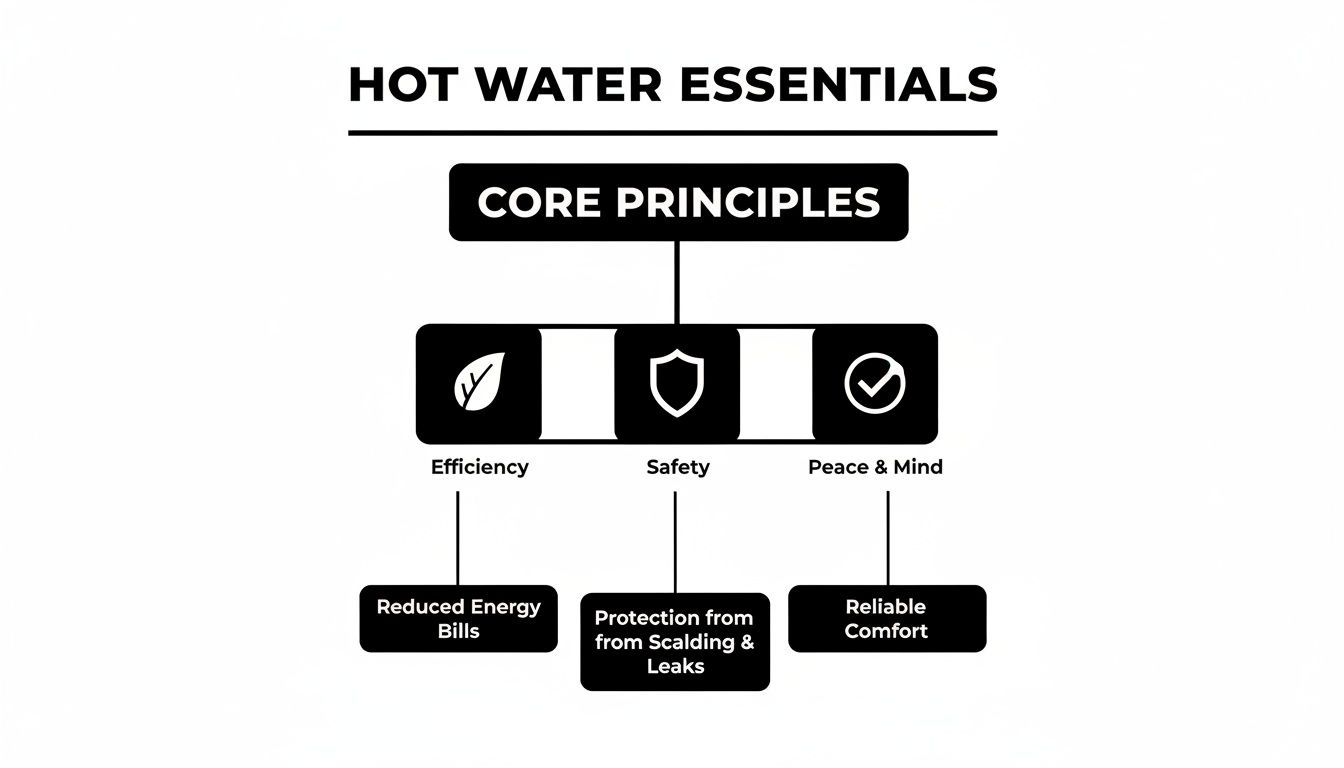
This really gets to the heart of what we do. By focusing on efficiency and safety, we give our clients the one thing every homeowner wants: complete peace of mind.
It just makes sense to use all this Queensland sunshine, right? Solar hot water systems do exactly that, using collectors on your roof to capture the sun’s energy and transfer it to an insulated storage tank. They are fantastic for the environment and can make a serious dent in your power bills.
Most solar setups include a gas or electric “booster” to make sure you’re never caught out on a cloudy day or when you have extra guests. The initial outlay is higher, but the long-term savings often speak for themselves.
Did You Know? A properly installed and maintained solar hot water system can cover up to 90% of a household’s hot water needs. It’s one of the single best investments for slashing your carbon footprint and running costs.
The heat pump hot water system is the clever new kid on the block. In simple terms, it works like your fridge but in reverse. Instead of pushing heat out, it pulls warmth from the ambient air and uses it to heat the water inside the tank.
Because it’s moving heat rather than creating it from scratch, a heat pump is phenomenally efficient, often using up to 75% less electricity than a standard electric unit. With government rebates making them more accessible, heat pumps are fast becoming the go-to upgrade for savvy Brisbane homeowners. At DLG Electrical, we have extensive experience installing and servicing these modern, high-efficiency units.
Hot water systems have a habit of giving you a heads-up before they completely pack it in. They don’t just fail out of the blue. Instead, they send out little warnings—some subtle, some not-so-subtle—that a breakdown is on the horizon. Learning to spot these signs is the key to catching a small problem before it turns into a major, expensive emergency.
Think of it this way: your hot water system is the unsung hero of your morning routine. You don’t really notice it until it’s gone. When it starts struggling, the symptoms show up in your water, your power bills, and even the sounds coming from your garage or laundry. Ignoring these messages is just asking for a cold shower and a hefty bill for water damage.
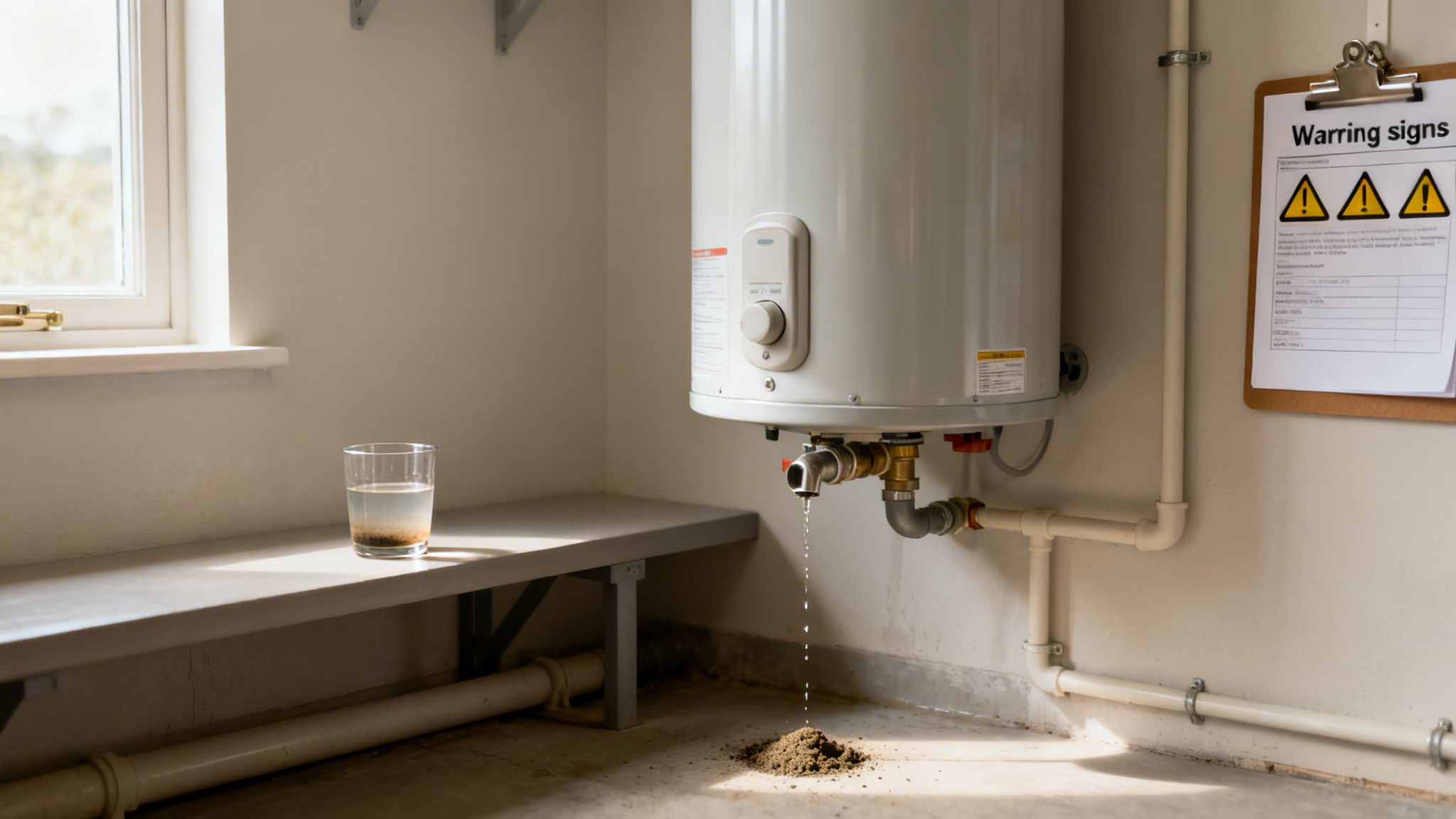
Are you hearing strange noises coming from your hot water tank? Popping, rumbling, or banging sounds are one of the most common red flags, and they usually point to a big build-up of sediment. Over the years, minerals from our water supply settle at the bottom of the tank, where they harden and trap small pockets of water.
When the heating element switches on, this trapped water boils and makes a popping noise, a bit like popcorn in a pan. It’s more than just an annoying sound. That layer of gunk forces your system to work much harder, driving up your energy bills and putting stress on the tank itself, which can eventually cause it to fail. A loud bang, on the other hand, could point to a serious issue with the heating element.
Strange smells are another urgent warning. If you have a gas unit and you notice a rotten egg odour, that’s an immediate cause for concern. It could be a gas leak, which means you need to shut the system off right away and call a professional. For any electrical system faults, a licensed electrician from DLG Electrical can safely find and fix the problem for you.
Sometimes, the clues are right there in plain sight. You just have to know what you’re looking for. Keep an eye out for these visual signs that your system needs a professional to take a look.
Crucial Takeaway: A leaking hot water tank is never a “wait and see” situation. It’s a sign of imminent failure. You need to get it looked at by a professional immediately to avoid serious water damage to your home.
While some signs point to simple wear and tear, others are genuine safety hazards. If you notice your lights flickering when the hot water kicks in, hear a buzzing or humming sound from the unit, or find yourself constantly resetting a tripped circuit breaker, please do not try to fix it yourself.
These are all clear indicators of a serious electrical fault. You need an experienced electrician to investigate the issue properly to prevent the risk of fire or electrocution. It also helps to know roughly how long your system is supposed to last in the first place. To get a better idea of your unit’s lifespan, you can check out our guide on how long hot water systems last. This will help you decide if a repair makes financial sense or if it’s time to invest in a replacement.
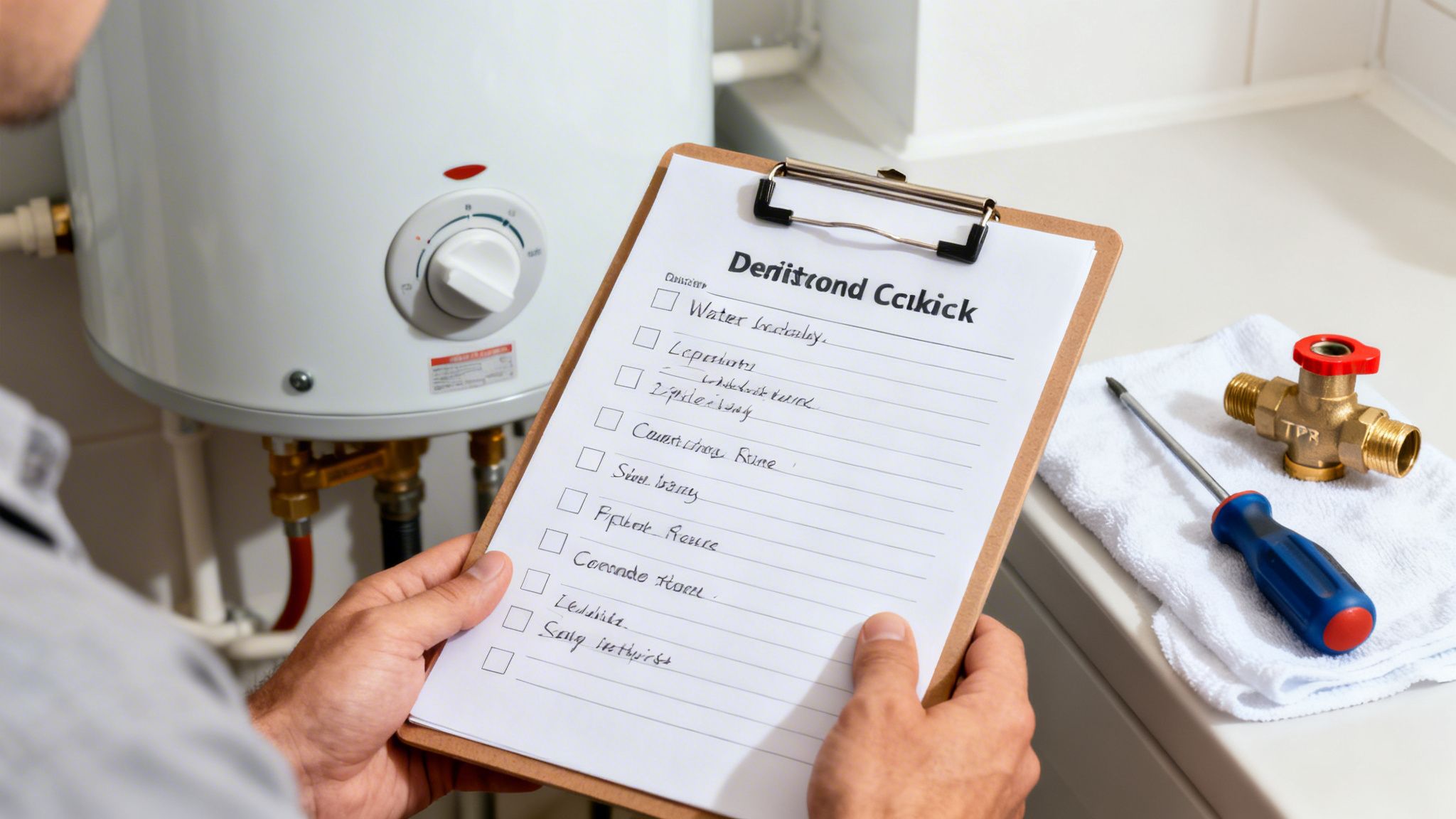
Nothing ruins a morning faster than a surprise cold shower. The best way to avoid that dreaded reality is with a bit of proactive care. Think of it like servicing your car—a little routine attention goes a long way in keeping your hot water system running efficiently and preventing costly, inconvenient breakdowns.
It’s not just about avoiding faults, either. A well-maintained unit is an efficient one, which means it keeps your energy bills from creeping up. Maintenance really breaks down into two parts: a few simple jobs you can do yourself and the crucial safety checks that you must leave to a licensed professional. Knowing the difference is key to keeping your system in top shape without taking any risks.
You don’t need a toolbox or a trade licence to handle a few basic checks. We recommend doing these every six months or so. They’re quick, easy, and can help you spot trouble long before it becomes a major headache.
While those DIY checks are a great start, they are no replacement for a proper professional service. At DLG Electrical, we recommend booking an expert service every few years, especially if you have a storage tank system. Here’s what a thorough inspection should always include.
The temperature pressure relief (TPR) valve is the most important safety device on your tank. Its job is to automatically release water if the pressure or temperature inside gets dangerously high, which prevents the tank from rupturing or even exploding. A technician will carefully test the valve to make sure it opens and closes exactly as it should.
A faulty TPR valve is one of the most serious safety risks in a hot water system. Professional testing is non-negotiable for the safety of your home and family.
Over time, minerals from the water supply build up as a layer of sludge at the bottom of your tank. This sediment forces the heating element to work much harder to heat the water, wasting energy and putting immense stress on the system. A professional flush removes all this gunk, immediately improving efficiency and extending the life of your tank.
The sacrificial anode rod is your tank’s unsung hero. It’s essentially a metal rod designed to act like a bodyguard, corroding away so the steel tank lining doesn’t. Once the anode is completely gone, the tank itself starts rusting from the inside—and that’s a one-way ticket to a major leak and a full system replacement.
A technician will inspect the anode rod and replace it if it’s worn out. This single service is one of the most cost-effective hot water system services you can get, and it can easily add years to your system’s life. For a deeper dive, check out our complete guide on hot water maintenance.
This kind of maintenance is especially important here in Queensland, where so many homes rely on storage systems paired with off-peak tariffs to manage their power bills. While market data shows smaller 30–100 litre units are common in other parts of the world, larger tanks are a staple in Australian homes, particularly in Queensland and NSW. With over 19 years of experience, DLG Electrical specialises in servicing these exact systems for homeowners and property managers right across Brisbane.
There’s nothing worse than a cold shower to start your day, but the unexpected bill that follows can be just as jarring. A hot water system failure is stressful, but understanding the potential costs upfront can help you make a clear-headed decision instead of a panicked one.
As Brisbane electricians, we believe in being upfront about pricing. The final cost of any hot water service will come down to a few things: the type of system you have (electric, gas, solar, or heat pump), how tricky the unit is to get to, the extent of the problem, and whether it’s an after-hours emergency call-out.
Most of the time, a hot water issue comes down to a single faulty part. These are usually quick jobs for a licensed professional, getting your hot water running again without costing a fortune.
Here are a few common repairs we see and what you can typically expect to budget:
These figures include the cost of the part and the licensed labour to install it safely. It’s worth remembering that trying to do your own electrical work is illegal in Queensland and incredibly dangerous.
To give you a clearer idea of how to budget, we’ve put together a table outlining typical cost ranges for hot water services here in Brisbane. This should help you plan financially, whether you’re facing a minor repair or a full system replacement.
| Service Type | Estimated Cost Range (AUD) | Key Factors Influencing Cost |
|---|---|---|
| Minor Repair (e.g., Valve) | $220 – $400 | Part cost, accessibility of the unit, and call-out fee. |
| Component Replacement (e.g., Thermostat) | $250 – $450 | System type (electric, gas, etc.), part availability. |
| Component Replacement (e.g., Element) | $300 – $550 | Number of elements, system brand, and complexity. |
| Electric Storage System Replacement | $1,400 – $2,500 | Tank size, brand, and any required plumbing/electrical upgrades. |
| Gas Instantaneous System Replacement | $1,800 – $3,500 | Gas fitting requirements, location, and flow rate (L/min). |
| Heat Pump System Replacement | $3,500 – $6,000+ | Brand, size, and eligibility for government rebates. |
Keep in mind these are estimates. The best way to get an exact figure is to get a professional quote that assesses your specific situation.
There comes a point where another repair just doesn’t make financial sense. If your unit is over 10-12 years old, needs constant attention, or the tank itself has started leaking, it’s time to look at a replacement.
A full system replacement is a significant investment, but it’s also an opportunity to upgrade your home’s efficiency. The long-term energy savings from a modern unit, especially a heat pump, can offset the initial expense over the system’s lifespan.
The price for a new hot water system can vary quite a bit depending on the technology. For a really detailed look at what to expect, check out our guide on the new hot water system cost. It breaks everything down so you can compare your options properly.
As a general guide for budgeting a full replacement in Brisbane, including standard installation, you’re looking at:
At DLG Electrical, we provide clear, itemised quotes with no hidden surprises. You’ll know exactly what the job costs before we pick up a single tool. This commitment to competitive and honest pricing is at the core of all our hot water system services.
When your hot water cuts out, the last thing you want is the added headache of trying to find a reliable tradie. It’s a stressful situation, and the professional you choose impacts not just the quality of the fix, but your home’s safety and your own peace of mind. Choosing the right specialist for hot water system services in Brisbane isn’t just about finding any old electrician; it’s about finding a genuine expert.
You need someone who has the technical skills down pat, backed by a solid local reputation. Don’t even consider anyone who isn’t fully licensed and insured. Seriously, this is non-negotiable. It’s your only protection against dodgy work and ensures everything is done to strict Australian safety standards.
First things first, check their qualifications. Are they a licensed electrician? If your system is gas, do they have the right gas fitting endorsements? A reputable company will have their licence numbers ready for you to look up and verify.
Next, dig into their experience and local track record. A business that’s been around the block, like DLG Electrical with our 19+ years servicing Brisbane, brings a level of knowledge you just can’t fake. Our five-star Google rating isn’t just a number; it’s proof of consistent, high-quality service delivered to real Brisbane families and businesses, job after job.
A licensed specialist isn’t a premium—it’s the minimum standard for safety and compliance. Unlicensed work can void your home insurance, nullify your system’s warranty, and create serious safety hazards.
This focus on compliance is more critical than ever. Australia’s big push towards electrification is shaking up the hot water industry. With plans to phase out new gas systems in homes and shift entirely to electric solutions by 2035, you need an expert who is ahead of the curve. As heat pumps from top brands like Rheem become the new normal, specialists like DLG Electrical ensure your system is installed correctly and ready to integrate with modern home energy setups. You can learn more about the future of smarter hot water systems and see just how vital expert installation has become.
When you’re sizing up a potential provider, run them through this checklist. A true professional will tick every one of these boxes without hesitation.
By taking these steps, you can confidently pick a Brisbane hot water specialist who will get the job done right the first time. It’s the best way to guarantee safe, reliable hot water for your home for years to come.
When you’re dealing with something as essential as your home’s hot water, a bit of expert knowledge can make all the difference. To help you make the right calls, we’ve put together answers to the most common questions we hear from Brisbane homeowners.
Here are some clear, practical answers from the DLG Electrical team, backed by over 19 years of hands-on experience.
For most traditional storage tank systems, we strongly recommend a professional service every 5 years. This isn’t just a quick look-over; it’s a vital check-up where a technician inspects the sacrificial anode rod, flushes out damaging sediment, and tests crucial safety valves.
If you have a continuous flow or heat pump model, it’s always best to check the manufacturer’s guidelines first. That said, a yearly check is a great rule of thumb to keep it running at peak performance. Think of regular hot water system services as preventative medicine—it can stop major breakdowns before they happen and seriously extend the life of your unit.
In a word: no. In Queensland, it’s not only illegal for an unlicensed person to work on a hot water system, but it’s also extremely dangerous. An electric system requires a licensed electrician, while a gas unit must be installed by a licensed gas fitter. There are no exceptions.
A DIY installation will instantly void your warranty, likely breach your home insurance policy, and creates a severe risk of electrocution, fire, or catastrophic water damage. Always leave it to a qualified professional for a safe, compliant installation.
It’s one of the first places we look. Water heating is a huge energy user in any home, typically accounting for about 25% of a household’s total power consumption. An old, inefficient, or faulty system can easily make your energy bills climb.
If you notice the unit seems to be running constantly or the water coming out is dangerously hot, that’s a clear red flag. A professional service can get to the bottom of it. In many cases, upgrading to a modern, energy-efficient model like a heat pump can lead to massive long-term savings.
This is the classic dilemma. Here’s a simple rule of thumb we use: if your system is less than 10 years old and the repair cost is under half the price of a brand-new replacement, a repair is usually the smart financial choice. Common fixes like replacing thermostats or heating elements are straightforward.
However, if your system is getting on in age, needs constant and expensive repairs, or the tank itself is leaking, a replacement is the better long-term investment. A professional can give you an honest, on-the-spot assessment to help you make the right call.
For an expert opinion and a free, no-obligation quote, you can trust the team at DLG Electrical. With over 19 years of experience, we deliver reliable and compliant hot water solutions for homes across Brisbane. Visit us at https://dlgelectrical.com.au to book a service today.

Master Electrician with over 30 years of experience. Founded DLG Electrical in 2005 after international project work including electrical installations at Stamford Bridge Stadium, London(Home of Chelsea FC).

Local Electricians that can fix all Electric Hot water Systems.
Motion sensor lights are a versatile addition to any home, offering nu
