83 Jean St, Grange QLD 4051
Mon-Fri 07:30 AM - 04:00 PM - Sat - 8:00 - 12 - Sunday Closed
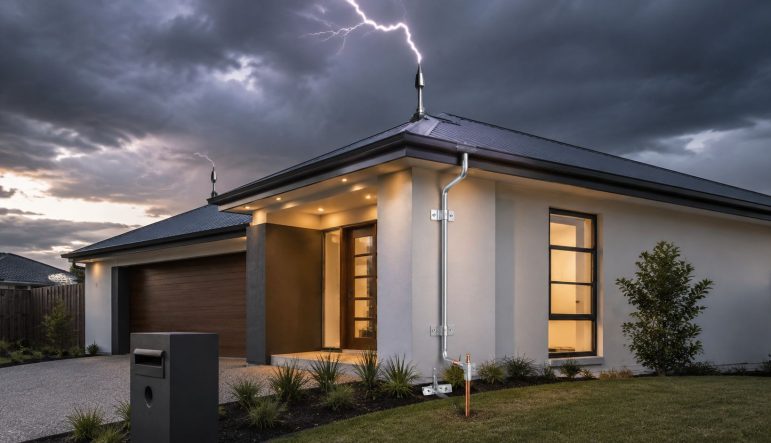
You've probably seen the pattern after a Brisbane summer storm. The lights blink, the router drops out, and a security camera, garage-door controller or television refuses to come back on. A neighbour may even watch several devices fail during one February storm, then discover that the lightning never struck the house directly. A surge can travel in through power, data, telephone, antenna or security wiring and damage equipment without leaving a dramatic mark on the roof.
Queensland's exposure makes that risk worth treating seriously. The Queensland State Disaster Risk Report records Energex data showing 265,000 lightning strikes in 24 hours during one event, with at least 80,000 strikes across the state in the same reporting context (Queensland lightning exposure and AS/NZS 1768 information). That doesn't mean every Brisbane home needs rods and roof mesh. It does mean homeowners should separate surge protection for services from a complete external lightning protection system, then spend money where the actual risk sits.
A lightning protection system doesn't stop lightning forming or guarantee that a building can't be damaged. Its job is more practical. If a direct strike reaches a protected structure, the system gives that energy a planned, low-impedance route away from people and building materials, while surge protective devices reduce damaging voltage on circuits entering the home.
Think of the system as four simple actions:
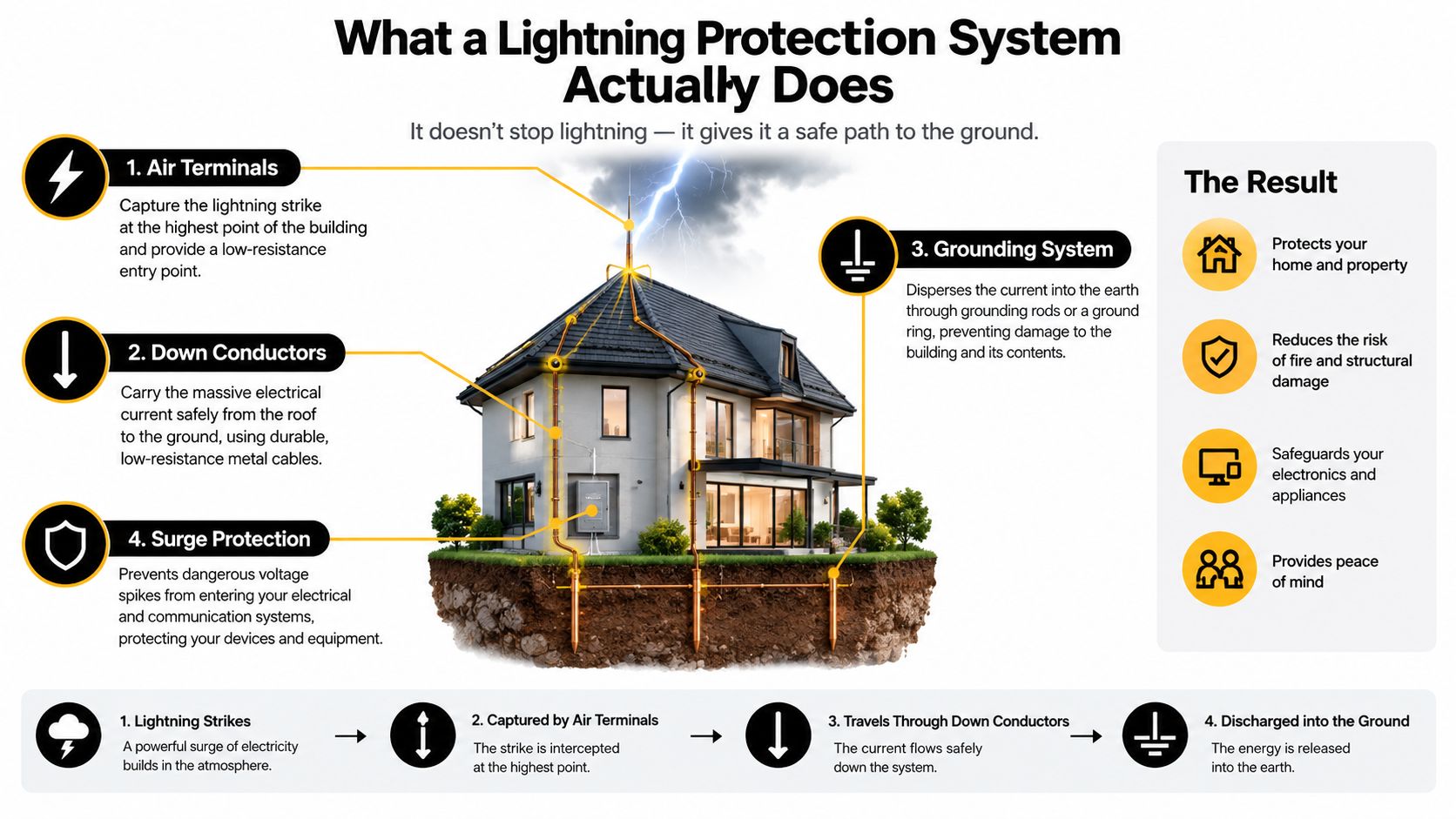
The visible part is external strike protection, which includes air terminals, roof conductors, downconductors, earthing and bonding. The less visible part is internal surge protection, usually installed at the switchboard and, where needed, closer to sensitive equipment. These systems work together, but they solve different problems.
For most Brisbane homes, internal protection is the sensible first conversation. A switchboard SPD can help protect circuits from transient overvoltage, but it won't make an unprotected roof safe from a direct strike. Full external protection becomes more defensible where the house is tall, isolated, exposed on a ridge, fitted with combustible or unusual roofing, or contains equipment where failure carries a serious consequence.
Practical rule: Don't buy roof rods simply because they look reassuring. Start with a risk assessment, then protect the services and equipment that can realistically be damaged.
A licensed electrician can help you compare options, document the work and locate a suitable provider through a platform for electricians and plumbers. The useful question isn't “Can lightning hit my house?” It can. The useful question is whether your building needs a controlled external strike path, service-level surge protection, or both.
Australian lightning protection guidance describes a complete arrangement using air terminations, downconductors, earthing systems and surge protective devices. AS/NZS 1768 was developed to protect people and property from lightning hazards and has evolved from the Australian MC1-1969 origin through later editions, with AS 1768:2021 continuing that development (Australian lightning protection standards background).
Air terminals are the rods, roof conductors, strike pads or mesh that create a controlled interception network. The familiar pointed lightning rod is only one form. Correct location, spacing, connection and bonding matter more than appearance, and metal roof sections or rooftop equipment may need to be incorporated into the design rather than left electrically isolated.
An undersized or poorly placed termination can leave parts of the roof outside the intended protection zone. A loose clamp or unbonded metal component can also encourage side flashing, where current jumps between nearby conductive parts.
Downconductors provide the route from roof level to earth. They should follow a direct path, avoid tight bends and remain mechanically secure. A sharp change in direction increases impedance during a very fast electrical event, while a damaged or badly joined conductor can heat, arc or force current into an unintended route.
Copper and aluminium conductors can both appear in compliant designs, but dissimilar metals require careful connection methods because corrosion at a joint can undermine continuity. A downconductor isn't just a cable fixed to a wall. It's part of a coordinated current path.
Earth electrodes may include driven rods, plates, buried tapes or concrete-encased arrangements. The designer must consider the site's soil conditions, electrode layout, bonding and access for testing. Brisbane's clay-rich suburbs can provide useful conditions, but no electrician should assume that soil will perform consistently without testing.
A single rod may be inadequate for the site, or its connection may deteriorate after landscaping, excavation or erosion. The result is a path that looks complete but doesn't dissipate energy as intended.
Surge protective devices sit at the switchboard and, where appropriate, near sensitive equipment. They help limit transient voltage on power circuits, while additional protection may be needed for data, antenna, telephone, solar or security wiring. The right arrangement depends on how services enter the building and how equipment is bonded.
For background on the relationship between earthing and electrical safety, see this practical guide to electrical earthing and grounding.
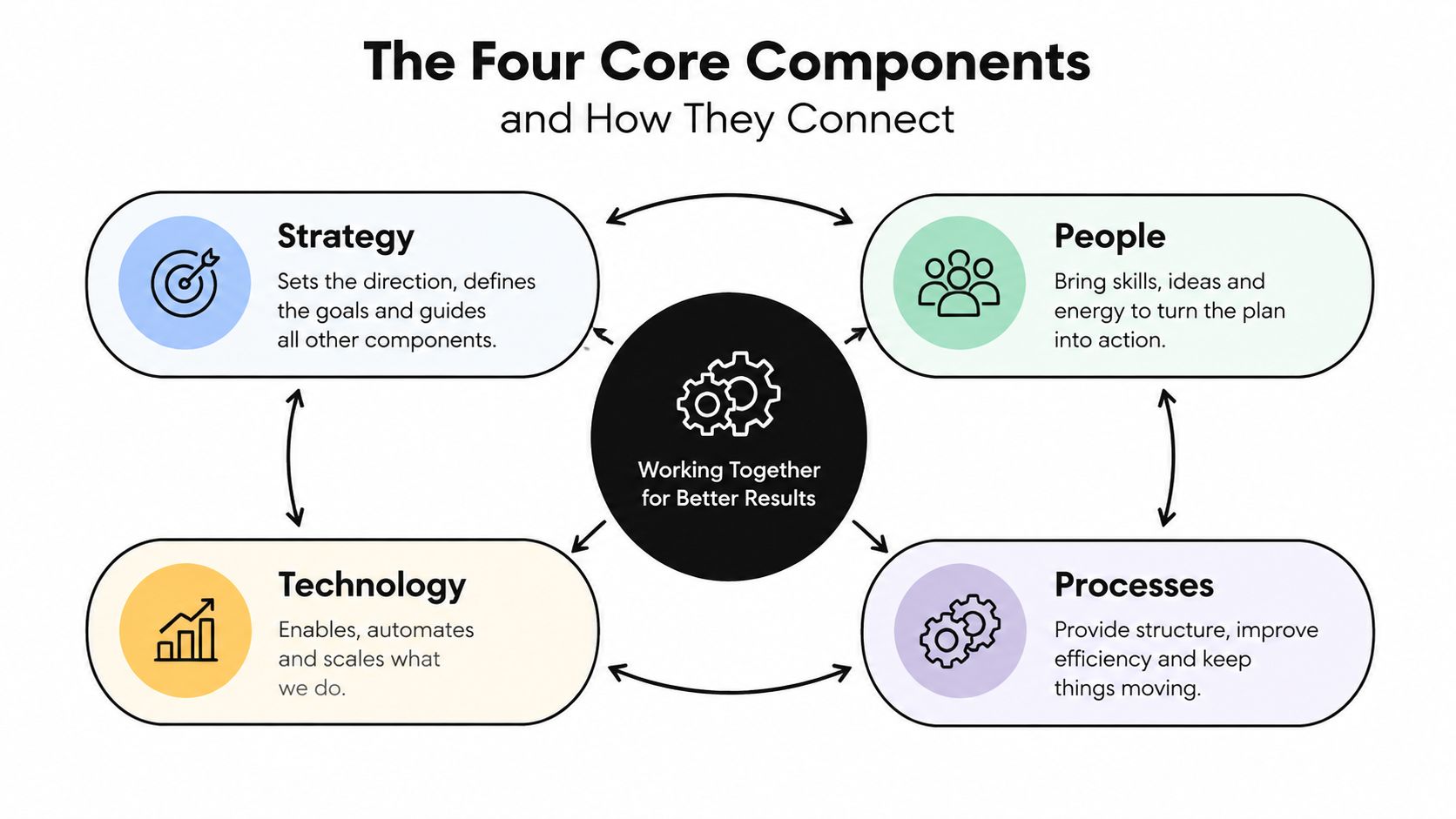
The four parts need to be designed as one system. A strong air terminal with a poor earth path is incomplete, just as a good switchboard SPD can't replace a direct-strike system where the structure needs one.
A Brisbane home on an exposed ridge needs a different approach from a standard suburban house surrounded by similar buildings. In practice, homeowners are choosing between three system types, with the right choice depending on exposure, construction and the consequence of damage.
A conventional Faraday-cage style system uses roof air terminals or mesh, multiple downconductors, bonding and a dedicated earth arrangement. It provides a controlled path for direct-strike current and suits larger roofs, exposed buildings, heritage properties with unusual construction, or sites where a strike could cause serious loss. The trade-off is visible roof work, more conductor routes and greater installation complexity.
An isolated or mast-style arrangement places air terminals on separate masts or poles. This keeps strike current away from the building fabric and can suit combustible roofing, extensive solar equipment, detached structures or layouts where conventional conductor routes are difficult. It normally costs more and requires careful design of spacing, support and conductor routing, so it is not a routine residential upgrade.
Surge-focused internal protection targets overvoltage arriving through electrical services or induced into household wiring. It combines switchboard protection with point-of-use devices and correct bonding. This approach can reduce damage to modems, televisions, cameras, alarms and control boards, but it does not create a controlled path for a direct roof strike. More detail on surge protection for homes covers the switchboard and whole-home options.
Brisbane sits in an Ng band of about 3 to 4 ground flashes per square kilometre per year, according to Australian risk tools using Bureau of Meteorology map values (Australian lightning risk calculator and Brisbane Ng band). Ng measures expected ground flashes per square kilometre per year. It indicates local exposure, while building height, isolation, construction and the consequences of equipment or structural loss determine whether external protection is justified.
| System Type | What It Protects Against | Typical Brisbane Cost | Best Fit | Main Limitation |
|---|---|---|---|---|
| Conventional external system | Direct strikes and associated current paths | Site-specific quote | Exposed, tall or higher-consequence buildings | More visible work and greater installation complexity |
| Isolated mast-style system | Direct strikes while keeping current away from the structure | Site-specific quote, usually premium | Combustible roofs, solar arrays or detached structures | Requires careful spacing, support and design |
| Surge-focused internal protection | Induced and service-borne overvoltage | Package depends on switchboard and services | Most standard suburban homes | Doesn't provide a controlled path for a direct strike |
For an ordinary tiled-roof home, internal surge protection is often the proportionate starting point. A full external system becomes more suitable when exposure and the consequences of a strike rise together. gbc
A lightning protection decision for a Brisbane home starts with AS 1768:2021, Australia's current lightning protection standard. It covers the design, installation, maintenance and testing of protection for common structures, including electrical and electronic systems within them. Rather than applying one fixed height rule, it uses a risk-based method (AS 1768:2021 from Standards Australia).
Brisbane's ground-flash exposure makes surge protection a sensible baseline for almost every home. A full external system needs a more specific case. The assessment turns on four factors: height, isolation, construction and consequence. Local exposure establishes the background risk, while the building's position, materials, services and contents determine how much protection is proportionate.
Consider two simplified assessments. A two-storey timber home in Kenmore, positioned on an exposed slope with a large roof and several external services, could warrant a detailed design for external protection and coordinated surge control. A low-set brick home in Carindale, surrounded by neighbouring homes and fitted with ordinary household equipment, may reasonably begin with switchboard surge protection and sound bonding.
| Risk Variable | Low Concern Example | High Concern Example |
|---|---|---|
| Height | Low-set dwelling with no prominent roof features | Two-storey home with rooftop plant or elevated sections |
| Isolation | Dense suburban setting with nearby structures | Stand-alone home on a ridge or open block |
| Construction | Conventional masonry and tiled roof | Combustible, heritage or electrically complex construction |
| Consequence of loss | Ordinary household electronics | Sensitive electronics or equipment where interruption matters |
The practical split is straightforward. Surge protection on incoming services is usually the proportionate starting point for a standard suburban dwelling. Full external protection becomes more defensible for exposed, taller or higher-consequence buildings, where a controlled path for a direct strike matters.
AS 1768 provides guidance rather than an automatic building-code requirement for every residential dwelling. An insurer may ask how electrical work was completed, whether switchboard devices were installed correctly and whether relevant records exist. An external system does not automatically improve or void cover. Check the policy wording, then retain certificates, test results and photographs.
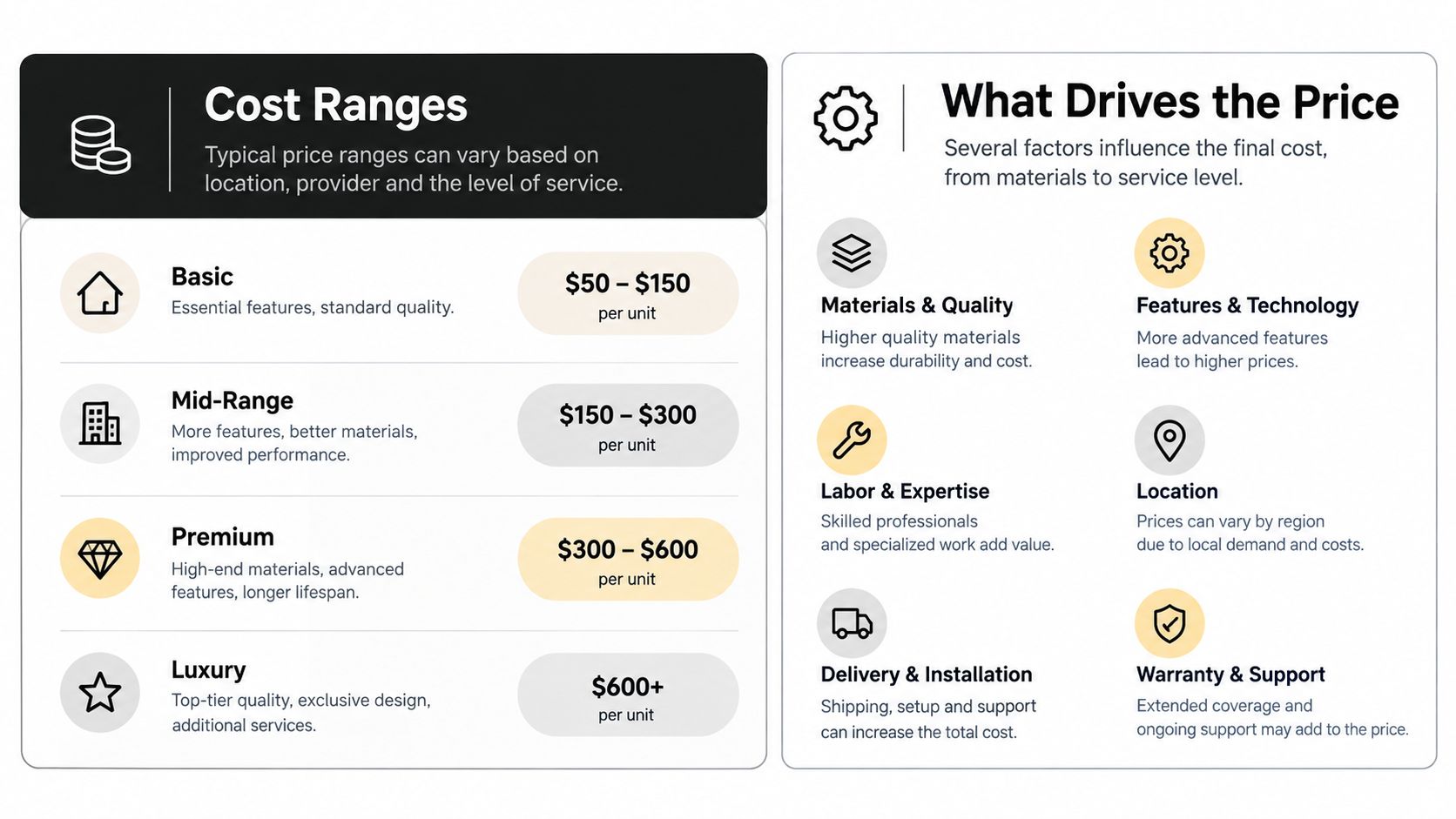
For Brisbane homeowners, a full residential installation may sit around $2,500 to $6,500, while a whole-home switchboard surge-protection package may cost approximately $900 to $1,800 fitted. Treat these as planning estimates, not fixed prices. A licensed electrician must inspect the property, confirm the switchboard arrangement and determine whether external protection is justified. The infographic below provides a visual comparison of cost ranges by material quality and feature level.
The building usually affects the quote more than floor area. A hip roof can require different conductor routing from a flat roof. A two-storey property may need specialist access equipment. Heritage surfaces often require discreet routes and careful fixing, while difficult soil or a long distance to a suitable earthing location can add labour and materials.
Ask for a clear schedule of inclusions. Mains surge protection, solar-inverter protection, antenna protection, telephone circuits, and data or security lines may be priced separately. Each service needs the correct protective device, with coordination between devices where required.
Before comparing quotes, check these details:
The practical value test is simple. Compare the protection cost with the equipment in the home, likely disruption after a failure, and the consequences of losing security, communications or other important electrical systems. In many Brisbane homes, the sensible starting point is service-level surge protection. A full external system is easier to justify for exposed or higher-consequence buildings than for a typical suburban property.
A professional installation starts before anyone climbs onto the roof. The electrician assesses the building, identifies overhead and underground services, checks access and considers whether the work could affect Energex infrastructure. The proposed arrangement should match the site risk and the relevant Australian standard, not a generic diagram pulled from the internet.
The physical sequence usually looks like this:
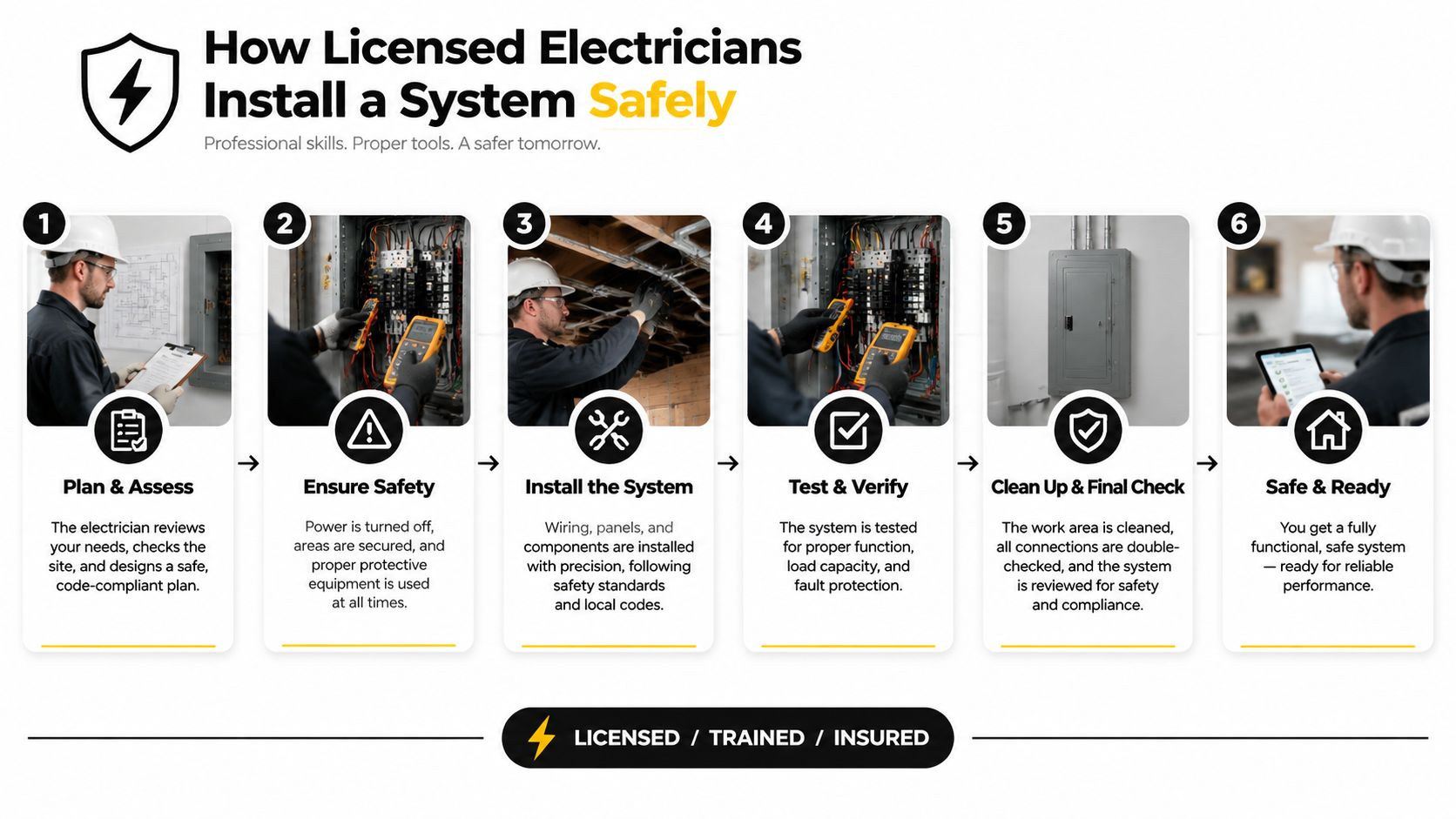
No one should work on the system during an active storm. After installation, the electrician checks continuity, earth performance, bonding and SPD status, then gives the homeowner a certificate of compliance and test documentation. You can also review why electrical contractor registration matters before choosing a contractor.
A lightning protection system is not a fit-and-forget purchase. Brisbane weather, roof repairs, corrosion, landscaping and electrical alterations can all change the condition or effectiveness of the installation.
A sensible residential routine is a visual check every 12 months, followed by a fuller AS 1768 compliance test every 2 to 3 years, and another inspection after a suspected direct strike. The exact interval should reflect the building, exposure and condition of the system. A roof replacement, solar installation or excavation near buried electrodes should also trigger a review.
Homeowners should stay on the ground and look for:
Don't open the switchboard or test an earth electrode yourself. A licensed electrician uses instruments such as a calibrated earth tester, continuity tester and clamp meter to check resistance, joint integrity, conductor continuity and surge-device condition. A visual inspection can miss a degraded internal component or a connection that has lost electrical performance.
Call promptly after a storm if you see scorch marks, blackened SPD modules, flickering appliances, repeated protective-device trips or discoloured conductor connections.
Keep a simple record with the inspection date, photographs, the electrician's findings and any repairs. That file helps the next contractor understand what changed and gives you useful evidence if equipment damage needs to be reported.
Yes, in many cases. The installer may route conductors beneath eaves, behind selected external finishes or through less prominent areas, but tile roofs, heritage details, solar arrays and extensions can limit the available paths. The electrician should inspect the structure first rather than promise that every cable can be concealed.
A retrofit can also begin with the switchboard and incoming services. That approach may provide practical protection for power-connected equipment while the contractor assesses whether the building needs a complete external system.
Most residential policies don't automatically require an external lightning protection system. They may still require electrical work to be performed legally and correctly, and an insurer can ask for documentation after a loss. Installation doesn't automatically improve or cancel cover, so read the policy and ask the insurer specific questions before relying on a presumed benefit.
Keep the quote, certificate of compliance, product details, test results and photographs. If a storm damages equipment, record the date, affected circuits, visible marks and any emergency isolation before disposing of failed devices.
This isn't a suitable DIY project. Roof-level air terminations, downconductors, earthing and bonding must be designed as a connected system, and electrical work in Queensland has licensing and safety requirements. A poorly placed conductor can create a false sense of security or an unsafe current path.
Homeowners can check visible conditions from the ground, but installation, switchboard work and testing belong with a licensed electrician.
Look for a tripped or blackened SPD, melted bonding points, scorch marks, damaged roof components, unexplained appliance failures or faults that began immediately after a storm. Don't reset devices repeatedly if they show heat damage. Isolate affected equipment safely, photograph the evidence and arrange a professional inspection.
Lightning can also affect nearby trees and surrounding property. If mature trees are close to the home, a separate resource on homeowner lightning protection for trees can help you consider the wider site rather than focusing only on the switchboard.
DLG Electrical can assess Brisbane homes for switchboard surge protection, related electrical upgrades and broader lightning-risk considerations, with the work documented by licensed electricians. Visit DLG Electrical to request a practical discussion and quote based on your roof, services, equipment and exposure.

Master Electrician with over 30 years of experience. Founded DLG Electrical in 2005 after international project work including electrical installations at Stamford Bridge Stadium, London(Home of Chelsea FC).

Local Electricians that can fix all Electric Hot water Systems.
Motion sensor lights are a versatile addition to any home, offering nu
