83 Jean St, Grange QLD 4051
Mon-Fri 07:30 AM - 04:00 PM - Sat - 8:00 - 12 - Sunday Closed
Right, let’s get straight to the point. The cost to get ducted air conditioning installed in a Brisbane home usually starts around $7,000 for a smaller place and can go north of $17,000 for a large, two-storey house. It’s not like buying a fridge off the shelf; the final figure is tailored specifically to your home’s size, layout, and how you live in it.
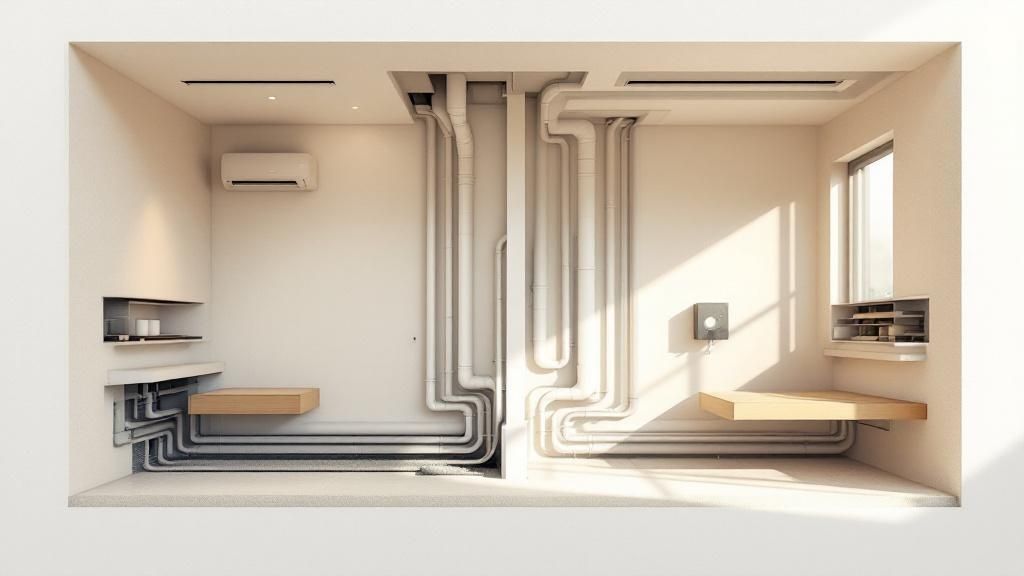
When you’re budgeting for this kind of whole-home comfort, it helps to think of ducted air conditioning as a complete climate control solution, not just a single product. The total cost on your quote is a blend of the system itself, the complex web of ductwork that snakes through your ceiling, and the expertise of the technicians putting it all together.
Now, the price for a ducted system does change depending on where you are in Australia, mostly due to property sizes and how complex the installation is. The good news is Brisbane is quite reasonably priced compared to other major cities. For instance, in Sydney, you could be looking at a range from $8,000 to $20,000, so we’re a touch more affordable here.
To give you a clearer idea of what to expect, we’ve put together a quick summary of typical costs based on common Brisbane property sizes. Think of this as a solid starting point for your budget—it will help you set realistic expectations before you start calling around for quotes.
Of course, these are just guides. The final price can shift depending on the specific brand you choose, the number of zones you want, and any tricky installation requirements.
A well-planned ducted system is more than just an expense; it’s an investment in your home’s comfort, livability, and long-term value. Getting the budget right from the start is the first step towards a successful installation.
To help you get a sense of the numbers, we’ve put together a simple table outlining the typical price brackets for different home sizes in Brisbane.
| Home Size / Type | Typical System Size (kW) | Estimated Total Installation Price Range |
|---|---|---|
| Small Home or Apartment (2-3 bedrooms) | 7-10 kW | $7,000 – $10,000 |
| Medium Single-Storey Home (3-4 bedrooms) | 10-14 kW | $10,000 – $14,000 |
| Large Home (4+ bedrooms) | 14-16+ kW | $14,000 – $17,000+ |
These figures give you a solid foundation for planning. For a more detailed breakdown of air conditioning costs, including different system types like split systems, take a look at our complete guide on how much it costs to install aircon.
Getting a quote for a ducted air conditioning system can feel a bit like trying to read a foreign language. It’s often a long list of parts, codes, and figures that don’t mean much on their own. To really get your head around the price to install ducted air conditioning, it helps to break the quote down into its three core pillars.
Think of it like building a custom car. You’ve got the engine, the chassis and body, and the skilled mechanic who puts it all together. Each component is essential, and the quality you choose for each one directly impacts the final cost and how well it performs. A ducted system is no different.
The infographic below gives a great visual overview of the main factors that build up your final installation cost, from your home’s unique layout to the system’s complexity.
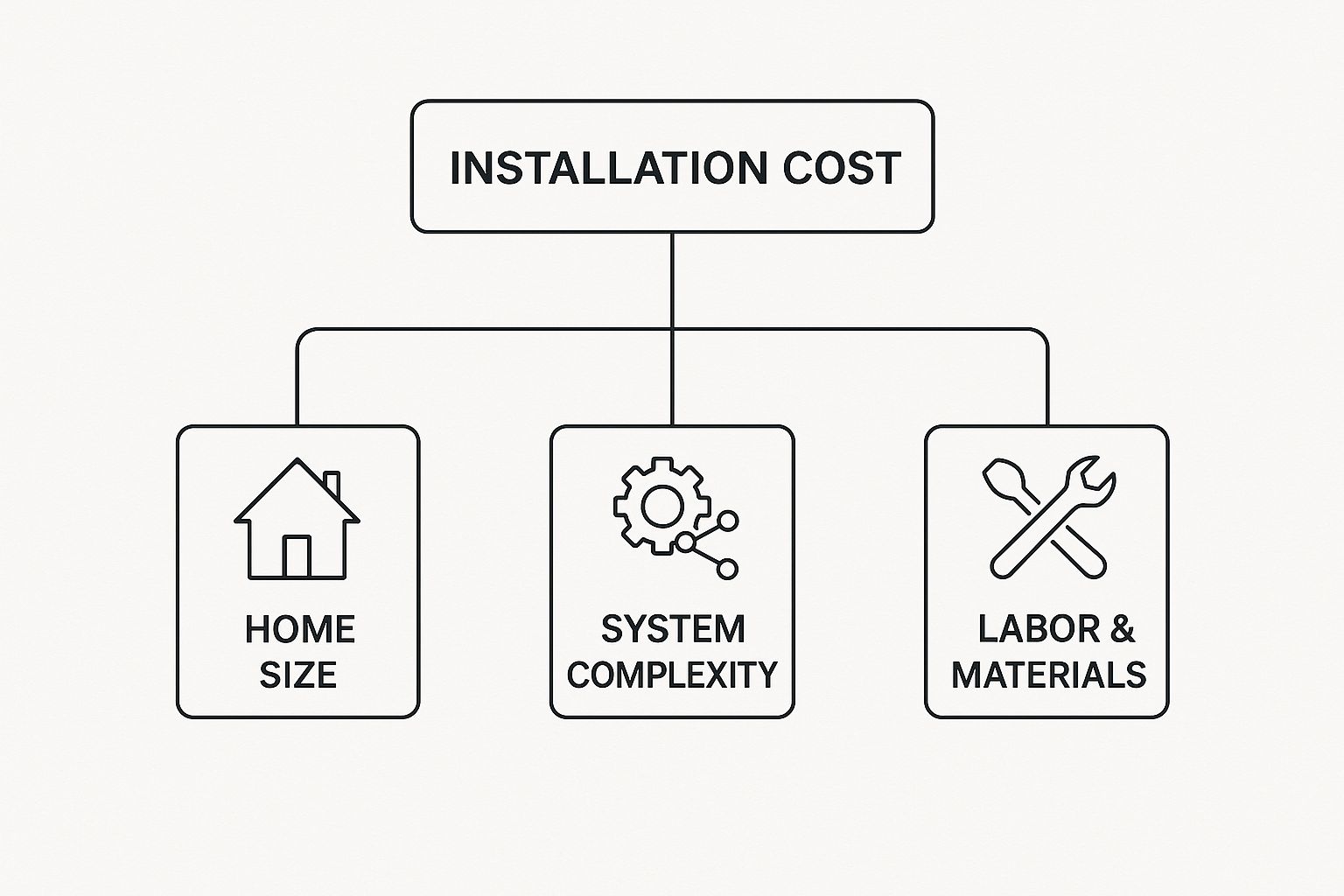
As you can see, the size of your property, the intricacy of the system you pick, and the labour involved are the foundational elements of any quote.
This is the heart of your climate control—the indoor and outdoor units that do all the heavy lifting of cooling and heating the air. The cost here is driven by two main things: brand and capacity.
Choosing the right unit is a careful balance. If it’s undersized, it will struggle constantly and run inefficiently. Go too big, and you’ll be wasting energy on every cycle.
If the main unit is the engine, then the ductwork is the delivery network. It’s the hidden infrastructure responsible for getting all that conditioned air to every single room. This is a big part of the overall cost and includes a surprising number of individual components.
You’re paying for the flexible ducting that snakes through your ceiling, the grilles or vents that sit in each room, and the zone control system. The more zones you want, the more dampers, motors, and wiring are needed, which all adds to the material and labour bill.
The quality of these materials is absolutely crucial. Poorly insulated or badly installed ductwork can leak cooled air straight into your hot roof space, leading to a 20-30% loss in efficiency. That’s like throwing a chunk of your power bill away every month.
Finally, a significant portion of the quote covers the cost of the skilled professionals who bring it all together. This isn’t just about connecting a few pipes; it’s a multi-disciplinary job that demands precision and certified expertise.
This part of the price to install ducted air conditioning covers:
Ducted air conditioning systems are a major home improvement. Here in Australia, you can expect installations to generally cost between $5,500 and upwards of $14,000 as of 2025. It’s a significant step up from a simple split system because of the complex network of ducts and the specialised labour needed for a true whole-home solution. You can learn more about these national cost benchmarks from the experts at Eleco.
The price to install ducted air conditioning isn’t something you can just pull off a shelf. It’s a common story: two similar-looking homes in Brisbane can end up with quotes that are thousands of dollars apart. The key is to understand what’s behind those numbers so you can set a realistic budget and know exactly what you’re paying for.
These factors go way beyond just the size of your home. They get into the nuts and bolts of your property’s structure and complexity. Each one presents a unique puzzle for installers, and solving it is what shapes the final cost. Let’s break down the biggest moving parts.
One of the first questions an installer will ask is whether they’re working on a new home under construction or fitting a system into an existing property. This is a massive fork in the road and can completely change the scope—and cost—of the job.
Retrofitting a ducted system into an established two-storey home is often the most complex job of all. It demands some really creative thinking to get ducting between floors, which ramps up the time, skill, and ultimately the cost of the installation.
This difference isn’t just a Brisbane thing; it’s true right across Australia. While the air-conditioning units themselves might range from $6,000 to over $30,000, the installation adds another layer. Retrofitting involves extra work and sometimes structural tweaks that push that final price up.
Square meterage is only part of the story. Your home’s actual layout plays a huge role in the final cost. A straightforward, single-storey rectangular house is a world away from a multi-level home with funky angles or soaring cathedral ceilings.
The more complex the floor plan, the more intricate the ductwork design has to be. This translates to more materials, longer duct runs, and more time spent on-site planning and installing it all to make sure every room gets balanced, consistent airflow.
That ceiling cavity is the hidden workspace for any ducted installation, and how easy it is to get around up there directly impacts the labour bill. A low-pitched roof with barely enough room to crawl makes every single task slower and more physically demanding for the installation team.
On the other hand, a high-pitched roof with plenty of headroom is a dream to work in. The team can move freely, lay ducting efficiently, and connect all the components much faster. This efficiency helps keep the labour component of your quote from spiralling.
And remember, the upfront install price is just one piece of the puzzle. It’s just as important to understand the ongoing costs of running air conditioning so you can plan your budget for the long run.
Once you’ve got the core system sorted, there’s a whole world of optional upgrades that can seriously lift your game in terms of comfort and control. Of course, these extras will influence the final price to install ducted air conditioning.
Think of the basic system like a reliable car that gets you from A to B. These features are the optional extras—like a premium sound system or an advanced GPS—that make the whole experience far more enjoyable and efficient.
These add-ons aren’t just about bells and whistles; many of them offer real, tangible benefits like lower running costs and a whole lot more convenience. The trick is figuring out which ones are right for you by balancing the upfront investment with the long-term value they bring. Let’s dig into some of the most common upgrades Brisbane homeowners are choosing.
Standard zoning is great—it lets you turn entire sections of your home on or off. But smart zoning takes this to a completely different level. Systems like MyAir or AirTouch give you pinpoint control over individual rooms, all from a central tablet or even your smartphone.
Picture this: the kids have left their bedroom doors wide open, and the aircon is blasting into an empty room. With a smart controller, you can instantly shut off the airflow to that specific zone without affecting anywhere else. It means you can tailor the climate in each space, so someone who needs a cool home office can have it without turning the living room into a freezer.
Smart zoning is genuinely one of the most effective ways to slash your system’s running costs. By only cooling or heating the rooms you’re actually using, you can cut down on wasted energy in a big way. That initial investment often pays for itself over time through lower power bills.
Another hugely popular feature, which often comes bundled with smart zoning, is Wi-Fi connectivity. This upgrade hooks your ducted system into your home network, letting you control it from anywhere with a smartphone app.
It might sound like a small thing, but the practical benefits quickly become something you can’t live without.
These kinds of upgrades transform your ducted system from a simple appliance into a smart, integrated part of your home. While they do add to the initial installation price, the enhanced control, comfort, and potential for long-term energy savings make them a seriously worthwhile consideration for any modern Brisbane home.
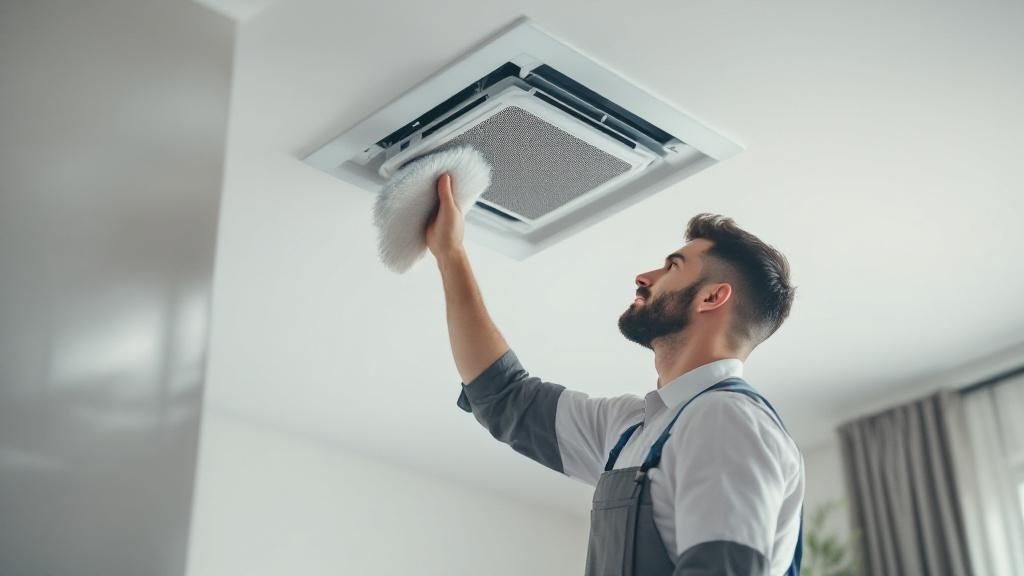
This is the part that matters most. Getting solid quotes is where you move from fuzzy estimates to a real, concrete budget for your price to install ducted air conditioning. Your mission here is to collect a handful of high-quality, comparable quotes from reputable installers around Brisbane.
The old wisdom holds true: get at least three quotes. This isn’t just about hunting for the lowest price. It’s about understanding the fair market rate for a job like yours and getting a feel for different companies—how they communicate, their attention to detail, and their overall approach.
A single-line quote scribbled on a notepad? That’s a huge red flag. A professional quote should be a detailed, itemised breakdown that tells you exactly what you’re getting for your money. No confusion, no grey areas.
A detailed quote is your best tool for comparing apples with apples. It protects you from nasty surprises down the track and ensures you and the installer are on the same page.
Here’s what any decent quote should include:
Think of it this way: when you insist on this level of detail, you’re not just getting a price, you’re getting a commitment. It shields you from hidden costs and proves the installer has properly thought the job through.
Before you even think about signing on the dotted line, you need to ask some direct questions. The way they answer will tell you everything you need to know about their professionalism and experience. Don’t be shy—a good installer will have these answers ready.
Getting clear, confident answers to these questions is your final check. It will help you find an installer who not only gives you a fair price but also delivers a high-quality, compliant system that will keep your home comfortable for years to come.
To make comparing quotes easier, use a simple checklist to keep everything organised. This helps you systematically evaluate each proposal side-by-side, ensuring you don’t miss any critical details.
| Checklist Item | Installer 1 | Installer 2 | Installer 3 |
|---|---|---|---|
| Total Quoted Price (inc. GST) | |||
| Brand & Model Number Quoted | |||
| System Size (kW) | |||
| Number of Zones Included | |||
| Controller Type (e.g., MyAir, ZoneTouch) | |||
| Ductwork Quality (R-rating) | |||
| Installation Warranty Period | |||
| Electrical Work Included? (Y/N) | |||
| Rubbish Removal Included? (Y/N) | |||
| QBCC Licence Verified? (Y/N) | |||
| Insurance Verified? (Y/N) | |||
| Payment Terms | |||
| Notes/Red Flags |
By filling this out for each quote you receive, you’ll have a much clearer picture of the value each installer is offering, moving you beyond just the bottom-line price.
The day your new system is commissioned might feel like the finish line, but really, it’s just the starting point. The true price to install ducted air conditioning isn’t just the number on the quote; it unfolds over the system’s entire lifespan through running costs and maintenance.
It’s crucial to think about this total cost of ownership. A high-efficiency unit might have a bigger price tag upfront, but it could save you hundreds on your quarterly electricity bills down the track. When you pair that efficiency with smart zoning, you’re not just buying comfort—you’re making a long-term investment in energy savings by only cooling the rooms you’re actually using.
Skipping your annual service might seem like a thrifty way to save a bit of cash, but it’s a false economy. A poorly maintained system has to work much harder to cool your home, which means higher power bills.
Over time, this kind of neglect allows minor issues to snowball into major, expensive repairs. An annual check-up, which typically costs around $150 to $250, is a small price to pay to keep your system running efficiently and reliably for years.
Ultimately, a smart budget doesn’t just cover the installation. It accounts for these ongoing expenses, ensuring your ducted system remains a genuine asset that adds value and comfort to your Brisbane home, not a source of unexpected financial headaches.
When you’re weighing up the price to install ducted air conditioning, it’s natural to have a few questions pop up. We get asked these all the time by Brisbane homeowners, so let’s clear the air on some of the most common ones.
For a pretty standard, single-storey Brisbane home, you can expect the installation to take one to two full days. It’s a significant job, but a professional team can get it done efficiently.
If you’re in a larger two-storey place or it’s a tricky retrofit into an older home, the timeline might stretch to three days or even a bit more. There’s just more to navigate with existing structures and often more complex electrical work. A good installer will always give you a clear, realistic timeframe upfront with their quote.
In a lot of cases, absolutely. It really shines in larger homes where you’d otherwise need three or four separate split systems to cool the place down.
A single, high-efficiency ducted system with smart zoning is a much more streamlined way to manage your home’s climate.
The real magic is in the design. The central unit is built for whole-home performance, and zoning means you’re not wasting a cent cooling rooms nobody is in. This targeted approach is why it often leads to lower power bills and a far more comfortable home in the long run.
Generally speaking, no. For a standard residential installation in an existing Brisbane home, you won’t need to get the council involved.
However, there are a few exceptions. If the outdoor unit is unusually large, noisy, or needs to be placed very close to your property boundary, specific rules might kick in. It’s always best to check with your installer—they live and breathe this stuff and will know the current Brisbane City Council requirements inside and out.
Ready to get a clear, detailed quote for your home? The expert team at DLG Electrical is here to help you design the perfect climate control solution. Get your free quote today!

Master Electrician with over 30 years of experience. Founded DLG Electrical in 2005 after international project work including electrical installations at Stamford Bridge Stadium, London(Home of Chelsea FC).

Local Electricians that can fix all Electric Hot water Systems.
Motion sensor lights are a versatile addition to any home, offering nu
