83 Jean St, Grange QLD 4051
Mon-Fri 07:30 AM - 04:00 PM - Sat - 8:00 - 12 - Sunday Closed
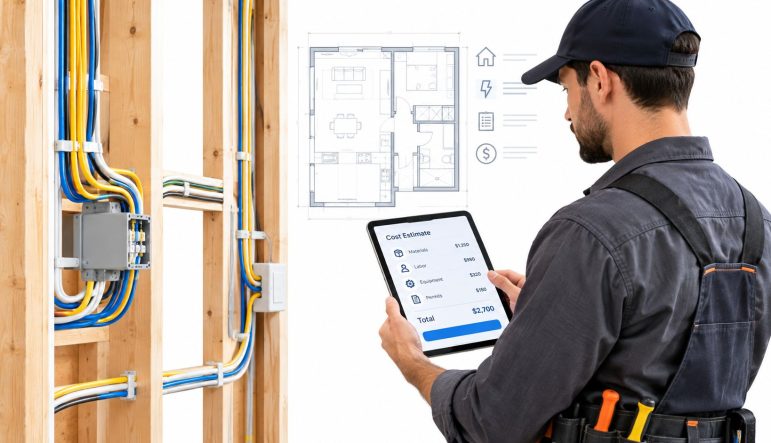
A Brisbane homeowner can expect about A$9,500 to A$15,500 for a standard three-bedroom full rewire, while more complex homes can reach A$19,000 to A$34,000. The difference usually comes from access, construction, wiring scope and safety upgrades, not just the number of bedrooms.
You've probably landed here after getting two quotes that differ by thousands, perhaps for a similar-looking home in Chermside, Windsor or Grange. That gap doesn't automatically mean one electrician is overcharging. It may mean the quotes describe different project types, count different power points, allow for different access problems, or bundle compliance work differently.
Brisbane rewiring prices sit across a broad range. Independent Australian guides place a full rewire at roughly A$4,000–A$8,000 for a two-bedroom home, A$6,000–A$10,000 for a three-bedroom home and A$8,000–A$14,000 for a four-bedroom home (Somners' Queensland house rewiring guide). A more technical Brisbane benchmark puts a standard three-bedroom rewire at A$9,500–A$15,500, with Queenslander and heritage homes reaching A$19,000–A$34,000 when access and wall construction make the work difficult (SEQ Sparky's Brisbane cost guide).
The useful question isn't only “what does rewiring a home cost?” It's “what kind of rewire is this, and what exactly has the electrician priced?”
A homeowner in a post-war brick house receives one quote for A$10,000 and another for A$15,000. The cheaper electrician has allowed for new cable runs and a few replacement outlets. The higher quote includes a new switchboard, RCBO protection, additional circuits, interconnected smoke alarms, testing and the paperwork needed to close out the work. Both may call it a full rewire, but they aren't necessarily offering the same finished electrical system.
A full rewire normally means removing or abandoning the old cabling throughout the property, installing new TPS cable and circuits, upgrading the switchboard where required, reconnecting the home and testing every circuit. The electrician should also address earthing, circuit protection, outlets, light points and other accessories needed for the agreed scope. A useful overview of how circuit layout affects a project is available in this guide to planning an electrical wiring layout.
For a Brisbane house, a properly defined quote may include:
The exact fittings matter. A quote for standard white outlets isn't equivalent to one allowing for USB outlets, dimmers, weatherproof fittings or designer plates. Similarly, “upgrade board” can mean a basic replacement in one quote and a fully populated board with RCBOs, a new main switch and reorganised circuits in another.
Data cabling, solar work, appliance installation, security systems, air-conditioning installation, plaster repairs, painting and floor lifting may sit outside the electrical scope. Some electricians include limited access cutting and patching, but full restoration is often assigned to a plasterer or builder.
Practical rule: If the quote doesn't state the number of circuits, outlets, light points, smoke alarms and switchboard components, you haven't yet got a meaningful price comparison.
The quote is best treated as a scope document, not just a number. Once you identify what's included and excluded, the reason for the gap between two Brisbane prices becomes much easier to see.
A rewiring quote can look high even when the cable allowance is modest. Labour commonly makes up 50% to 70% of the total (O'Shea Electrical's Australian rewiring guide). The percentage shifts with the property and scope, but the trade-off is consistent. Open roof and subfloor access allows faster cable runs. Finished plaster, solid masonry and furniture create slower routes, protection work and staged isolation.
That difference separates four Brisbane project types. A simple swap in a vacant, accessible home keeps labour relatively controlled. A lived-in rewire costs more because rooms must be isolated, protected and restored in sequence. A heritage Queenslander often adds careful work around older construction and restricted access. A safety-bundled rewire may include switchboard protection, smoke alarms or other required upgrades, increasing the total while addressing more of the installation at once.
Labour includes inspection, circuit planning, isolation, removal or disconnection of old wiring, cable installation, accessory fit-off, switchboard work, testing and coordination with other trades. A vacant lowset brick home may allow continuous work. A furnished Queenslander can require repeated interruptions and more careful routing.
Cables, conduit and consumables cover TPS cable in different sizes, conduit, saddles, junction components, clips, connectors, labels and protective materials. Cable size depends on the circuit design and installation conditions. A generic “metres of cable” allowance gives too little information for comparing technical scope.
The switchboard may include a main switch, enclosure changes, RCBOs, circuit breakers, neutral and earth bars, labelling and testing. It can represent a smaller share of the invoice while carrying major safety responsibilities. A board with correctly selected protection and organised circuits is not equivalent to a low-cost replacement with minimal protection.
Points and accessories are priced by quantity and specification. A three-bedroom home with 18 points requires a different installation from one with 32, even if the floor area is similar. Each point adds route planning, installation, termination and testing. White outlets, USB outlets, dimmers, weatherproof fittings and designer plates also change the allowance.
| Line Item | Share of Quote | Notes |
|---|---|---|
| Labour | 50%–70% | The biggest variable, especially with concealed wiring, difficult access or staged work. |
| Cable and installation materials | Not fixed | Depends on circuit design, cable sizes, conduit, access and route length. |
| Switchboard and protection | Not fixed | Confirm whether RCBOs, main switch, enclosure work, labelling and testing are included. |
| Power points and light points | Not fixed | Ask for a count and fitting specification, not a broad allowance. |
| Testing and compliance | Not fixed | Confirm certification and required electrical notifications. |
Two electricians can price the same Brisbane address differently because one has counted every point while another has used a basic allowance. Product quality, access assumptions and exclusions create further gaps. Use the Australian guide to rewiring costs for houses to check whether a proposal separates labour, materials and compliance work.
A switchboard upgrade can add A$1,500–A$3,500 when required alongside rewiring (Fair Cost's Australian electrician rewire guide). Check the protection being installed, the circuits covered and whether the allowance provides a full reconfiguration rather than a cosmetic enclosure replacement.
The property itself determines how quickly an electrician can reach each cable route. Before comparing prices, walk through five practical questions: how many levels does the house have, where can the electrician access the roof and subfloor, what are the walls made from, what condition is the existing wiring in, and whether local restrictions affect the work?

A double-storey home needs longer vertical runs and more careful routing between levels. A narrow roof cavity can turn a straightforward cable pull into slow work involving multiple access points. Stairs, tiled areas and finished joinery can also limit where cables can be chased or dropped.
A lowset timber or brick home with accessible ceiling and subfloor spaces may be easier to rewire than a smaller property with concealed masonry routes. This is why per-square-metre pricing is a poor substitute for an on-site assessment.
Plasterboard is generally easier to open and repair than solid brick or rendered masonry. Hard walls require chasing, dust control, tooling and surface preparation. Older Queenslander walls can introduce VJ boards, lath-and-plaster sections, decorative finishes and fragile areas that the electrician must protect rather than just cut through.
In pre-war properties, brittle or deteriorated insulation can also make removal more complicated. An electrician may need to isolate unsafe sections carefully and coordinate disposal or specialist handling where hazardous materials are suspected.
Raised homes on stumps around Aspley and Chermside can have useful subfloor access, but the height, bracing and route between floors still affect labour. Bayside homes near Redcliffe may require closer inspection of fittings and connections exposed to salt air. Heritage overlays in parts of Windsor and Bowen Hills can make chasing, external changes and restoration more sensitive.
A Queenslander premium isn't an arbitrary suburb charge. Queensland-specific guides associate the higher price with access limitations, heritage construction and the extra effort involved in floor lifting or working around lath-and-plaster walls (Aurora Electrical Solutions' Queensland rewiring guide). Ask the electrician to identify the exact physical obstacle behind each allowance.
Old rubber-insulated, cloth-insulated or otherwise brittle wiring can require more careful isolation and removal than a previous TPS installation. The electrician also needs to establish whether earlier renovations have created undocumented junctions, abandoned circuits or overloaded additions.
The switchboard upgrade regulations guide can help homeowners prepare questions about protection and compliance, but the final scope still depends on what the electrician finds during the inspection.
A Brisbane rewire quote becomes easier to judge when the project is placed in the right category. Four useful types are a simple swap, a lived-in rewire, a heritage Queenslander project and a safety-bundled upgrade. Room count alone does not explain the price. Access, construction and the work included in the same visit matter more.
| Project type | Typical example | Indicative cost range (AUD) | What drives the quote |
|---|---|---|---|
| Simple swap | Small brick or weatherboard cottage, about 25–35 points | A$6,000–A$10,000 | Direct cable routes, accessible roof or subfloor, and a straightforward switchboard allowance. Somners' Brisbane rewiring guide |
| Lived-in rewire | Standard three-bedroom single-level home | A$9,500–A$15,500 | Circuit and outlet count, roof access, furniture protection and switchboard specification. SEQ Sparky's Brisbane benchmark |
| Safety-bundled upgrade | Two-storey brick home or a rewire combined with board and protection work | A$14,000–A$22,000 | Longer vertical runs, extra circuits, restricted access and added safety work. |
| Heritage Queenslander | Lived-in or staged Queenslander | A$19,000–A$34,000 | Timber framing, VJ or lath-and-plaster walls, floor lifting, fragile finishes and possible board relocation. |
A small cottage can sit below the lived-in range when the roof and subfloor are open and the installation is direct. A tight cavity, rendered wall or difficult internal route can push the quote higher, even in a compact two-bedroom home.
The standard three-bedroom range is a practical Brisbane reference point, not a guaranteed price. Dedicated kitchen appliance circuits, air-conditioning, outdoor power and a larger lighting plan add labour and materials beyond a basic bedroom count.
Queenslander work reaches the upper band because access takes longer and finished surfaces need protection. Floor lifting, staged rooms and careful work around heritage fabric can make labour the largest part of the quote. The premium usually reflects hours on site, not expensive cable.
For wider context, a Queensland pricing guide places the national average house rewire at A$8,000–A$23,000, with a modelled midpoint of A$15,500, and Brisbane estimates at A$6,800–A$19,550 (Fair Cost's 2026 Australian pricing guide). Use those figures for orientation. Your electrician's point schedule, access plan and list of included safety work should carry more weight than an online midpoint.
A Brisbane homeowner choosing between these options is choosing a scope of work, not just a price. The right decision depends on how much cabling is defective, how much access the house allows, and whether walls or floors are already being opened.
| Option | Suits | Main benefit | Main limitation |
|---|---|---|---|
| Full rewire | Widespread deterioration, old wiring throughout, major renovation | Replaces the electrical system as a coordinated project | Highest disruption and project cost |
| Partial rewire | Specific damaged or high-load circuits, staged renovation | Deals with defined risks while limiting immediate disruption | Older wiring remains elsewhere |
| Switchboard upgrade | Serviceable cabling with outdated protection | Improves protection at the main board | Does not replace defective cable runs |
A partial rewire fits a confined fault, a circuit that cannot support a new load, or one renovation zone requiring fresh cabling. It can also suit a heritage Queenslander where opening every wall would trigger substantial restoration work. A typical partial job may fall around A$1,500–A$4,000, depending on the number of circuits, access and the repairs included.
Staging becomes poor value when the house has brittle, undocumented or unsuitable wiring across several areas. Replacing one circuit may mean paying for isolation, wall access and patching again when the next area is addressed. A full rewire usually makes better sense during a vacancy or major renovation, when ceilings, floors and wall finishes are already accessible.
A switchboard upgrade addresses protection and distribution at the board. It can be appropriate in a newer home with sound cable runs but outdated protective devices, or where a landlord must address a defined safety requirement. It will not repair damaged insulation, overloaded wiring or loose connections inside the house. Ask the electrician to separate board work from cable replacement on the quote, so the scope is clear.
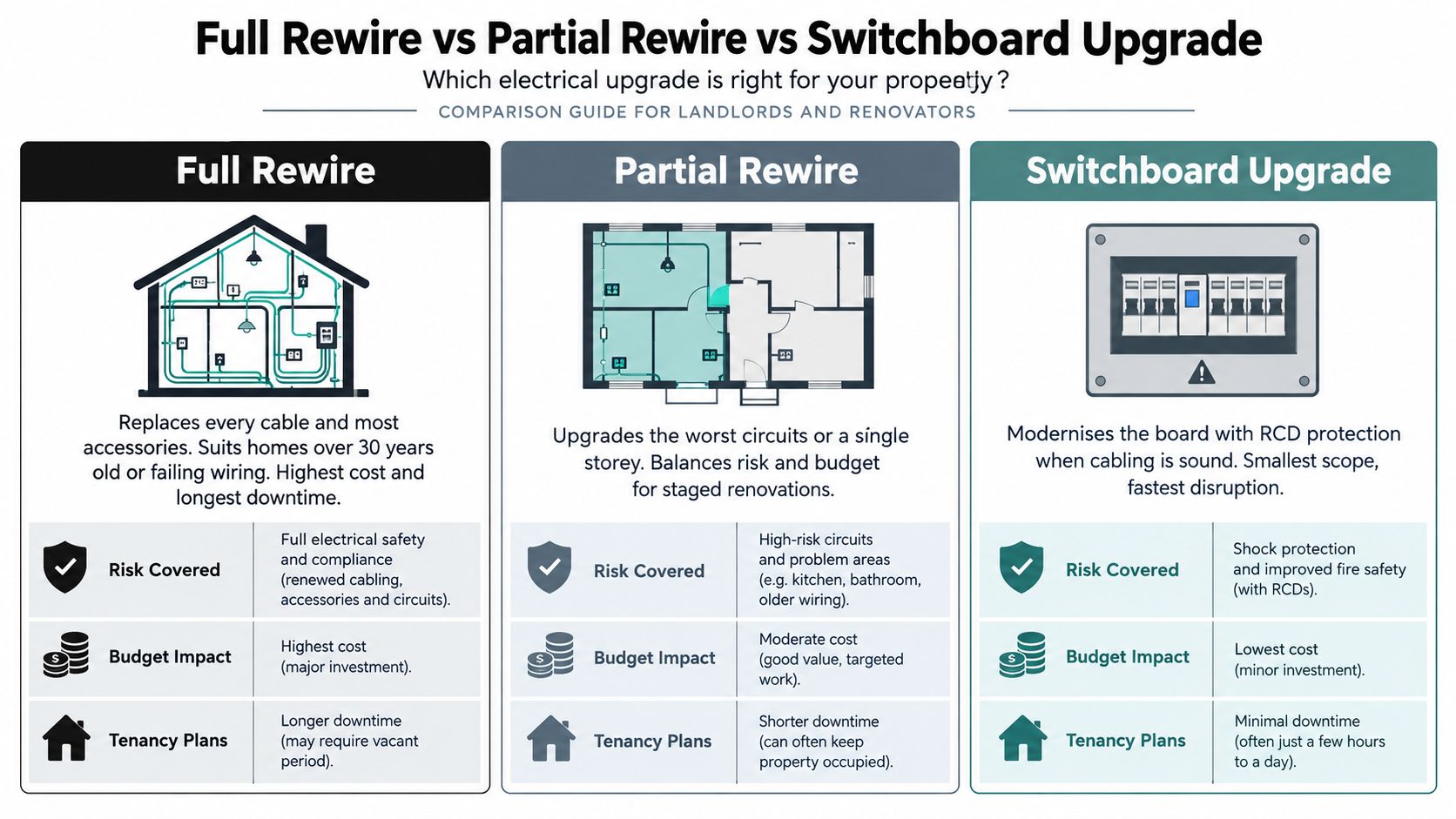
For a Chermside rental, testing may show that a board upgrade and targeted circuit work are enough. For a New Farm renovation with old cabling throughout, staging can defer the larger bill while repeating access and repair costs. The quote should state the observed condition, circuits included, protection changes and what remains untouched.
A vacant three-bedroom brick home usually has a shorter programme than a lived-in property. Based on DLG Electrical project experience in Brisbane, allow 3–7 working days for a straightforward vacant rewire. Lived-in work commonly takes 1–3 weeks, because the crew works room by room, restores access progressively and manages power interruptions. A heritage Queenslander can take 2–4 weeks where ceiling access, switchboard relocation, floor lifting and patching add work.
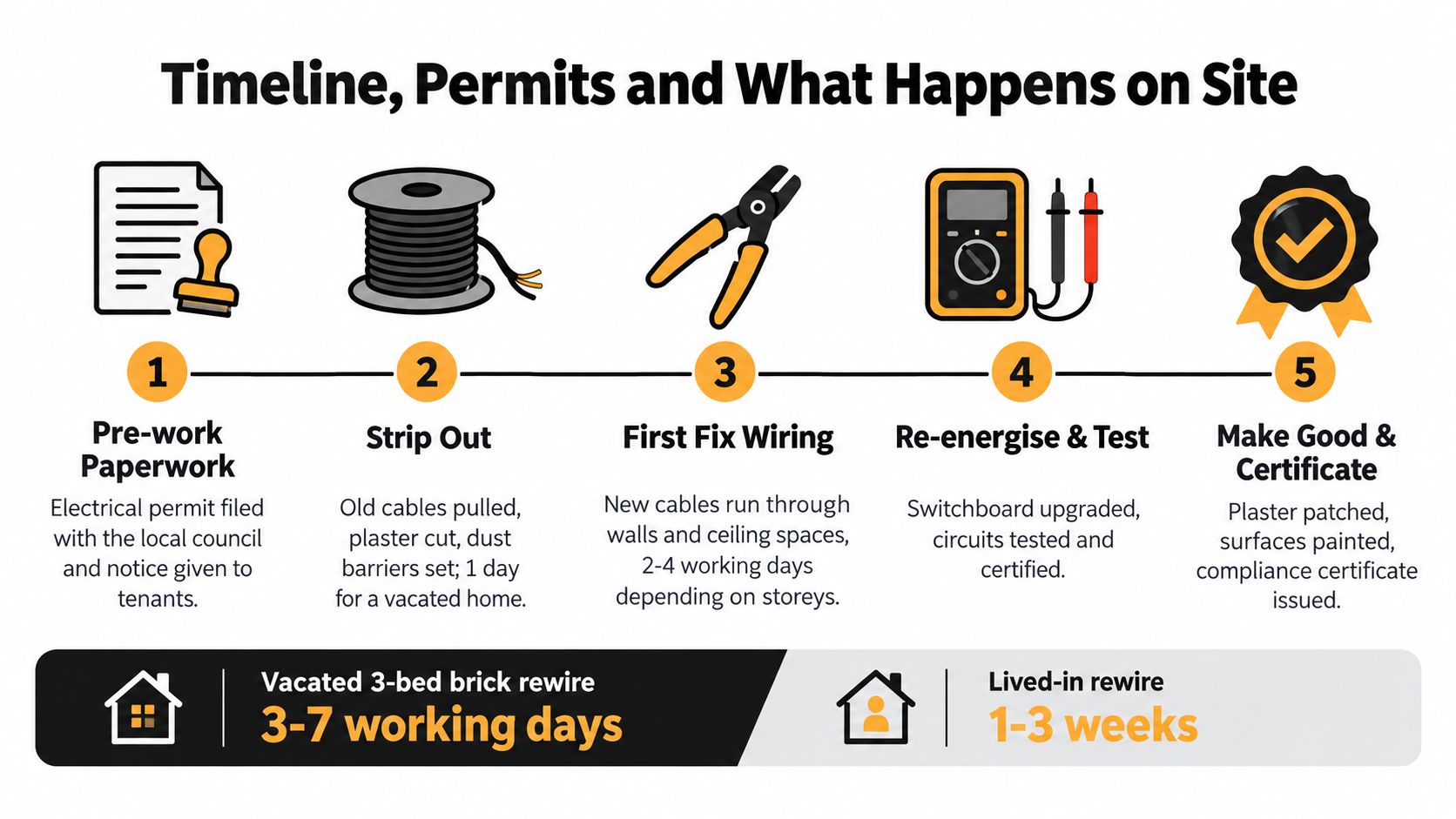
The electrician should inspect the property, confirm the circuit plan and mark areas requiring furniture removal or surface protection. Your quote should identify who handles plaster patching, painting, floor lifting and appliance moves. If the home remains occupied, agree on which rooms will lose power, how refrigeration will be managed and whether bedrooms or bathrooms need restricted access.
Queensland electrical work also involves notification and certification responsibilities for the licensed contractor. Before work starts, confirm how the Form A process, Electrical Work Request, testing and handover documents will be handled. “All compliant” is not enough unless the electrician identifies the certificate or notice you will receive.
The crew isolates circuits, removes or disconnects old cabling, protects finished surfaces, installs new cable routes and fits outlets, switches and lights. First-fix work may leave sections open or cable routes accessible until the electrician returns for the switchboard, accessories and final testing.
Power interruptions are part of a rewire. In an occupied home, set a daily shutdown plan and identify arrangements for medical equipment, refrigeration, cooking and temporary lighting. Staging can reduce disruption, although it may lengthen the calendar time and require repeated access and patching.
The electrician should test each circuit, verify protective devices, label the board, complete the agreed smoke alarm work and provide the relevant compliance documents. Keep those records with the property file, particularly if the home may be sold or rented later.
Before signing off: Walk through every room with the electrician. Compare the installed points, switches and fittings with the written schedule, and resolve omissions before the crew leaves.
Treat the quote appointment as a vetting exercise. A reliable proposal should tell you what the electrician will do, what products will be installed, how many points are included, how access assumptions affect the price and what another trade must complete.
Ask for a fixed-price written quote with separate allowances for:
Compare like with like. Three quotes are useful only when each electrician has priced the same number of points, equivalent switchboard protection, the same smoke alarm scope and the same access assumptions. A low figure may exclude the work that makes the property usable again, such as patching or moving a board.
You should also verify the electrician's Queensland electrical contractor licence and ask for recent Brisbane rewiring references you can contact. Listen for practical answers about your roof cavity, subfloor, wall construction and existing switchboard. An electrician who prices the house without inspecting those areas is making assumptions.
Bundling the rewire with a switchboard upgrade, safety switches and interconnected smoke alarms can reduce repeat visits and create one coordinated compliance handover. Staging is more defensible when the wiring is serviceable and the work follows a clear plan, such as completing a kitchen, extension or damaged circuit first. It becomes poor value when the electrician has already identified widespread deterioration and the partial job will require opening the same areas again.
DLG Electrical is one Brisbane contractor that offers electrical assessments and written rewiring quotes as part of its residential electrical services. Whether you choose them or another licensed contractor, insist on a documented scope rather than accepting a single unexplained total.
A quote should make you feel informed, not pressured. If the proposal is vague about circuits, access, protection or exclusions, ask for a revision before comparing the price. For a property with suspected heat damage, burning smells, buzzing or exposed conductors, arrange a licensed electrician's inspection promptly rather than using an online estimate to delay safety work.
DLG Electrical can assess your Brisbane home, explain whether a full rewire, partial upgrade or switchboard solution fits the wiring condition, and provide a written quote based on the property's actual access and construction. Visit DLG Electrical to discuss your rewiring project and arrange the next step.

Master Electrician with over 30 years of experience. Founded DLG Electrical in 2005 after international project work including electrical installations at Stamford Bridge Stadium, London(Home of Chelsea FC).

Local Electricians that can fix all Electric Hot water Systems.
Motion sensor lights are a versatile addition to any home, offering nu
