83 Jean St, Grange QLD 4051
Mon-Fri 07:30 AM - 04:00 PM - Sat - 8:00 - 12 - Sunday Closed
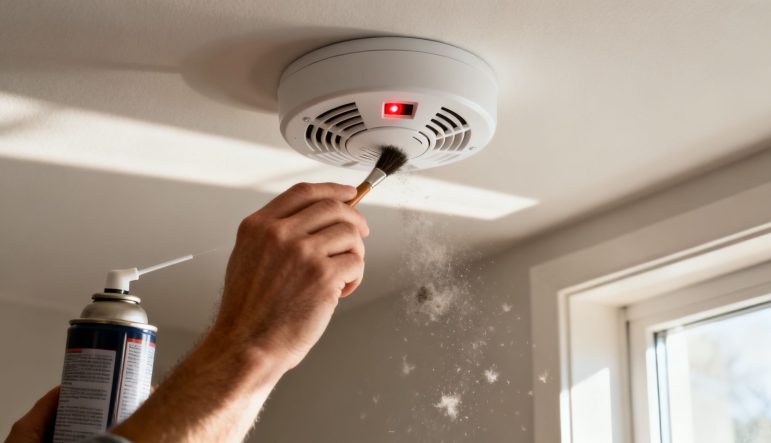
That sudden, piercing shriek from your smoke alarm when there’s no fire is more than just an annoyance—it’s a problem that needs a swift solution. More often than not, the culprit is something simple. The most common reasons a smoke alarm is randomly going off include a dying battery, a bit of dust on the sensor, high humidity, or even a small insect crawling inside. The good news is that most of these triggers are simple, DIY fixes that can restore peace and safety to your home.
A smoke alarm that sounds without an actual fire is often called a “nuisance” or “false” alarm, and it’s an incredibly common experience for homeowners across Brisbane. This doesn’t necessarily mean your alarm is broken. In fact, it’s often a sign that it’s doing its job a little too well, reacting to particles in the air that mimic smoke.
Learning to spot the difference between a minor issue and a genuine electrical fault is the first step toward a quiet, safe home.
Before assuming you have a serious problem, it’s worth checking for these everyday situations that can cause your smoke alarm to activate unexpectedly.
A false alarm is a crucial signal. It’s your system’s way of telling you that something needs attention—whether it’s a simple battery change, a quick clean, or a deeper electrical inspection.
Research confirms just how widespread this issue is. Studies looking into smoke alarm maintenance in Australian communities found that 51% of homeowners reported false alarms. Among those incidents, cooking was responsible for a staggering 80% of activations, which really highlights how sensitive modern alarms can be to everyday activities.
You can read more about these findings on Australian smoke alarm behaviour. This knowledge helps you tell the difference between a simple annoyance and a symptom of a larger problem, guiding you on whether a quick fix is enough or if it’s time to call in a professional electrician.
There’s nothing quite like the jarring shriek of a smoke alarm going off for no reason. It’s frustrating, loud, and can really get your heart racing. But before you grab a broom handle to silence the racket, take a breath. That alarm is trying to tell you something, and your first job is to play detective.
The sound itself is your biggest clue. Is it a full-blown, ear-splitting scream, or a single, annoying chirp that repeats every minute or so? These two sounds point to completely different issues. A constant alarm means the sensor has been triggered by something—be it dust, steam, or an actual hazard. That lonely chirp, however, is almost always a simple cry for a new battery.
Learning to speak your smoke alarm’s language is the key to restoring peace and quiet.
A consistent, periodic chirp is the easiest one to solve. Think of it as the universal signal for a low battery. It’s just letting you know its power source is running on empty and needs replacing, pronto.
A full, continuous alarm when there’s no smoke is a bit more complex. This means the internal sensor has been tripped. The culprit could be anything from a spider building a web inside the unit to a blast of steam from a hot shower. Your job is to work through the common offenders one by one.
This quick guide should help you figure out what’s going on.
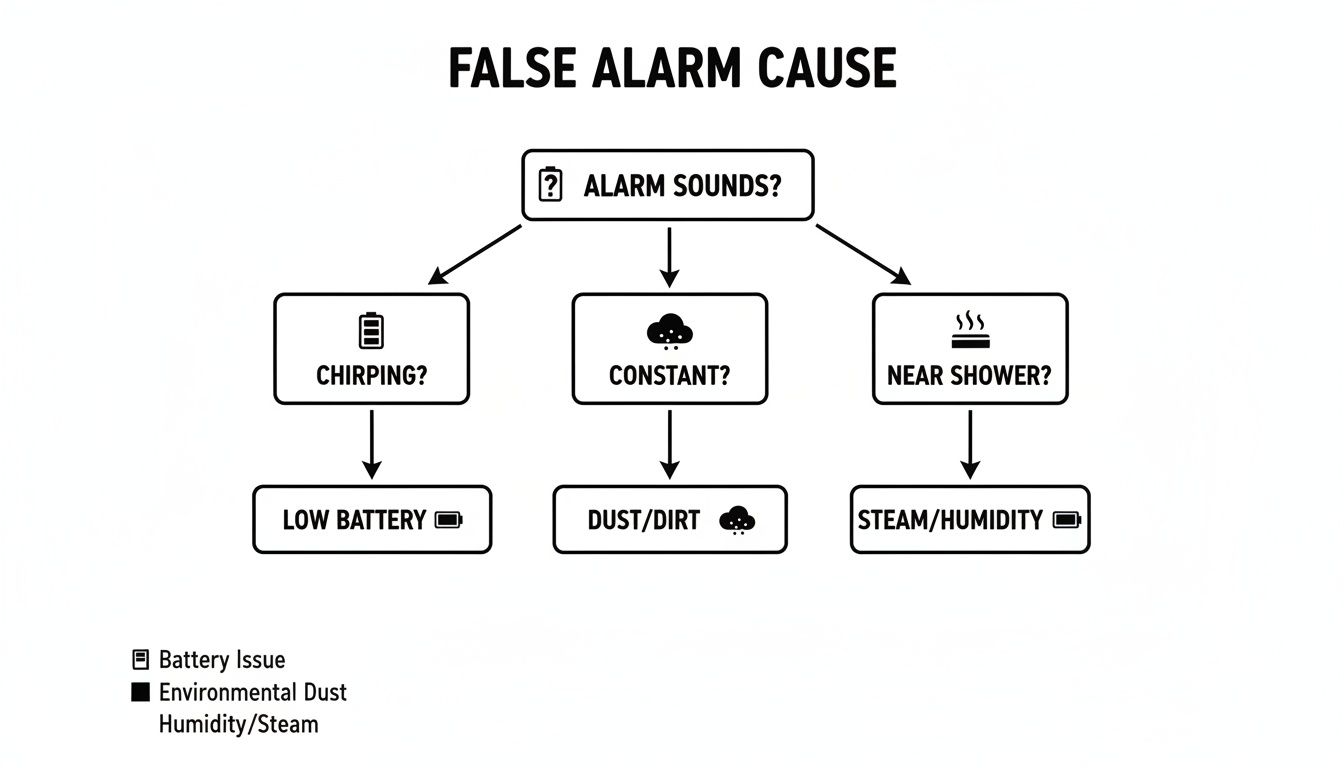
As you can see, the sound is the best indicator. A chirp points to the battery, while a constant siren means it’s time to investigate environmental factors like dust or humidity.
To make things easier, here’s a quick-reference table to help you identify the likely cause of a random alarm and find the right solution.
| Symptom | Likely Cause | DIY Solution | When to Call an Electrician |
|---|---|---|---|
| Single, loud chirp every 30-60 secs. | Low Battery | Replace the battery with the exact type recommended by the manufacturer. Write the date on the new battery. | If the chirping continues with a fresh, correct battery. |
| Full alarm sounds, no smoke or fire. | Dust or Insects | Gently vacuum the alarm vents with a soft brush attachment. Use compressed air to clean the internal chamber. | If cleaning doesn’t stop the random alarms. |
| Alarm triggers during/after showers/cooking. | Humidity/Steam | Use the hush button. Improve ventilation with an exhaust fan or open window. | If the alarm is poorly located and needs to be moved further from the kitchen/bathroom. |
| Alarm is yellowing, over 10 years old. | End-of-Life | The unit needs to be replaced entirely. All smoke alarms have an expiry date printed on the back. | For mains-powered or interconnected alarms that require professional replacement. |
| Multiple alarms sound at once. | Interconnect Fault | Press the hush button on the initiating alarm (it usually has a flashing red light). Clean all connected units. | If the problem persists, indicating a wiring or communication fault between the alarms. |
This table covers the most frequent issues we see in the field. By starting with the simplest fix, you can often solve the problem in minutes.
Once you’re sure there’s no fire, the immediate goal is to stop that noise. Most modern smoke alarms have a “hush” or “silence” button right on the front. Pressing it will quiet the alarm for about 8-10 minutes, giving you a window to investigate without going deaf.
This feature is perfect for minor cooking mishaps, like burnt toast, where the air will clear on its own. If the alarm kicks off again after the hush period ends, it means the sensor is still detecting particles in the air, and you need to dig a little deeper.
Here’s what to do next:
Give It a Good Clean: Dust, debris, and even tiny insects are the number one cause of a smoke alarm randomly going off. Over time, this buildup can trick the sensor into thinking there’s smoke. The fix is simple: gently vacuum the outside vents with a soft brush attachment. For a really thorough job, a can of compressed air can dislodge any stubborn gunk inside.
Change the Battery (The Right Way): If you suspect a low battery, replace it straight away. It’s absolutely crucial to use the exact battery type recommended by the manufacturer—using a different one, even if it fits, can cause all sorts of performance problems. Here’s a pro tip: use a marker to write the installation date on the new battery. It’s a simple visual reminder for next time.
Look for Environmental Triggers: Think about what was happening right before the alarm went off. Was someone taking a long, hot shower? Roasting veggies at high heat in the oven? Smoke alarms installed too close to kitchens and bathrooms are notorious for false triggers from steam and humidity. If it’s a regular occurrence, you might need to relocate the unit slightly further away (while still following safety guidelines, of course).
A Critical Safety Reminder: Never, ever just remove the battery to silence a nuisance alarm and then forget about it. A smoke alarm without power offers zero protection. Always use the hush button for temporary silence, then find and fix the root cause.
By working through these steps, you can confidently sort out most false alarms yourself. If you want a more detailed breakdown of keeping your alarms in top shape, check out our guide on how to check a smoke detector properly. But if you’ve tried all these fixes and the alarm is still acting up, it could point to a more serious problem with the unit itself or even your home’s wiring.
You’ve done everything right. You’ve cleaned the vents, swapped out the battery for a fresh one, and ruled out steam from the bathroom or dust from the attic. And yet, that piercing chirp continues to shatter your peace. When the simple fixes don’t work, it’s often a sign that the problem isn’t with the alarm itself, but with the electrical system it’s wired into. This is where we move beyond simple DIY and into territory that needs a professional’s touch.
Most modern Brisbane homes feature hardwired smoke alarms. They’re not just standalone battery-operated units; they’re connected directly to your home’s power and linked together. This interconnected system is fantastic for safety—when one sounds, they all sound. But it also adds a layer of complexity when things go wrong.
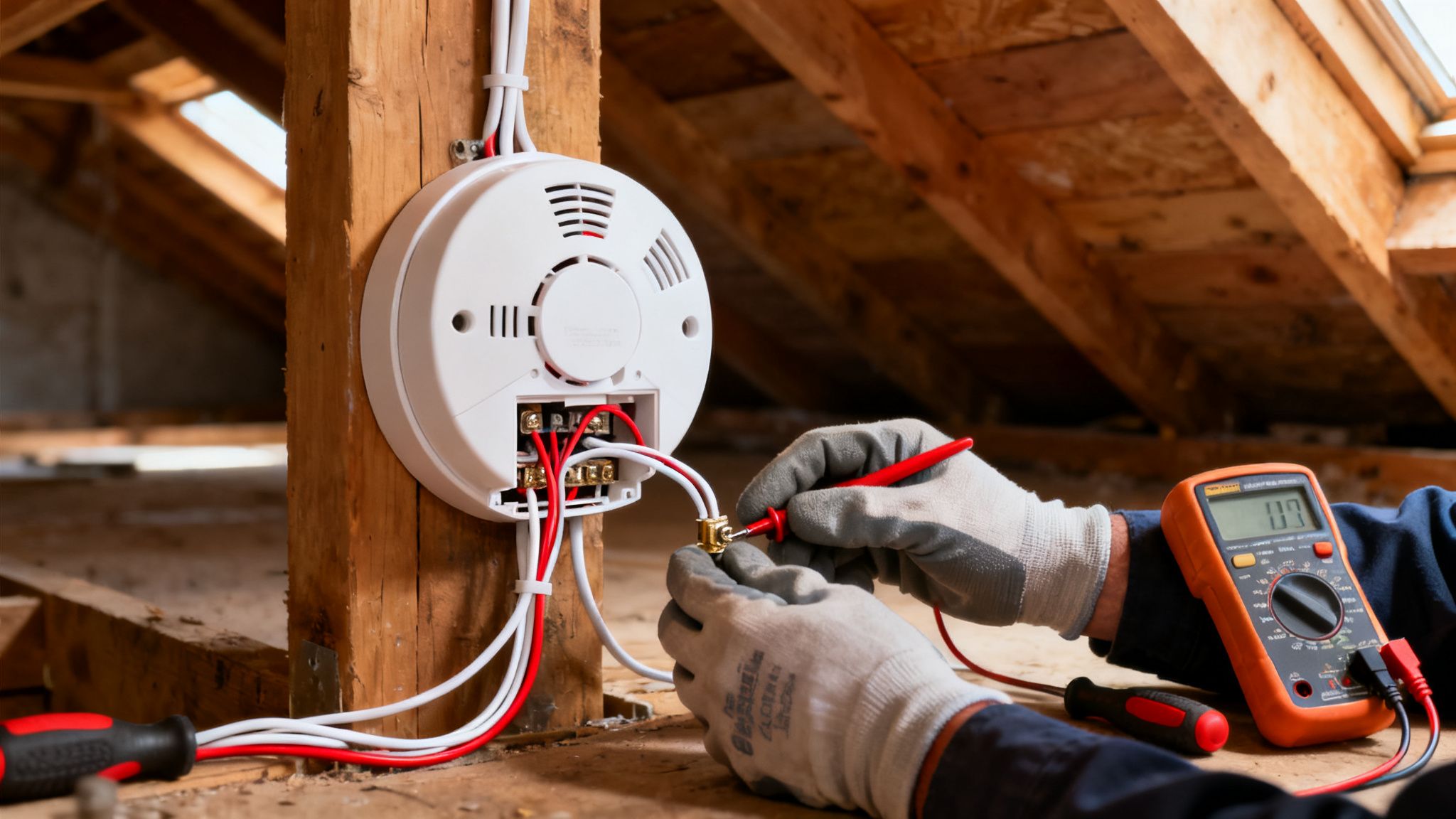
A phantom alarm that just won’t quit could be a symptom of an underlying electrical fault. These aren’t issues you can spot with the naked eye, and trying to fix them without proper training is a serious safety risk.
One of the more common culprits we see is power fluctuation on the circuit, sometimes called ‘dirty power’. Even tiny, momentary power surges or dips can be enough to trigger the sensitive electronics inside a hardwired alarm. Do your alarms seem to go off when the air conditioner kicks in or the fridge compressor starts up? Do your lights flicker now and then? That could be it—a sign of an unstable circuit that needs a licensed electrician to investigate.
Another big one is simply faulty wiring. Over the years, especially in older Brisbane homes, connections can work themselves loose or the wiring itself can start to degrade. Something as simple as a loose neutral wire can cause all sorts of unpredictable behaviour in every device on that circuit, including your smoke alarms. This isn’t just an annoyance; it’s a legitimate fire hazard.
A hardwired smoke alarm is part of a larger electrical ecosystem. A recurring false alarm that defies simple solutions is often the system’s way of flagging a problem that extends far beyond the alarm unit itself.
Correct installation is absolutely non-negotiable for smoke alarms. It’s shocking how many nuisance alarms trace back to installation errors. In fact, research points to improper installation being responsible for a staggering 30% of all nuisance alarms, which really drives home how crucial a professional setup is.
We often see mistakes like placing alarms too close to a steamy bathroom or connecting them to circuits with incompatible devices, like dimmer switches, which can mess with the power flow and cause false triggers. You can learn more about these common installation faults from Fire and Rescue NSW.
Here are a few specific installation faults that can lead to those phantom alarms:
Sometimes, the simplest answer is the right one: the alarm is just old. Every smoke alarm has a strict 10-year lifespan. This isn’t a sales tactic; it’s a critical safety standard. The internal sensors that detect smoke degrade over time.
As an alarm nears its expiry date—printed right there on the back of the unit—its components become unreliable. The sensor might become overly sensitive and react to the slightest change in the air, or worse, it could fail to detect a real fire. This is why replacing your alarms every decade is one of the most important pieces of home maintenance you can do.
If your smoke alarm is over 10 years old and randomly going off, no amount of cleaning or battery changes will fix it. The unit has reached the end of its effective life and must be replaced immediately. For hardwired systems, this is a job for a qualified electrician who will ensure the new unit is installed safely and meets current Queensland regulations. Knowing when to stop troubleshooting and call for help is key.
A smoke alarm that cries wolf too often is more than just an annoyance; it’s a serious safety hazard in disguise. When your smoke alarm is randomly going off, that initial jolt of panic quickly fades into frustration. Before you know it, you’ve developed a dangerous habit: alarm fatigue.
After rushing to silence the third false alarm in a month from burnt toast or shower steam, human nature takes over. You start assuming every alarm is a false one. Maybe you take a bit longer to react, or worse, you resort to the truly dangerous ‘fix’ of pulling the battery out, leaving your family completely unprotected.
Alarm fatigue isn’t just some textbook theory; it has real, life-threatening consequences. An alarm you no longer trust has lost its power to protect you. People start tuning it out, treating that piercing shriek as background noise rather than an urgent signal to get out.
This desensitisation means that when a real fire breaks out, those crucial seconds and minutes you need to escape safely are lost. The very device installed to save your life becomes nothing more than a plastic ornament on the ceiling.
The greatest danger of a nuisance alarm isn’t the noise it makes, but the silence it creates when you stop listening. Ignoring a persistent false alarm is like ignoring a check engine light—eventually, the problem will lead to a catastrophic failure.
It’s also worth remembering that a smoke alarm is just one part of your home’s safety net. For a bigger picture, a general home safety checklist can help you spot other potential risks around the house, especially for more vulnerable family members. This broader approach reinforces why every warning system, starting with your smoke alarms, must be in perfect working order.
Ignoring a faulty smoke alarm doesn’t just put your family at risk; it can hit your wallet hard, too. In Queensland, when a hardwired alarm system automatically notifies emergency services, a fire crew is dispatched immediately. If they show up to find there’s no fire, the property owner can be slapped with a significant fine for the unnecessary callout.
And this isn’t a minor slap on the wrist. These fees are in place to discourage preventable callouts that divert critical resources away from genuine emergencies.
The financial burden of false alarms across Australia is staggering. In fact, data from 2019 revealed that false fire alarms cost Australian taxpayers around $100 million every single year. A shocking 97% of automatic fire alarm callouts attended by Fire and Rescue NSW were for non-emergencies. With fines reaching up to $1,600 per callout for building owners, a malfunctioning alarm suddenly becomes a major financial liability.
Suddenly, investing in professional maintenance doesn’t just feel like a good idea; it’s a financially responsible one.
At the end of the day, a functional smoke alarm system is a core part of being a responsible homeowner in Brisbane. It’s not just about ticking a legal box; it’s about safeguarding lives.
When you let a smoke alarm fall into a state of disrepair where it constantly goes off for no reason, you create a dangerously complacent environment. It teaches everyone in the household—especially kids—to ignore the very sound designed to save them.
Treating a smoke alarm randomly going off as a critical maintenance issue is essential. It demands a proactive response, whether that means a simple clean, a battery change, or calling in a licensed electrician to diagnose a deeper fault. By making sure your system is reliable, you are upholding your most important duty: keeping your home and your loved ones safe.
For any Brisbane homeowner, a smoke alarm that keeps going off for no reason is more than just an annoyance. It can be a serious red flag that your system isn’t compliant with Queensland’s incredibly strict safety laws. These aren’t just guidelines; they’re non-negotiable rules designed to give you and your family the earliest possible warning in a fire.
Getting compliance wrong has serious consequences, not just legally, but for the safety of everyone under your roof. That’s why understanding the legislation is essential for every property owner.
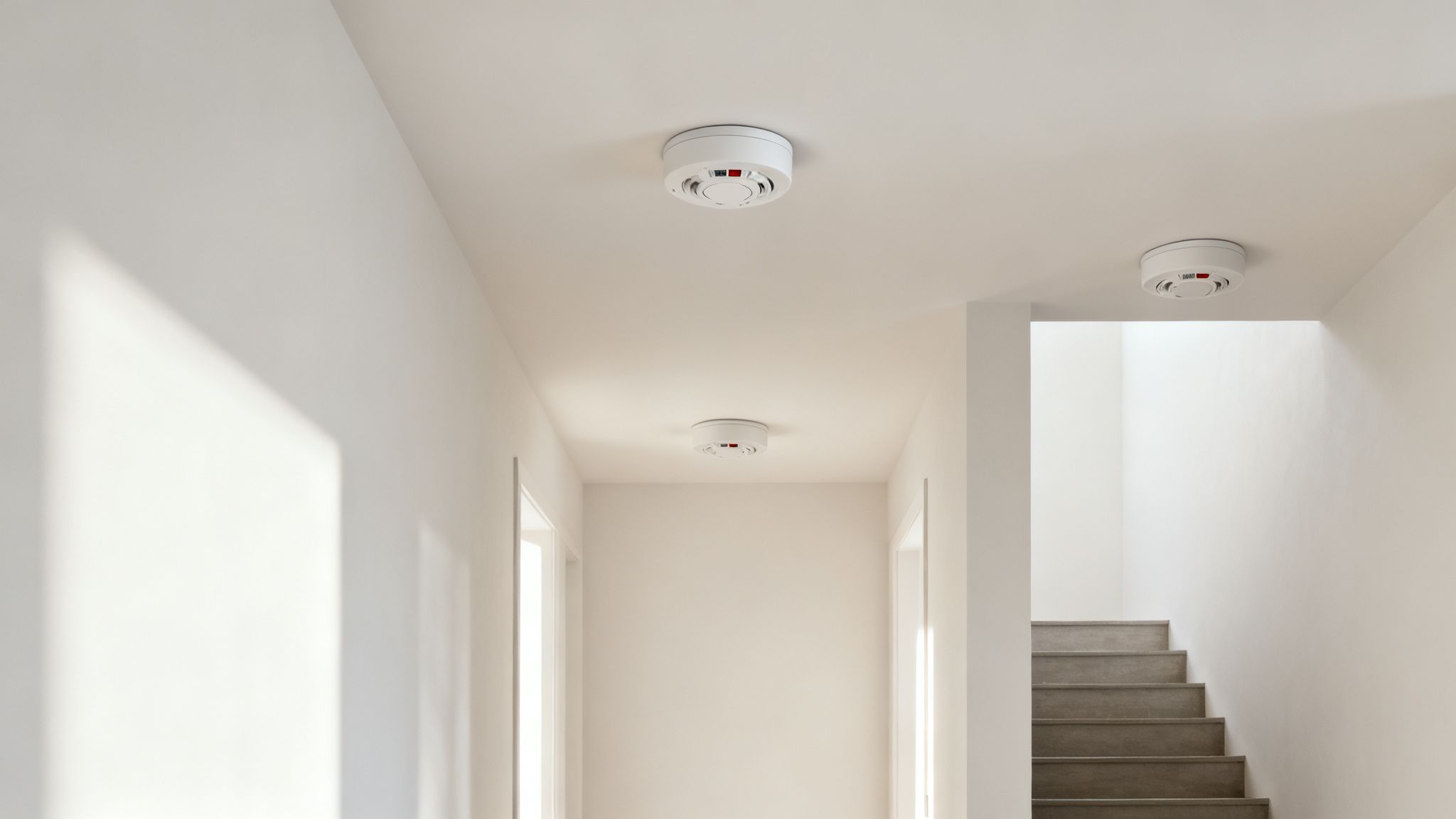
The days of cheap, standalone battery alarms are long gone. The current laws are all about creating a smart, integrated safety net that covers your entire home. The idea is simple but powerful: when one alarm detects smoke, they all scream.
Here’s what your home needs to be compliant:
These standards are a massive step up in home fire safety. If you want to get into the nitty-gritty, you can learn more about Queensland’s smoke alarm laws in our detailed guide.
The type of alarm is only half the battle; where you put them is just as crucial. Bad placement can mean delayed warnings or, just as frustrating, more nuisance alarms from cooking or steam. The legislation is crystal clear on placement to ensure maximum protection.
Alarms must be installed in these key locations:
This strategic layout ensures an alarm is always close to potential fire sources and sleeping occupants.
Meeting these regulations isn’t just about ticking a box or avoiding a fine. It’s about installing a life-saving system that gives your family the best possible chance of survival. A professional check is the only way to be 100% certain your home is both protected and compliant.
The timeline for meeting these standards depends on your property. It’s vital to know which category your home falls into.
For rental properties and any home being sold or having its lease renewed, the laws have been in full force since 1 January 2022. If you’re a landlord or planning to sell, your property must already be fully compliant. No exceptions.
For all other owner-occupied homes, the final deadline is 1 January 2027. While that might sound like a long way off, upgrading an entire home’s alarm system is a job for a professional electrician. Leaving it to the last minute will likely lead to a frantic rush and potential installation delays as the deadline looms.
If you have a smoke alarm that is randomly going off despite all your troubleshooting efforts, it could be a clear sign that your old, non-compliant system is on its last legs. Upgrading to a modern, interconnected photoelectric system won’t just solve those annoying false alarms—it will bring your home up to the required safety standard and give you genuine peace of mind.
So, you’ve done everything right. You’ve cleaned the alarm, tested it, and even swapped out the batteries, but it’s still chirping or going off for no reason. While a bit of DIY troubleshooting can sort out most common hiccups, there are definite moments when it’s time to step back and let a licensed professional take the reins. Knowing that line in the sand is crucial for your safety.
A major red flag is any false alarm that just won’t quit. If you’ve thoroughly cleaned the unit and the phantom beeping continues, it’s a strong sign the problem isn’t a bit of dust or a curious spider. More likely, you’re dealing with a faulty internal sensor or a problem with its electrical connection.
Things get a bit more complex with hardwired smoke alarms, as they’re connected directly to your home’s main power circuit. If you have an interconnected system where one alarm triggers all the others, and they’re all screaming at once without a hint of smoke, it often points to a wiring fault rather than an issue with a single unit. Something as simple as a power surge or a loose connection somewhere in the circuit can set the whole network off.
This is where you absolutely must draw the line on DIY. Working with mains power is incredibly dangerous and is strictly a job for a licensed electrician. They have the proper testing tools and, more importantly, the knowledge to safely trace the fault and fix the root cause. If you’re stuck in a loop of false alarms, it’s worth understanding what’s involved in professional electrical repairs and why it’s the only safe option here.
A smoke alarm is a life-saving device, not a household gadget. When you’ve exhausted the basic fixes, treating a persistent problem as an urgent electrical issue is the safest and most responsible choice you can make.
There are a couple of other scenarios where calling an expert is non-negotiable.
First, if any of your smoke alarms are over 10 years old, they need to be replaced. Period. The sensors inside these units degrade over time, making them unreliable. An expired alarm isn’t just more likely to give you false triggers; it might fail to detect a real fire when you need it most.
Second, if you’re upgrading your home to meet the current Queensland smoke alarm legislation, this is a job for a qualified sparkie. They’ll ensure your new interconnected, photoelectric alarms are installed in all the right locations and wired correctly, giving you peace of mind that your home is both safe and fully compliant with the law.
Even with the best information, a few questions always pop up, especially when you’re dealing with a smoke alarm that keeps going off for no reason. It often brings up concerns about proper maintenance, weird electrical behaviour, and the different types of alarms out there. Here are the most common queries we get from homeowners around Brisbane.
Consistent testing is genuinely the only way to know for sure your alarms will do their job when it counts. You need to press the ‘test’ button on every single alarm in your house once a month, holding it down long enough to hear the full siren. A quick tap isn’t enough.
But testing goes beyond just the button. Every six months, give your alarms a proper clean.
And for any alarm with a replaceable battery, change it once a year, even if it’s not chirping yet. We always tell our clients to link it to a memorable date, like New Year’s Day, so it never gets forgotten.
Yes, it definitely can. Hardwired smoke alarms are directly connected to your home’s electrical system, making them sensitive to any hiccups in the power supply. A sudden power surge, a short brownout, or even a quick flicker of the lights can be enough to trigger the entire network of interconnected alarms.
If you’ve noticed your alarms tend to go off during a thunderstorm or right when a big appliance like your air conditioner cycles on, that could point to an unstable circuit. It’s not something you should ignore, as it can sometimes be a symptom of a much bigger electrical problem that needs a professional eye.
An alarm that reacts to power fluctuations isn’t just an annoyance; it’s a potential red flag for your home’s electrical health. A licensed electrician can figure out if a circuit is overloaded or if there’s a wiring fault that needs to be fixed right away.
Knowing what type of alarm you have is incredibly important. Photoelectric alarms work by using a beam of light inside the sensor. When smoke enters the chamber, it scatters the light, triggering the alarm. They are exceptionally good at detecting the slow, smouldering fires that are most common in residential homes.
Ionisation alarms, on the other hand, use a tiny amount of radioactive material between two electrically charged plates. They’re good at picking up fast, flaming fires but are notorious for nuisance alarms from everyday things like burnt toast or steam.
Current Queensland law mandates interconnected photoelectric alarms precisely because they offer the earliest possible warning for the types of fires that typically occur in homes. If your house still has older ionisation models, it’s likely non-compliant and, more importantly, not as safe as it should be.
A smoke alarm that won’t stop beeping is a problem that needs a safe, reliable solution. Whether it’s a simple fix or a complex wiring issue, the licensed team at DLG Electrical is here to help. We ensure your Brisbane home is safe, compliant, and free from nuisance alarms. Contact us today for a free quote and professional service at https://dlgelectrical.com.au.

Master Electrician with over 30 years of experience. Founded DLG Electrical in 2005 after international project work including electrical installations at Stamford Bridge Stadium, London(Home of Chelsea FC).

Local Electricians that can fix all Electric Hot water Systems.
Motion sensor lights are a versatile addition to any home, offering nu
