83 Jean St, Grange QLD 4051
Mon-Fri 07:30 AM - 04:00 PM - Sat - 8:00 - 12 - Sunday Closed
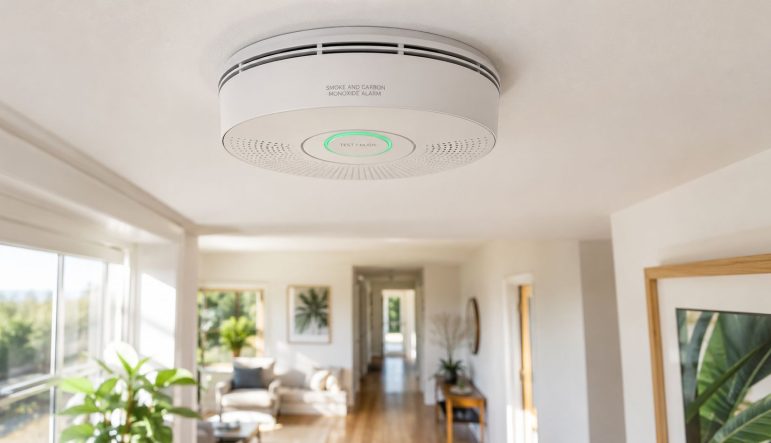
Saturday morning in Brisbane, someone's usually standing in a hallway with a chirping alarm in one hand and a coffee in the other, trying to work out whether the noise is a low battery, a smoke alarm fault, or the start of a bigger problem. That moment is exactly why the smoke and monoxide detector question matters. People don't want theory, they want to know what the unit is sensing, where it should go, and which parts of the job are legally fixed in Queensland versus left to judgment.
A smoke detector and a carbon monoxide detector look for different hazards, even if people often group them together. Smoke alarms respond to particles from a fire, usually with photoelectric sensing in Queensland homes now, while carbon monoxide detectors respond to a gas you cannot see or smell. That difference matters because the sensing chambers are different, and one device does not cover the other job.
In a home, smoke alarms are there for the fire you do not want to miss. Carbon monoxide alarms are there for the combustion problem that can come from a gas heater, cooktop, wood fire, or an attached garage where a car is idling. The risks spread through a house in different ways, so the placement rules differ too.
Practical rule: if the hazard is smoke from a room-to-room fire, the smoke alarm is doing the heavy lifting. If the hazard is exhaust from fuel-burning appliances, the CO detector is the one that matters.
Combined units put both sensors into one housing, with one sounder and one mounting point. That can tidy up a hallway or bedroom-adjacent area where you want both warnings without putting two separate devices on the ceiling. It does not change the placement rules, it just packages the hardware differently.
For Brisbane homes that already use smart-home gear, alarm placement and notifications usually sit alongside the rest of the house setup rather than replacing it. If you are comparing alarm layout with broader home automation ideas, the practical overview at Edinhart Realty smart home tips is a useful starting point because it treats alarms as part of the house, not as a gadget on its own.
The smoke alarm is the one you're legally expected to get right; the CO alarm is the one you choose based on what's burning inside or near the home.
The best choice depends on where the hazard lives. A standalone photoelectric smoke alarm is the basic legal building block in Queensland, and it's the simplest option when you only need fire detection in a bedroom hallway or a storey landing. A standalone carbon monoxide detector makes sense where you've got fuel-burning appliances nearby and you want a dedicated sensor tuned for that gas. A combined smoke/CO detector is useful when one ceiling location has to cover both risks.
| Feature | Standalone Smoke Alarm | Standalone CO Detector | Combined Smoke/CO Detector |
|---|---|---|---|
| Main job | Detects smoke from fire | Detects carbon monoxide | Detects both hazards in one unit |
| Best use case | Bedrooms, hallways, storeys | Near combustion appliances or attached garages | Shared locations where both risks overlap |
| Installation footprint | One device | One device | One device instead of two |
| Cost shape | Lowest entry cost | Extra device if needed | More than one smoke alarm, less than buying two separate units |
| False-alarm sensitivity | Can nuisance-trigger near steam or cooking if badly placed | Less likely to respond to smoke, but still needs correct placement | Can simplify layout, but only if both hazards genuinely matter there |
| Queensland compliance | Meets smoke-alarm rules when photoelectric and interconnected | Not part of the state smoke-alarm mandate | Can help with convenience, but doesn't replace legal smoke-alarm duties |
The trade-off is mostly about overlap. If the hallway outside bedrooms is already the right place for a smoke alarm and it's also near a gas heater or flue, a combined unit can do real work without adding clutter. If the nearest combustion appliance is in a different room, separate devices usually make more sense because each sensor can sit where the hazard is.
That's also where product selection gets muddied by other gas-detection categories. For people researching broader building safety, methane detection for buildings shows how gas monitoring changes once you move from home smoke protection into fixed gas-safety systems. It's a different problem, and that's the point. Residential smoke and CO protection should be chosen for the room, the fuel source, and the likely airflow path, not because one combined box sounds convenient.
For Queensland owners comparing options, the question isn't “what's the fanciest detector?”, it's “what covers the risk with the least clutter and the least confusion?” If the answer is one shared location, combined can win. If the hazards live apart, separate units win.
The photoelectric side of the picture is explained well in DLG's Queensland smoke alarm overview, which is worth reading before you start swapping old alarms for whatever is cheapest online.
Queensland has made the smoke-alarm side of this required. Under the state reform, alarms must be photoelectric, interconnected, and compliant with AS 3786-2014. They also have to be installed in every bedroom, in hallways serving bedrooms, and on each storey of a domestic dwelling, so the warning reaches sleeping areas fast enough to matter.
The timeline is what catches a lot of homeowners off guard. The reform was staged after the 2011 Slacks Creek house fire, which killed 11 people, including eight children under 18, and the rollout milestones were set for 1 January 2017, 1 January 2022, and homeowners will need to meet the final compliance deadline by 1 January 2027 (Queensland Fire Department smoke alarm reforms). The law is in its last phase, so this is the point where older setups stop being good enough.
The practical rule is easier than the legislation sounds. If you're an owner-occupier in a home that hasn't sold or leased, the final deadline is still the one to plan around. If you're a landlord, the alarms need to line up with lease renewal points. If you're selling, the property needs to be compliant before settlement, because the buyer inherits the house, not the problem.
The reason Queensland went this route is plain enough if you look at the historical data. A Queensland parliamentary research brief reported that only 72% of homes had a smoke alarm installed that was in working order, which is the kind of gap that leaves people thinking they're protected when they're not (Queensland parliamentary research brief). A fitted alarm that doesn't work, or doesn't wake the right part of the house, is not the same thing as real protection.
For Brisbane homeowners, the short version is this. Smoke alarms are a legal compliance job now, not a shopping preference. Carbon monoxide detection is still a judgment call based on your fuel sources and layout.
Placement is where good intentions often fail. A detector can be perfectly legal on paper and still be badly positioned for the way a Brisbane home breathes, heats up, and fills with steam on a wet morning. The simplest way to think about it is to place smoke alarms where fire would first matter to sleeping people, then place CO alarms where combustion appliances can affect indoor air.

Bedrooms deserve direct coverage because people sleep through early warning signs. Hallways outside those rooms matter even more than living rooms in a lot of Brisbane houses, because that's the path smoke uses before it reaches the sleeping zone. On each storey, the alarm should be part of the escape route, not hidden where no one will hear it early enough.
Kitchens need extra care. Photoelectric alarms are the right sensing type for Queensland, but they still need to be placed away from cooking steam, toaster smoke, and the normal chaos of breakfast. If a detector sits too close to the kitchen opening, you'll be back on the step ladder more often than you should be.
Practical rule: smoke alarms belong on the ceiling, but not jammed into corners or pushed hard against walls where dead air forms and smoke doesn't get there quickly.
For carbon monoxide, placement follows the appliance and the airflow. A detector belongs near the room with the gas heater, wood fire, gas cooktop used without much rangehood capture, or attached garage exposure. It should be where it can hear the problem early, not where it gets kicked by furniture or buried behind cupboards.
That's the key difference between smoke and CO planning. Smoke placement is governed by the Queensland interconnection framework and sleeping-area coverage. CO placement is about the specific fuel-burning source, which is why the same home can need both, but not always in the same place.
If you want a second placement reference that's written for the Australian home rather than a product box, where to install smoke alarms is a practical cross-check before you start drilling.
Most Brisbane homeowners end up choosing between three power styles, and each one fits a different kind of house. The cheapest is still the old battery unit, often found in older homes that haven't been upgraded properly. The most convenient for the 2027 path is the 10-year sealed lithium unit. The most durable for renovations and rewires is the 240V hardwired linked system with backup power.
| Feature | 9V Battery | 10-Year Sealed Lithium | 240V Hardwired Linked |
|---|---|---|---|
| Upfront cost | Lowest | Higher than basic battery units | Usually highest because it involves wiring |
| Ongoing maintenance | Battery swaps and more frequent attention | Minimal day-to-day maintenance | Needs less battery swapping, but still needs testing |
| Power-outage resilience | Works if the battery is fresh | Works on its internal battery | Works with backup battery during outages |
| Compliance fit | Weakest option for a serious upgrade path | Strong fit for many 2027-compliant homes | Strong fit for new builds, rewires, and major renovations |
| Rental suitability | Often easy to ignore, which is the problem | Good for landlord-proofing and tenant consistency | Very good when the circuit is already there |
| Aesthetic impact | Small and simple | Small and tidy | Can be neat, but wiring access matters in older ceilings |
| Interconnection | Usually not enough on its own | Can be wireless-interconnected | Can be hardwired interconnected |
A lot of Queensland homes end up moving toward sealed lithium because it reduces the “I'll get to it later” problem. Tenants don't have to be trusted to keep spare batteries in a drawer, and owners don't need to remember annual battery changes on every unit. Hardwired linked systems are still the gold standard when the ceiling is already open, because they suit a renovation or a full rewire and make interconnection straightforward.
Practical rule: if the ceilings are open anyway, hardwired linked alarms are usually the cleanest long-term fit. If the house is already finished and you're trying to stay compliant without ripping walls open, sealed lithium units or wireless interconnection are often the more realistic path.
The old 9V route is only attractive because it looks cheap. In real houses, cheap usually means more maintenance, more nuisance chirps, and more chances for someone to leave a dead battery in place.
A detector only helps if it still works when you need it. The routine I give homeowners is boring on purpose, because boring is what gets followed. Press the test button regularly, clean the unit before Brisbane dust and spider webs pack into the chamber, and replace the whole alarm when it reaches the end of its life.

The easiest reminder is to tie the clean to a calendar event you already notice, like the first daylight saving Sunday. That way you're not trying to remember a separate safety task every few months. The alarm doesn't care whether the batteries are new if the sensor chamber is dusty or the unit is past its design life.
A lot of people ask why the whole unit has to go at the ten-year mark. The short answer is sensor degradation. The chamber and electronics age whether you've used them much or not, and the fact that it still beeps is not the same as saying it will respond correctly in a real fire or CO event.
If the unit is sealed lithium, the whole thing goes out at the end of life. If it's hardwired, the replacement should be handled by a licensed electrician because the 240V wiring stays part of the job. For a simple refresher on the testing habit itself, how to test a smoke alarm is worth keeping handy.
A one-page fridge calendar works better than memory. Mark the monthly test, the clean, and the replacement year, then stick to it.
A chirp isn't just annoying, it's diagnostic. The sound pattern tells you a lot about whether the problem is a battery, a sensor fault, or a unit that's reached the end of its life. In the field, that distinction saves a lot of unnecessary replacements.
| Sound Pattern | Likely Cause | What to Do First |
|---|---|---|
| Single chirp every 30 to 60 seconds | Flat or failing battery | Check the battery type, replace it if the unit allows, then retest |
| Rapid beeping | Real smoke or CO event | Treat it as an actual alert, check the house, and get out if there's any doubt |
| Triple chirp pattern | End-of-life on a sealed unit | Replace the entire alarm |
| Repeated nuisance sounding after cleaning | Placement or contamination problem | Check for steam, cooking residue, dust, or insects in the chamber |
False alarms usually come from the house, not the brand. Steam from a hallway bathroom can drift where it doesn't belong. Cooking aerosols can reach a detector that was mounted too close to the kitchen. Renovation dust settles into sensing chambers. Insects also love warm ceiling spaces and can sit inside the unit until it starts acting odd.
The fastest way to narrow it down is to match the trigger to the room. If it only happens after a shower, look at steam movement. If it happens during cooking, check the detector's distance from the kitchen opening. If the house has just been sanded, painted, or stripped out for a reno, vacuum the chamber before replacing the unit.
A smoke alarm that resets and then chirps again within 24 hours is usually asking for more than a fresh battery. That's the point where a proper inspection is cheaper than guessing.
Homeowners can safely press the test button, vacuum the vents, and replace a 9V battery in a non-sealed unit. They should not be doing hardwired interconnection work, swapping a hardwired alarm, or adding a new detector to a 240V circuit. That's licensed electrician territory in Queensland, and it matters because the wiring, interconnection, and compliance all need to line up.
The other warning signs are visual. Yellowing, cracking, or heat damage on the housing means the unit has already had a rough life. At that point, don't keep nursing it along. Get it replaced properly.
DLG Electrical installs, tests, and replaces smoke alarms for Brisbane homes that need to meet the Queensland rules without creating a mess in the ceiling. If your place is still behind the 1 January 2027 deadline, or you're not sure whether the layout in your hallway, bedrooms, or rental property is compliant, DLG Electrical can check it, quote it, and get it sorted the right way.

Master Electrician with over 30 years of experience. Founded DLG Electrical in 2005 after international project work including electrical installations at Stamford Bridge Stadium, London(Home of Chelsea FC).

Local Electricians that can fix all Electric Hot water Systems.
Motion sensor lights are a versatile addition to any home, offering nu
