83 Jean St, Grange QLD 4051
Mon-Fri 07:30 AM - 04:00 PM - Sat - 8:00 - 12 - Sunday Closed
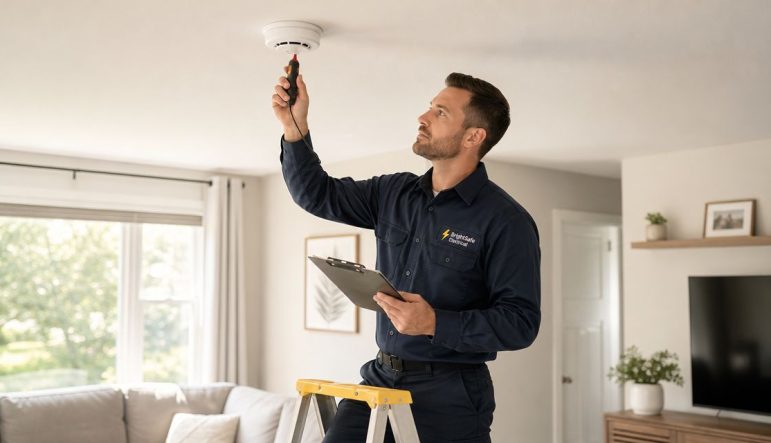
You usually find out smoke alarms matter at the worst possible time. A tenant is moving in next week. The conveyancer asks about compliance before settlement. You press the test button on one alarm and realise only that unit sounds. Another has yellowed plastic. A third looks old enough to have been there since the kitchen was renovated.
That's when smoke detector service stops being a small maintenance job and becomes a safety and legal issue.
In Brisbane, a proper smoke alarm service isn't just someone swapping a battery and leaving. It means checking whether the alarms are the right type, in the right places, interconnected properly, still within service life, and documented if the property is rented. If you ever end up dealing with the aftermath of a serious fire, practical insurance guidance can matter as much as the electrical side, which is why this guide on how to maximize fire insurance payouts is worth bookmarking.
For the Queensland legal side, the first thing most owners should read is the current guide to Queensland smoke alarm laws. The law tells you what must be there. What is found on the day, however, is another matter. That's where a proper service visit makes the difference.
A lot of Brisbane owners assume compliance means there's an alarm on the ceiling and it beeps when tested. That isn't the standard anymore. The practical question is whether the system in the home matches current Queensland requirements for the type of property and whether it's still working as intended.
The homes that cause the most trouble are usually not the newest ones or the oldest ones. It's the in-between houses. They've had a renovation, an extension, a split-system air conditioner added, maybe a hallway reworked, and now the original alarm layout no longer suits the building. On paper, the home has alarms. In practice, the coverage and interconnection can be wrong.
A compliance problem often shows up in one of these situations:
Practical rule: If one alarm sounds and the rest stay silent, treat that as a system problem, not a minor fault.
Brisbane landlords also need to think beyond installation. Rental compliance is about proving alarms stay compliant, rather than resting on the fact that they were once fitted. That's why smoke detector service has become a recurring maintenance task rather than a one-off purchase.
Queensland's smoke alarm rules are strict because they focus on working, modern alarms, not outdated units that happen to still be attached to the ceiling. The core requirement many owners need to remember is straightforward: the staged reforms introduced from 2022 require interconnected photoelectric smoke alarms in all bedrooms, hallways connecting bedrooms, and on every storey for dwellings sold, leased, or substantially renovated from 1 January 2022. The broader shift is explained through smoke alarm research summarised by NIST, which notes that about 20% of homes with smoke alarms had non-operational units, and that working alarms could reduce U.S. residential fire deaths by an estimated 36%.
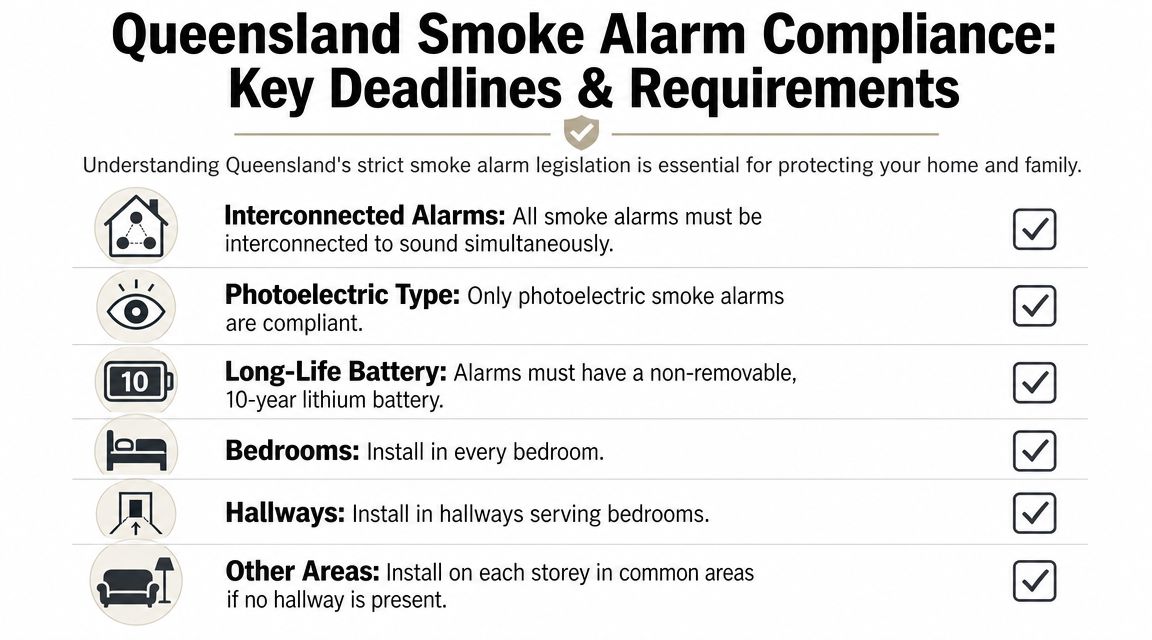
For most Brisbane homes, compliance isn't satisfied by having a single hallway alarm near the bedrooms. The layout now has to reflect how people sleep and move through the house. Bedrooms matter. Hallways matter. Every storey matters.
The alarms also need to be interconnected. If one activates, they all need to sound. That's the point of the system. A fire that starts at one end of the home must wake people at the other end.
A compliant system is designed so occupants get the earliest realistic warning throughout the home, not only in the room where the alarm first detects smoke.
The most common issue isn't refusal to comply. It's false confidence. Owners often rely on an old installation standard, a past renovation, or advice from years ago. Queensland moved away from the old install-and-forget approach. Smoke alarm service now has to account for interconnection, placement, testing, and replacement over time.
For landlords and property managers, that means you need more than a quick visual check before a tenant moves in. You need a system that can be verified.
The law tells you the minimum. The technology tells you whether the system will perform well in a real house.
Queensland's preference for photoelectric alarms is based on how residential fires often develop. Photoelectric alarms respond better to visible smoke from smouldering fires, which is why they're the accepted standard for modern residential compliance. The move toward hardwired, interconnected systems also has a strong reliability basis. Research summarised in the NFPA study referenced by Chelmsford found that the death rate per 1,000 reported fires was 8.4 with battery-powered smoke alarms and 3.6 with hardwired smoke alarms during 2012–2016. The same summary says fire departments responded to an estimated 25,700 home fires per year where smoke alarms should have operated but failed, causing an average of 440 deaths and 1,440 injuries annually.
Photoelectric alarms are the baseline for compliance, but the main decision is usually between hardwired interconnection and 10-year battery interconnection where suitable. Hardwired systems are often the cleaner long-term option in homes that already have the wiring or are being renovated. Battery-powered interconnected units can be useful where running cable is impractical.
What doesn't work well is a patchwork approach. Mixing incompatible models, leaving one isolated alarm in a rear bedroom, or assuming a new battery fixes an expired unit usually creates more problems than it solves.
If you're weighing connected features beyond basic compliance, this guide to WiFi smoke alarms is useful for understanding where smart features fit and where they don't replace core legal requirements.
| Feature | Photoelectric Alarm | Ionisation Alarm | Hardwired Alarm | 10-Year Battery Alarm |
|---|---|---|---|---|
| Detection style | Better suited to visible smoke from smouldering fires | Older technology not aligned with current Queensland residential requirements | Power supplied from the home's electrical system | Self-contained power source designed for long service life |
| Compliance suitability in QLD homes | Yes, this is the required technology standard | Not the preferred compliance option for current Queensland residential rules | Commonly used where required or practical, especially in upgraded systems | Often suitable where hardwiring isn't practical, depending on the property |
| Interconnection | Available | Older units may not support suitable interconnection | Strong option for reliable interconnection | Available in many compliant models |
| Best use case | Modern residential alarm coverage | Replacement of these units is usually the right move | Renovations, rewires, or homes already set up for it | Existing homes where cable access is difficult |
| Main drawback | Needs correct placement and proper servicing | Wrong technology for current expectations | Installation is more involved | Still needs full placement, testing, and expiry management |
A professional smoke detector service should start with these technology decisions, not end with them.
A proper service visit should feel more like a safety audit than a handyman call. The electrician isn't there just to make noise by pressing test buttons. The job is to inspect the whole system against the layout of the home, the type of alarms installed, their age, their operation, and whether the property needs documentation.
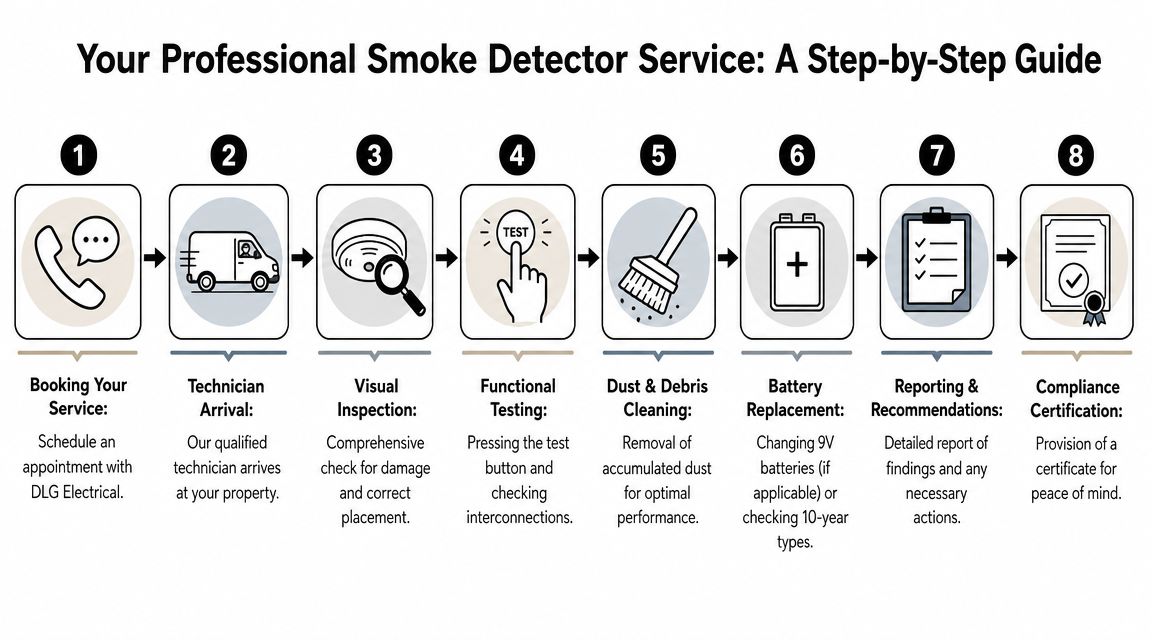
The visit usually starts with a walk-through. The electrician checks where the bedrooms are, how the hallways connect, whether there are split levels, whether the lower storey is enclosed, and whether any renovations have changed the original layout. In older Brisbane homes, that first inspection often uncovers the actual problem. The alarms may be good units, but no longer in the right places.
Then comes the physical condition check. Dust, paint, insect contamination, cracked housings, loose bases, and yellowed casings all matter. Nuisance alarms near kitchens, bathrooms, or air-conditioning outlets also get flagged because poor placement leads people to disable alarms, and a disabled alarm is no protection at all.
On site, the most useful question isn't “Does it beep?” It's “Will this system wake everyone in the house if a fire starts tonight?”
A visual overview helps, but seeing the process is useful too.
During service, the electrician should test operation, interconnection, and service life. USFA guidance on smoke alarms recommends a monthly functional test and replacing entire smoke alarms at about 10 years of service life. That expiry check is one of the most overlooked parts of smoke detector service. An alarm can still chirp or pass a casual button test and still be too old to trust.
A proper service generally includes:
Experience counts. A renovated Queenslander, a post-war home with later extensions, or a townhouse with awkward stair geometry often needs more than a simple like-for-like swap. You may have hardwired alarms in one part of the home, battery units in another, and a ceiling layout changed by ducted air-conditioning.
That's also why post-fire support should never stop at the electrical repair scope. If a home has already suffered serious damage, practical recovery reading such as these fire recovery tips for Marion County can help owners think through the broader process while the electrical system is being made safe again.
For owners comparing service providers, a company such as DLG Electrical can handle smoke alarm compliance and installation as part of broader residential electrical work. The important point isn't the brand name. It's that the electrician is licensed, understands Queensland alarm rules, and leaves the property with clear findings rather than vague reassurance.
Some alarms fail loudly. Others fail silently. The trouble is that homeowners often react only to the obvious warning, such as chirping, and miss the signs that the whole unit is at the end of its life.
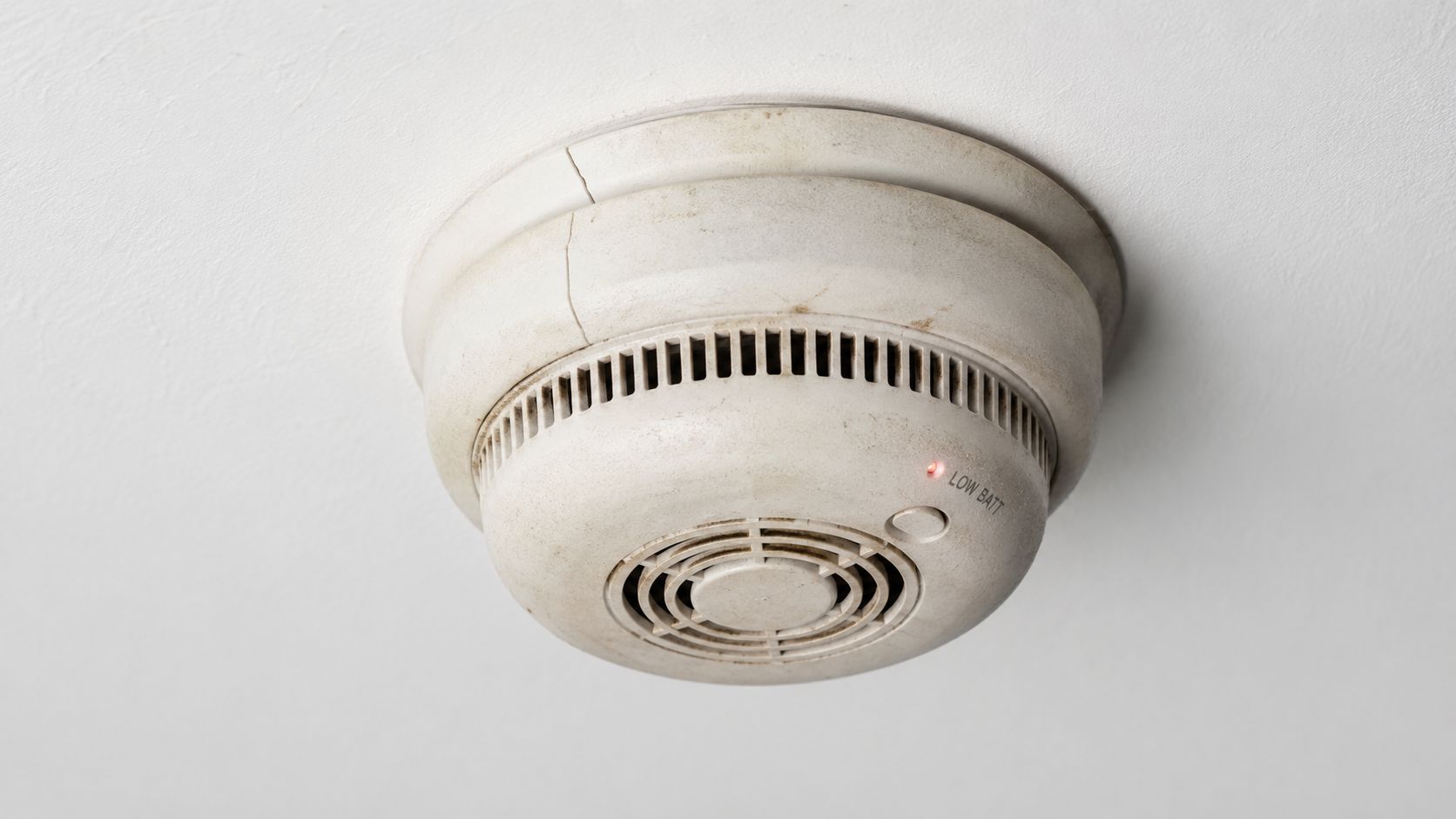
The biggest replacement trigger is often the least dramatic one. The alarm is too old. Once the unit reaches the end of its service life, replacing the battery doesn't solve the problem because the sensing components themselves can degrade.
Replacement is the right call when the alarm has reached its service life, not when it finally stops making noise.
If a home has several alarms installed at different times, expect at least one to be out of step with the others. Mixed ages often mean mixed performance, and that's where service turns into system replacement rather than spot repair.
A licensed electrician should leave you with more than a verbal “all good”. If the job is done properly, you should know what type of alarms are installed, where they're located, whether they're interconnected, whether any are expired, and what still needs to be corrected.
For rental properties, documentation matters just as much as the physical work. The Residential Tenancies and Rooming Accommodation Act discussion referenced here notes that alarms in rental properties must be tested and maintained, and that a professional service provides a compliance certificate as an auditable record. That record helps protect the landlord and confirm safety for the tenant.
Smoke detector service crosses into compliance, electrical safety, and liability. A licensed electrician understands the installation side as well as the maintenance side. That matters in homes with hardwired systems, mixed alarm types, or renovation-related placement problems.
If you want a broader sense of the work a qualified tradesperson handles in a home, this overview of what an electrician does gives the bigger picture. Smoke alarms are one part of that responsibility, but they're one of the few parts that can directly affect whether people wake up in time.
If your smoke alarms are due for checking, replacing, or bringing up to Queensland standard, contact DLG Electrical for a free quote. A licensed smoke detector service gives you a clear answer on compliance, a safer home, and the paperwork you need if the property is rented, sold, or recently renovated.

Master Electrician with over 30 years of experience. Founded DLG Electrical in 2005 after international project work including electrical installations at Stamford Bridge Stadium, London(Home of Chelsea FC).

Local Electricians that can fix all Electric Hot water Systems.
Motion sensor lights are a versatile addition to any home, offering nu
