83 Jean St, Grange QLD 4051
Mon-Fri 07:30 AM - 04:00 PM - Sat - 8:00 - 12 - Sunday Closed

If you're looking at your house, rental, or renovation plans and wondering whether the smoke alarms are still "good enough", that's the exact point where many Queensland owners get caught out. The old thinking was simple: if an alarm is on the ceiling and it chirps when tested, you're covered. That isn't how smoke detectors regulations work in Queensland anymore.
For Brisbane homeowners, landlords, and renovators, the hard part isn't just choosing an alarm. It's knowing when the law forces an upgrade, what type of system is required, and what counts as proper ongoing maintenance once it's installed. Those details matter because the trigger for compliance often arrives before people expect it, especially around a sale, a new tenancy, or building work.
Queensland property owners are dealing with two layers of rules at once. Australia has a national building-code baseline through the National Construction Code, but the legal requirements you must follow day to day are mainly enforced by state law. For Brisbane properties, that means Queensland's rules are the practical source of truth, particularly for existing homes, rentals, and upgrades, as outlined in the Australian Government response on smoke alarm regulation.
A lot of owners know about the 1 January 2027 deadline, but they treat it as something to worry about later. That approach causes problems. By 2026, many people will already be in the window where they need quotes, electrical work, product selection, and installation planning sorted before the final rush.
If you're selling, leasing, or renovating, waiting can be a mistake. Compliance isn't just a box to tick at the end. It affects how the system is designed, where alarms are placed, how they're powered, and whether they talk to each other properly.
Practical rule: In Queensland, smoke alarm compliance isn't just about having alarms. It's about having the right alarms, in the right places, with the right power supply and interconnection.
A significant majority of homeowners learned smoke alarm rules under an older model. One alarm near the hallway used to satisfy a lot of homes. The current approach is different. Queensland now expects a whole-of-home warning system, not a single isolated detector doing all the work.
That change catches out:
The safest way to read smoke detectors regulations in QLD is this: if something is happening to the property, check compliance before it happens, not after.
Queensland's smoke alarm rules are technical for a reason. The law doesn't just say "install alarms". It sets a standard for how the system detects smoke, how the alarms communicate, and how they're powered. According to the Queensland Fire Department smoke alarm FAQ, alarms for relevant homes must be photoelectric, AS 3786:2014 compliant, interconnected, and either hard-wired or powered by a non-removable 10-year battery.
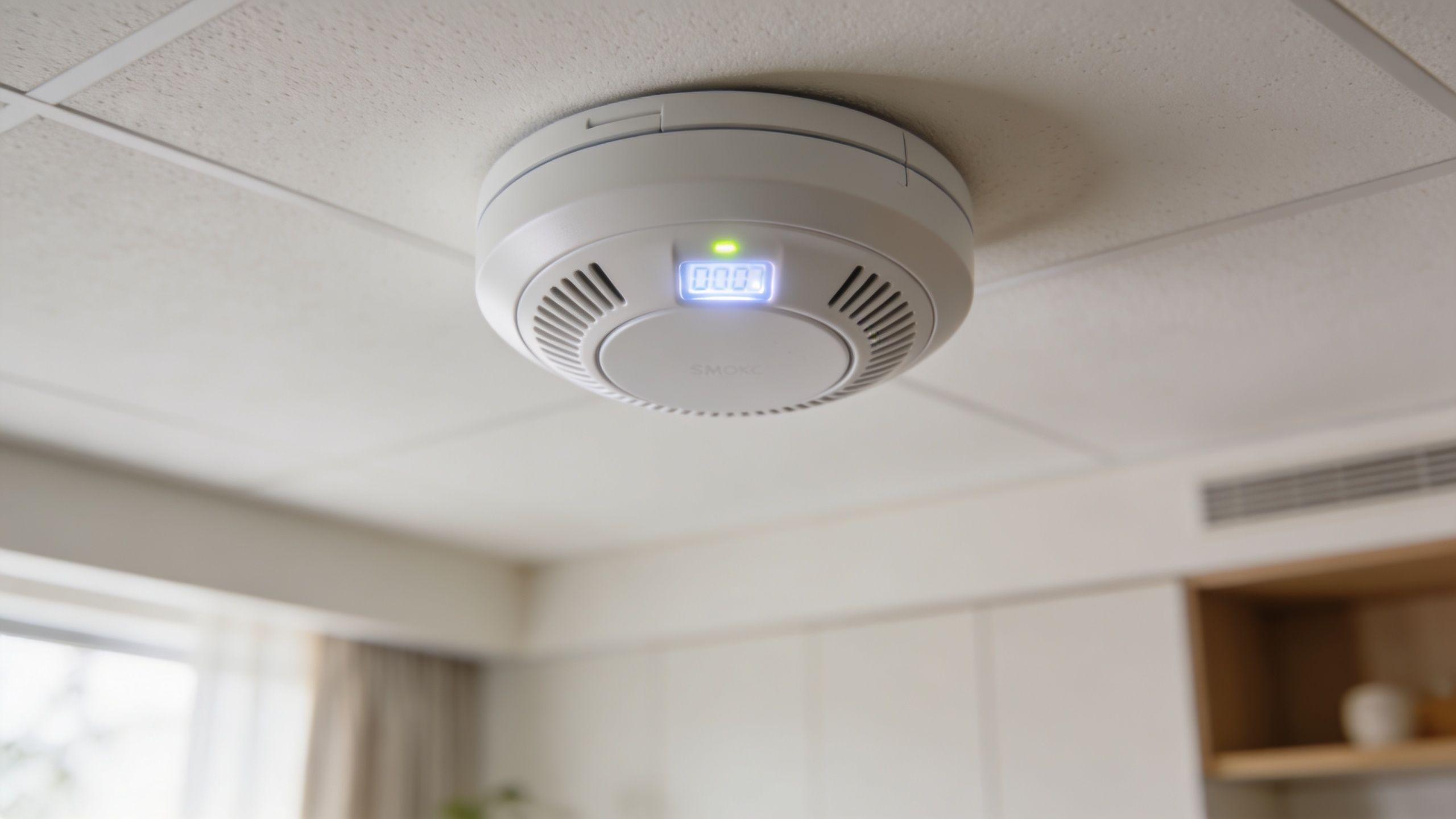
In practical terms, a photoelectric alarm is the modern baseline for Queensland compliance. If you still have older ionisation units in an affected property, that can become a problem when a trigger event happens or when the final statewide deadline arrives.
What works in the field is simple. Check the product details, the model markings, and the compliance standard before buying anything. Owners often lose time and money by picking up a shelf product that looks right but doesn't suit the property's legal requirement or installation setup.
What doesn't work is mixing random alarms and hoping they count as a system. Different brands, incompatible interconnection methods, and mismatched power arrangements often create headaches later.
Interconnection is where Queensland's approach becomes much stricter than the old one-alarm model. If one alarm activates, every alarm in the dwelling must sound. That turns separate detectors into a warning network.
In a single-storey unit, that matters because smoke might start at one end of the dwelling while someone is asleep at the other. In a larger house, it matters even more. A detector in one bedroom isn't much help if the rest of the home stays silent.
A compliant system should behave like one safety network, not a collection of unrelated devices.
This video gives a useful visual overview of how compliant alarms fit into a home safety setup:
Queensland also narrows the acceptable power options. The alarms must be either:
That requirement deals with one of the biggest real-world failure points. In older properties, removable battery alarms often end up with flat batteries, missing batteries, or units that nobody has checked for years.
For owners, the trade-off is straightforward:
The right choice depends on the building, access, and whether the property is being renovated or upgraded for compliance. But either way, the days of relying on scattered battery-only alarms are ending.
The biggest mistake I see is treating smoke detectors regulations as one deadline only. In Queensland, the final date matters, but several events can force compliance earlier. The Queensland smoke alarm guidance makes that clear: the rules are triggered not just by time, but by things like selling a property, signing a new lease, or carrying out relevant building work.
If you're an owner-occupier with no plans to move, lease, or renovate, you might only be thinking about the 2027 end point. But that's not how many real properties operate. The moment the property changes hands, changes tenancy, or enters a renovation pathway, the compliance question changes too.
That matters for Brisbane owners because a lot of alarm work gets left until conveyancing, lease preparation, or late-stage fit-out. That's usually when time disappears and the job becomes more expensive or more disruptive than it needed to be.
Leave smoke alarm upgrades until the week before settlement or a tenant handover, and you usually lose your best options for layout, scheduling, and clean installation.
| Property/Event Type | Requirement Effective Date | Summary of Obligation |
|---|---|---|
| Existing private homes, townhouses, units and manufactured homes | By 1 January 2027 | Must have interconnected photoelectric smoke alarms as required under Queensland's staged rollout. |
| New dwellings | Already applies | Must have hardwired, interconnected alarms in required locations. |
| Property sale | Triggered by sale event | Existing alarms must meet the applicable standards at the point the sale trigger applies. |
| New lease or rental conversion | Triggered by new lease or conversion to rental | Existing alarms must meet the applicable standards for the tenancy trigger. |
| Renovation or new building work | Triggered by the work | Compliant interconnected alarms must be installed as part of the relevant work. |
| Expired or non-working existing alarms | When identified | Pre-existing alarms must be replaced when expired or no longer work. |
A seller of an older Brisbane home often assumes, "We'll let the buyer deal with it." That can be the wrong assumption if the sale itself brings the property into a stricter compliance point.
A landlord can make the same mistake when a tenancy changes. The alarm layout that seemed acceptable under an older arrangement may not be enough once a new lease is being signed.
For renovators, the issue is sequencing. Smoke alarms shouldn't be a last-minute accessory item. If the work affects ceilings, wiring access, room layout, or bedroom arrangements, the smoke alarm design needs to be considered early. That's also the right time to review whether an older setup needs a full upgrade rather than piecemeal replacement. If you're deciding whether your existing units are too old to keep, this guide on when smoke detector replacement is needed is a useful starting point.
The cleanest jobs happen when owners decide based on the next property event, not the final calendar date.
What works:
What doesn't:
The right alarm in the wrong spot can still be a compliance problem. Placement is part of the job. Queensland requires alarms in every bedroom, in hallways that connect bedrooms to the rest of the dwelling, and on every storey. Then there is the installation detail that many people miss: where the alarm sits on the ceiling or wall also affects performance.
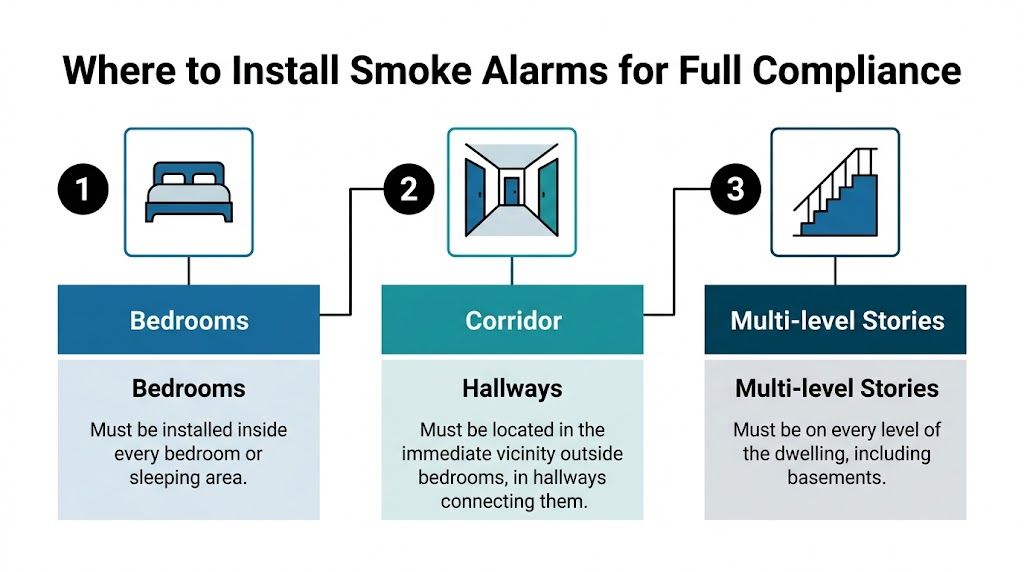
Bedrooms are no longer optional locations in the Queensland model. If someone is asleep behind a closed door, a hallway alarm alone may not give the same warning profile as an alarm inside that room.
Hallways matter because they sit along the likely path between bedrooms and exits. They help spread the warning through circulation spaces, not just inside one room.
Then there is the storey rule. A multi-level home can't rely on one well-placed downstairs alarm. Each level needs coverage.
Placement also needs to account for dead air. The Victorian Building Authority guide on smoke alarm positioning explains that alarms should be mounted on the ceiling at least 30 cm from a wall, or on a wall between 30 cm and 50 cm below the ceiling, to avoid areas where smoke may gather last.
That sounds minor, but it's not. Corners and ceiling junctions can delay smoke entry into the sensing chamber. A detector that activates later because it was mounted poorly isn't doing its best work.
The difference between a neat-looking install and a correct install is often a tape measure.
Walk through the home in this order:
If you're unsure whether your existing setup is compliant or whether a renovation has changed the required layout, a professional assessment helps. For Brisbane properties, smoke detector installation services can identify both product and placement issues before they turn into a failed compliance check.
A compliant installation is only the starting point. Smoke detectors regulations also create an ongoing duty to keep the system working. That's where many owners slip. They install new alarms, assume the issue is closed, and don't look at them again until one starts chirping.
For owner-occupiers, the practical approach is straightforward. Test the alarms regularly, keep them clean, and pay attention to age and fault indicators. If a unit no longer responds properly, has reached end of life, or shows signs of failure, replace it with a compliant unit that suits the property's legal requirements.
This is especially important in homes with sealed battery alarms. People sometimes assume "10-year battery" means "ignore it for 10 years". It doesn't. The battery is designed to last, but the alarm still needs testing and basic care.
A simple routine should include:
Landlords and property managers need to think beyond installation because rental compliance is operational. The Fire and Rescue NSW summary of landlord obligations is useful here because it spells out recurring duties clearly: landlords must check alarms annually, repair faults within 2 business days, and replace alarms within 10 years of manufacture.
Queensland owners should take the same lesson seriously. In a rental, smoke alarms aren't a set-and-forget fixture. They are part of an ongoing safety process that has to be documented, repeated, and acted on quickly when faults appear.
A rental property owner should be able to answer three questions at any time: Does the alarm work, when was it last checked, and how old is it?
The landlords who stay out of trouble usually do the basics well:
For Brisbane rentals, smoke alarm testing services can support that maintenance side of compliance, particularly where owners manage multiple properties or want formal records of inspections and testing.
If you want to know where you stand, don't start with legislation PDFs. Start at the front door and walk the property with a checklist. The goal is to identify obvious gaps fast, then decide whether you need replacement, repositioning, or a full system upgrade.
You probably need further action if any of these apply:
If your answer is "I'm not sure" to more than one item, don't guess. Have the system checked properly.
A lot of compliance issues aren't dramatic. They're ordinary oversights. An alarm is too old. Another one is in the wrong spot. A third isn't interconnected. The property still looks fine to the owner, but it doesn't line up with current expectations.
That's why a checklist works so well. It turns smoke detectors regulations from a vague legal topic into a property-by-property inspection process.
Smoke alarm compliance isn't just about avoiding a problem at settlement or tenancy change. It's about making sure the people inside the property get an early warning if a fire starts, especially at night when doors are shut and seconds matter.
For Brisbane owners, the practical challenge is that compliance now sits across product selection, alarm age, interconnection, placement, trigger dates, and ongoing maintenance. That's a lot to manage if you're also dealing with a renovation, a tenant handover, or preparing a home for sale.
The sensible approach is to treat smoke alarms as a system, not a shopping list. That means checking the property layout, identifying the legal trigger, verifying the type and age of the existing alarms, and deciding whether the job is a replacement, a retrofit, or a full redesign.
For owners who want that work handled professionally, DLG Electrical provides smoke alarm compliance, installation, testing, and maintenance services in Brisbane. The practical value in using a licensed electrician is that the job can be assessed as a complete compliance issue, not just a supply-and-fit task.
If your property has older alarms, a coming lease, an upcoming sale, or renovation work on the horizon, now is the time to get clarity. Waiting usually narrows your options and increases the risk of rushed decisions.
If you want clear advice on your property's smoke alarm setup, contact DLG Electrical for a free quote and a practical compliance check for your Brisbane home or rental.

Master Electrician with over 30 years of experience. Founded DLG Electrical in 2005 after international project work including electrical installations at Stamford Bridge Stadium, London(Home of Chelsea FC).

Local Electricians that can fix all Electric Hot water Systems.
Motion sensor lights are a versatile addition to any home, offering nu
