83 Jean St, Grange QLD 4051
Mon-Fri 07:30 AM - 04:00 PM - Sat - 8:00 - 12 - Sunday Closed
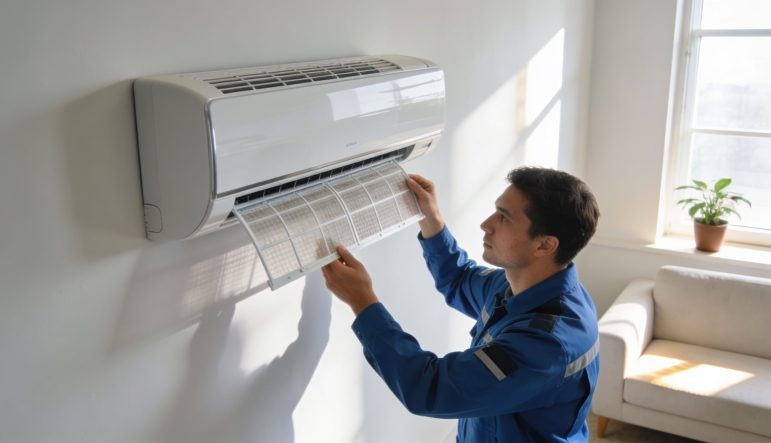
You notice it on a hot Brisbane afternoon. The lounge is cool enough if you sit still, but the split system is running longer than usual, the airflow feels weaker, and there's a faint musty smell every time it starts. It hasn't stopped working, so it's easy to put off. That's exactly how small air con problems turn into expensive ones.
In Brisbane, a split system service isn't just about comfort. It's about efficiency in a long cooling season, moisture control in a humid climate, and making sure the unit is still safe to run. For landlords and owners of older homes, it's also about compliance and reducing the risk of water damage or electrical faults.
If you're still learning the basics of how these systems differ from other setups, this guide to ductless HVAC systems gives a useful overview of how indoor and outdoor units work together. That matters because proper servicing has to look at both sides of the system, not just wipe down the filter and call it done.
A lot of Brisbane households don't book a service because the unit still cools. That's understandable. If cold air is coming out, it feels like the job's being done.
The problem is that cooling and operating properly are not the same thing. A split system can keep limping along while dirty filters choke airflow, a drain starts to clog, terminals loosen, or the outdoor coil gets packed with grime. You still get some cooling, but the system works harder to produce it.
That's where people usually get caught. They wait for a complete breakdown in the middle of a humid spell, when the unit has already spent weeks or months under strain.
A split system service is often most valuable before the unit stops, not after.
In Brisbane homes, the pattern is familiar. The bedroom unit runs every night through summer. The living room system gets hammered on hot afternoons. Rental properties often go longer than they should between proper checks. Then the warning signs start showing up.
Those asking about split system service want practical answers:
Those are the right questions. Servicing isn't a vague “maintenance is good” idea. It has a clear purpose. It keeps the system clean where performance is affected, checks the parts most likely to fail under heat and humidity, and picks up issues early enough to avoid unnecessary repair costs.
Queensland conditions are hard on air conditioning. High use, moisture in the air, dust, pollen, and outdoor debris all add up. A split system service has to do more than freshen the unit up. It needs to check efficiency, drainage, electrical safety, and whether the system is operating as designed.
That's the standard Brisbane property owners should expect. Not a rushed spray-and-go job. A proper inspection, a proper clean, and clear advice on what's normal, what's wearing out, and what shouldn't be left until later.
Brisbane's climate doesn't forgive neglected air conditioning. Long cooling seasons and high humidity put split systems under steady load, and that changes the cost-benefit calculation. A service isn't just a nice extra. It's one of the few practical ways to keep the unit efficient, hygienic, and reliable.

Modern split systems sold in Australia are rated for seasonal efficiency under the SEER framework, and servicing matters because dirty filters or low refrigerant can drive electricity use up and cancel out the benefit of an efficient unit during long cooling seasons, as noted in the Australian energy-rating context discussed at Home Service Scorecard.
That point gets missed all the time. People compare brands, choose an efficient inverter unit, then never maintain it properly. The system may still cool, but it won't perform the way it was designed to if airflow is restricted or the refrigerant side isn't right.
A well-serviced unit has a better chance of holding temperature without unnecessary strain. In practical terms, that means more consistent comfort and fewer avoidable power bill surprises in summer.
Brisbane air con doesn't just deal with heat. It deals with moisture. Once dust and moisture combine inside a unit, the indoor coil, filters, and drain area can become a problem zone for odours and poor indoor air quality.
That's one reason a split system service should include more than a quick filter rinse. The job needs to check what's happening deeper in the indoor unit, especially if there's a stale smell when the system starts or if occupants are sensitive to dust and allergens.
The third reason is longevity. Most major failures don't appear out of nowhere. They start as reduced airflow, a blocked drain, vibration, a dirty outdoor coil, loose electrical connections, or a performance issue that gets ignored because the room still feels cool enough.
Practical rule: If a split system is used heavily through a Brisbane summer, preventive service is cheaper than waiting for a peak-season fault.
A routine service helps catch those issues before they become compressor stress, water leaks, nuisance trips, or complete loss of cooling. That's where the value lies. Not polishing the unit. Protecting the equipment and the people relying on it.
Most split systems don't fail without warning. They usually get noisier, smell worse, leak, cycle oddly, or stop keeping up with the room. The trick is recognising those signs early enough to act.
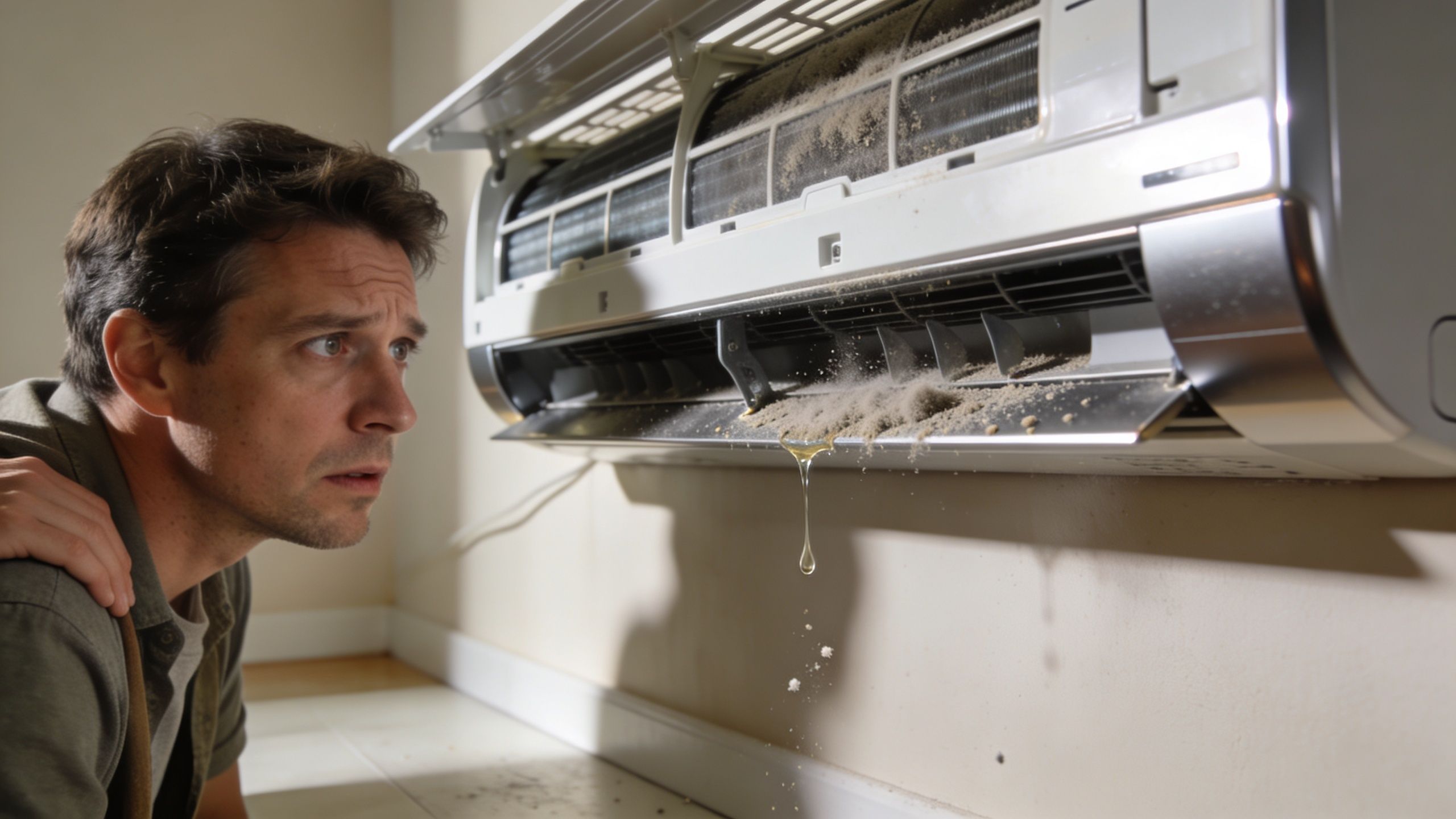
For Queensland households facing high cooling loads, the question of whether servicing is still worth it when the system cools is important, because neglecting early signs is linked to higher energy bills, shorter equipment life, and avoidable repair costs, as discussed in this piece on the hidden costs of HVAC neglect.
If the unit is on but the air feels soft or uneven, start with the simple possibility. Filters may be loaded with dust. If that's not the only cause, the indoor coil may be dirty, the fan may need inspection, or the system may be struggling for other reasons.
Weak airflow matters because it often makes people lower the temperature setting, which pushes the system harder without fixing the underlying issue.
A stale smell when the unit starts often points to built-up grime and moisture inside the indoor section. In Brisbane conditions, that's common.
A smell doesn't always mean a major repair is needed, but it does mean the unit needs attention. Odours are one of the clearest signs that a basic wipe-down hasn't dealt with what's happening inside.
Water around the wall unit or dripping from the casing should never be ignored. The cause is often a blocked condensate drain, but the important part is this. Water belongs in the drainage system, not on the wall, floor, or carpet.
If that's happening at your place, this guide on why an air conditioner leaks water covers common causes and what needs checking.
A split system should make normal operating sounds, not rattles, buzzing, grinding, or sharp vibration. Noise often points to loose components, fan issues, debris, or wear that gets worse if the system keeps running under load.
Short cycling is when the system starts and stops too often instead of running in a steady pattern. That can come from control issues, airflow problems, sensor faults, or a system that isn't operating cleanly.
The practical problem is wear. Frequent starts put extra stress on parts that are already working hard in summer.
Ice might seem odd in a cooling system, but it can happen when airflow is poor or performance issues are left unresolved. If you see icing, switch the unit off and have it assessed. Running it that way can make things worse.
Sometimes the only warning is financial. The house doesn't feel dramatically hotter, but the air con seems to run forever. If your usage habits haven't changed much and the system feels less effective, a service is worth booking.
If a split system needs more run time to achieve the same comfort, something is usually restricting performance.
A proper split system service is a working inspection, a clean, and a safety check. It isn't just washing the filter and spraying deodoriser into the head unit. A technician should assess how the system is breathing, draining, cooling, and drawing power.
Start with the broad picture. A detailed maintenance approach matters because a 21-point checklist can include drain cleaning, float switch inspection, evaporator coil assessment, and line set insulation verification, while diagnostic monitoring can help identify condenser restrictions or refrigerant deficiencies before failure, according to this HVAC maintenance and diagnostics reference.
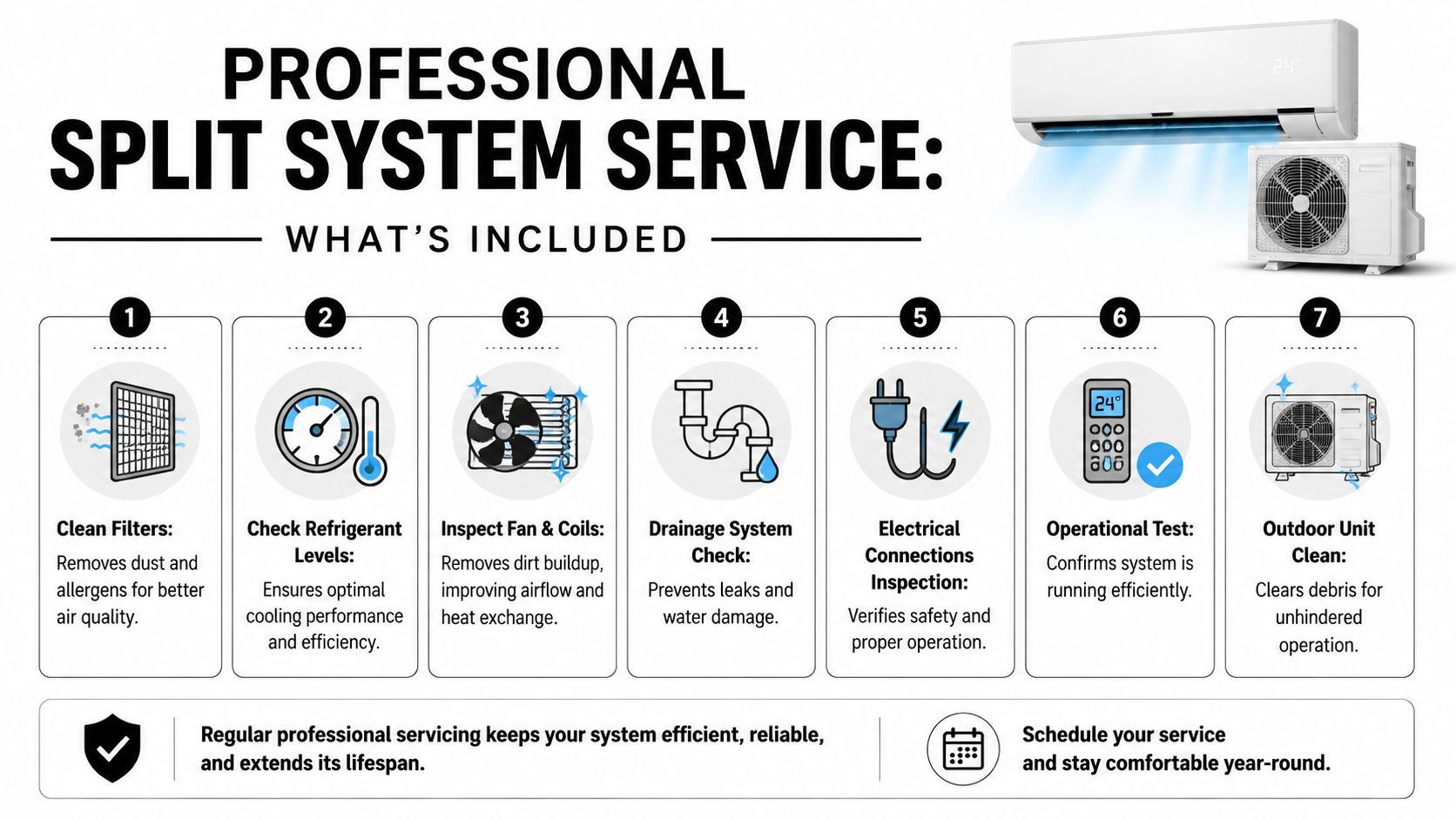
Most performance complaints begin indoors. That's where airflow gets restricted, odours develop, and drainage issues show up.
A professional service commonly includes:
If you want a plain-English explanation of coil cleaning and why it affects cooling, this article on restoring AC performance for homeowners is a useful companion read.
The outdoor section does the hard heat-rejection work, and Brisbane conditions can be rough on it. Leaves, dirt, grass clippings, and restricted clearance all reduce performance.
Checks on the outdoor unit usually include:
Pressure management matters here. Carrier technical guidance notes that excessive pressure loss reduces cooling capacity and wastes energy, and poor line set design or condition can reduce performance by 10 to 15% in split systems, based on this Carrier technical paper on refrigerant piping and pressure loss.
That's why service isn't only about cleaning. It's also about checking whether the refrigerant circuit and line set are in good shape.
A more detailed repair inspection may be needed if the unit shows ongoing faults. In that situation, air conditioner repair guidance from DLG Electrical outlines the difference between routine service issues and problems that need deeper diagnostic work.
A short visual can help if you want to see the process in action.
The exact price depends on the unit type, access, condition, and whether faults are found. What matters most is understanding the scope before booking.
| Service Tier | Typical Price Range | Estimated Time |
|---|---|---|
| Basic residential split system service | Varies by provider and unit condition | Often completed within a standard appointment window |
| Service with deeper cleaning or drainage work | Higher than a basic clean | Usually longer than a basic service |
| Diagnostic visit for performance or fault issues | Varies based on testing required | Depends on fault complexity |
Ask what's included before you book. A low advertised service price can mean a very limited clean with no meaningful diagnostic or safety checks.
One provider option for Brisbane homeowners is DLG Electrical, which handles electrical and air conditioning-related service work with a focus on inspection, maintenance, and fault finding in residential settings.
Homeowners should do some split system upkeep themselves. They just need to know where the line is. Good DIY habits help the system run better between services. They do not replace professional servicing.
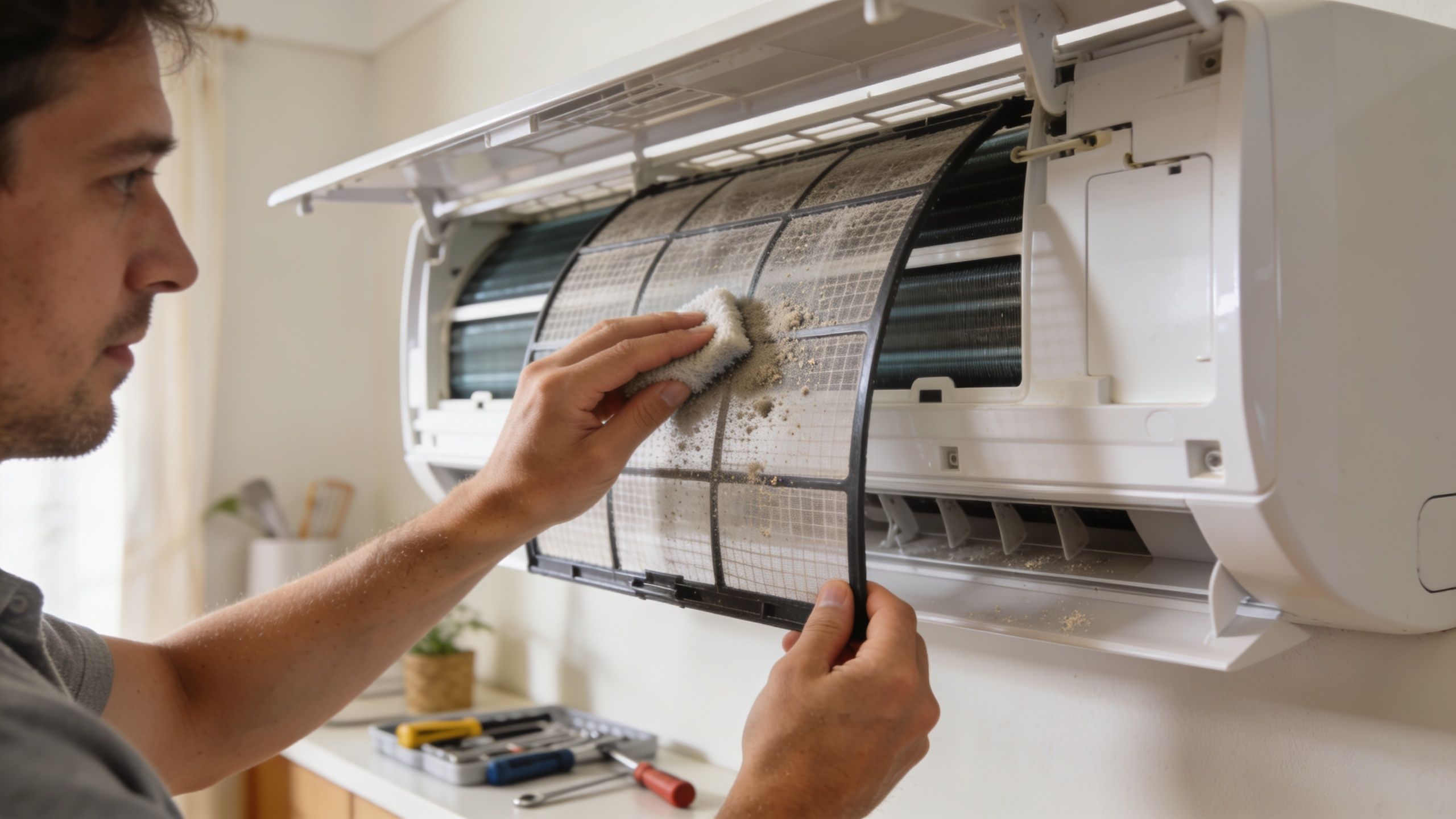
These are sensible homeowner tasks:
That routine care helps. It improves airflow and gives you a better chance of spotting trouble early.
For safety and compliance, a technician should handle electrical inspections, refrigerant-related issues, drainage faults beyond simple observation, and any internal cleaning that requires dismantling or exposure to live components.
For landlords and owners of older homes, service is about safety and compliance as much as comfort. A professional service should check damaged wiring, loose terminals, and blocked drains to reduce fire or water-damage risk, as highlighted in this discussion of ductless split safety and servicing considerations.
Trying to do that work yourself can create more problems than it solves. The most common example is water leakage. People clean the filter, assume they've fixed it, then leave a partially blocked drain or an electrical issue untouched.
DIY maintenance is for housekeeping. Professional servicing is for performance, safety, and diagnosis.
A homeowner can help the system stay tidy. A licensed professional checks what's happening behind the cover, at the terminals, in the drain, around the fan, and across the refrigerant side. That's also the level of attention landlords and property managers need if they want fewer repeat call-outs and fewer unpleasant surprises during inspections.
Clean filters yourself. Leave electrical, refrigerant, and internal fault diagnosis to licensed trades.
Split systems are common in Australian homes because the installed base is large. The ABS 2021 Census recorded 3,275,451 households using a non-ducted heating system and 2,581,138 households using reverse-cycle air conditioning as their main form of heating, which helps explain why split system maintenance is such a routine need across the country, as summarised in this article on split system maintenance in Australia.
That scale matters in Brisbane. When a system is used heavily through hot, humid months, service isn't optional for long if you want reliable cooling and fewer breakdowns. It's basic asset protection.
DLG Electrical is a family-owned and operated Brisbane contractor with 19+ years of experience, serving local homeowners, landlords, and renovators who need practical electrical work done safely and properly. That local experience matters because split system issues in North Brisbane, Grange, Windsor, and surrounding suburbs often come down to the same mix of heat, moisture, ageing components, and heavy seasonal use.
In practice, Brisbane customers usually want three things:
That's especially important in older homes, where air conditioning faults can overlap with broader electrical concerns. If you're also weighing other household electrical upgrades or need a local trade contact for related work, this overview of a licensed electrician in Brisbane may help.
The worst time to think about servicing is usually the first brutal run of summer heat, when everyone else has the same idea. If your unit has shown any of the warning signs covered earlier, it makes sense to book before it turns into a failure call.
A split system service is one of those jobs that pays off most when it's done early, without fuss, and before the discomfort starts.
For Brisbane homes, annual servicing is the standard starting point. That aligns with common Australian guidance and industry practice for split systems, especially where reliability and efficiency matter.
Some households need more attention between services. If the unit runs hard through summer, if the property is dusty, or if occupants clean filters often because they clog quickly, don't wait for the calendar alone. Usage and condition matter more than a fixed rule.
Yes. A system can still cool while operating inefficiently, draining poorly, or carrying faults that haven't become obvious yet. That's common with dirty coils, restricted airflow, early electrical wear, or a drainage issue that only leaks under heavier use.
If you leave it until performance collapses, you lose the chance to deal with the small issue cheaply and cleanly.
A big difference. A basic clean usually focuses on visible dirt, especially the filters and accessible casing. A proper split system service also checks drainage, coil condition, electrical connections, operating behaviour, and whether the system is showing signs of wear or imbalance.
That's why two services can look similar from the outside but deliver very different value.
Often, yes. If odours are coming from the unit, servicing can help by cleaning areas where dust and moisture collect. It won't solve every indoor air quality issue in a home, but it can make a noticeable difference when the source is inside the air conditioner.
This is particularly relevant in humid weather, when stagnant moisture inside the unit can create that musty start-up smell.
That depends on the condition of the unit, how often it's faulting, and whether the core components are still worth backing. If the system is generally sound and the issues are maintenance-related, a service is the sensible first step.
If faults are repeated, performance stays poor after servicing, or major repairs are looming, replacement may be the better long-term decision. The right call comes from inspection, not guesswork.
Safety, drainage, and documentation. A rental property service should look beyond comfort and check for water-leak risk, damaged wiring, loose terminals, and general operating condition.
For landlords, the question isn't just whether the tenant feels cool enough. It's whether the system is safe, maintained, and less likely to create a preventable problem.
If your split system is running longer, smelling musty, leaking, or just not coping the way it used to, book a service with DLG Electrical. You'll get practical advice, licensed electrical expertise, and a clear assessment of what the system needs to stay safe and reliable in Brisbane conditions.

Master Electrician with over 30 years of experience. Founded DLG Electrical in 2005 after international project work including electrical installations at Stamford Bridge Stadium, London(Home of Chelsea FC).

Local Electricians that can fix all Electric Hot water Systems.
Motion sensor lights are a versatile addition to any home, offering nu
