83 Jean St, Grange QLD 4051
Mon-Fri 07:30 AM - 04:00 PM - Sat - 8:00 - 12 - Sunday Closed
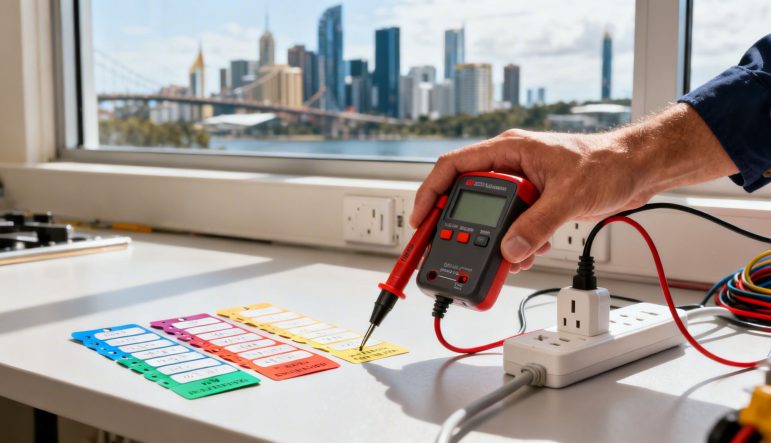
When you’re looking at testing and tagging in Brisbane, prices generally fall somewhere between $3.00 and $10.00 for each item. The key thing to remember is that this cost can drop quite a bit when you have more items to test. For smaller jobs, you’ll also need to factor in a minimum call-out fee to cover the electrician’s travel and time on-site.
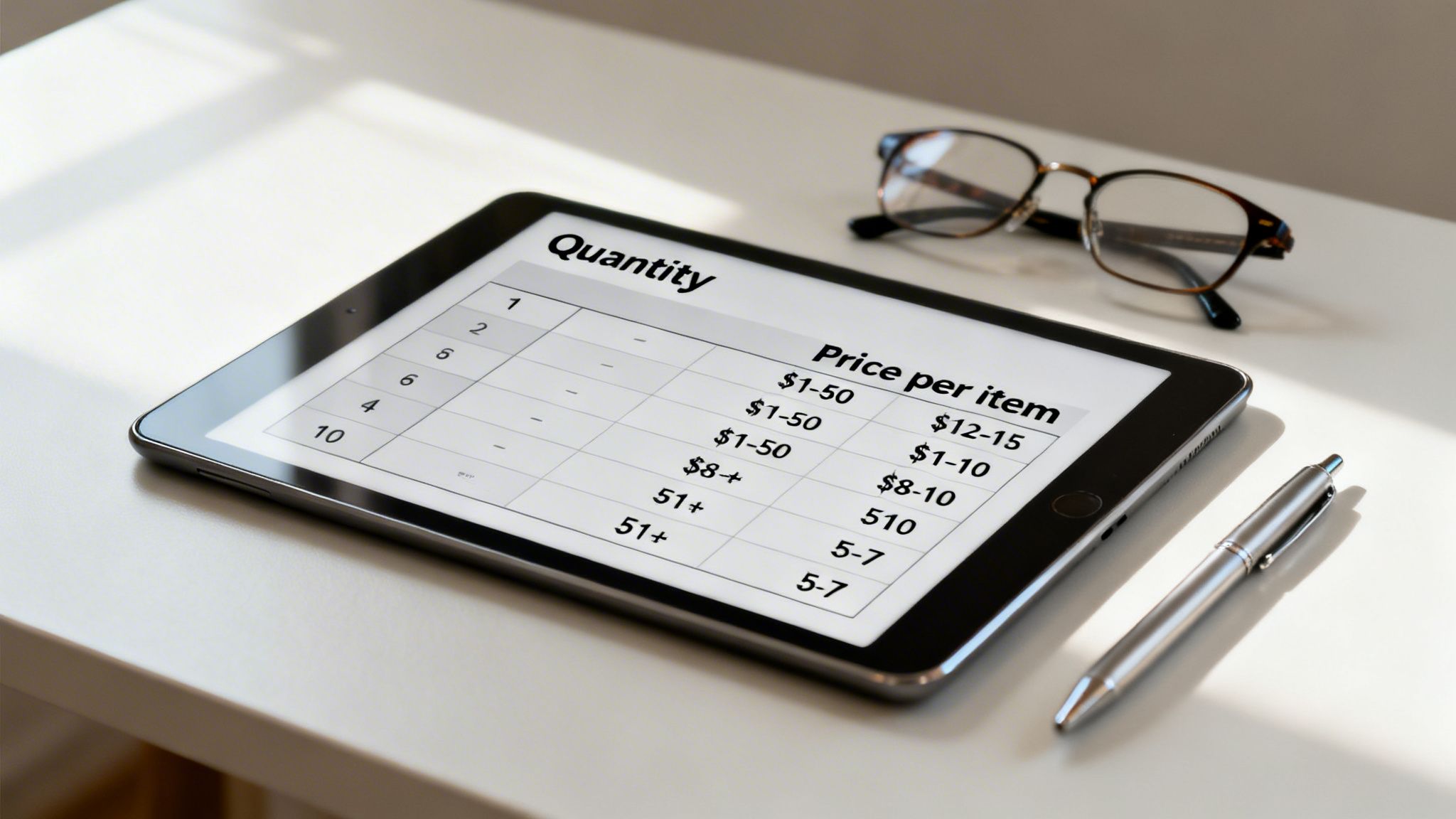
Getting a handle on testing and tagging prices isn’t just about the single-item cost. It’s about understanding the whole pricing model. Think of it like buying in bulk—the more you get, the cheaper each individual unit becomes. Electrical safety services work in a very similar way.
The most common setup you’ll find is a per-item fee paired with a minimum service charge. This minimum, which we call a call-out fee, makes it worthwhile for a qualified sparky to come out to your property, even if you only have a handful of appliances. If you’re a residential client or a small business with fewer than 30 or 40 items, you’ll almost certainly be quoted this minimum charge.
For larger commercial sites like offices, workshops, or multi-property portfolios, the maths starts to look much better. As the number of appliances goes up, the cost per item goes down. This is where you can find some real savings.
Across Australia, the industry has settled on a pretty consistent pricing model. Most service providers will charge a call-out fee between $120 and $200 for those smaller jobs, but the per-item rate can drop dramatically on bigger projects.
This whole strategy is designed around efficiency. The most cost-effective way to get it done is to bundle everything—your whole office, workshop, or multiple rental properties—into a single visit.
To give you a clearer idea, here’s how the pricing tiers usually break down.
| Number of Items | Estimated Cost Per Item | Notes |
|---|---|---|
| 1 – 25 | $5.00 – $10.00 | Often subject to a minimum call-out fee of $120+ |
| 26 – 100 | $4.00 – $6.00 | Per-item rate becomes more cost-effective |
| 101 – 500 | $3.50 – $5.00 | Significant savings begin to appear at this volume |
| 501+ | $3.00 – $4.00 | Best value, ideal for large commercial facilities |
Understanding these tiers is the best way to budget properly for your compliance needs. While this pricing is specific to testing and tagging, you might also want to check out our guide on what electricians charge for other services to get a full financial picture.
It’s easy to look at the cost of testing and tagging and see it as just another business expense. But that’s a bit like seeing a regular car service as just a bill—when in reality, it’s what stops you from breaking down in the middle of the motorway. Proactive electrical testing works exactly the same way. It’s not a cost; it’s a critical investment to prevent disaster.
This service is your most important line of defence against some of the most serious workplace hazards. Faulty electrical gear is a leading cause of fires in offices, workshops, and job sites. A single appliance with a hidden defect can create a life-threatening risk of electric shock for your team or customers.
Regular inspections are all about finding these hidden dangers so they can be fixed before they have a chance to harm people or damage property.
Viewing this service as a simple line item on a budget completely misses the bigger picture. It’s a fundamental part of managing your legal and insurance obligations here in Queensland. Work Health and Safety (WHS) regulations demand that businesses provide a safe electrical environment, and a documented test and tag history is the clearest way to prove you’re meeting that duty of care.
In the event of an incident, you can be sure your insurance provider will ask for evidence of due diligence. A complete and up-to-date test and tag register is undeniable proof that you’ve taken proactive steps to manage electrical risks, which can be the deciding factor in a successful claim.
To really get the long-term value, it helps to look at the total cost of ownership. The small, regular investment in testing pales in comparison to the potential costs of equipment downtime, property damage from a fire, massive legal fines, or—worst of all—a serious injury.
Ultimately, consistent testing and tagging delivers something invaluable: peace of mind. It’s the confidence that comes from knowing you’ve done everything you can to protect your team, your customers, and your business.
Ever gotten two wildly different quotes for what seems like the exact same job? It can be confusing, but test and tag pricing isn’t just a number pulled out of thin air. A few key variables shape the final cost, determining the time and complexity of the work ahead.
Think of it like hiring removalists. The final bill isn’t just based on how many boxes you have. It depends on whether they’re moving feather-light furniture or a grand piano, if it’s a ground-floor unit or a third-floor walk-up, and how far they need to travel. In the same way, your electrical testing quote is a specific calculation based on the details of your job.
As we’ve touched on, the total number of items is the biggest driver of your per-item rate—the more you have, the lower the price for each one. But the type of equipment is just as important. Testing a standard office computer and its monitor is a straightforward, quick process.
On the other hand, specialised or 3-phase machinery you’d find in a factory or workshop is a different beast entirely. These items demand more complex testing procedures and specialised gear, which naturally takes more time per item and is reflected in the cost.
How easy is it to get to your appliances? An electrician can fly through dozens of items in an open-plan office if everything is out in the open. But if appliances are buried behind heavy cabinets, locked away, or spread across multiple levels, the job simply takes longer.
Want a simple way to keep costs down? Prepare for our visit. Making sure all your equipment is accessible before the technician arrives means we spend less time on-site, and that can directly lower your final bill.
Travel time to your Brisbane site is also factored into any quote, particularly if your property is outside a technician’s usual service area. It makes sense that a centrally located, easy-to-access site will almost always be cheaper to service than a remote one.
This all comes together to deliver real value—it’s not just about a price tag, but about ensuring safety, maintaining compliance, and giving you complete peace of mind.
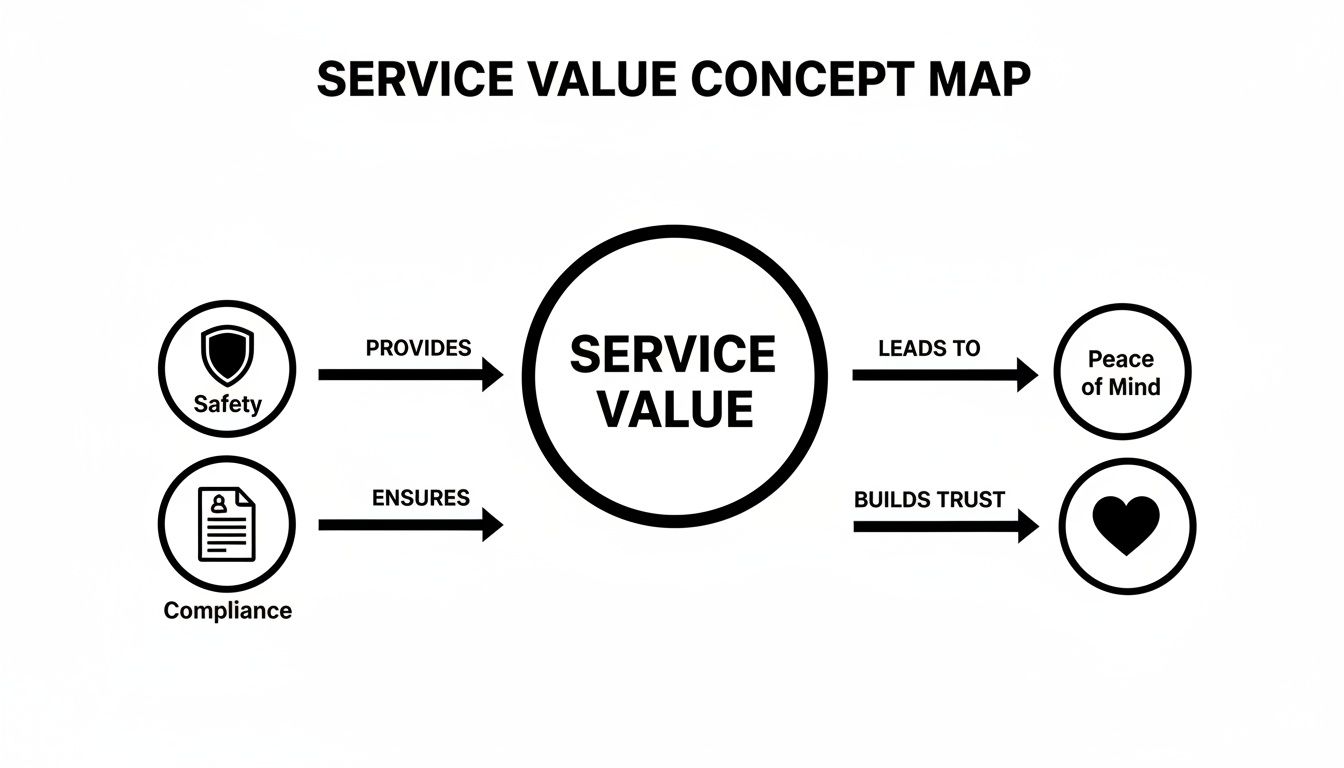
Ultimately, professional testing is an investment in a safe, compliant environment that protects your people and your business. The final price is a blend of item numbers, equipment types, site access, and reporting requirements, which is why getting a detailed quote is so important. Getting a handle on these cost factors is a crucial first step for anyone needing comprehensive electrical services in Brisbane.
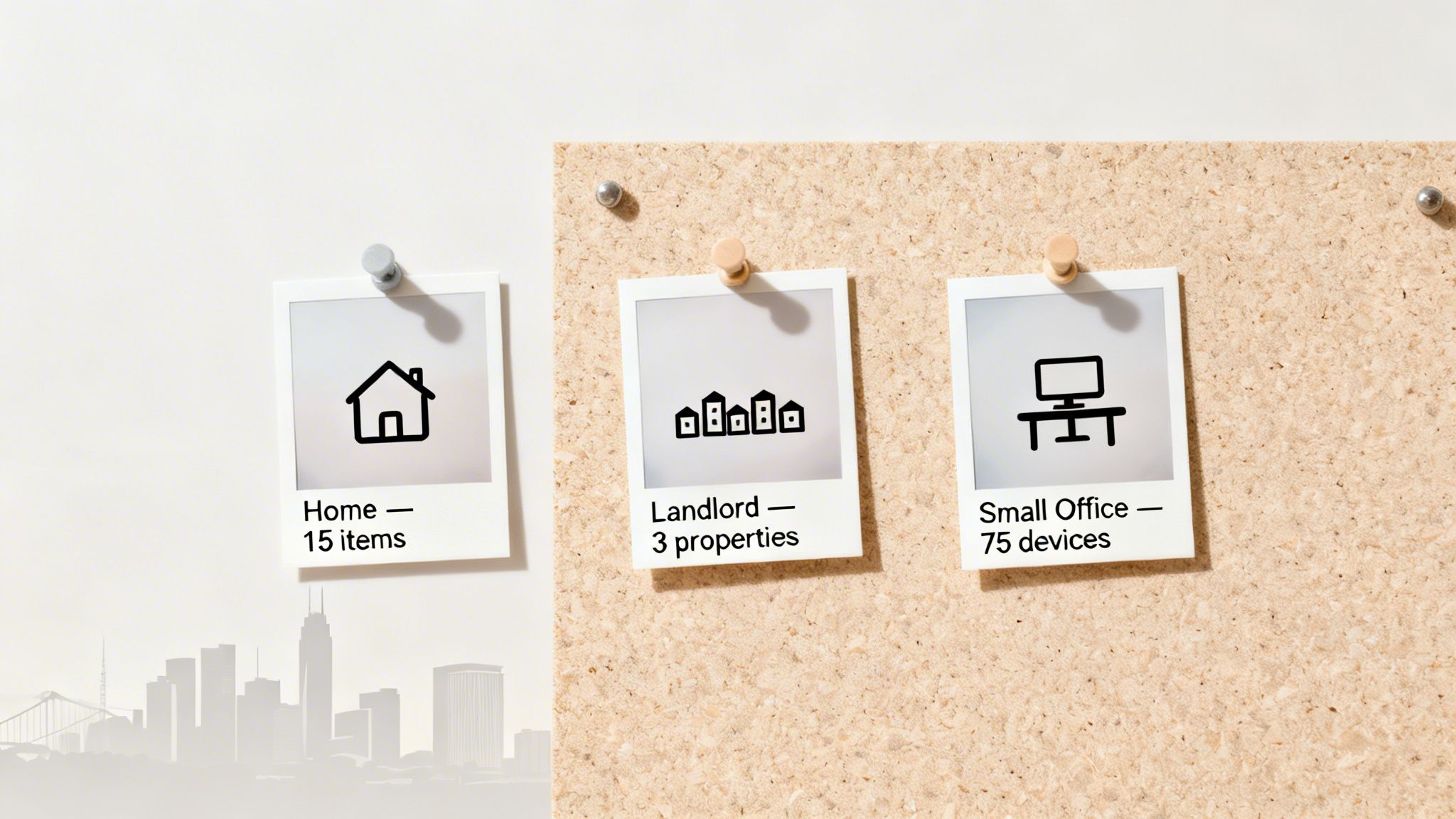
It’s one thing to talk about per-item rates and call-out fees, but it’s another to see what that actually looks like on an invoice. To make sense of it all, let’s break down a few common jobs we see around Brisbane.
Seeing how testing and tagging prices apply in the real world helps you move from guesswork to a confident budget. These scenarios show how the numbers stack up, whether you’ve got a handful of items at home or a whole office to keep compliant.
Let’s start with a homeowner in Grange. They run a small business from a home office and have a workshop in the garage for weekend projects. All up, they have about 15 standard appliances that fall under workplace health and safety rules—think computers, monitors, printers, and a few power tools.
This is a perfect example of how for smaller jobs, the cost is determined by the minimum service fee, not a per-item calculation.
Next, we have a landlord in Windsor who manages three rental properties nearby. For tenant safety and their own compliance obligations, each property needs around 20 portable appliances tested. This brings the total to 60 items.
By scheduling all three properties to be serviced on the same day, the landlord moves beyond the minimum fee and starts benefiting from volume-based pricing. This is a smart way to manage compliance costs efficiently.
Finally, let’s look at a small commercial office over in North Brisbane. They have around 75 devices needing tags, including all the usual office gear: computers, monitors, printers, kitchen appliances, and various other plug-in items scattered through the workspace.
Knowing what drives test and tag pricing is one thing, but how do you actually lower your bill? The good news is that with a bit of savvy planning, you can make a real dent in your compliance costs without ever cutting corners on safety.
It all boils down to making the technician’s job as smooth and efficient as possible. Think about it—the less time they spend navigating obstacles or waiting around, the less time you’re paying for. A little preparation on your end translates directly into savings.
A smart business manager knows that planning ahead isn’t just about being organised; it’s a powerful cost-control strategy. Tidying up your site and grouping jobs together will have a direct, positive impact on your bottom line.
Being prepared is your single best tool for cutting costs. Taking a few simple steps before your electrician arrives will make their work faster, easier, and ultimately, cheaper for you.
Finding a reliable electrician you can trust offers more value than just a one-off job. When you build a long-term relationship with a single provider, you often gain access to better rates and a far more streamlined service over time.
You can think of it as a loyalty discount. A technician who already knows your site, your equipment, and your specific requirements can work much more efficiently on return visits. Better yet, bundling your test and tag service with other electrical maintenance—like smoke alarm checks or switchboard inspections—can often open the door to package deals, reducing your overall expenses. This approach turns a simple compliance task into a true partnership focused on your ongoing safety.
Trying to make sense of testing and tagging prices can be frustrating, but choosing the right team shouldn’t be. For over 19 years, DLG Electrical has been the family-owned business Brisbane locals count on for honest, no-nonsense electrical work. We’ve always believed that keeping your property safe shouldn’t come with confusing costs.
As a local business ourselves, we get the budget pressures homes and companies are facing. That’s why we’re committed to giving you a clear, upfront quote with no hidden surprises. You’ll know exactly what the job costs from the very beginning.
We’re not just here to tag your gear; we’re here to give you genuine peace of mind. Every single electrician on our team is fully licensed and insured, bringing years of real-world experience to every site, whether it’s a small home office or a large factory floor. Our five-star rating on Google is a direct result of the pride we take in getting the job done right.
Choosing someone for your test and tag service isn’t just about ticking a compliance box—it’s about trust. With DLG Electrical, you’re getting a team that treats your property with the same care and respect we’d show our own.
Our local knowledge means we’re already up to speed with the specific electrical needs and regulations for properties right across Brisbane. If you’d like more tips on what to look for in a contractor, have a read of our guide on finding a trusted electrician in Brisbane.
We invite you to see why so many Brisbane locals choose us. We offer a free, no-obligation quote for all our testing and tagging services.
Give us a call and let our team provide a clear, fair assessment of what you need. You can reach an electrician who genuinely cares about your safety by calling us Monday to Friday, between 7:30 AM and 4:00 PM.
Understanding the pricing is one thing, but the practical side of testing and tagging is where most of our Brisbane clients have questions. Let’s run through a few of the most common ones we get asked every day.
Getting these details right is crucial for keeping your workplace safe and compliant, so it pays to be clear on the requirements.
This is probably the number one question we hear, and the answer really depends on the environment. A power saw on a construction site gets a lot more abuse than a desktop computer in an office, so the testing schedule needs to reflect that risk.
The Australian Standard AS/NZS 3760 sets out the minimum frequencies:
A qualified electrician can help you set up a testing schedule that makes sense for your specific workplace and ensures you’re always compliant.
If an appliance fails, it means it’s no longer safe and could pose a serious risk. Our technician will immediately remove it from service by attaching a red “DANGER – DO NOT USE” tag and will let you know straight away. This is the most important part of the process—it prevents an accident before it happens.
When an item fails, it’s a safety system working exactly as intended. It has identified a potential hazard before it could cause a fire or an electric shock, protecting your people and property.
At that point, you have a couple of choices. You can either get the item properly repaired by a qualified person or dispose of it so it can’t be used again. You must never use an appliance that has been tagged as failed.
It’s a good question, and many people are unsure about this. The simple answer is no—brand new equipment, fresh out of the box, is considered safe from the manufacturer and doesn’t need to be tested immediately.
However, as soon as that item is put to use in your workplace, it becomes your responsibility. It should be added to your asset register and included in your next scheduled round of testing. This makes sure it doesn’t get missed and stays safe for its entire service life.
Ready to get a clear, fair price for your testing and tagging needs? The team at DLG Electrical is here to help. We offer a free, no-obligation quote so you can budget with confidence. Contact us today at https://dlgelectrical.com.au.

Master Electrician with over 30 years of experience. Founded DLG Electrical in 2005 after international project work including electrical installations at Stamford Bridge Stadium, London(Home of Chelsea FC).

Local Electricians that can fix all Electric Hot water Systems.
Motion sensor lights are a versatile addition to any home, offering nu
