83 Jean St, Grange QLD 4051
Mon-Fri 07:30 AM - 04:00 PM - Sat - 8:00 - 12 - Sunday Closed

It’s a sound we all dread: the piercing shriek of a smoke detector when there’s no fire in sight. We’ve all been there. If your smoke detector seems to be going off for no reason, you’re not alone. It’s usually triggered by a handful of common culprits, from cooking fumes and high humidity to dust buildup and ageing batteries.
Getting to the bottom of these triggers is the first step to silencing those frustrating false alarms for good.
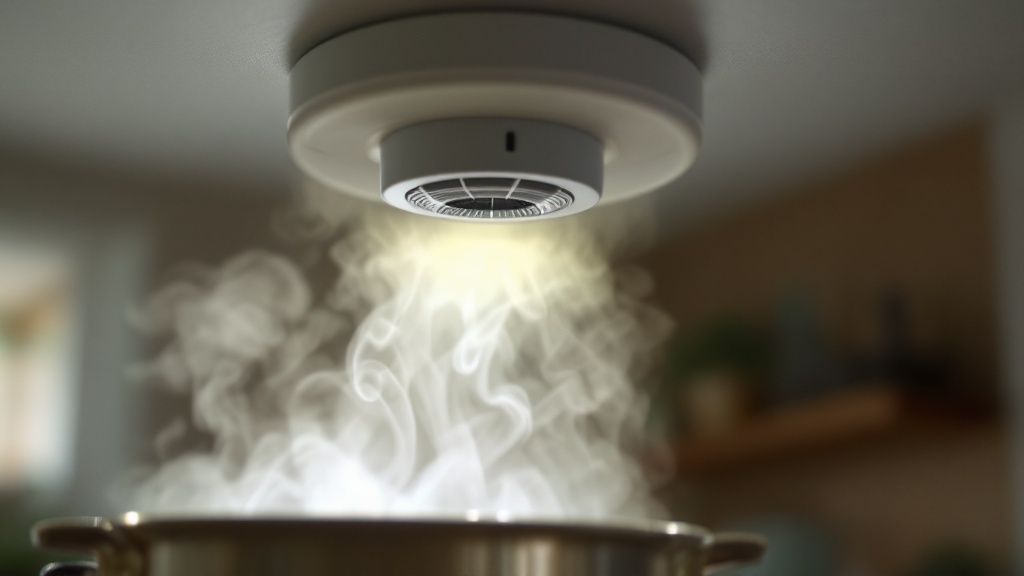
A smoke detector is engineered to be incredibly sensitive. That’s its job. But this high sensitivity means it can’t always tell the difference between genuine smoke particles and other airborne imposters.
Think of your smoke alarm like an overprotective guard dog. It barks at the postie, passing cars, and actual intruders with the same frantic urgency. This guide will help you figure out what’s making your alarm “bark” when it doesn’t need to, so you can diagnose the issue with confidence.
Most false alarms aren’t caused by a faulty unit but by things happening in its immediate environment. The good news is these are often the easiest issues to spot and fix.
In fact, a study by the Australian Building Codes Board found that around 50% of Australian households have experienced nuisance alarms. Of those, a massive 80% were caused by cooking, while another 6% were triggered by steam from bathrooms.
Key Takeaway: The majority of false alarms aren’t random at all. They’re predictable reactions to everyday activities like searing a steak or taking a long, hot shower.
To help you quickly identify what might be setting off your alarm, here’s a simple table outlining the most common triggers and their fixes.
| Common Cause | What’s Happening | Quick Fix |
|---|---|---|
| Cooking Fumes | Tiny particles from frying, grilling, or burning food mimic smoke particles. | Use your rangehood fan, open a window, and temporarily move the detector if it’s too close to the stove. |
| Steam & Humidity | Dense water vapour from showers or kettles can trick the sensor. | Improve ventilation with an exhaust fan or by opening a door/window. |
| Dust & Debris | Dust, cobwebs, or small insects can get inside and block the sensor chamber. | Gently vacuum the detector with a soft brush attachment every six months. |
| Ageing Batteries | A low battery often causes the detector to emit short, sharp chirps. | Replace the batteries annually, even if they’re not completely dead. |
| Chemical Fumes | Strong smells from paint, cleaning products, or aerosols can trigger the alarm. | Ensure the area is well-ventilated when using strong chemicals. |
| Detector Age | Smoke detectors have a limited lifespan (10 years maximum) and become less reliable over time. | Check the expiry date on the back of the unit and replace it if it’s out of date. |
By working through this list, you can usually pinpoint the cause without needing to call in a professional.
Beyond the obvious culprits like steam and cooking smoke, other less apparent factors can cause your alarm to go off. A slow accumulation of dust inside the detector’s sensing chamber is a classic example that can trick it into sounding an alarm.
Sometimes, what feels like a random shriek is just the detector’s reaction to a high concentration of airborne particles. This is where overall home air quality comes into play. Learning how air duct cleaning can improve indoor air quality can sometimes offer a solution by reducing these common irritants.
By systematically exploring these causes, you can move from frustrating uncertainty to effective troubleshooting.
Your smoke detector is an incredibly sensitive piece of equipment, but it’s not always the smartest. Think of it like a guard dog with an amazing sense of smell but terrible eyesight; it can pick up on the tiniest airborne particles but can’t always tell the difference between dangerous smoke and a harmless imposter. This is exactly why so many alarms randomly go off when you’re just cooking dinner or taking a shower.
The most common culprits are steam and cooking fumes. When you take a hot shower, you’re filling the air with dense clouds of water vapour. To your alarm’s sensor, these condensed water particles look almost identical to smoke particles. It can’t distinguish between the two, so it does its job and sounds the alarm, assuming the worst-case scenario.
It’s the same story in the kitchen. Searing a steak or accidentally burning the toast releases a flurry of microscopic particles into the air. While not necessarily a fire hazard, these particles are more than enough to fool the sensor. Your alarm isn’t malfunctioning; it’s just being a little too cautious for its own good.
So, how do you stop these interruptions? The best defence is a combination of smart placement and good airflow. In fact, Australian Standards for smoke alarm installation recommend keeping detectors away from the immediate vicinity of kitchens and bathrooms for this very reason.
A key principle is distance. A smoke alarm installed at least 3 metres away from a kitchen or bathroom is far less likely to be triggered by steam or everyday cooking fumes, ensuring it only activates when there’s a genuine threat.
If your alarm is already installed and moving it isn’t an option right now, ventilation becomes your most powerful tool. By proactively clearing the air, you can stop these harmless particles from ever reaching the alarm’s sensor in the first place.
Here are a few simple strategies to keep the peace:
By understanding how these everyday activities can trick your detector, you can take simple, practical steps to stop nuisance alarms. It’s not about disabling this critical safety device—it’s about creating an environment where it can do its job effectively, without the constant interruptions. This proactive approach ensures your home remains both safe and peaceful.
Not all smoke alarms are created equal, and if you’re dealing with constant false alarms, the technology inside your device might be the real culprit. To get to the bottom of why your smoke detectors randomly go off, you need to understand the two main types found in Australian homes: ionisation and photoelectric.
Think of an ionisation alarm as having an incredibly sensitive nose. It works by using a tiny bit of radioactive material to create a stable electrical current between two plates. When very fine particles—like the ones from a fast, flaming fire—enter its chamber, they break this current and sound the alarm.
The problem? This technology is so sensitive that it struggles to tell the difference between dangerous smoke particles and harmless ones. Things like steam from the shower, fumes from burnt toast, or even aerosol sprays can disrupt the current just as easily, leading to those all-too-familiar, frustrating false alarms.
On the other hand, a photoelectric alarm works more like a tripwire using a beam of light. Inside its chamber, a small LED light shines away from a sensor. When larger smoke particles from a slow, smouldering fire drift in, they scatter the light beam, reflecting it onto the sensor and triggering the alarm.
This method is far less likely to be fooled by the tiny, non-threatening particles that plague ionisation models. Because steam and cooking fumes don’t typically scatter light in the same way, photoelectric alarms provide much better protection against the most common types of house fires while dramatically cutting down on nuisance alarms.
Research from fire authorities consistently shows that photoelectric alarms provide earlier warnings for smouldering fires and are less prone to nuisance alarms from cooking, making them the recommended choice for homes.
For a deeper dive into modern safety standards, our guide to smoke alarm solutions provides detailed information on selecting the right technology for your home’s layout and your family’s needs. Proper maintenance is also crucial for any type of alarm.
This infographic breaks down the simple but essential maintenance schedule every homeowner should be following.
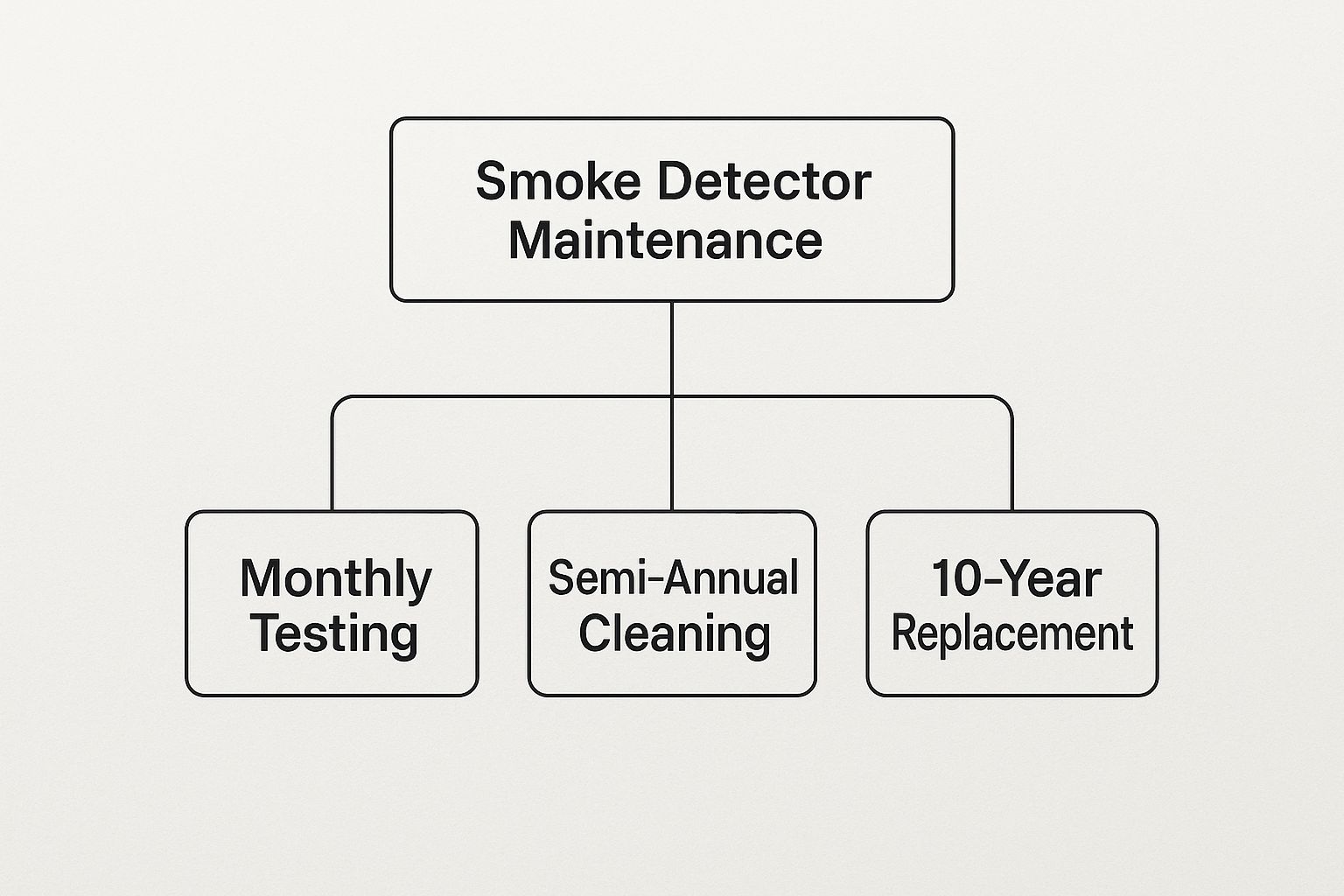
This visual guide reinforces that regular testing, cleaning, and timely replacement are non-negotiable for ensuring your smoke detector’s reliability, regardless of its type. Upgrading to photoelectric technology is often the most effective step you can take to achieve both safety and peace of mind.
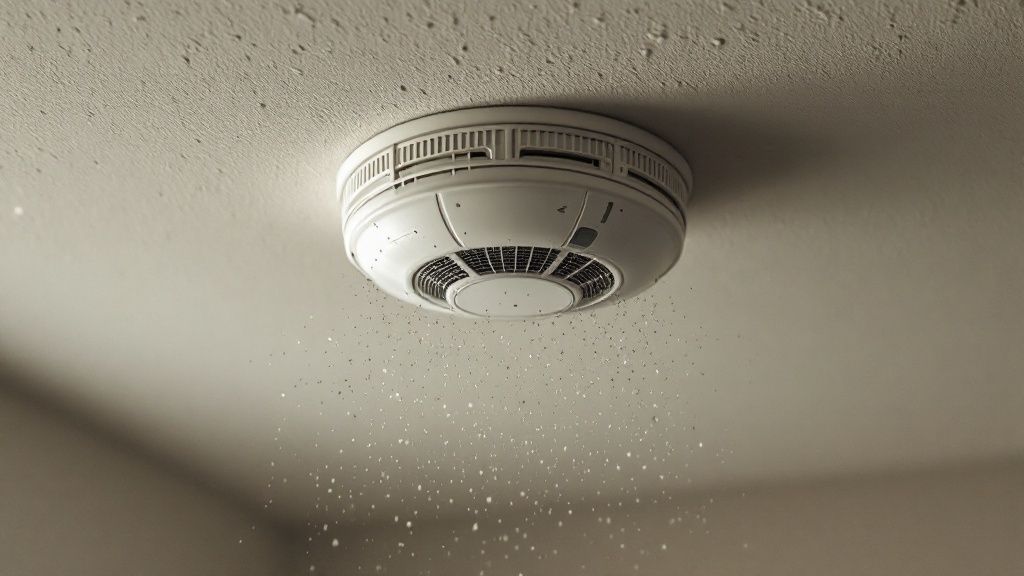
Sometimes, the real reason your smoke detector randomly goes off isn’t a phantom fire or some complex electrical fault. It’s often just plain neglect. Your smoke alarm is a sensitive piece of kit that needs a bit of TLC to do its job properly. Over time, dust, pesky cobwebs, and even tiny insects can make their way into the sensing chamber, tricking it into a false alarm.
Think of it like a dirty window. When it’s covered in grime, you can’t see through it clearly. It’s the same principle for a smoke alarm. When its sensor gets clogged with debris, it can’t tell the difference between a real threat and a bit of dust, triggering that piercing shriek when you least expect it.
A consistent maintenance schedule is your best defence against these frustrating nuisance alarms. It’s not complicated, but it’s crucial. A few minutes of your time can prevent annoying interruptions and, more importantly, ensure your alarm is ready to protect you and your family when it counts. A clean, tested alarm is a reliable one.
This simple routine will make all the difference:
An alarm that constantly cries wolf because of dust is more than just an annoyance—it’s a genuine safety risk. People are far more likely to just disable a faulty alarm, leaving their homes and families completely unprotected.
It’s surprising how many people skip these basic checks. Research on Australian households found that roughly one in three people never test their smoke alarms. That figure jumps to about 50% for unemployed individuals. These are worrying statistics that highlight a major gap in home fire safety.
It’s also vital to know what your alarm is trying to tell you. A low battery isn’t going to trigger a full-blown emergency siren. Instead, you’ll hear a short, sharp ‘chirp’ every 30 to 60 seconds. This is a maintenance reminder, not a sign of immediate danger. Knowing the difference saves you a lot of panic.
For landlords and property managers, keeping on top of smoke alarm maintenance is both a legal requirement and a moral responsibility. If you need a hand managing all your property safety tasks, a resource like this ultimate rental property maintenance checklist can be incredibly helpful.
Following these steps and knowing what to listen for will stop most maintenance-related false alarms in their tracks. And to make sure you’re doing it right, our detailed guide explains exactly how to test a smoke alarm safely and effectively.
A smoke detector that keeps going off for no reason is more than just an annoying interruption to your dinner or a rude awakening at 2 AM. It’s a problem that can ripple out and affect your entire street or building complex.
It’s easy to get caught up in the immediate frustration, but every time your alarm sounds unnecessarily, it has a much bigger, and potentially dangerous, consequence.
Think of it as the classic “boy who cried wolf” story, but playing out in your neighbourhood. The first time an alarm goes off, people pay attention. But if the same alarm is constantly triggered by a bit of burnt toast or shower steam, a dangerous sense of complacency starts to creep in. Your neighbours might begin to ignore it, writing it off as “just another false alarm.” This slow erosion of urgency is a serious risk because it could mean a dangerously slow reaction when a real fire breaks out.
Beyond making your neighbours complacent, false alarms put a massive strain on Australian emergency services. Each activation can trigger a full-blown response, dispatching fire crews and tying up critical resources that might be desperately needed at a genuine emergency somewhere else.
Fire Rescue Victoria reports that a huge number of their callouts are for false alarms. These incidents don’t just waste time; they can delay fire crews from reaching life-threatening situations and clog up emergency phone lines. The impact is significant.
This isn’t just an inconvenience; it has direct public safety implications. A fire truck attending your nuisance alarm is one that isn’t available for a house fire, a serious car accident, or another genuine crisis.
On top of that, in many apartment buildings and commercial properties, frequent false alarms can lead to hefty fines from local fire services. These fees are designed to discourage negligence and help recover the costs of unnecessary callouts.
Ultimately, looking after your smoke detectors isn’t just about protecting your own home. It’s a core part of being a responsible neighbour and community member. Ensuring your alarms are working correctly and meet local laws is also vital. You can get the specifics by reading our guide on the current smoke alarm legislation in QLD.
By taking a few simple steps to prevent false alarms, you help keep our emergency responders free for when they’re truly needed most.
That sudden, ear-splitting shriek from a smoke alarm is enough to send anyone into a panic. But before you assume the worst, take a deep breath and run through this quick checklist. More often than not, a randomly sounding alarm has a simple explanation, and you can figure out whether it’s an easy fix or a job for a professional.
First, think about what’s been happening in the house. Has someone just stepped out of a steamy shower? Is there a bit of smoke lingering from cooking dinner? High humidity and cooking fumes are the number one culprits for nuisance alarms, so always check for those first. If the air seems clear, it’s time for a closer look at the alarm itself.
A little bit of regular maintenance can prevent a whole lot of headaches. Before you call in an electrician, these basic checks solve the vast majority of false alarm issues:
Important Reminder: Whatever you do, never take the battery out of a smoke alarm to silence it, not even for a minute. An alarm without power is just a piece of plastic on the ceiling—it offers zero protection and leaves your family completely vulnerable.
While most false alarms are harmless, some can be a red flag for a more serious electrical issue brewing behind the walls. These are problems you should never try to fix yourself. Not only is it incredibly dangerous, but it’s also illegal to perform most electrical work in Australia without a licence.
It’s time to call a licensed electrician immediately if you notice any of these signs:
These symptoms suggest there are underlying electrical faults that only a qualified expert can safely diagnose and repair.
Even after you’ve checked all the usual suspects, some smoke detector behaviours can leave you scratching your head. It’s completely normal to have specific questions about why your alarm is acting up. To help you get to the bottom of it faster, we’ve put together some of the most common queries we hear from homeowners.
Think of this as a quick-fire FAQ round to help you sort out those lingering issues and restore a bit of peace and quiet.
This is a big one. In Australia, every smoke detector has a mandatory 10-year lifespan. After a decade, it’s time for a replacement, no exceptions.
You’ll find the manufacturing or expiry date stamped right on the back of the unit. Even if it seems to be working fine, the internal sensors degrade over time, making it less sensitive and unreliable. An expired alarm is not just a common cause of annoying false alarms; it’s a serious safety risk because it might not go off in a real fire.
Yes, absolutely. Power fluctuations are a classic trigger for hardwired smoke alarms. A surge, a brownout, or even a brief power cut can make the alarm sound off for a moment when the power returns and the unit resets itself.
If this happens every time there’s a storm or when a big appliance like your air conditioner kicks in, it could be pointing to a deeper issue with your home’s electrical wiring.
Don’t just dismiss frequent false alarms that line up with power events. They can be a warning sign of unstable electrical circuits, which are a significant safety hazard. Getting a licensed electrician to take a look is the safest bet.
A brand-new smoke detector that won’t stop chirping is frustrating, but it’s usually an easy fix. The first thing to check is the battery pull-tab—make sure it’s been removed completely. Next, pop the battery out and make sure it’s sitting correctly in its compartment.
If it’s a hardwired model, a constant chirp can signal a loose or improper connection to the mains power. If a quick check of these things doesn’t solve it, you might have a faulty unit on your hands that needs to be returned.
It sure does. In fact, high humidity is one of the top culprits behind false alarms, especially from steam pouring out of bathrooms or kitchens. The dense moisture in the air can trick the alarm’s sensor into thinking it’s detecting smoke particles.
The best way to prevent this is with good ventilation. Make sure your exhaust fans are running, and check that your alarms aren’t installed too close to these high-steam areas in the first place.
If you’ve run through all the troubleshooting steps and your smoke detector issues persist, it’s time to call in the professionals. For reliable diagnostics, repairs, and compliance checks, trust the licensed experts at DLG Electrical. Visit us at https://dlgelectrical.com.au to book a service and ensure your home is safe.

Master Electrician with over 30 years of experience. Founded DLG Electrical in 2005 after international project work including electrical installations at Stamford Bridge Stadium, London(Home of Chelsea FC).

Local Electricians that can fix all Electric Hot water Systems.
Motion sensor lights are a versatile addition to any home, offering nu
