83 Jean St, Grange QLD 4051
Mon-Fri 07:30 AM - 04:00 PM - Sat - 8:00 - 12 - Sunday Closed
Imagine you’re out for the day in Brisbane, maybe grabbing a coffee in West End or running errands in Chermside, and a faulty appliance at home starts to smoulder. A traditional alarm might beep away unheard, but this is where a wifi smoke alarm completely changes the game. It sends a real-time alert straight to your phone, giving you a critical early warning whether you’re at work or away on holiday.
It’s no longer just about making a loud noise; it’s about getting immediate, actionable information when every second counts. The real power of wifi smoke alarms lies in this constant connectivity, turning a passive safety device into an active guardian for your home. This is especially vital in a sprawling city like Brisbane, where you could be miles away when a fire starts.
This instant notification means you can call emergency services yourself, far faster than waiting for a neighbour to hopefully spot smoke pouring from a window. It can be the difference between a small, contained incident and a devastating loss.
Another game-changing feature is interconnection. When one smart alarm in the garage detects smoke, it doesn’t just sound off on its own. It instantly triggers every other interconnected alarm throughout your house—from the upstairs bedrooms to the living room.
This synchronised, house-wide alert gives your family those crucial extra seconds to hear the warning and get out safely, no matter where in the home the fire begins.
An interconnected system ensures that a fire detected in the basement is immediately announced by the alarm in an upstairs bedroom. This eliminates dangerous delays and maximises evacuation time for everyone inside.
The statistics on this technology are compelling. Data from the Australian Institute of Health and Welfare shows that residential fires were responsible for an average of 80 deaths per year between 2014 and 2018. More importantly, early data from state fire services indicates that interconnected smoke alarms can slash the risk of death by up to 50%. A figure like that really highlights the life-saving potential of these modern systems. You can find more insights on these smoke detector market trends over at Grandview Research.
Understanding these benefits is the first step. Our comprehensive guide on wifi smoke alarms dives even deeper into how these devices protect your home and family. By embracing this technology, you’re not just ticking a compliance box; you’re actively upgrading your home’s safety to a whole new level of preparedness.
Jumping into the world of smart smoke alarms can feel a bit overwhelming, but it gets a lot simpler when you know what to focus on. Your first and most important decision comes down to the type of sensor inside the alarm, because that directly determines how quickly it detects different kinds of fires.
You’ll find two main technologies on the market: ionisation and photoelectric. Ionisation sensors are pretty good at picking up fast, open-flame fires. On the other hand, photoelectric sensors are much better at spotting the slow, smouldering fires that produce heaps of thick smoke long before any real flames appear.
For Brisbane homes, a photoelectric alarm is not just the superior choice—it’s the legally required one. This is because they give you the earliest possible warning for the most common types of house fires, like those starting from a faulty appliance in the kitchen or living room.
Once you’ve locked in a photoelectric model, it’s time to look at the features that make a WiFi smoke alarm genuinely smart. They aren’t all built the same, and a few key functions can make a massive difference in a real emergency.
A non-negotiable feature is a sealed, 10-year lithium battery. This simple thing completely gets rid of that infuriating low-battery chirp at 2 AM and means you won’t be climbing ladders every year. Another fantastic feature to look for is a clear voice alert that tells you what the danger is and where it is. Hearing “Emergency, smoke in the kitchen” is infinitely more helpful than just a blaring siren.
A great smart alarm should simplify safety, not complicate it. The mobile app has to be intuitive, letting you test the system, check the battery, and silence a false alarm from burnt toast—all from your phone.
When you’re trying to pick the right alarm, it helps to have a quick reference. This table breaks down the essential features and explains why they’re so important for a Brisbane home.
| Feature | What to Look For | Why It Matters for Brisbane Homes |
|---|---|---|
| Sensor Type | Photoelectric | Legally required in QLD. Best for detecting slow, smouldering fires common in homes. |
| Power Source | Sealed 10-year lithium battery or 240V hardwired with battery backup. | The 10-year battery eliminates annual replacements. Hardwired is best for replacing existing units. |
| Connectivity | WiFi and RF Interconnection | WiFi gives you phone alerts, while RF ensures all alarms sound together even if the internet is down. |
| Alert Type | Voice alerts specifying location and hazard type (e.g., “Smoke in hallway”). | Provides clear, actionable information during a stressful event instead of just a generic siren. |
| App Usability | An intuitive app for remote testing, silencing, and status checks. | Easy management from anywhere gives you peace of mind, whether you’re at work or on holiday. |
| Smart Home Integration | Compatibility with systems like Google Home or Amazon Alexa. | Allows you to create automated safety routines, like turning on lights if an alarm is triggered. |
Choosing an alarm with this combination of features ensures you’re getting a system that is not only compliant but also practical and genuinely useful for modern living.
The mobile app experience is absolutely critical. A clunky, poorly designed app makes managing your safety system a chore. A good one, however, puts total control at your fingertips and delivers real peace of mind.
It can also be helpful to see how other smart devices work to understand what a good user experience looks like. For instance, exploring the benefits of smart thermostats can give you a feel for the kind of seamless app integration you should expect from a top-tier smoke alarm system.
To make things even easier, here are a few practical points to consider for your own home.
Your Home Evaluation Checklist:
Running through this quick checklist will help you map out exactly what your property needs, ensuring you end up with a system that’s a perfect fit.
Trying to get your head around Queensland’s smoke alarm legislation can feel like a chore, but honestly, it’s one of the most important things you can do to protect your family. The laws are strict for a very good reason—they save lives. For any homeowner in Brisbane, compliance isn’t just a suggestion, it’s mandatory, and it all boils down to one key principle: interconnection.
The core requirement is that when one alarm detects smoke, they all go off. This is a massive safety upgrade from the old, standalone alarms we all grew up with. A fire starting in the garage will now trigger the alarm in your bedroom at the exact same time, giving you and your family the earliest possible warning. This is where modern wifi smoke alarms really shine, offering seamless wireless interconnection without needing to run new cables through your walls.
To be fully compliant, your Brisbane home needs specific types of alarms installed in very particular locations. This isn’t just a recommendation; it’s a legal standard designed to create a comprehensive safety net across your entire property.
Here’s a simple breakdown of the absolute must-haves:
Failing to meet these standards doesn’t just put your family at serious risk; it can also have major legal and insurance consequences down the track. For a deeper dive into the nitty-gritty, our guide on the current smoke alarm legislation in QLD lays out all the specifics.
The goal of the legislation is simple: ensure everyone in the house is alerted to a fire, no matter where they are or where the danger starts. An interconnected system is the only way to reliably achieve this.
This legislative push has, not surprisingly, sparked huge demand for more advanced safety solutions like wifi smoke alarms. The government’s mandate for interconnected systems lines up perfectly with what smart technology does best—using wireless signals to link devices together effortlessly. Even safety bodies like Fire and Rescue NSW confirm that interconnected alarms dramatically reduce fire fatalities by making sure everyone gets the warning. The growth of the smart smoke detector market is a direct reflection of this shift.
Whether you own an older character home in Paddington or you’re building a new place out in Rochedale, the compliance deadlines are critical. The upgrade requirements have been phased in, and by now, homeowners are expected to have a fully compliant system installed. Upgrading isn’t just about ticking a box or avoiding a fine; it’s about embracing a superior level of protection that modern technology finally makes possible.
Getting your new wifi smoke alarms out of the box and onto the ceiling can feel like a big job, but it’s more straightforward than you might think. With the right approach, you can have your entire system up and running, giving you that crucial peace of mind. The whole process really boils down to two main parts: the physical install and the digital setup.
First things first, let’s talk about location. Where you place your alarms is just as important as the technology inside them. The goal is to get maximum coverage across your home while cleverly avoiding those spots notorious for causing frustrating false alarms.
You want your alarms to be effective, not just annoying background noise every time you make toast. That means keeping them well clear of steam and smoke that aren’t genuine emergencies. A classic mistake we see is an alarm installed too close to the kitchen or right outside a steamy bathroom door.
To get it right, just follow these simple placement rules:
The best spot is almost always in the centre of the ceiling. This central position gives the alarm the best possible chance to detect smoke as it rises and spreads, no matter where in the room the fire starts.
Once you’ve mapped out your locations, you’re ready for the physical installation. How this goes will depend entirely on whether you’ve chosen battery-powered or hardwired units.
For 10-year lithium battery-powered alarms, the installation is a simple DIY job. Most models come with a mounting bracket that you just screw directly into the ceiling. Once that bracket is secure, you twist the alarm into place to activate it. It’s a quick and easy way to get compliant without needing any specialised tools or skills.
On the other hand, 240V hardwired alarms are a completely different story. If you’re replacing existing hardwired units or installing new ones, Queensland law is crystal clear: this work must be performed by a licensed electrician. Working with your home’s main electrical wiring is incredibly dangerous and illegal for anyone who isn’t qualified. An electrician will ensure the units are connected safely and meet every legal standard.
This infographic breaks down the core steps for getting a wifi alarm up and running.
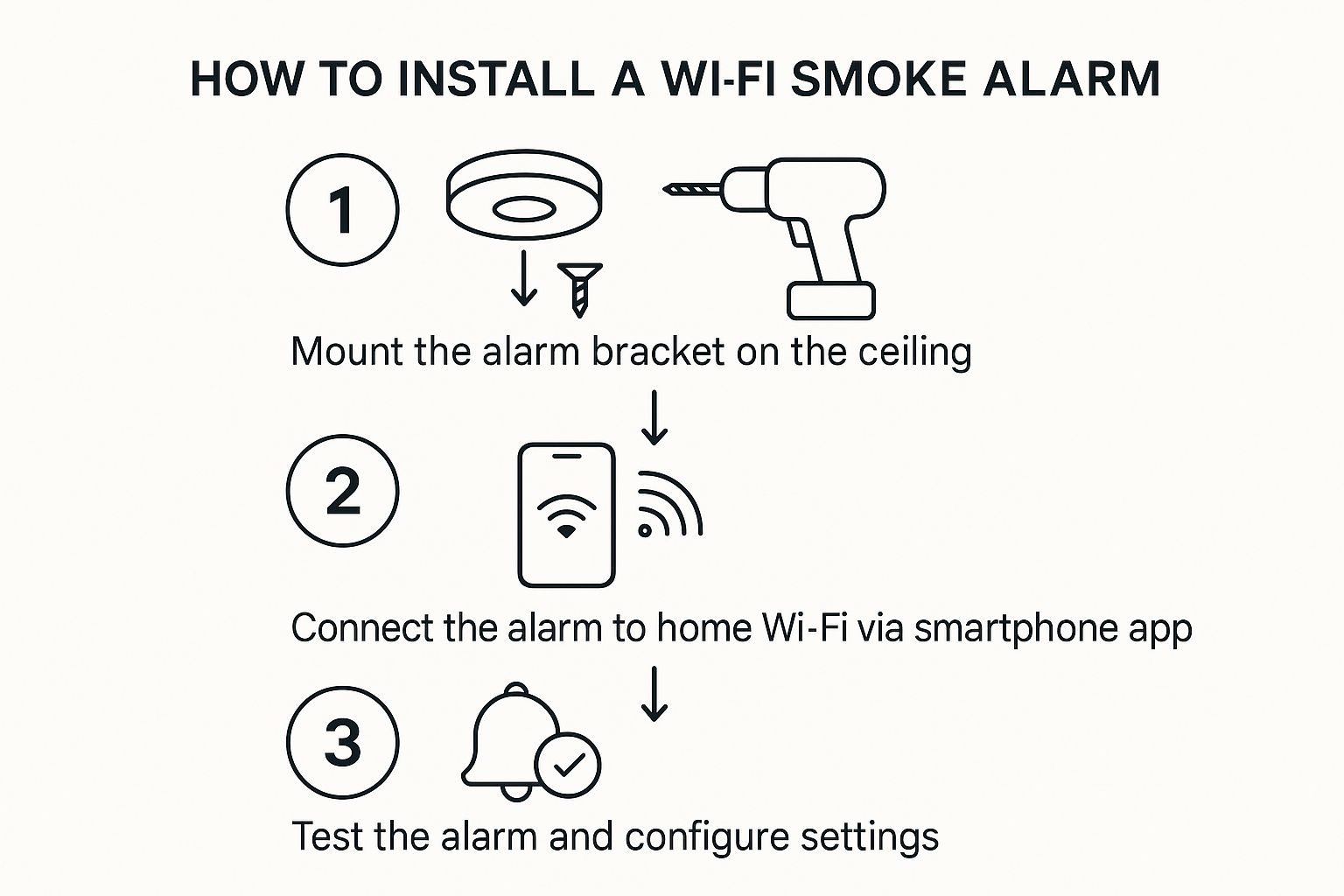
As you can see, it’s a logical journey from mounting the hardware to having a fully configured, life-saving system.
With your alarms physically installed, it’s time to bring them online. This is where the “smart” part of your wifi smoke alarms really comes to life. Each brand has its own smartphone app, but the connection process is generally very similar and designed to be user-friendly.
You’ll start by downloading the manufacturer’s app and creating an account. From there, the app will walk you through pairing each alarm to your home’s WiFi network. This usually involves scanning a QR code on the alarm itself or pressing a button to put it into pairing mode.
Here’s a pro tip from the field: pair and name each alarm one by one before you install it, especially if you have a lot of them. Labelling them “Kitchen,” “Master Bedroom,” or “Upstairs Hallway” in the app as you go makes it so much easier to manage them later. More importantly, you’ll instantly know where a potential alert is coming from.
After all your devices are connected to the WiFi, the final—and most crucial—step is to run a full system test right from the app. This will trigger every interconnected alarm in the house to sound off, confirming they are all communicating correctly with each other and, of course, with your phone.
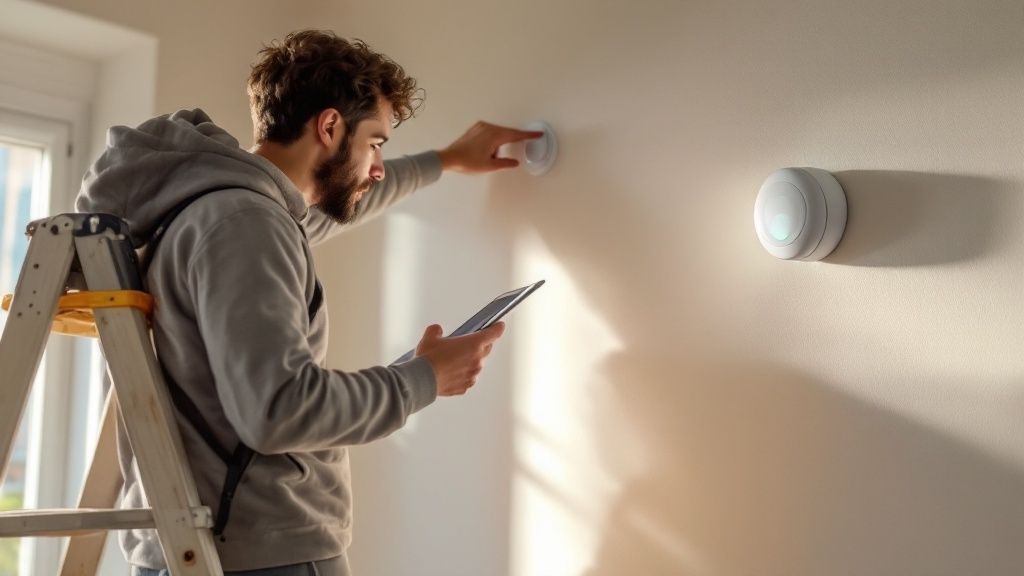
Look, your new safety system is only as good as its ongoing upkeep. The good news is that keeping your wifi smoke alarms in peak condition is worlds easier than with older models, all thanks to the smart features built right in. All it takes is a simple routine to make sure they’re always ready to protect you and your family.
Gone are the days of wobbling on a dining chair to jab a tiny test button. The best part about a connected system is running a full diagnostic check straight from your phone, whether you’re in the lounge room or on holiday.
Honestly, setting aside just five minutes a month is all you need to keep your system performing flawlessly. It’s a tiny time investment that delivers massive peace of mind, knowing your first line of defence against fire is active and reliable.
Here’s a simple routine we recommend to our clients:
A common mistake people make is forgetting the physical side of maintenance. Dust and cobwebs can easily build up in an alarm’s vents, which can obstruct the sensor. This can lead to annoying false alarms or, far worse, a delayed response in a real emergency.
Making sure your wifi smoke alarms are clean should be part of your regular home maintenance schedule. A gentle clean every six months is enough to prevent the build-up that can mess with the photoelectric sensor inside.
The right way to clean them is with the soft brush attachment on your vacuum cleaner. Just gently go over the vents and casing to clear away any dust. A word of warning: never use household cleaners or solvents. The chemicals can wreck the internal components and degrade the plastic.
This simple step ensures the alarm can accurately pick up on real smoke particles when it matters most. For a deeper dive into the testing process, you can check out our complete guide on how to properly test a smoke detector. Following these straightforward steps will protect your investment and ensure your system works perfectly when you need it most.
Jumping into any new tech brings up a few questions, and when it’s about something as critical as your family’s safety, you want straight answers. We get a lot of the same queries from Brisbane homeowners when they first look into wifi smoke alarms, so we’ve gathered the most common ones here.
One of the biggest worries we hear is about reliability. It’s a fair question: what happens to your “smart” alarm if the power goes out or the internet drops?
This is the most important thing to know: your core protection is completely unaffected. While the WiFi part is what sends handy alerts to your phone, the alarms themselves talk to each other using their own dedicated radio frequency (RF).
This means if one alarm detects smoke, it still sends a signal to every other alarm in your house, and they will all sound their ear-piercing sirens. The only thing you lose without internet is the smartphone notification. The essential, life-saving siren system that wakes you up at 2 AM works every single time, internet or not.
This one’s a hard and fast rule, and it all comes down to the type of alarm you buy. The law here in Queensland is crystal clear to keep everyone safe.
If you’re ever in doubt, just call a professional. It guarantees your family’s safety and keeps you on the right side of the law.
A lot of people think that because their old alarm went off from burnt toast, it was just “too sensitive.” The truth is, a good photoelectric alarm is supposed to detect airborne particles. The game-changer with a smart alarm isn’t less sensitivity, but better control.
The latest wifi smoke alarms are actually engineered to be much smarter about those annoying false alarms. Most quality photoelectric models now use clever algorithms to get better at telling the difference between a bit of cooking smoke and a genuine fire.
Plus, the convenience factor is massive. If it does go off while you’re cooking, you can usually just tap a button in the app on your phone to silence it. No more standing on a chair frantically waving a tea towel.
For guaranteed compliance and professional installation of your wifi smoke alarms, trust the experts at DLG Electrical. Make sure your family’s safety is in good hands by having your system installed correctly from the get-go. Visit us at https://dlgelectrical.com.au to get a free quote today.

Master Electrician with over 30 years of experience. Founded DLG Electrical in 2005 after international project work including electrical installations at Stamford Bridge Stadium, London(Home of Chelsea FC).

Local Electricians that can fix all Electric Hot water Systems.
Motion sensor lights are a versatile addition to any home, offering nu
