83 Jean St, Grange QLD 4051
Mon-Fri 07:30 AM - 04:00 PM - Sat - 8:00 - 12 - Sunday Closed
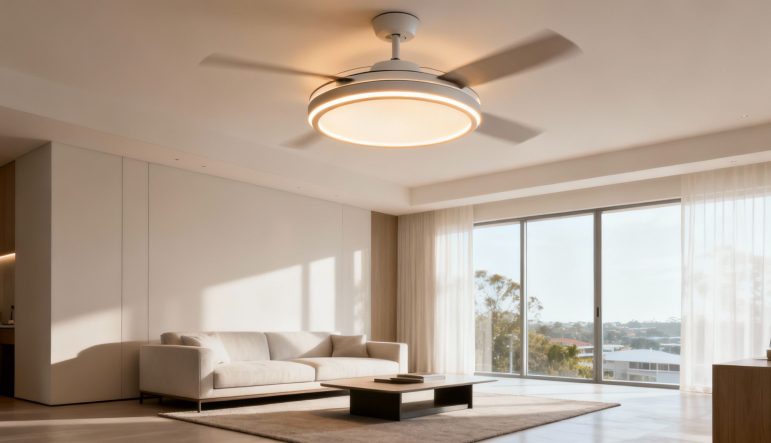
A ceiling fan light is exactly what it sounds like: a single unit that combines a fan’s cooling power with a light’s brightness. It’s a hugely popular choice for Brisbane homes because it’s a practical, two-in-one solution that saves ceiling space and gives you both comfort and light from a single electrical point.
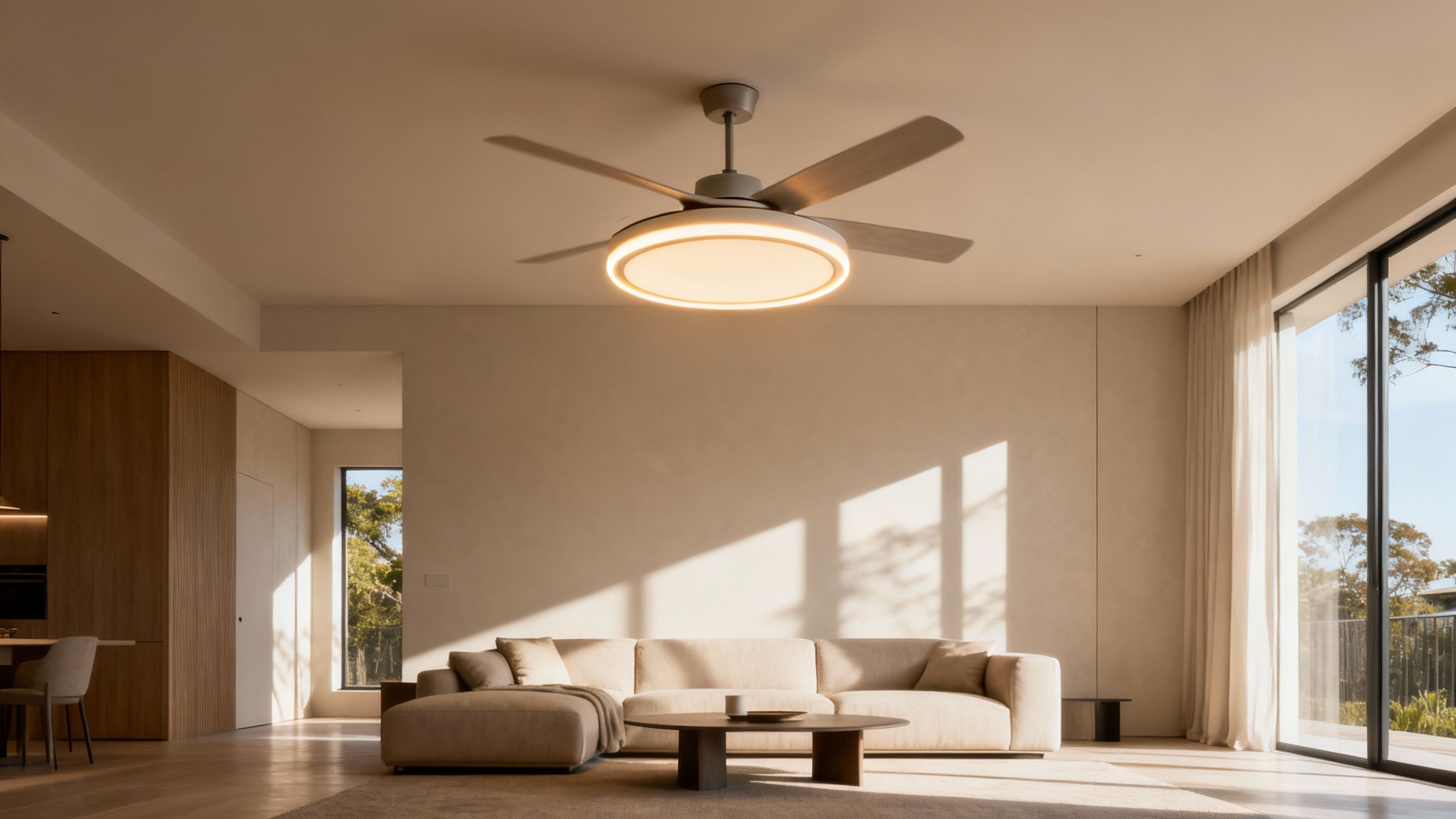
Tired of battling the Queensland heat while your energy bills keep climbing? A ceiling fan with a built-in light isn’t just another fixture; it’s one of the smartest upgrades you can make to your home. Forget cluttering your ceiling with a separate fan and light. A modern ceiling fan light pulls double duty, combining powerful airflow and beautiful illumination into one sleek, elegant unit.
These fixtures have come a long way from their purely functional roots. Today, they are stylish centrepieces that can define a room’s look and feel while keeping you comfortable all year round. Think of this guide as your starting point for understanding how this one simple change can deliver a trio of powerful benefits.
For homeowners in Brisbane, the appeal of a ceiling fan light really comes down to its practicality and efficiency. The benefits are crystal clear and tackle the common challenges of our local climate head-on.
When you weigh up the options, the integrated approach of a ceiling fan light often comes out on top for practicality and cost-effectiveness.
| Feature | Ceiling Fan Light | Separate Fan, Lights, and Air Con |
|---|---|---|
| Space | Single fixture, minimalist footprint. | Multiple fixtures clutter the ceiling. |
| Installation | One electrical point, simpler wiring. | Requires multiple electrical points and complex wiring. |
| Energy Use | Highly efficient, uses 50-100 watts. | Air con alone uses ~3,500 watts. |
| Cost | Lower upfront and running costs. | Higher costs for multiple units and installation. |
| Aesthetics | Integrated, stylish, and cohesive look. | Can look disjointed and cluttered. |
Ultimately, a ceiling fan light streamlines your home’s comfort and lighting into one elegant, cost-effective package.
The Australian ceiling fan market is booming for a good reason. Projections show its value growing from USD 224 million in 2024 to nearly USD 293 million by 2033. This surge is fuelled by the shift towards energy-saving solutions—after all, a modern ceiling fan with a light uses just 50-100 watts compared to an air conditioner’s massive 3,500 watts.
To truly get the most out of your space, you need to balance comfort with ambiance. Combining good airflow with smart illumination creates a room that’s not just comfortable but also inviting and perfectly lit for any occasion. These tips to put your living room in the best light are a great place to start. At DLG Electrical, we specialise in helping you achieve that perfect balance.
Picking the right ceiling fan light is about so much more than just moving air—it’s a design choice that needs to feel right in your home. Think of it like finding the perfect pair of shoes for an outfit. Some are purely practical, others are bold statements, but the right one pulls the whole look together.
Your starting point is the fan’s core design. Each style is engineered to solve a problem, whether that’s dealing with the low ceilings in a classic Queenslander or creating a dramatic focal point in a modern, open-plan living area. Nailing this first step is key to finding your perfect match.
The most common options you’ll come across are Standard, Hugger, and Decorative models. Each one serves a distinct purpose and is built for different architectural needs. Getting this right from the start ensures you get both the performance and the look you’re after.
Once you’ve settled on a fan type, the next piece of the puzzle is the light kit. This is what really sets the mood and determines the brightness of your space. It’s where pure function meets personal style.
Many modern fans now come with integrated LED lights. These are built directly into the fan’s housing for a clean, minimalist look. Not only are they incredibly energy-efficient, but they last for ages, meaning you won’t be dragging out the ladder to change a bulb anytime soon.
For a softer, more traditional vibe, bowl lights are a classic choice. A single glass bowl covers the bulbs, diffusing the light to create a warm, ambient glow that’s perfect for bedrooms or living rooms where you want a gentle, inviting atmosphere.
But if you need bright, targeted light, a multi-light fixture (sometimes called a branch or fitter style) is the way to go. These kits have several individual lights, often with their own shades, that can be angled to point light exactly where you need it. Think kitchens, home offices, or large family rooms.
Standard ceiling fans are popular for a reason, making up a huge 59.51% of the Australian market’s revenue in 2023. At DLG Electrical, we see this every day; over 70% of our fan installations in 2024 have included light kits, as Brisbane homeowners look for efficient, all-in-one solutions that comply with AS/NZS 3000 wiring rules. And while decorative models are the fastest-growing trend, the sheer reliability of standard fans makes them a go-to for renovations. You can find more insights about the Australian ceiling fan market on grandviewresearch.com.
Ultimately, the goal is to create a look that feels cohesive and intentional. A rustic fan with weathered timber blades might pair beautifully with a caged, industrial-style light kit, while a sleek white fan is the perfect partner for an understated integrated LED. For a deeper dive into how illumination shapes a home’s atmosphere, it’s worth exploring the world of lighting design and artistry. Blending form and function is how you choose a ceiling fan light you’ll be happy with for years to come.
Choosing the right size for your ceiling fan isn’t just a friendly suggestion—it’s the key to getting the cooling power and balanced look you’re after. A fan that’s too small for a big room will just spin its heart out, barely making a difference. On the flip side, a massive fan in a tiny room can feel overpowering and create an annoying draft instead of a gentle breeze.
Thankfully, getting it right is pretty straightforward. It all boils down to matching the fan’s blade span (that’s the full diameter from tip to tip) with your room’s total area. This ensures the fan moves the right amount of air to cool the space efficiently.
The easiest way to figure this out is to measure your room’s length and width in metres, then multiply them to get the square metres. With that number in hand, you can find the perfect fan diameter. Taking a moment to do this avoids guesswork and makes sure you end up with a fan that’s genuinely built for the room.
To make it even easier, here’s a quick guide to help you find the right match for common Australian room sizes.
| Room Size (Square Metres) | Recommended Fan Diameter (cm) |
|---|---|
| Up to 7 sq. m (e.g., laundry, small bathroom) | 76 – 91 cm |
| 7 – 13 sq. m (e.g., home office, small bedroom) | 107 – 122 cm |
| 13 – 21 sq. m (e.g., standard bedroom, dining area) | 122 – 132 cm |
| 21 – 37 sq. m (e.g., living room, large bedroom) | 132 – 142 cm |
| Over 37 sq. m (e.g., open-plan living, great room) | 142 cm or larger |
This table gives you a great starting point, but if you want to dive deeper into measurements and other things to consider, our complete ceiling fan size guide breaks down every last detail.
While diameter is the main event, your ceiling height plays a huge role too. For both safety and proper airflow, the fan blades absolutely must be at least 2.1 metres off the floor. If you have standard 2.4-metre ceilings, a flush-mount or “hugger” fan is often your best bet, as it sits right up against the ceiling.
This little decision tree can help you picture which fan style works best for your ceiling height.
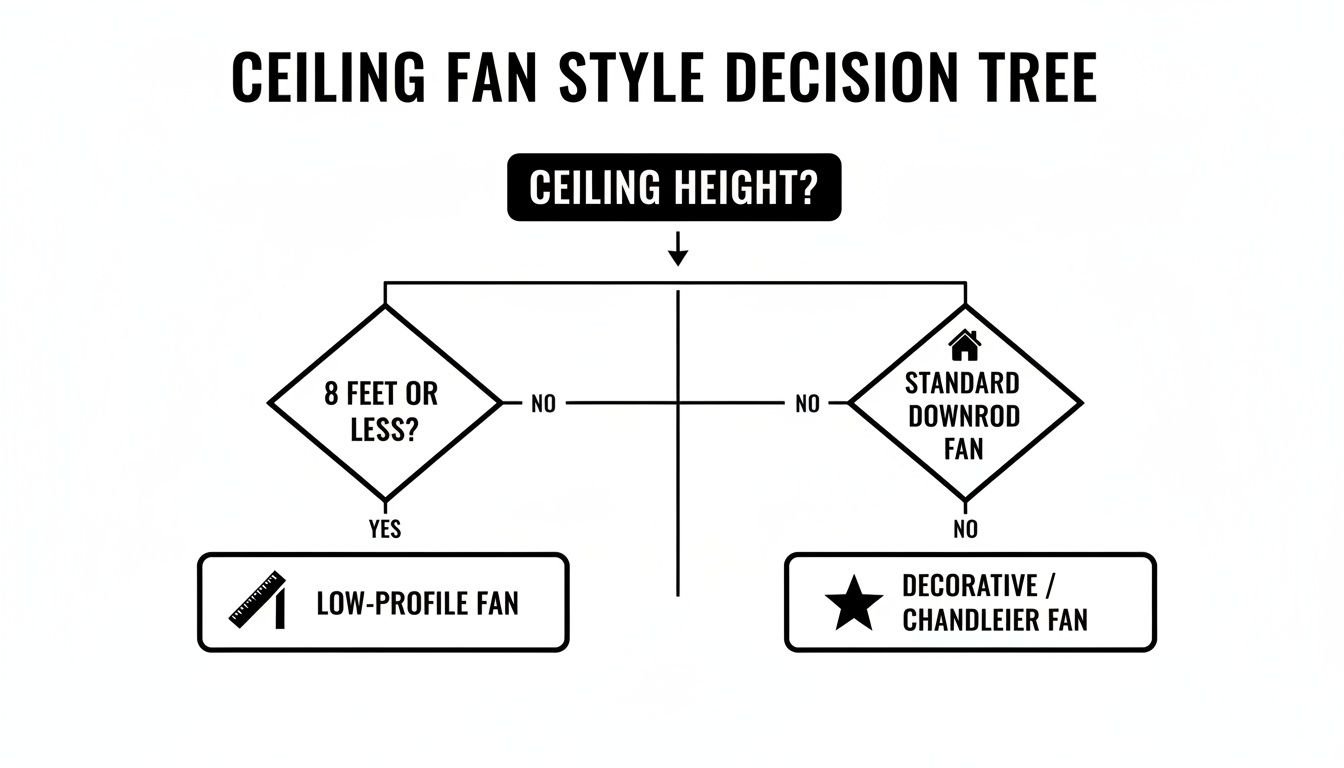
If your ceilings are higher than 2.7 metres, you’ll need a fan with a longer downrod. This is just an extension pipe that lowers the fan to the right height, making sure the air actually circulates where you can feel it instead of getting stuck up high. Many Brisbane homes also have angled or sloped ceilings, and for those, you’ll need a special sloped ceiling adapter kit to keep the fan hanging level and working safely.
There’s one last piece of the puzzle that often gets missed: the junction box in your ceiling. This is the electrical box where the fan gets mounted and wired. A standard box made for a simple light fitting is not strong enough to handle the weight and constant movement of a ceiling fan.
It is a legal and safety requirement in Australia that a ceiling fan must be mounted to a fan-rated junction box that is properly secured to a ceiling joist or a specially installed brace. This prevents the fan from wobbling, vibrating excessively, or dangerously falling.
This isn’t something you can just eyeball. A licensed electrician from DLG Electrical will always verify this as part of any installation. We make sure the existing structure is solid enough to handle the dynamic load of a new fan, giving you total peace of mind that your new fixture is not only stylish but completely safe and secure.
The ‘light’ part of your ceiling fan is so much more than just a light source. Think of it as a powerful tool for saving a bit of cash and setting the perfect mood in your home. The bulb you screw in there has a direct say in your energy bills, the overall comfort of the room, and how often you’ll find yourself balancing on a ladder to change it. Getting this choice right pays you back for years to come.
For any home here in Brisbane, the hands-down winner is LED (Light Emitting Diode) technology. Honestly, it’s not even a fair fight. Old incandescent bulbs were basically tiny, inefficient heaters that just happened to glow. They wasted a ridiculous amount of energy as heat—the absolute last thing you want during one of our sweltering Queensland summers.
LEDs, on the other hand, are the complete opposite. They’re incredibly efficient, turning most of their energy straight into light with very little heat waste. This means they chew through far less electricity and, just as importantly, they won’t add extra warmth to your room, letting your fan do its job of cooling you down more effectively.
When you stack LEDs up against older tech like halogen or incandescent bulbs, the argument for making the switch is pretty overwhelming. The financial and practical perks start showing up almost immediately. This isn’t just a small tweak; it’s a massive leap forward in performance and durability.
If you really want to get into the nitty-gritty of it, our detailed comparison between LED lights vs halogen breaks it down even further.
In Australia, choosing an energy-efficient ceiling fan light can unlock significant savings. Government rebates can potentially reduce installation costs by 20-30% for qualifying models, and Queenslanders can slash summer electricity bills by up to 25% with a low-wattage fan. The move to long-lasting LEDs further compounds these savings and supports national sustainability goals. You can discover more insights about the Australian ceiling fan market on researchandmarkets.com.
Modern LED technology gives you more than just efficiency; it offers fantastic control over your home’s lighting. Many new ceiling fan light kits come packed with advanced features that can completely change the feel of a room with a simple press of a button.
Dimmers are a really popular feature, letting you adjust the brightness from a functional, bright light right down to a soft, ambient glow. This kind of versatility is perfect for a room that does double duty, like a living area used for kids’ homework and then movie nights later on.
On top of that, many LEDs now offer adjustable colour temperatures. This clever feature lets you switch the light from a warm, cosy white (around 2700K), which is ideal for relaxing in the evening, to a cool, crisp white (around 5000K) that feels more like daylight and is great for tasks or waking up in the morning.
The takeaway here is simple. Picking the right bulbs—specifically LEDs—for your ceiling fan light is one of the easiest wins for securing ongoing energy savings while seriously upgrading the comfort and function of your living space.
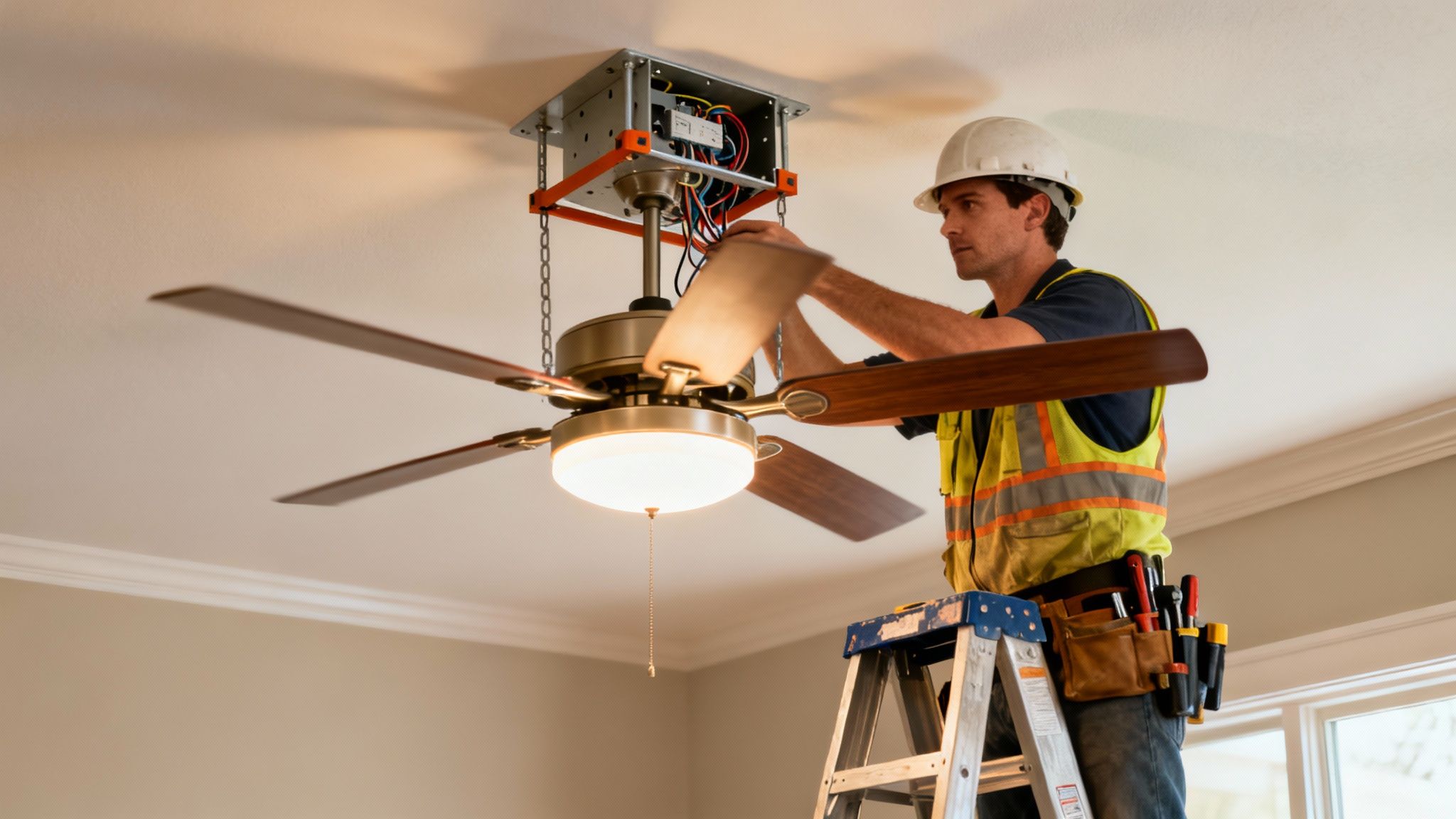
When it comes to weekend projects, it’s always tempting to roll up your sleeves and get stuck in. But installing a ceiling fan light is one job where DIY isn’t just a bad idea—it’s illegal and downright dangerous in Australia. Why? Because electrical work demands a level of precision, knowledge, and adherence to strict safety standards that only a licensed professional can bring to the table.
Here in Queensland, all electrical work is governed by a strict set of regulations known as the AS/NZS 3000 wiring rules. These aren’t just suggestions; they are the law, designed to protect you, your family, and your home from the very real risks of electrical faults, fires, and electrocution. Trying to do this work yourself not only voids your home insurance but can also land you with some hefty penalties.
That’s why getting a licensed electrician from DLG Electrical isn’t just a smart move; it’s the only way to ensure your new fan is installed safely, compliantly, and is built to last.
The risks that come with getting a ceiling fan installation wrong are massive. It’s a lot more involved than just connecting a few wires, and even a small mistake can have devastating consequences.
These dangers are exactly why Australian law is so clear: only licensed professionals are allowed to handle this kind of work.
When a DLG Electrical technician shows up to install your new ceiling fan light, they follow a meticulous process that’s about much more than just hooking up power. It’s a full safety and performance check from start to finish.
First up, we always assess the existing structure. We need to answer the crucial question: “Can this ceiling actually support a fan?” Most standard light fixture boxes are simply not designed to handle the weight and dynamic forces of a fan in motion. Our electricians make sure a fan-rated support brace is secured firmly to the ceiling joists, creating a rock-solid foundation.
Next, we handle the wiring. This often involves running the right type of cabling to allow independent control of the fan and light, whether that’s through a dual wall switch or a remote control receiver. We also calculate the electrical load to make sure your new fixture doesn’t overload the circuit—a classic DIY mistake. Every connection is made securely and checked to ensure it meets the AS/NZS 3000 standards.
Peace of mind is the ultimate benefit of professional installation. Knowing your ceiling fan light is securely mounted, correctly wired, and fully compliant with national safety standards is invaluable. It’s the only way to ensure the fixture operates safely and efficiently for its entire lifespan.
Finally, we assemble, mount, and balance the fan to prevent any annoying wobbles or noises. We test every single function—all the fan speeds, the light, and any remote features—to make sure everything is working perfectly. Our detailed guide to ceiling fan with installation gives you an even deeper look into what our comprehensive service covers. By trusting a professional, you’re not just getting a new fixture; you’re investing in safety and quality craftsmanship.
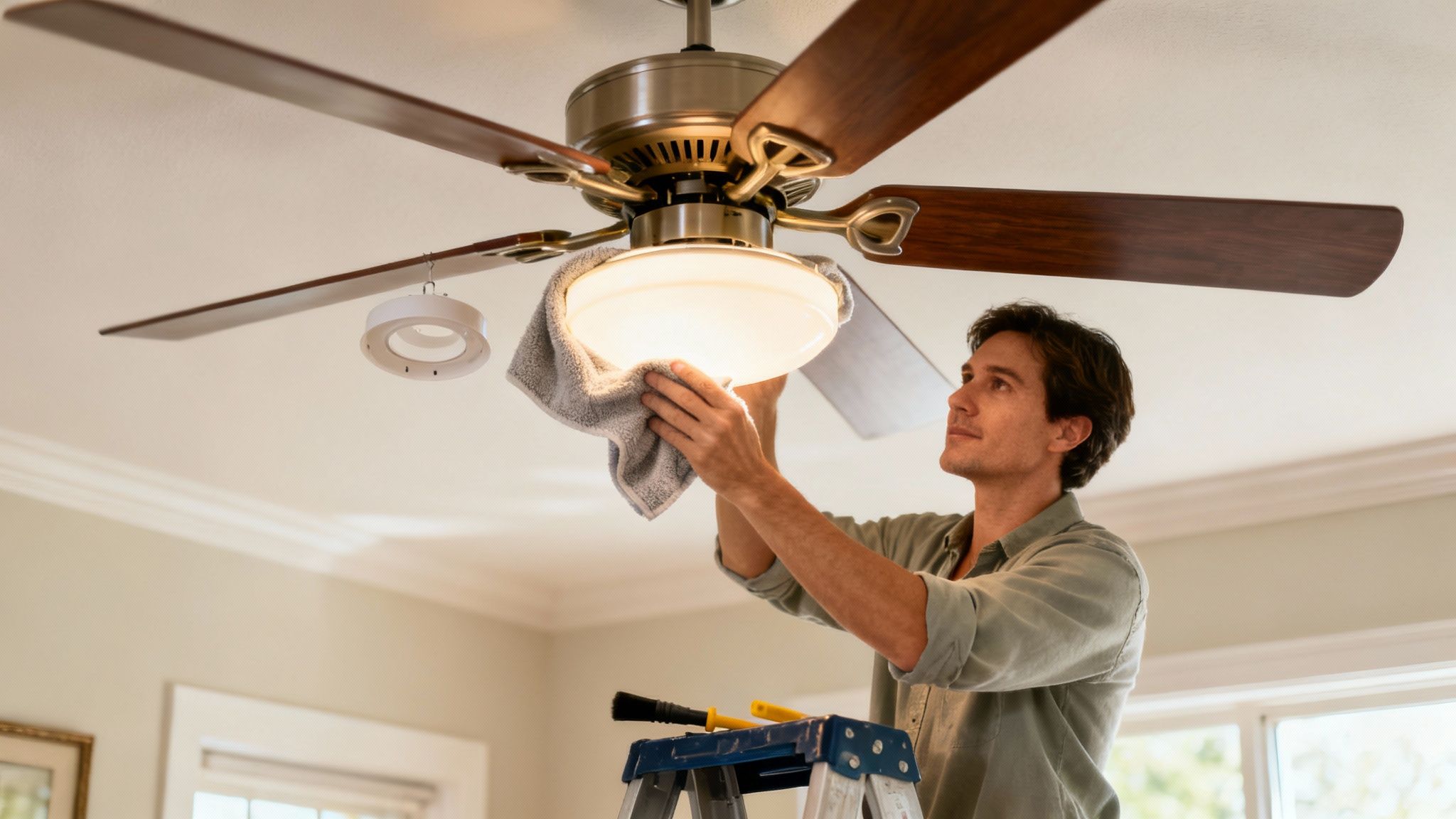
Your new ceiling fan light is a hard-working appliance, and like anything in your home, a little TLC goes a long way. Some simple, routine maintenance will keep it running quietly and efficiently for years. The good news is, you don’t need to be an expert to handle the basics.
Just a few quick checks every six months or so can make a world of difference. It’s all about preventing common issues before they even start, protecting your investment and ensuring your fan runs smoothly and the light shines brightly.
Keeping your ceiling fan in top shape is surprisingly straightforward. By adding these simple tasks to your regular cleaning routine, you can ensure it operates efficiently and, most importantly, safely. Before you start, always remember the golden rule: turn the power off at the circuit breaker.
A wobbly fan isn’t just an annoyance; it’s a clear signal that components are under stress. Taking a minute to tighten loose screws each season prevents unnecessary wear on the motor and ensures the entire unit stays securely and safely mounted.
One of the most useful—and most overlooked—features of a ceiling fan light is its reversible motor. A tiny switch lets you change the direction the blades spin, which is a game-changer for optimising airflow for both summer cooling and winter heating.
Seasonal Directional Switch:
While basic cleaning and tightening are easy DIY jobs, some issues need an expert touch. If you’re hearing a persistent humming or grinding noise from the motor, or if the lights flicker even after you’ve changed the bulb, it’s time to call in a pro. These could be signs of deeper problems, like internal wiring faults or a motor on its way out.
For any complex electrical issues with your ceiling fan light, the safest bet is to contact a licensed electrician from DLG Electrical. We can diagnose the problem correctly and make sure any repairs are done safely and to Australian standards.
Even after covering all the basics, there are always a few extra questions that pop up for Brisbane homeowners thinking about a new ceiling fan light. This is where we tackle those common queries we hear all the time at DLG Electrical. Think of it as a final checklist to get all your ducks in a row.
Getting these last details sorted will help you move forward with total confidence. We’ll cover everything from installation costs to how well these fans actually perform in our sticky Brisbane weather, making sure there are no surprises left.
This is easily the most common question we get, and the honest answer is: it really depends. The final price tag for a ceiling fan light installation can shift based on a few key things in your home. We need to look at the state of your existing wiring, how high your ceilings are, and whether we need to install a new support brace to hold the fan safely.
To avoid any guesswork, your best bet is always to get a specific quote. At DLG Electrical, we offer a free, no-obligation quote that’s tailored to your home’s unique setup. This way, you get a clear, accurate price right from the start. While it can be tempting to find a cheaper shortcut, investing in a professional ensures safety, compliance, and flawless performance—saving you money and a whole lot of headaches down the track.
Yes, absolutely. Just about every modern ceiling fan with a light is built for dual control, giving you total flexibility. This is usually handled in one of three ways: with a handy remote control, a dual wall switch, or even through smart home apps if you’re a bit more tech-savvy.
When your DLG Electrical technician installs the unit, they’ll wire it up according to your preference. Remotes are hands-down the most popular choice these days, purely for their convenience. You can tweak fan speeds, dim the lights, and switch things on or off from anywhere in the room without having to get up.
One of the biggest advantages of a modern ceiling fan light is its versatility. Having independent control means you can enjoy a gentle breeze without the lights on during a sunny afternoon, or use the light as your room’s main source of illumination without running the fan in winter.
They are incredibly effective, especially for cutting through that classic Brisbane humidity. It’s a common myth that fans actually cool the air down—they don’t. What they do is create a powerful wind-chill effect, which makes the air feel significantly cooler on your skin.
This constant air movement is brilliant at helping moisture evaporate right off your skin, which is what really tackles that sticky, uncomfortable feeling on a humid day. For many households, this provides enough relief to dramatically cut back on using the power-hungry air conditioner, delivering a whole lot of comfort and energy savings all summer long.
Ready to upgrade your home with the perfect blend of comfort and style? The expert team at DLG Electrical is here to help you select and safely install the ideal ceiling fan light for your space. Get your free, no-obligation quote today!

Master Electrician with over 30 years of experience. Founded DLG Electrical in 2005 after international project work including electrical installations at Stamford Bridge Stadium, London(Home of Chelsea FC).

Local Electricians that can fix all Electric Hot water Systems.
Motion sensor lights are a versatile addition to any home, offering nu
