83 Jean St, Grange QLD 4051
Mon-Fri 07:30 AM - 04:00 PM - Sat - 8:00 - 12 - Sunday Closed
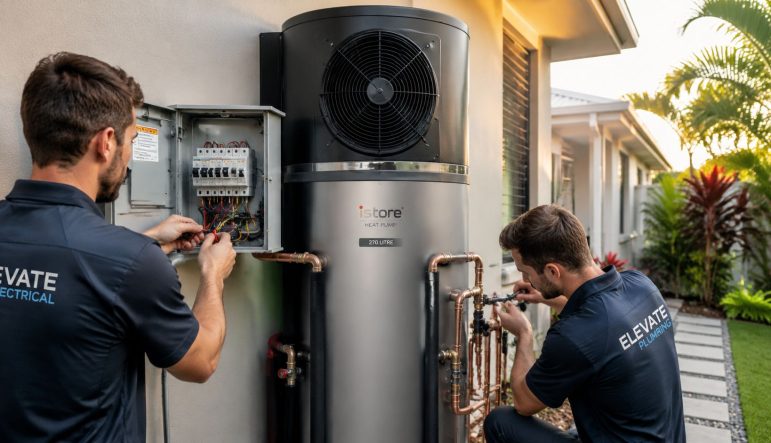
Your old storage tank is ageing, power bills keep climbing, and you've probably heard heat pumps are the smarter option. That's usually the point where Brisbane homeowners start comparing systems, rebates, and installer quotes, then realise most advice skips the details that decide whether the job runs well or becomes a headache.
A good heat pump hot water installation isn't just about buying an efficient unit. It's about matching the system to the home, giving it the right electrical supply, installing it to Australian standards, and avoiding the cheap shortcuts that cause noise, faults, poor performance, and warranty arguments later.
Brisbane suits this technology well. Our climate gives heat pumps a practical advantage because they draw warmth from the surrounding air rather than relying on a conventional resistance element to do all the work. That makes them appealing for homeowners replacing ageing electric storage systems, renovators planning all-electric upgrades, and landlords who want lower running costs without compromising safety or compliance.
Heat pump hot water systems have moved well beyond being a niche upgrade. Across Australia, uptake has accelerated, with the Clean Energy Regulator documenting 159,848 hot water heat pump systems installed as reported by Renew Economy's coverage of the national rollout. That tells you something important. Homeowners aren't treating heat pumps like an experiment anymore.
In Brisbane, the appeal is straightforward. People want reliable hot water, lower running costs, and a system that fits the shift away from older gas and inefficient electric resistance storage units. They also want fewer surprises after installation. That's where the conversation usually needs more honesty.
A heat pump can be an excellent upgrade. It can also be a poor one if the installer ignores airflow, drainage, pipe insulation, switchboard capacity, or the electrical supply arrangement.
Practical rule: The unit matters, but the installation quality decides whether the system performs properly over the long term.
Brisbane homes vary a lot. Some have older switchboards. Some have tight side access. Some are straightforward tank replacements, while others are part of a renovation or a broader electrification plan. The right answer depends on the property, not just the brochure.
The local climate is a big advantage because heat pumps work by extracting heat from ambient air. In a city like Brisbane, that usually gives the system favourable operating conditions for much of the year.
Homeowners also tend to use hot water in patterns that suit storage-based systems. Families shower in the morning or evening, then rely on stored hot water through the day. A well-selected heat pump can fit that routine well, especially when the installation has been planned properly from the start.
Most bad outcomes don't come from the basic technology. They come from rushed design decisions, weak trade coordination, or low-grade products sold on price alone. That's why the technical side matters as much as the energy-saving pitch.
A heat pump hot water system is easiest to understand if you think of it as a refrigerator in reverse. A fridge removes heat from inside the cabinet and pushes it out into the room. A heat pump does the opposite job for your hot water. It pulls warmth from the air and transfers that heat into the water stored in the tank.
That's the key difference from a standard electric storage unit. A conventional unit uses an electric element to create heat directly. A heat pump mainly uses electricity to move heat from one place to another.
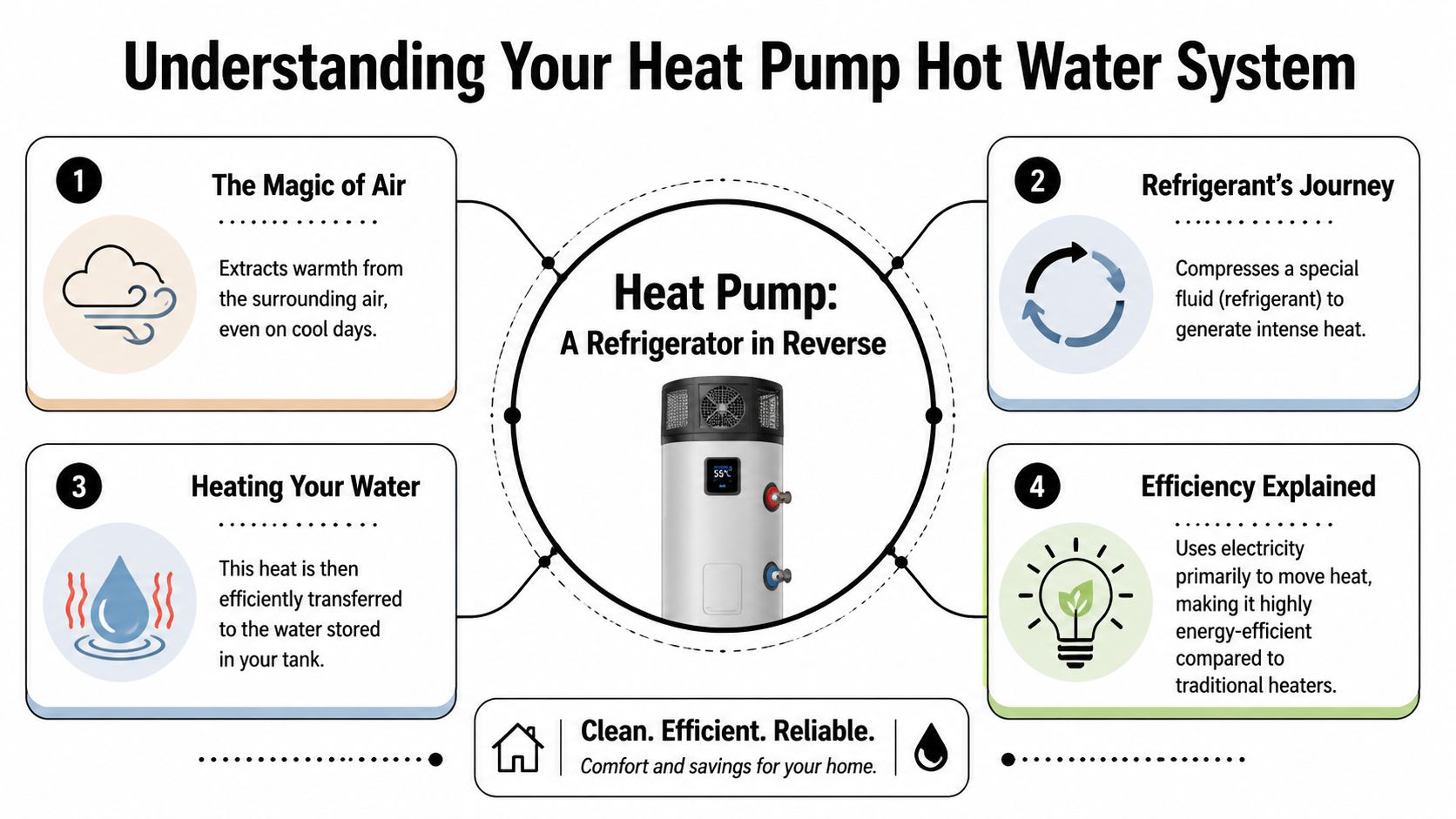
Inside the unit, a fan draws in air. A refrigerant circuit captures heat from that air, then a compressor raises the refrigerant temperature so the heat can be transferred into the stored water. The tank keeps that water ready for taps, showers, and appliances around the house.
That's why people often describe heat pumps as efficient. They aren't trying to brute-force the whole job with resistance heating.
For homeowners still comparing options, this guide on choosing a hot water system is useful because it helps frame where heat pumps sit against other common system types.
Brisbane's subtropical conditions suit this style of water heating better than colder regions. When the surrounding air has usable warmth in it for much of the year, the system has a better starting point. That doesn't remove the need for correct installation, but it does explain why the technology makes practical sense here.
A heat pump still needs planning around placement, noise, drainage, and wiring. But from a pure operating principle, Brisbane gives it a friendly environment.
A heat pump isn't complicated once you understand the principle. It's an air-powered water heater that relies on proper installation more than flashy marketing.
It isn't a simple plug-in appliance. It isn't a one-size-fits-all swap for every old tank. And it isn't automatically a good buy just because the sticker mentions rebates.
The best results come when the unit capacity, location, plumbing layout, and electrical setup all work together. That's what separates a smooth, quiet, compliant installation from one that ends up disappointing the owner.
A Brisbane homeowner gets two quotes for the same heat pump model and expects them to be close. One is noticeably cheaper. In practice, that gap often comes down to what has been included, and what has been left for a surprise on installation day.
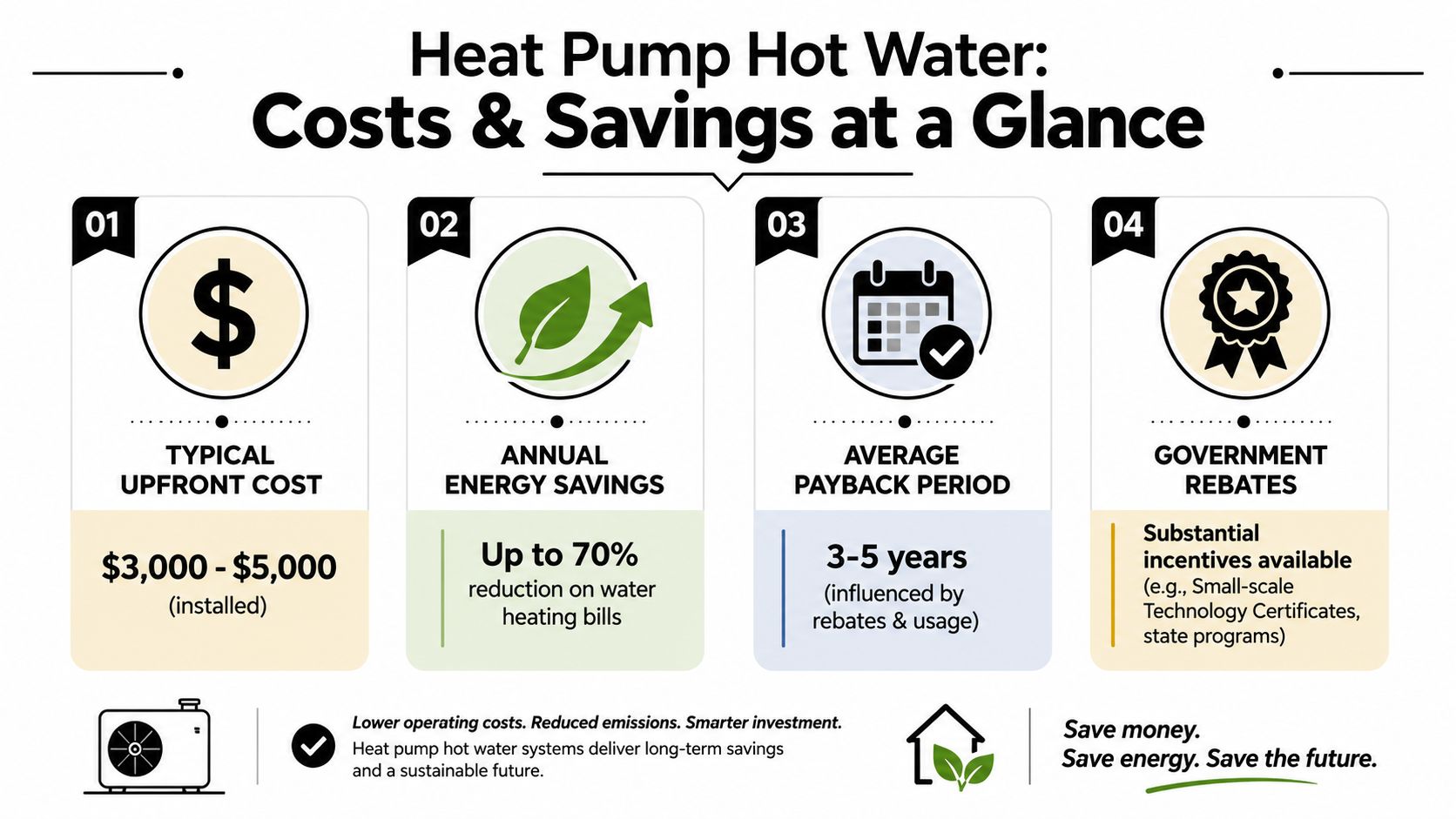
Upfront cost is only part of the decision. The true cost is the installed cost after rebate, with the electrical, plumbing, removal, and compliance work properly allowed for. If a quote looks sharp because it skips site-specific work, it usually stops looking cheap once the job starts.
One useful benchmark from this heat pump rebate and pricing overview is that the STC rebate provides average savings of about $700, and the average fully installed cost drops to around $4,300 after that rebate. That gives homeowners a reasonable starting point, not a guaranteed final figure for every property.
The model matters, but installation conditions usually decide whether a job stays straightforward.
Common cost drivers include:
If you want a broader price picture before comparing quotes, this guide to new hot water system cost helps explain where installation budgets tend to shift.
Running cost savings are real, but they are never one-size-fits-all. A household replacing an older electric storage system with heavy daily hot water use will usually see a stronger return than a smaller household that already uses less.
The same pricing overview notes that annual savings can range from $400 to $2,000. That range is wide for a reason. Usage patterns, tariff structure, system sizing, and installation quality all affect the result.
This is the part generic sales advice often misses. A heat pump that is poorly matched to the home, or installed without proper attention to the electrical and site conditions, can underperform long before the owner sees the savings they were promised.
Ask these questions before you sign anything:
| What to check | Why it matters |
|---|---|
| Has the STC rebate already been deducted | Some quotes show the gross figure first, while others only show the net price after rebate. |
| What electrical work is included | Dedicated supply and board-related work can change the total cost quickly. |
| Who handles warranty issues | A good manufacturer matters, but local support matters just as much when faults occur. |
Judge the job on installed cost, compliance, warranty support, and expected running cost over time.
That approach gives a far clearer picture of value than chasing the lowest sticker price.
This is the part many homeowners never hear until installation day. A heat pump hot water system needs more than a spare corner outside and a nearby power point.
The location has to work for the unit and for the trades. That means enough air circulation, a solid and level base, room for servicing, sensible distance from bedroom windows where possible, and proper drainage for condensate and overflow. If the site is cramped or poorly planned, performance and practicality suffer.
In Australia, the compressor requires a dedicated hardwired connection to the switchboard, not a standard plug-in setup, as outlined in this installation requirements discussion. That point is often glossed over in consumer content, but it matters for safety, efficiency, and compliance.
The controller may use a regular socket on some systems, but that doesn't change the need for the compressor circuit to be properly hardwired. If you're replacing an older electric storage unit, the existing wiring may not suit the new arrangement without modification.
That's one reason some installations also trigger a closer look at the board itself. If your home has an older setup, switchboard upgrades in Brisbane can become part of making the system safe and compliant.
A proper site inspection should account for more than just whether the tank fits.
Key items include:
The wrong location can turn a good product into a poor installation.
Australian requirements also cover insulated pipework, drain terminations, and temperature control measures depending on the building class and setup. If an installer talks only about rebates and never mentions electrical supply, drainage, or insulation, that's a warning sign.
A quality installation starts with the site. The appliance comes second.
On a well-organised job, installation day is usually straightforward. The work needs coordination, though. Heat pump hot water installation is a combined plumbing and electrical project, not a single-trade swap-over.
The best way to understand it is by looking at the sequence.
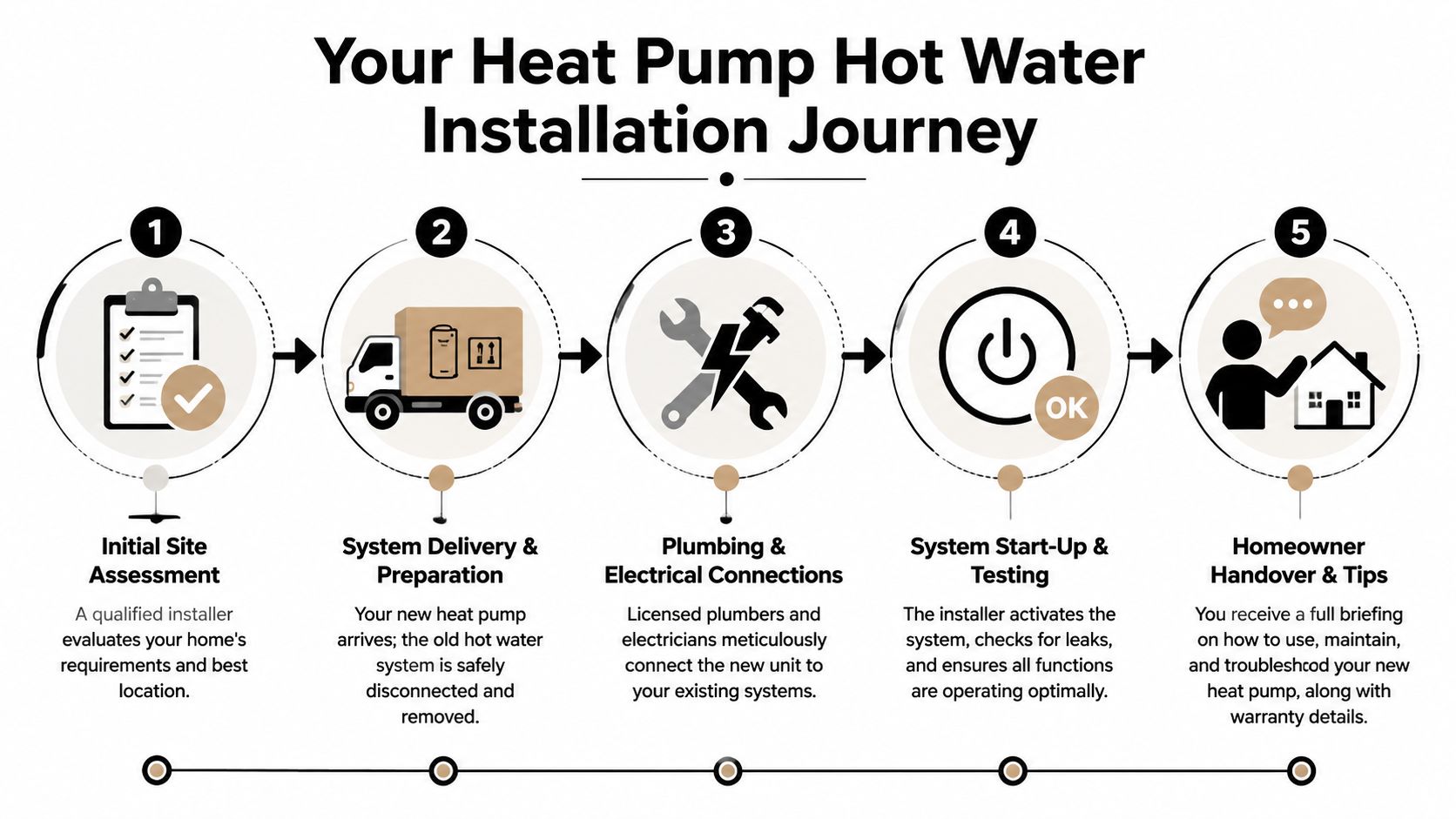
Before anything is disconnected, the installers confirm the unit location, access, existing services, and safe working area. That includes checking the base, clearances, drainage path, and electrical route.
If the old system is in a tight or awkward spot, this stage matters even more. Good prep prevents rushed decisions later in the day.
The existing system is shut down, drained, disconnected, and taken out. That sounds simple, but the condition of the old tank, corrosion around fittings, and access constraints can all affect how smoothly this goes.
For homeowners, this is usually the messiest-looking part of the day. It's normal.
A quick visual overview can help if you haven't seen a modern installation before:
Once the old system is out, the new heat pump is placed on its prepared base and the plumbing rough-in begins. Water connections, valves, drainage points, and insulated pipework are completed according to the relevant requirements.
At the same time, the electrician handles the dedicated supply arrangement, protective devices, and final electrical connection for the compressor, a stage where trade coordination matters most. The plumber and electrician don't work in isolation on a job like this.
After the connections are complete, the team fills the tank, checks for leaks, energises the system, and confirms operation. This is also where installers should verify that the controls are working correctly and that the unit starts and runs as expected.
A proper commissioning process isn't a formality. It's the point where small installation errors are caught before they turn into callbacks.
Good commissioning saves time twice. It protects the installer from return visits and protects the homeowner from avoidable faults.
The final step is often rushed on lower-quality jobs, but it shouldn't be. The homeowner should be shown the system basics, isolation points, expected operating sounds, and the maintenance items worth keeping an eye on.
A useful handover normally covers:
Most standard replacements can be completed within a day, although site complexity can change that. The main thing for the homeowner is knowing the process is structured and that both trades have clear responsibilities.
Compliance isn't admin for its own sake. It protects the homeowner, the occupants, and the warranty position if something goes wrong later.
Australian standards for heat pump installations include specific requirements for insulated hot water pipework and a mandatory thermostatic mixing valve to cap outlet temperatures at 50°C in new homes, as outlined in this SolarQuotes summary of AS/NZS 3500.4 requirements. If those details are missed, the job may be unsafe, non-compliant, or both.
Any homeowner doing renovation work should also understand that permit obligations can vary depending on the scope of the project. This general overview of building permit basics is useful for understanding how approvals fit into broader building work, even though the exact requirements for a Brisbane property should always be checked locally.
Just as important is receiving the right trade documentation once the work is complete. An electrical certificate of compliance gives the owner proof that licensed electrical work has been carried out properly.
Heat pumps don't need constant fussing, but they do benefit from sensible upkeep. Small checks can prevent larger issues from building unnoticed.
Good habits include:
Homeowners sometimes think of maintenance as optional because the unit is outside and appears to be running fine. That's a mistake. A blocked airflow path, damaged insulation, or ignored leak can affect efficiency, reliability, and warranty support.
A compliant installation is the starting point. Ongoing reliability comes from keeping the unit accessible, clean, and looked after.
If a fault appears, don't let an unqualified person improvise a repair. Heat pumps sit at the intersection of plumbing, refrigeration-style components, and electrical safety. They need the right trade response.
A lot of the mixed opinions around heat pumps come back to one issue. The technology gets blamed for installation mistakes.
Industry insiders and plumbers have raised concerns about insufficient installation standards and poor warranties from some manufacturers, which is why installer quality matters so much, as discussed in this industry conversation about heat pump reliability and standards. That doesn't mean heat pumps are a bad option. It means homeowners need to be selective.

Choose an installer who can clearly explain:
If the installation is part of a renovation, this broader home renovation permit guide can help you think through permit planning in the wider project, alongside local advice.
Are heat pumps noisy?
They do make operating sound because they use a fan and compressor. Good placement and a quality unit make a big difference.
Do they work with solar?
They can pair well with solar because stored hot water can be produced using available daytime generation, depending on the setup.
What happens in a power outage?
Like other electric hot water systems, the unit won't heat water while power is out. If the tank is already hot, you may still have stored hot water available for a time.
Are they worth it for older homes?
Often yes, but older homes need proper checks on switchboard condition, wiring suitability, and installation space before anyone promises a simple swap.
If you're planning a heat pump hot water installation in Brisbane and want the electrical side done properly, DLG Electrical can help. Their licensed local team handles residential electrical work with a strong focus on safety, compliance, and getting the job right the first time. Reach out for a quote if you want clear advice on dedicated circuits, switchboard suitability, and what your home will need before a new system goes in.

Master Electrician with over 30 years of experience. Founded DLG Electrical in 2005 after international project work including electrical installations at Stamford Bridge Stadium, London(Home of Chelsea FC).

Local Electricians that can fix all Electric Hot water Systems.
Motion sensor lights are a versatile addition to any home, offering nu
