83 Jean St, Grange QLD 4051
Mon-Fri 07:30 AM - 04:00 PM - Sat - 8:00 - 12 - Sunday Closed
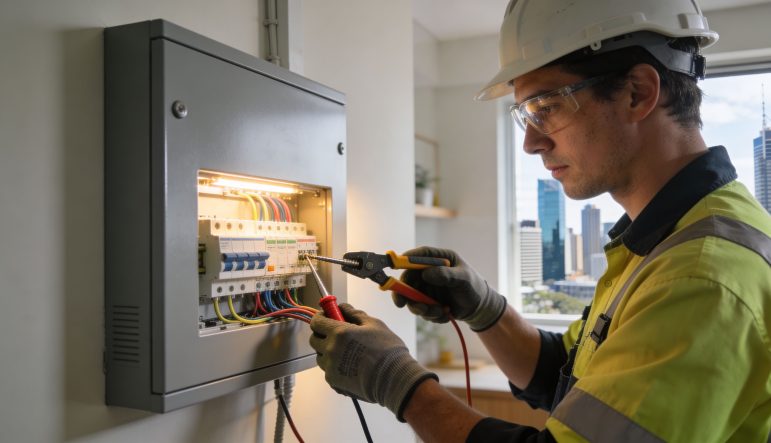
You usually don’t think about your switchboard until something starts going wrong. Lights flicker when the kettle and air con are running together. A fuse blows again. The box in the corner looks old, a bit dusty, and nobody’s touched it in years.
That’s a common situation in Brisbane, especially in older homes around Grange, Windsor, and nearby suburbs where original boards, old fuse carriers, ageing wiring, and even asbestos-backed panels still turn up. In Queenslanders and post-war homes, the switchboard often wasn’t designed for the way people live now. Add air conditioning, an induction cooktop, a larger hot water system, security gear, or plans for an EV charger, and the weak point shows up fast.
A proper switchboard upgrade isn’t about making the box look newer. It’s about making the whole home safer, compliant, and ready to handle modern electrical demand without nuisance tripping or hidden heat buildup. For many homeowners, it’s one of the most important electrical jobs they’ll do.
If the switchboard is old, the rest of the house feels it. Power issues don’t always look dramatic. Sometimes it’s just annoying little things that keep happening, like a circuit dropping out when too many appliances are on, or lights dimming when a larger load kicks in.
Your switchboard is the control centre for the home’s electrical system. It takes power coming in and distributes it safely to lighting, power points, appliances, and dedicated circuits. In practical terms, it decides what happens when something goes wrong. An older board with ceramic fuses reacts very differently from a modern board with circuit breakers and Residual Current Devices (RCDs).
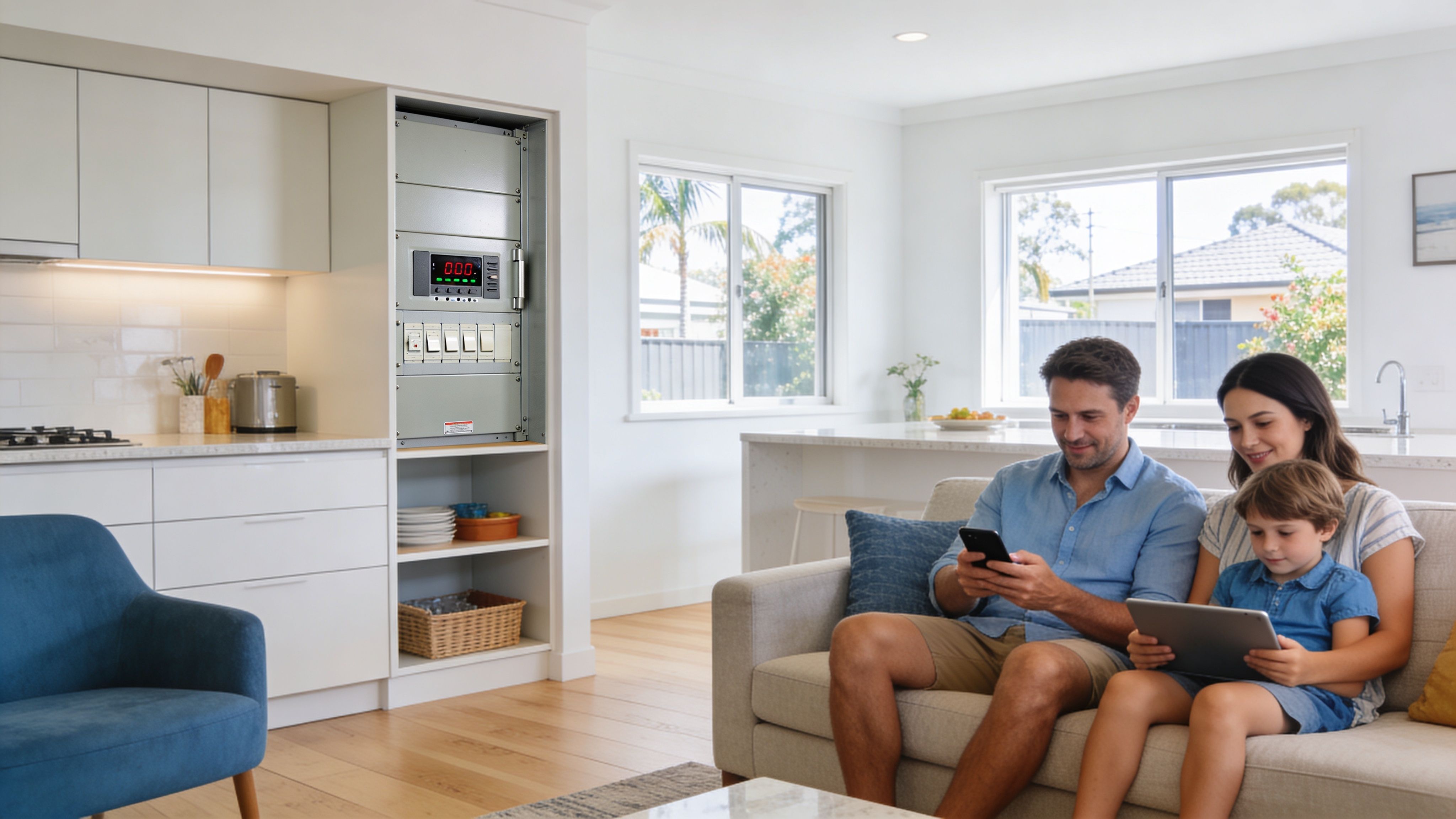
Ceramic fuses were common in older Brisbane homes. They did their job in their day, but they’re limited compared with modern protection. A modern switchboard uses circuit breakers to protect circuits from overload and short circuit faults, and RCDs to cut power quickly if there’s a dangerous leakage current.
That matters because modern homes place very different demands on wiring than older homes ever did. If you want a simple explanation of how personal shock protection works, this guide on what a safety switch does in a home is worth reading before you compare quotes.
Practical rule: If your home still relies on rewireable fuses, the switchboard is not keeping up with modern expectations for household safety.
After an upgrade, what people usually notice first is reliability. Circuits are clearly labelled. Faults are easier to identify. The board is safer to work on and easier to expand later if you’re adding new equipment.
A modern switchboard also gives you a better foundation if you’re trying to understand where your power use is going. If you’re looking at home energy monitoring systems, a compliant, well-organised switchboard makes that conversation much easier because the circuits are already structured properly.
For switchboard upgrades brisbane homeowners, the benefit is peace of mind. The system is safer, easier to service, and far better suited to the way Brisbane households use power today.
Most switchboards don’t fail all at once. They give warnings first. In older homes, especially in North Brisbane character suburbs, those warnings are often brushed off as “just an old house” problems. They shouldn’t be.
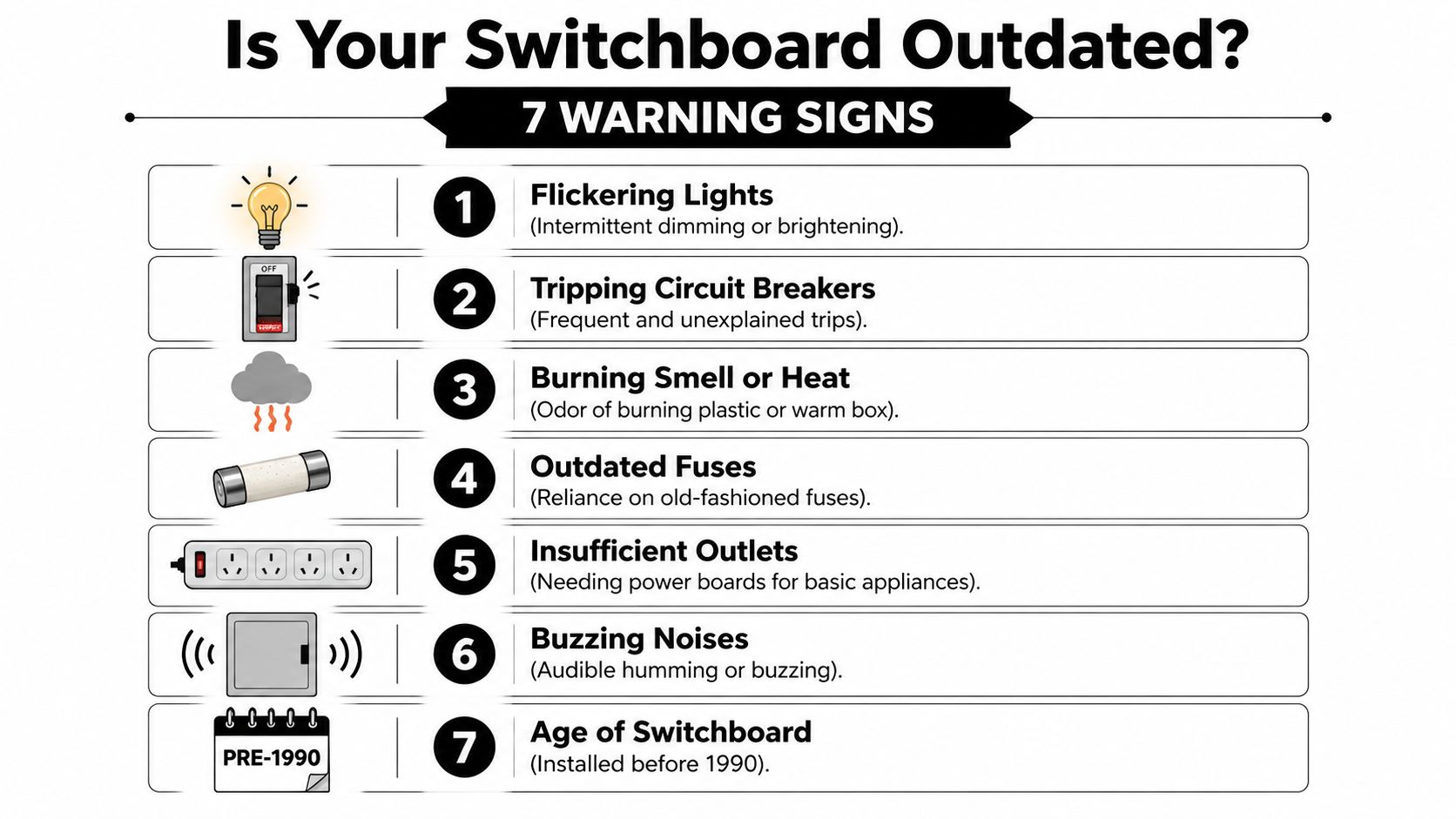
Flickering or dimming lights
If lights dip when a larger appliance starts up, the system may be struggling with load changes. That doesn’t always mean the switchboard alone is at fault, but it’s a clear sign the electrical system needs inspection.
Frequent tripping
If circuits trip regularly, the board may be overloaded or the protection may no longer match how the home is being used. Frequent power trips are a common sign that older boards can’t handle modern appliances.
Burning smell or heat near the panel
A warm switchboard, scorched marks, or a burning plastic smell needs urgent attention. Heat at the board means something is under stress, loose, or failing.
Ceramic rewireable fuses
This is one of the clearest red flags. Signs like regular blown fuses or the presence of ceramic rewirable fuses heighten fire hazards, as these older systems lack the immediate protection of modern circuit breakers, as noted by Connex Electrical’s Brisbane switchboard warning guide.
Power boards everywhere
If you’re relying on multiple power boards because the house wasn’t designed for current appliance use, that often points to a broader issue. The switchboard may need upgrading alongside additional or dedicated circuits.
Buzzing or crackling noises
Switchboards should not hum, buzz, or crackle in a noticeable way. Those noises can indicate loose terminations or deteriorating components.
The home or board is from before 1990
In Brisbane, homes built before 1990 often need switchboard upgrades because they commonly have outdated fuse protection and no proper safety switch coverage.
In Grange and Windsor, many homes have had bits added over time. A new air con here, a renovated kitchen there, maybe an upgraded hot water system later on. The switchboard often ends up as the oldest part of the electrical setup, trying to manage loads it was never designed for.
If the board looks original but the house has modern appliances, don’t assume it’s fine because “nothing major has happened yet”.
The risk isn’t just inconvenience. Older fuse boards don’t manage heavy demand from smart home gear, security systems, and hot water systems well. That’s where switchboard upgrades brisbane homeowners often get the biggest safety gain.
You buy an older Queenslander in Windsor, book a few minor electrical jobs, and the electrician opens the switchboard to find an asbestos backing panel, old fuse gear, and a newer air conditioner circuit squeezed in years ago without proper protection. The lights may have worked fine for years, but that does not mean the installation meets current safety requirements.
In Brisbane, switchboard work is judged against the AS/NZS 3000:2018 Wiring Rules and Queensland’s Electrical Safety Regulation 2013. Those rules matter most in older homes because the board often reflects decades of piecemeal changes, not one properly planned electrical system. If you want a plain-English overview of how larger board capacity changes can fit into a broader setup, this guide on understanding the installation of a 200 amp sub panel gives useful background, although Brisbane homes still need local design and compliance checks.
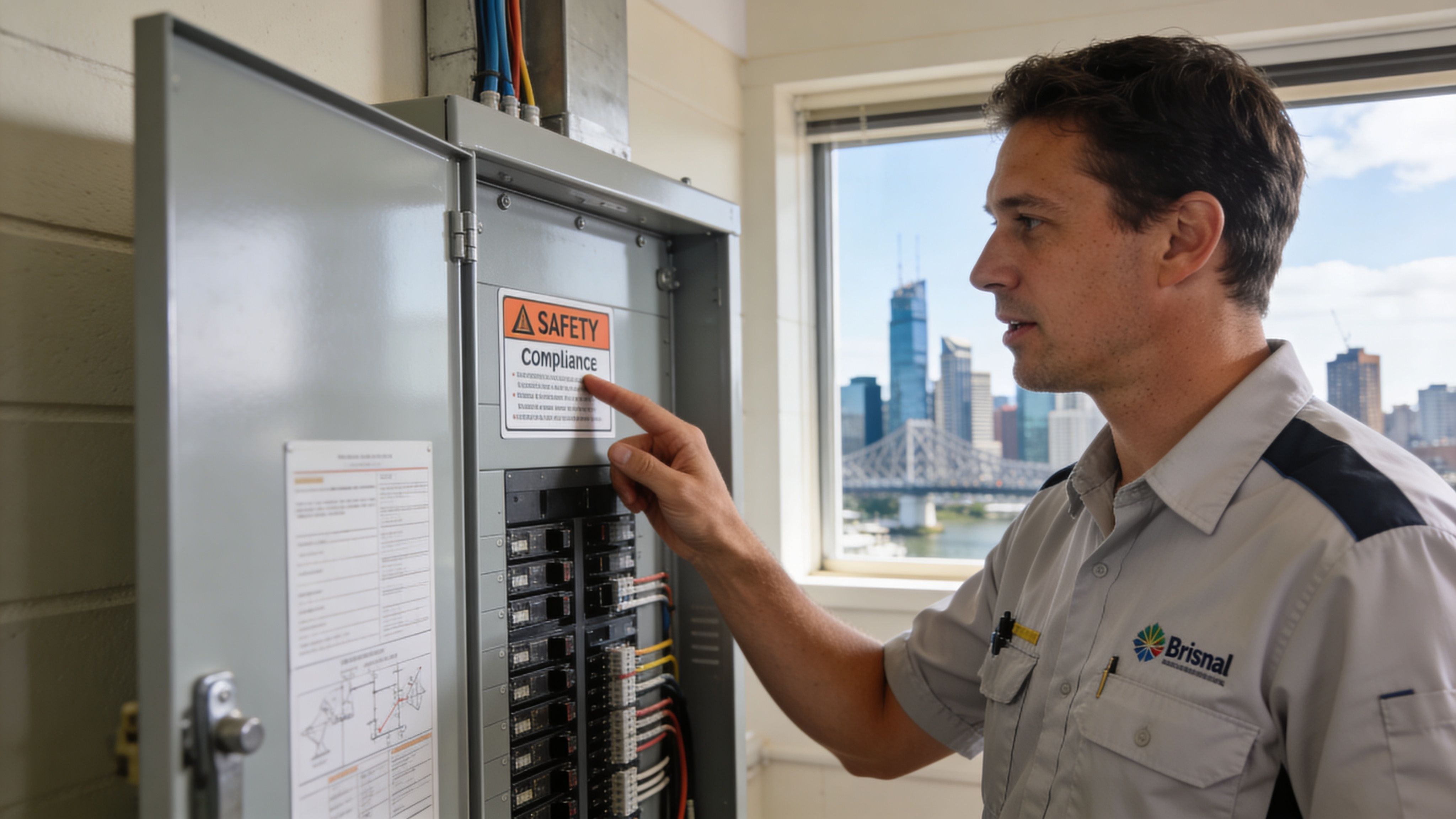
An RCD, also called a safety switch, disconnects power fast when it detects leakage current. Its job is to reduce the risk of electric shock.
A standard circuit breaker does a different job. It protects wiring and equipment from overloads and short circuits. A modern board usually needs both, with the right devices matched to the circuits they protect.
Queensland’s safety switch rules affect older homes more often than owners expect. Safety switches are required in certain situations, including newer homes and older homes being sold or rented, as outlined in this Brisbane guide to switchboard upgrade requirements.
Renovations can also trigger the issue. Add a new oven circuit, replace major electrical equipment, or alter part of the installation, and the switchboard often needs to be assessed as part of that work.
For older homes in Grange and Windsor, the practical problem is rarely just age. It is usually a mix of old and new. A common example is a Queenslander where a previous owner added an air conditioner, upgraded the kitchen, or changed the hot water system, but left the original board in place. That can leave the property short on safety switch coverage, short on space, or unsuitable for a new tenancy until the board is brought up to standard.
Generic compliance advice misses the issues I see in older Brisbane suburbs every week. In Grange and Windsor, many homes have one or more of these complications:
A board can still turn the power on and off and still be unsafe to keep, unsafe to modify, or not suitable for current tenancy and sale requirements.
That is why a proper inspection matters. In an older Queenslander, compliance is not only about swapping fuses for breakers. It can involve checking whether the panel contains asbestos, whether the existing wiring can stay in service, and whether previous additions were done to a standard that allows the board to be upgraded cleanly. The right fix might be as small as improving protection on existing circuits, or it might mean replacing the whole board so the house is safer and easier to work on in future.
Not every upgrade looks exactly the same. The right setup depends on what’s already in the home, what circuits are there now, and what you plan to add later. The best quotes usually explain the components clearly instead of just listing “new board” as one line item.
Here’s what homeowners are usually comparing.
| Upgrade item | Older setup | Modern benefit |
|---|---|---|
| Circuit breakers | Ceramic or rewireable fuses | Resettable protection for overloads and short circuits |
| RCD safety switches | No equivalent protection in many older boards | Fast disconnection to improve personal safety |
| Surge protection | Often not fitted at all | Helps protect sensitive electronics from power spikes |
| Clear circuit labelling | Mixed or missing labels | Faster fault finding and safer maintenance |
| Spare capacity | Board full with no room to grow | Makes later additions easier |
Replacing ceramic fuses with modern circuit breakers works well because faults become easier to isolate and safer to reset. Adding RCD protection is one of the biggest safety improvements you can make. Surge protection also makes sense in homes with expensive electronics, security systems, office equipment, or entertainment gear.
What doesn’t work is trying to patch around an outdated board. Swapping one or two parts into a cramped, ageing setup often gives the homeowner a half-fix. It may keep the lights on for now, but it doesn’t solve limited capacity, poor layout, or compliance issues.
Many older homes often fall behind. Modern upgrades are increasingly about capacity, not just replacement. With a 25% year-over-year increase in Brisbane EV registrations, new boards need to cope with 10-22kW EV charging loads and be ready for solar integration, according to this Brisbane switchboard upgrade overview focused on renewable readiness.
For homeowners comparing larger electrical upgrades, broader reading can help frame the conversation around capacity and sub-board planning. This explainer on understanding the installation of a 200 amp sub panel is US-focused in terminology, but it’s useful for understanding how electricians think about load growth and downstream distribution.
A practical switchboard upgrade should suit the house you have now and the one you’re building toward.
The day of the upgrade is usually more straightforward than people expect. The main inconvenience is the temporary power outage. A typical residential switchboard upgrade in Brisbane is often completed in one day, and it usually involves power being off for several hours while the old board is removed, the new one is installed, and all circuits are reconnected, tested, labelled, and certified, as outlined in this Brisbane switchboard upgrade process guide.
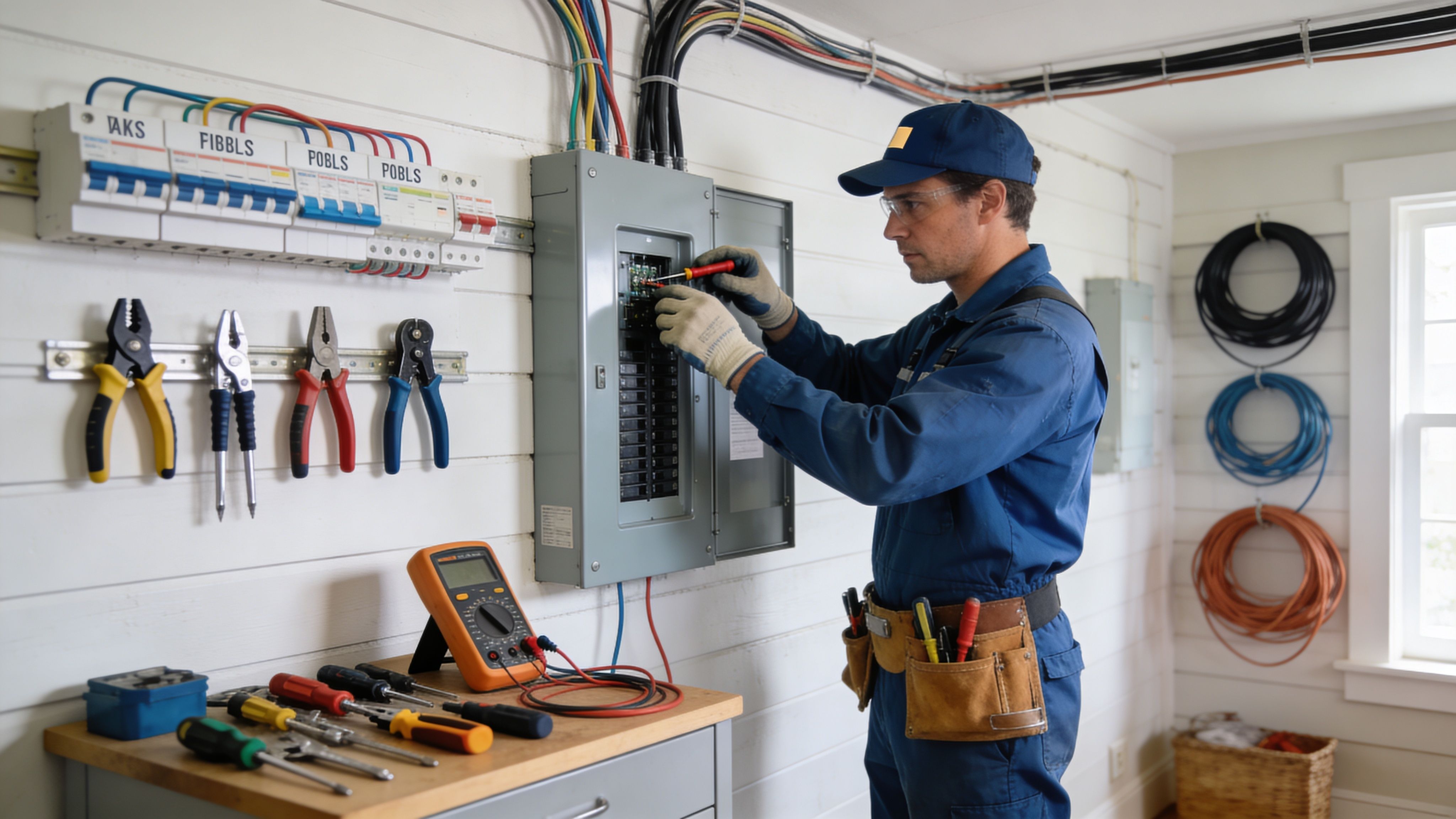
Most jobs follow the same basic sequence.
Initial check and safe isolation
The electrician confirms the scope, checks the existing board, and isolates the supply so the work can be done safely.
Removal of the old components
Old fuse gear, outdated breakers, and other unsafe or non-compliant components are removed. In some older homes, this stage takes longer because previous additions were poorly labelled or awkwardly arranged.
Installation of the new board
The new enclosure and protection devices are fitted. Circuits are re-terminated and organised properly.
Testing and identification
Each circuit is tested, faults are checked, and everything is labelled clearly.
Compliance paperwork
Once testing is complete, the electrician provides the required compliance documentation.
Queenslanders in Grange and Windsor can be a bit unpredictable once the cover comes off. It’s common to find old cable joins, poorly identified circuits, limited access, or damage that wasn’t obvious from the outside.
Older switchboards rarely tell the full story from the front cover alone.
If you’d like a visual overview of how electricians approach board upgrades and replacements, this short video gives useful context before the day starts.
A few simple steps make the job easier:
For most homeowners, the process is much less stressful once they know what to expect.
Cost matters, but one flat number doesn’t tell you much. For standard residential switchboard upgrades in Brisbane, the usual range is $900 to $1,800, with the final price affected by the number of circuits, supply arrangement, existing wiring condition, and any extra rectification work needed, according to this Brisbane switchboard cost guide.
That range covers many straightforward homes. Older properties in Grange, Windsor, and similar suburbs can push beyond a basic quote when the board is only one part of the problem.
| Component / Labour | Estimated Cost Range | Notes |
|---|---|---|
| Standard residential switchboard upgrade | $900 to $1,800 | Typical Brisbane range for straightforward residential work |
| Extra rectification work | Qualitative only | Poor earthing, unclear labelling, or wiring issues can push pricing into the low thousands |
| Single-phase supply work | Qualitative only | Usually simpler and quicker than more complex arrangements |
| Older home access or fault-finding | Qualitative only | Character homes often take longer due to mixed wiring and hidden defects |
A few factors have the biggest effect on price.
In older North Brisbane homes, the hidden cost is often not the switchboard itself. It’s what sits around it. Asbestos-backed panels, old timber surrounds, uncertain circuit identification, and piecemeal additions from past renovations all make the job less predictable.
That doesn’t mean every older house becomes expensive. It means the most accurate quotes come after inspection, not over the phone.
Local insight: In older suburbs, a cheap quote can miss the work needed to make the board safe, testable, and compliant.
On timing, many standard upgrades are completed the same day. More involved jobs take longer when access is poor, faults are found, or additional coordination is required.
A lot of Brisbane homeowners only start asking the right questions after a fuse keeps blowing, the lights flicker during a storm, or a pre-sale inspection points out an old board. In Grange, Windsor, and similar older suburbs, choosing the electrician matters as much as choosing the new switchboard. The job often involves more than swapping a panel. It can include asbestos-backed mounting boards, mixed wiring from past renovations, and circuits that were never labelled properly.
The right electrician should be able to spot those issues early, explain them in plain language, and price the work fairly.
Before you agree to anything, ask specific questions about older Brisbane homes, not just electrical work in general:
Are you licensed and insured in Queensland?
The answer should be clear and easy to verify.
Can you describe your experience with switchboard issues in Queenslanders or post-war homes in suburbs like Grange or Windsor?
You want someone who understands old timber houses, altered circuits, and the extra faults that often show up once the board is opened.
Have you worked around asbestos switchboard panels or older meter board setups?
Older homes can have materials and layouts that change how the job needs to be handled.
What exactly is included in the quote?
Ask about testing, circuit identification, labelling, compliance paperwork, and likely rectification work if defects are found nearby.
What happens if the existing wiring around the board is unsafe or non-compliant?
A good electrician should explain the likely scenarios before work starts, not after the power is off.
Will I receive the required certificate for the completed work?
You should.
A capable electrician will not give you vague reassurance or a phone quote that sounds too neat for an old house. They should explain what they expect to find, what could change the scope, and which issues are common in Brisbane character homes.
That usually means talking through things like limited space in the existing board, old cable colours, poor circuit separation, and whether the board has enough capacity for air conditioning, induction cooking, solar, or future renovations. If you want a broader checklist before comparing quotes, this guide on choosing the right electrician in Brisbane is a useful reference.
Good electricians also explain the trade-offs. A cheaper quote may cover a basic board replacement but leave out fault-finding, relabelling, or correction of defects that prevent the installation being tested properly. In older homes, those details matter.
For homeowners organising switchboard upgrades Brisbane wide, DLG Electrical handles residential switchboard upgrade work across older and newer homes and brings long-term local experience to the kind of conditions often found in North Brisbane properties.
That experience is especially relevant in houses where the switchboard is only part of the problem. In Grange and Windsor, it is common to find old timber meter panels, pieced-in cabling from earlier renovations, and surrounding defects that need to be addressed before the new board can be signed off safely.
If your switchboard is showing its age, or you are renovating an older Brisbane home and want straight answers before costs spread into other electrical work, contact DLG Electrical for a free quote. A licensed inspection can confirm whether you need a straightforward upgrade, extra circuit protection, or corrective work around the existing installation.

Master Electrician with over 30 years of experience. Founded DLG Electrical in 2005 after international project work including electrical installations at Stamford Bridge Stadium, London(Home of Chelsea FC).

Local Electricians that can fix all Electric Hot water Systems.
Motion sensor lights are a versatile addition to any home, offering nu
