83 Jean St, Grange QLD 4051
Mon-Fri 07:30 AM - 04:00 PM - Sat - 8:00 - 12 - Sunday Closed

You're standing in the laundry with the lights half on, rain hammering the roof, and the electrical safety switch has just tripped again. The rest of the house goes quiet, the kettle stops, and you're left wondering whether it's a nuisance, a faulty appliance, or the thing that just stopped a shock from becoming a tragedy.
In Brisbane homes, that little switch on the board is one of the most important safety devices you've got. It's also one of the most misunderstood, especially in older places where the switchboard has been patched together over time. A proper safety switch protects people, not just wiring, and Queensland's staged compliance rules mean homeowners, landlords, and buyers need to know exactly what's on the wall and what isn't.
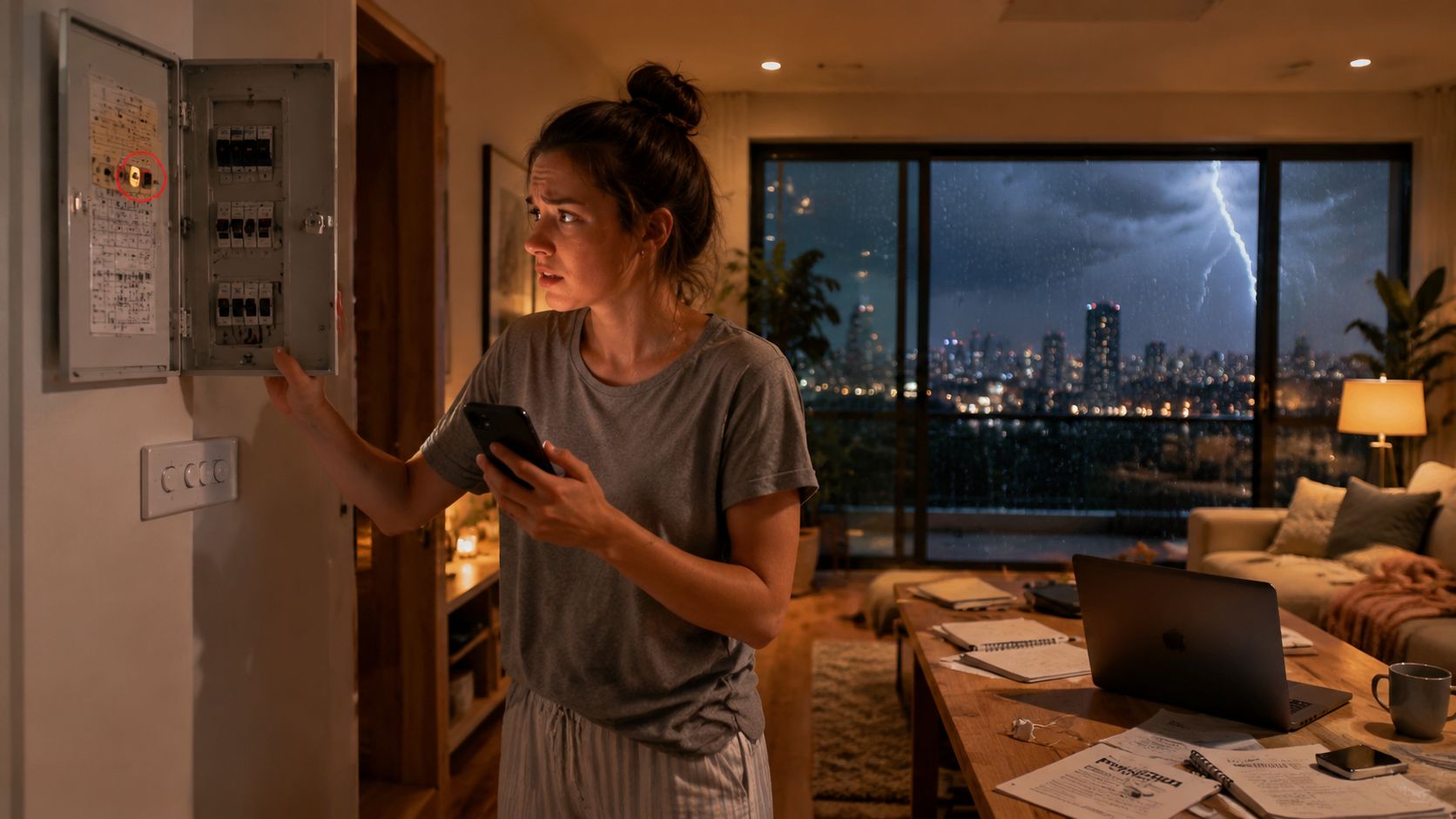
A safety switch, also called a residual current device or RCD, watches the electricity flowing through a circuit. In normal use, the current going out and the current coming back should balance. If some of that current leaks to earth, the device trips fast and cuts power before the shock can continue.
That's why people describe it as a guard at the switchboard. It isn't waiting for the cable to melt or the breaker to get hot, it's watching for imbalance, which is exactly the kind of problem that can happen if a person becomes part of the circuit. A circuit breaker is different. It protects the wiring from overload and short circuit. A safety switch is there to reduce the chance of electrocution.
Practical rule: if a breaker trips, think wiring load. If a safety switch trips, think leakage to earth and check for a fault in the appliance, circuit, or installation.
The distinction matters in everyday Brisbane homes because storms, moisture, old sockets, and ageing appliances all increase the chance of nuisance trips and real faults. A tripping switch isn't always a disaster, but it is always a signal that something deserves attention. That's why homeowners should treat the device as essential, not optional.
A quick way to think about it is this. The safety switch is the one standing between you and a fault that might not look dramatic until it's already dangerous. For practical homeowner reading on related shutdown behaviour in appliances, the logic is similar to furnace repair tips from Bear Valley, where a protective shutdown is a warning sign, not something to ignore.
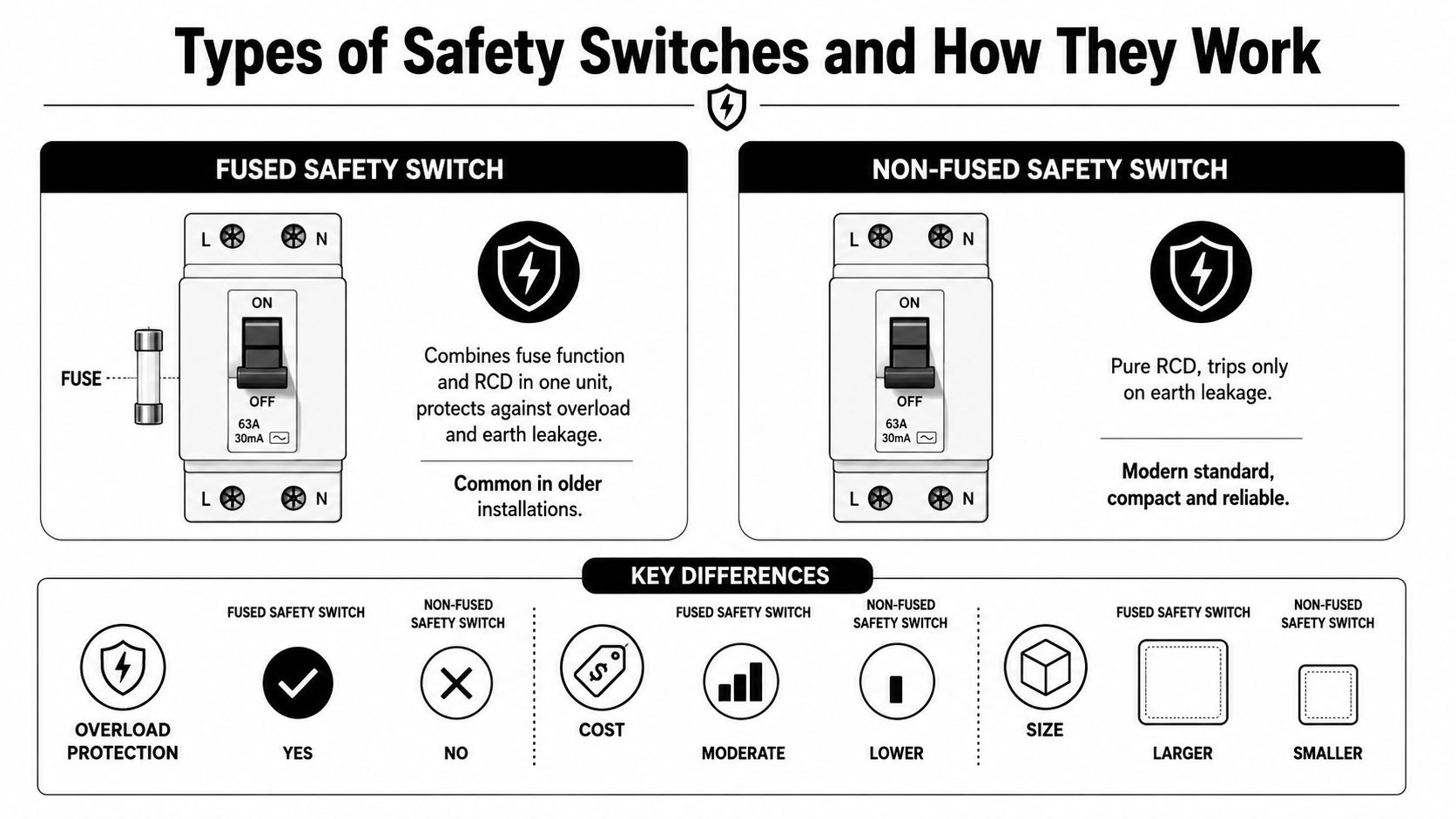
For Brisbane homeowners, the main difference sits between a fused safety switch and a non-fused safety switch. A fused unit combines manual isolation with overcurrent and short-circuit protection in one enclosure. A non-fused unit only provides isolation and relies on upstream protection to clear faults.
That difference affects how the switchboard is set up and how a fault is handled. A fused unit does more of the protection work itself, while a non-fused unit is part of a coordinated arrangement that depends on the protection already installed ahead of it. The practical point is simple, the device has to suit the installation and the fault level where it is fitted. Eaton's catalogue also shows that safety switches are built for different current frames and fault duties, so matching the unit to the job matters more than picking one that just fits the space. Eaton safety switch catalogue
The switch can isolate a circuit properly under normal load and still be the wrong device if its fault rating does not suit the installation.
ABB lists safety switches in a range of enclosure and rating options, including fusible and non-fusible versions, with indoor, outdoor, and corrosion-resistant enclosures. ABB safety switch specifications That matters in Brisbane because a laundry, garage, external wall, or exposed plant area puts very different demands on the enclosure than a dry internal cupboard. Moisture, heat, and airborne grime all affect what will hold up over time.
Pole count matters just as much. ABB notes that single-phase applications typically need two poles, while three-phase systems need three or more for full isolation. ABB safety switch specifications In plain terms, the switch must disconnect the right live conductors at the same time. If it does not, maintenance can leave part of the circuit energised, which is a real risk when someone assumes the circuit is dead.
For a clean primer on the device itself, this guide to what an RCD switch is is a useful companion read. A history note from frequency switch connection history also shows how switching hardware has evolved, although the day-to-day homeowner priority is still straightforward protection and safe isolation.
A Brisbane buyer opens the switchboard cover during settlement and sees a mix of old fuses, a couple of switches, and one label that does not quite match the circuits in the house. That is the point where Queensland's safety switch rules stop being theory and start affecting the deal.
Queensland treats safety switches as the practical device that protects people from electric shock, and the residential rules changed in stages rather than all at once. From 1 January 2019, homes being sold or leased needed safety switches on power circuits and lighting circuits. By 1 January 2022, the requirement extended to all final subcircuits, including appliance and air-conditioning circuits, for dwellings sold or leased in Queensland. Queensland Electrical Safety Office
If you are selling a home, leasing one out, or buying a property in Brisbane, the switchboard is part of the due diligence now. A board with partial protection may have been acceptable under older arrangements, but that does not carry through to current sale or lease obligations. For landlords, the check needs to happen before the property is handed over, because once a tenant is in place, any gap in protection becomes a compliance problem as well as a safety one.
Older homes with ceramic fuses often need more than a simple add-on. They may need a switchboard upgrade because compliance is only part of the job. The board still has to allow proper isolation, provide enough enclosure space, and give an electrician room to test and maintain the circuits without working around a cramped or patched-up layout. In many Brisbane properties, that is where the real work starts.
When I inspect a board like that, I look at the dwelling as a whole, not just the device label. Age of wiring, condition of the board, circuit arrangement, and the way the property is used all affect whether the installation is fit for sale, lease, or purchase. A useful reference point is the electrical safety inspection guidance, because the board, the circuits, and the property history all need to line up before anyone signs off on it.
The staged rollout shows how regulators dealt with risk in the actual world. They started with the circuits people rely on every day, then widened the requirement across the whole installation. For Brisbane homeowners, landlords, and buyers, that means older assumptions about “some protection” are no longer enough if the property is being sold or leased under the current Queensland rules.
Bottom line: if your Brisbane property is being sold or leased, the switchboard has to match the current Queensland requirement for the type of dwelling and transaction.
For landlords sorting out tenancy paperwork, the 2026 rental inspection checklist is a practical companion, because electrical compliance belongs in the same review as the rest of the property condition.
The monthly test takes less than two minutes, and it's one of the simplest habits a homeowner can build. Find the switchboard, locate the safety switch marked with T or Test, and press it. A working device should trip and cut power to the protected circuits straight away.
After that, reset the switch by moving it back to the ON position. If it stays on and power returns normally, that's a good sign the mechanism is still operating. Repeat the process for every safety switch in the board, because one switch doesn't prove the whole installation is protected.
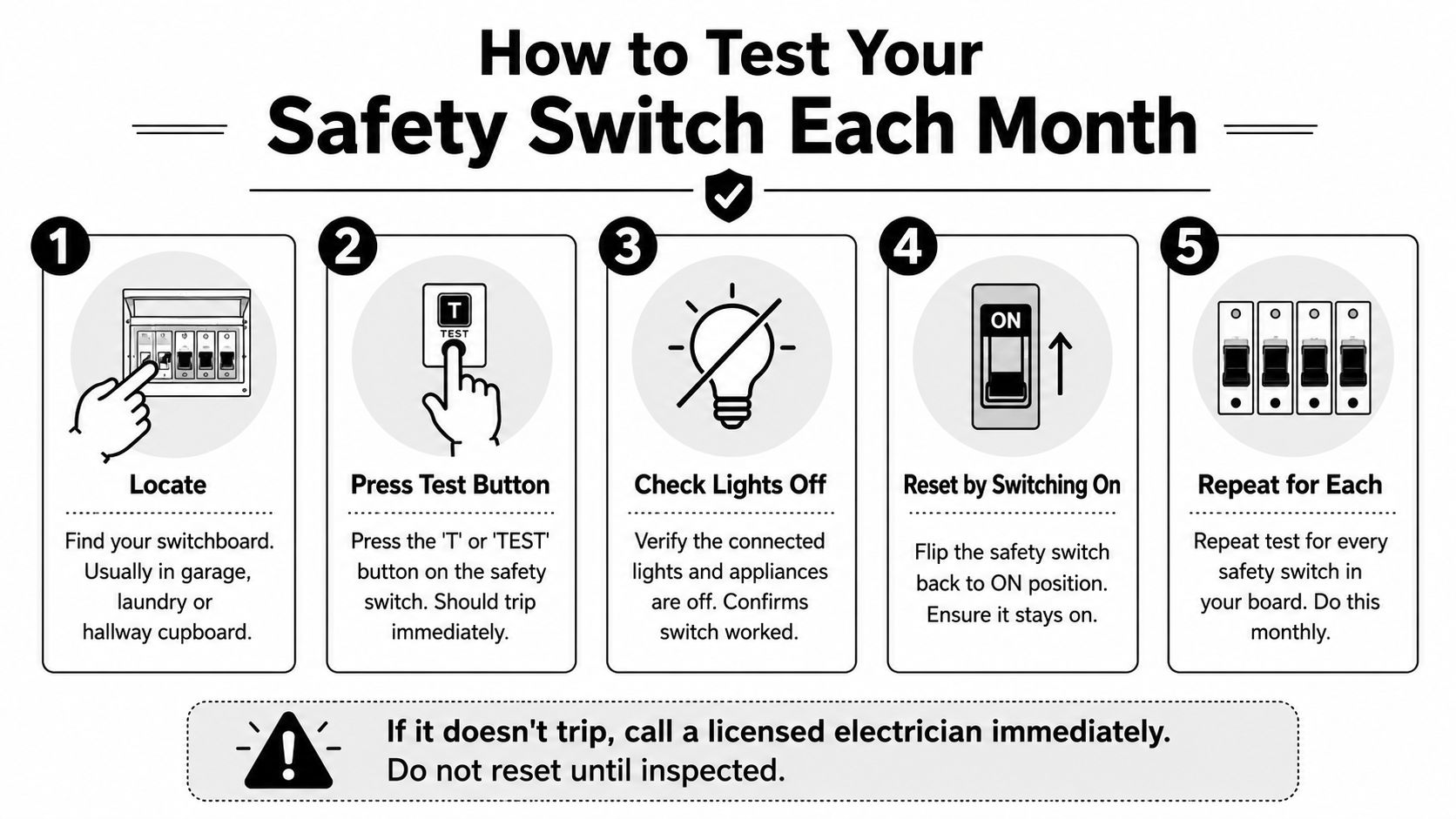
A successful test gives you a clear trip, then a clean reset. If the button does nothing, the device needs attention. If the switch won't stay reset, stop cycling it over and over, because repeated forcing doesn't fix the underlying fault.
You can also do a visual check while you're there. Look for heat marks, discolouration, cracking, loose covers, or any smell that doesn't belong around the board. Those signs tell you more than a quick glance at the lights in the house.
If the switch fails the test, leave it alone and get it checked. Don't treat a failed trip test as a nuisance.
The habit is easy to forget, which is why a monthly reminder on your phone works well. I tell Brisbane homeowners to make it part of the same routine as checking smoke alarms, because both devices only help if they're functioning.
For a focused troubleshooting read when a board has already tripped, this guide on what to do when a safety switch trips is useful. It keeps you from guessing which appliance or circuit might be responsible.
Not every trip means the safety switch itself is failing. Sometimes a toaster, pump, washer, or outdoor fitting has developed a fault and the switch has done its job. The question is whether the problem is isolated or repeated.
Normal tripping often has a clue attached to it. A lamp, an outdoor power point, or a single appliance may be the obvious culprit. A damaged switchboard, on the other hand, tends to show a broader pattern, and that's when guessing gets expensive.
Don't keep resetting a switch that instantly trips again. Don't swap appliances around until the fault disappears and assume the board is fine. Don't open the switchboard cover yourself if you're not licensed.
Practical rule: one trip can be a coincidence. A pattern is a job for fault finding.
If the same circuit keeps causing trouble, a proper diagnosis is faster than trial and error. That's the point where inspection, testing, and isolation by a licensed electrician save time and reduce risk.
Safety switch work is one of those jobs where cutting corners can undo the whole point of the device. The price and complexity depend on how many circuits need protection, whether the existing switchboard has room for extra modules, the type of safety switch selected, and how much of the original wiring still has to be worked around.
Older Brisbane homes can be straightforward or messy. If the board has ceramic fuses, limited space, or signs of heat damage, a full switchboard upgrade is often the cleaner path because it gives you proper protection, clearer labelling, and better access for future testing. If the board is already modern and there's capacity for the new device, the job may be simpler.
Queensland electrical work must be done by licensed professionals. That's not a paperwork preference, it's the difference between a compliant installation and a dangerous one. A safety switch fitted incorrectly can appear fine while still failing to isolate properly when it matters.
A good installation should end with proper testing, clear identification of the protected circuits, and documentation that supports compliance. If the board needs more than a replacement switch, the electrician should explain the practical options rather than just changing one part and hoping the rest holds up.
For Brisbane homeowners comparing options, a full-service local team such as DLG Electrical can handle switchboard upgrades, safety switch testing, and replacement work in one visit, which is often more practical than piecemeal repairs when the board is dated.
The cheapest fix isn't always the cheapest outcome if it leaves the rest of the installation unsafe or difficult to maintain.
If you're renovating, buying, or managing a rental, get the board reviewed before a small issue turns into a failed inspection or a rushed repair. That's especially true in older homes where the original protection was never designed for today's electrical load patterns.
Does a safety switch protect against every electric shock? No. It's designed to reduce risk by detecting earth leakage and cutting power quickly, but it doesn't make a home shock-proof. Damaged cords, poor maintenance, wet areas, and unsafe work can still create danger.
How long does a safety switch last? There isn't a one-size-fits-all answer. A switch that tests properly and operates cleanly can keep doing its job for years, but if it starts failing the monthly test, tripping repeatedly, or showing damage, it needs attention sooner rather than later.
Are older Brisbane homes without safety switches illegal to live in? The answer depends on the property's use and transaction status. Queensland's staged requirements apply to homes being sold or leased, with the 2019 and 2022 milestones setting the compliance standard for those situations Queensland Electrical Safety Office.
What if the switch trips every time I use one appliance? Stop using that appliance and have it checked. The fault may be in the appliance itself, but it can also be in the outlet or the circuit feeding it.
Should I replace the whole switchboard if I'm adding safety switches? Not always. But if the board is old, crowded, or still built around ceramic fuses, a broader upgrade is often the more sensible long-term fix because it gives you room, clarity, and better protection.
If your Brisbane home, rental, or purchase needs a safety switch check, DLG Electrical can inspect the switchboard, test the devices, and recommend the right compliance fix for the property. Visit DLG Electrical to arrange a quote and get the board sorted before the next trip becomes a bigger problem.

Master Electrician with over 30 years of experience. Founded DLG Electrical in 2005 after international project work including electrical installations at Stamford Bridge Stadium, London(Home of Chelsea FC).

Local Electricians that can fix all Electric Hot water Systems.
Motion sensor lights are a versatile addition to any home, offering nu
