83 Jean St, Grange QLD 4051
Mon-Fri 07:30 AM - 04:00 PM - Sat - 8:00 - 12 - Sunday Closed
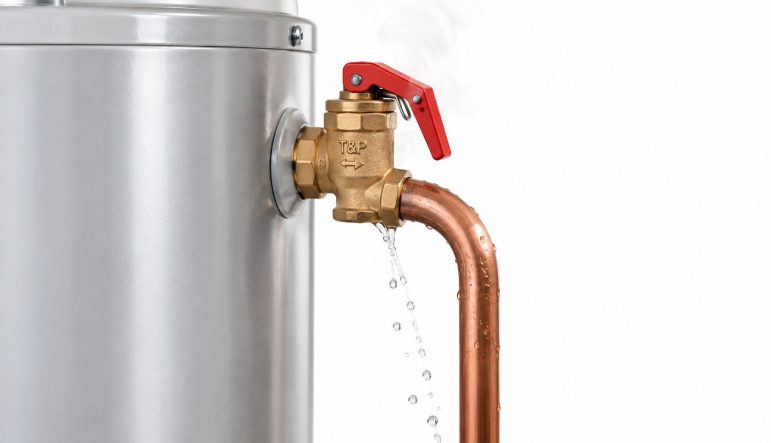
A small pipe beside your Brisbane hot-water cylinder is dripping into a drain, and you're wondering whether it's harmless condensation or the first sign of a failing heater. That uncertainty is common, but the pipe isn't decorative. It's part of a safety system designed to release excess heat and pressure before the cylinder, surrounding property or household occupants face serious risk.
A pressure relief valve in a hot-water system can discharge occasionally during heating, yet continuous dripping, a blocked outlet or unsafe pipe termination needs attention. This guide explains what the valve protects, how to recognise normal and abnormal behaviour, why discharge location matters around electrical equipment, and when a licensed professional should inspect the complete system.
Mia noticed the trickle during a warm Brisbane afternoon. Her electric storage cylinder was still producing hot water, there was no obvious burst pipe, and the discharge line looked like a simple piece of plumbing. Her first thought was to put a container underneath it and keep an eye on things.
That response makes sense, but it misses the pipe's purpose. The line is connected to a temperature-pressure relief valve, often called a TPRV or PTRV. The valve provides a controlled escape route if the water becomes too hot or the pressure inside the pressurised storage vessel rises beyond a safe level. Queensland Government guidance states that AS/NZS 3500.4:2003 requires a TPRV on all pressurised hot-water storage systems, making it a standard safety component, not an optional accessory (Queensland Government guidance on hot-water relief valves).
A small amount of discharge during a heating cycle can have a different meaning from water that runs constantly. The important clues are how often it discharges, how much water appears, whether the valve reseats, and where the pipe directs the water.
Practical rule: Never treat a relief-valve outlet as an ordinary leak that can be capped or diverted without understanding the system behind it.
The valve protects against two linked hazards. Excessive temperature can create steam and pressure, while heated water expands and can raise pressure even when the heater is operating normally. The cylinder, valve, expansion-control equipment and discharge pipework therefore work as one safety arrangement.
By the end of this guide, you should be able to recognise a sensible inspection point, identify warning signs, and explain the problem clearly to a licensed plumber or hot-water technician. You won't need to dismantle the heater, adjust the valve or guess whether a replacement alone will solve the issue.
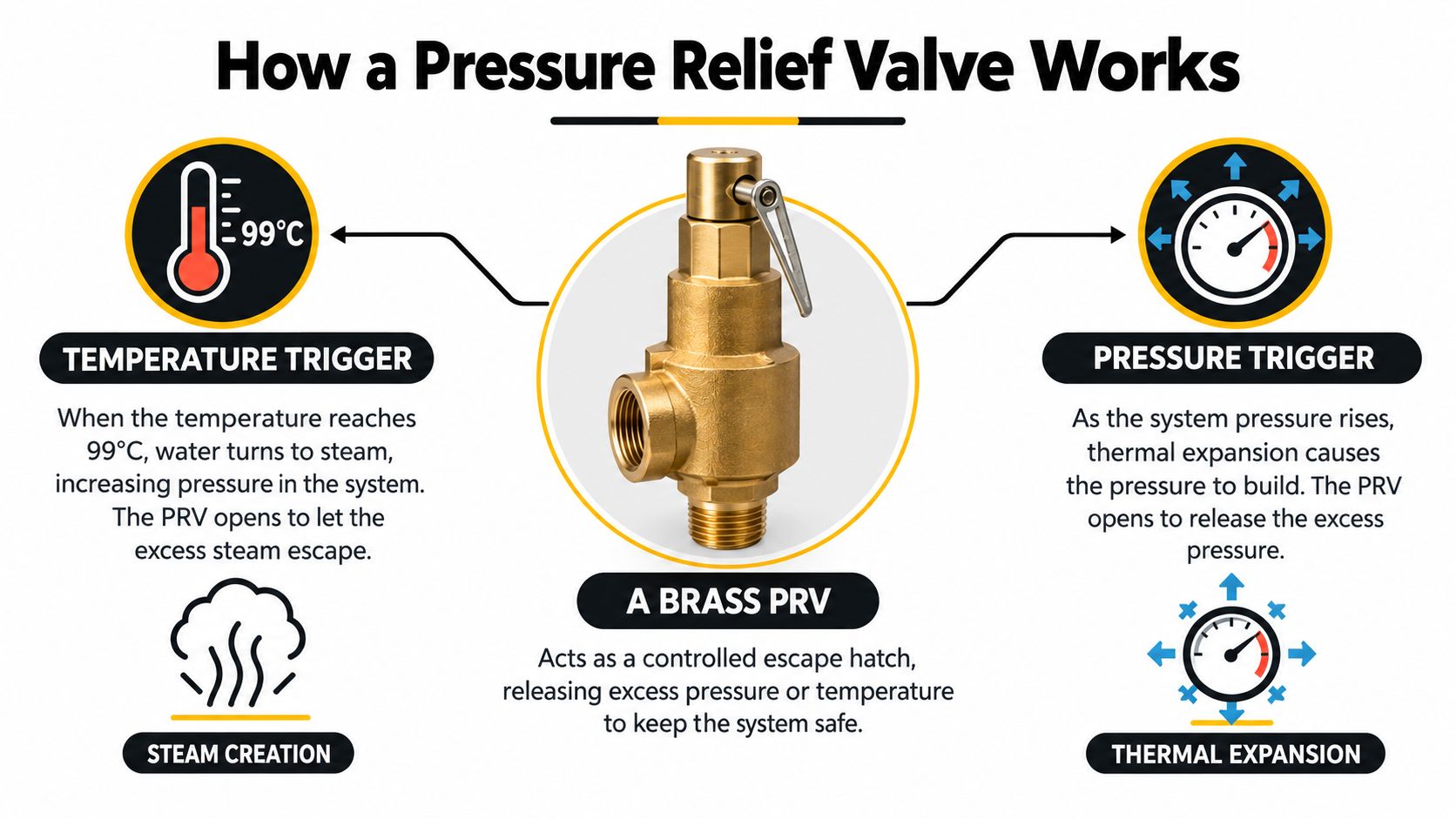
Think of the valve as a controlled escape hatch, not a faulty tap. A kettle's whistle tells you that pressure is building, but a hot-water relief valve has a specific safety role. It opens when the system reaches conditions that require pressure or hot water to discharge, then should close and seal again once the unsafe condition has passed.
The process is easier to understand in stages:
The expansion-control valve is the companion component. It manages pressure created by the natural expansion of heated water, so the TPRV doesn't have to act as the routine outlet for every pressure change. The two devices aren't interchangeable. A TPRV protects against both temperature and pressure, while expansion control addresses pressure created during normal heating.
For an accessible explanation of the wider heating process, see this guide to how an electric hot-water system works. It helps place the relief valve in context, alongside the cylinder, heating element, thermostat and water connections.
The valve's job is protective, but discharge still needs somewhere safe to go. If you're comparing symptoms and replacement decisions across different types of heating equipment, this resource on when to replace a boiler relief valve offers useful background, although Brisbane homeowners should have their own installation assessed against Australian requirements and the heater manufacturer's instructions.
The Queensland Building and Construction Commission generally recommends servicing by an appropriately licensed person every five years, and Queensland guidance says occupants may operate the relief lever periodically if they avoid scalding and confirm that the valve closes correctly afterward (Queensland Government servicing guidance). A lever that won't reseat is not a minor inconvenience. It means the escape hatch may remain open, or may no longer be sealing reliably.
A relief valve may start dripping after a heater has been working hard. That small discharge can look like a valve problem, yet it may be the visible symptom of pressure building elsewhere in the system. The hot-water cylinder stores heated water under pressure, so it needs working controls and a clear route for excess pressure to escape.
The valve responds to two separate escalation mechanisms. Understanding the difference helps prevent the wrong part being replaced.
If the normal temperature controls fail, the water can become excessively hot. Steam then forms and occupies far more space than liquid water. Without a functioning relief route, pressure inside the cylinder can rise quickly.
A pressure-related discharge can also result from a control or installation fault. For example, discharge that stops within minutes of the heating cycle ending usually points towards thermal expansion rather than a failed valve. A valve that continues releasing water after the system has settled needs a licensed person to investigate the pressure, controls and valve together.
Repeated discharge carries minerals into the valve. In hard-water areas, calcium carbonate can build up inside the mechanism, restricting movement or stopping the valve from opening when required. Scale can also prevent the valve from closing fully, leaving a persistent leak and wasting hot water.
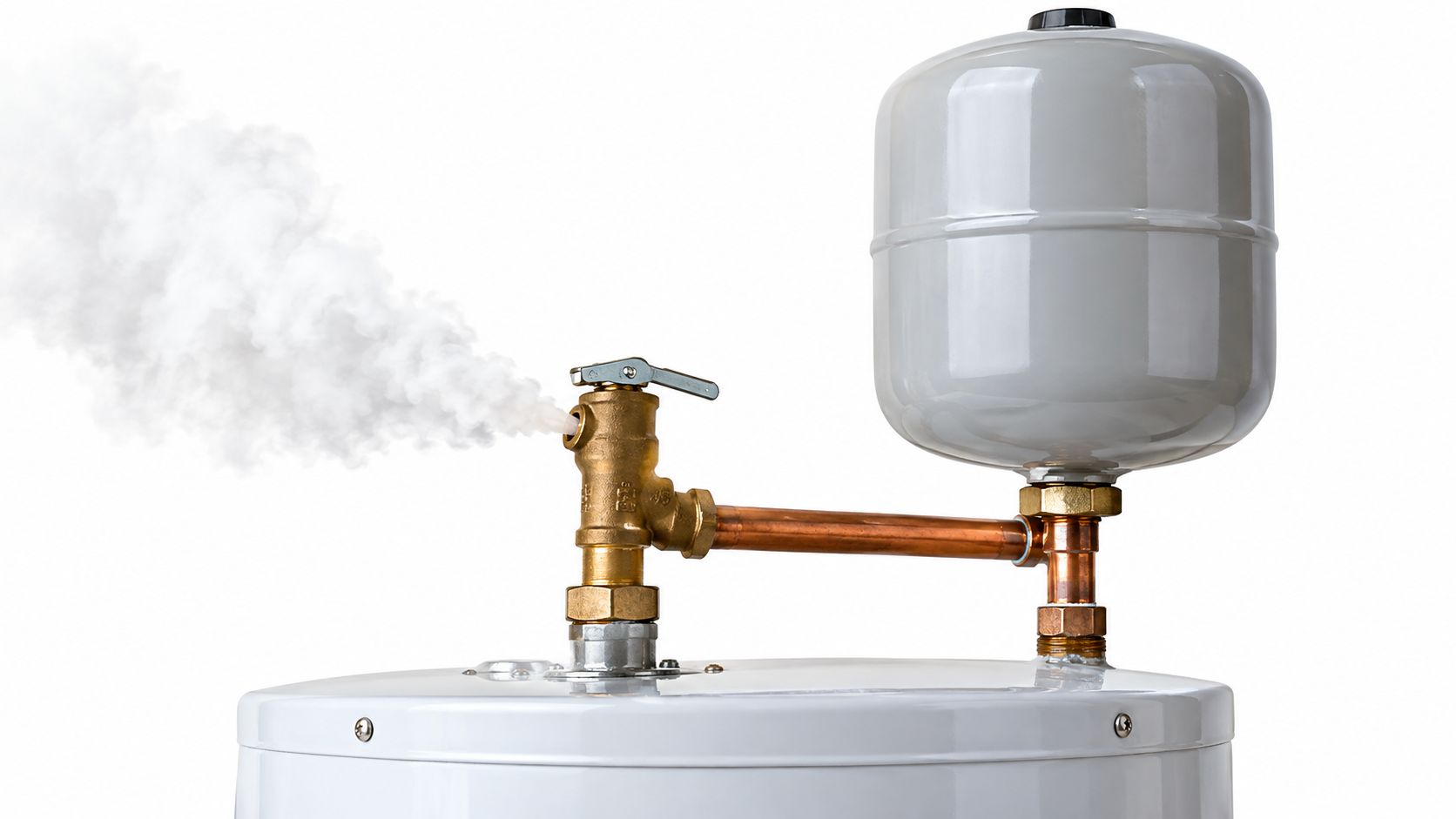
The NCC Volume Three requirements call for a temperature-and-pressure relief device compliant with AS/NZS 3500.4, and new or replacement unvented storage water heaters must have both a new TPR valve and an expansion-control valve (NCC Volume Three heated water services requirements).
This matters during renovations and heater replacement. Reusing an old valve, leaving out expansion control or fitting a component without checking its suitability can leave the cylinder with an incomplete safety arrangement. The discharge line also needs to lead to a safe, visible location, away from areas where hot water could contact people or outdoor electrical equipment.
A relief valve isn't an optional drain. It gives excess heat or pressure a controlled way out.
Never cap, block or permanently isolate the outlet to stop a leak. That removes the route designed to protect the vessel. If pressure, mineral deposits or valve deterioration causes discharge, diagnose the system rather than hiding the symptom.
A relief valve can discharge for a valid reason, but a continuous leak deserves more than a quick wipe or a new bucket. Start by comparing the behaviour you can observe with the likely system response.
Occasional discharge while the heater is recovering from use may reflect heating and expansion. By contrast, a steady trickle, a valve that keeps running after the system has settled, or water that fills a bucket within a day indicates that the valve should be replaced or professionally investigated, according to Australian consumer guidance (YourHome guidance on hot-water systems and relief valves).
A new valve may be the right repair, but it may not be the complete repair. Continuous discharge can point to excessive incoming mains pressure, thermal expansion, a missing or incorrectly selected expansion-control valve, or a poorly installed drain line. In those cases, the relief valve may be doing its job by showing that another part of the system needs attention.
| What You Observe | Likely Cause | What to Do |
|---|---|---|
| Occasional discharge during heating | Thermal expansion or normal pressure response | Keep the outlet clear and arrange an inspection if the discharge becomes frequent or increases |
| Continuous dripping | Worn or scaled valve, excessive mains pressure, expansion-control fault or drain-line problem | Don't cap it. Arrange a licensed assessment of the valve and system pressure |
| A bucket beneath the outlet fills within a day | Excessive discharge or a valve that no longer seals correctly | Follow consumer guidance and arrange valve replacement or diagnosis |
| Water runs heavily or suddenly | A significant temperature or pressure event may be occurring | Keep people away from hot discharge and seek urgent professional help |
| The outlet is capped, blocked or routed uphill | Unsafe discharge arrangement | Don't alter it yourself. Have the installation corrected by a licensed professional |
| The lever is operated but the valve won't reseat | Debris, mineral buildup, deterioration or another valve fault | Stop testing, avoid scalding and arrange inspection |
A landlord or renovator should treat a small wet patch as useful evidence, not as a cosmetic nuisance. Continuous discharge can waste water, damage a wall or slab, and hide a pressure problem that will return after the valve is changed.
For general maintenance context, this guide to hot-water maintenance can help you organise inspections around the heater and its safety components. Homeowners who want background on manual testing can also review information about a pressure relief valve for Melbourne homes, while remembering that a Brisbane installation still needs assessment against applicable Queensland and Australian requirements.
The relief valve can be correctly selected and still be unsafe if its discharge line is badly installed. Released water may be near boiling temperature, and steam or hot water can injure people, damage building materials or create a nuisance. Australian guidance therefore treats the pipe route and termination point as part of the safety system, not as an afterthought.
A compliant-looking line should be checked by a qualified person, but a homeowner can identify obvious concerns without touching the valve:
State guidance based on AS/NZS 3500.4 requires an inlet pressure-control valve where maximum mains pressure is likely to exceed 500 kPa. That makes incoming water pressure part of the diagnosis. A cylinder may be sound, yet the system can still discharge because pressure entering the property is too high or because heated water has nowhere suitable to expand (NSW guidance on hot-water discharge and pressure controls).
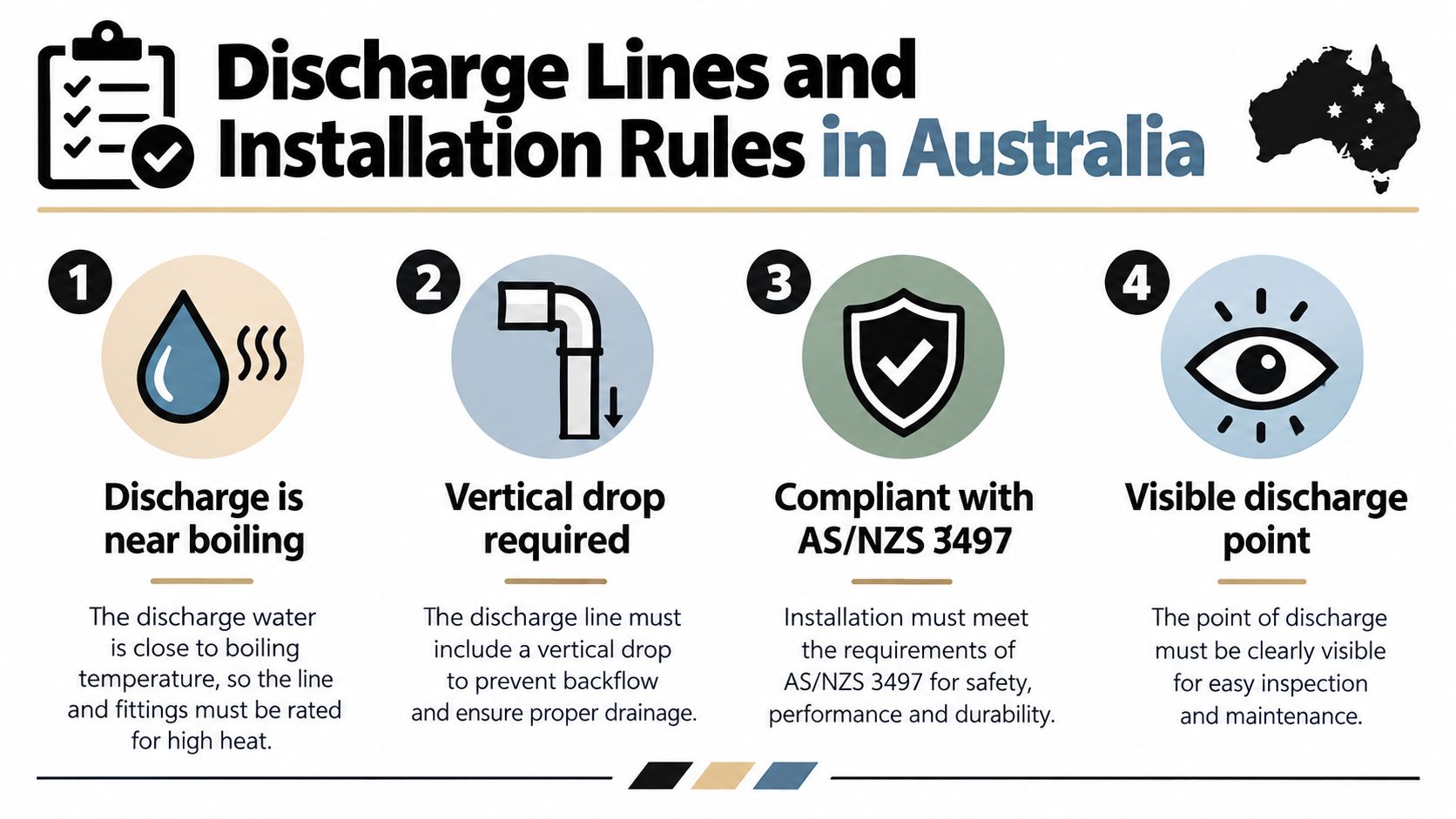
Where a TPR drain discharges above an overflow relief gully or gravel pit, the termination must be at least 75 mm and no more than 300 mm above it, and the drain should generally match the valve outlet size, as described in the state technical guidance linked above. These aren't decorative measurements. They help manage splash, visibility, drainage and the risk of contact with hot water.
An incorrectly shortened pipe can discharge onto a wall or path. An uphill section can retain water and interfere with drainage. A capped line can prevent the relief valve from doing its job at the precise moment the cylinder needs protection.
Don't reroute the pipe to make it look tidier, connect it to an improvised fitting or reduce its outlet because the original route is inconvenient. A licensed plumbing professional should assess the current NCC and PCA requirements, AS/NZS 3500.4 provisions and the heater manufacturer's instructions before altering the arrangement.
Plumbing and electrical safety often meet in the narrow space beside an outdoor cylinder. A relief valve may be certified and operational, yet its discharge can still create a site-specific hazard if hot water lands near an outdoor power point, an air-conditioner isolator, switchboard-related equipment or a walkway.
This is especially easy to miss in older North Brisbane homes, renovations and compact properties where the cylinder shares a service area with electrical equipment. Hard paving can also make hot water splash unpredictably, while a poorly directed outlet may send steam or water towards an appliance instead of a safe drainage point.
Australian technical guidance warns that temperature-pressure-relief discharge can create injury or electrical hazards when directed near appliances or equipment. It also notes that hot water may discharge in unpredictable directions, so the termination point needs to account for surrounding services and external influences (Victorian technical guidance on hot-water discharge safety).
Stand clear of the outlet and look at the full route. Don't operate the lever just to see where water goes if you can't do so without exposure to hot discharge.
Safety check: Don't solve an electrical-plumbing interaction by moving the pipe yourself. The correct route may depend on heat, drainage, access, clearances and the equipment manufacturer's instructions.
A professional can determine whether the discharge line needs correction and whether nearby electrical equipment requires separate attention. Treating these as one inspection is safer than waiting for a wet outlet, tripped electrical protection or damaged equipment to reveal the connection.
A relief valve that drips once after heating may be responding to pressure. Persistent discharge is different. Arrange professional help if the valve fails to reseat, the fitting shows corrosion or scale, or the outlet has been capped, shortened or rerouted. Get an assessment if hot water discharges near a socket, air-conditioner isolator, switchboard equipment, doorway or commonly used path.
A licensed technician checks the pressure problem behind the symptom. The inspection should cover incoming water pressure, thermal expansion, the expansion-control arrangement, valve operation, the complete discharge route and the heater manufacturer's instructions. This helps determine whether the valve needs replacement or whether excessive pressure would make a new valve drip again.
If the last service date is unknown, treat the recommended servicing interval as overdue and book an inspection under Queensland servicing guidance. Occupants may operate the relief lever periodically, provided they can avoid hot discharge and confirm that the valve closes fully. If it does not reseat, stop forcing it and do not attempt a repair with household tools.
For Brisbane households, hot-water system repairs near me can help you find an electrician experienced with electric storage systems. DLG Electrical provides Brisbane experience with electric hot-water repairs and can assess pressure symptoms alongside nearby electrical safety concerns.
Use this maintenance rhythm:
If the valve is dripping near electrical equipment or will not reseat, DLG Electrical can assess the electric hot-water system, discharge route and surrounding safety risks. Contact the Brisbane team for a free quote and practical advice.

Master Electrician with over 30 years of experience. Founded DLG Electrical in 2005 after international project work including electrical installations at Stamford Bridge Stadium, London(Home of Chelsea FC).

Local Electricians that can fix all Electric Hot water Systems.
Motion sensor lights are a versatile addition to any home, offering nu
