83 Jean St, Grange QLD 4051
Mon-Fri 07:30 AM - 04:00 PM - Sat - 8:00 - 12 - Sunday Closed
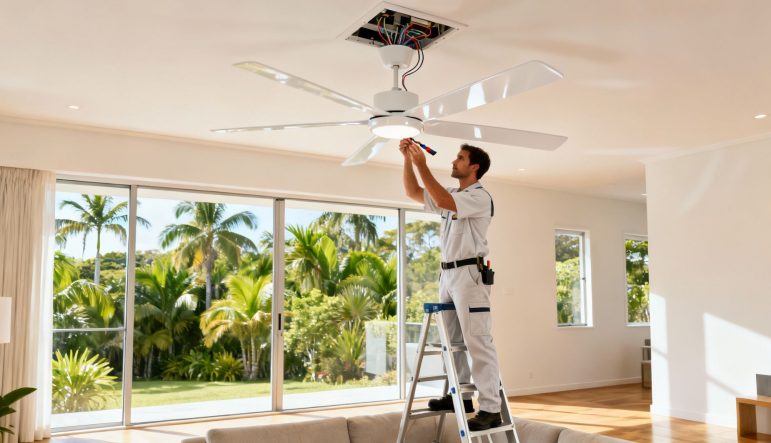
Choosing the right ceiling fan and having it installed properly is one of the smartest moves a Brisbane homeowner can make. In our subtropical climate, it’s a genuine game-changer—a savvy investment that delivers year-round comfort by combining powerful airflow with impressively low running costs. The result? You can drastically cut back on how much you rely on that power-hungry air conditioner.
In a city famous for its hot, sticky summers, finding a way to stay cool without getting a massive shock from your electricity bill is a top priority. While air conditioning certainly packs a punch, it comes with a hefty price tag every time you switch it on. This is where the humble ceiling fan steps in as the unsung hero of home cooling, offering a surprisingly effective and affordable alternative.
Think of a ceiling fan less like a fridge for your room and more like a personal breeze machine. It doesn’t actually lower the air temperature. Instead, it moves air across your skin, creating a wind-chill effect that makes you feel several degrees cooler. This simple trick is powerful enough to reduce your air conditioning use by up to 40%, which translates into real, noticeable savings over a long Brisbane summer.
But it’s not just about surviving the heat. Modern ceiling fans are designed for the Brisbane lifestyle year-round. Most quality fans now come with a reverse function, which is incredibly handy during our milder winter months. By flipping a switch, the blades spin in the opposite direction, gently pushing the warm air that’s risen and trapped near the ceiling back down into your living space. This makes your heating far more efficient and your home feel cosier.
This dual functionality brings some serious benefits to the table:
For anyone living in Brisbane, getting a professional ceiling fan and installation isn’t just a minor home improvement. It’s a strategic move towards a home that’s more comfortable, more stylish, and much more energy-conscious. It’s the key to truly enjoying our beautiful climate without the financial sting.
Picking the perfect ceiling fan can feel a bit overwhelming with all the choices out there. But if you break it down into a few key decisions, the whole process becomes much simpler. The goal is to land on a fan that not only looks fantastic but works efficiently in your specific Brisbane space, whether that’s a cosy bedroom or a big, open-plan living area.
The very first step is getting the size right for your room. This isn’t just about looks; it’s about actually moving the air effectively. A fan that’s too small will spin its heart out without creating a decent breeze, while a massive one can feel like a helicopter taking off in a small room. It’s simple physics—the right blade span gives you the best airflow.
This little infographic is a great way to visualise the main decision points when you’re on the hunt for a new ceiling fan.
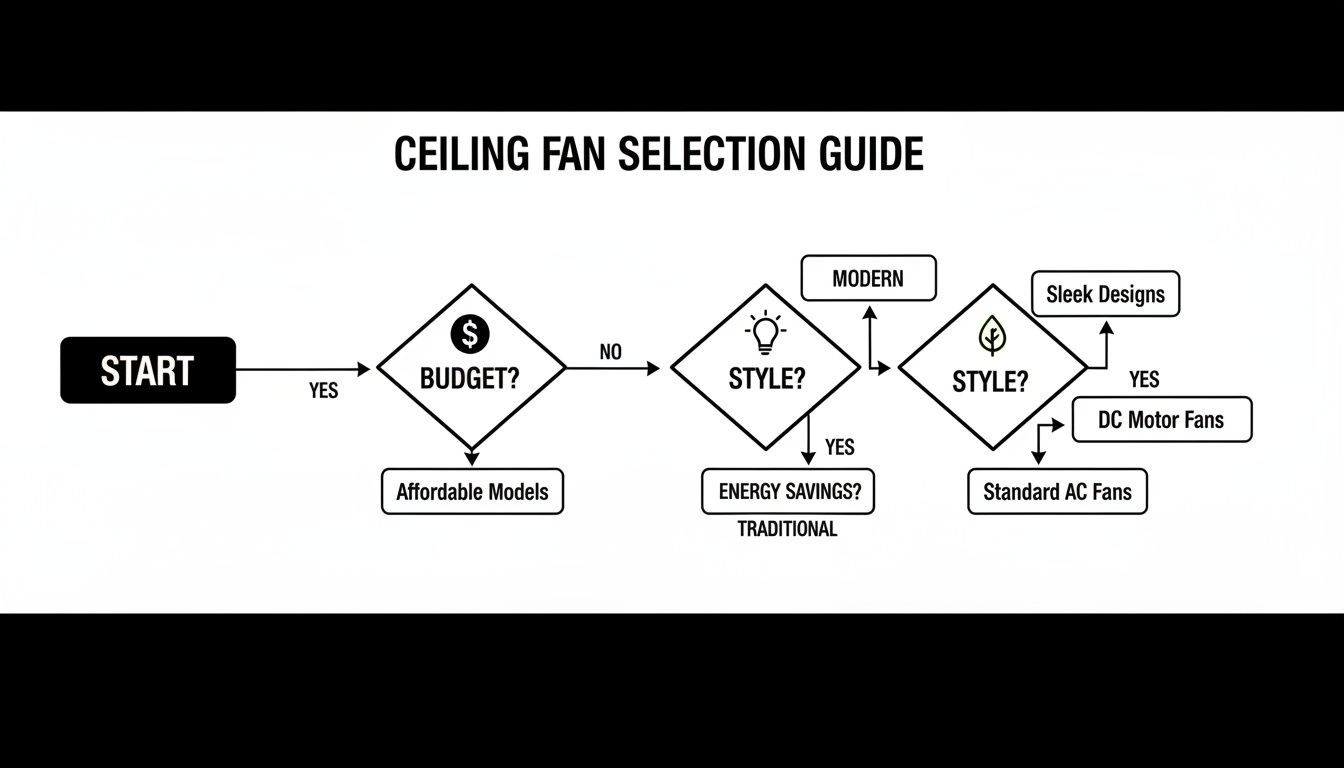
If you start by thinking about your budget, the style you’re after, and how important energy savings are, you can quickly narrow down the best type of ceiling fan for your home.
Getting the blade span right is absolutely critical for performance. Think of it like putting the right-sized engine in a car—you want enough power to do the job well without going overboard. A properly sized fan moves air around without a fuss, keeping you consistently comfortable.
Here’s a quick guide to help you match the fan to your room:
For a deeper dive into measuring your space and picking the perfect size, check out our comprehensive ceiling fan size guide.
Here in Brisbane, with our humid subtropical climate, the material of your fan is more than a style choice—it’s a practical one. While traditional timber blades look stunning, they can warp, droop, or get discoloured over time thanks to all that moisture in the air.
That’s why ABS (Acrylonitrile Butadiene Styrene) plastic is often the smarter pick for both indoor and outdoor undercover areas in Queensland. ABS is a tough, lightweight polymer that won’t warp and is a breeze to clean, keeping your fan looking and performing its best for years. For coastal homes or more exposed outdoor spots, stainless steel or marine-grade fans are also fantastic, rust-resistant options.
At the heart of every fan is its motor, and you’ll generally be choosing between two types: AC (Alternating Current) and DC (Direct Current).
Think of an AC motor as the reliable, standard engine—it gets the job done but uses more fuel. A DC motor is the modern, high-efficiency hybrid; it’s quieter, more powerful, and uses significantly less energy to achieve the same or better results.
Honestly, DC motor fans are a smarter long-term investment. They can use up to 70% less electricity than their AC cousins, give you more speed settings, and run almost silently. They might cost a little more upfront, but the savings on your power bills add up quickly.
Today’s ceiling fans do a lot more than just create a breeze. Modern features are designed to fit right into your lifestyle, adding a layer of convenience and control. Some of the most popular upgrades include:
The demand for smart fans is really taking off in Australia, especially in tech-savvy Brisbane homes where energy efficiency is a big deal. These advanced models are incredibly convenient and efficient, with some running on as little as $64.80 per year. If you’re interested, you can discover more about the growing Australian smart ceiling fan market and its impressive growth. Picking the right features ensures your ceiling fan and installation will deliver maximum comfort and value for years to come.
When you’re budgeting for a new ceiling fan, it’s easy to focus on the price tag of the fan itself. But the professional installation is a huge part of the equation, and getting a handle on those costs upfront will save you from any nasty surprises. Here in Brisbane, the final price for getting a fan installed almost always comes down to one thing: what’s already hiding in your ceiling.
Think of it this way. Replacing an old, tired fan is a bit like changing a light bulb. The wiring is already there, the switch is on the wall, and the power is ready to go. It’s a straightforward swap. But putting a fan in a room for the very first time? That’s more like adding a whole new light fixture where one never existed. It means running new cables from your switchboard, which is a much bigger job and, naturally, costs more.
The most common and budget-friendly job we do is a simple replacement. If you’ve got an old ceiling fan or even just a central light fitting, our licensed electricians can usually tap into that existing wiring. This makes the installation much faster and simpler, which keeps the cost down for you.
A completely new installation, on the other hand, needs a bit more love. An electrician has to run a dedicated new circuit all the way from your switchboard to the fan’s location. This often involves getting up into the ceiling cavity and sometimes cutting a small amount of plasterboard to fit a new wall switch.
The real difference in cost boils down to time and materials. A simple swap uses the infrastructure that’s already in place. A new installation means we’re building that electrical backbone from scratch to make sure it’s safe, compliant, and built to last.
So, what should you actually expect to pay? Generally, a standard ceiling fan installation in Queensland, using existing wiring, will fall somewhere between $120 and $350. It’s a really affordable upgrade for most Brisbane homes and usually only takes our team an hour or two to complete, with typical electrician rates sitting between $75 and $150 per hour.
If new wiring is required, the price tends to shift into the $200 to $450 range. For a deeper dive into how electricians structure their pricing, check out our detailed guide on how much electricians charge in Brisbane.
To give you a clearer picture, here’s a quick breakdown of what to expect for different scenarios.
This table compares the estimated costs for different ceiling fan installation scenarios to help you budget.
| Installation Scenario | Estimated Cost Range (AUD) | Key Factors |
|---|---|---|
| Direct Replacement (Like-for-Like Swap) | $120 – $200 | Existing wiring and mounting bracket are suitable. Quickest and most straightforward job. |
| New Fan with Existing Wiring (e.g., replacing a light) | $150 – $350 | Uses an existing light circuit. May require extra bracing in the ceiling for fan weight. |
| New Installation (No prior wiring) | $200 – $450 | Requires running a new dedicated circuit from the switchboard. More labour and materials needed. |
| Complex Installation (High ceilings, difficult access) | $350+ | Raked ceilings, attics with poor access, or special controllers add to the time and complexity. |
These figures are a great starting point, but keep in mind that a few other things can influence your final quote.
It’s also worth remembering the long-term value. A typical 75W fan running for eight hours a day uses just 0.6 kWh. At current Brisbane energy prices, that works out to only around $5.40 a month to run—a tiny fraction of what an air conditioner chews through. When you factor in the energy savings, a professional installation by DLG Electrical isn’t just an expense; it’s a smart investment in your home’s comfort and running costs.
When it comes to home improvements, the DIY spirit is a fantastic thing. Tackling a new deck or painting a room yourself can be incredibly rewarding. However, in Australia, ceiling fan installation falls firmly outside the scope of a weekend project. Legally, and for very good reason, it’s a job that can only be performed by a licensed electrician.
Think of it like the structural work on your house. You wouldn’t knock down a supporting wall without a licensed builder because the risks to your home’s integrity and your family’s safety are just too high. Your home’s wiring is exactly the same—it’s the hidden framework that powers your life, and getting it wrong can have disastrous consequences.
Attempting to install a ceiling fan yourself isn’t just against the law; it’s a massive gamble with your safety and your property. The risks are very real and range from annoying issues to life-threatening emergencies.
A few of the most serious hazards include:
Hiring a professional isn’t just about paying for a service; it’s a direct investment in the safety of your home and the well-being of your family. It’s the only way to guarantee the job is done right, the first time, without cutting any corners.
Hiring a licensed and experienced electrician provides complete peace of mind. A team like DLG Electrical ensures every single installation is performed in strict accordance with Australian Standards (AS/NZS 3000) and specific Queensland safety regulations.
This professional oversight guarantees that the job is not only safe but also fully compliant. For example, Australian regulations are clear—ceilings must be at least 2.4 metres high for a fan installation, and only qualified electricians can handle the wiring. For Brisbane families and businesses, partnering with trusted local experts who live and breathe these rules is essential. A professional installation is also incredibly efficient and far more affordable than running an AC unit. If you’re interested, you can discover the full Australian ceiling fan market outlook and its current trends.
This commitment to compliance extends to critical details that are almost always overlooked in a DIY attempt.
A professional electrician will manage:
Ultimately, choosing a professional is the only way to protect your home, your family, and your investment. The expertise of a licensed electrician in Brisbane guarantees a secure, compliant, and perfectly balanced fan that will provide safe and efficient cooling for many years to come.
Knowing what’s going to happen on installation day can make all the difference. It turns what could be a stressful project into a smooth, hassle-free experience. When you book a ceiling fan and installation with DLG Electrical, you’re not just getting a tradie for the day; you’re welcoming a dedicated professional into your home. We’ve fine-tuned our process around respect, efficiency, and total transparency.
It all starts the moment our uniformed, licensed electrician arrives at your Brisbane property. Punctuality is key for us. Before a single tool comes out, we’ll walk through the job with you, confirm the exact spot for the fan, and answer any last-minute questions you have. Getting a general understanding the building process and what to expect can be a great way to prepare for any home improvement project.
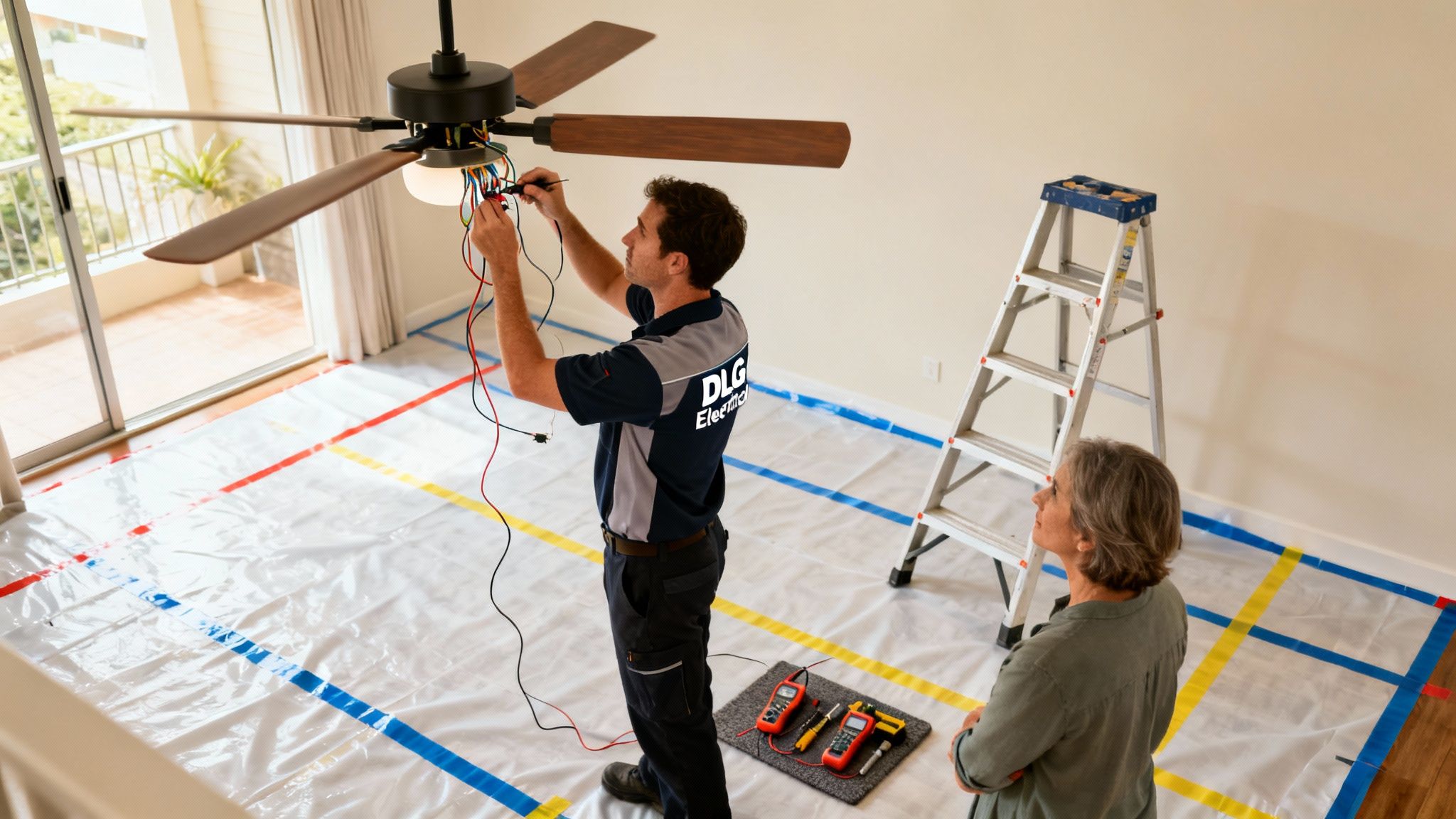
Your home is your sanctuary, and we treat it that way. We lay down drop sheets and protective coverings to safeguard your floors and furniture. Our goal is to leave nothing behind but a perfectly installed ceiling fan. Our process is methodical, focusing on safety and precision every step of the way.
We meticulously test every single function of your new ceiling fan. This means cycling through all speed settings, checking the remote or wall switch for responsiveness, verifying the reverse function, and ensuring the fan is perfectly balanced and whisper-quiet.
Our job isn’t done until you are 100% satisfied. After testing is complete, we’ll show you exactly how to operate your new fan, including how to change its seasonal direction and use any special features. This is the perfect time to see it in action and ask us anything.
We then do a full cleanup, removing all packaging, off-cuts, and our equipment. We pride ourselves on leaving your space even tidier than we found it. From the moment we arrive to the final handshake, the DLG Electrical experience is designed to give you complete confidence and a flawless, professionally installed fan.
Getting your ceiling fan professionally installed is a great start, but a bit of simple maintenance is the secret to making that investment last. Think of it like servicing your car—a few quick checks now and then will keep everything running smoothly, saving you hassle and money down the road.
These straightforward tips will keep your fan performing perfectly, season after season.
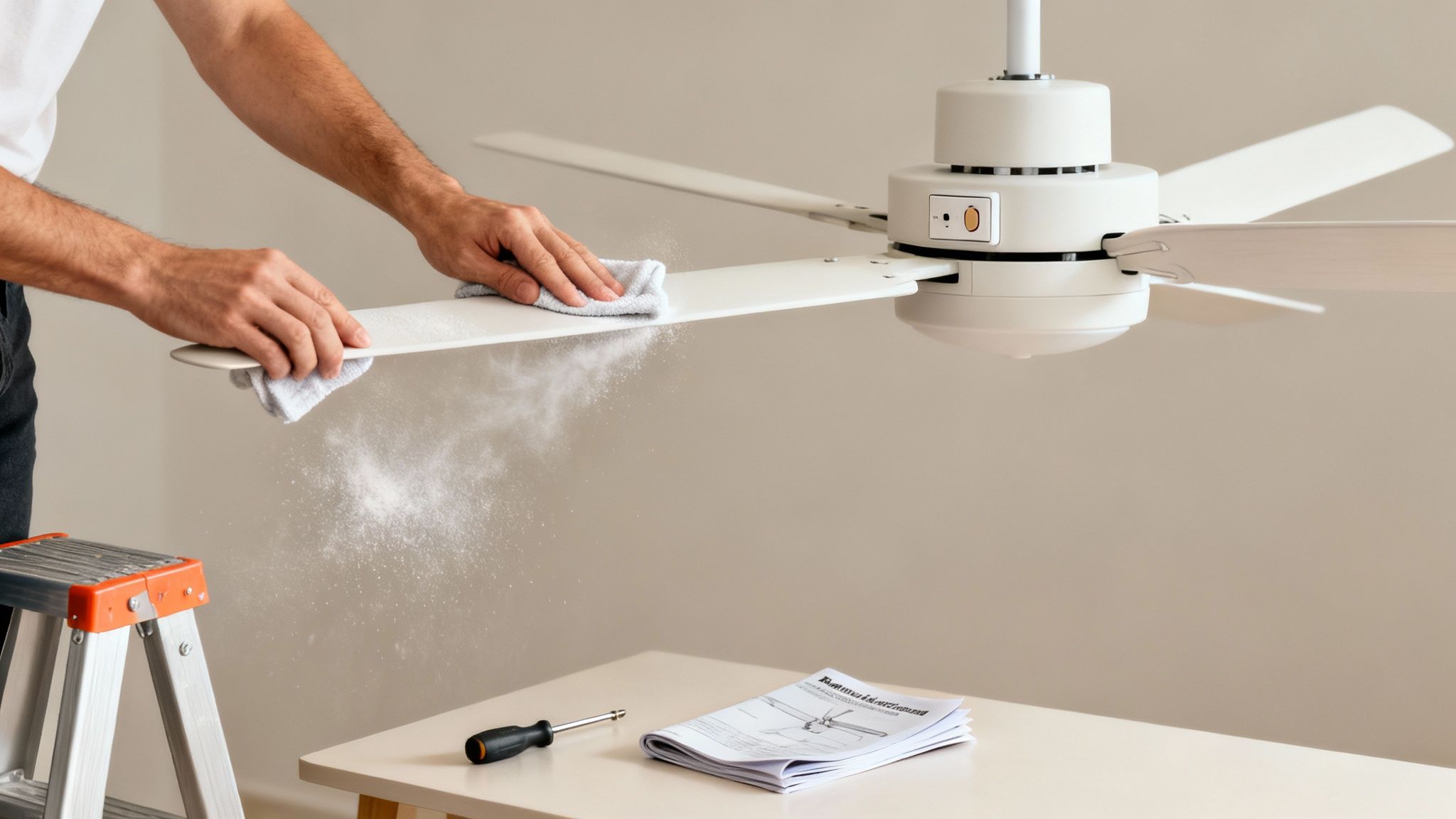
Over time, a layer of dust and grime builds up on the fan blades. This extra weight can throw them off balance, not only reducing airflow but also causing that annoying wobbling sound. Thankfully, a regular clean is all it takes to keep your fan stable and efficient.
For most fans, a quick clean every few months is plenty. The easiest trick is to grab an old pillowcase. Just slide it over each blade and pull it back—all the dust gets trapped inside instead of falling all over your furniture.
One of the best features of a modern ceiling fan is the reverse switch, which changes the direction the blades spin. This simple adjustment turns your fan from a summer cooling tool into a winter energy-saver.
Summer Mode (Counter-Clockwise): The blades push air straight down, creating a wind-chill effect that makes you feel cooler without touching the thermostat.
Winter Mode (Clockwise): On a low speed, the blades draw air up. This forces the warm air that’s naturally risen to the ceiling to circulate back down into the room, all without creating a chilly draught.
Flicking this switch helps your heater work more efficiently, keeping your home comfortable while cutting down your energy bills during Brisbane’s cooler months.
Even a well-maintained fan can have an off day. Before you reach for the phone, here are a few common hiccups and what usually causes them.
| Issue | Possible Cause | What to Do |
|---|---|---|
| Wobbling Fan | Dirty blades or loose screws. | Clean the blades thoroughly and check that all mounting and blade screws are tight. |
| Clicking Noises | Loose parts or an internal wiring issue. | Turn the fan off and check for any loose screws. If the noise continues, it could be a wiring problem. |
| Burning Smell | Overheating motor or a short circuit. | Turn the fan off immediately at the switchboard. This is a serious fire risk. |
| Unresponsive Switch | Faulty switch wiring or a dead remote battery. | Try changing the remote battery first. If that doesn’t fix it, the issue is likely electrical. |
If you ever notice a burning smell, if the fan won’t operate on all its speed settings, or if these basic checks don’t solve the issue, it’s time to call in the pros. These are clear signs of an electrical fault that needs a professional eye.
For a complete safety check and reliable repairs, the licensed team at DLG Electrical is always here to help ensure your ceiling fan and installation remains safe and effective for years to come.
Even after doing your homework, it’s completely normal to have a few questions floating around. We get it. Over the years, we’ve heard just about every query from Brisbane homeowners, so we’ve put together the most common ones to give you clear, no-nonsense answers. This should help you feel 100% confident moving forward.
Pretty much, yes—whether it’s flat, high, or sloped. But the real question isn’t about the ceiling type, it’s about what’s behind it. A ceiling fan needs to be anchored directly into a solid ceiling joist or a special fan-rated brace. It’s not just holding up dead weight; it has to handle constant movement, so a flimsy mount just won’t cut it.
If you have sloped or raked ceilings, we’ll use a special mounting kit to make sure the fan hangs level and operates without a wobble. For those beautiful high ceilings, we simply use a longer downrod to bring the fan down to the sweet spot for air circulation, which is usually around 2.4 to 2.7 metres off the floor. Our electricians always start by assessing the structure to find the safest and most secure way to mount your new fan.
This one is a big deal in Queensland, and it’s a strict safety rule, not a suggestion. The body of the ceiling fan must be at least 300mm away from any smoke alarm.
And just as importantly, the spinning blades need a clearance of at least 1.5 metres from the alarm. This is to stop the fan’s airflow from blowing smoke away from the detector, which could prevent it from working in a fire. Our team is meticulous about this—every installation we do is fully compliant with these local standards.
Following smoke alarm clearance rules isn’t just about ticking a box; it’s a critical safety measure that ensures your alarm can do its job when you need it most, giving you and your family genuine peace of mind.
It’s a real possibility, especially in some of Brisbane’s older, charming homes. Your switchboard is the heart of your home’s electrical system, and if it’s already running at capacity, adding new fan circuits could push it over the edge.
An upgrade is often on the cards if your current board:
When we come out to do a free quote, our licensed electrician will take a look at your switchboard and give you a transparent recommendation. We’ll only suggest an upgrade if it’s genuinely needed for a safe, reliable, and compliant installation.
Absolutely. This is one of the most popular and straightforward upgrades homeowners ask for. In most cases, we can use the existing wiring that powered your old light to run the new fan and its light, which helps keep the installation simple.
However, there’s one crucial catch: the mounting box in the ceiling. The junction box used for a light fitting was never designed to take the weight and rotational force of a ceiling fan. To guarantee a rock-solid installation, we will always swap it out for a heavy-duty, fan-rated mounting box. This ensures your fan stays securely fixed to the ceiling for years to come.
Ready to enjoy the comfort and efficiency of a professionally installed ceiling fan? The team at DLG Electrical is here to help with a safe, compliant, and seamless installation process. For a free, no-obligation quote from Brisbane’s trusted electrical experts, visit us at https://dlgelectrical.com.au.

Master Electrician with over 30 years of experience. Founded DLG Electrical in 2005 after international project work including electrical installations at Stamford Bridge Stadium, London(Home of Chelsea FC).

Local Electricians that can fix all Electric Hot water Systems.
Motion sensor lights are a versatile addition to any home, offering nu
