83 Jean St, Grange QLD 4051
Mon-Fri 07:30 AM - 04:00 PM - Sat - 8:00 - 12 - Sunday Closed

A straightforward single breaker replacement in Brisbane usually lands around $215 to $350 installed, and specialty breakers often sit around $300 to $500 installed. The part is rarely the expensive bit, most of the bill comes from the electrician's time, safety checks, and whatever the board reveals once it's opened.
A Brisbane homeowner usually learns that the hard way when the kitchen goes dark mid-dinner, the air conditioner trips again, or a powerboard starts dropping out for no obvious reason. At that point, the core question isn't just what the breaker costs, it's whether you're paying for a simple swap, a fault-finding visit, or the start of a switchboard upgrade.
A Brisbane callout like this usually starts with one circuit tripping, then resetting once or twice before the breaker stops holding. If the switchboard is modern, easy to access, and the fault stays on one standard breaker, the installed price usually lands around $215 to $350. On jobs like that, the breaker itself is often about $115 to $150, with installation adding roughly $100 to $200.
A specialty GFCI/AFCI-type breaker pushes the total higher, usually into the $300 to $500 range. That lines up with what happens on site. These breakers cost more because they do more, and they are usually fitted where the circuit needs a different level of protection or the wiring conditions call for a more specific device.
A fair quote covers more than the part sitting inside the panel. It should include isolating the board, checking the fault, replacing the breaker, and testing the circuit before it is put back into service.
Practical rule: if the quote reads like the breaker is the whole job, it is probably leaving out the work that actually takes time.
For a quick sanity check, the local Perth electrician pricing guide puts a typical average around $215 and a normal range of $115 to $300 for small replacement jobs. That is useful because it stops a homeowner from overreacting to every quote they see. If a Brisbane price sits well above that range, it does not automatically mean the electrician is overcharging, it usually means the board needs more than a simple branch-circuit swap.
The quickest way to read the number is this. If the breaker has failed on its own and the switchboard is in good shape, you are in repair territory. If the quote starts including testing, main isolator work, or panel hardware changes, you are no longer comparing the same job.
Most homeowners focus on the breaker itself because that's the visible item. In reality, the breaker is often the smallest line in the quote, while the electrician's arrival, diagnostic work, isolation, and testing do the heavy lifting.
| Typical Cost Components of a Brisbane Breaker Replacement | |||
|---|---|---|---|
| Line Item | Typical Range (AUD) | What Drives It | Main Cost Driver |
| Breaker part | Usually modest compared with labour | Standard, specialty, or main-breaker hardware | Breaker type and rating |
| Call-out fee | Varies by suburb, timing, and contractor | Travel, scheduling, and minimum booking time | Availability and response time |
| Labour | Usually the biggest part of the bill | Isolation, replacement, testing, cleanup | Time on site |
| Safety testing or compliance check | Sometimes included, sometimes separate | Older switchboards, fault-finding, or added verification | Board condition and risk level |
The part cost matters, but only up to a point. A simple branch breaker can be cheap relative to the visit, while a specialty breaker or main device pushes the hardware higher and usually demands more careful installation.
The labour side is where Brisbane quotes diverge. Two electricians can quote the same faulty breaker and still end up hundreds apart because one has allowed for diagnosis, panel cleaning, and final checks, while the other has priced only the physical swap. One quote may be fairer because it's more complete.
If an older home has heat marks, loose cable terminations, or a switchboard that hasn't been looked at in years, the quote isn't just buying a breaker. It's buying the time needed to prove the circuit is safe to leave energised.
That's why a quote should be read as a package, not a component list. A low number can be genuine if the job is simple. It can also mean the electrician hasn't allowed for the part of the job that protects you from a second call-out next week.
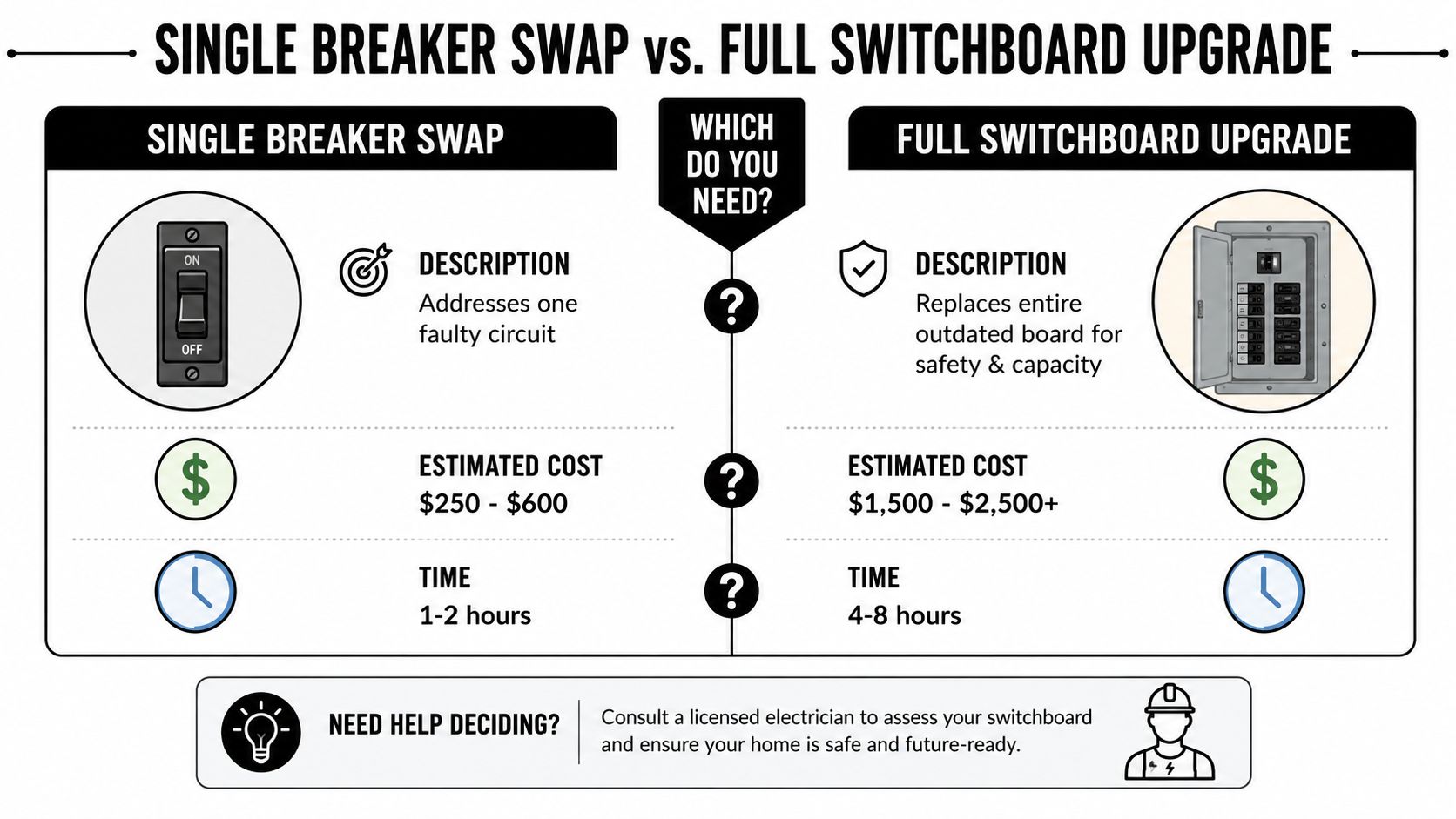
The hard part for most Brisbane owners is that a tripping breaker can mean two very different jobs. It can be a one-circuit fix, or it can be the first sign the board is out of its depth.
A standard breaker replacement is often discussed around $150 to $400 in broader pricing guides, while main breaker work can climb to $200 to $600+ and full panel replacement can jump to A$850 to A$4,000 (HomeGuide cost to replace a circuit breaker switch). That step-change matters because it shows the issue is not the symptom alone, it's the scope of the electrical system behind it.
Repeated nuisance tripping is the clearest one. So are older boards with poor protection, extra load from new appliances, and visible heat or damage around the switchboard.
If a property still relies on an outdated board, the better conversation is often about capacity and compliance, not just a dead breaker. That's where a proper switchboard review earns its keep, because replacing one device in a tired panel can be false economy.
The distinction is simple enough in practice. A single breaker swap fixes one faulty circuit. A switchboard upgrade replaces the platform that all the circuits rely on, which is why the price moves so sharply.
DLG Electrical's Brisbane switchboard upgrade guide is worth reading if you're trying to decide whether the board itself needs work rather than just one breaker. The same symptom can sit in completely different budget brackets, and the only way to know which one you're in is to get the board assessed properly.
A breaker usually gives clues before it gives up completely. The mistake I see most often is people resetting the same circuit over and over, then waiting until the fault becomes a full outage.
A circuit that keeps tripping in a rental property deserves prompt attention, especially when tenants are reporting the same pattern more than once. For landlords who need a broader inspection mindset, inspection tips for rental electrical systems is a useful reference point alongside the electrician's own findings.
A breaker that trips occasionally under a real load can be doing its job. A breaker that trips constantly, smells burnt, or feels wrong to the touch is usually asking for a proper inspection, not another reset.
A breaker isn't meant to become a habit. If the same circuit keeps misbehaving, treat the symptom as a diagnostic clue.
For readers who want a deeper look at nuisance trips, this Brisbane guide on a circuit breaker keeping tripping helps separate a simple overload from something that needs a licensed electrician on site. That difference matters because it changes the cost from a straightforward replacement to a more involved fault investigation.
After-hours pricing gets a bad reputation because people compare it with daytime work and assume the difference is just a surcharge. In practice, the higher number usually reflects dispatch speed, urgent diagnosis, and the fact that someone has left their own dinner table to solve your outage.
If you want a deeper breakdown of how electricians structure booking charges, DLG Electrical's Brisbane call-out fee guide is a useful companion. The key point is that an emergency visit isn't priced like a routine appointment.
If the home has a sustained outage, safety risk, or appliances that can't be left off for long, waiting can cost more than the call-out itself. A fridge full of food, medical equipment, or a fault that smells like heat damage changes the decision quickly.
If the problem is a single nuisance trip and the home is otherwise safe, waiting until business hours is often the smarter move. That gives the electrician more time to fault-find properly and usually avoids the pressure of after-hours work.
Rule of thumb: pay for urgency when safety or property loss is on the line. Don't pay for urgency just because the breaker annoyed you after dinner.
Older switchboards also complicate emergency jobs because the electrician may need extra time to isolate the board safely before any replacement starts. That's another reason emergency pricing is not just about the clock. It's also about the conditions inside the panel.
A well-priced job can still go wrong if the electrician isn't properly licensed, insured, or clear about what's included. Brisbane homeowners, renovators, and landlords get better outcomes when they ask direct questions before anyone touches the board.
For background on why licensing matters in the trade, TP Training's guide to trade licensing in Australia is a solid overview. In day-to-day work, licensing and insurance are not paperwork extras, they're the floor you should insist on.
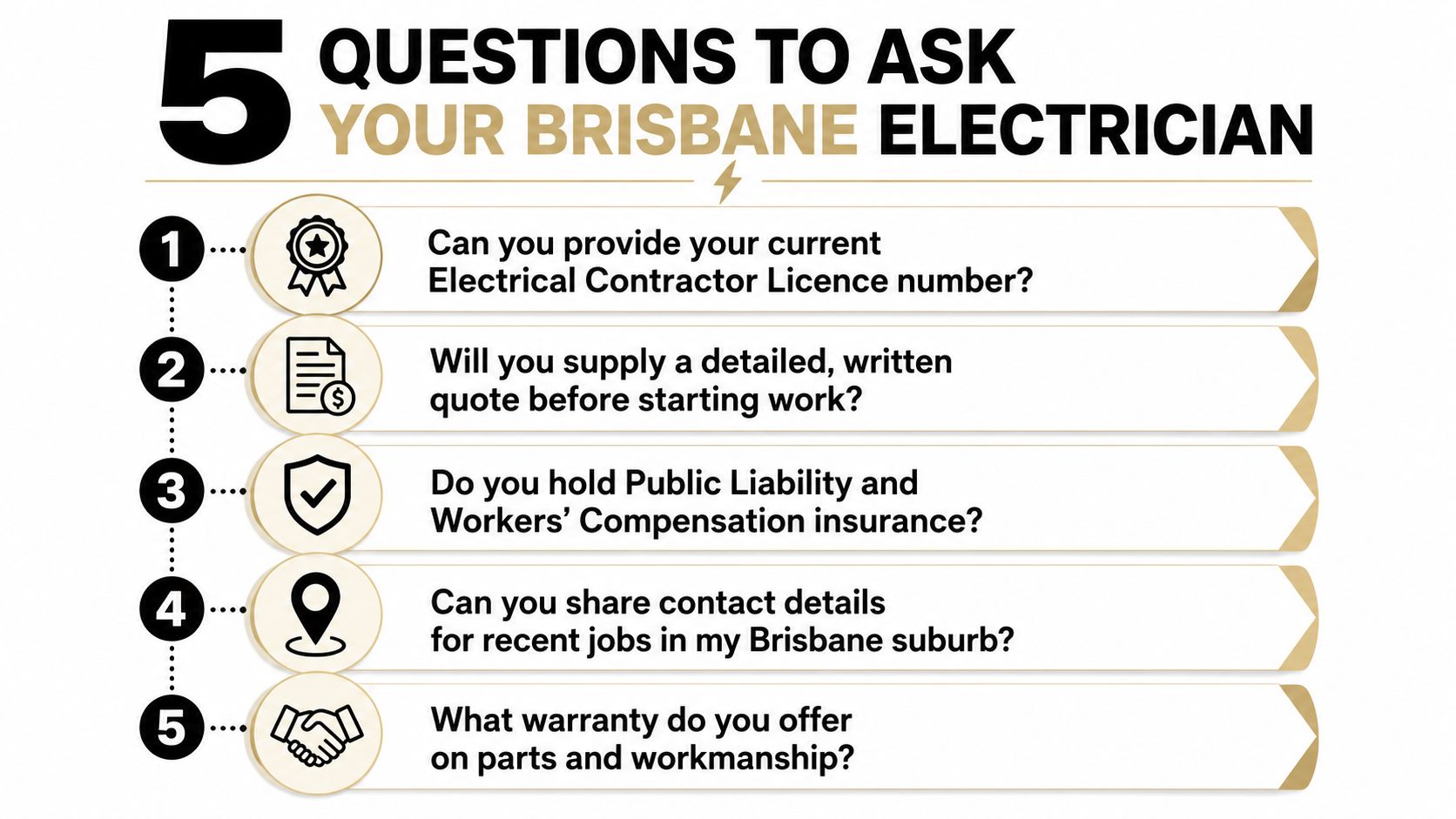
A good quote reads like a plan, not a guess. It names the job, the likely part, the labour assumption, and what happens if the electrician uncovers a board-level issue.
If the quote is vague enough that you can't tell whether it covers a breaker swap or a switchboard repair, ask for it to be rewritten before work starts.
DLG Electrical has been working in Brisbane for 19 years, and that local experience matters most when the job stops being a simple one-device replacement. A seasoned electrician knows when a quote should stay tight and when the board needs a broader compliance conversation.
The cleanest way to approach a breaker problem is to move in order. First, identify the symptom, then decide whether it looks like a single circuit issue or a board-level issue, then ask for a written quote that separates parts, labour, and compliance work.
A homeowner who does that avoids the most common mistake, which is comparing a cheap breaker swap with a quote that includes diagnosis, testing, and upgrade allowances. Those aren't the same jobs, and the price difference usually tells you that long before the paperwork does.
For Brisbane homes, safety switches, smoke alarm compliance, and a properly labelled board all sit in the same conversation once an electrician is already there. If the quote is clear and the problem is isolated, a small repair can stay small. If the board is tired or the fault keeps coming back, the smarter spend is usually on the correction that ends the cycle rather than the cheapest item on the list.
If you're comparing breaker replacement, fault-finding, or a switchboard upgrade in Brisbane, DLG Electrical can inspect the board, explain the scope in plain language, and quote the work properly. If you want a licensed electrician who'll separate a simple fix from a bigger compliance issue, visit DLG Electrical and ask for a written quote.

Master Electrician with over 30 years of experience. Founded DLG Electrical in 2005 after international project work including electrical installations at Stamford Bridge Stadium, London(Home of Chelsea FC).

Local Electricians that can fix all Electric Hot water Systems.
Motion sensor lights are a versatile addition to any home, offering nu
