83 Jean St, Grange QLD 4051
Mon-Fri 07:30 AM - 04:00 PM - Sat - 8:00 - 12 - Sunday Closed
The search usually starts the same way. A breaker trips during a Brisbane storm, half the house goes dark, and suddenly you’re on your phone typing electrician company near me and hoping the first name you click isn’t a mistake.
That’s where most homeowners get caught. Not by the fault itself, but by the rush to hire the first person who answers the phone. In suburbs like Grange and Windsor, we see the same pattern often. Older homes, ageing switchboards, storm-season nuisance tripping, smoke alarm questions, and a lot of conflicting advice online. Some of that advice is useful. Plenty of it isn’t.
Brisbane doesn’t need generic electrical advice. It needs local, practical judgement. What matters in a post-war home in Windsor isn’t always the same as what matters in a newer renovation in North Brisbane. A rental property has a different compliance risk to an owner-occupied family home. A cheap quote for a switchboard job can become expensive fast if the contractor has skipped testing, documentation, or the right upgrade path.
This is the no-nonsense version. If you want to avoid getting ripped off, avoid unsafe work, and hire someone who’ll do the job properly, start with the checks below and don’t skip the boring parts. They’re the parts that protect you.
It usually starts with a small problem that stops being small. A circuit drops out during a summer storm. The kitchen power cuts when two appliances run at once. You book a new air conditioner, hot water system, or oven, and the installer points at the switchboard and says the house is already at its limit.
That is a common Brisbane call-out, especially in older pockets like Grange and Windsor where post-war homes often have ageing circuits, dated boards, and wiring that has been added to in stages over decades. In newer renovated homes, the problem is often different. The finish looks modern, but the electrical capacity was never properly upgraded to match the extra load.
Smoke alarm compliance also catches people out. So do last-minute rental deadlines, storm-season faults, and switchboards that were acceptable years ago but are now showing their age. By the time many homeowners search for an electrician company near me, the job already feels urgent.
Urgent jobs are where bad hiring decisions happen.
A tidy website and a fast answer on the phone do not tell you much. A very cheap estimate is not much use either if it leaves out testing, fault-finding, compliance work, or the materials needed to finish the job safely. We have worked across North Brisbane for 19+ years, and the expensive mistakes usually come from the same pattern. Someone hires too quickly, gets a vague price, and only learns what was excluded after the work starts. If you want a clearer picture of typical pricing before you ring around, this guide on how much electricians charge in Brisbane will help.
Good electricians answer direct questions with direct answers.
The local detail matters here. In Brisbane, one house can need smoke alarm compliance for a tenancy change, while the house two streets over needs a switchboard upgrade because nuisance tripping starts every time storm season rolls in. The right electrician should be able to tell the difference quickly, explain the risk plainly, and give you a scope that matches the house.
Some call-outs are predictable:
Slow the process down for five minutes before you hire. Check who you are dealing with, what they have included, and whether they know Brisbane homes well enough to spot the true issue instead of guessing.
Before anyone steps into your roof space, opens your switchboard, or starts pulling covers off power points, confirm they are properly set up to do the job. In Brisbane, that matters even more in older pockets like Grange and Windsor, where we regularly find a mix of old cabling, partial upgrades, and previous work that was never brought up to a proper standard.
A tidy website and a fast answer on the phone prove nothing. The checks below do.

Check the electrical licence
Ask for the contractor licence details and verify them through the Queensland regulator. If they dodge the question or get vague, cross them off the list. A licensed contractor should be easy to identify and easy to verify.
Ask for insurance proof
Ask for a current Certificate of Currency for public liability insurance. That is basic business housekeeping. If a contractor acts like this is a big ask, that tells you plenty before the work even starts.
Check whether they understand local compliance work
Brisbane homeowners often need more than a simple repair. They need smoke alarm upgrades that meet Queensland rules, switchboard work that suits modern loads, or fault-finding in homes that have been altered over decades. Ask what similar jobs they do in your area. A contractor who works regularly in inner-north suburbs will usually spot common issues faster and quote more accurately.
Get written quotes and compare scope, not just price
If the work is not urgent, line up a few written quotes and read the inclusions carefully. One price may allow for testing, compliance paperwork, disposal of old fittings, or making safe damaged wiring, while another leaves those items out. If you want a clearer sense of what changes the final bill, our guide on how much electricians charge in Brisbane breaks down the usual cost drivers.
Ask what warranty and documentation you receive
Get the workmanship warranty in writing. Ask whether you will receive test results, compliance certificates where required, and a clear record of what was replaced or upgraded. That paperwork matters later, especially for insurance questions, property sales, and rental compliance.
For a quick outside view of how a legitimate local business should present itself online, the marketing guide to optimising Google Business Profiles is useful. It is not a licence check, but it helps you spot whether a business looks established, active, and consistent.
These checks are less about paperwork and more about how the business runs.
An organised electrician can tell you who is licensed, what is insured, what is included, and what is excluded without wasting your time. That usually carries through to the job itself. Clear bookings, proper fault-finding, a cleaner switchboard label-up, and an invoice that matches the quote.
The opposite pattern is easy to spot as well. Slow replies. Blurry answers. No written scope. Those jobs are the ones that drift, grow legs halfway through, or leave the homeowner arguing over what was supposedly included.
Practical rule: If you cannot verify the business before they touch your switchboard, smoke alarms, or meter box, do not hire them.
Homeowners who avoid expensive mistakes usually do one thing well. They check the basics before the first booking is locked in.
Once the licence and insurance checks are done, Google becomes useful again. Not for finding the cheapest option, but for spotting patterns.
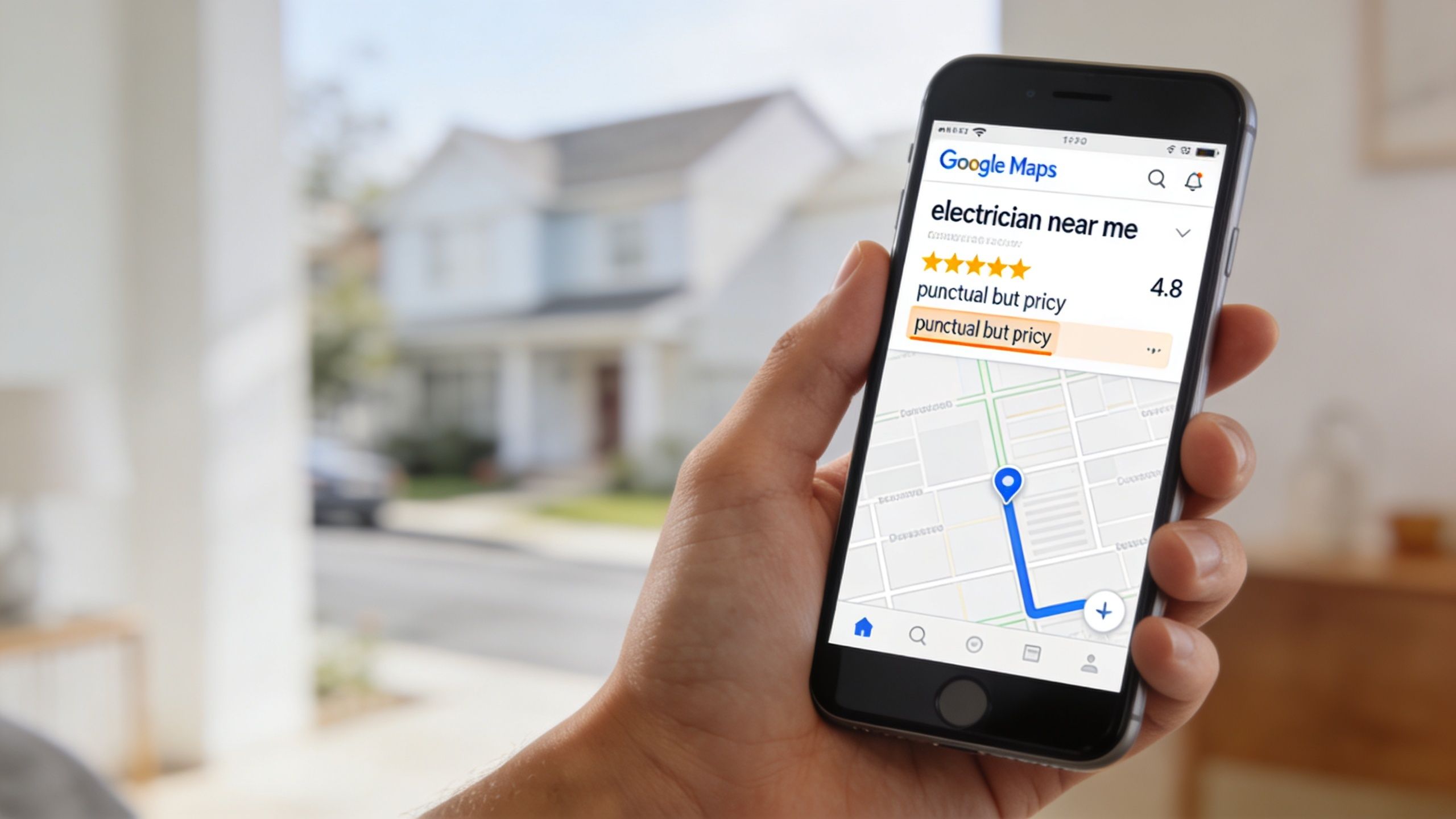
A strong Google Maps listing usually looks like a real operating business. Recent photos. Consistent service areas. Clear categories. Reviews that mention specific work, not generic praise. If you’re curious how businesses structure these listings properly, this guide to optimising Google Business Profiles gives a solid overview from the marketing side.
A believable review often includes detail. The customer mentions a switchboard upgrade, smoke alarm replacement, fault-finding visit, or a particular issue in an older home. They might mention the suburb. They may refer to how the electrician explained the problem or cleaned up after the work.
Weak reviews tend to sound interchangeable. “Great service.” “Highly recommend.” “Very professional.” Those comments aren’t useless, but if that’s all you see, they don’t tell you much.
Look for patterns such as:
Photos can expose a listing quickly. Real electrical businesses usually show actual workspaces, switchboards, smoke alarm installs, testing, vehicles, and team members on site. Stock imagery and generic office shots don’t prove much.
A proper listing also lines up with the company’s broader local footprint. If you’re comparing options around North Brisbane, our local perspective on choosing an electrician in near me can help you separate broad directory listings from contractors who work in your area.
If the reviews are vague, the photos are generic, and the business description sounds like it could apply to any trade in any city, keep scrolling.
Google is useful when you use it like a screening tool, not a trust substitute.
The phone call or site visit is the interview. You’re not being difficult by asking direct questions. You’re checking whether the electrician runs a professional business or just reacts job by job.
The right contractor won’t get defensive. They’ll answer clearly, explain their process, and put important details in writing. That matters because electrical work often looks simple from the outside. It rarely is once you open a switchboard, trace a fault, or try to bring older wiring into line with current requirements.
Good answers are usually plain and specific. Not polished, just clear. You ask what’s included in the quote, and they tell you. You ask whether they’ve worked on similar homes in Windsor or Grange, and they can explain the likely issues without pretending every house is identical.
Poor answers tend to be slippery. “Don’t worry about that.” “We’ll sort it out on the day.” “It should be fine.” Those phrases usually mean one of two things. They either haven’t thought it through, or they don’t want to pin themselves down.
For businesses trying to improve the customer side of the trade, this article on customer service for electricians is worth reading because it highlights something homeowners feel straight away. Clear communication is part of competent service, not an optional extra.
| Question Category | What to Ask | Why It Matters |
|---|---|---|
| Licensing and cover | Are you fully licensed and insured for this work? | You need confirmation that the contractor is authorised and accountable. |
| Scope of work | What exactly is included in the written quote, and what isn’t? | This helps prevent disputes over testing, parts, call-out charges, or unexpected extras. |
| Experience | Have you done this type of work in older Brisbane homes before? | Experience with local housing stock matters, especially in suburbs with older switchboards and wiring layouts. |
| Compliance | Will this work require testing, certification, or any compliance documentation? | Proper paperwork matters for safety, rentals, resale, and peace of mind. |
| Variations | If you find extra issues once the job starts, how do you handle changes? | You want a process, not a surprise invoice. |
| Timeframe | When can you attend, and how long is the work likely to take? | This shows whether the business is organised and realistic. |
| Warranty | What workmanship warranty do you provide in writing? | Verbal promises are easy to make and hard to rely on later. |
| Subcontracting | Who will actually carry out the work? | You should know whether the person quoting is the person doing the job, or whether it’s being handed elsewhere. |
A few questions tend to separate professionals from pretenders fast:
A written quote isn’t paperwork for paperwork’s sake. It’s the line between a controlled job and a moving target.
If the answers are straightforward, you’re probably dealing with someone worth considering.
The call usually comes after something small stops feeling small. The lights flicker every time the air conditioner starts. The hot water drops out. A storm rolls through Brisbane and half the house loses power. In older suburbs like Grange and Windsor, those signs often point to wiring or switchboard issues that have been sitting there for years.
The jobs we see most often in Brisbane homes are switchboard upgrades, smoke alarm upgrades for rentals and owner-occupied homes, hot water faults, storm damage, and general safety repairs after a defect has been ignored too long. They sound routine. Some are. But the risk level changes quickly once older wiring, DIY alterations, or overloaded circuits enter the picture.
A good electrician does not treat every fault as a quick fix. The right repair depends on the age of the home, the condition of the existing installation, and whether the work also needs to satisfy current Queensland requirements.
A switchboard upgrade is rarely just swapping a box on the wall. In many Brisbane homes, especially older Queenslanders and post-war properties, the board has to match current load demands, include the right safety devices, and leave room for the way people use power now. Air conditioning, induction cooking, pool equipment, and EV charging all change what the switchboard needs to handle.
Storm season makes this more urgent. If circuits are poorly protected or the board is already showing heat damage, nuisance tripping and failed protection become more likely at exactly the wrong time. If you want a local explanation of what is involved, this guide on switchboard upgrades in Brisbane homes covers the main points clearly.
This is one area where Brisbane owners get caught by half-accurate advice. Queensland's deadline for all rental properties to have interconnected photoelectric smoke alarms is 1 January 2027. For landlords, that means planning the upgrade properly, not waiting until a lease turnover or sale puts pressure on the job.
Older homes in Grange and Windsor often take more work than owners expect. Ceiling access can be tight, previous renovations can leave odd circuit paths, and alarm locations that look fine on paper may not suit the actual layout. A proper installation considers placement, interconnection, power supply, and whether the final setup will stand up to scrutiny if there is ever a tenancy dispute or insurance claim.
Electric hot water faults can come from the unit itself, but we often find the underlying issue in the circuit feeding it. Failed isolation, damaged cabling, worn connections, or an aging breaker can all look like a simple hot water problem at first. Replacing a part without testing the rest of the circuit is how money gets wasted.
The same goes for "small" safety repairs. A burnt outlet, a tripping breaker, or lights dimming in one part of the house may be the visible symptom, not the root cause. In Brisbane's older housing stock, especially where renovations have been layered over old work, fault-finding matters just as much as the repair.
One Brisbane option for these residential jobs is DLG Electrical, which handles switchboard upgrades, smoke alarm compliance, hot water system repairs, and security installations across North Brisbane.
The pattern is usually easy to spot.
Cheap work often gets paid for twice. First when the shortcut goes in, then again when someone has to find the defect, correct it, and make the installation safe.
Professional electrical work should still make sense a year from now. That means safe circuits, clear documentation, and repairs or upgrades that suit the house you own.
These are the questions Brisbane homeowners ask all the time, usually after they’ve had one bad experience or heard three different opinions from friends.
| Question | Answer |
|---|---|
| How do I know if an electrician is legitimate? | Check the licence, ask for insurance proof, and insist on a written quote. If they avoid any of those, don’t proceed. |
| Should an electrician quote over the phone? | For very simple work, they may give a rough guide. For switchboards, smoke alarms, fault-finding, or anything in an older home, a proper inspection is the safer approach. |
| Is the cheapest quote usually the best value? | Not often. A low quote can mean missing items, rushed labour, or no allowance for proper testing and compliance. |
| What should be in a written quote? | The scope of work, what’s included, likely exclusions, and how variations will be handled if hidden issues are found. |
| Do landlords need to be more careful when hiring? | Yes. Rental properties carry compliance obligations, especially for smoke alarms. A poor job can create legal and insurance headaches. |
| Are older homes in Grange and Windsor harder to work on? | They can be. Older switchboards, past renovations, limited access, and legacy wiring all make accurate quoting and safe upgrades more important. |
| What’s the biggest red flag? | Evasion. If someone won’t answer clear questions clearly, that usually tells you enough. |
If a contractor is easy to verify, easy to question, and easy to get in writing, you’re usually on safer ground than with someone who’s only easy to book.
Hiring an electrician shouldn’t feel like a punt. The safe path is simple. Verify the licence, confirm insurance, read reviews properly, ask direct questions, and get the scope in writing before work starts.
That approach matters even more in Brisbane homes where storm exposure, older wiring, rental compliance, and switchboard capacity issues can turn a “small job” into a safety issue fast. The contractor you hire should make the process clearer, not murkier.
If you’re comparing local options, judge each one by the same standard. Are they accountable, transparent, and willing to explain the work without hiding behind jargon? If the answer is yes, you’re probably dealing with the right sort of electrician. If not, keep looking.
If you want a practical quote from a licensed local team, contact DLG Electrical for advice on switchboard upgrades, smoke alarm compliance, hot water repairs, and other residential electrical work across Brisbane.

Master Electrician with over 30 years of experience. Founded DLG Electrical in 2005 after international project work including electrical installations at Stamford Bridge Stadium, London(Home of Chelsea FC).

Local Electricians that can fix all Electric Hot water Systems.
Motion sensor lights are a versatile addition to any home, offering nu
