83 Jean St, Grange QLD 4051
Mon-Fri 07:30 AM - 04:00 PM - Sat - 8:00 - 12 - Sunday Closed
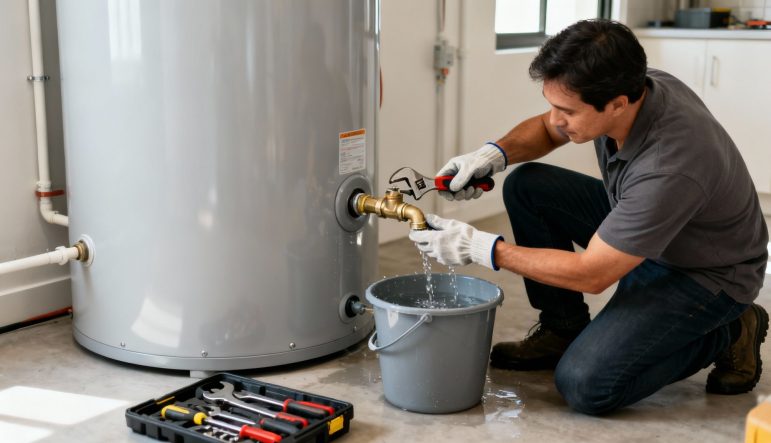
It’s a classic case of “out of sight, out of mind.” Your hot water tank hums away quietly in a cupboard or outside, and as long as the shower is warm, we tend to forget it even exists. But ignoring your hot water system, especially here in Brisbane, is a costly mistake just waiting to happen.
Think of routine servicing as cheap insurance for your home’s comfort and your wallet. It’s the single best way to prevent surprise cold showers, keep those climbing energy bills in check, and get the maximum possible lifespan out of your unit.
For too many homeowners, the only time their hot water system gets any attention is when it fails spectacularly—usually at the worst possible moment. Proactive maintenance flips that script, turning a potential emergency expense into a predictable, minor cost.
Ignoring your system doesn’t just risk a cold shower; it actively costs you money through lost efficiency month after month.
This guide will walk you through exactly what’s involved, from a practical maintenance checklist to diagnosing common issues and knowing when it’s time to call in a professional electrician. We’ll show you how a small investment in servicing can save you hundreds, if not thousands, down the track.
The water quality in Brisbane plays a huge role in the health of your hot water system. Our water is considered moderately hard, which means it contains minerals like calcium and magnesium. When this water is heated, those minerals drop out and form a thick, chalky sediment at the bottom of your tank.
This sludge buildup creates a real problem. It forms an insulating layer between the heating element and the water, forcing the system to work much harder. This leads to a few expensive side effects:
According to Australian plumbing experts, the typical 8 to 12-year lifespan of a storage hot water system can be cut dramatically without regular maintenance. Here in Brisbane, we’ve seen sediment buildup slash efficiency by up to 20-30% if the tank isn’t flushed annually. You can find more insights on extending your system’s life from the team at Jim’s Plumbing.
At DLG Electrical, our 19+ years of experience in Brisbane have shown us one thing very clearly: annual servicing can easily double the effective lifespan of a hot water unit. It’s the most effective way to protect your investment, bar none.
Regular servicing isn’t just about saving a few bucks. It’s a critical safety check. A qualified electrician will inspect crucial safety components like the temperature and pressure relief (TPR) valve. This little valve is designed to prevent the tank from rupturing under extreme pressure—a rare but catastrophic failure.
They’ll also check for any electrical faults that could pose a serious shock or fire risk. At the end of the day, that peace of mind, knowing your system is running safely and efficiently for your family, is priceless.
Want to get hands-on with your hot water tank maintenance? Great. A few simple checks you can do yourself will go a long way in extending its life and catching small problems before they turn into major headaches. This checklist covers the basics you can safely handle between professional services.
Before you touch a single thing, though, let’s talk safety. Your first, non-negotiable step is to go to your switchboard and flick off the circuit breaker for your hot water system. Seriously. This protects you from nasty electrical shocks, so don’t skip it.
Start with a good look around the unit itself. Are there any signs of moisture, drips, or rusty stains on the tank or the pipes running in and out? Even a tiny, slow leak can signal a failing valve or a corroded fitting that needs sorting out.
Next, find the temperature and pressure relief (TPR) valve. This little valve with a lever is a critical safety feature.
A working TPR valve is your system’s main defence against dangerous pressure build-up. Giving it a quick test once a year is an absolute must.
This infographic shows just how quickly a little neglect can spiral into a big problem. Sediment builds up, the system has to work way harder, and eventually, something gives.
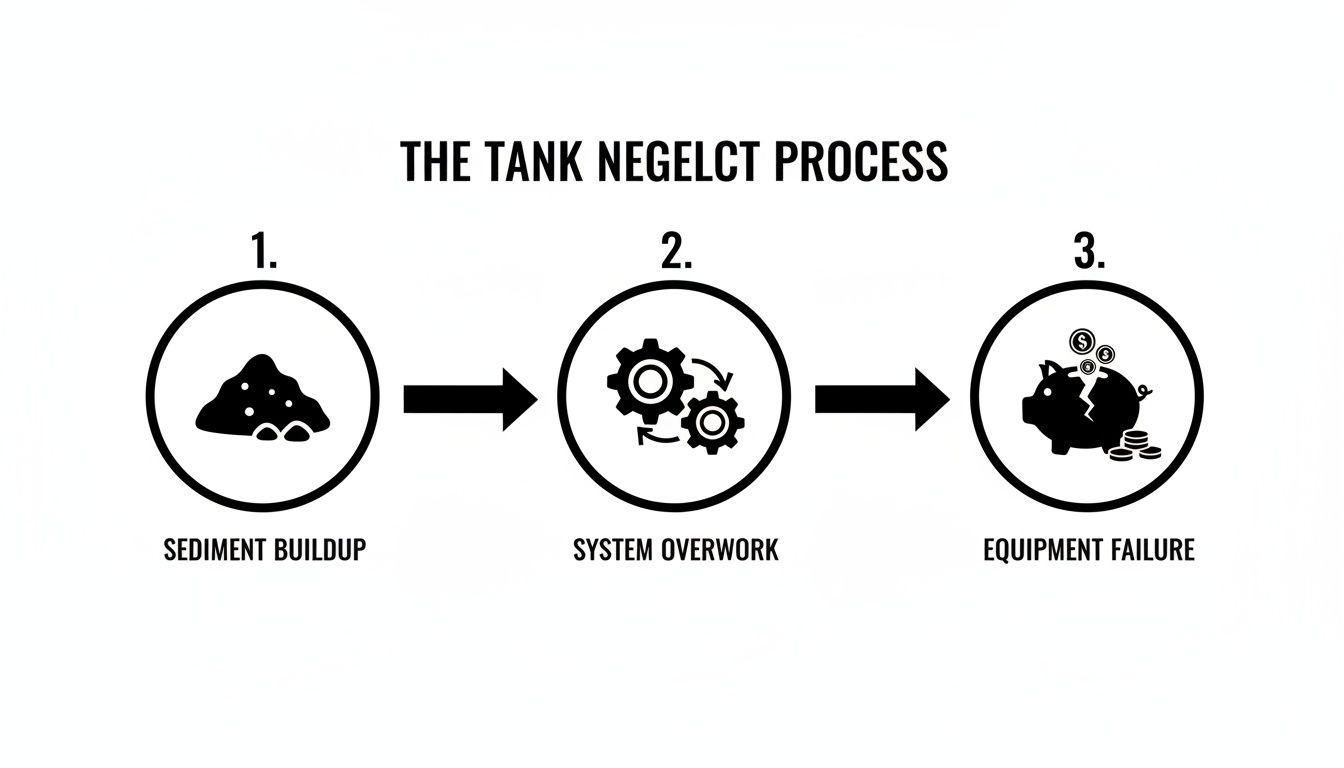
It’s a clear visual of why jobs like flushing sediment aren’t just “nice-to-haves”—they’re essential for protecting your investment.
One of the most effective DIY jobs you can do is flushing the sediment out of your tank. Minerals from Brisbane’s water supply eventually settle at the bottom, creating a layer of sludge. This sludge acts as an insulator, making your heating element work overtime and chewing through electricity.
Flushing your tank every 6-12 months can seriously boost its efficiency and stop those weird rumbling or banging noises that signal a heavy sediment problem. For a full guide on how to do it, have a look at our post on https://dlgelectrical.com.au/dlg-blog/hot-water-maintenance/. It’s also worth looking into expert water tank cleaning services to see what the pros do, even if their focus is on more specialised units.
Pro Tip: A DIY flush is a great start, but a professional service takes it to the next level. An electrician will also inspect the sacrificial anode rod. This clever component is designed to corrode instead of your tank, and checking it is key to preventing internal rust.
For landlords and renovators here in Brisbane, this kind of routine servicing is non-negotiable. Queensland regulations require functional systems, and neglected hot water units are a factor in 22% of tenant disputes each year. Our 19 years of experience at DLG Electrical shows that properly serviced systems cut down emergency repair calls by a massive 60%, saving landlords an average of $800 per callout.
To keep your system running smoothly and efficiently, it helps to have a clear schedule. This table breaks down what needs doing and when.
| Maintenance Task | Recommended Frequency | DIY or Professional? |
|---|---|---|
| Visual Inspection for Leaks | Every 3 months | DIY |
| Test Temperature & Pressure Relief (TPR) Valve | Every 6 months | DIY |
| Flush Sediment from Tank | Every 6-12 months | DIY |
| Check Sacrificial Anode Rod | Annually | Professional |
| Inspect Heating Element & Thermostat | Annually | Professional |
| Full Electrical Safety Check | Annually | Professional |
Following a schedule like this is the best way to catch issues early, avoid those cold-shower mornings, and get the maximum lifespan out of your hot water tank.
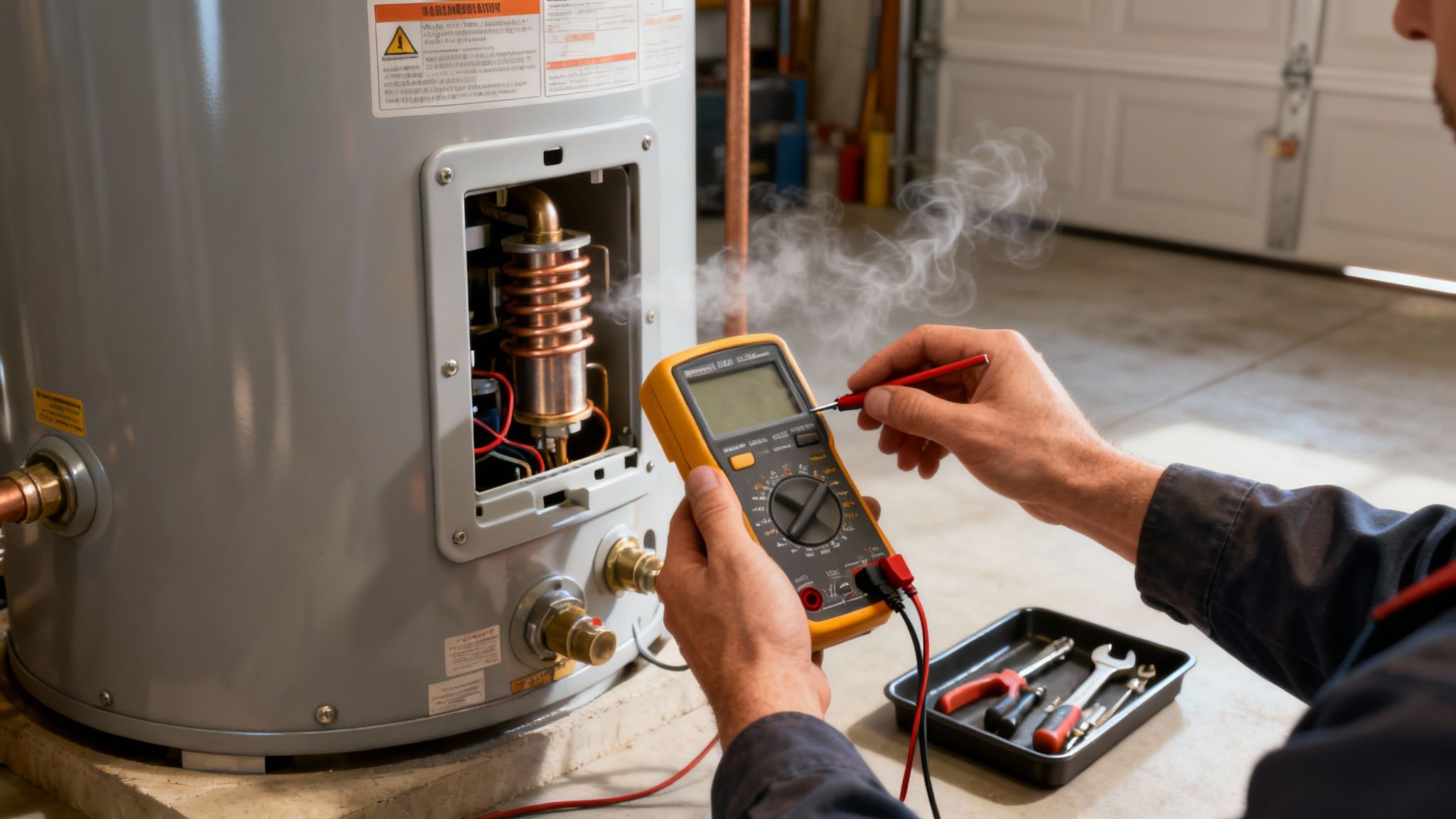
It’s an unfortunate fact of life: eventually, every hot water tank runs into trouble. The trick is knowing how to spot the signs and what they’re telling you about your system. While a surprise cold shower is a pretty clear signal, some other issues can be a lot more subtle.
Getting a handle on these common faults helps you figure out if you’ve got a minor hiccup you can keep an eye on, or a serious problem that needs a professional—fast. Before you even think about touching anything, though, make sure you’ve switched the power off at your switchboard. Safety first, always.
This is the big one, and easily the most frustrating. The very first place to look is your switchboard. Has the circuit breaker for your hot water system tripped? If it has, you can try resetting it once. If it trips again immediately, do not touch it again. This is a dead giveaway for a serious electrical fault, most likely a burnt-out heating element or a failed thermostat, and it’s a job for a licensed sparkie.
If the breaker looks fine, the issue is almost certainly with one of two components inside the tank:
Fixing either of these is strictly a job for a professional. Trying to replace them yourself isn’t just illegal here in Queensland; it’s incredibly dangerous.
When your water just can’t seem to get properly hot, you’re looking at a similar list of suspects as the “no hot water” scenario, but with a slight twist. It could be a faulty thermostat giving incorrect temperature readings, or if you have a dual-element tank, the lower heating element might have given up.
Another common culprit is the tempering valve. This valve’s job is to mix a little cold water with the hot water from the tank to deliver it to your taps at a safe, non-scalding temperature. If the valve fails, it might be letting too much cold water in, leaving you with a lukewarm shower. While some of these seem like minor issues, our detailed guide on professional hot water repairs explains why a proper diagnosis is so important to avoid wasting money replacing the wrong part.
Hearing banging, popping, or rumbling noises from your tank? That’s almost always the sound of sediment buildup at the bottom. When the heating element kicks on, it boils the pockets of water trapped underneath this layer of gunk, creating steam bubbles that make a racket as they escape.
Key Takeaway: Those noises aren’t just annoying; they’re a warning sign that your system is under serious stress. This extra strain causes accelerated wear and tear, leading to premature failure of both the heating element and the tank itself.
If you start seeing rusty or brownish water coming from your hot taps, that’s a massive red flag. It usually means the sacrificial anode rod inside your tank has completely corroded away, and now the tank itself is rusting from the inside out. Once this starts, a major leak is just a matter of time, and a full tank replacement is usually the only option. An annual hot water service allows a professional to check and replace the anode rod before this happens, potentially saving you thousands.
Figuring out where to draw the line between a simple weekend maintenance task and a job for a licensed professional is one of the most important parts of owning a hot water system. Getting it wrong isn’t just about a botched job; it can have serious safety and even legal consequences, especially here in Queensland.
Thankfully, some jobs are perfectly fine for a competent homeowner to tackle. These are generally the inspection and basic upkeep tasks that don’t involve opening up any of the unit’s electrical panels or messing with its core components.
A few clear examples of safe DIY maintenance include:
These quick actions help you keep a close eye on your system’s health without straying into dangerous territory.
The second a job involves touching the electrical components of your hot water system, it’s no longer a DIY project. It’s a legal requirement to call a licensed electrician. In Queensland, the laws on this are crystal clear and non-negotiable.
Any work on the following components is strictly off-limits for anyone who isn’t licensed:
Trying to replace a thermostat or fiddle with a heating element yourself is not only illegal but incredibly dangerous. You’re risking severe electric shock, creating a serious fire hazard, or causing irreparable damage to the entire unit. Calling in a fully insured expert like DLG Electrical guarantees the work is done safely, is compliant with all Aussie standards, and keeps your manufacturer’s warranty intact.
For commercial property owners in Brisbane, the stakes are even higher. The heavy usage common in a business environment can slash a system’s lifespan by 20-30%. A Queensland building audit found that a staggering 28% of commercial hot water systems were non-compliant, putting them at risk of fines and shutdowns. You can learn more from industry reports about how professional servicing prevents costly breakdowns.
It can get a little confusing, right? If you’ve got water gushing from a burst pipe connected to the tank, that’s a clear-cut job for a plumber. They handle the “wet” side of things—the pipes, water flow, and physical plumbing connections.
However, if your problem is electrical in nature—no hot water at all, a constantly tripping circuit breaker, or a suspected faulty component—you need an electrician. Since the vast majority of hot water system failures come down to electrical parts like thermostats and elements, an electrician is usually your first and most important call.
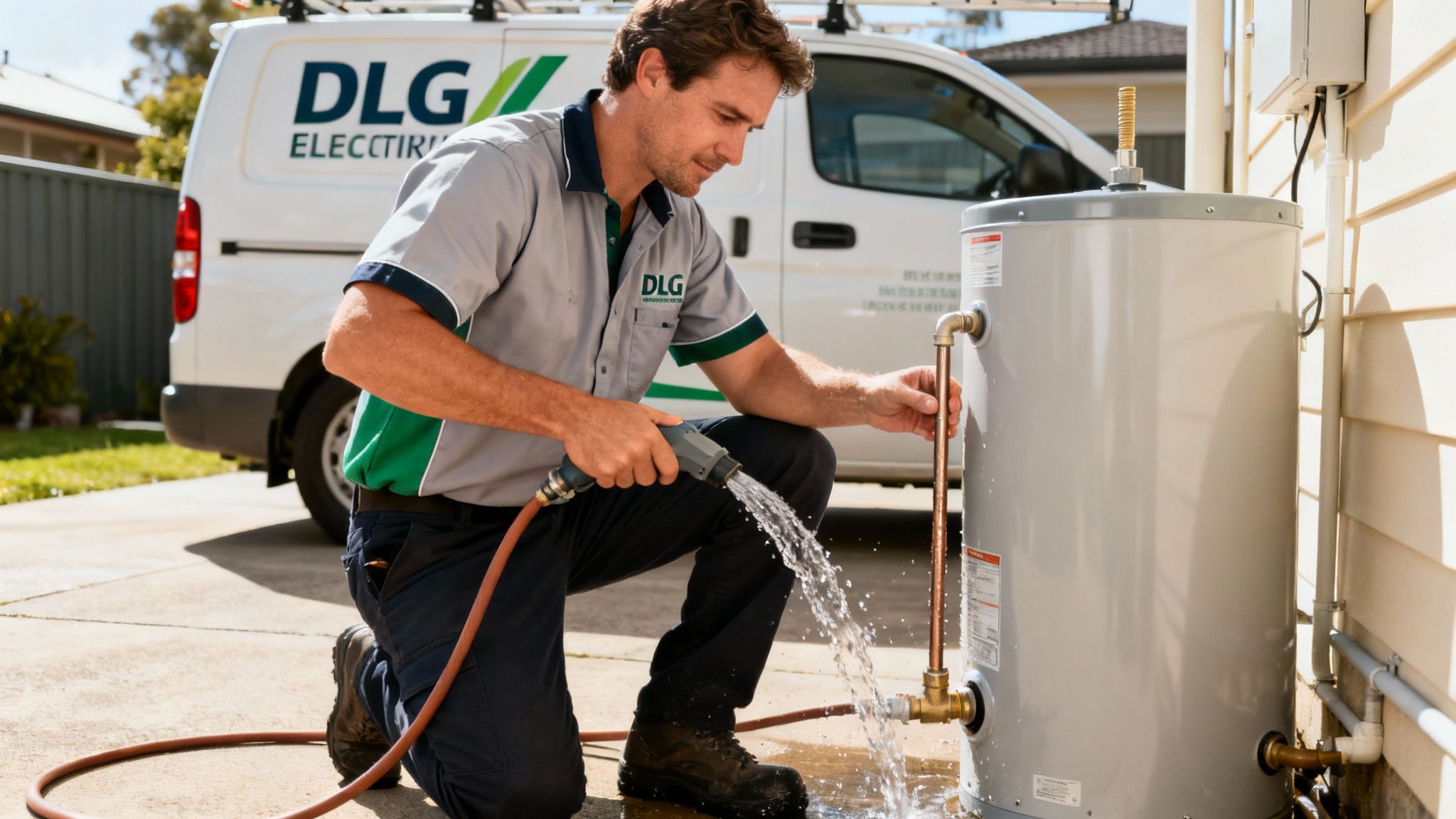
Booking a professional service can feel a bit mysterious if you’ve never done it before. What does a licensed electrician actually do when they show up? When a DLG Electrical expert arrives to service your hot water tank, you can expect a methodical and transparent process designed to maximise safety and efficiency.
It all kicks off with a thorough safety inspection. Before any tools even come out, our electrician will visually check the unit, its wiring, and the surrounding area for any immediate red flags. First things first, they’ll isolate the power at the switchboard to make sure the entire job is electrically safe.
With the safety checks out of the way, the real work begins. The goal here is to test every critical component and carry out preventative maintenance that will give your system the best chance at a long, healthy life. This isn’t just a quick look-over; it’s a detailed health check for your unit.
A typical service call from us includes several key steps:
By the end of the service, we’ll give you a clear, jargon-free report on your system’s health. We’ll walk you through what we did, what we found, and give you honest recommendations if any parts are looking a bit worse for wear.
We believe in being upfront and honest, especially when it comes to money. A standard professional service for a hot water tank in Brisbane generally ranges from $150 to $300. This covers the full inspection, all the testing, and the maintenance tasks we’ve just run through.
If we spot a component that needs replacing—like a worn-out anode rod or a faulty valve—we will always give you a clear, itemised quote before proceeding with any extra work. No hidden fees, no surprise charges on the final bill.
This proactive approach not only saves you from the stress and expense of an emergency callout down the track but also gives you a much clearer picture of your system’s future. For more details on budgeting, our guide on the cost of replacing a hot water system can provide some really valuable insights into long-term expenses.
Even with a step-by-step guide, it’s normal to have a few more questions pop up. We get calls about this stuff all the time, so we’ve put together the most common queries we hear from Brisbane homeowners to give you clear, straight-up answers.
Think of this as your quick-reference guide for keeping your hot water system in top shape.
Here in Brisbane, we’ve got moderately hard water, which can speed up sediment buildup inside your tank. That’s why we strongly recommend a professional service annually. This isn’t just a quick peek; it’s a full health check for your system.
A proper annual service should always include inspecting the sacrificial anode rod, testing the thermostat and heating element, and flushing the tank completely to clear out any gunk. Honestly, this simple yearly appointment is the single best thing you can do to stop small problems from turning into a cold-shower-in-the-morning kind of emergency. It’s how you make your unit last.
“Many homeowners see servicing as another bill, but it’s genuinely an investment. A yearly check-up can easily double the lifespan of a standard electric hot water tank, saving you thousands by avoiding a premature replacement.”
For a standard, professional hot water service in the Brisbane area, you can typically expect to pay somewhere between $150 and $300. This usually covers the full rundown of checks and maintenance tasks.
This price should get you:
Now, if we find a part that needs replacing—like the anode rod is on its last legs or a pressure valve is faulty—the total cost will go up. At DLG Electrical, we’re all about being upfront. We’ll always give you a detailed quote for any extra work before we even think about starting, so there are no nasty surprises on the bill.
Ah, the classic question. The answer really boils down to two things: how old the tank is and what’s actually wrong with it. You’re balancing the short-term repair cost against the long-term value.
As a rule of thumb, if your system is less than 10 years old and just needs a minor fix like a new thermostat or heating element, it’s almost always worth repairing. But if your unit is creeping up to the 12-year mark (or older), and especially if the tank itself is leaking, replacement is often the smarter financial decision. An old, inefficient unit is already costing you more on your power bills, and you don’t want to get stuck in a cycle of paying for one repair after another.
Seeing rusty or brownish water coming out of your hot taps is a big red flag. Don’t ignore it or just hope it clears up on its own.
Nine times out of ten, this means the sacrificial anode rod inside your tank has completely corroded away. Its one job is to sacrifice itself to protect the steel tank from rust. Once it’s gone, the tank itself starts rusting from the inside out. If you catch it early enough, a professional can just pop in a new anode rod. But if you leave it too long, the tank will eventually spring a leak, and a full system replacement becomes your only option. If you spot rusty water, call a licensed electrician straight away.
Ready to book in a professional service or just need an expert opinion on a repair? The fully licensed and insured team at DLG Electrical has been keeping Brisbane’s hot water running for over 19 years. Contact us today for a free, no-obligation quote and experience service you can trust.

Master Electrician with over 30 years of experience. Founded DLG Electrical in 2005 after international project work including electrical installations at Stamford Bridge Stadium, London(Home of Chelsea FC).

Local Electricians that can fix all Electric Hot water Systems.
Motion sensor lights are a versatile addition to any home, offering nu
