83 Jean St, Grange QLD 4051
Mon-Fri 07:30 AM - 04:00 PM - Sat - 8:00 - 12 - Sunday Closed
When you ask, “how long do LED lights last?” you’re not really asking when they’ll suddenly stop working. Unlike the old incandescent bulbs that would pop and die without warning, modern LEDs have a much more predictable and graceful exit.
Think of an LED’s lifespan like the tread on a car tyre. It doesn’t just vanish one day but wears down slowly over thousands of kilometres. LEDs do the same, gradually dimming over an incredibly long time.
For an average Australian household using their lights for about eight hours a day, a quality LED bulb with a lifespan of 25,000 to 50,000 hours is a game-changer. That translates to an incredible 10 to 17 years of service. An LED you install today could easily still be shining brightly a decade from now, saving you the hassle of constant replacements.
That rated lifespan isn’t just a marketing gimmick; it’s a genuine measure of durability. It tells you how long the light can run before its brightness noticeably dips. The real “wow” moment comes when you stack LEDs up against older lighting technologies.
As we move through 2025 in Australia, the numbers speak for themselves. An LED’s lifespan of 25,000 to 50,000 hours completely dwarfs the 750 to 2,000 hours you’d get from a traditional incandescent bulb. Even the more “modern” CFLs only manage around 8,000 to 10,000 hours. You can discover more insights about these lighting lifespans at eleco.com.au.
To put this into perspective, let’s compare the most common lighting technologies found in Australian homes.
| Light Type | Average Lifespan (Hours) | Estimated Years (at 8 hours/day) |
|---|---|---|
| LED | 25,000 – 50,000 | 8 – 17 years |
| CFL (Compact Fluorescent) | 8,000 – 10,000 | 2 – 3 years |
| Halogen | 1,000 – 2,000 | 4 – 8 months |
| Incandescent | 750 – 2,000 | 3 – 8 months |
As you can see, there’s really no competition. The longevity of LEDs is in a class of its own.
The shift to LEDs represents one of the most significant leaps in lighting efficiency. A single LED can outlast dozens of traditional bulbs, saving money and reducing waste over its lifetime.
This chart drives the point home, visually showing the dramatic advantage of LED technology.
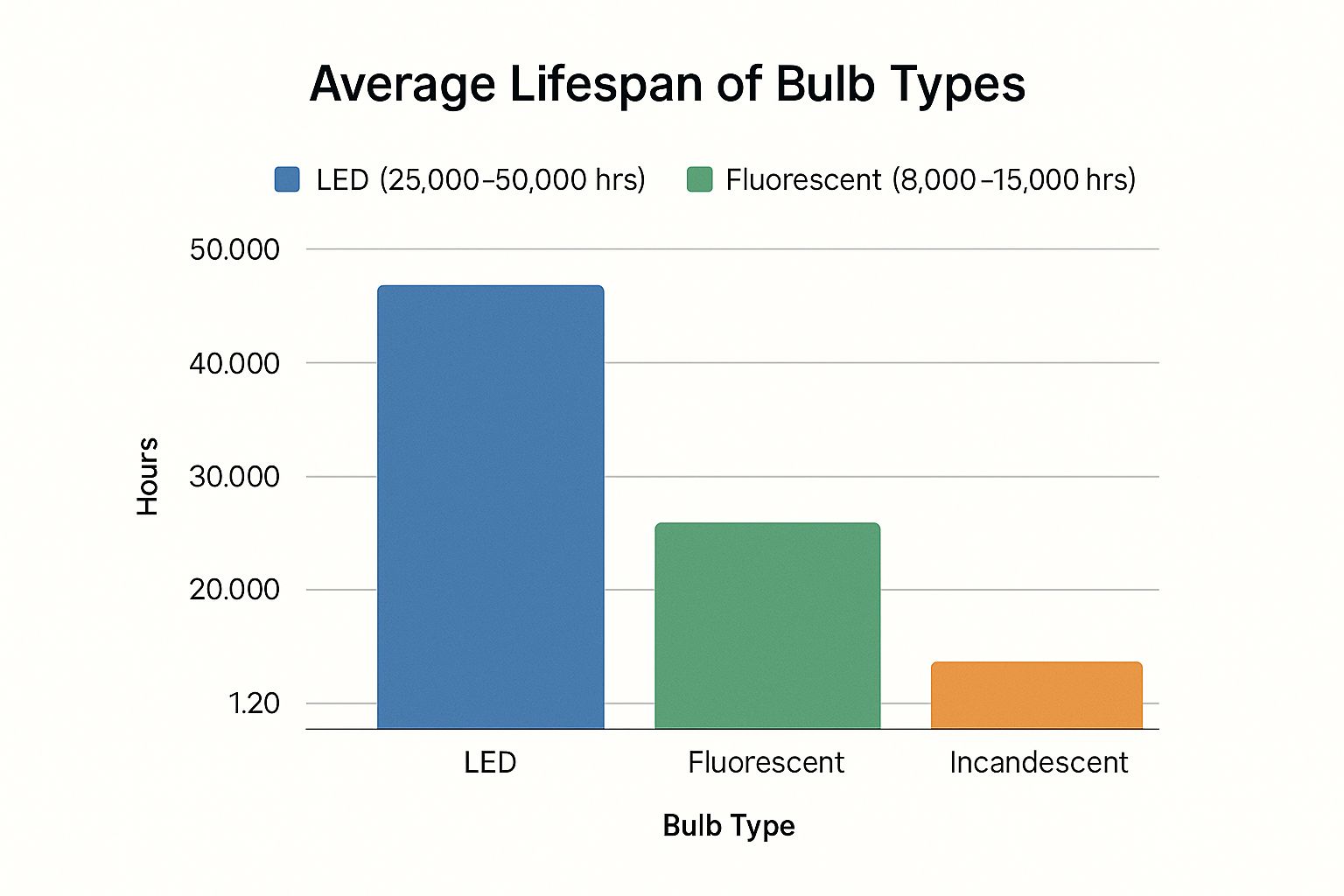
The data is clear: an LED’s minimum expected lifespan crushes the maximum lifespan of both incandescent and fluorescent bulbs. This outstanding durability is precisely why they’ve become the gold standard for any modern lighting solution.
When you see a huge number like 50,000 hours on a box of LEDs, it’s fair to wonder what that really means. Unlike old incandescent bulbs that would just pop and burn out, the lifespan of an LED is a bit more sophisticated. It’s all about a gradual decline in brightness over a very long time.
This concept is called lumen maintenance, and it’s the secret to understanding just how long your LEDs will actually last in the real world.
Think of it like the battery in a new smartphone. Straight out of the box, it holds a full charge. A couple of years later, it still works perfectly well, but maybe it only holds 70% of its original capacity. LEDs do something similar, but with light instead of energy.
The industry standard you’ll see most often is the L70 rating. This is the benchmark that defines an LED’s useful lifespan, and it’s simpler than it sounds.
The “L” stands for lumens (the measurement of brightness), and the “70” represents 70%. So, an L70 rating of 50,000 hours means that after 50,000 hours of use, the LED is projected to still produce at least 70% of its original light output.
At this stage, the light hasn’t failed—it’s just a bit dimmer than when you first installed it. The human eye generally only notices a drop in brightness once it hits around the 30% mark, which makes L70 a really practical way to know when you might want to think about a replacement. This is why getting your head around how long LED bulbs last is about more than just when they stop working completely.
The L70 metric also helps us appreciate just how durable modern LEDs are. Recent lifetime testing in Australia has shown that high-quality LED chips from top suppliers now have lifespans of 60,000 hours or more. Some manufacturers even make bold claims of up to 1 million hours under L70 standards.
What this means in practical terms is that an LED running continuously could last for years before its light output even begins to degrade noticeably.
So, that “lifespan” on the packaging isn’t about a sudden death. It’s telling you a story of a long, graceful fade, empowering you to read the specs like a pro and know you’re buying a product engineered for a predictable, high-performance life.
While the lab-tested lifespan of an LED is impressive, the real world often tells a different story. That massive 50,000-hour rating is achieved under perfect factory conditions, but an Australian home throws a whole lot of challenges at it that can dramatically shorten that lifespan.
The funny thing is, the LED chip itself is incredibly durable. Premature failure is almost always caused by the environment stressing the sensitive electronic components packed inside the bulb. Just like a high-performance computer will crash if it constantly overheats, an LED’s performance is deeply tied to its operating conditions. Understanding these real-world culprits is the key to protecting your lighting investment.
By far, the biggest killer of an LED light is excessive heat. While LEDs are miles more efficient than old-school incandescent bulbs, they still produce some heat. The crucial difference is that this heat is meant to be drawn away from the LED chip by a built-in heat sink.
If an LED is placed in a fixture that traps this heat, its internal temperature can quickly rise to damaging levels.
Common culprits for overheating include:
Think of the electronic driver inside an LED bulb as its brain. If that brain is constantly running too hot, its components will degrade and fail much faster than intended, leading to flickering or complete failure long before the LED chip itself wears out.
Beyond heat, the quality of the electricity powering your lights and the moisture in the air play a huge role. These external stressors can be just as damaging as internal heat buildup.
Power Quality Problems
The delicate electronics inside an LED bulb are designed for a stable electrical supply. Unfortunately, the power in many homes isn’t always perfectly consistent.
These kinds of external factors can seriously reduce an LED’s lifespan. Identifying these issues is key, and specialised services like power quality auditing can help find and fix them.
High Humidity Environments
Moisture is the enemy of all electronics, and LEDs are no exception. In humid Australian climates, especially in bathrooms or poorly ventilated laundries, moisture can creep into the bulb’s housing.
This can lead to corrosion on the circuit board and other components, causing short circuits and premature failure. It’s why you should always use LEDs with an appropriate IP (Ingress Protection) rating for any damp or wet locations.

Knowing what can kill an LED is only half the battle. The other half is won before you even get the bulb home, right there in the store aisle. The market is absolutely flooded with LEDs, and they range from brilliant, long-lasting performers to complete duds that fail in months.
It might surprise you, but the tiny LED chip itself—the part that actually makes the light—is rarely the first component to give up. It’s the supporting cast that usually lets the side down. The two most common culprits are a cheap, poorly made driver (the bit that converts your home’s AC power to the low-voltage DC the LED needs) or an undersized heat sink.
A quality LED is a balanced system, not just a bright chip. Get the surrounding parts wrong, and the whole thing is destined for an early grave.
Becoming a savvy shopper means looking beyond the brightness and the price tag. You need to know the signs of quality engineering and, just as importantly, regulatory compliance. Here’s what to look for to make sure your next purchase is one that lasts.
Australian consumer guidance suggests a quality LED bulb should last anywhere from 15,000 to 50,000 hours, giving it a lifespan 5 to 10 times longer than an old halogen bulb. To back this up, standards recommend warranties of at least 2 years for bulbs rated up to 15,000 hours, and 3 or more years for those claiming to last even longer. You can learn more about Australian LED quality standards from energyrating.gov.au.
When you’re comparing two bulbs on a shelf, the differences can seem minor. But those small details are what separate a bulb that will last a decade from one that might not even last a year.
This table breaks down what to look for.
| Feature | High-Quality LED | Low-Quality LED |
|---|---|---|
| Heat Sink | Metal (often aluminium) with visible fins for good heat dissipation. | Small, smooth, or made of plastic with poor thermal management. |
| Weight | Feels solid and substantial due to quality components and a larger heat sink. | Feels lightweight, hollow, and often flimsy. |
| Certifications | Clearly displays the RCM mark for Australian standards compliance. | Missing or has questionable certification marks. |
| Warranty | Typically offers a 3-5 year warranty, indicating manufacturer confidence. | Often has a 1-year warranty or no clear warranty information. |
By keeping these points in mind, you can confidently walk into any store and pick out LEDs that will actually deliver on their promise of a long, reliable life.
Knowing what shortens an LED’s life is one thing, but actively preventing it is what really counts. The great news is, you don’t need to be an electrician to get the most out of every bulb. A few simple, proactive habits are all it takes to help your LEDs reach—or even cruise past—their rated lifespan.
These strategies all come down to managing the two biggest enemies of an LED: heat and electrical stress. Think of it like a car: it runs better with the right fuel and regular maintenance. Your lights are no different. They’ll perform better and last longer when their environment is optimised, and every bit of advice here is straightforward enough for any Australian home.
Heat is the absolute number one threat to the delicate electronics tucked away inside your LEDs. Proper ventilation isn’t just a friendly suggestion; it’s essential for a long and healthy lifespan.
When heat gets trapped, the internal temperature of the bulb’s driver skyrockets, causing its components to break down much faster. Thankfully, this is easy to prevent.
A simple rule of thumb is to give your lights breathing room. An LED that can effectively dissipate heat is an LED that will last significantly longer, saving you money and replacement hassles down the track.
Beyond heat, managing the electricity flowing into the bulb and the moisture in the air is crucial. This protects the sensitive driver components that actually power the LED.
Using the wrong accessories or installing a standard bulb in a damp area can lead to premature failure, which you’ll often see as flickering or a complete burnout. This is especially important when you realise how differently various bulb types operate; you can learn more about this by comparing LED lights vs halogen and their specific needs.
To dodge these common pitfalls, just follow these simple guidelines:
Unlike the dramatic pop of an old incandescent bulb, an LED rarely fails suddenly. Instead, it gracefully fades over thousands of hours. This means knowing when to replace one isn’t about waiting for it to die, but about recognising when its performance is no longer up to scratch.
The industry uses a concept called L70 as a technical benchmark—the point where a bulb has dimmed to 70% of its original brightness. But in the real world, you don’t need a light meter to know when things are off. Your eyes are the best judge. If a room that once felt bright and welcoming now seems a bit dim or gloomy, your LEDs are likely well past their prime.
While gradual dimming is the most common sign of an ageing LED, other symptoms can also signal that a replacement is due. These issues often point to a failing internal driver, which is the small electronic component that powers the light.
Keep an eye out for these clear indicators:
Replacement is often a choice based on light quality, not just function. An LED might still technically work, but if the light it produces is dim, inconsistent, or the wrong colour, it’s no longer doing its job effectively.
While most end-of-life signs are related to performance, some indicate a potential safety hazard. If you notice any of the following issues, you should stop using the bulb immediately and replace it.
Physical Damage: A cracked or broken housing isn’t just a cosmetic issue; it can expose the internal electronics, creating a safety risk.
Heat Discolouration: If the base of the bulb or the fixture around it shows signs of scorching or browning, it’s a clear warning of a serious overheating problem. Don’t ignore this.
We get asked about LED longevity all the time. Here are some quick, no-nonsense answers to the most common queries we hear from our clients.
It’s the number you see on the box, but it’s not always the full story. While a 50,000-hour rating can technically stretch over 21 years with very light use, a 10 to 17-year lifespan is a much more realistic benchmark for a quality LED in a typical Australian home. Real-world factors like heat, how often you use it, and the quality of the fixture are what truly determine how long it’ll last.
Not at all. This is a myth left over from the days of old fluorescent tubes. Unlike their predecessors, LEDs are built for frequent switching, so flicking them on and off doesn’t cause any significant wear. The real enemies of an LED are excessive heat and poor power quality, so don’t hesitate to turn them off to save a bit of power.
We find that the most common reason for an LED failing early isn’t the light-emitting chip itself. It’s usually one of the other internal bits, like the driver. Overheating or a power surge are the usual culprits, which is why build quality matters so much.
If a new LED bulb gives up the ghost unexpectedly, the problem is almost always with its internal components, not the actual LED chip. The most common reasons we see are a faulty power driver, overheating inside a poorly ventilated fixture, or damage from a power surge. This is precisely why we recommend choosing reputable brands that stand behind their products with a solid warranty.
For professional advice on choosing and installing long-lasting lighting solutions for your home or business, trust the experts at DLG Electrical. Visit us online to get a free quote for your project.

Master Electrician with over 30 years of experience. Founded DLG Electrical in 2005 after international project work including electrical installations at Stamford Bridge Stadium, London(Home of Chelsea FC).

Local Electricians that can fix all Electric Hot water Systems.
Motion sensor lights are a versatile addition to any home, offering nu
