83 Jean St, Grange QLD 4051
Mon-Fri 07:30 AM - 04:00 PM - Sat - 8:00 - 12 - Sunday Closed
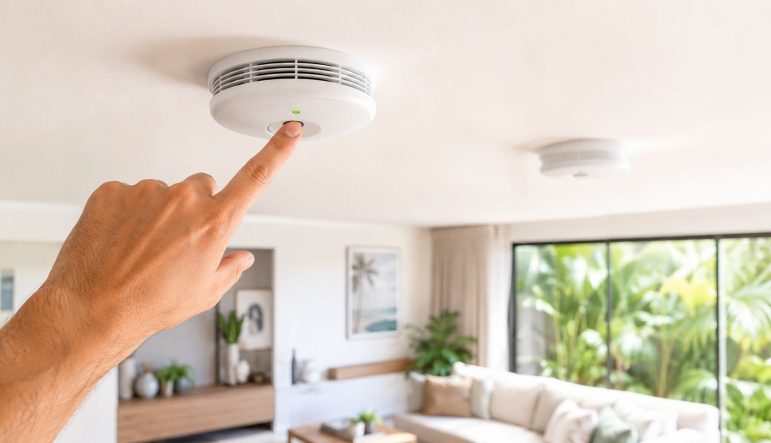
Test Queensland smoke alarms once a month by pressing and holding the test button until the alarm sounds, then repeat the test for every alarm and confirm interconnected units all sound together. This simple routine gives Brisbane homeowners a practical way to find faults before an emergency.
The forgotten chirp usually appears at the worst time, perhaps while you're making breakfast in a Brisbane kitchen or settling children into bed. You may press the button once, hear a beep, and assume everything is fine. The unit looks clean, the cover is firmly attached, and nobody remembers when it was last checked.
That quick check is useful, but it isn't the whole picture. Monthly testing checks immediate operation, while cleaning, visual inspection, replacement planning and tenancy checks deal with problems a button press alone may not reveal.
Queensland guidance gives homeowners a clear starting point: test smoke alarms once a month. The method is specific. Press and hold the test button until the alarm sounds, then repeat the process for each alarm in the property. If the alarms are interconnected, they should all sound during the test, and the indicator light on the cover should flash at least once every 60 seconds. Queensland Government smoke alarm guidance sets out this routine for homes and rental properties across the state.
That consistency matters. A smoke alarm isn't helpful if its battery has failed, its mains supply has been interrupted, or its connection to other alarms has stopped working. Testing turns an invisible electrical and electronic problem into something you can hear, see and act on.
This advice applies to owner-occupiers, landlords, tenants, renovators and property managers in Brisbane and wider Queensland. A family home in Grange needs a dependable routine. A rental in Windsor needs that routine plus specific leasing responsibilities. A renovation can also disturb alarm locations, wiring or interconnection, so the system should be checked after electrical work.
Practical rule: Treat the monthly test like checking a torch before a blackout. You don't wait for darkness to discover the batteries are flat.
For broader fire and security maintenance ideas, homeowners may also find the Amax Fire & Security Ltd homepage useful as a general reference. The important Queensland distinction remains simple: monthly testing is the ongoing household habit, while rental compliance creates additional event-based duties. The statewide transition to interconnected photoelectric alarms also means installation and maintenance questions deserve more attention, not less.
By the end of this guide, you'll know what the test button checks, how to test every alarm properly, which duties apply to a Queensland rental, and when a licensed electrician should inspect the system.
Think of the test button as a controlled rehearsal. Checking a torch before a blackout doesn't prove that every component is perfect, but it confirms the batteries, lamp and switch respond when you need them. A smoke alarm test works in much the same way.
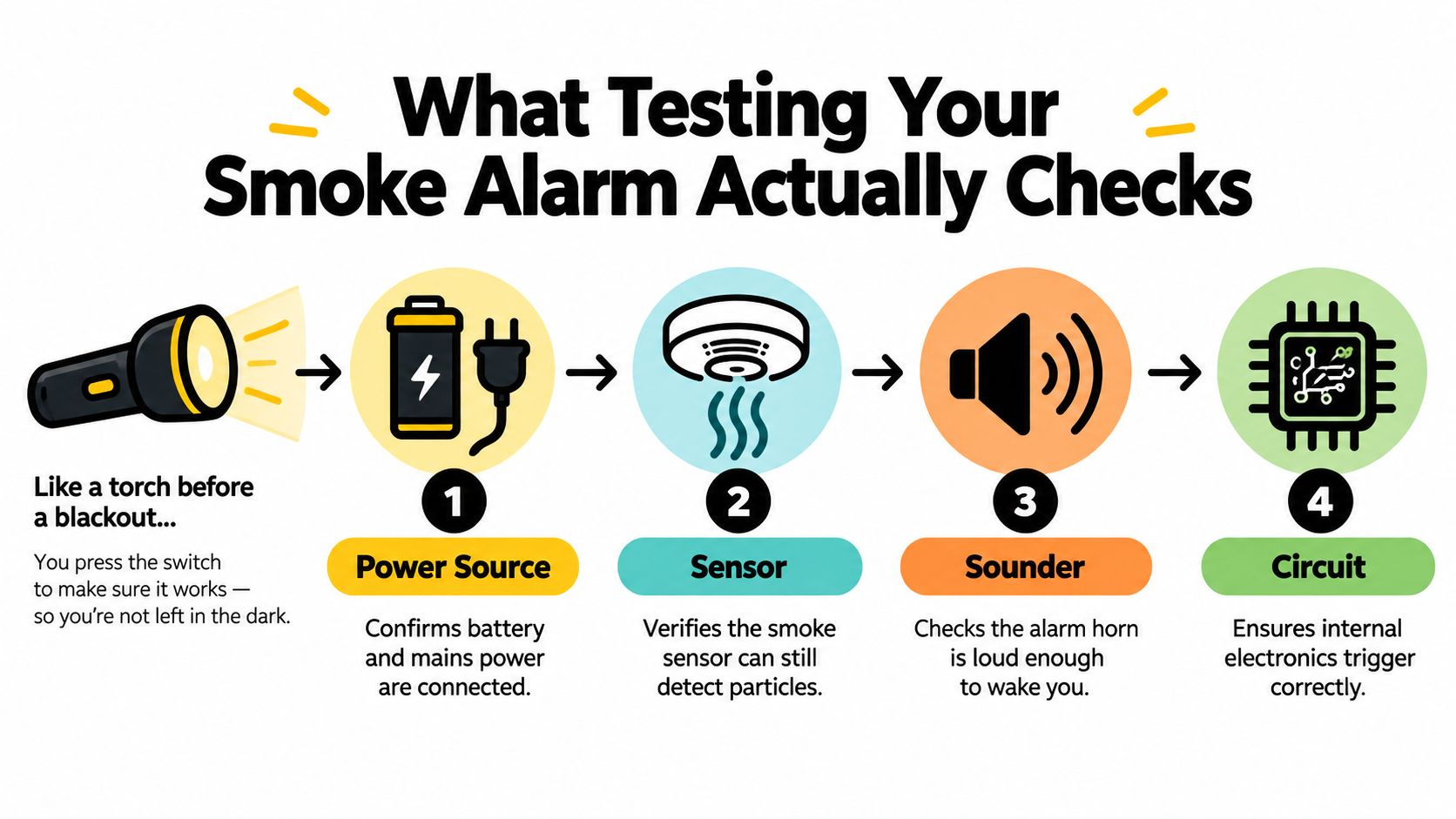
A proper button test gives you information about several parts of the alarm:
The test doesn't involve lighting paper, spraying substances into the alarm or creating smoke indoors. Use the manufacturer's test control, because improvised methods can contaminate or damage the sensing chamber.
A smoke alarm can look perfectly intact while still having a problem. Dust, paint or insects may affect the sensor chamber. A mains-powered unit can have a supply fault. A battery may be present but unable to provide dependable power. The cover may be secure while the alarm is too old to provide reliable sensing.
Testing asks, “Does the system activate when commanded?”
Cleaning removes dust and other contamination from the alarm's openings.
Inspection looks at the alarm's position, cover, indicator, age, wiring and physical condition.
Replacement removes a unit that has reached the end of its service life or can't pass its checks.
South Australian Metropolitan Fire Service guidance recommends monthly testing for hard-wired alarms and six-monthly cleaning and inspection, including checks of dust, paint, battery condition and mains-power indicators. The MFS servicing schedule explains why these tasks complement each other. A button test can reveal an immediate failure, while scheduled cleaning and inspection help uncover conditions that could reduce performance.
The sound you hear is valuable evidence, but it isn't a complete certificate of safety. It confirms a response to the test command. The wider test-and-inspect routine checks whether the alarm remains suitable, clean, correctly powered, properly positioned and connected to the rest of the system.
Choose a regular day that's easy to remember, such as the first weekend of the month. Test during daylight where possible, and tell everyone in the home before you activate the alarms. The sound can be loud and may disturb neighbours in closely spaced homes.
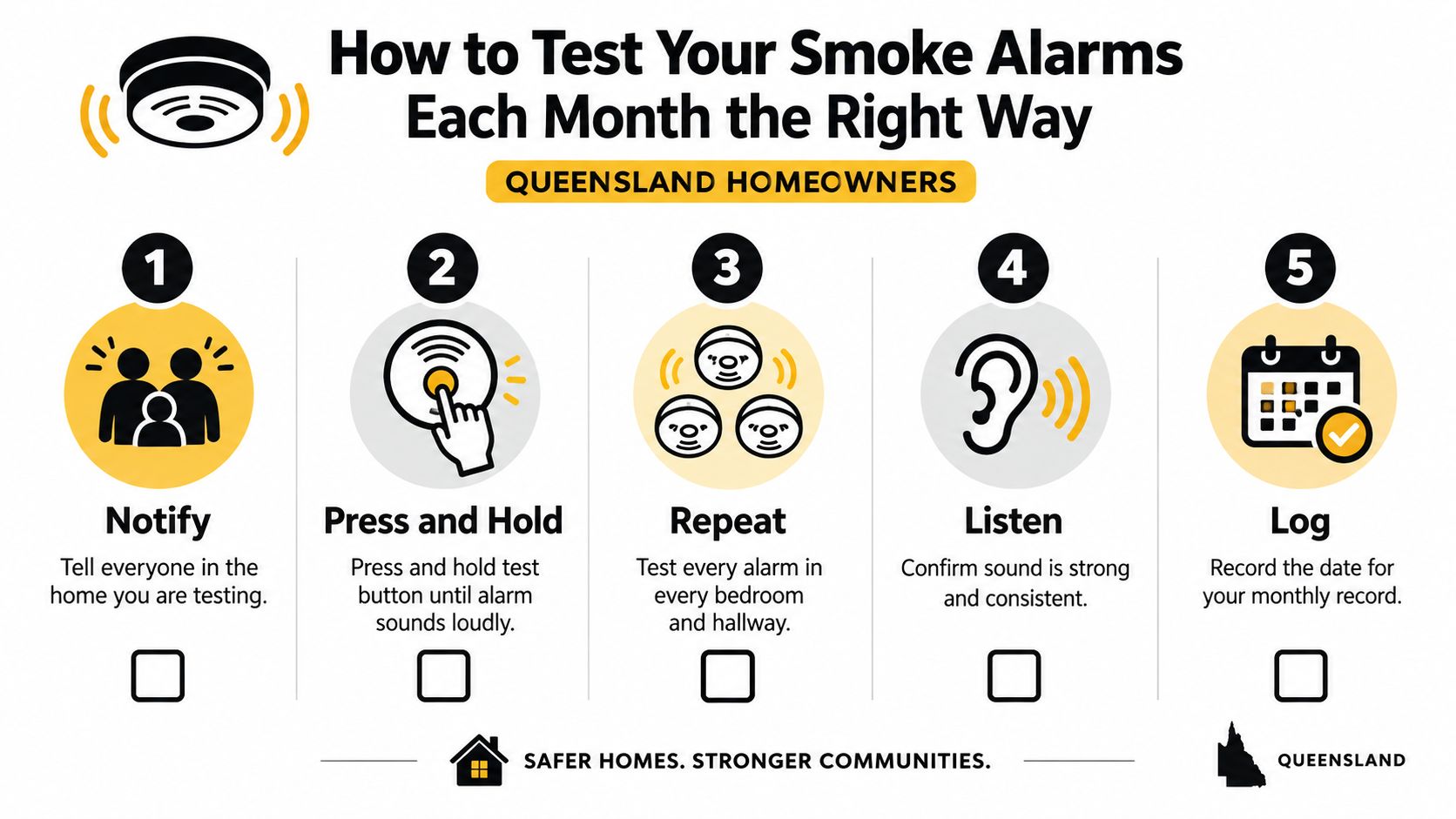
Walk through the property. Locate every smoke alarm, including units near bedrooms, in hallways and on different storeys. Don't assume that testing the alarm closest to the kitchen tests the rest of the home.
Tell household members. Explain that you're carrying out a safety check. Anyone holding a baby, caring for an older person or working near the alarm should know when the sound will begin.
Press and hold the test button. Keep the button depressed until the alarm sounds. A quick tap may not give the unit enough time to complete its test sequence.
Repeat for every alarm. Move from room to room and test each unit individually. This confirms that every alarm responds, rather than relying on one device as a representative sample.
Listen to the interconnected system. If the alarms are linked, confirm that all interconnected alarms sound during the test. Hearing the first alarm alone isn't enough, because the purpose of interconnection is to alert occupants throughout the property.
Check the indicator light. Queensland guidance says the light on the cover should flash at least once every 60 seconds. If the light doesn't behave as expected, consult the manufacturer's instructions or arrange a professional inspection.
Record the result. Write down the date, the alarms tested and any issue found. A note in a home-maintenance app, calendar or paper log is enough to create a useful history.
If an alarm doesn't sound, don't ignore it. Check the manufacturer's instructions for the correct battery or fault procedure, and look for obvious damage, contamination or a missing power indicator. Don't remove a hard-wired alarm or interfere with fixed wiring yourself. Arrange a qualified inspection if the unit still fails, if linked alarms don't respond together, or if a fault light continues.
This short video can help visualise the basic testing action before you begin:
The safest approach is controlled and repeatable. You aren't trying to create smoke. You're confirming that each installed alarm responds correctly through its own test function and that the interconnected arrangement behaves as intended.
A homeowner may press the test button every month and still need to meet other duties if the property is rented. The monthly routine supports household safety. Queensland tenancy rules add checks linked to the start or renewal of a tenancy, along with maintenance during the tenancy.
| Testing Type | When Required | Who Is Responsible |
|---|---|---|
| Routine household testing | Once a month, following the Queensland test method | Homeowners and occupants should maintain the routine |
| Tenancy commencement or renewal check | Within 30 days before a tenancy starts or renews | Property owners or managers |
| In-tenancy testing and cleaning | At least once every 12 months during the tenancy | Tenants, under the Queensland rental framework |
| Interconnection and compliance inspection | When installation, alteration or a suspected fault affects the system | A suitably qualified person, with electrical work handled by a licensed electrician |
These duties cover different moments. A monthly entry in a maintenance calendar does not replace the check required before a new tenancy or renewal. Owners and managers should keep records of checks, faults, repairs and professional work, so there is a clear trail if a problem is later identified.
The practical inspection also needs to look beyond whether one alarm sounds. The arrangement should suit the property, the alarms should be correctly interconnected where required, and any alteration or suspected fault should be assessed by a suitably qualified person. Electrical work on fixed wiring belongs to a licensed electrician.
Tenants have their own part to play. They should test and clean alarms according to the tenancy instructions, keep them clear of avoidable contamination and report faults promptly. An owner's pre-tenancy check does not remove those ongoing responsibilities.
Queensland's reform timetable applies to homes that have not yet reached the final statewide requirement. According to the Queensland Fire Department smoke alarm fact sheet, that requirement is scheduled for 1 January 2027 for remaining domestic dwellings. This makes the alarm type, interconnection and installation condition relevant alongside regular testing.
The Queensland smoke alarm laws and requirements provide a plain-language explanation of the state framework. Owner-occupiers should continue the monthly routine even when tenancy rules do not apply. Safety maintenance and legal compliance support each other, but one does not automatically satisfy the other.
A single beep proves that the alarm responded to the button. It doesn't prove that every part of the installation will perform during a real fire.
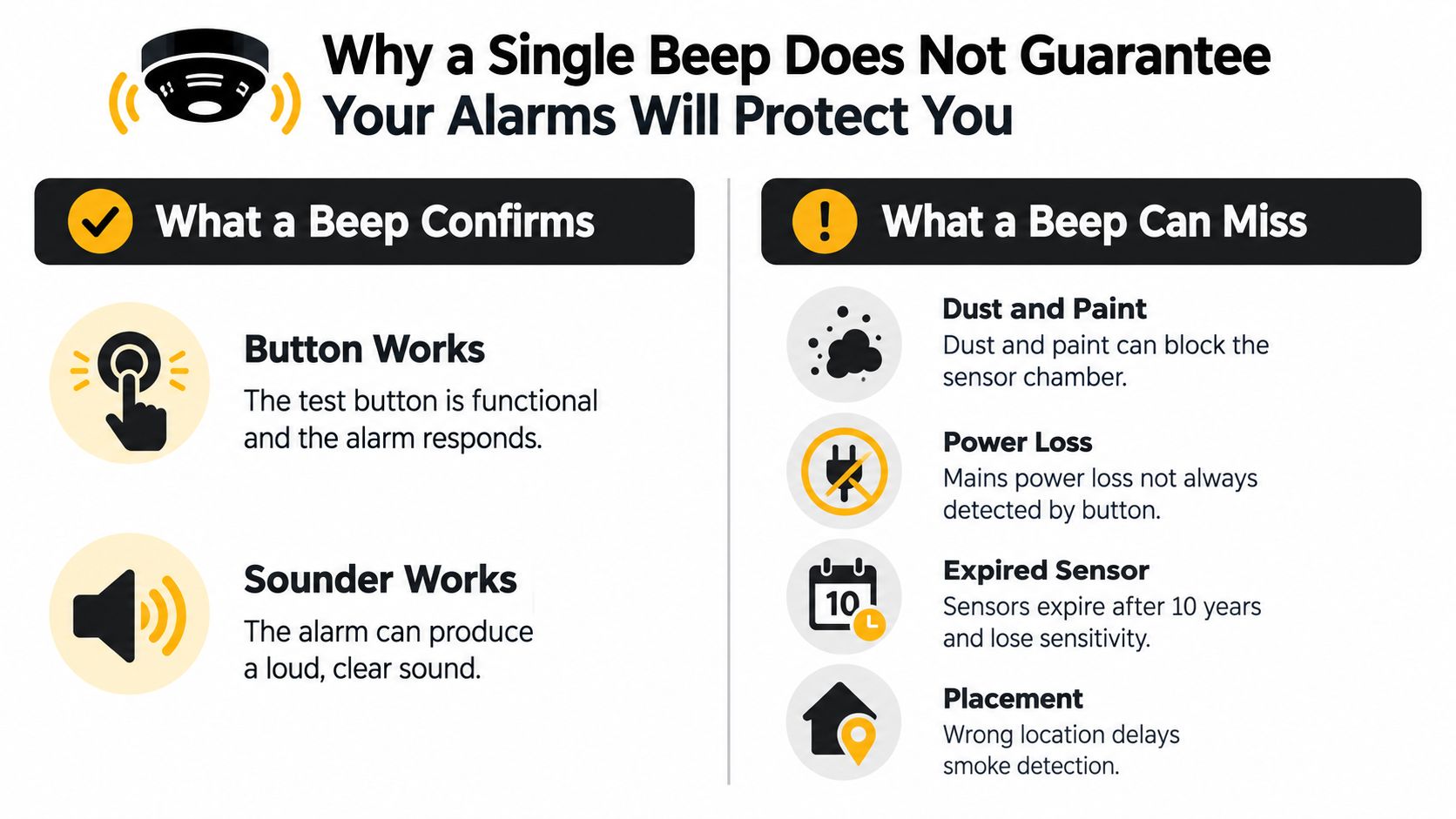
The sensor chamber may contain dust or paint. The mains supply may have been interrupted. An alarm may be outside its intended service life. A unit may sound locally but fail to communicate with the other alarms. Those faults can sit behind a successful button response.
The button test normally gives you confidence that:
It can miss other conditions. A contaminated chamber may affect smoke detection without preventing a test sound. A damaged or poorly positioned alarm may activate later than intended. An alarm installed near a wall, corner or unsuitable source of steam may not provide the coverage the room requires.
Queensland's current direction places emphasis on photoelectric, interconnected alarms, with requirements covering power, connection, positioning and coverage across bedrooms, hallways and storeys. Queensland Fire Department guidance explains the broader safety context, including regular cleaning and testing.
Australia's regulatory history shows a progressive move towards more consistent smoke alarm protection. By 1997, every state and territory had adopted hard-wired smoke alarms in all new dwellings. The National Construction Code, then called the Building Code of Australia, was adopted by every state and territory from 1 May 2011, giving national smoke alarm requirements legal effect. By 2014, the requirement had expanded to all smoke alarms in new dwellings. These milestones are documented in the Australian Parliament fire-safety report.
The practical lesson isn't that older alarms are automatically unsafe. It's that a modern installation involves more than a working horn. It also involves correct alarm type, suitable placement, dependable power, interconnection and a clean sensing path.
For advice on choosing suitable units, this guide to good smoke alarms can help homeowners compare the features that matter. Where household air quality is also a concern, a device such as an EcoQuest Purifiers smoke purifier addresses air treatment, but it doesn't replace compliant smoke alarms or their maintenance.
A reliable smoke alarm routine works best as a calendar, not as a memory test. Put the monthly activation check, six-monthly clean and inspection, tenancy duties and replacement planning in separate reminders so one task doesn't hide another.
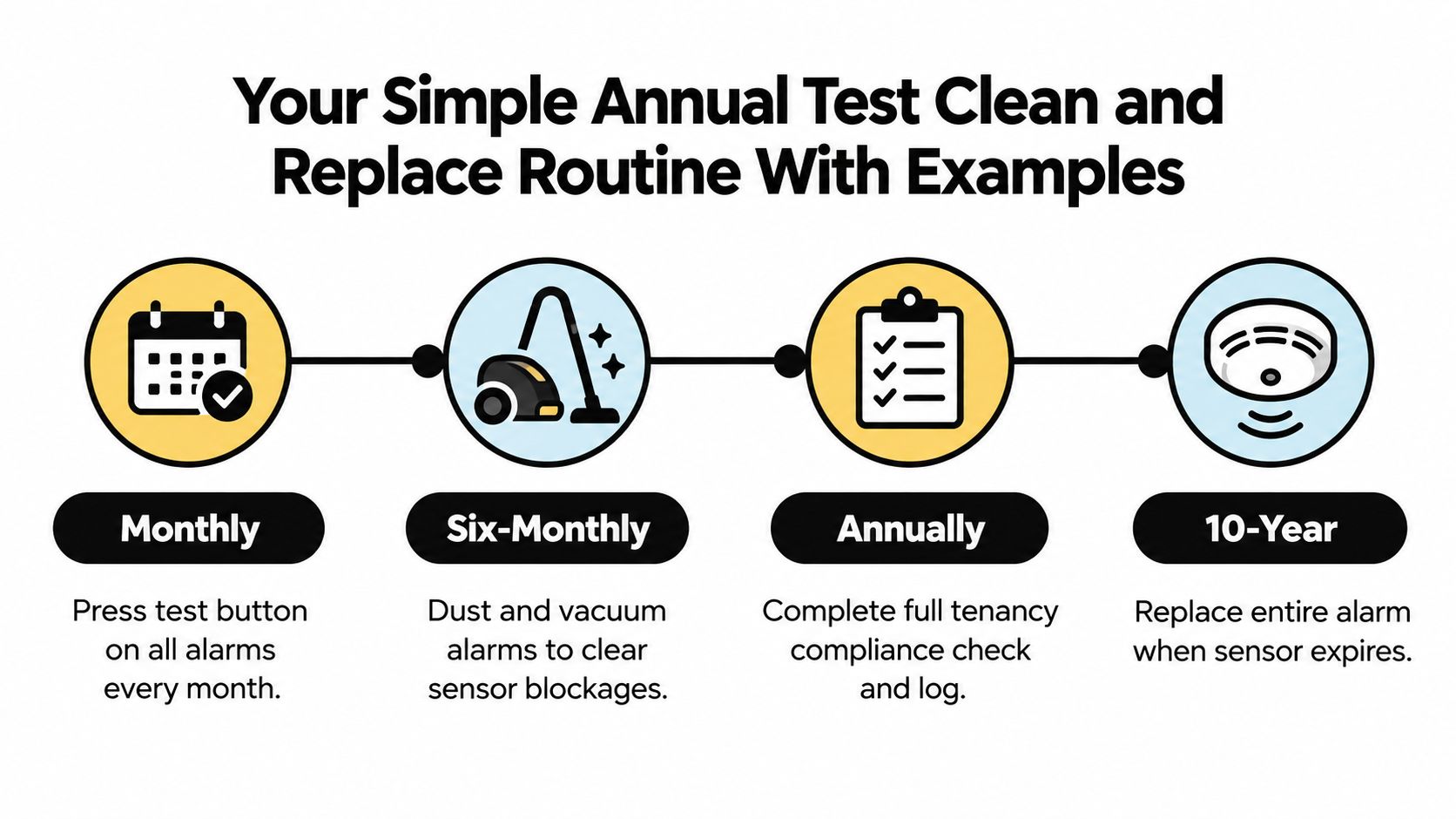
Consider a family in Grange that tests alarms on the first Saturday of each month. After a renovation, the family doesn't wait for the next scheduled test. They checks that trades haven't covered, moved or disconnected an alarm, then arranges a qualified inspection if wiring or interconnection has changed.
A landlord in Windsor needs a second layer of organisation. The property manager records each routine visit and ensures the legally required check occurs within the relevant period before a new tenancy or renewal. The tenant receives clear instructions for their in-tenancy testing and cleaning responsibilities, while faults are documented and addressed rather than left as informal messages.
The guide to smoke alarm replacement timing is useful when building a property maintenance schedule. Replacement planning matters because an alarm can continue to chirp or pass a button test while its sensing components age.
Keep records simple. Note the property address, date, alarm locations, test result, indicator-light observation, cleaning date and any action taken. Good records help a homeowner remember what happened, and they give landlords and managers evidence that maintenance has been treated as an organised safety responsibility.
The answer to how often should smoke alarms be tested is clear for Queensland homes: once a month. Press and hold the test button until the alarm sounds, repeat it for every alarm, and confirm interconnected units respond together.
That monthly habit should sit inside a wider routine. Clean and inspect alarms on the six-monthly schedule recommended by South Australian Metropolitan Fire Service guidance, review the manufacturer's replacement information, and respond promptly to faults. In a rental, keep the monthly habit separate from the testing duties linked to tenancy commencement, renewal and in-tenancy maintenance.
The approaching 1 January 2027 Queensland milestone makes correct alarm type, positioning and interconnection especially important for properties that still need to meet the remaining statewide requirement. Queensland Fire Department information can help clarify the broader system expectations, while a licensed Brisbane electrician can assess fixed wiring, battery backup, interconnection and installation changes.
Call a professional when an alarm repeatedly fails, interconnected units don't all sound, a mains-powered alarm shows a supply fault, or renovation work may have affected the system. Don't disconnect an alarm to stop nuisance beeping and leave it unattended. Record the issue, follow the manufacturer's instructions and arrange a qualified repair or replacement.
Set your next monthly reminder today, then look at the date and condition of every alarm in the house. A small, repeatable check gives you far more confidence than waiting for a chirp to tell you something has gone wrong.
DLG Electrical can inspect smoke alarms, test individual detectors and interconnections, assess battery backup and help with Queensland compliance requirements. Visit DLG Electrical to arrange a Brisbane smoke alarm check or request a quote for installation, maintenance or electrical repairs.

Master Electrician with over 30 years of experience. Founded DLG Electrical in 2005 after international project work including electrical installations at Stamford Bridge Stadium, London(Home of Chelsea FC).

Local Electricians that can fix all Electric Hot water Systems.
Motion sensor lights are a versatile addition to any home, offering nu
