83 Jean St, Grange QLD 4051
Mon-Fri 07:30 AM - 04:00 PM - Sat - 8:00 - 12 - Sunday Closed
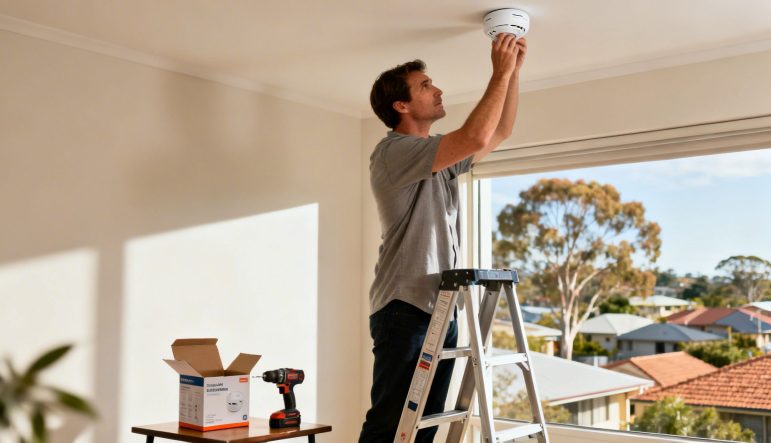
That quiet, unassuming alarm on your ceiling has a hard expiry date. Most people don’t realise it, but here in Queensland, the law is clear: all smoke alarms must be replaced every 10 years from their manufacture date. It’s not just a compliance checkbox—ignoring it is a serious safety risk for your home and family.
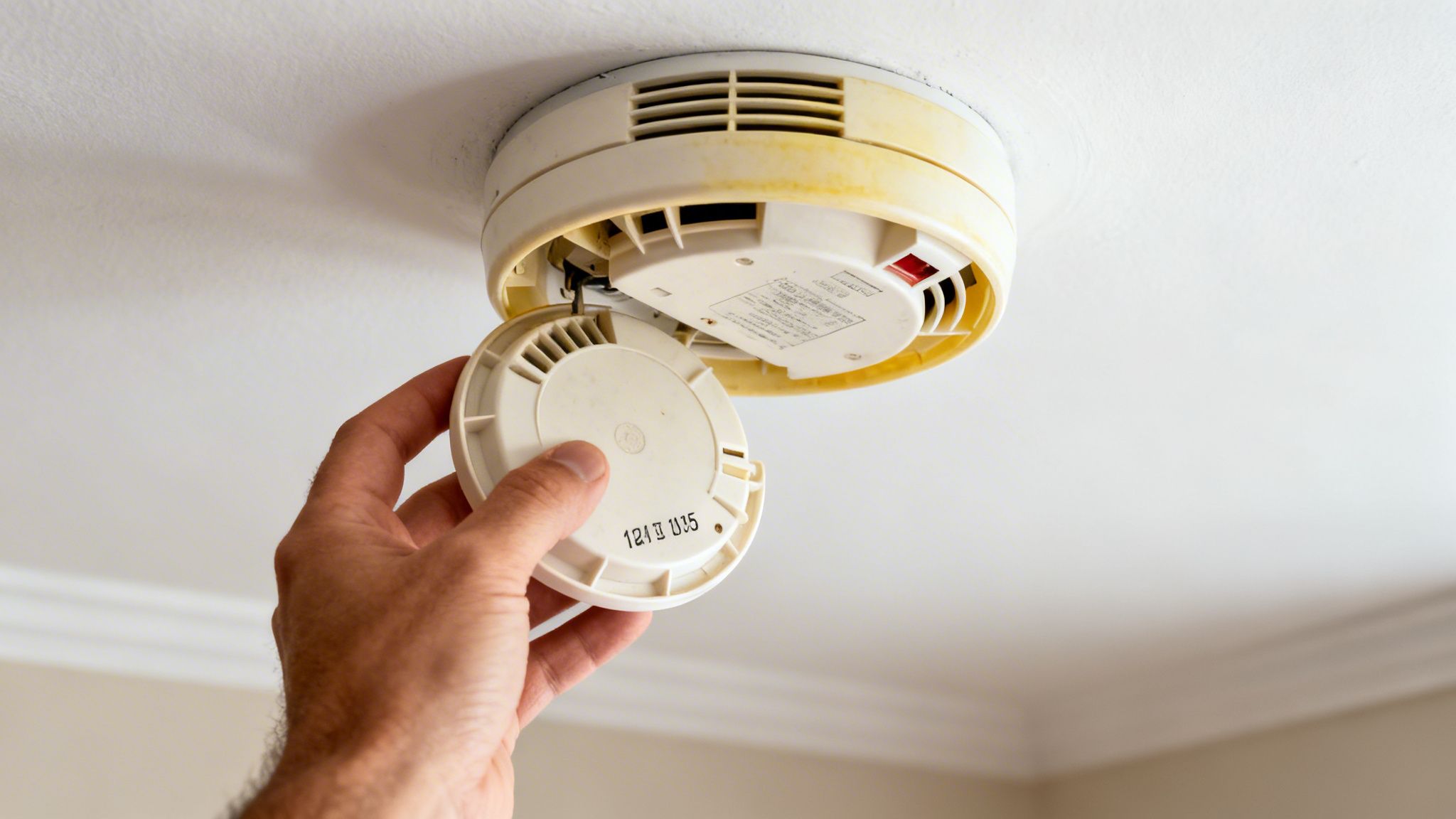
Too many Brisbane homeowners only pay attention to their smoke alarms when that annoying chirping starts. But waiting for the chirp often means you’ve waited too long. It’s not always just a low battery.
Over a decade, the internal sensors that actually detect smoke become less sensitive. They degrade. This means an older alarm might not react fast enough in a real fire, or worse, it might fail to sound at all.
It’s easy to set and forget these critical devices until something goes wrong. We see it all the time. Here are the tell-tale signs we tell our clients to look for—the ones that mean your alarms are due for an immediate replacement.
To make it even easier, here’s a quick checklist to run through.
| Warning Sign | What It Means | Action Required |
|---|---|---|
| It’s Over 10 Years Old | The sensors have expired and are no longer reliable. | Immediate replacement is required by law. |
| Constant Chirping | This is the alarm’s end-of-life warning. | Replace the entire unit, not just the battery. |
| It’s Visibly Discoloured | The materials have degraded, which affects performance. | Plan to replace the unit as soon as possible. |
| It Doesn’t Beep When Tested | The alarm is faulty and will not work in a fire. | Replace it immediately. No exceptions. |
If you see any of these signs, don’t put it off. It’s time to take action.
Failing to replace alarms within the 10-year window is a huge issue across Queensland. According to Queensland Fire and Emergency Services (QFES) data, over $2.5 million in fines were issued for non-compliant smoke alarms in Brisbane alone between 2018 and 2022. A staggering 68% of those violations were for alarms being past their expiry date.
It’s especially a problem in rentals. A 2023 QFES audit found that an incredible 42% of rental properties they inspected had at least one smoke alarm that was over ten years old.
I always tell my clients: your smoke alarm is the single most important safety device in your home. It’s your first line of defence. Making sure it’s working and in-date is the most critical check you can do for your family’s safety.
Of course, working alarms are just one part of a safe home. Brushing up on some essential home fire prevention tips is always a smart move to keep your property protected.
Getting your head around Queensland’s smoke alarm legislation is crucial for any Brisbane homeowner or landlord. These laws were brought in to save lives, and being compliant isn’t just about ticking a box—it’s about giving you and your family the earliest possible warning if a fire breaks out.
At first glance, the rules can seem a bit dense. But they really boil down to a couple of key, non-negotiable requirements that we see homeowners wrestling with every day.
The biggest change is the mandate for photoelectric smoke alarms. These are the only type we’re allowed to install in Queensland homes now, and for good reason. They’re simply far better at detecting the slow, smouldering fires that are most common in a house fire. While old ionisation alarms “smell” smoke, a photoelectric alarm actually “sees” it, which means it responds faster when every second counts.
On top of that, every alarm we now install must be interconnected. This is a genuine game-changer for safety. It means if the alarm in a back bedroom goes off, every single alarm in the house sounds at the same time. An alarm triggering in the garage will wake someone sleeping upstairs, making sure nobody sleeps through a fire starting in another part of the home.
The legislation is very specific about placement to create a web of protection and give the earliest possible warning. For your home to be compliant, we must install alarms in these exact spots:
This strategy is designed to eliminate any “dead zones” where a fire could start and take hold before anyone notices. For a deeper dive into the specifics, you can check out our detailed guide on Queensland’s smoke alarm laws.
A common scenario we see in Brisbane is a landlord getting a property ready between tenants. They often don’t realise that the handful of old, standalone battery alarms in the hallway simply don’t cut it anymore. Getting the property fully compliant is a legal must and a critical part of providing a safe home.
For landlords in suburbs like Grange or Windsor, the rules are especially tight. Failing to comply isn’t just a major safety risk for your tenants; it also opens you up to significant financial and legal trouble.
And the scale of this problem is much bigger than you’d think. Since the new laws kicked in, compliance checks have shown just how many properties are falling short. A 2022 Residential Tenancies Authority (RTA) survey found that a shocking 52% of Brisbane rental properties had at least one alarm that needed replacing.
The law is crystal clear: alarms have to be replaced when they expire or within one month of a new tenancy starting. Considering photoelectric models are 85% effective at picking up smouldering fires compared to just 60% for older types, this isn’t an upgrade you want to delay. Having properly functioning replacement smoke alarms is proven to slash fire-related deaths by up to 71%. If you want to dig into the research, the BRE Group website has some eye-opening data on how old smoke detectors lose their effectiveness.
So, you’ve figured out your old smoke alarms are past their use-by date. The next step is choosing the right replacements, and in Queensland, this decision is both critical and clear-cut. The only type of alarm you should be installing now is a photoelectric alarm.
There’s a very good reason for this mandate. They work fundamentally differently to the old ionisation models you might be used to.
Think of it like this: an old ionisation alarm “smells” the air, waiting to detect the tiny, invisible particles from a fast-flaming fire. A modern photoelectric alarm, however, “sees” the smoke. It uses a small beam of light inside a chamber, and when visible smoke from a smouldering fire drifts in and scatters that light, the alarm goes off. This makes it far better at detecting the slow, smoky fires that are common in homes, giving you precious extra time to get out safely.
Once you know you need photoelectric alarms, the next decision is how to power them. You’ll be choosing between hardwired (240V) alarms or units with a 10-year sealed lithium battery. The best option really depends on your property.
Hardwired (240V) Alarms: These are wired directly into your home’s main power circuit by an electrician and include a battery backup for blackouts. For any new home or significant renovation in Brisbane, hardwired and interconnected alarms are a non-negotiable legal requirement. They offer the ultimate level of reliability.
10-Year Sealed Lithium Battery Alarms: These are the go-to compliant solution for upgrading existing homes. The built-in battery is designed to last the entire 10-year life of the alarm, which means no more annoying low-battery chirps at 2 am. They can be wirelessly interconnected to “talk” to each other, meeting Queensland’s laws without the cost and mess of running new cables through your walls and ceilings.
This decision tree can help you visualise the right path for your home.
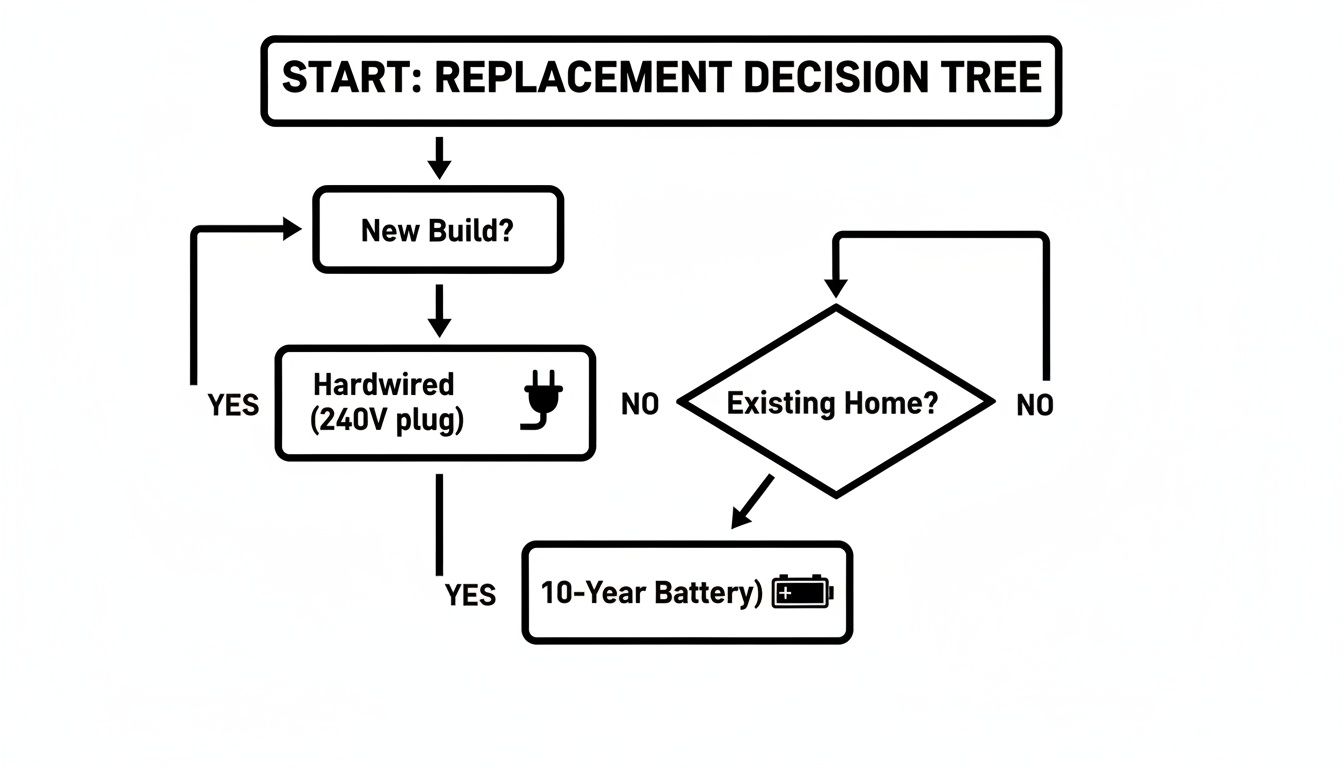
As you can see, the main question is whether you’re dealing with a new build or upgrading an existing property. That will point you towards the most practical and compliant power source.
Let’s look at a real-world scenario we see all the time. Say you own a classic three-bedroom post-war home in Windsor. The existing alarms are over a decade old and aren’t interconnected. To meet the legislation, you could pay an electrician to rewire the whole house for hardwired alarms, but it would be incredibly disruptive and expensive.
In this situation, choosing interconnected, 10-year sealed battery photoelectric alarms is the perfect solution. You get full compliance, top-tier safety, and avoid the headache and cost of major electrical work.
On the other hand, if you’re building a new townhome in North Brisbane, your electrician must install a fully hardwired and interconnected system from the get-go. It’s the standard for all modern construction projects and ensures a robust, integrated safety system is built-in from day one.
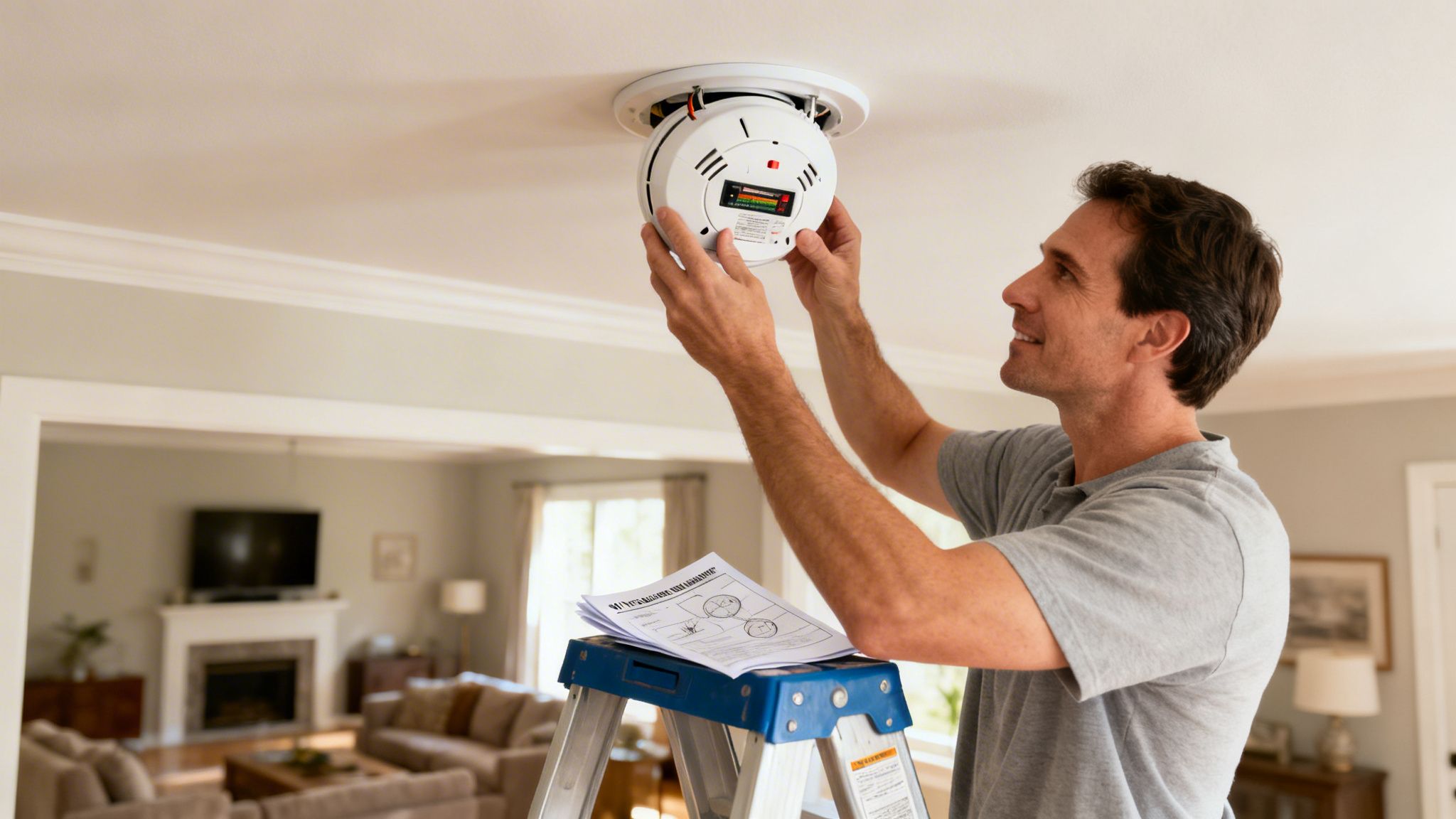
So you’ve picked out your new photoelectric alarms. Now for the big question we hear all the time from Brisbane homeowners: “Can I just install these myself?”
The answer really comes down to one thing: the type of alarm you’re dealing with. There are two very different paths here—a simple DIY job for battery-powered units, or calling in the pros for anything that touches your home’s wiring. Knowing which path to take is non-negotiable for your safety and for staying on the right side of the law.
If you’re swapping out an old, tired battery alarm for a new 10-year sealed lithium battery alarm, then yes, this is a job you can tackle yourself. These units are specifically designed for easy homeowner installation and don’t involve touching any dangerous wiring.
Here’s the typical process:
This is the perfect way to upgrade your home to a compliant, interconnected system of battery alarms without needing to call an electrician.
Let’s be crystal clear on this: it is illegal and extremely dangerous for anyone who isn’t a licensed electrician to do any work on 240V mains power in Queensland. That includes installing or replacing any hardwired smoke alarms.
The law exists for a very good reason: your safety. A tiny mistake in the wiring of a hardwired alarm can create a serious fire risk, the potential for electric shock, or cause the entire system to fail silently. It’s a risk that’s never, ever worth taking.
You absolutely must hire a professional electrician if you are:
The consequences of getting this wrong are devastating. Data from the Queensland Fire Incident Reporting System (QFIRS) shows thousands of house fires where outdated or faulty alarms failed. In South East Queensland alone, fires in homes with alarms over 10 years old led to 18 fatalities and 320 injuries. If you want to understand just how much alarms degrade over time, you can explore detailed reports on sensor degradation.
Deciding between DIY and a professional can be tricky. This table breaks down the common tasks to help you make the right call.
| Task | DIY Feasibility | When to Call a Professional Electrician |
|---|---|---|
| Replacing battery alarms | High: A straightforward job if replacing with new 10-year sealed battery units. | If you’re unsure or uncomfortable working on a ladder. |
| Testing and cleaning alarms | High: You should be testing alarms monthly and cleaning them every 6 months. | If an alarm fails a test and you can’t identify the cause (e.g., a dead battery). |
| Replacing hardwired alarms | None: It is illegal and unsafe to do this yourself. | Always. This involves working with 240V mains power and requires a licensed sparkie. |
| Installing new hardwired alarms | None: Requires new wiring and connection to your home’s electrical circuits. | Always. This is complex electrical work that must be certified. |
| Interconnecting hardwired alarms | None: Involves running new cabling between alarms. | Always. This ensures the system works as one and is legally compliant. |
Ultimately, any task involving 240V wiring is a clear-cut case for a professional. For everything else, your comfort level and the manufacturer’s instructions are your best guide.
When you bring in a licensed team like DLG Electrical, you’re not just getting alarms screwed to the ceiling. You’re getting a complete, compliant safety solution for your home. We handle the entire process, so you don’t have to worry about a thing.
Our electricians will:
Choosing a professional gives you the peace of mind that the job is done right, protecting your home, your family, and your investment.
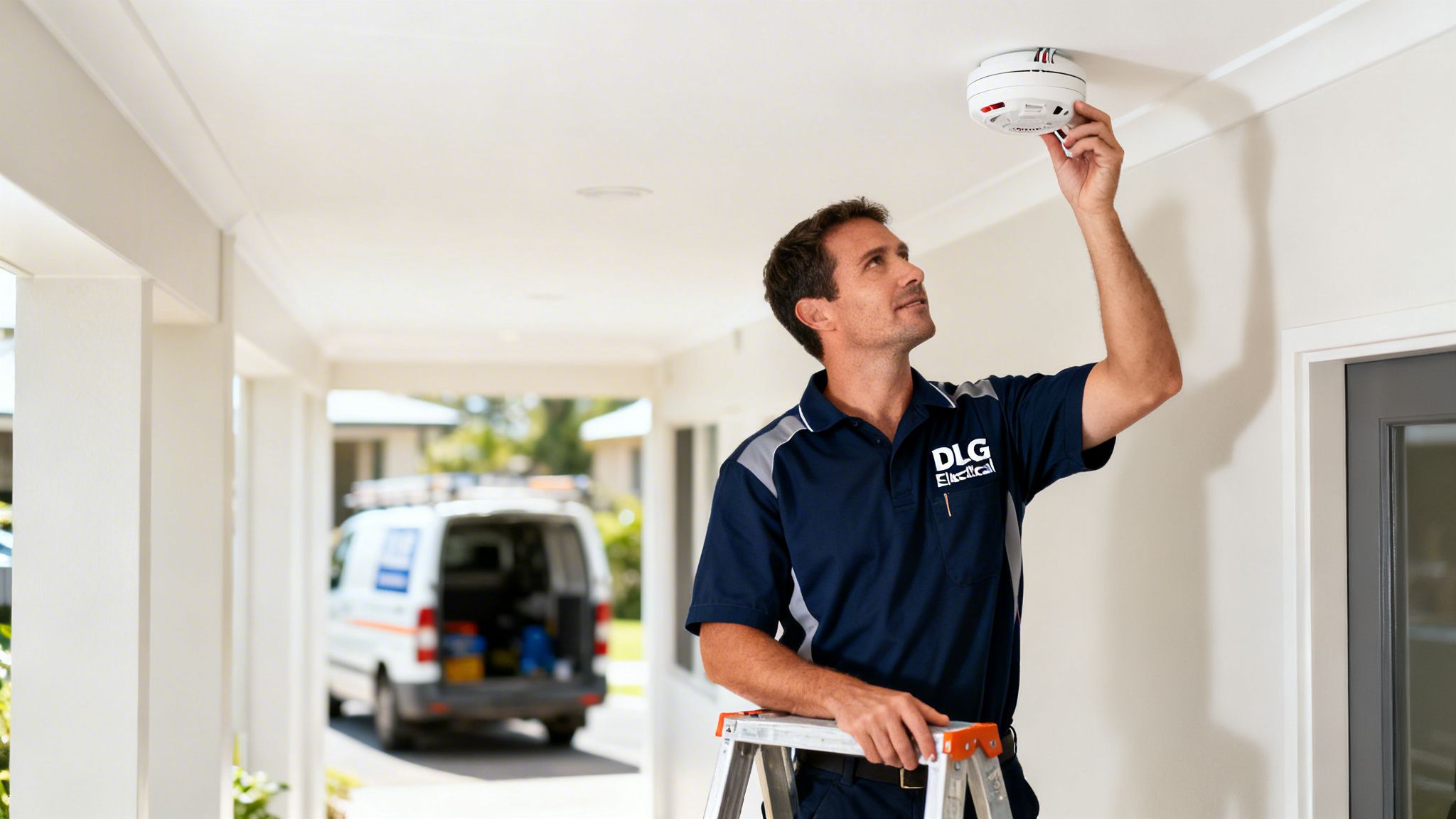
Choosing an electrician for your replacement smoke alarms is a bigger deal than just getting a task ticked off. It’s about putting the safety of your family and your home in someone else’s hands. You need a local expert who gets Brisbane properties and knows Queensland’s tough safety legislation inside and out.
Here at DLG Electrical, we’ve spent over 19+ years keeping Brisbane families safe. We’re not just installers who show up and screw alarms to the ceiling; we see ourselves as your partners in home safety. Our team has deep roots in the community, and we’ve earned our five-star reputation by understanding the trust you place in us when we step into your home.
Our job is to do more than just install new alarms. We’re here to deliver a complete, stress-free compliance solution that’s built around what you actually need.
Our experienced team has worked in every kind of Brisbane home you can imagine, from old Queenslanders with tricky layouts to brand new builds. We know what to look for. You can get more insights on finding a great local tradesperson in our guide to choosing an electrician in Brisbane.
“We’ve been serving the Brisbane community for nearly two decades. Every smoke alarm installation is a promise we make to a local family—a promise to keep them safe. It’s a responsibility we take very seriously.” – DLG Electrical
We see it every day—the legislation can be confusing, and it’s easy for old, ineffective alarms to get forgotten. That’s why our whole focus is on making the path to compliance as simple and clear as possible.
Our friendly, licensed electricians don’t just work; they explain. They take the time to walk you through what’s required and why, giving you total confidence in your home’s safety system.
We firmly believe that protecting your family shouldn’t be a complicated headache. When you work with us, you’re not just hiring an electrician. You’re getting the peace of mind that comes from having a trusted local expert on your side who genuinely cares. Your safety is, and always will be, our number one priority.
Ready to make your home safe and compliant? Get in touch with our team today for a free, no-obligation quote, and let us handle the rest.
Even when you know the rules, it’s natural to have questions when it’s time to organise replacement smoke alarms. We hear them every day from Brisbane homeowners and landlords. Let’s run through the most common queries we get, so you can move forward with confidence.
This is usually the first question people ask, and the honest answer is: it depends on what your property needs to be compliant.
Picking up a single 10-year sealed battery alarm from a hardware store might only set you back $30-$50. But that’s just the unit—it doesn’t cover compliant installation or ensure your whole home is interconnected.
For a professional, full-home upgrade by a licensed electrician, the cost will vary based on your home’s size, how many alarms are required, and whether hardwired or wireless units are the best fit. At DLG Electrical, we provide a transparent, upfront quote that covers everything. No surprises, just a home that is 100% compliant with Queensland law.
We get this call all the time. That relentless, annoying chirp isn’t a low-battery warning; it’s the alarm’s end-of-life signal. It’s telling you its internal components are failing and it can no longer be trusted to do its job.
The first thing you should do is check the manufacture or expiry date printed on the back. If it’s more than 10 years old, the only safe move is to replace the entire unit. It’s literally screaming at you that it’s time for an upgrade.
That chirp is easy to tune out, but you absolutely shouldn’t. It’s an audible warning that your first line of defence against a house fire is compromised. Ignoring it puts your family and your property at serious risk.
You can’t just toss old smoke alarms into the wheelie bin, particularly the older ionisation models. These types contain a very small, safely sealed amount of radioactive material and need to be disposed of correctly.
The responsible way to get rid of them is through a dedicated e-waste program. Most Brisbane City Council resource recovery centres will accept old smoke alarms, making sure they’re managed safely and kept out of landfill. If we’re on-site handling your replacement, we’ll advise you on the best disposal option for your old units.
Yes, absolutely. For all residential properties in Queensland—including every single rental in Brisbane—the law is crystal clear on this.
“Interconnected” means that when one alarm detects smoke, every alarm throughout the house sounds at the same time. This is a non-negotiable, life-saving feature. It gives tenants the earliest possible warning of a fire, no matter where they are in the home. As a landlord, ensuring your property is fully compliant isn’t just a good idea; it’s a legal duty that protects both your tenants and your investment.
Don’t let compliance questions stop you from making your home safe. The team at DLG Electrical has the experience and expertise to ensure your property is fully protected and meets all Queensland regulations. For a clear, no-obligation quote on your smoke alarm needs, contact us today.

Master Electrician with over 30 years of experience. Founded DLG Electrical in 2005 after international project work including electrical installations at Stamford Bridge Stadium, London(Home of Chelsea FC).

Local Electricians that can fix all Electric Hot water Systems.
Motion sensor lights are a versatile addition to any home, offering nu
