83 Jean St, Grange QLD 4051
Mon-Fri 07:30 AM - 04:00 PM - Sat - 8:00 - 12 - Sunday Closed
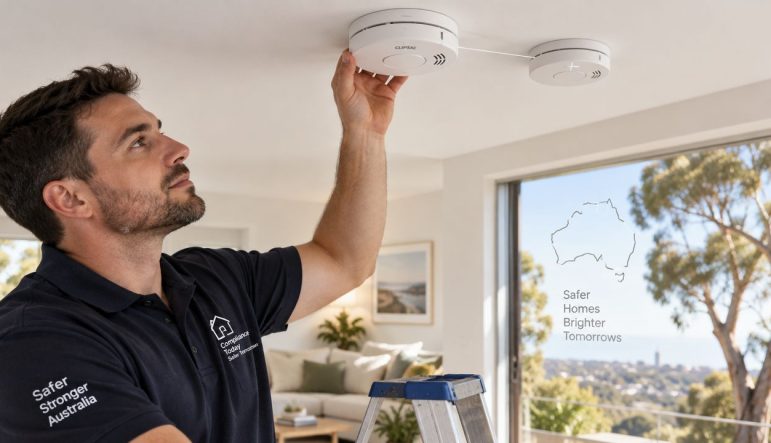
Queensland's smoke alarm problem isn't a lack of alarms on walls. A 2026 ABC report said Smoke Alarm Solutions estimated that 70% to 80% of owner-occupied homes were still not compliant, leaving roughly 1.2 million properties needing upgrades within about six months of the report's publication. That changes the conversation around smoke alarm compliance Australia. The question isn't whether an alarm is installed, but whether the home has the right detector technology, power source, locations and interconnection for the law and for real evacuation conditions. ABC News reported on the owner-occupied compliance gap.
A smoke alarm can pass a test and still leave a Queensland home outside the required standard. The hidden gap in owner-occupied properties is often the system behind the visible devices. Compliance depends on photoelectric alarms that communicate with one another, along with suitable power, placement and compatibility across the dwelling.
That matters at night. A resident behind a closed bedroom door, or on another level, may not hear a distant standalone alarm soon enough. Interconnection allows detection in one area to trigger warning throughout the home, giving occupants more time to respond.
Australia has no single rule applied identically across every state and territory. Building, fire safety and tenancy obligations vary according to jurisdiction and property type. Advice from another state, an old inspection or an alarm installed under earlier requirements can therefore create a false sense of compliance. For a Brisbane homeowner, Queensland's framework determines the local obligation.
Historical Queensland data shows why counting alarms is an unreliable check. Australian parliamentary material recorded that 96.6% of Queensland households had an installed smoke alarm or detector in 2013–14, compared with 70% to 82% in 2004–05. Those figures confirmed presence, not whether the alarms worked. A Queensland parliamentary research brief also reported that only 72% of Queensland homes had a smoke alarm installed and working in the 2004–05 reporting period, compared with 71.9% in 2001–02. The figures are documented in ABC reporting on Queensland's smoke alarm deadline.
An alarm may be expired, poorly positioned, disconnected, fitted with the wrong sensor or unable to alert other devices. A proper inspection checks the entire alarm fleet, not the number of units fixed to ceilings or walls.
Practical rule: Treat every existing alarm as a device to identify and verify, not as proof that the property complies.
The final Queensland rollout reaches homes that earlier sale and tenancy triggers may not have captured. Owner-occupied properties are particularly exposed when alarms have been replaced individually, renovations have changed the floor plan, or standalone battery units were added without interconnection.
The upgrade is a fleet-management task. Each alarm must operate within the intended system, using compatible technology and an appropriate power arrangement. Replacing one visible unit with a modern alarm does not correct a network that still contains ionisation detectors or unlinked devices.
A practical upgrade may involve replacing several alarms at once rather than treating each failed unit as a separate job. That approach costs more upfront, but it reduces compatibility problems and avoids leaving older devices in the same system. The result is a home where an alarm in one area can warn occupants throughout the dwelling, rather than a collection of devices that only appear compliant.
Queensland's staged rollout has created a compliance gap in owner-occupied homes. The Queensland Government smoke alarm requirements set out the deadlines and hardware rules property owners need to apply.
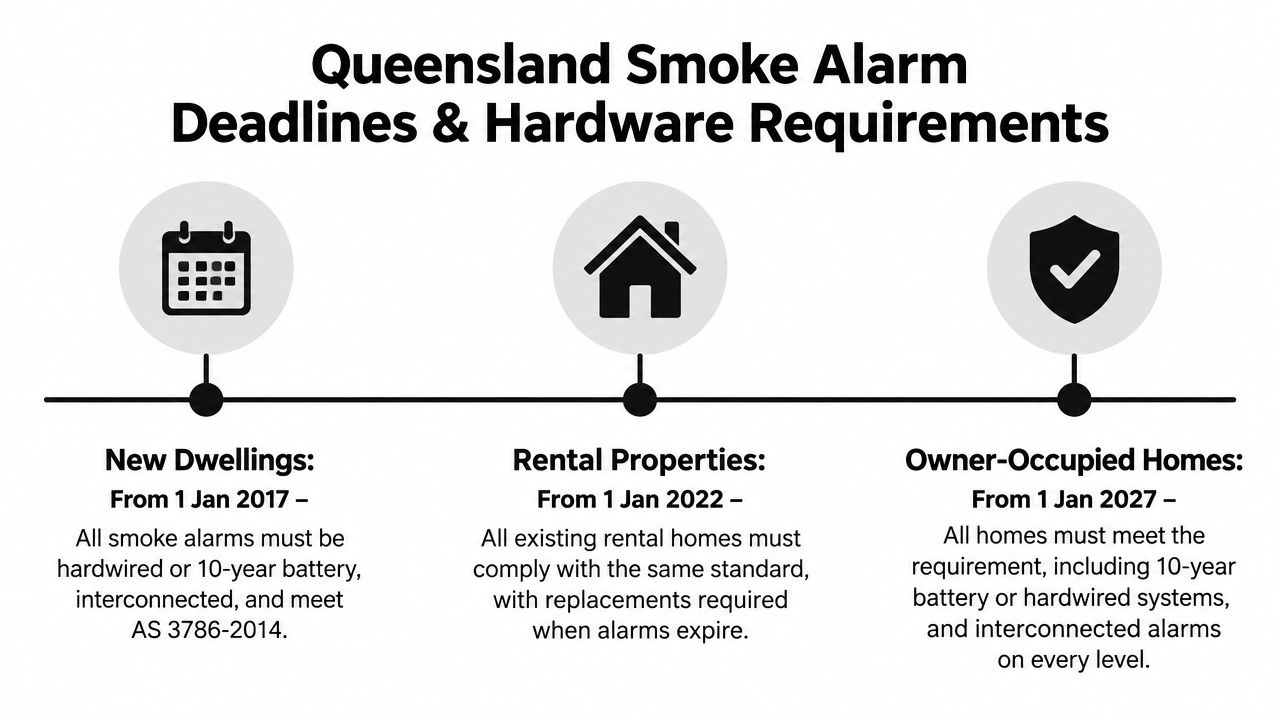
The first milestone began on 1 January 2017. New dwellings and substantially renovated homes had to use interconnected photoelectric smoke alarms that comply with Australian Standard 3786:2014.
The second milestone began on 1 January 2022. The same requirements applied to houses that were leased or sold. A sale or tenancy event can therefore trigger compliance before the final statewide deadline.
The final milestone is scheduled for 1 January 2027, when every remaining dwelling in Queensland, including owner-occupied homes, will be required to comply. The framework also covers caravans and motorhomes in Queensland, which must have compliant photoelectric smoke alarms by that date.
Queensland requires photoelectric alarms, not ionisation alarms. Photoelectric detectors use optical sensing to detect smoke particles, while ionisation models use a different sensing method. An alarm that still operates but contains an ionisation sensor does not meet the stated requirement.
Alarms must also be interconnected. If one detects smoke, the other connected alarms sound to warn occupants across the dwelling. Compatible wiring or an approved wireless arrangement can provide that connection. Independent alarms installed in separate rooms do not create the same warning system.
The permitted power arrangements are:
The Queensland Fire Department smoke alarm guidance explains the required technology and power options. Check the product label and manufacturer instructions before buying. A standalone alarm, ionisation model, or unsuitable battery arrangement can leave an owner with upgraded hardware that still fails the wider system requirement.
Owner-occupied homes should be checked as a fleet. Replacing one alarm does not resolve older ionisation units, incompatible wireless devices, or alarms that are no longer interconnected. For a practical explanation of photoelectric smoke alarms in Queensland, review the available options before planning the upgrade.
Responsibility depends on the property relationship, but the owner remains central to the compliance decision. A tenant may test an alarm and report a fault, but that doesn't transfer the owner's obligation to provide a safe and compliant dwelling. Landlords and property managers also need a repeatable maintenance process, not a one-off installation certificate filed away and forgotten.
For owner-occupied homes, the sensible starting point is an audit. Identify the alarm type, age, power source and interconnection method. A sealed 10-year battery unit may be self-installed if it's an approved product and no electrical alteration is needed. A hardwired alarm, new mains connection or new interconnection wiring is different work and should be handled by a licensed electrician.
Replacing a like-for-like sealed-battery alarm can be relatively simple, but there are still traps. The new unit must meet the Queensland specification, be positioned correctly and be compatible with any other alarms that are intended to operate together. Mixing wireless systems, hardwired systems and unrelated brands without checking compatibility can leave the network incomplete.
Hardwired work has a clear boundary. A homeowner shouldn't open a mains-connected alarm, alter 240-volt wiring or create a new interconnection pathway without a licensed electrical contractor. Incorrect connections can cause nuisance alarms, disable part of the system or create an electrical safety risk.
Landlords need a more formal process before a tenancy begins or changes. The property manager should know what was installed, whether the alarms are interconnected and what testing or replacement records exist. Tenants should report chirping, damage, contamination, failed tests or missing alarms promptly, but they shouldn't remove or modify the system themselves.
| Responsibility | Owner-Occupied | Landlord / Property Manager | Tenant |
|---|---|---|---|
| Identify alarm type | Check each unit for photoelectric labelling, age and power source. | Keep a property record and confirm the installed system before occupancy events. | Report unclear, damaged or missing alarms. |
| Test operation | Test the alarms and investigate failures. | Arrange required checks and retain maintenance records. | Press the test button when instructed and report faults. |
| Replace sealed-battery units | May self-install an approved 10-year non-removable battery unit where no electrical work is involved. | Arrange compliant replacement and confirm the system remains interconnected. | Don't remove or substitute alarms without approval. |
| Alter mains wiring | Use a licensed electrician. | Use a licensed electrician and keep the job documentation. | Never interfere with 240-volt wiring. |
| Maintain access | Keep alarms clear of paint, dust and obstructions. | Include access and testing in property management procedures. | Avoid covering, disconnecting or damaging devices. |
Landlords and agents can use Queensland smoke alarm compliance guidance for property owners when organising inspections and upgrades. The useful mindset is to treat maintenance as a managed electrical asset, not as a tenant-only household chore.
A compliant alarm in the wrong location can delay detection. Placement should reflect how smoke moves through the dwelling and how occupants leave it, while avoiding positions that encourage nuisance alarms or restrict airflow.
Bedrooms need particular attention. Install alarms inside sleeping rooms where required by the applicable arrangement, and place alarms in the hallway or corridor outside sleeping areas. Stairways also matter because they connect levels and form part of the likely escape route.
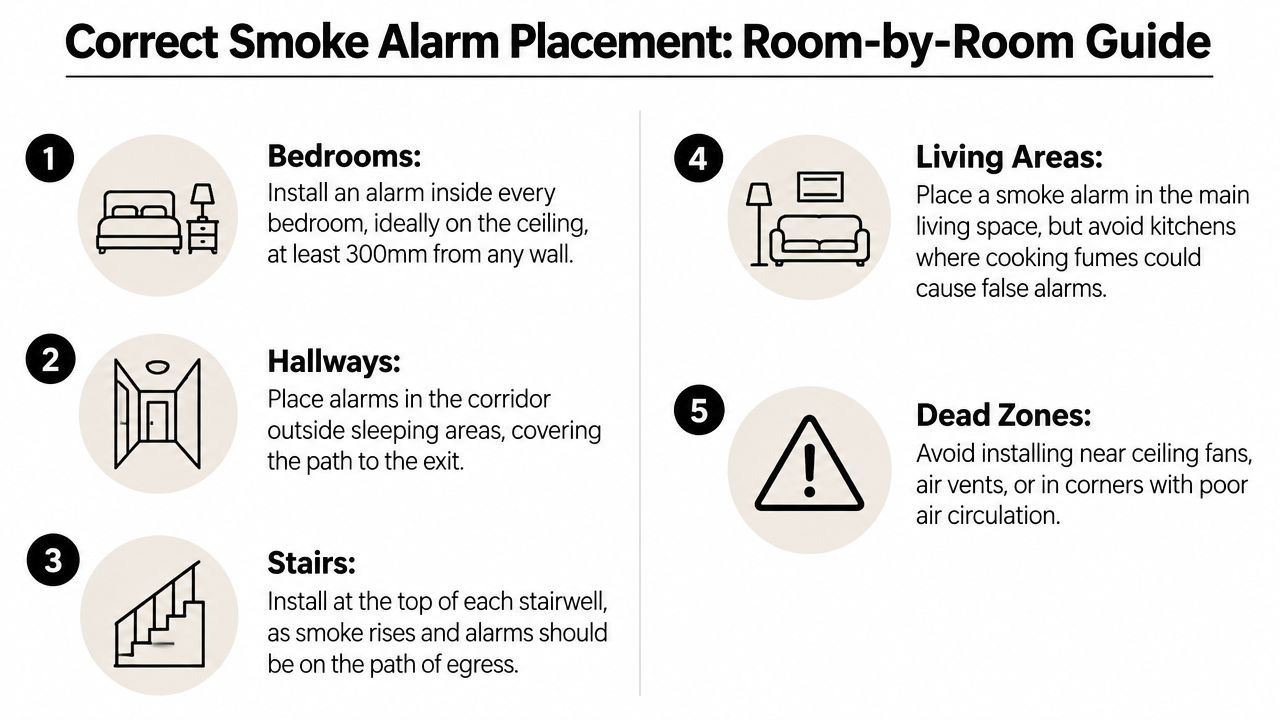
Ceiling lights, fans and vents can make a placement unsuitable even when the chosen spot looks convenient. A qualified installer will assess the actual ceiling layout rather than selecting a position by eye from the doorway.
The DLG guide to smoke alarm locations provides a useful property-level reference. For facility operators and people managing larger building portfolios, Facility Management Insights on fire safety offers broader context about planning detection systems as part of an overall fire safety approach.
A hardwired system with secondary power can suit homes where alarms already have mains cabling or where renovation work makes cable access practical. It provides a permanent electrical supply, but installation or alteration requires electrical expertise and may involve ceiling access, testing and careful coordination with existing wiring.
A 10-year non-removable battery alarm can reduce disruption where running new cable is impractical. It still needs correct placement, correct interconnection and product compatibility. Battery power doesn't remove the need to assess the entire alarm fleet, especially in a multi-level home with older units.
The cost-effective option isn't automatically the cheapest individual alarm. It's the pathway that leaves the whole property compliant and maintainable.
A whole-home upgrade involves more than removing old alarms and fitting replacements. The installer must establish which devices are present, whether they communicate, how they are powered and whether the floor plan needs further detection points. That system-level check is where owner-occupied homes can fall short before Queensland's 2027 deadline.
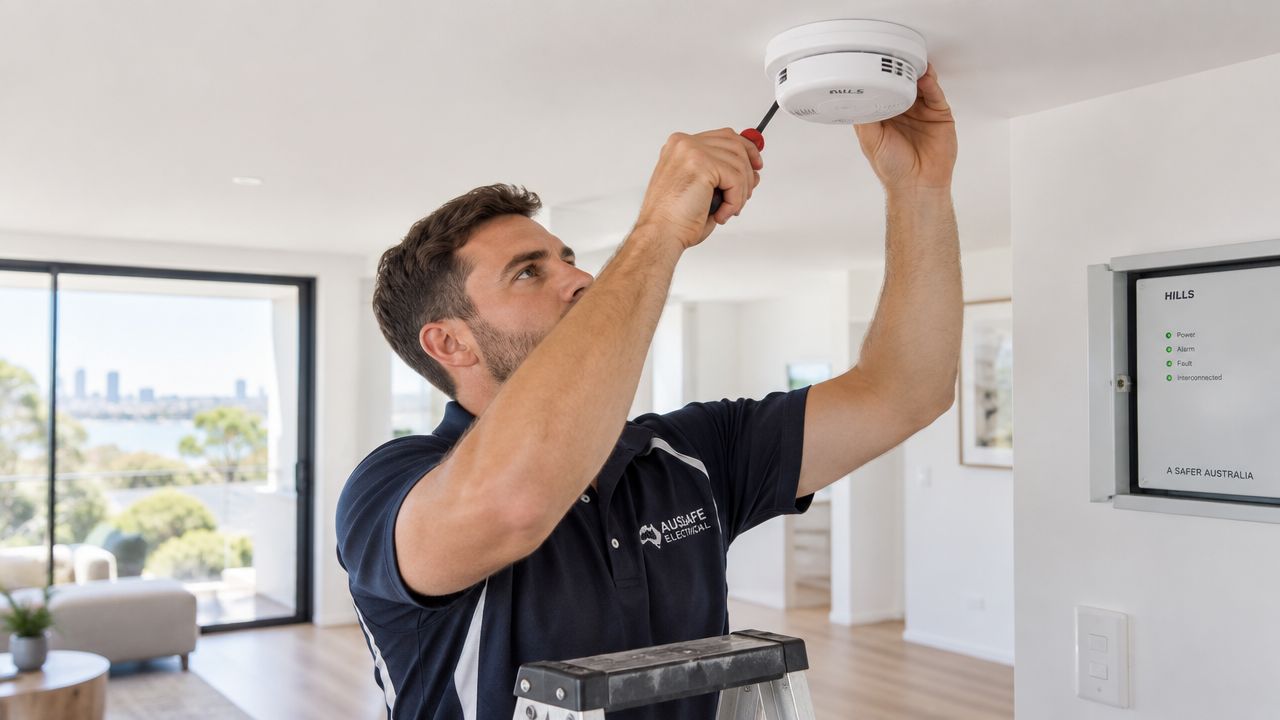
Replacing only failed or outdated units can leave the property with incompatible devices. New photoelectric alarms may not communicate with older alarms. A homeowner may also assume a wireless unit is interconnected because it has radio capability, even though the devices have not been paired. Existing mains wiring can contain faults or incorrect connections, while a backup battery may no longer provide the intended support.
Hardwired alarm work carries additional electrical risk. An incorrect connection can affect the wider network, cause persistent nuisance alarms or leave a detector without reliable power. The work can also create a safety problem in the electrical installation itself, separate from smoke detection.
A professional audit should document alarm locations, detector type, power source, interconnection method and visible condition. The resulting plan can then distinguish between individual replacements, a compatible wireless fleet and rewiring across part or all of the home.
A working alarm is not necessarily a compliant alarm. The system has to work together, in the right places, with the right power arrangement.
Older interconnected systems may follow a conventional master-slave arrangement, with defined wiring and device roles. Modern compatible systems may use mesh communication, allowing alarms to pass signals through the network and making expansion or replacement easier in some homes. Mesh equipment still requires matching products and proper commissioning. Devices should not be mixed without checking the manufacturer's requirements.
The practical trade-off is clear. A sealed-battery fleet can avoid opening ceilings and may suit homes where new cabling is difficult. A hardwired pathway can provide a permanent supply and may make sense where cabling already exists or renovation work provides access. Neither option solves an incomplete upgrade if older alarms remain outside the network.
Professional installation also gives the owner a usable handover record, covering what was fitted, where it was installed and which maintenance tasks remain. That information supports future replacements and gives a property manager or landlord a clear system history.
DLG Electrical is one Brisbane option for smoke alarm compliance checks and installations, including assessment of photoelectric, hardwired and interconnected arrangements.
The following video can help visualise the type of installation work involved:
Start before the deadline creates a rush. A calm audit gives you time to identify incompatible equipment, resolve access issues and choose between a sealed-battery upgrade and a hardwired pathway.
For a rental property, add a tenancy checklist. Confirm the system before a new lease or renewal, arrange repairs through the property manager, and keep evidence of the inspection and replacement work. For an owner-occupied home, book professional help when the system is hardwired, the alarms don't interconnect, the wiring is unclear or the property needs additional detection points.
Don't wait until the last available appointment before the Queensland deadline. Inspect your alarms now, separate simple sealed-battery replacement from electrical work, and organise a qualified assessment for anything uncertain.
DLG Electrical provides Brisbane smoke alarm compliance checks, assessments, testing and installation for photoelectric, hardwired and interconnected systems. Visit DLG Electrical to discuss your property, arrange a quote and plan the upgrade around Queensland's requirements.

Master Electrician with over 30 years of experience. Founded DLG Electrical in 2005 after international project work including electrical installations at Stamford Bridge Stadium, London(Home of Chelsea FC).

Local Electricians that can fix all Electric Hot water Systems.
Motion sensor lights are a versatile addition to any home, offering nu
