83 Jean St, Grange QLD 4051
Mon-Fri 07:30 AM - 04:00 PM - Sat - 8:00 - 12 - Sunday Closed
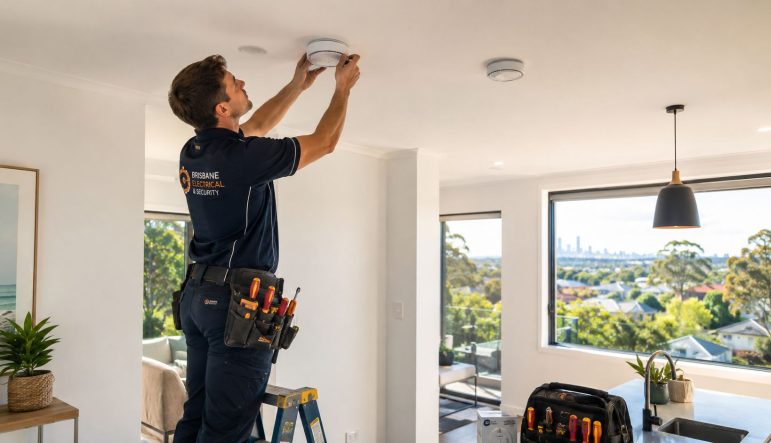
A smoke alarm starts chirping in a Windsor hallway late at night. The owner removes the battery, gets some sleep, and plans to replace the unit at the weekend. Then a property manager calls about a tenancy renewal, or a buyer's building inspection identifies alarms that aren't interconnected. What looked like a small maintenance job has become a whole-of-dwelling compliance issue.
For Brisbane Northside homes, the important question isn't whether an alarm is hanging from the ceiling. The technology, position, power supply, interconnection and paperwork all matter. Queensland's 1 January 2022 requirement already applies to homes sold or leased, while the final statewide deadline for existing homes is 1 January 2027. The Queensland requirements are outlined in Queensland smoke alarm legislation guidance.
A homeowner in Aspley can discover the problem while preparing a property for sale. The existing alarms still sound during a test, but they are older standalone models, and one bedroom has no alarm at all. The estate agent flags the issue before the listing proceeds. A battery change will not fix it. The electrician must assess the dwelling, check alarm positions and power supplies, install compliant units, and test that the system operates together.
A landlord faces a similar issue under different circumstances. A tenant reports a chirping alarm after midnight, and the owner must arrange access without allowing the device to be removed or left inactive. Queensland rental guidance assigns duties to owners and managers, including testing alarms within the required pre-tenancy period, replacing flat or nearly flat batteries before a lease starts or is renewed, and giving tenants appropriate notice for compliance work. The Residential Tenancies Authority smoke alarm guidance covers access and maintenance responsibilities.
Queensland introduced the requirements in stages. From 1 January 2022, homes sold or leased in Queensland must have photoelectric, interconnected smoke alarms complying with AS 3786-2014, installed in every bedroom, in connecting hallways or suitable exit paths, and on every storey. The same rules apply to detached homes, units and townhouses in suburbs including Grange, Windsor, Chermside and Aspley. The rollout began in 2017, and 2027 is the final deadline for remaining homes.
An owner-occupied property that is not being sold or leased still needs attention before 1 January 2027. Delaying the work until a sale, lease renewal or renovation handover can leave little time to resolve practical constraints. Roof access, switchboard condition, ceiling construction and alarm positioning may all affect the installation.
Practical rule: Treat smoke alarm work as a whole-of-dwelling compliance upgrade. Replacing one noisy alarm will not address missing coverage, unsuitable locations or failed interconnection elsewhere.
Insurance and handover discussions have also made owners more attentive to records, testing and installation quality. A compliant product in its packaging does not prove that the dwelling has been assessed correctly. The completed job should show that each required area was considered, the alarms communicate with one another, and the installed system has been tested.
A smoke alarm job in a North Brisbane home is a whole-dwelling compliance upgrade, not a replacement for the unit that started chirping. Queensland requires photoelectric alarms that comply with AS 3786-2014, are interconnected, and cover the required areas of the property. The Queensland Fire and Emergency Services smoke alarm guidance sets out the statewide requirements for private homes, townhouses, units and manufactured homes.

The system should operate as one coordinated warning. A standalone bedroom alarm may detect smoke in that room, but it cannot provide the same whole-home alert as interconnected alarms.
The deadlines affect how owners should plan in 2026. Homes sold or leased have been subject to the newer requirements since 1 January 2022. Remaining existing homes must comply by 1 January 2027. New homes and relevant building work may bring earlier obligations under applicable building rules. Owners should arrange an assessment instead of assuming an existing layout is acceptable.
In North Brisbane rentals, the owner or property manager must ensure the required system is in place. For owner-occupied homes, waiting until a sale, lease or renovation handover can create avoidable pressure, especially where ceiling access, switchboard condition or building layout complicates the work.
The Queensland smoke alarm laws guide provides further background. The completed installation should confirm that each required area was checked, the alarms communicate with one another, and the system was tested after installation.
Not every smoke alarm works in the same way, and not every replacement is suitable for Queensland compliance. The choice starts with detection technology, then moves to power, interconnection and the building itself.
Ionisation alarms respond readily to flaming fires, but they aren't the correct choice for the current Queensland requirement. Photoelectric alarms use light scattering to identify smoke and are the required technology for compliant installations. Combination smoke and carbon monoxide units can add another form of detection where gas appliances or an attached garage create a reason to monitor for carbon monoxide, but the smoke component still needs to meet the applicable smoke alarm requirements.
| Alarm Type | Detection Strength | Power & Battery | QLD Compliance |
|---|---|---|---|
| Ionisation | Sensitive to rapidly flaming fires | Varies by model | Not suitable as the required current smoke alarm type |
| Photoelectric | Designed for smoke detection using a light sensor | Mains power with backup or sealed battery | Required technology when compliant with AS 3786-2014 |
| Combination smoke and carbon monoxide | Smoke detection plus carbon monoxide sensing | Varies by model | Smoke function must still meet Queensland requirements |
A 240-volt hardwired system suits many established Brisbane homes where ceiling access is reasonable. It provides mains power with backup and can use wired interconnection, although older properties may need cable routing or new conductors.
A sealed 10-year battery alarm avoids routine battery changes and uses a non-removable power source. That can work well where running cable would require substantial access work, provided the units are compliant and correctly interconnected.
Wireless interconnection can simplify installation in finished homes, but it still needs careful product selection and testing. A monitored security alarm is different again. Monitoring can send an alert to a service, but it doesn't replace the required smoke alarm coverage inside the dwelling.
The photoelectric smoke alarm information for Queensland homes is useful when comparing these options. The right answer depends on the property, not on the cheapest unit on the hardware shelf.
Any work that modifies 240-volt wiring, connects alarms to a circuit or changes interconnection wiring belongs with a licensed electrician. Queensland electrical safety guidance covers the hazards associated with installing smoke alarms, including the need to manage electrical isolation and safe installation practices.
A battery-only replacement is not the same as a hardwired upgrade. In older North Brisbane houses, a ceiling position may lack the conductors needed for a new alarm. The electrician may need to route cable through the roof space, connect the system correctly and check whether the existing circuit and switchboard provide suitable protection.

A licensed electrician doesn't just press one test button and leave. The completed work should include:
For landlords and sellers, documentation helps demonstrate what was installed and when it was tested. It doesn't replace the owner's ongoing maintenance responsibilities, but it gives the property manager, tenant and conveyancer a clearer record.
DIY installation can look attractive when the job appears to involve only battery units. It becomes risky when the owner assumes a device swap solves missing coverage, incorrect placement or failed interconnection. A low-cost first attempt can leave the property needing a second assessment and more ceiling work later.
The electrician should begin with a walkthrough, not a drill. They'll inspect the bedrooms, hallways and levels, look at existing alarm locations, check ceiling access and review the switchboard before confirming the installation approach.
Plasterboard, timber and concrete ceilings each need different fixings and access methods. Older homes can also have limited roof access, unusual ceiling junctions or existing wiring that can't be extended. A proper site assessment identifies those issues before they become variations.
On-site expectation: The work should leave you with working alarms, a clean ceiling area and a clear record of where each unit is installed.

The electrician should verify that the alarms operate together, that backup power is available and that the protective equipment at the switchboard is suitable. If the installation involves broader switchboard work or a new sub-board, a practical reference on electrical distribution is the Value Tools Co electrical guide, although the electrician still needs to assess the specific Brisbane property.
Expect some ceiling dust and minor access marks where cable is installed. The final clean-up and a walkthrough of test buttons, hush functions and maintenance instructions should form part of a professional handover.
Pricing for smoke alarm installation Brisbane Northside varies according to the number of required units, dwelling size, access, existing cabling and the amount of work needed to reach the statewide standard. A straightforward single-storey, three-bedroom home with accessible roof space and usable 240-volt cabling is a different job from a multi-level townhouse with concrete ceilings.
The following figures are indicative 2026 ranges, not fixed prices. They reflect the practical difference between a relatively accessible retrofit and a property requiring more extensive cabling or electrical work.
| Dwelling Type | Typical Alarm Count | Indicative Price Range | Notes |
|---|---|---|---|
| Single-storey three-bedroom home | Three to four | $450 to $700 | Assumes accessible roof space and existing 240-volt cabling |
| Larger or multi-storey home | More than a basic single-storey layout | $800 to $1,400 | More alarms, levels, cable routing or complex access may apply |
| Complex property | Assessed on site | Higher than the standard ranges | Concrete ceilings, difficult roof spaces or switchboard work can increase labour |
A written quote should identify the alarm brand and model, confirm that the units are photoelectric and use sealed 10-year batteries where applicable, and state how interconnection will be achieved. It should also itemise labour, cable routing, RCD verification or upgrades if required, minor make-good work, disposal of old alarms and any compliance documentation.
An unusually low quote may exclude cable routing, switchboard work or documentation. Comparing itemised scopes is more useful than comparing the headline figure.
Smoke alarm work needs to suit the local building, not just the suburb name. North Brisbane includes post-war timber homes, older brick houses, renovated Queenslanders, modern apartments and townhouse developments. A roof space in Wooloowin can present a different installation challenge from a newer home in North Lakes, even when the required alarm coverage is similar.
DLG Electrical services Northside locations including:
The team can also discuss surrounding suburbs on request, which helps buyers, landlords and investors managing properties close to a postcode boundary. A full service description is available through DLG Electrical's Brisbane Northside service area.
A contractor should be able to explain their Queensland electrical contractor licensing, insurance and testing process before work begins. Experience across different housing types matters because the installation method can change with ceiling material, roof access, existing circuits and the condition of older alarms.
DLG Electrical is a family-owned Brisbane contractor with over 21 years of experience, and its published business information identifies fully licensed and insured electricians and a five-star Google rating. Customer feedback described by the business refers to punctual attendance, tidy work sites and clear written quotes. Those points are useful indicators, but the practical test is whether the quote clearly states the alarm locations, interconnection method, testing and handover records.
Landlords should ask for documentation suitable for RTA and tenancy records. Sellers should retain the installation and testing information with their property files. The paperwork is part of an organised compliance process, not an optional extra after the electrician leaves.
Start with an assessment rather than buying replacement alarms. Tell the electrician whether the property is a detached home, unit, townhouse or another dwelling type, then provide the number of bedrooms and storeys. Existing alarm locations, whether the home is owner-occupied or tenanted, and any renovation or sale timeline will help the contractor understand the likely scope.
A useful first check is to walk through every bedroom, connecting hallway and storey. Look for standalone alarms, older units, missing devices, chirping alarms and areas where a renovation may have changed the original exit path. Don't remove a nuisance alarm and leave the opening empty. A persistent chirp can indicate a flat battery, end-of-life unit, contamination, a wiring issue or another fault that needs proper diagnosis.
For a rental property, coordinate access early. Queensland rental guidance requires owners and managers to manage testing, battery replacement and access in specific circumstances, so a tenant communication plan matters alongside the electrical work. Keep the quote, installation details, testing record and any certificate with the tenancy file.
Acting before the 1 January 2027 deadline gives you time to resolve difficult access, outdated wiring and switchboard issues without a rushed booking. It also leaves the property prepared for a sale, lease renewal or future insurance documentation. The value is not just avoiding a last-minute compliance problem. Correctly placed and interconnected alarms give occupants an earlier whole-home warning when smoke develops away from the room they're using.
A complete service should cover the assessment, supply of suitable alarms, installation, interconnection, testing and certification. That approach prevents the common mistake of treating each alarm as an isolated device and then discovering later that the system doesn't meet the requirements as a whole.
DLG Electrical offers free, no-obligation quotes for Brisbane Northside properties. Contact the team by phone, email or its online enquiry form and provide the property details above. During standard business hours, the team advises that responses are typically available the same day or on the next business day, subject to workload and access.
Schedule the inspection this week if your home still has standalone, outdated or missing alarms. Getting the assessment done now gives you a clear scope before the statewide deadline becomes an emergency booking problem.
DLG Electrical can assess, supply and install compliant photoelectric smoke alarms across Brisbane Northside, then test the interconnection and provide the relevant completion records. Visit DLG Electrical to request a free quote and arrange an inspection before the 2027 deadline.

Master Electrician with over 30 years of experience. Founded DLG Electrical in 2005 after international project work including electrical installations at Stamford Bridge Stadium, London(Home of Chelsea FC).

Local Electricians that can fix all Electric Hot water Systems.
Motion sensor lights are a versatile addition to any home, offering nu
