83 Jean St, Grange QLD 4051
Mon-Fri 07:30 AM - 04:00 PM - Sat - 8:00 - 12 - Sunday Closed
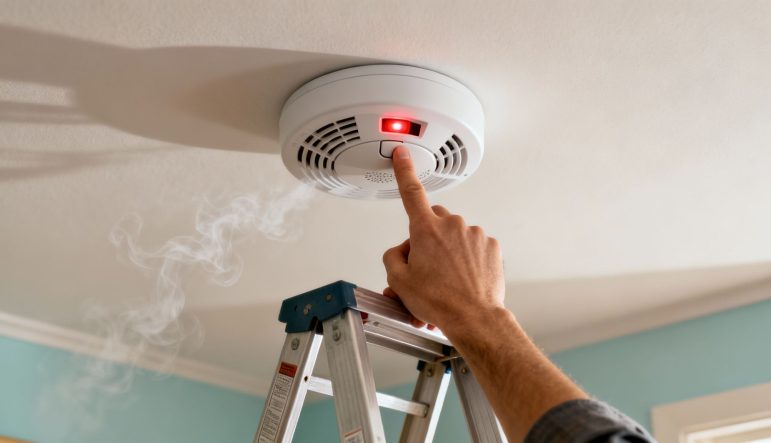
That ear-splitting shriek from your smoke alarm when there’s no fire is more than just annoying—it’s seriously stressful. But more often than not, it’s not a faulty alarm. Most random alarms are triggered by everyday things like cooking fumes, steam from the shower, dust, or even a dying battery. Figuring out which one is the culprit is the first step to getting some peace and quiet back.
Nothing gets the heart racing quite like the piercing wail of a smoke alarm in the middle of the night. Your first instinct is probably panic, quickly followed by frustration when you can’t see or smell any smoke. It’s a surprisingly common experience, but knowing what to do in those first few moments is key for both your safety and your sanity.
Before you even think about troubleshooting, your one and only priority is to confirm there isn’t a real fire.
Once you’re 100% sure there’s no danger, your next mission is to silence that racket. It’s impossible to think straight with that noise blaring. Most alarms have a ‘hush’ or ‘test/silence’ button. Give it a firm press. This usually quiets the alarm for a few minutes, giving you a precious window to find the source of the problem.
Under Queensland law, modern homes must have interconnected smoke alarms. This means when one alarm detects something, they all go off. It’s a brilliant, life-saving feature in an actual fire, but it can make false alarms a real head-scratcher.
You might be standing in the hallway with an alarm screaming at you, but the actual trigger could be a bit of dust in a bedroom detector down the other end of the house. The key is to find the one unit with the rapidly flashing red light—that’s your culprit. Pressing the hush button on that specific alarm should silence the entire network.
This is why a simple issue in one room can feel like a total system failure. It’s not that all your alarms have gone haywire; it’s just one doing its job (a bit too enthusiastically) and telling all its mates to join the party.
To help you quickly figure out what’s going on, here’s a simple triage table for the most common triggers we see out in the field.
This table breaks down the usual suspects behind false alarms and what you can do about them right away.
| Potential Cause | Telltale Signs | Immediate Action |
|---|---|---|
| Cooking Fumes/Steam | Alarm is near the kitchen or bathroom and activates during/after cooking or a hot shower. | Press the ‘hush’ button. Open windows and doors to ventilate the area. |
| Dust or Insects | Chirping or false alarms, often in unused rooms or after cleaning/construction. | Press ‘hush’. Use a vacuum cleaner with a soft brush attachment to gently clean the alarm vents. |
| Low Battery | A single, sharp ‘chirp’ every 30-60 seconds (not a full-blown alarm). | Identify the chirping unit and replace the battery immediately with a new, high-quality one. |
| Power Interruption | Alarms sound briefly when power is restored after an outage or surge. | The alarm should reset itself. If it continues, press the ‘hush’ button. |
| Humidity/Condensation | Happens on very humid days or in poorly ventilated areas like laundries. | Ventilate the room by opening a window or using an exhaust fan. |
| Ageing Alarm | The alarm is over 10 years old and is activating randomly without a clear cause. | Check the expiry date on the alarm. If it’s over 10 years old, it’s time for a replacement. |
This checklist covers the majority of nuisance alarms we get called out for. Working through it can often save you the stress and hassle of an unnecessary emergency call.
A huge number of these false alarms come from everyday life. In fact, Queensland fire services once responded to 63,253 unwanted alarms in a single year, with an incredible 6,083 triggered by simple cooking fumes and steam. You can discover more insights about Brisbane smoke alarm statistics and see just how common this is.
Once you’ve handled the immediate noise and confirmed everyone is safe, you’re in a much better position to calmly find and fix the root cause.
Alright, you’ve hit the hush button and confirmed there’s no actual fire. Now what? A smoke alarm that randomly goes off isn’t just a deafening annoyance; it’s a sign that something’s not right. Think of yourself as a detective—we just need to figure out which clue to follow.
This hands-on checklist will walk you through the most common culprits we see in the field, helping you systematically rule out issues one by one.
Let’s start with the most obvious but often overlooked cause: what’s floating in the air? Your smoke alarm’s sensor is incredibly sensitive, and it can’t always tell the difference between dangerous smoke particles and other things like dust or steam. Taking a methodical approach is always the best way to get to the bottom of it.
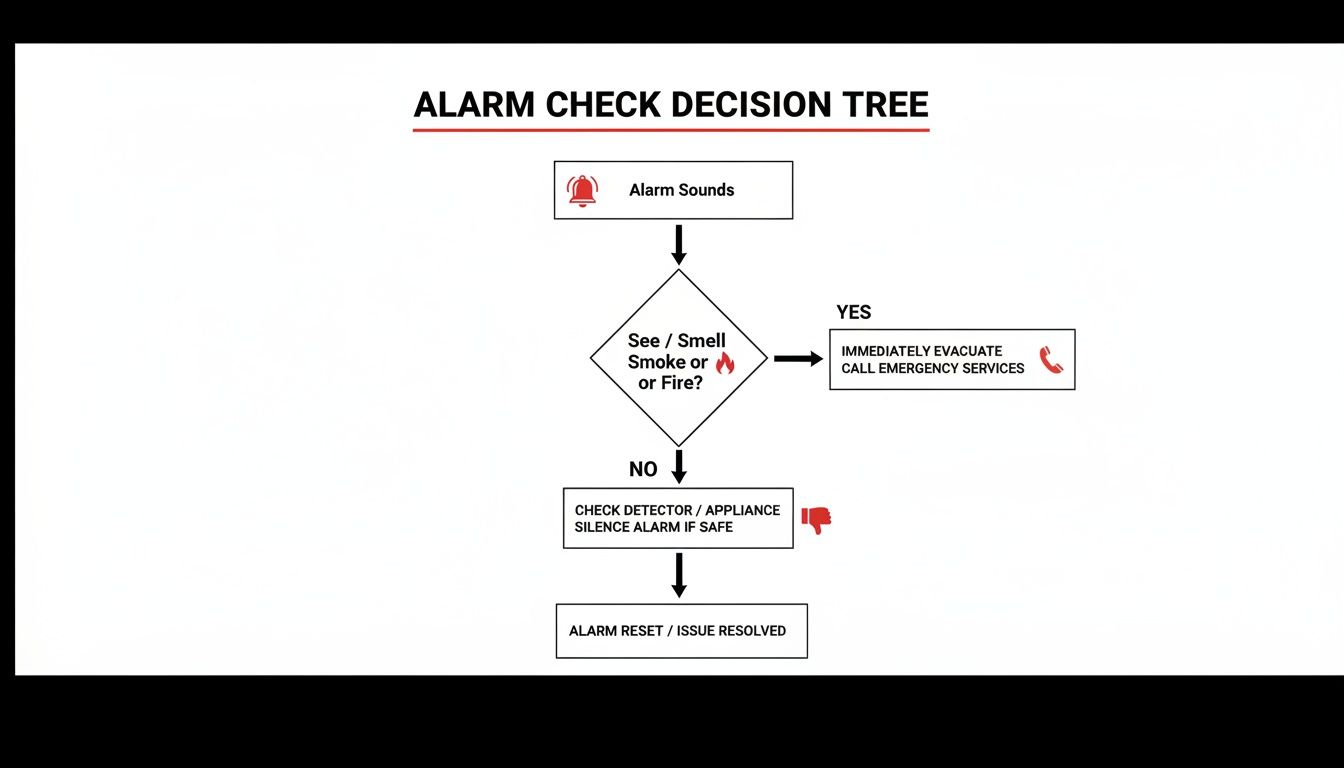
This decision tree is a great visual reminder of the most critical first step—always check for a real fire before assuming it’s a false alarm. Only after you’ve confirmed your safety should you move on to finding the cause.
Time to get up close and personal. Grab a stable stepladder and a torch so you can get a good look at the unit that seems to be causing the trouble. You’re looking for anything that could be physically messing with the internal sensor.
If you spot any little critters or build-up, you’ve likely found your culprit. A gentle clean using a vacuum with the soft brush attachment is usually all it takes to solve the problem.
This is a huge point of confusion and a common reason for call-outs. A smoke alarm makes two very different sounds, and they mean completely different things.
A full-blown, continuous, and painfully loud shriek is a genuine alarm activation. This means the sensor has detected particles it thinks are smoke. On the other hand, a single, sharp ‘chirp’ every 30 to 60 seconds is a low-battery warning. It’s not an emergency; it’s just a maintenance reminder.
Getting this right is crucial. If you’re just hearing an intermittent chirp, your problem isn’t a phantom fire—it’s simply a power issue that needs a new battery.
Sometimes, the alarm isn’t faulty at all; it’s just in a bad spot. The immediate environment around a smoke detector plays a massive role in how it behaves. Ask yourself a few questions about the alarm’s location:
If the placement seems questionable, relocating the alarm—even just a metre or two away—can make all the difference.
If you have a modern, interconnected system (which is mandatory in Queensland properties), finding the source of the alarm is your most important diagnostic step. The whole point of these systems is that when one alarm detects something, they all sound off. This can make it seem like the whole house has gone haywire when it’s really just one unit with a specific problem.
Look for the alarm with a rapidly flashing red or green light. This is the initiating unit—the one that actually “detected” the smoke. All the other interconnected alarms will be screaming, but their indicator lights will be flashing differently or not at all. Once you’ve found the trigger unit, you can focus all your troubleshooting efforts right there.
Preventing that startling, middle-of-the-night false alarm often comes down to one simple thing: proactive care. When smoke alarms randomly go off, it’s rarely because they’re broken; it’s usually because they’ve been neglected. A simple, regular maintenance routine is the single most effective way to keep your alarms reliable and ready for a real emergency.
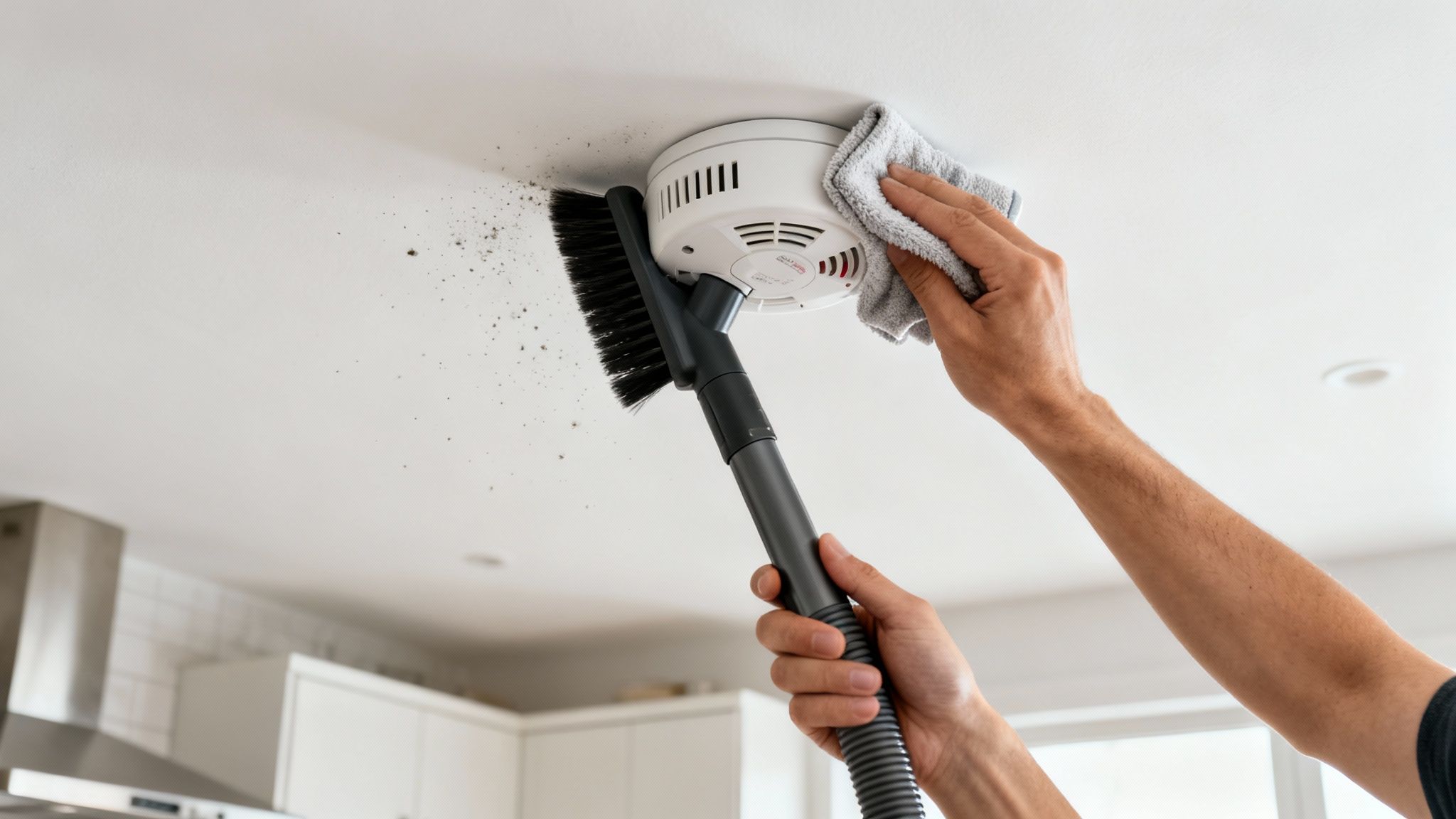
Think of your smoke alarms like any other essential appliance. You wouldn’t let your air conditioner run for years without cleaning the filter, and the same principle applies here. A little attention goes a long way.
The nuisance of false alarms isn’t just an annoyance; it’s a widespread issue. Fire services across the country attend thousands of activations a year, with most being false triggers that waste critical resources. Nationally, 64% of Australians have experienced false alarms, and a worrying 41% aren’t sure how to silence them. This sometimes leads to dangerous practices, like removing the battery or the alarm altogether.
Setting aside just a few minutes each month can drastically reduce the chances of a false alarm. The goal is to keep the alarm’s sensing chamber free of anything that can mimic smoke particles.
Here’s a straightforward routine:
This quick clean is especially important after activities that kick up a lot of dust, like renovations or a big spring clean.
A quick tip from the field: We often see people try to clean their alarms with compressed air. It seems like a good idea, but the force can damage the delicate internal parts or, even worse, push dust further into the sensing chamber. Stick to a gentle vacuum.
Cleaning is only half the battle. You also need to be certain the alarm is actually working. Testing your alarms isn’t just about pushing a button; it’s about confirming the entire system is operational, from the sensor to the siren and, crucially, the interconnectivity between units.
You should test your alarms at least once a month, right after you’ve cleaned them. It only takes a second.
Simply press and hold the ‘Test/Hush’ button on one of the units. Here’s what you should expect to happen and what it tells you about your system’s health:
If any of these things don’t happen, you’ve got a problem that needs immediate attention. It could be a lost connection between alarms or a failing battery in one unit. For a deeper dive into what to look for, check out our guide on how to check a smoke detector properly. For broader insights into keeping various home safety devices in top condition, you might find useful tips on residential security system maintenance.
By folding these simple cleaning and testing steps into your monthly home routine, you can build real confidence in your fire safety system. This proactive approach not only prevents the headache of false alarms but ensures your first line of defence is always ready to protect you and your family.
That relentless, high-pitched chirp is a sound that can test anyone’s patience. While it’s often mistaken for a random false alarm, it’s rarely a malfunction. More often than not, it’s the smoke alarm’s way of telling you it needs attention, and the issue is almost always tied to its power source.
Learning to tell the difference between a low-battery warning and a full-blown emergency alarm is the first step to sorting it out.
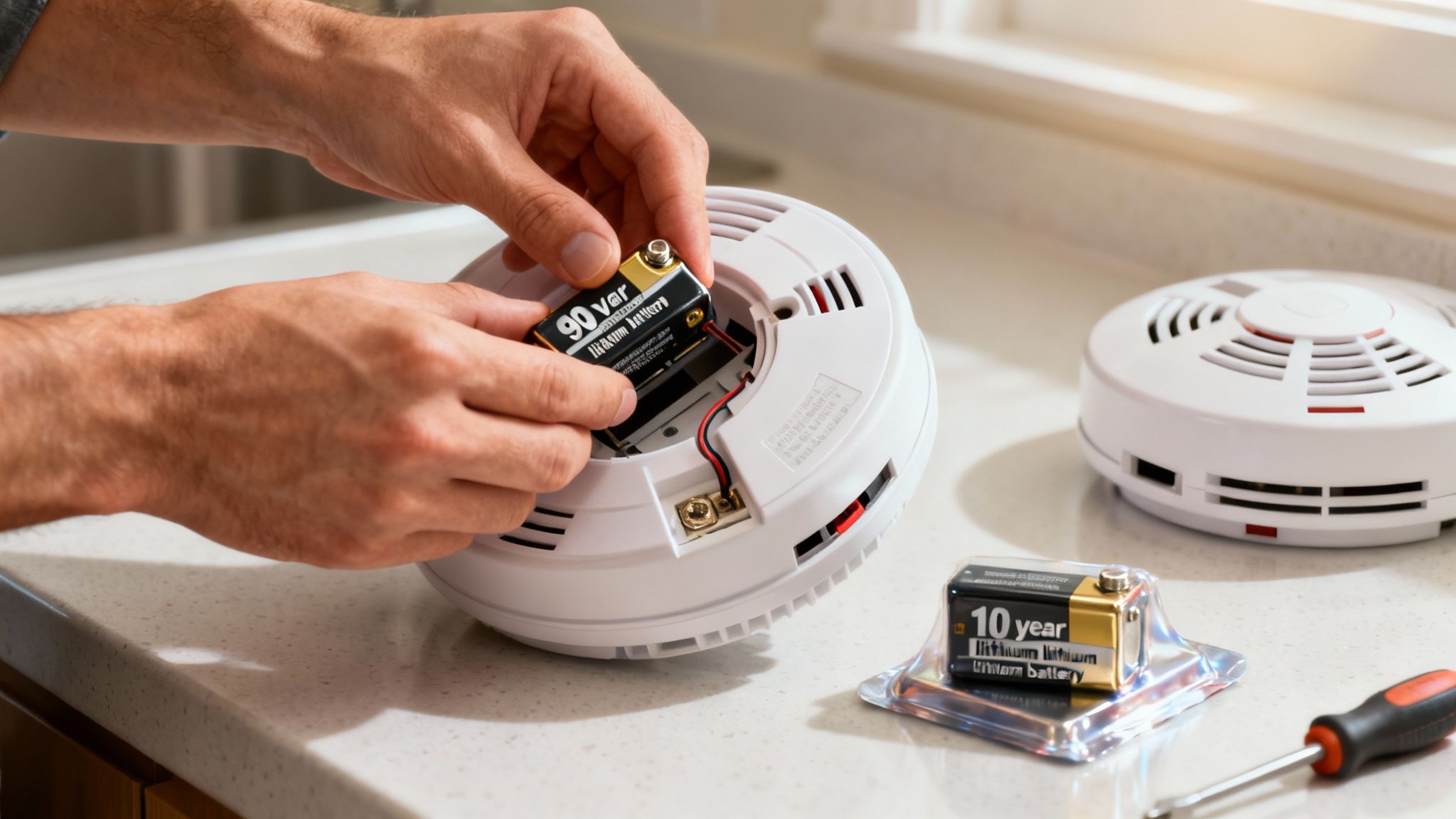
It really comes down to the sound itself. A full, continuous siren means the alarm has detected particles it thinks are smoke. On the other hand, a single, sharp ‘chirp’ every 30 to 60 seconds is the universal signal for a low battery. It’s designed to be annoying enough that you can’t ignore it, forcing you to replace the power source before it dies completely.
Low battery issues are a surprisingly common reason for nuisance alarms. In fact, Australian studies have shown that a staggering 20% of false alarm reports are a direct result of dying 9-volt batteries that homeowners mistake for a major fault.
This confusion can lead to dangerous inaction. Other research has found that up to 30% of smoke alarms in tested homes were non-functional, often because the old batteries were simply removed and never replaced.
For most traditional smoke alarms—both standalone battery-powered and hardwired models—the humble 9-volt battery is the star of the show. Swapping it out is a simple but absolutely critical piece of home maintenance.
Here’s the quick rundown:
This simple job will silence that frustrating chirp and get your protection back online in minutes.
Modern smoke alarms are increasingly moving away from the old replaceable 9-volt batteries. Many new units, especially those required under Queensland’s latest legislation, now feature sealed, non-replaceable 10-year lithium batteries.
The entire alarm unit is designed to last for a decade. At the end of its life, you replace the whole thing. This takes the guesswork out of maintenance and ensures the sensor and power source expire together, keeping you safe.
Even hardwired alarms that run on your home’s main electrical supply have a battery backup. This is a critical safety feature that keeps the alarm working during a power outage—a time when the risk of a fire can actually be higher. These backup batteries, whether they are a 9-volt or a sealed lithium type, still need to be checked and replaced according to the manufacturer’s guidelines.
For a deeper dive, our guide to wireless smoke alarms explores the technology behind these modern interconnected systems.
For homes with hardwired smoke alarm systems, the mains power supply itself can sometimes be the culprit behind random alarms, particularly in areas with older electrical infrastructure.
If you notice your smoke alarms randomly going off at the same time the lights flicker, or right after the power comes back on, this is a very likely cause. While an occasional flicker isn’t usually a major worry, frequent activations linked to power fluctuations could point to a bigger problem with your home’s wiring.
In these situations, it’s always best to get a licensed electrician from a trusted team like DLG Electrical to investigate. We can make sure your electrical system is safe, stable, and not putting your family at risk.
So, you’ve done everything by the book. You’ve cleaned the sensors, popped in fresh batteries, and ruled out all the usual suspects like steam and dust. But still, the smoke alarms keep blaring, shattering the peace and fraying your nerves.
While a lot of nuisance alarms are simple fixes, there comes a point where you need to hang up the duster and call in a licensed professional. Ignoring persistent false alarms isn’t just an annoyance; it’s a genuine safety risk. When an alarm cries wolf too often, it’s human nature to become complacent, and that hesitation could be critical in a real fire. Knowing when to stop troubleshooting and bring in an expert is key to keeping your family safe.
This is the most obvious sign you need a sparky. You’ve followed every single step—cleaned the unit meticulously, used high-quality new batteries, and made sure there’s no stray steam or dust—but the alarm still goes off for no apparent reason.
When an alarm is this stubborn, the problem usually runs deeper than a bit of dust. It could be an internal sensor that’s finally given up the ghost, a fault in the alarm’s circuitry, or even a more complex issue with the house wiring it’s connected to. Constantly hitting the ‘hush’ button is just kicking the can down the road; it’s a temporary fix for what could be a serious underlying fault.
Hardwired and interconnected smoke alarms—now mandatory across Queensland—are brilliant for safety, but they add a whole new layer of complexity. If you’re having trouble with an interconnected system, it’s not a DIY job. It’s time to call an electrician, no exceptions.
Here are a few red flags we see all the time:
DIY electrical work is not only illegal in Australia but also incredibly dangerous. A licensed electrician can safely diagnose issues with faulty wiring, neutral faults, or incorrect installation that could be causing your smoke alarms to randomly go off.
Like a carton of milk, every smoke alarm has a use-by date. It’s not a suggestion; it’s a hard rule. According to Australian Standards (AS 3786) and Queensland law, all smoke alarms must be replaced every 10 years from their date of manufacture.
Over a decade, the internal sensors degrade. They become less reliable and, you guessed it, much more prone to false alarms. If your alarms are getting close to their 10-year anniversary, random activations are a massive red flag that they’re on their last legs.
Instead of trying to fix an expired alarm, the only safe and compliant solution is to have them all replaced by a licensed professional. An electrician will ensure the new alarms are installed correctly, properly interconnected, and meet all current legislation. To get a better handle on more complex issues, you can learn more about professional electrical repairs and what goes into a proper diagnosis.
Even with perfectly maintained smoke alarms, you’re bound to have a few questions. They’re a vital piece of safety gear, and understanding why they do what they do is key to your peace of mind. Here are some of the most common queries we hear from Brisbane residents.
According to Queensland legislation and Australian Standards, every smoke alarm must be replaced within 10 years of its manufacture date. You’ll find this date printed directly on the alarm itself.
Even if it seems to be working just fine, the internal sensors degrade over time. This makes it less reliable at detecting a real fire when it counts. Think of it like a tyre on your car; it might look okay, but the rubber ages and loses its effectiveness. A professional electrician can manage a full replacement schedule for you, ensuring your property is both safe and fully compliant.
Yes, it’s definitely possible. While it’s not a daily event, a significant power surge from a nearby lightning strike or a brief brownout can absolutely trigger your hardwired alarms. If you notice they all start screaming right as the lights flicker or just after the power comes back on, it’s likely linked to your electrical supply.
If this happens more than just once in a blue moon, it’s a good idea to have a licensed electrician from a team like DLG Electrical take a look at your home’s wiring and switchboard. It helps rule out any more serious underlying electrical faults that might need attention.
This is a really important one for home safety. Ionisation alarms used to be the standard and are decent at detecting fast-flaming fires. The problem is, they are notorious for false alarms—think burnt toast, cooking fumes, or even steam from the shower.
Photoelectric alarms, which are now the only type allowed in Queensland homes, use a beam of light to detect smoke particles. They are far better at picking up the slow, smouldering fires that are most common in homes and are much less likely to drive you mad with nuisance alarms.
Upgrading to a fully interconnected system of photoelectric alarms is the single biggest improvement you can make for your home’s fire safety and your own sanity.
That’s actually a life-saving feature of the interconnected smoke alarm systems now required by law in Queensland. When just one detector senses a fault, a low battery, or actual smoke, it sends a signal to every other alarm on the network, making them all sound at the same time.
This design makes sure you’re alerted to a potential fire no matter where you are in the house. The alarm that started it all will usually have a different flashing light—often a rapid, urgent flash—to help you identify it. If you’ve silenced them but can’t figure out which one is the culprit, it’s best to call an expert for help.
If you’re tired of your smoke alarms randomly going off or want to ensure your Brisbane home is fully compliant and safe, the expert team at DLG Electrical is here to help. Contact us today for a free quote and reliable service.

Master Electrician with over 30 years of experience. Founded DLG Electrical in 2005 after international project work including electrical installations at Stamford Bridge Stadium, London(Home of Chelsea FC).

Local Electricians that can fix all Electric Hot water Systems.
Motion sensor lights are a versatile addition to any home, offering nu
