83 Jean St, Grange QLD 4051
Mon-Fri 07:30 AM - 04:00 PM - Sat - 8:00 - 12 - Sunday Closed
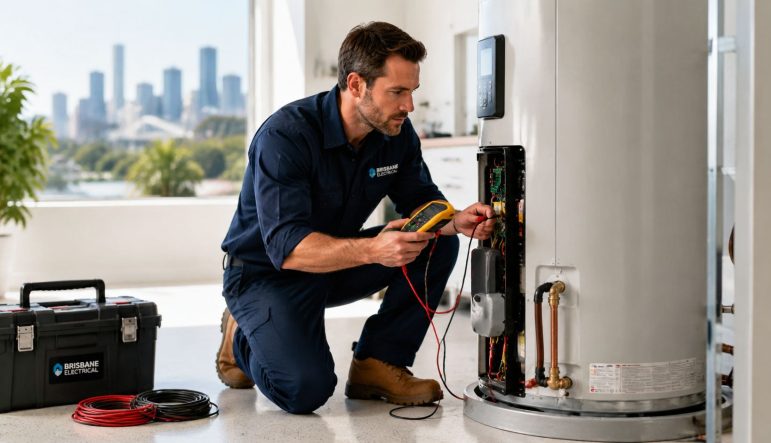
A cold shower usually isn't the first sign. Most Brisbane homeowners notice the system drifting before it fails. The water turns lukewarm by night, the tank starts making odd noises, or a small drip appears near the base and gets ignored for a few weeks. Then one morning, there's no hot water at all.
That's when the key question starts. Is this a simple repair, or are you about to spend money on a unit that's already near the end of its life? With an electric hot water service, the cheapest option in the moment often isn't the cheapest option over time. That matters even more in Brisbane homes, rentals, and older suburbs where switchboards, pipework, and ageing tanks all affect the final outcome.
Electric storage systems are still a normal part of life in Brisbane homes. Over 22% of households in Brisbane and surrounding areas rely on electric storage water heaters, and these systems typically consume between 1,800 and 3,000 kWh annually per household, according to the Australian Bureau of Statistics 2023 Energy Use Survey.
That local context matters. If your place has an electric system, you're not dealing with something unusual or outdated by default. You're dealing with a very common appliance that can work well for years, but only if the unit, wiring, protection, and maintenance all line up.
Most calls come down to a handful of practical questions:
Practical rule: If a hot water unit is failing and the home has older electrical infrastructure, the problem often isn't only the tank. The supply circuit and protection need checking as well.
A lot of online advice stops at purchase price. That's too narrow. A landlord in Windsor and an owner-occupier in Grange don't just need a cheap tank. They need a setup that won't turn into repeat repairs, tenant complaints, and electrical compliance issues.
If you're comparing options, broad buying advice like these tips for homeowners choosing a water heater can help frame the decision, but Brisbane conditions and local electrical compliance still need to drive the final call.
When people say they need an electric hot water service, they can mean four different things. That's where confusion starts. A service call might be an inspection, a repair, a full replacement, or routine maintenance. Each one involves different work.
A proper inspection starts with the basics. Is the unit getting power. Is the dedicated circuit intact. Is the thermostat operating correctly. Is the heating element working as it should. On storage systems, the condition of the tank, valves, cable entry points, and visible corrosion also matter.
In homes with older switchboards, the inspection can go wider than the heater itself. If the circuit protection or cabling isn't in good condition, replacing parts on the tank won't solve the underlying problem.
A thorough inspection often includes checks on:
Repair means the cylinder is still worth saving. Common repair jobs include replacing failed thermostats, faulty elements, worn valves, damaged wiring, or addressing smaller leaks around fittings rather than from the tank body itself.
Repairs make sense when the fault is isolated and the rest of the unit is in reasonable condition. They make less sense when the tank is heavily corroded, the unit is old, or one problem is likely to be followed by another.
A good repair should buy reliable time, not just delay replacement for a few weeks.
Replacement is more than pulling one tank out and dropping another in. The old unit needs to be isolated, disconnected safely, removed, and disposed of responsibly. The new system then needs to be positioned correctly, connected, wired on a compliant dedicated circuit, tested, and commissioned.
Australian standards matter here. AS/NZS 3500.4:2021 requires temperature and pressure relief valves on hot water systems, and AS/NZS 3000 wiring rules require dedicated circuits that only a licensed electrician can legally install and certify.
Maintenance is the part that is often overlooked until there's a failure. That usually costs more in the long run. Preventive work can include checking for early leaks, testing safety devices, looking at visible corrosion, inspecting electrical connections, and flushing sediment where appropriate.
The point of maintenance isn't to make an old tank immortal. It's to catch the expensive failures before they happen and avoid spending good money on a unit that's already past the sensible repair stage.
A failing hot water system rarely stays subtle for long. The signs usually show up in daily use first, then around the unit itself. If you know what to look for, you can act before a small fault turns into a full replacement under pressure.
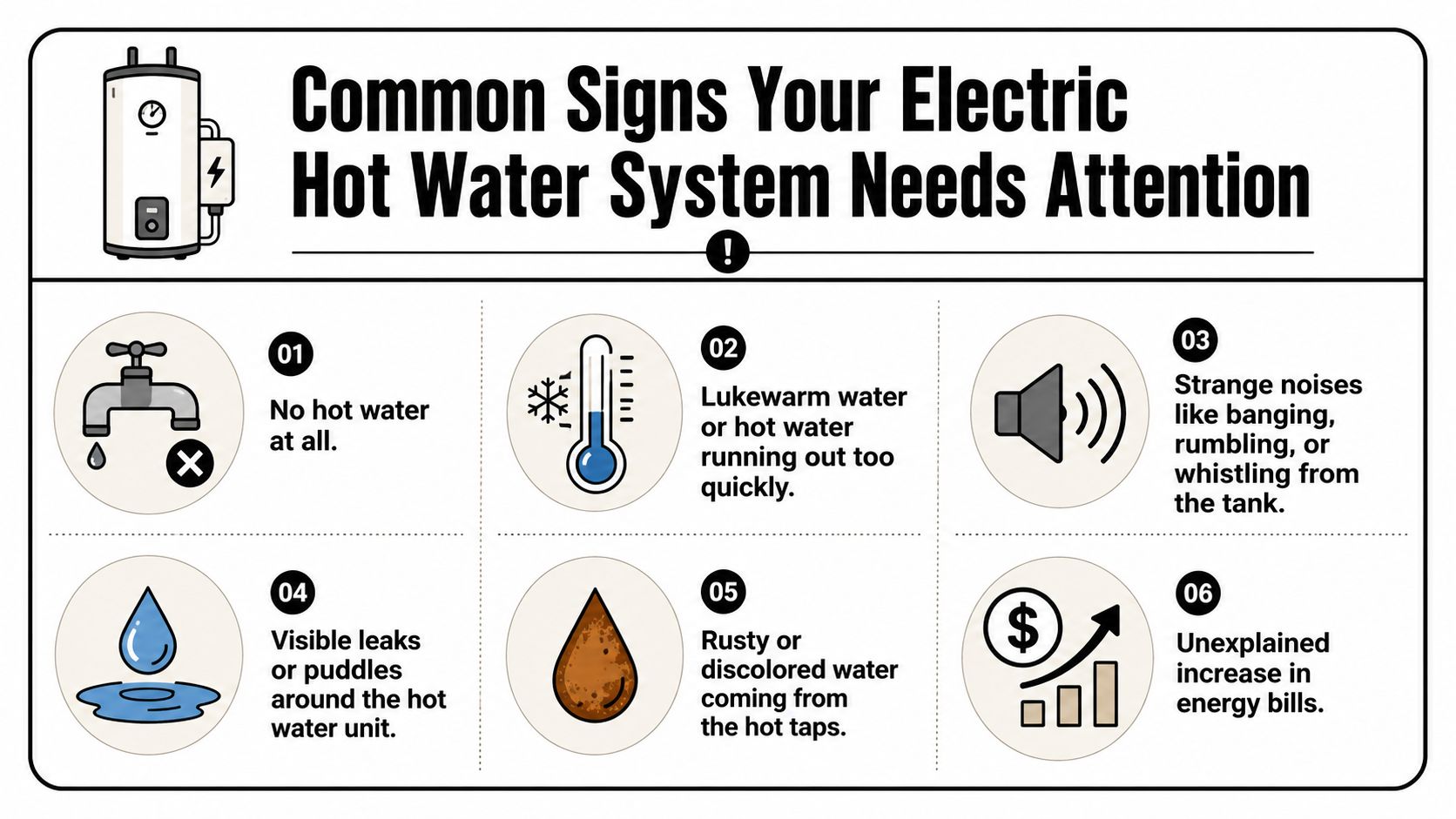
If the shower never gets hot, the first suspects are usually the thermostat, the element, or loss of electrical supply to the unit. Sometimes the system still works, but only partially. That's when you get warm water that runs out too quickly or never reaches a proper usable temperature.
That sort of fault can feel random from day to day. In practice, it often points to a component that's failing rather than a full tank failure.
A tank that bangs, rumbles, or pops is usually telling you something. Sediment and scale can build up around the heating area and force the system to work harder than it should. The result is more noise, reduced efficiency, and more wear.
If the hot water starts looking rusty or cloudy, corrosion becomes a concern. That can come from internal deterioration in the tank or from sacrificial components wearing out and no longer protecting the system properly.
Look out for these less obvious warning signs:
Visible moisture around the base of the unit deserves attention straight away. A leaking fitting can often be repaired. A leaking tank body is a different story. Once the cylinder itself is failing, replacement is usually the practical answer.
In Australian conditions, the average lifespan of electric hot water units is 10 to 12 years, and breakdowns often show up during peak summer demand. If your unit is in that age range and symptoms are stacking up, it's wise to assess the whole system rather than chase one repair after another.
Most homeowners don't call about hot water until something has already gone wrong. What helps is knowing what the visit should look like, step by step, so you can tell the difference between a proper service process and a rushed guess.
A typical workflow is shown below.
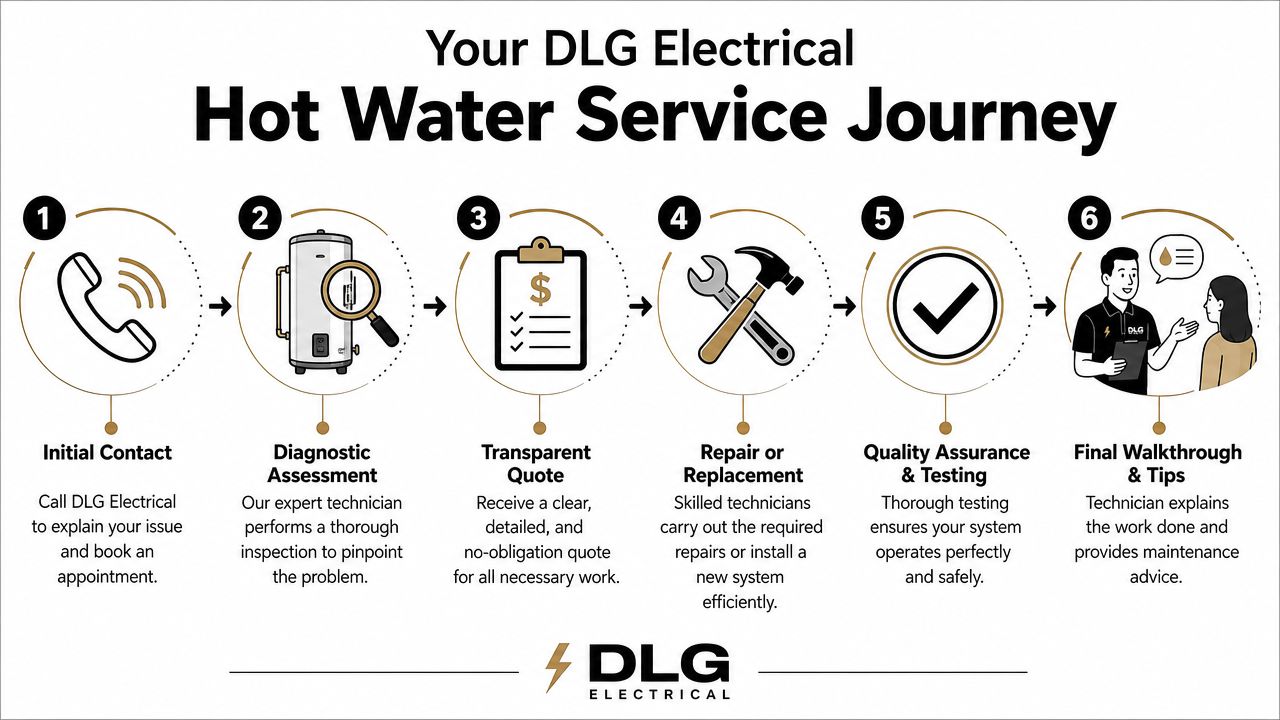
When you book a hot water job, have a few details ready. Say whether there's no hot water at all, reduced hot water, leaking, noise, or visible rust. If you can see the model label and tank size, that helps. So does knowing roughly how old the unit is.
If there's active leaking, say that upfront. Water around an electrical appliance changes the urgency and the isolation steps.
The inspection should confirm whether the problem is electrical, mechanical, or both. That means checking supply, testing components where appropriate, inspecting the tank and valves, and looking at the installation condition as a whole.
This is also the point where hidden issues tend to show up. Older homes often have a heater fault plus another problem such as deteriorated wiring, outdated protection, or evidence that the system has been patched before.
For homeowners wanting a deeper look at what professional hot water work can involve, DLG Electrical also outlines related service work on its hot water system services page.
Once the fault is identified, the next step should be simple. You need a clear explanation of what's failed, whether repair is sensible, and whether replacement is the better long-term option.
If the job goes ahead, the physical work usually follows this order:
The last part matters more than people think. A proper finish includes restoring supply, verifying heating operation, checking for leaks, confirming safe function, and making sure the area is left clean.
This walkthrough gives a useful visual overview of common electric water heater service issues and fixes:
At handover, the homeowner should know what was done, what to watch for next, and whether the current system still has a reasonable service life left. That final advice is often what saves the next emergency call.
The biggest mistake I see is judging an electric hot water service on purchase price alone. That's how people end up putting money into a system that looks cheap today and expensive six months later.
Brisbane homeowners usually face three broad financial paths. Repair the current unit. Replace it with another standard electric storage system. Move to a more efficient option with a higher upfront cost but better long-term performance. The right choice depends on tank condition, usage pattern, property type, and how long you plan to keep the system.
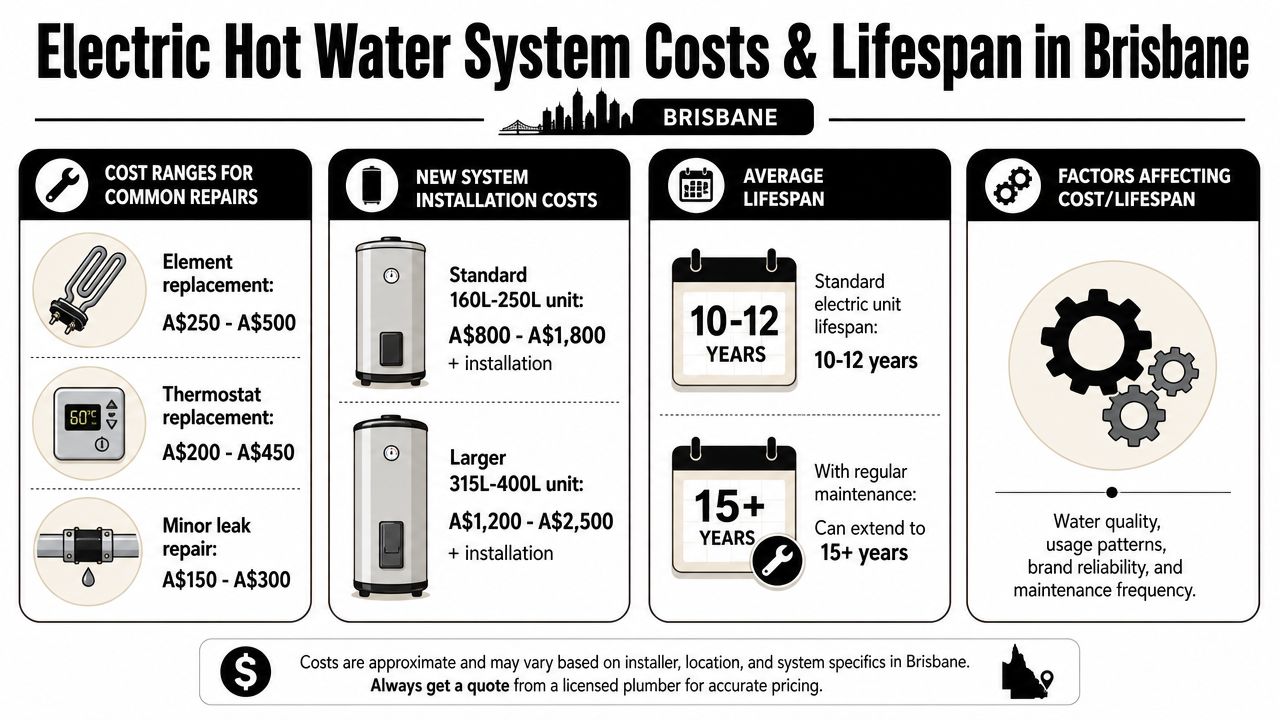
A repair is usually easier to justify when the tank is sound and the fault is contained to replaceable components. It's harder to justify when the unit is older, corroded, or showing multiple symptoms at once.
A useful way to think about it is this:
| Decision point | Usually leans toward repair | Usually leans toward replacement |
|---|---|---|
| Tank condition | No sign of cylinder failure | Visible tank corrosion or tank leak |
| Fault type | Isolated component issue | Repeated faults across the system |
| Property plans | Short-term hold or urgent fix | Long-term ownership or renovation |
| Reliability need | Some risk acceptable | Predictable performance matters |
Lifecycle cost is where the picture changes. It's not only about power bills. It's also about callouts, repeat failures, water damage risk, and how the system copes under real household use.
That matters a lot for landlords and high-turnover rentals. In Queensland, Heat Pump Water Heaters have a higher upfront cost, but 12-month operational data shows a 55% reduction in maintenance calls compared with traditional electric systems. In high-turnover rental units, standard resistive systems can fail 3x faster, negating initial savings within 4 years.
That doesn't mean a heat pump is automatically right for every home. It does mean the cheapest resistive unit on day one can become the expensive option over the life of the property.
If you're replacing a hot water system in a rental, don't ask only what it costs to install. Ask what it's likely to cost you to own.
A standard electric unit can still be a practical choice when the installation is straightforward and the usage pattern suits it. But if you're already replacing a failed tank, it's worth pausing long enough to compare long-term ownership, not just invoice totals.
For more context on how age affects replacement timing, this guide on how long hot water systems last is a useful starting point.
One provider in Brisbane that handles electric hot water replacements is DLG Electrical, including safe disconnection, like-for-like tank swaps, disposal of the old unit, and final testing after installation.
When an electric hot water service fails badly, speed matters. So does sequence. The wrong first move can put you at risk of electric shock, water damage, or both.
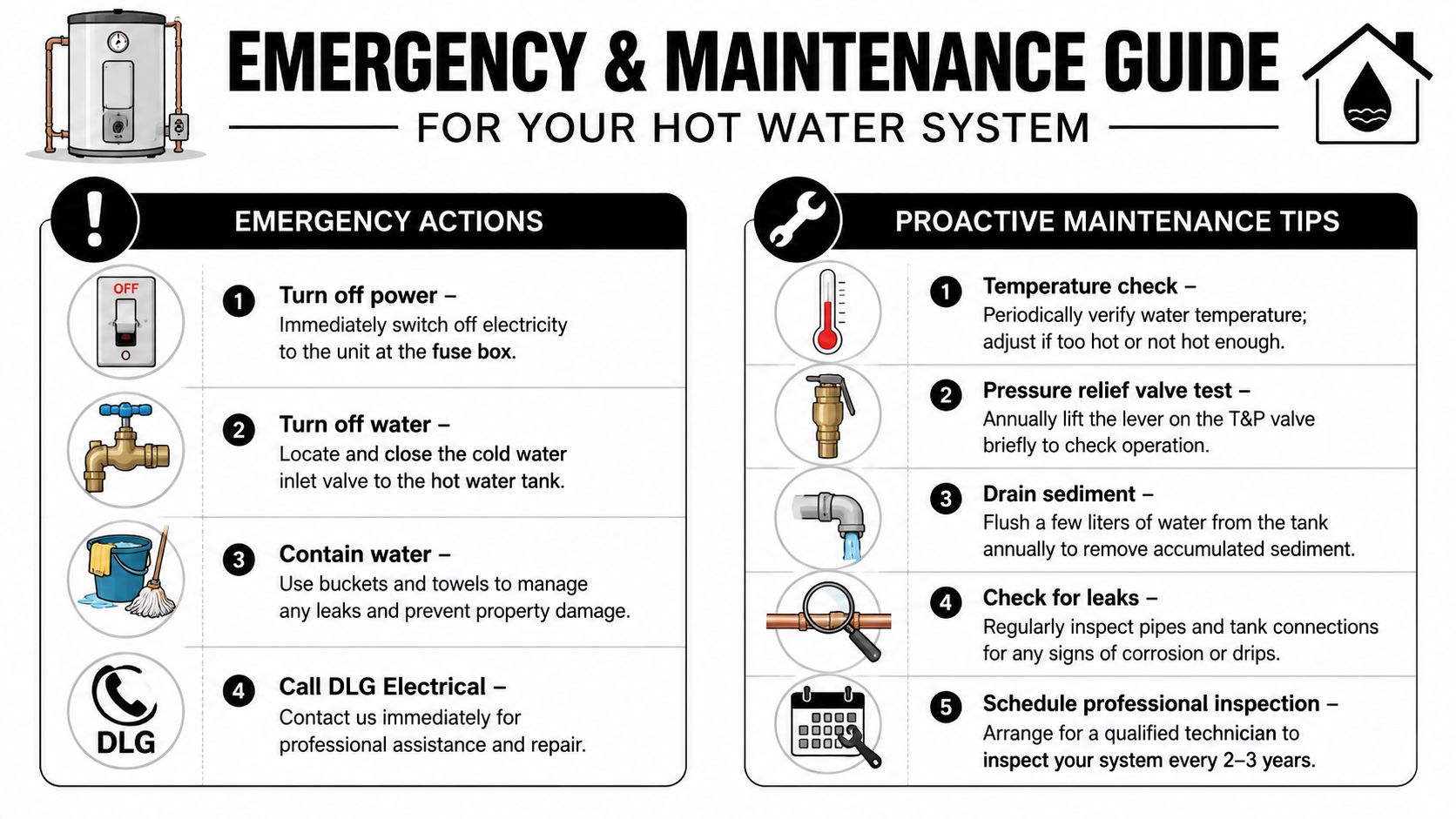
If the unit is leaking heavily, smells hot, or appears unsafe, keep it simple.
If water has reached electrical points, don't touch the unit or nearby switches until the area is made safe.
Safety first. A hot water fault becomes an electrical fault the moment water reaches live components or damaged wiring.
Good maintenance is simple, regular, and focused on early warning signs. It doesn't need to be complicated to be worthwhile.
Here's the checklist I'd give most homeowners:
For homeowners who want a broader maintenance reference, EZ Plumbing's 2026 water heater guide covers useful general upkeep habits. For Brisbane-specific service planning, DLG Electrical also has guidance on hot water maintenance.
Maintenance can extend useful life and reduce surprise failures. It can't reverse internal tank corrosion. Once the cylinder itself is going, maintenance stops being prevention and starts becoming delay.
That's why the smartest maintenance decision is sometimes not another service call on the old unit. Sometimes it's replacing the system before it fails on a weekend, floods a cupboard, or leaves tenants without hot water.
Electric hot water looks straightforward until you get into the details. Water, high-current electrical supply, safety devices, switchboard protection, and compliance all meet in one appliance. That's not handyman work.
Australian standards are clear on the parts that matter most. AS/NZS 3500.4:2021 mandates temperature and pressure relief valves on all hot water systems to prevent dangerous overpressure events. AS/NZS 3000 wiring rules require dedicated circuits, which only a licensed electrician can legally install and certify. If those basics aren't right, the system isn't just inconvenient. It can be unsafe.
A licensed pro doesn't just replace parts. They check whether the fault is isolated or part of a bigger installation issue. They can identify when the old tank isn't the only problem, when the circuit needs attention, or when replacement will save money over repeated repairs.
That matters most when:
Brisbane homes, especially in established suburbs, often need that wider view. A compliant installation today saves a lot of trouble later.
If your hot water has gone cold, started leaking, or you're weighing up repair versus replacement, DLG Electrical can help with practical advice, licensed electrical work, and clear quotes for Brisbane homes.

Master Electrician with over 30 years of experience. Founded DLG Electrical in 2005 after international project work including electrical installations at Stamford Bridge Stadium, London(Home of Chelsea FC).

Local Electricians that can fix all Electric Hot water Systems.
Motion sensor lights are a versatile addition to any home, offering nu
